An introductory slide deck for 1st graders explaining how thermometers measure heat energy and how the liquid rises and falls.
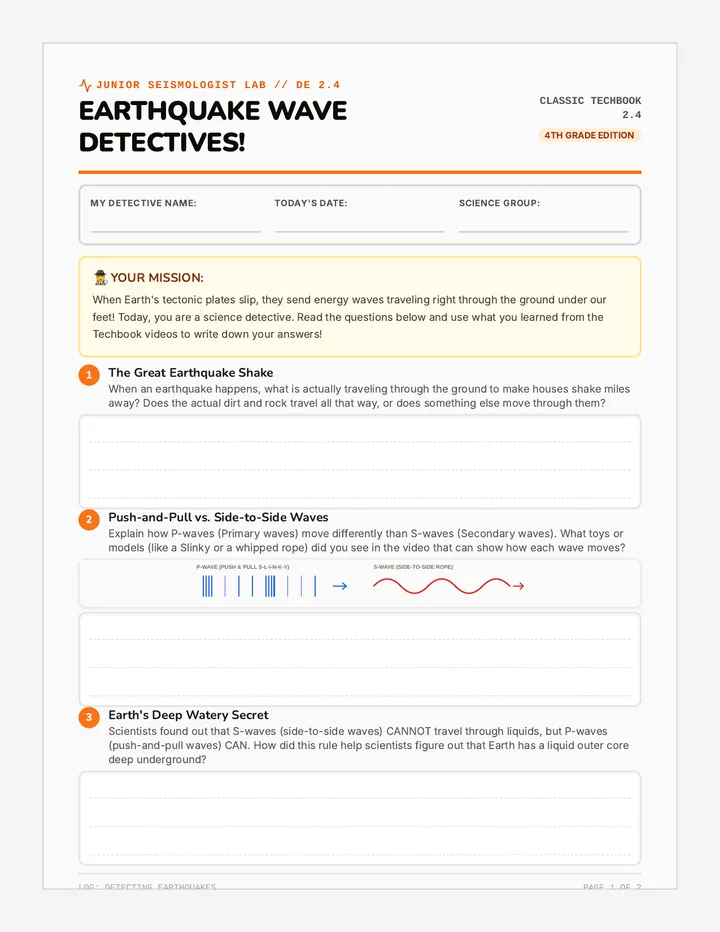
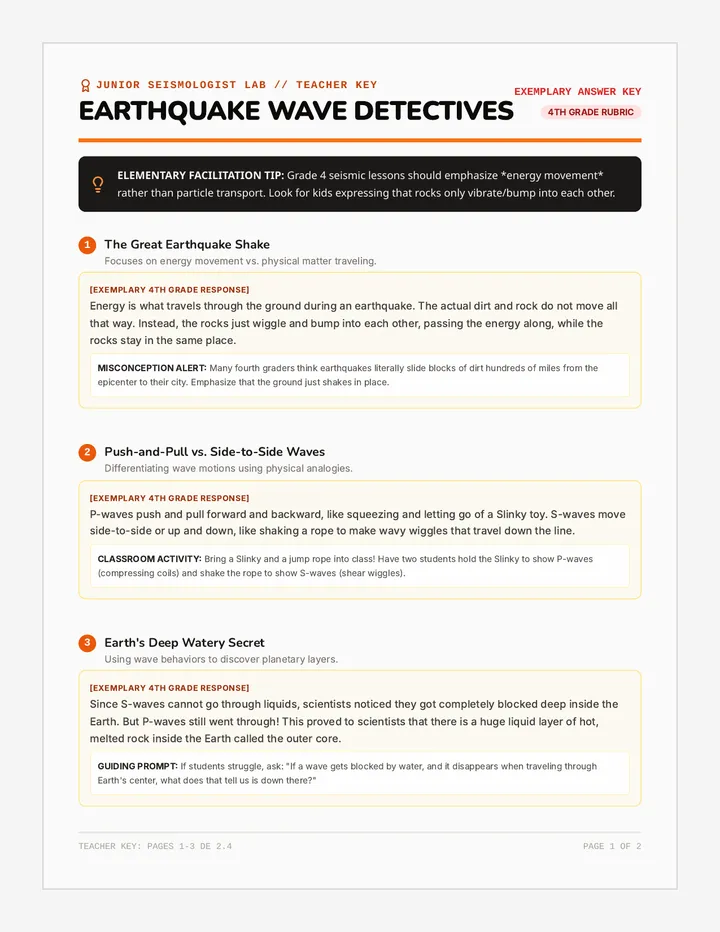
An earth and space science curriculum unit covering dynamic earth processes, earthquake wave mechanics, atmospheric pressure systems, and weather prediction techniques.
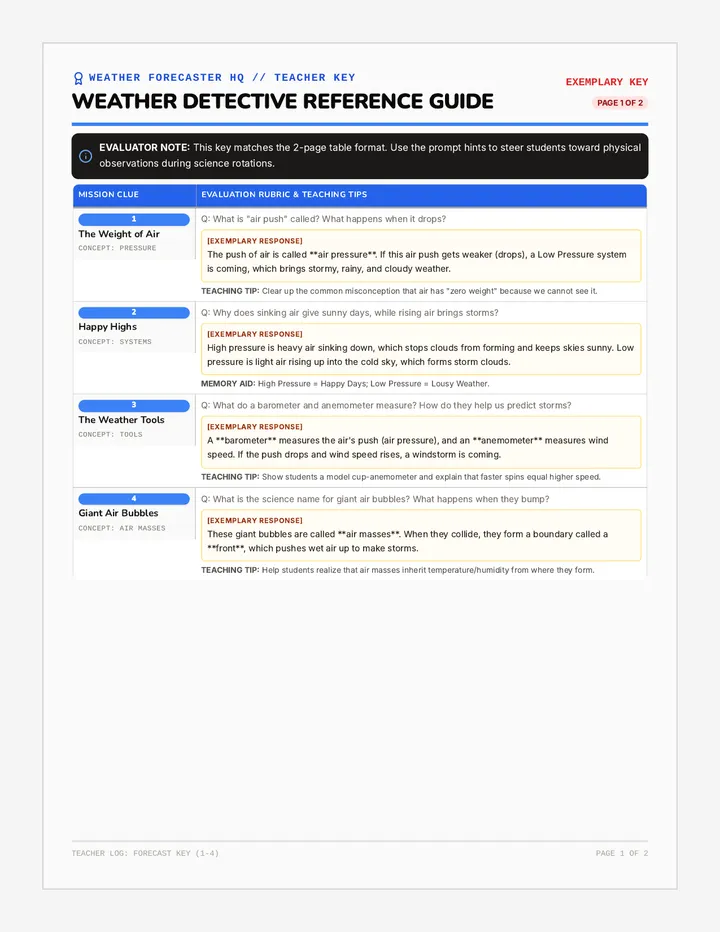
This lesson covers weather prediction techniques, atmospheric pressure systems, warm and cold fronts, and how meteorologists analyze satellite and radar data to forecast storms.
A comprehensive teacher answer key and instructional guide, containing exemplary student responses, common misconceptions, and teaching tips for the Predicting Weather Lab Worksheet.
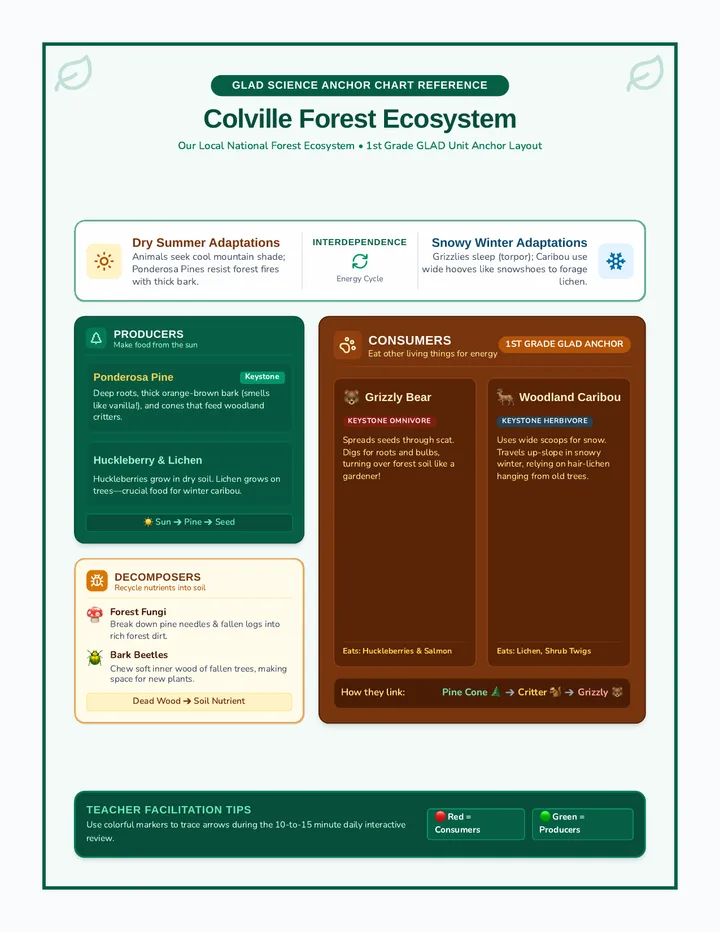
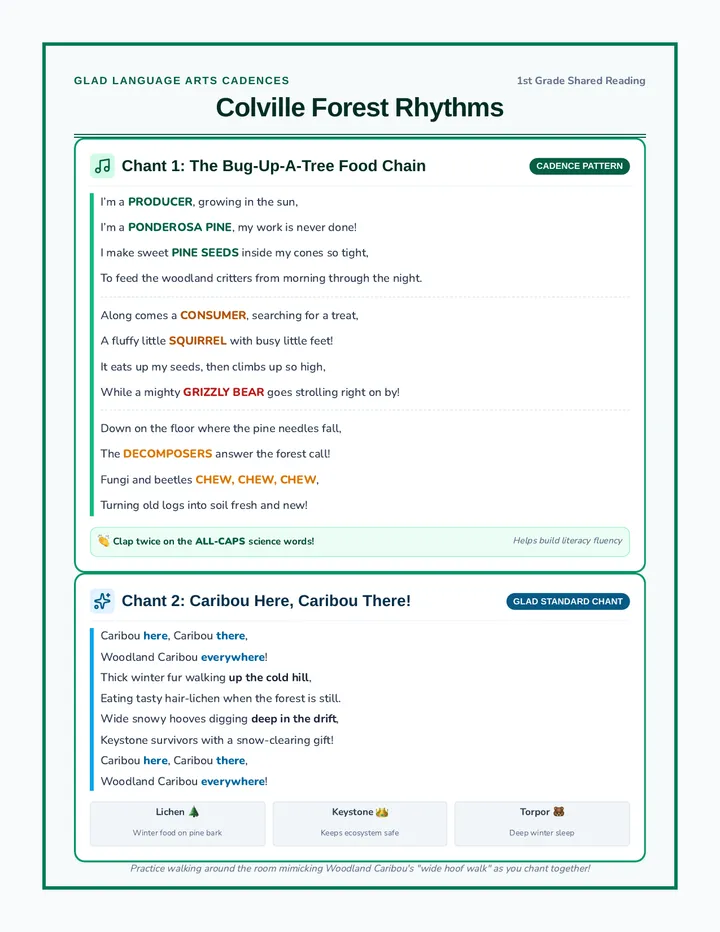
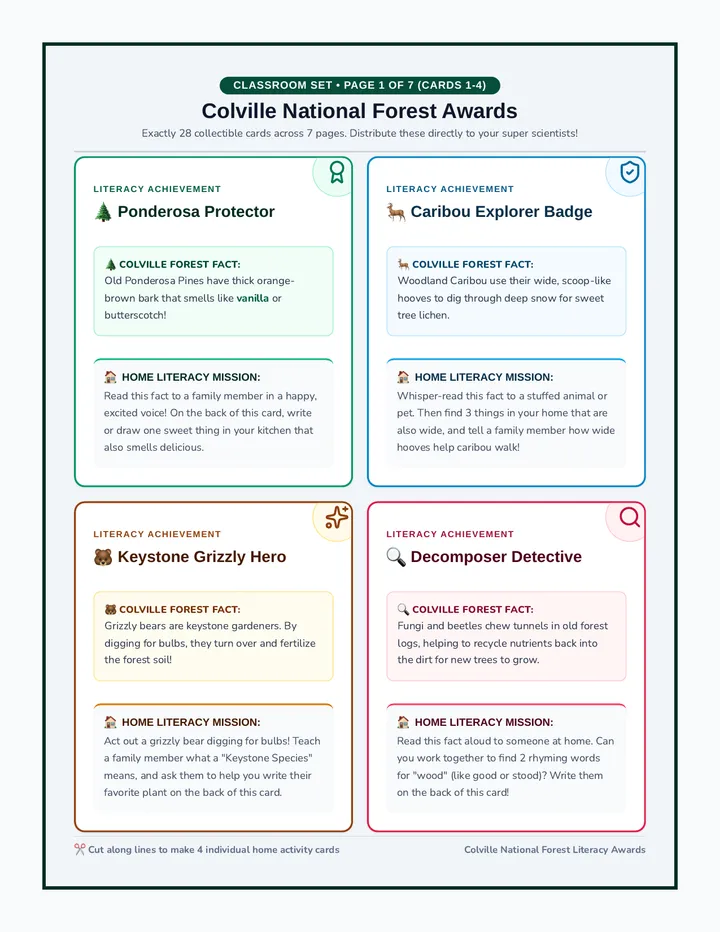
An immersive 1st-grade GLAD unit focused on the Colville National Forest ecosystem. Students explore food chains, interdependence, seasonal changes, and local keystone species through visual charts, rhythmic chants, and rewarding literacy achievements.
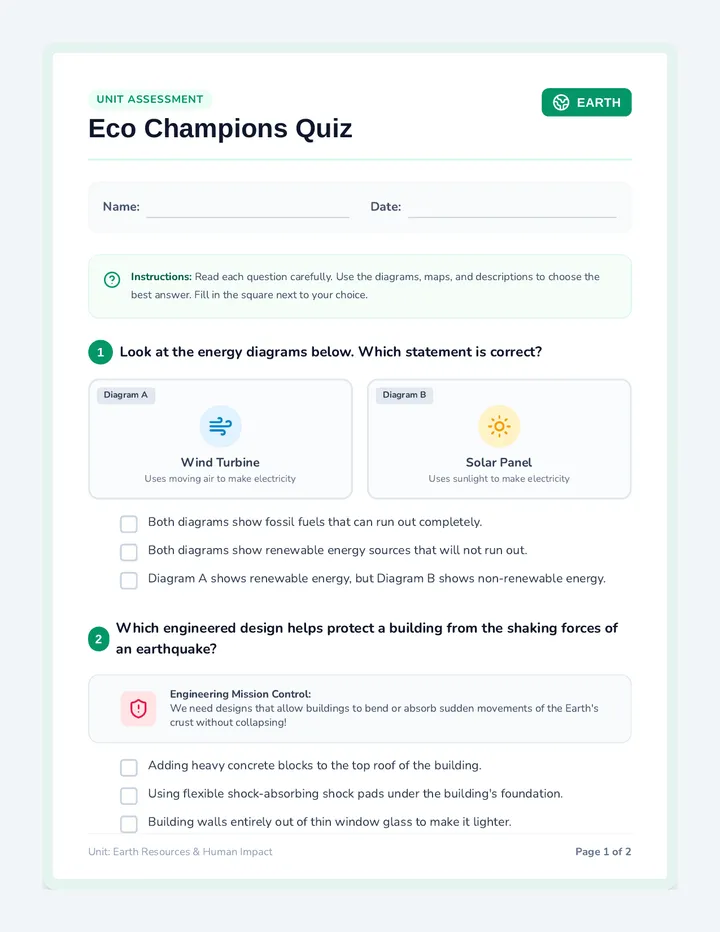
An elementary Earth Science lesson focusing on renewable energy, natural hazards, conservation, and human impact. Includes a highly visual student quiz and a corresponding teacher answer key.
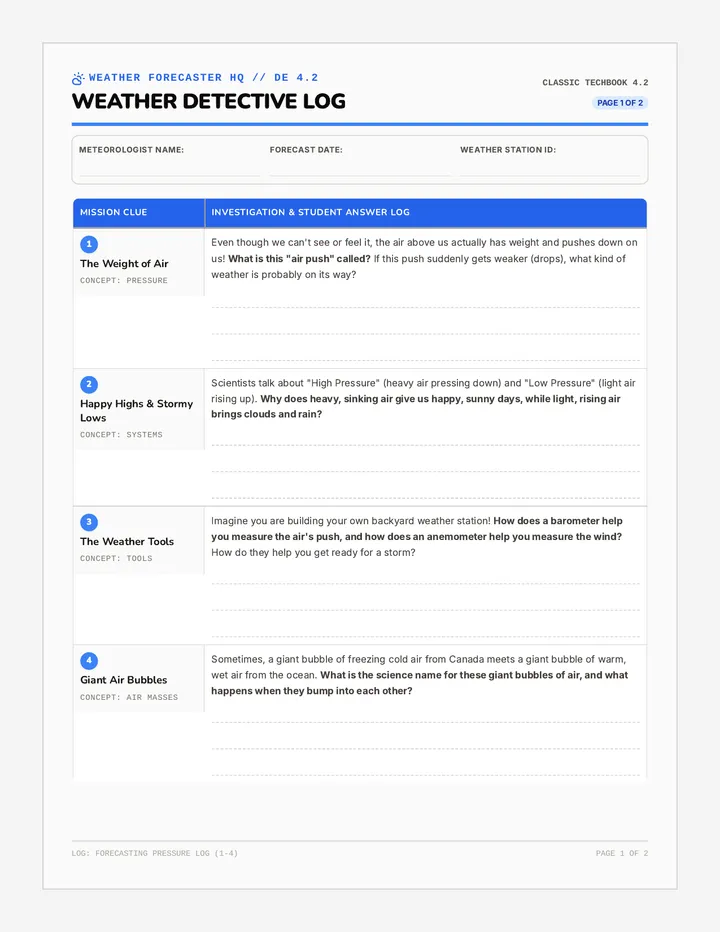
A restructured 2-page student investigation worksheet in table format, featuring 4 conceptual weather questions on Page 1 and 4 on Page 2, written in 4th-grade student-friendly language.
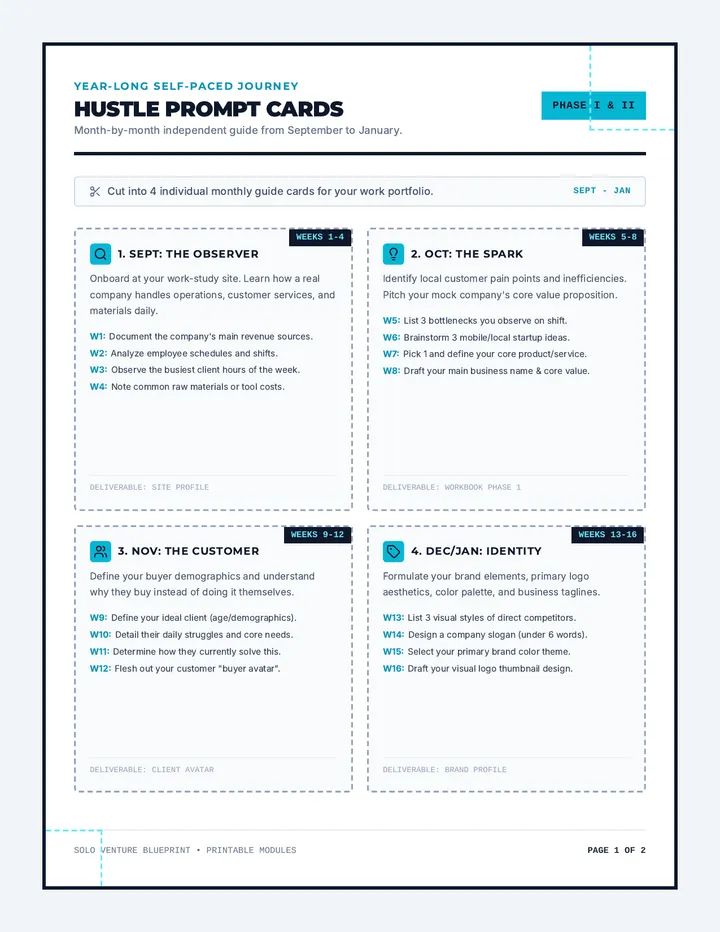
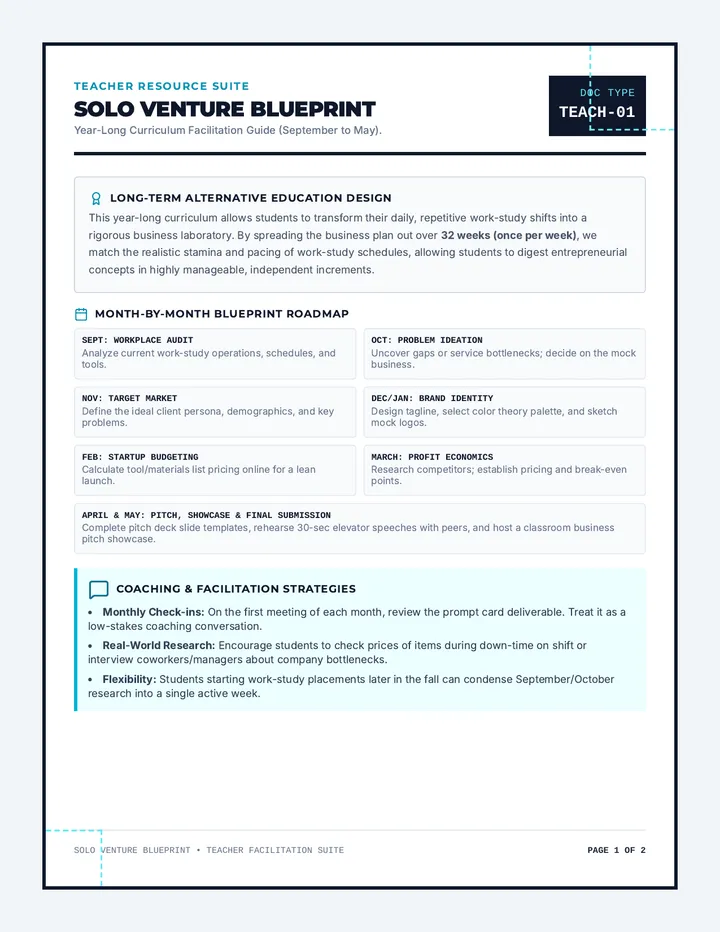
A year-long, self-paced entrepreneurship curriculum spanning September to May for alternative education students in work-study placements. Students transform real-world work experience into a modular business plan and slide presentation.
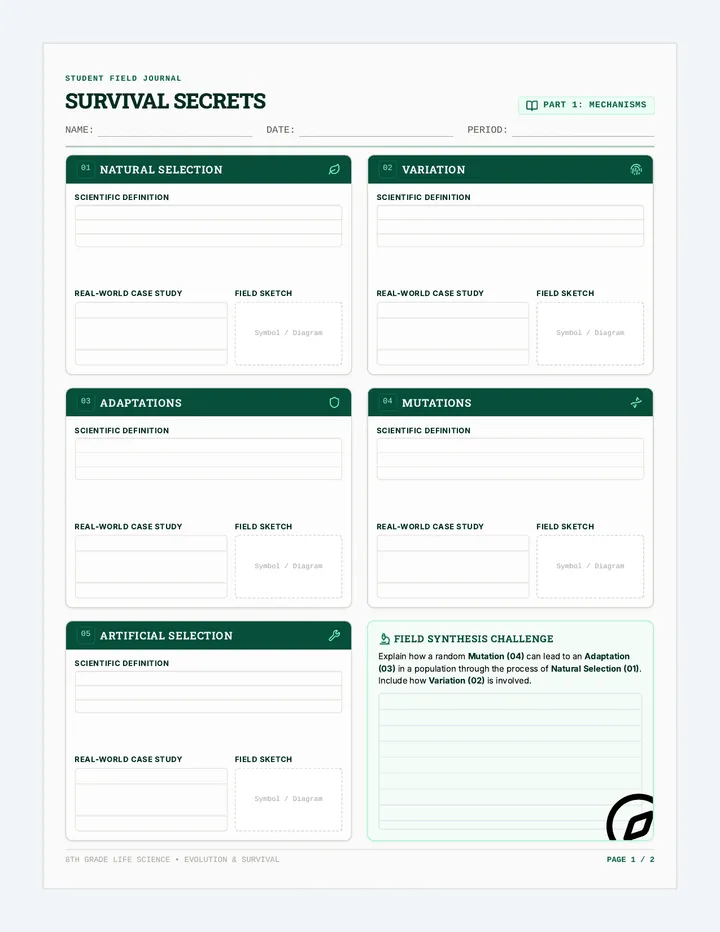
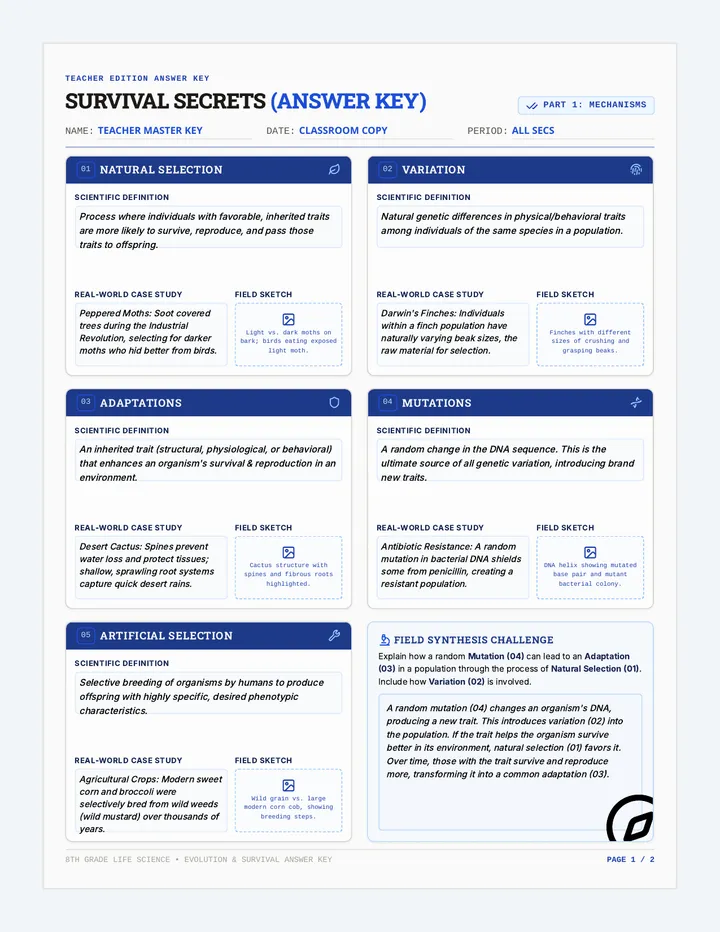
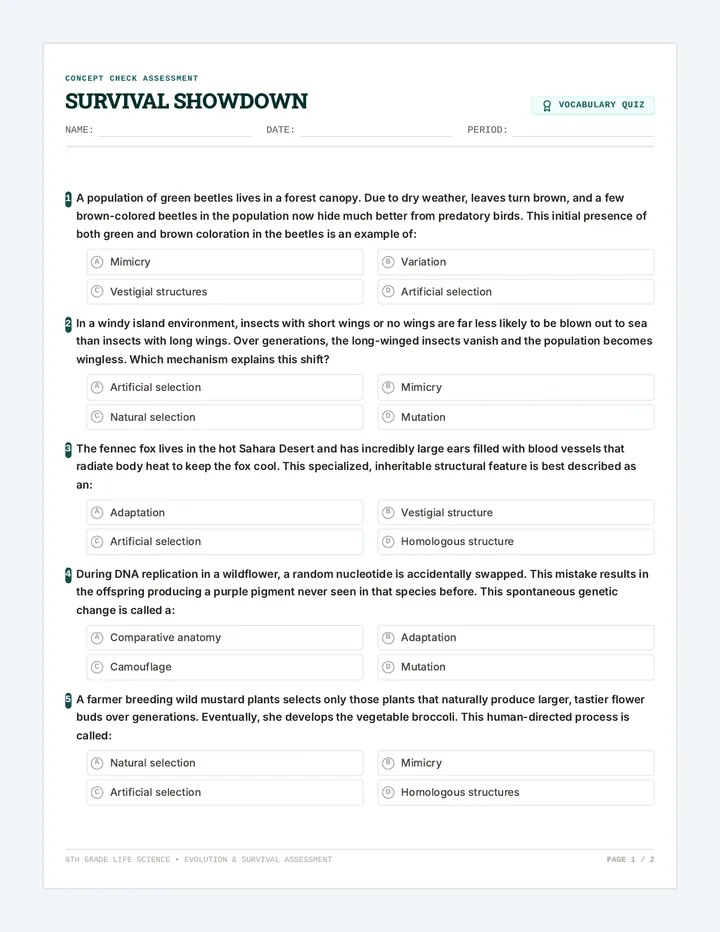
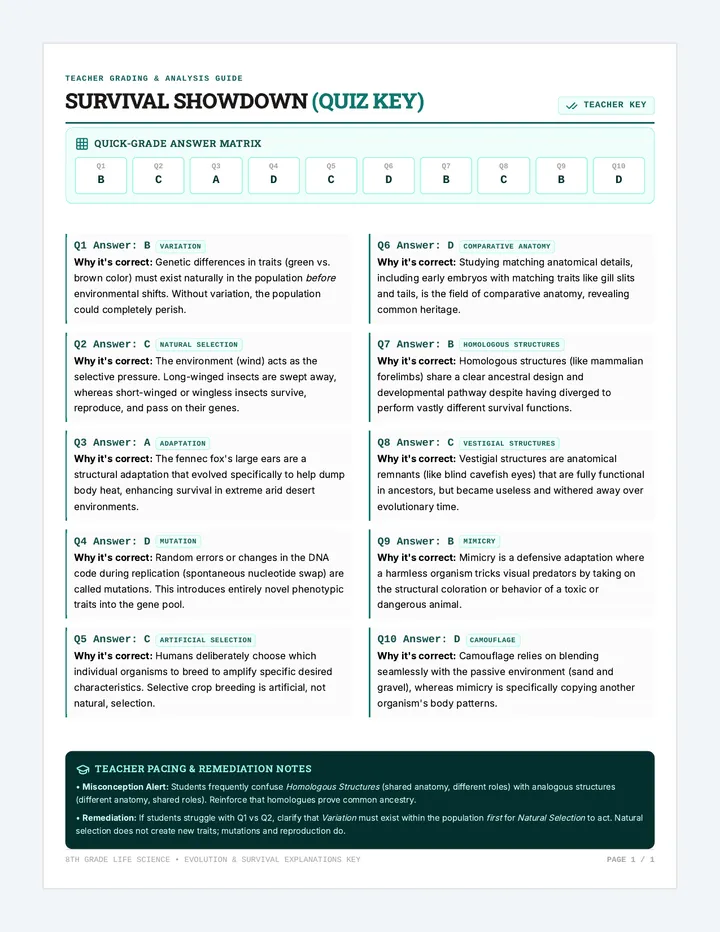
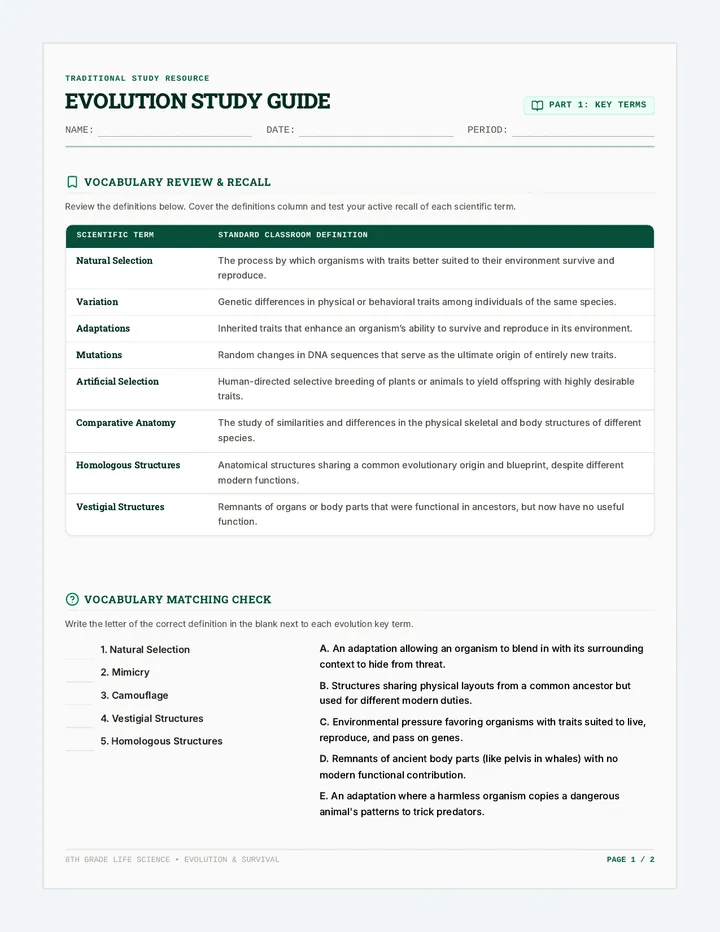
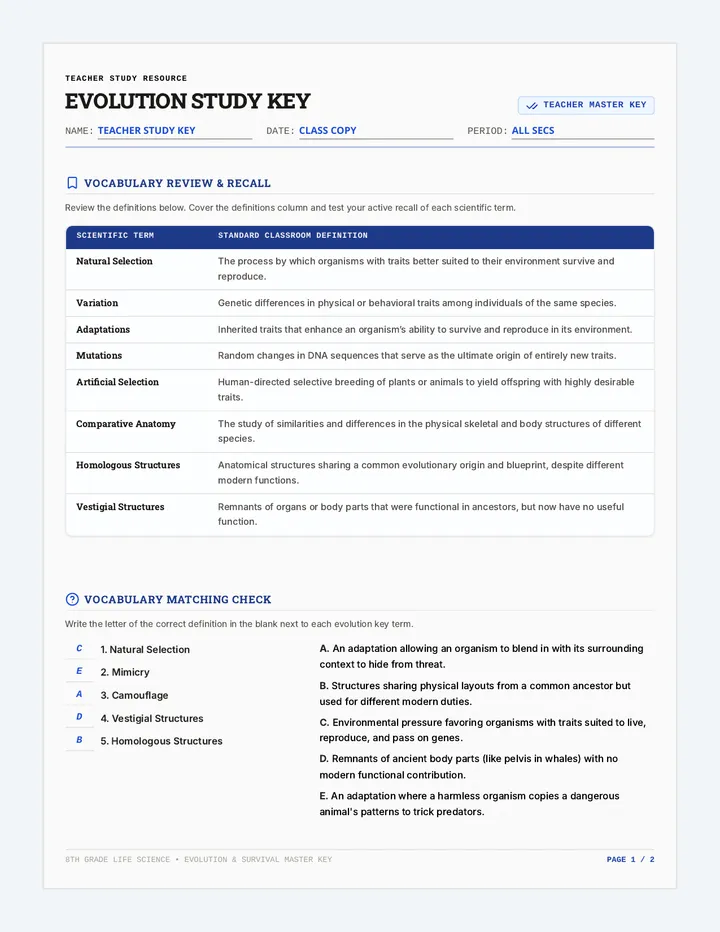
An active-recall study unit on natural selection and evolutionary evidence, featuring graphic organizers, application activities, and a practice quiz.
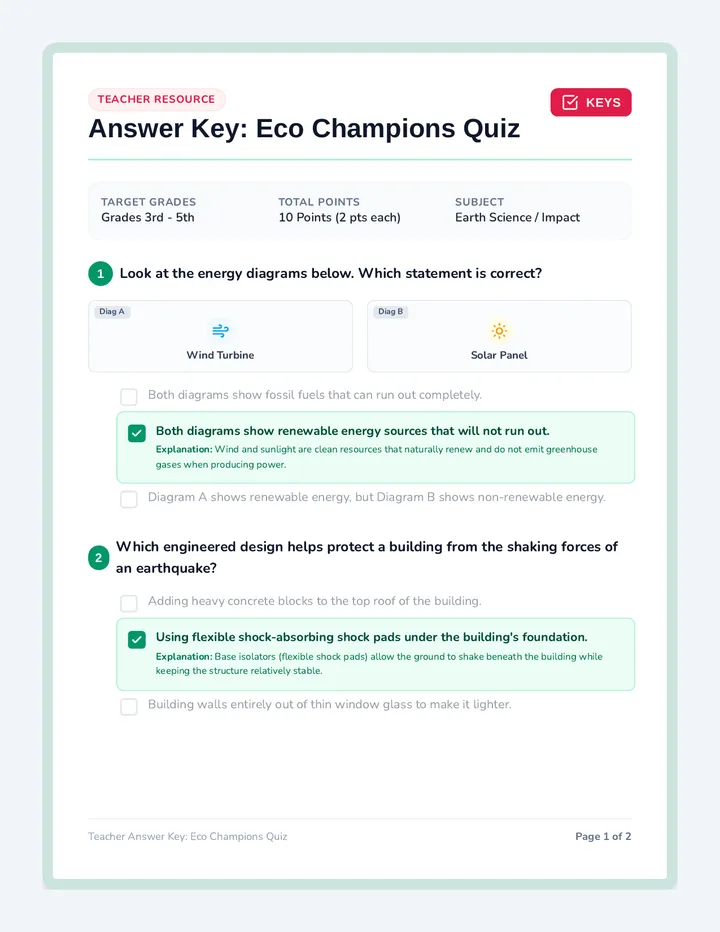
A teacher-facing 2-page Answer Key for the Eco Champions Quiz, providing highlighted correct answers, explanations, and grading criteria for the open-ended action plan question.
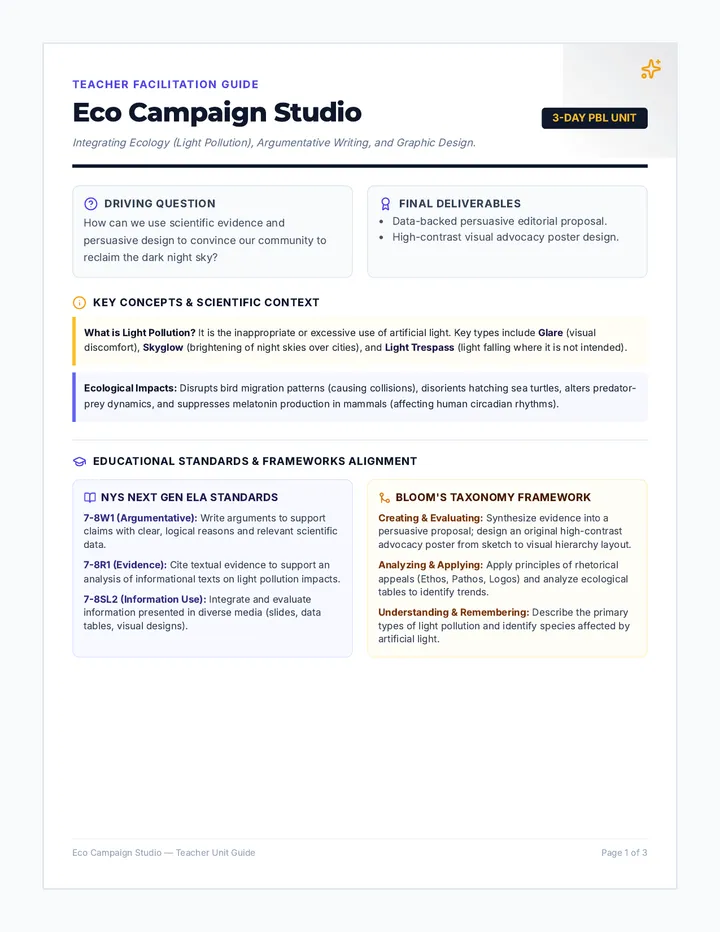
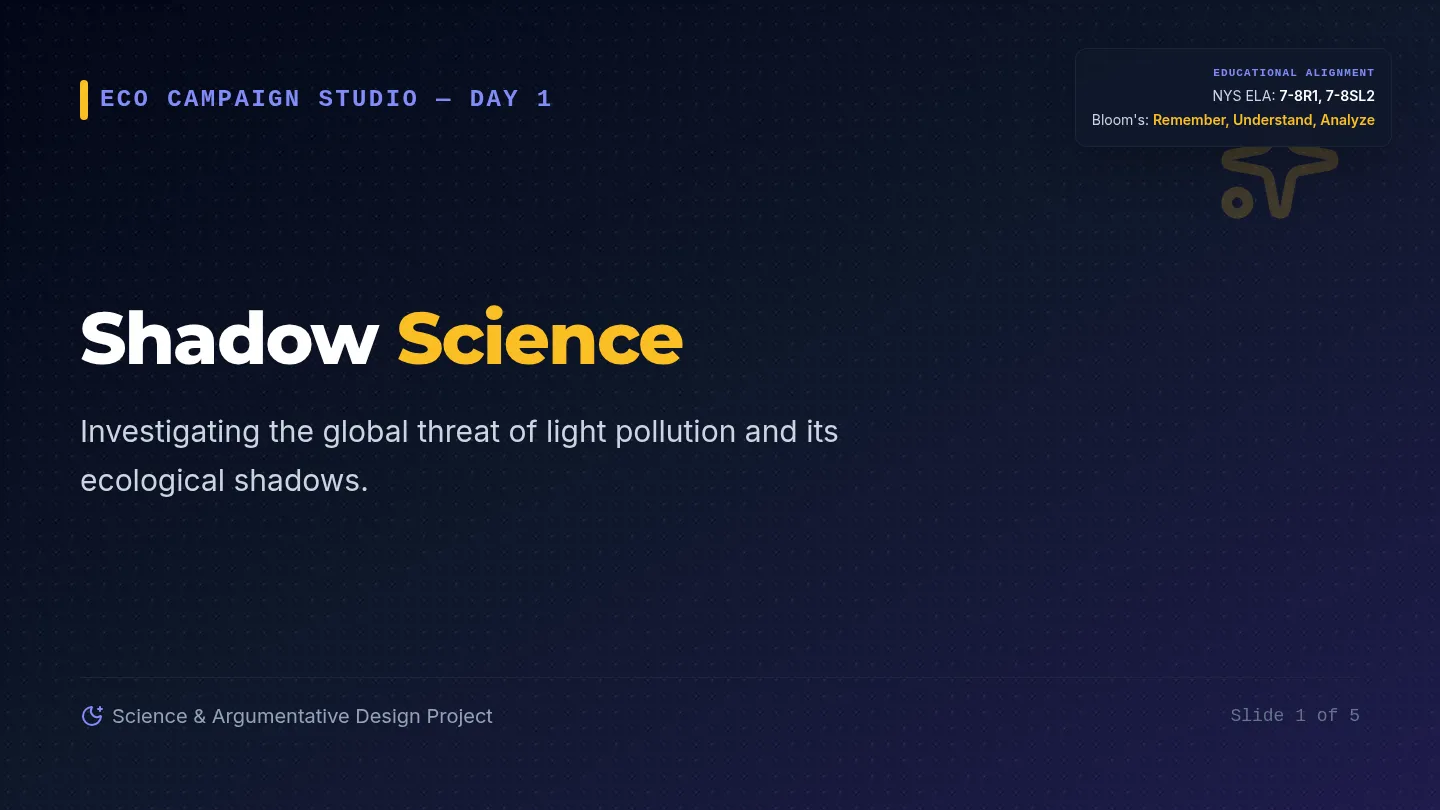
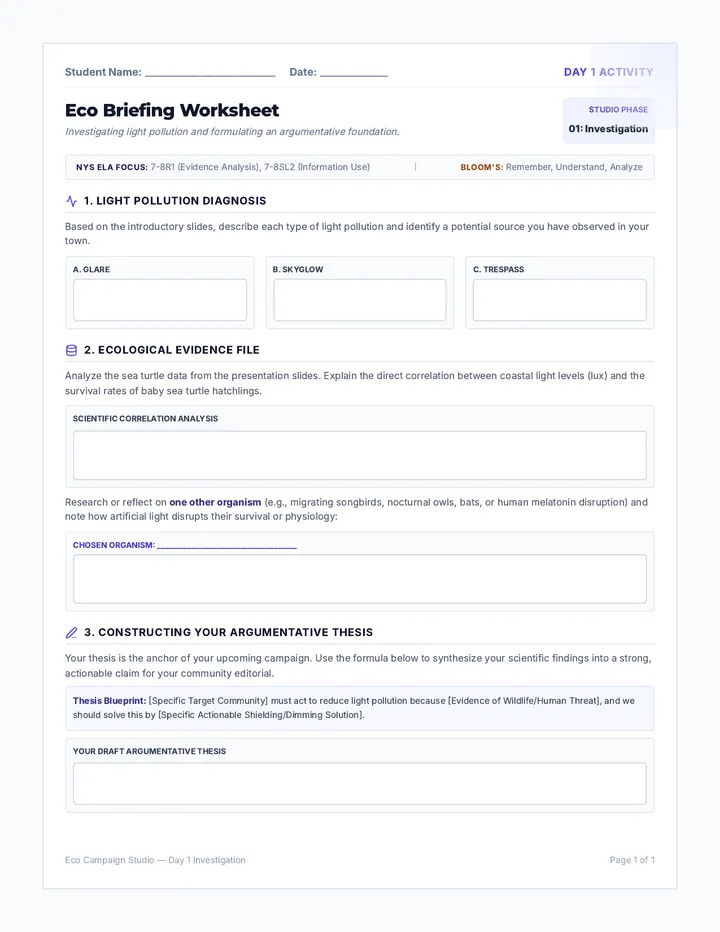
A cross-curricular, 3-day project-based unit combining science, argumentative writing, and graphic design. Students investigate the ecological impacts of light pollution, write a data-driven persuasive proposal, and design a community awareness campaign poster.
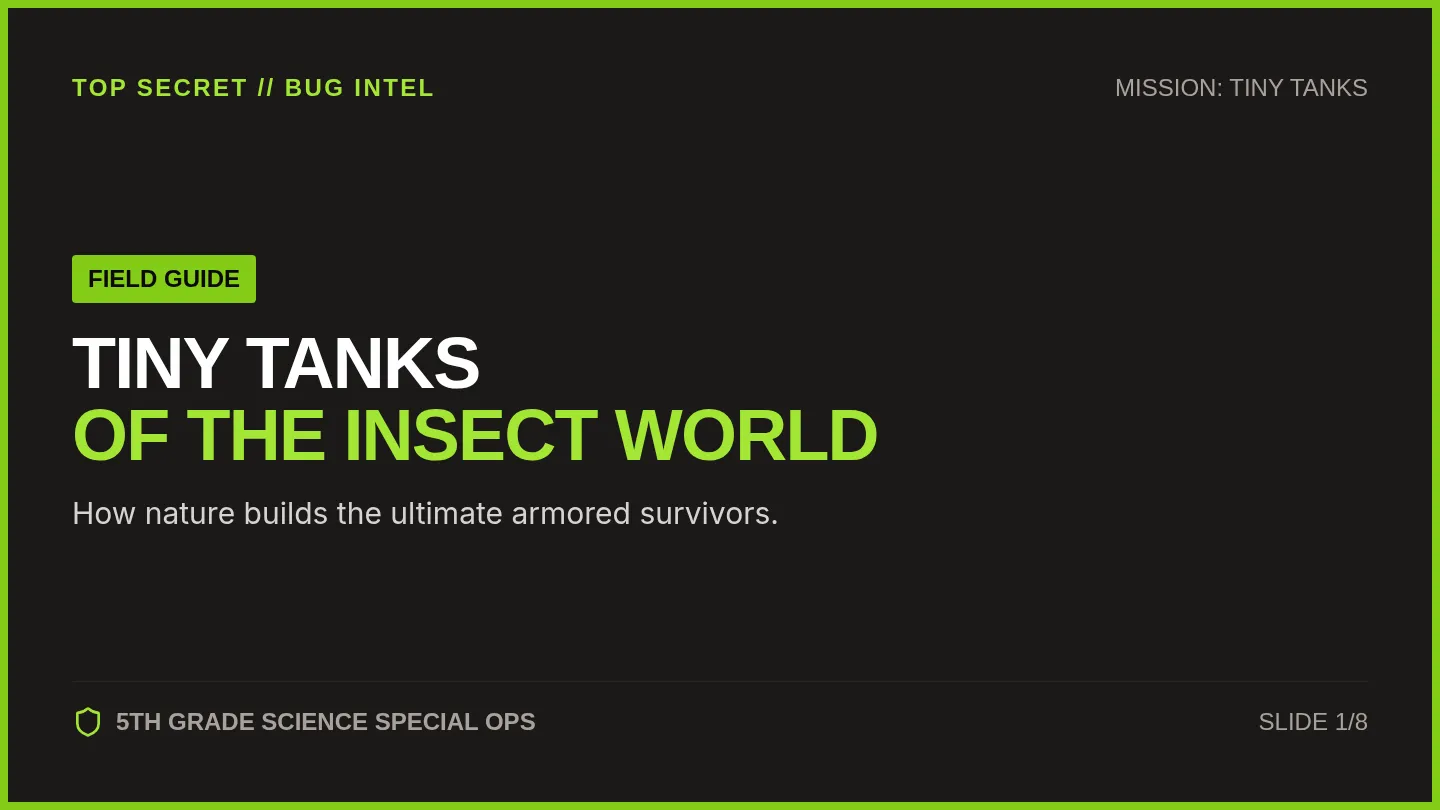
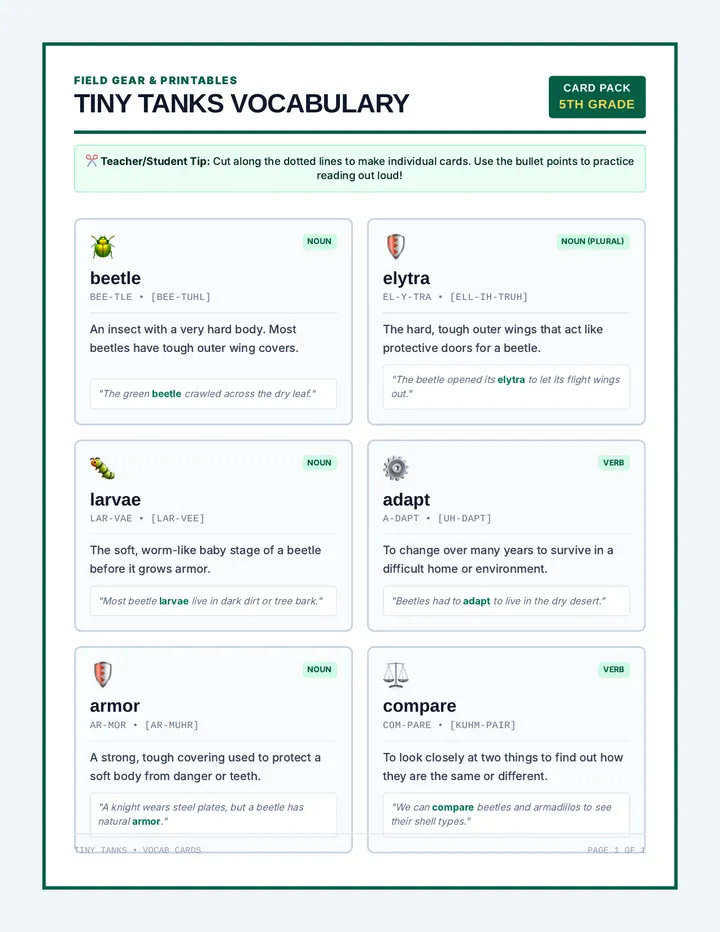
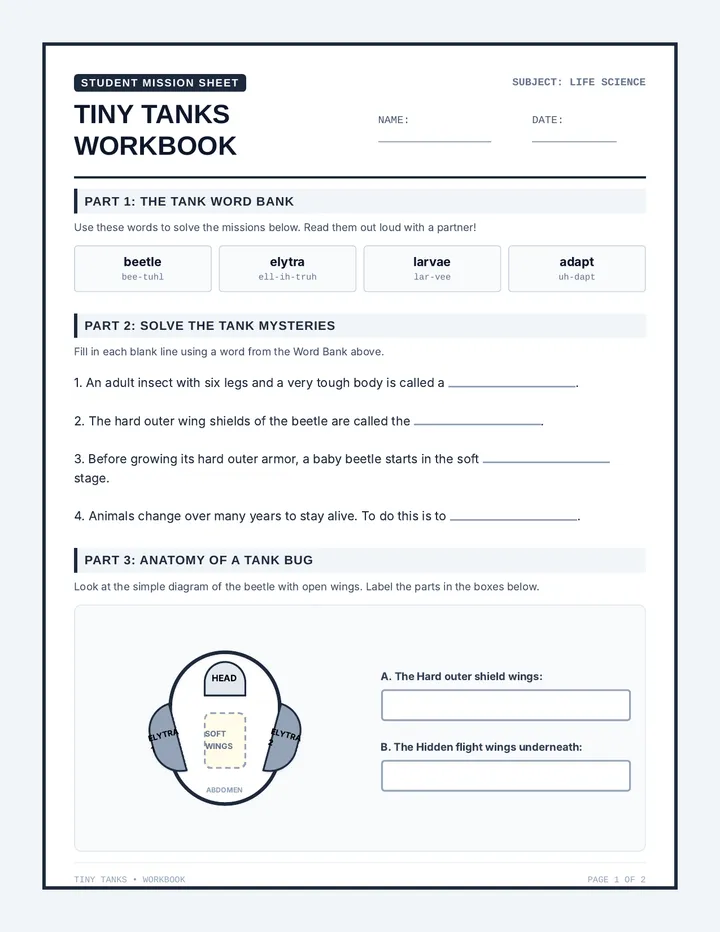
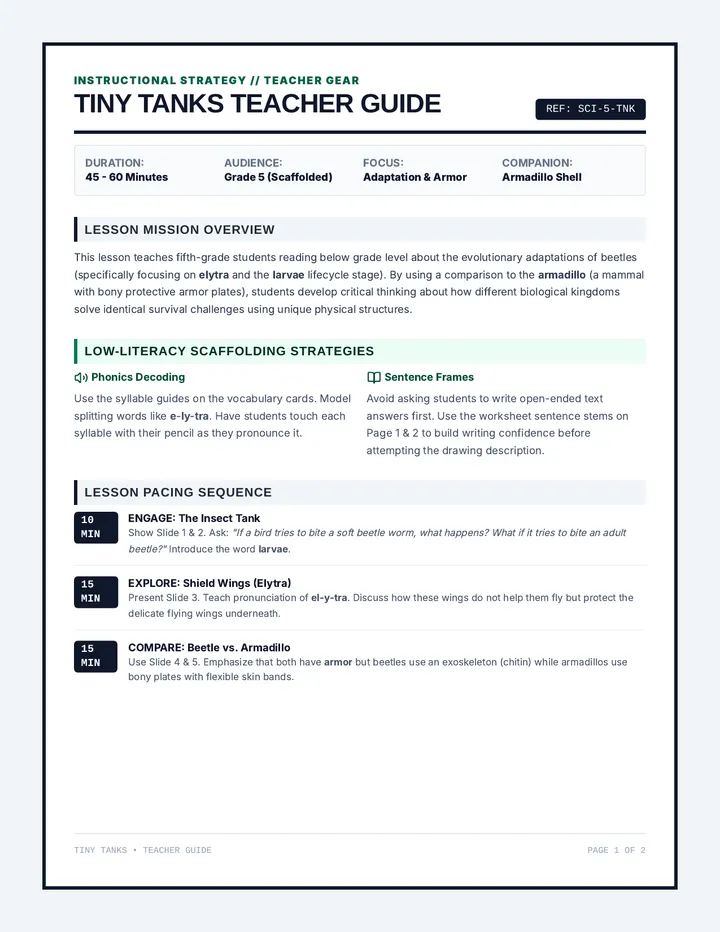
An engaging, highly visual science lesson exploring beetles as the armored tanks of the insect world, designed specifically for fifth-grade students reading below grade level. Students learn about elytra, beetle adaptation, and compare insect armor to that of the armadillo through scaffolded activities.
A visually engaging, 2-page Earth Science quiz designed for grades 3-5, focusing on renewable energy, natural hazards, conservation, and climate change with clean diagram boxes and student writing space.