A set of 8 stoichiometry task cards organized by review "Phases". Topics cover molar mass, conservation of mass, mole ratios, multi-step mass-to-mass calculations, limiting reactants, and percent yield. Designed for station-based review.
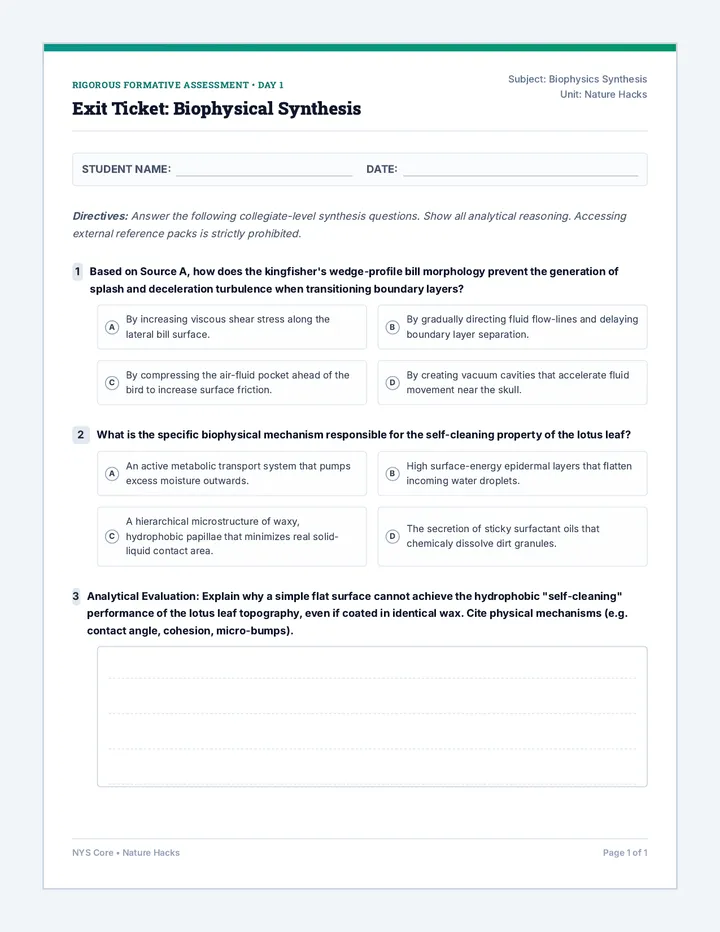
A high-stakes exit ticket for the Human Genetics lesson, evaluating student understanding of genetic hierarchy and their ability to solve Punnett square problems.
A teacher-facing resource for aggressive monitoring during the Human Genetics lesson, featuring specific 'look-fors' and a tracking grid for student mastery.
A set of three station activities for the Human Genetics lesson, including hands-on modeling instructions, a vocabulary matching game, and genetic cross task cards.
A high-impact slide presentation for the 90-minute Human Genetics lesson, covering DNA hierarchy and Punnett squares with built-in Think-Pair-Share and station instructions.
A student handout for the Human Genetics lesson featuring a bell ringer, guided notes with sentence stems, and practice Punnett square problems for aggressive monitoring.
Advanced investigator worksheet for high-achieving students. Features DOK 3 level strategic thinking questions, including probability justification, evolutionary persistence of alleles, and a complex CER on meiosis errors. Fixes page breaks and increases response space with a more compact layout. Added a mini-pedigree for Task 1.
Scaffolded investigator worksheet for students needing support. Fixes missing pedigree diagram, alignment in the matching section, and keeps stations on single pages.
Standard student investigator worksheet for the Human Genome lesson. Fixes page-break issues and increases writing space for students.
Four detailed station cards for the Human Genome investigation. Fixes pedigree diagrams, page overflow, and improves contrast for accessibility.
A high-impact 8-slide presentation deck for the Human Genome lesson. Fixes visual clarity on diagrams and text contrast issues. Added a Bell Ringer, simplified language, and improved chunking for better student engagement. Now includes X and Y chromosome labels on the karyotype example.
A detailed 2-day teacher facilitation guide for the Human Genome lesson, including pacing, teacher scripts, and aggressive monitoring checklists. Fixes formatting and content gaps.
A teacher guide containing the answer keys for the worksheet and task cards, along with instructional tips and scaffolding strategies for teaching symbiotic relationships.
A graphic organizer featuring a relationship matrix for definitions and symbols, and a visualization tool for mapping specific symbiotic interactions. Includes writing lines and word bank support.
Eight task cards featuring unique animal and plant interaction scenarios. Students must classify each as mutualism, commensalism, or parasitism. Perfect for scavenger hunts or small group work. Polished for high-quality printing.
A two-page 'Field Report' worksheet where students identify and reason about symbiotic relationships using provided case studies. Includes a scaffolded word bank with definitions and clear horizontal writing lines within reasoning boxes for improved student response areas. consolidated to fit exactly two pages.
An introductory slide deck for the 'Wild Bonds' lesson, defining symbiosis and explaining mutualism, commensalism, and parasitism with clear visual cues and examples.
A participant handout for Lesson 2 (Decomposition) with a Rally Coach section for low-lift tasks, a Professional Blueprint for classroom application, and a reflective Coach's Corner connecting early exposure to long-term CS success.
A 5-slide presentation for Lesson 2 (Decomposition) featuring the Allison Cuttler quote, the video intro, Rally Coach instructions, and professional application examples across storytelling, standards, and math.
Updated facilitation guide for Lesson 2 (Decomposition), featuring quotes from Krauss & Prottsman and Allison Cuttler, a Rally Coach instructional strategy, and cross-curricular connections from literacy to industrial tech.
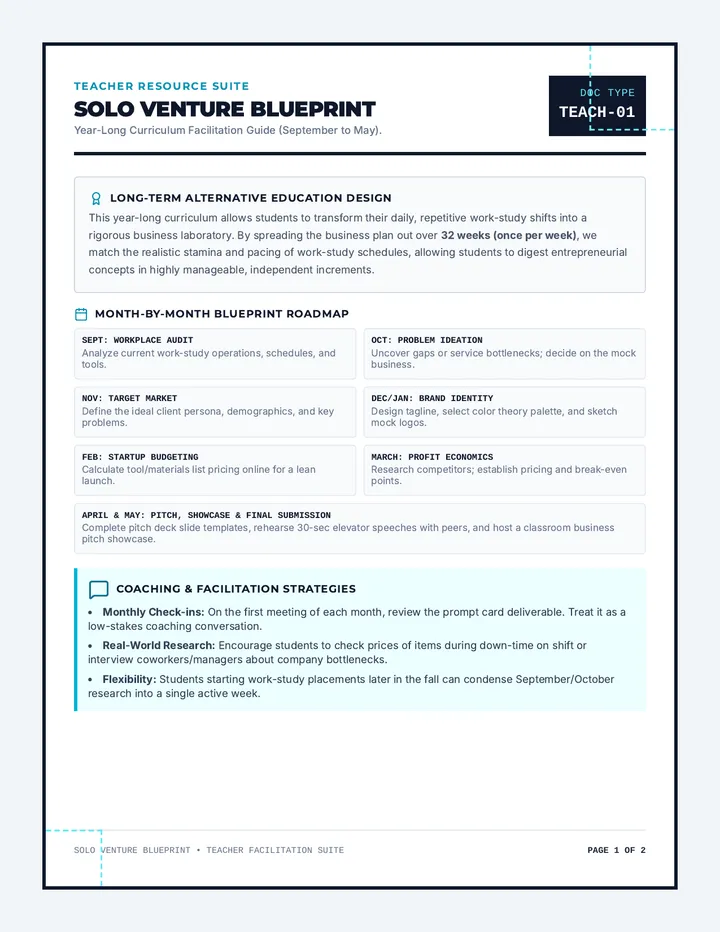
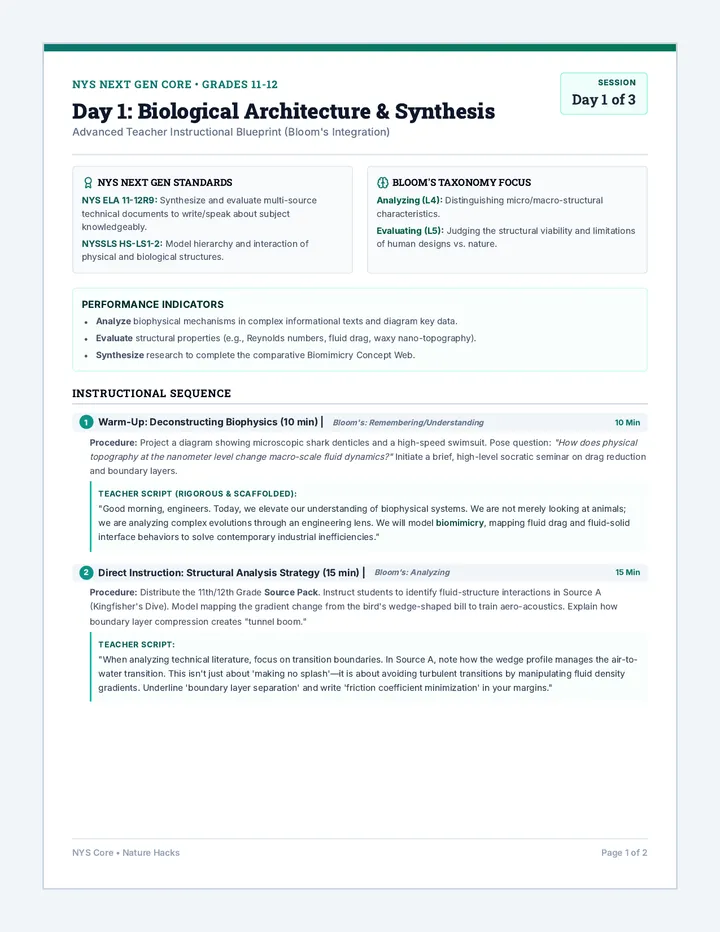
A teacher guide with standards, pacing, and pedagogical tips. Optimized for single-page use with improved contrast and layout.
A structured planning document for advocacy projects. Optimized for 2-page printing with an expanded sketch area and clear checklist.
A research and analysis worksheet where students investigate environmental inequality. Optimized for 2-page printing with generous work areas and built-in visual aids.
A 6-slide presentation covering environmental justice concepts, the Flint water crisis, urban air pollution data, and potential community solutions.
A teacher-facing facilitation guide for the Waste Wise project, including learning objectives, pacing, safety notes, and discussion prompts.
A detailed grading rubric for the Trash to Treasure video project, focusing on scientific accuracy, creative execution, and technical quality.
A comprehensive project guide and rubric for high school students to create a video documentary or performance art piece focused on waste management and upcycling, inspired by Shoji Yamasaki.
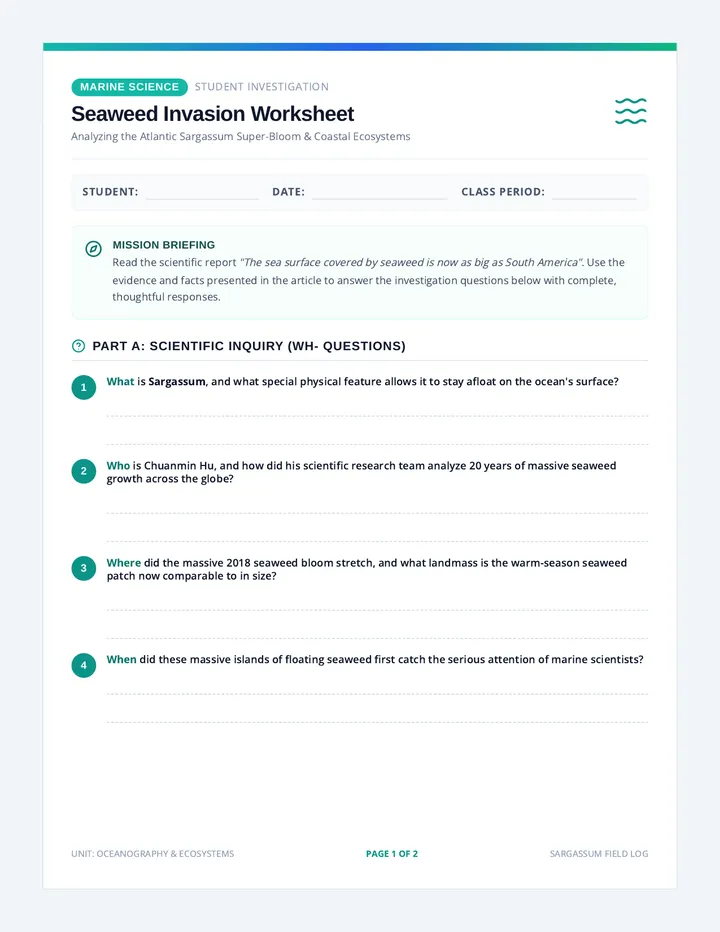
A research primer for students explaining the mechanics of bioaccumulation and biomagnification, providing inquiry questions and scientific vocabulary to support their lab report research.
A formal grading rubric for teachers to assess the Plastic-Free Project lab report, focusing on research depth, challenge integrity, and scientific writing standards.
A two-week tracking log for students to document their single-use plastic encounters, attempted alternatives, and difficulty levels as part of their Zero Waste Quest project.
A comprehensive project guide for the Zero Waste Quest, detailing the challenge rules, research requirements on bioaccumulation, and the specific structure for the final formal lab report.
A student planning worksheet for the Portfolio Showcase. Includes a draft area for a professional bio, an asset inventory checklist for all Unit 4 projects, and a final launch area for the live URL. Optimized for single-page printing.
A facilitation guide for teachers covering Lesson 42-43: The Portfolio Showcase. Includes instructional scripts for the 'digital resume' hook, technical curation tips, and professional farewell notes. Optimized for single-page printing.
A celebratory and professional slide deck for the Portfolio Showcase. Guides students through the transition from students to founders, the philosophy of curation, and the technical steps to publish their work as a professional digital studio.
A student drafting worksheet for Lesson 41: The Business Reflection. Includes a SWOT analysis matrix for the pitch, space for a 3-paragraph strategic reflection (The Pivot Document), and an end-of-semester proud moment exit ticket. Optimized for single-page printing.
A teacher facilitation guide for Lesson 41: The Business Reflection. Includes instructional scripts for the 'famous pivot' hook, SWOT analysis instruction, and professional context on business retrospectives. Optimized for single-page printing.
A reflective slide deck for Lesson 41. Covers famous business pivots, introduces the SWOT analysis framework for performance evaluation, and guides students through drafting a 3-paragraph strategic reflection.
A student evaluator rubric and investment log for the two-day "Big Pitch" event. Includes a boardroom scoring table for peer feedback on visual design, data, and delivery, plus the final "Class Cash" investment decision. Optimized for printing.
A two-day facilitation guide for the Unit 4 Capstone: The Big Pitch. Includes room setup instructions, the 3+2 minute timing rules, and instructional scripts for the "Shark Tank" Q&A and final "Class Cash" investment reflection. Optimized for single-page printing.
A high-stakes presentation slide deck for the Unit 4 Capstone: The Big Pitch. Includes "Founder's Circle" hooks, 3+2 pitch rules, scoring criteria for design, data, and delivery, and the final "Investor's Choice" exit ticket.
A student rehearsal log and peer-feedback worksheet for Lesson 38. Includes a non-verbal fundamentals checklist, space for partner feedback on projection and filler words, and an exit ticket for self-correction. Optimized for single-page printing.
A facilitation guide for teachers covering Lesson 38: Public Speaking with Media. Includes instructional scripts for non-verbal communication, projection coaching tips, and professional speaking context. Optimized for single-page printing.
A high-impact slide deck for Lesson 38: Public Speaking with Media. Covers non-verbal communication, the speaker's toolkit (eye contact, posture), projection techniques, and a rehearsal roadmap.
A student planning and checklist worksheet for Lesson 37. Includes a data proof strategy section, a slide asset checklist for the final five slides of the pitch deck, and a project self-audit checklist. Optimized for printing.
A comprehensive teacher facilitation guide for Lesson 37: Building the Deck. Includes pacing, simplification strategies for data slides, animation techniques, and professional context on financial scrutiny. Optimized for single-page printing.
A professional slide deck for Lesson 37 focusing on data integration and presentation flow. Covers chart simplification, animation for storytelling, and provides a final project checklist for the full pitch deck. Corrected numbering and syntax.
A student drafting and checklist worksheet for Lesson 36. Includes brand alignment fields for HEX codes and typography, a slide asset checklist for the first five slides, and a professional audit section for visual consistency. Optimized for printing.
A comprehensive teacher facilitation guide for Lesson 36: Building the Deck. Includes instructional scripts for the 'Death by PowerPoint' hook, technical tips for master slides/frames, and professional marketing context.
A high-impact slide deck for Lesson 36 focusing on visual consistency in pitch decks. Covers the 'Death by PowerPoint' concept, master slide/branding techniques, and provides a clear checklist for the first five slides of the final project.
A student drafting worksheet for Lesson 35: The Anatomy of a Pitch. Includes space for scripting the 'Pain Point' hook, identifying key data points from research, outlining the solution/reveal, and crafting a 20-word elevator pitch. Optimized for single-page printing.
A comprehensive teacher facilitation guide for Lesson 35: The Anatomy of a Pitch. Includes instructional scripts for the Shark Tank hook, Guy Kawasaki structure notes, and pacing for the analog scripting activity. Optimized for single-page printing.