Praxis Literacy Study Guide
Praxis 5205
LITERACY EXAM VISUAL STUDY GUIDE
Part 1: The Big 5, Cognitive Models & Emergent Literacy Visuals
Visual Learner Cheat Sheet
5 Essential Components of Reading (National Reading Panel)
Core Big 5
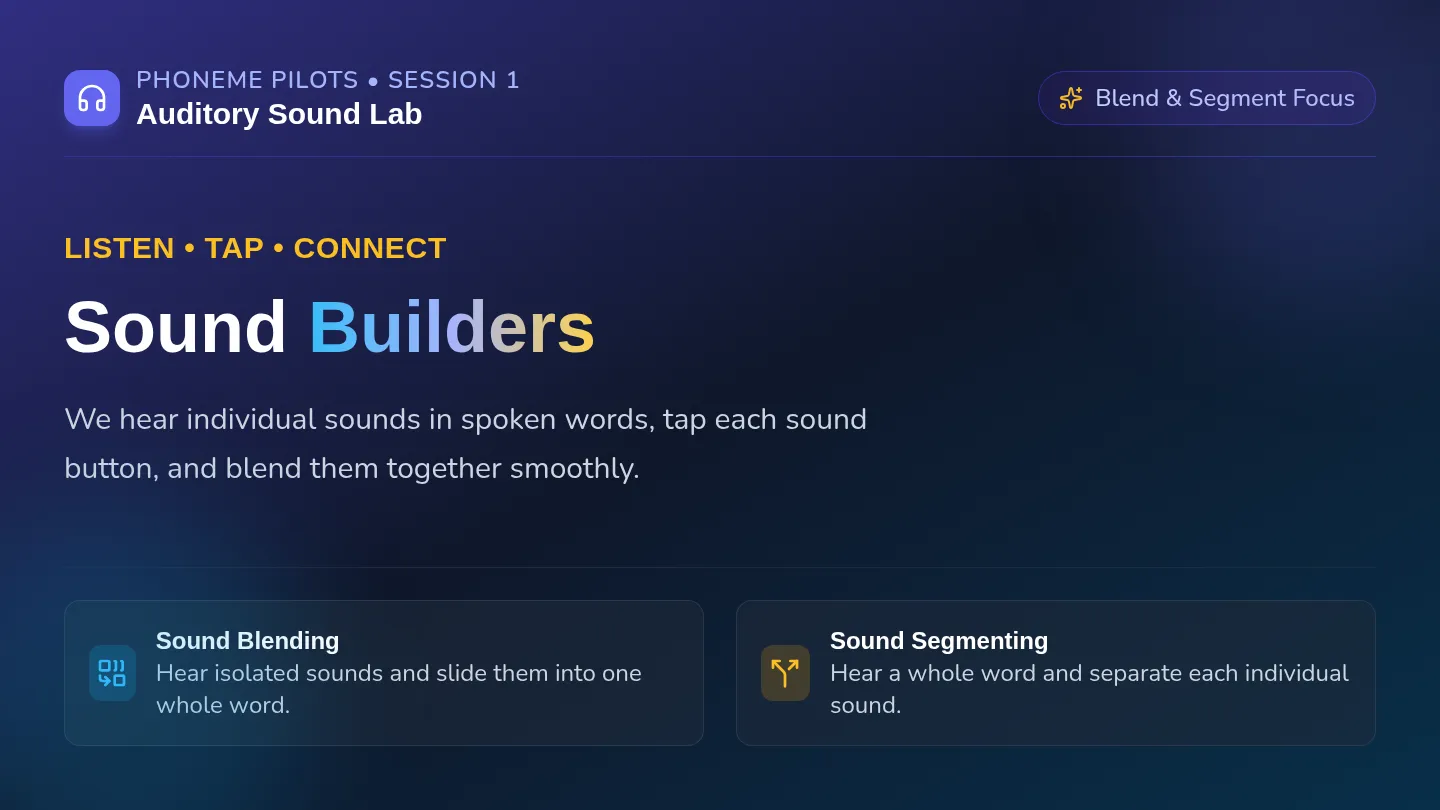
1. Phonemic Awareness Listening Ear / Sounds
Sounds only in spoken words (/c/-/a/-/t/). No print!
A B 2. Phonics Alphabet Blocks / Print
Mapping sounds (phonemes) to letters (graphemes).
3. Fluency Smooth Reading Car
Accuracy (95%+), Rate (WCPM), and Prosody.
4. Vocabulary Growing Plant / Blossoms
Words blossom into meaning. Focus on Tier 2 words.
5. Comprehension Puzzle Connecting
Puzzle pieces connect to construct meaning from text.
Core Reading Models: Visuals & Equations
High-Yield SoR
The Simple View of Reading Gough & Tunmer
/a/t/ Decoding
×
Language Comp.
=
Reading Comp.
Multiply, Don't Add: \(D \times LC = RC\). If either component equals 0, reading comprehension equals 0!
*Decoding = print recognition; Language Comprehension = oral listening comprehension.
Scarborough's Reading Rope (2001) Braided Strands
Language Comprehension → Increasingly Strategic
• Background Knowledge
• Vocabulary (Breadth)
• Language Structures
• Verbal Reasoning
• Literacy Knowledge (Print concepts)
Word Recognition → Increasingly Automatic
• Phonological Aware.
• Decoding (Phonics)
• Sight Recognition (Orthographic mapping)
Skilled Reading Fluent execution of word recognition & text comprehension
Emergent Literacy Instruction: Print & Oral Language
Early Reader Prep
Concepts of Print (Marie Clay)
- Directionality: Left → right, top → bottom.
- Return Sweep: Sweeping back to start of next line.
- Book Handling: Front/back cover, title, spine.
- Word vs. Letter: Spaces separate words.
Test Cue: Assessed by asking child "Show me where to start reading."
Oral Language Development
- Dialogic Reading: Interactive PEER loop (Prompt, Evaluate, Expand, Repeat).
- Language-Rich Class: Rich talk, conversational turns.
- Shared Reading: Teacher points to big book text while tracking aloud.
Key Goal: Builds receptive vocabulary and syntax schema.
Alphabet Knowledge
- Letter Naming: Strongest predictor of first-grade reading success.
- Letter Formation: Multisensory skywriting, sand trays.
- Alphabetic Principle: Letters systematically represent phonemes.
Sequence: Letter name → shape → sound.
Praxis 5205: Teaching Reading Elementary Page 1 of 3 • Models, Big 5 & Emergent Literacy
Praxis 5205
LITERACY EXAM VISUAL STUDY GUIDE
Part 2: Phonemic Awareness, CLOVER Syllables & Decoding Tools
CLOVER Visual Framework
Phonological Hierarchy • Auditory vs. Print Distinction
Exam Must-Know
Phonemic Aware. Eyes Closed / Auditory
Spoken sounds only. "Can be done in the dark."
Phonics Eyes Open / Print
Connects sounds to written graphemes (letters).
Phoneme: Smallest sound unit (/s/, /p/, /o/, /t/ = 4)
Grapheme: Letter(s) representing sound ('sh', 'igh', 'p')
Morpheme: Smallest unit of meaning ('un-' 'help' '-ful')
Phonological Hierarchy Continuum Easiest → Hardest
1 Word Level: Sentence segmentation (counting words in a spoken sentence).
2 Syllable Level: Clapping & blending syllables (e.g., /wa/-/ter/ → water).
3 Onset-Rime Level: Onset = first consonant (/b/); Rime = vowel+rest (/at/). Rhyming.
4 Phonemic Manipulation: Isolation → Blending → Segmenting → Deletion/Substitution
6 Common Syllable Types • CLOVER Framework (Visual Icons)
Visual Mnemonic
C Closed
Short Vowel (˘)
Ends in ≥1 consonant; vowel is closed in.
cat, bed, pic-nic
L Consonant-le
Final Stable
At end of word. Unaccented /l/ sound.
bub-ble, ta-ble
O Open
Long Vowel (¯)
Ends in a vowel; free to say its name.
go, so, ti-ger
V Vowel Team
Teams / Glides
2 vowels make 1 sound or glide (diphthong).
rain, speak, boat
E Silent E (VCe)
Magic E (¯)
Silent 'e' makes prior vowel say its name.
make, bike, rope
R R-Controlled
"Bossy R"
Vowel sound is controlled/distorted by 'r'.
car, bird, fern
How to Teach Decoding: Explicit Instructional Routines
Evidence-Based
4-Step Structured Decoding Routine
1
Sound-Symbol Correspondence: Teacher introduces grapheme → phoneme relationship explicitly.
2
Continuous Blending: Blending sounds without pause (/s/→/u/→/n/ → sun).
3
Decodable Connected Text: Reading controlled sentences matching taught phonics.
4
Automaticity Practice: High repetitions for orthographic mapping into sight memory.
Elkonin Sound Boxes (Multisensory):
Push counter into box per phoneme (sound), NOT letter.
sh
ee
p
('sheep' = 3 phonemes / 3 boxes)
Blend vs. Digraph:
Blend: Each sound is heard individually (bl, str, cl). Digraph: 2 letters make 1 new sound (ch, sh, th, ph).
Decode (Read): Print → Speech
Encode (Spell): Speech → Print
Praxis 5205: Teaching Reading Elementary Page 2 of 3 • Phonics, CLOVER Syllables & Decoding
Praxis 5205
LITERACY EXAM VISUAL STUDY GUIDE
Part 3: Fluency, Vocabulary, Comprehension, Assessment & Constructed Response
Scoring 4/4 Constructed Response
Fluency & Tiered Vocabulary Architecture
Bridge to Meaning
Fluency: 3 Dimensions ≥95% Accuracy Target
Accuracy
≥95% independent
Rate
WCPM norm checks
Prosody
Expression & phrasing
Fluency Strategies: Choral reading, Echo reading, Partner reading, Reader's Theater, and Repeated reading. (Avoid Round Robin!)
Beck's 3 Vocabulary Tiers Target Tier 2
Tier 1 (Basic): Everyday conversation words (dog, run).
Tier 2 (High-Utility Academic - PRIORITY): Cross-curricular words (analyze, compare, establish, formulate).
Tier 3 (Domain-Specific): Content units (photosynthesis, isotope).
Morphology: Prefixes, Latin/Greek roots, suffixes. Frayer Model: 4-quadrant organizer.
Comprehension of Text & Questioning Taxonomies
Metacognition
3 Reading Phases
- Before: Activate schema, picture walk, preview headings.
- During: Self-monitor, visualize, infer, ask questions.
- After: Summarize, synthesize, graphic organizers.
QAR Question Taxonomy
- Right There (Literal): Stated in 1 spot in text.
- Think & Search (Inferential): Clues across text.
- Author & You (Evaluative): Judgment & theme.
Text Structures
Cause/Effect
Problem/Solution
Compare/Contrast
Chronological
Assessment Matrix & Miscue Analysis (M-S-V Cues)
Diagnostic Precision
Screening: Universal benchmark (Fall/Winter/Spring) to flag risk.
Diagnostic: In-depth test pinpointing exact deficits.
Progress Monitoring: Frequent bi-weekly probes on intervention.
Summative: End-of-unit / end-of-year mastery measurement.
Independent 95-100%
Instructional 90-94%
Frustrational <90%
Running Record Miscue Analysis (M-S-V) Error Diagnosis
M = Meaning
"Does it make sense?" Reads "barn" for "stable".
S = Structure
"Does it sound right?" Grammar fits (yelled → shouted).
V = Visual
"Does it match letters?" Reads "cloud" for "could".
Praxis Gold Rule: MSV analyzes errors, but never teach students to guess words using context! Direct them to decode the print.
Diverse Learners & Constructed Response Formula
Passing Score Template
Dyslexia Support:
Neurobiological phonological deficit. Requires Structured Literacy: explicit, systematic, cumulative, multisensory (Orton-Gillingham).
English Language Learners (ELLs):
Use cognates, visual realia, pre-teach academic vocabulary, and sentence frames. Distinguish language acquisition from reading disability.
Praxis Constructed Response 3-Step Template Score 4/4
1. Identify 1 Strength & 1 Specific Need: Cite exact running record or writing sample data (e.g., struggles with VCe syllables).
2. Propose Evidence-Based Strategy: Name explicit SoR intervention (e.g., multisensory letter tiles to contrast CVC and CVCe word pairs: tap → tape).
3. Rationale & Progress Monitoring: Explain why it works (builds orthographic mapping) and monitor weekly with 1-min word probes.
Praxis 5205: Teaching Reading Elementary Page 3 of 3 • Fluency, Assessment & Constructed Response