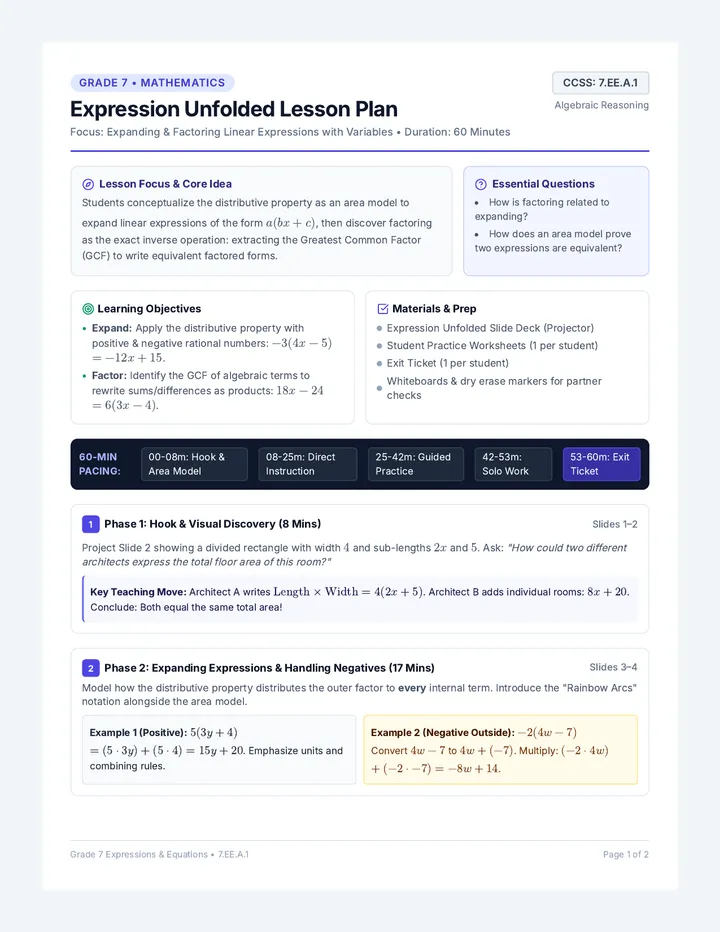
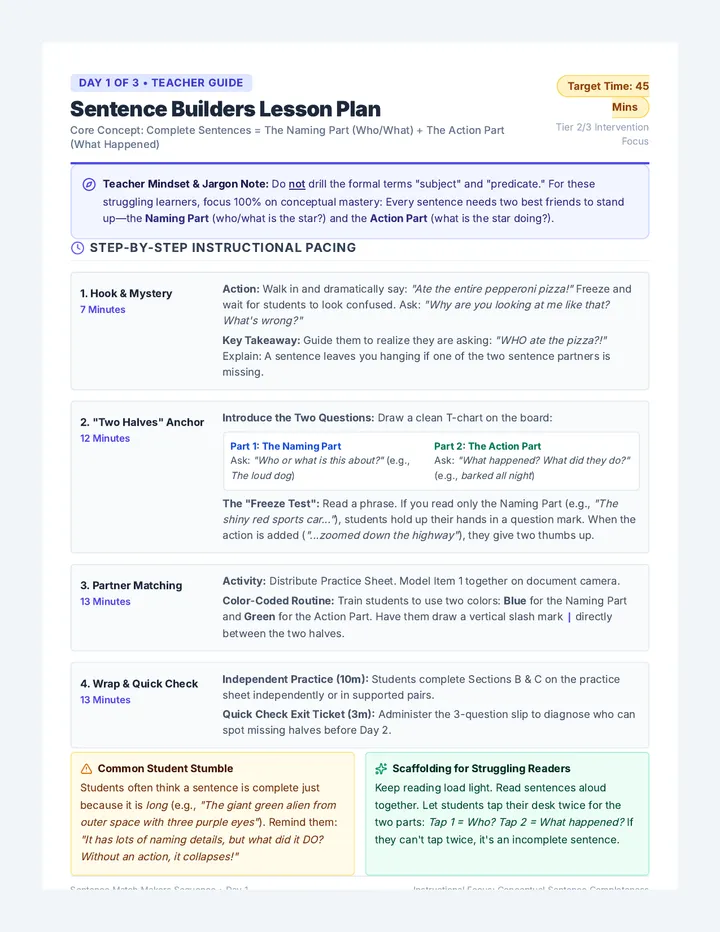
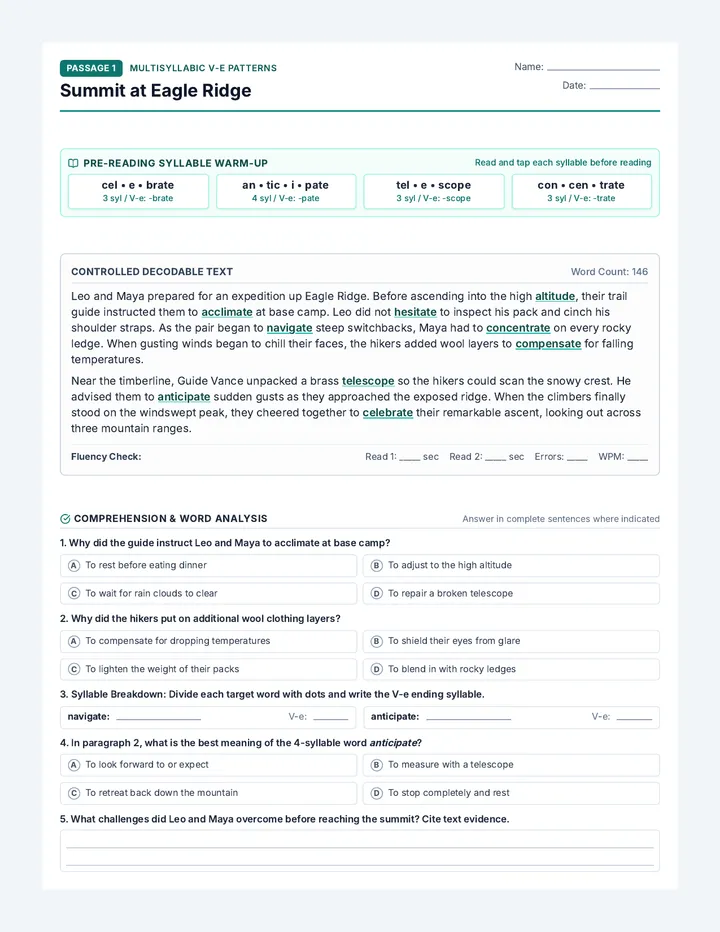
Passage Practice Test BookletNJ New Jersey Student Learning Assessment English Language Arts • Unit 1: Informational Reading Grade 7 / Grade 8 Student Name: Date: Period: Directions: Carefully read the following scientific article about biomimetic engineering. Then, turn to pages 2 and 3 to answer questions 1 through 4. Informational Text Architects of the Wind and Soil by David Sterling 1 Deep in the arid savannahs of southern Africa, colossal spires of hardened clay rise twenty feet toward the sun. Constructed by millions of tiny, blind Macrotermes termites, these mounds resemble primitive fortresses. Yet within their mud walls lies an engineering feat so sophisticated that modern architects travel thousands of miles to study it: an autonomous, self-cooling ventilation network requiring no electricity. 2 The termites' survival depends entirely on this airflow. Subterranean chambers beneath the mound house a fragile fungus—the colony's sole food source—which must be maintained at exactly 87°F (30.5°C). While exterior desert temperatures swing from freezing nights to scorching 104°F afternoons, the mound acts like an organic lung. Porous clay walls capture passing breezes, circulating fresh oxygen downward through narrow tunnels while metabolic heat vents stale carbon dioxide upward through central chimneys. 3 In the early 1990s, Zimbabwean architect Mick Pearce drew inspiration from these earthen towers to design the Eastgate Centre, a major complex in Harare. Traditional high-rises in sub-Saharan Africa depend on expensive, energy-guzzling air conditioners that buckle under recurring power outages. Pearce asked a revolutionary question: What if a modern skyscraper could regulate its own temperature using nature's blueprint? 4 Partnering with engineers at Arup, Pearce built Eastgate using regional masonry with high "thermal mass," which absorbs harsh daytime heat without transferring it indoors. At night, automated roof fans draw chilled ambient air through hollow floor slabs, cooling the interior concrete. During working hours, this stored chill naturally cools incoming air, slashing energy consumption by 35 percent. Eastgate proved that biomimicry—emulating nature’s patterns—holds the key to sustainable urban architecture. Unit 1: Informational Reading GO ON TO THE NEXT PAGE ➜ Page 1 NJSLA Practice • Unit 1: Informational Text Questions 1 – 2 Question 1 Part A What is the meaning of the word autonomous as it is used in paragraph 1 of the passage? (A) dependent upon constant human monitoring (B) operating independently without external power (C) constructed from native geological substances (D) functioning effectively only during severe storms Part B Which detail from the passage best supports the answer to Part A? (A) "colossal spires of hardened clay" (Paragraph 1) (B) "...requiring no electricity." (Paragraph 1) (C) "The termites' survival depends entirely..." (Paragraph 2) (D) "...slashing energy consumption..." (Paragraph 4) Question 2 Part A Which statement best expresses the central idea of "Architects of the Wind and Soil"? (A) African termites cultivate fragile subterranean fungi that require steady warmth. (B) Studying the self-regulating design of termite mounds inspired a breakthrough in sustainable architecture. (C) Traditional air-conditioning systems are superior to natural ventilation methods in hot regions. (D) Modern builders are replacing steel framing with unbaked clay to eliminate utility bills. Part B Which sentence from the passage best supports the answer to Part A? (A) "Subterranean chambers beneath the mound house a fragile fungus..." (Paragraph 2) (B) "Eastgate proved that biomimicry—emulating nature’s patterns—holds the key to sustainable urban architecture." (Paragraph 4) (C) "While exterior desert temperatures swing from freezing nights to scorching afternoons..." (Paragraph 2) (D) "In the early 1990s, Zimbabwean architect Mick Pearce drew inspiration from these earthen towers..." (Paragraph 3) Unit 1: Informational Reading GO ON TO THE NEXT PAGE ➜ Page 2 NJSLA Practice • Unit 1: Informational Text Questions 3 – 4 Question 3 Part A How does the author structure paragraphs 3 and 4 to develop the concept of biomimetic engineering? (A) by detailing an architectural obstacle and explaining how insect adaptations supplied the solution (B) by chronicling the timeline of African construction methods from ancient history to modern times (C) by contrasting the biological intelligence of termites with that of other social desert creatures (D) by analyzing the financial failures of early commercial ventures across sub-Saharan Africa Part B Which sentence from paragraph 3 best supports the answer to Part A? (A) "In the early 1990s, Zimbabwean architect Mick Pearce drew inspiration from these earthen towers..." (B) "Traditional high-rises in sub-Saharan Africa depend on expensive, energy-guzzling air conditioners..." (C) "Pearce asked a revolutionary question: What if a modern skyscraper could regulate its own temperature using nature's blueprint?" (D) "...Pearce built Eastgate using regional masonry with high 'thermal mass'..." Question 4 Multiple Select Based on paragraph 4, which two design strategies allow the Eastgate Centre to stay cool without traditional air conditioning? (A) Utilizing dense regional stone and concrete with high thermal mass to delay daytime heat absorption (B) Cultivating subterranean biological organisms that produce cold vapor throughout office corridors (C) Using automated rooftop fans to pull chilled night air through hollow floor slabs to pre-chill the building (D) Constructing porous outer mud barriers that expand during windstorms to block desert dust (E) Installing synthetic misting nozzles along the rooftop perimeter to lower external temperatures Unit 1: Informational Reading GO ON TO THE NEXT PAGE ➜ Page 3 NJ New Jersey Student Learning Assessment English Language Arts • Unit 2: Literary Reading Grade 7 / Grade 8 Directions: Carefully read the following short story excerpt about a lighthouse keeper’s daughter facing a sudden gale. Then, turn to pages 5 and 6 to answer questions 5 through 8. Work of Literature The Signal at Beacon Shoals by Clara Hensley 1 The salt-crusted barometer on the keeper's desk had been dropping steadily since noon, its needle shivering against the glass like a trapped moth. By twilight, the Atlantic had ceased its gentle rhythmic lapping and turned into an unbroken wall of slate-gray brine. Fourteen-year-old Maeve pressed her forehead against the chilled lantern room window, watching violent foam explode over the jagged teeth of the reef known as the Devil’s Ribs. 2 "Wind’s veering north-northeast," her father muttered, wiping grease from his calloused knuckles with an oily rag. He looked exhausted, the deep furrow between his eyebrows etched by three nights of relentless storm watch. "The coastal packet from Portland is due past the shoals tonight, Maeve. With this impenetrable fog bank rolling in, they won’t see the sweep of our Fresnel lens until their wooden hull is split on the rocks. We need the auxiliary steam horn sounding immediately." 3 Maeve’s stomach tightened into a knot. The steam horn was housed in a corrugated iron shed fifty yards down the sheer granite cliff, where breakers hammered the foundation. Operating the boiler was a grueling procedure her father had guided her through, but always with his reassuring hand hovering near the brass lever. Now, he leaned heavily against the iron rail, his left boot dragging painfully from an ankle sprained that morning. "I can walk down with you," he offered, but his pale grimace betrayed his agony. 4 "No," Maeve replied, surprised by the steady resolve in her own voice. "Stay by the light, Dad. If the lamp mantle flickers in this draft, you must keep it burning. I know the boiler sequence by heart." Sizing her oilskin coat, she stepped out into the howling gale, fighting down the slippery rock steps toward the surging ocean. 5 Inside the shuddering shed, Maeve fired the furnace, watching the copper pressure gauge climb past forty pounds until the release valve hissed its warning whisper. Gripping the heavy counterweight lever with both hands, she thought of the passengers aboard the unseen vessel plunging toward the reef. With steady precision, she drew the brass handle down. An earth-shaking blast rolled out over the roaring sea. Moments later, through the salt-streaked glass, she saw a distant mast lantern swing sharply westward into the safe waters of the open channel. Unit 2: Literary Reading GO ON TO THE NEXT PAGE ➜ Page 4 NJSLA Practice • Unit 2: Literary Text Questions 5 – 6 Question 5 Part A Which statement best expresses a central theme of "The Signal at Beacon Shoals"? (A) Severe natural disasters inevitably overpower human caution and technology. (B) Genuine courage is demonstrated when dedication to others overcomes personal hesitation. (C) Coastal lighthouse keepers should avoid mechanical signals during severe storms. (D) Inexperienced youths must always defer crucial decisions to older authorities. Part B Which sentence from the passage best supports the answer to Part A? (A) "The salt-crusted barometer on the keeper's desk had been dropping steadily since noon..." (Paragraph 1) (B) "Gripping the heavy counterweight lever with both hands, she thought of the passengers aboard the unseen vessel plunging toward the reef." (Paragraph 5) (C) "Starting the auxiliary boiler was a grueling procedure her father had guided her through..." (Paragraph 3) (D) "...watching violent foam explode over the jagged teeth of the reef known as the Devil’s Ribs." (Paragraph 1) Question 6 Part A How does Maeve’s perspective transform between paragraph 3 and paragraph 4? (A) dreading a solitary task to stepping forward with calm resolve (B) complete indifference about the ship to sudden overwhelming panic (C) resentment over her father's injury to sadness about isolation (D) confidence in her own judgment to total dependence on adults Part B Which quote best reflects this transformation in Maeve? (A) "Maeve’s stomach tightened into a knot." (Paragraph 3) (B) "'No... Stay by the light, Dad. I know the boiler sequence by heart.'" (Paragraph 4) (C) "...his left boot dragging painfully..." (Paragraph 3) (D) "Inside the shed, Maeve fired the furnace..." (Paragraph 5) Unit 2: Literary Reading GO ON TO THE NEXT PAGE ➜ Page 5 NJSLA Practice • Unit 2: Literary Text Questions 7 – 8 Question 7 Part A In paragraph 1, what does the simile "its needle shivering against the glass like a trapped moth" suggest about the atmosphere at Beacon Shoals? (A) The barometer is broken and gives misleading weather readings. (B) The impending storm brings sudden, nervous tension and impending danger. (C) The lighthouse room has become infested with nocturnal sea insects. (D) The indoor air has grown warm and suffocating due to the storm lanterns. Part B Which additional phrase from paragraph 1 creates a similar feeling of imminent hazard? (A) "on the keeper's desk" (B) "dropping steadily since noon" (C) "jagged teeth of the reef" (D) "Fourteen-year-old Maeve" Question 8 Plot Development & Resolution How does paragraph 5 resolve the primary conflict of the story? (A) Maeve overcomes her dread, manually triggers the steam horn, and successfully warns the oncoming packet away from disaster. (B) Her father manages to hobble down the stairs and rescue Maeve after the boiler safety valve ruptures. (C) The coastal packet drops anchor in the harbor before the foghorn blast can even be sounded. (D) The gale blows the fog away from the rocks, making the auxiliary steam horn unnecessary. Unit 2: Literary Reading STOP • You have reached the end of the test. Page 6
Scoring Guide Answer KeyKEY Teacher Scoring Guide & Alignment Matrix New Jersey Student Learning Assessment (NJSLA) ELA Model Grades 7–8 NJSLA Scoring Rule EBSR (Evidence-Based Selected Response): 2 pts = both Part A and Part B correct; 1 pt = Part A correct, Part B incorrect; 0 pts = Part A incorrect (regardless of Part B choice). Multiple Select: 2 pts for both correct; 1 pt for 1 correct with 0 incorrect; 0 pts otherwise. UNIT 1: INFORMATIONAL TEXT — "Architects of the Wind and Soil" Total Possible Points: 8 pts Item 1 • EBSR Vocabulary in Context CCSS / NJSLS: RI.7.4, RI.7.1 Part A: B Part B: B Rationale: In paragraph 1, "autonomous" refers to a self-operating system that functions on its own without electricity or human manipulation. Part B choice (B) directly confirms this by noting the system requires "no electricity." Distractors (A) and (C) contradict the text or focus on composition rather than autonomy. Item 2 • EBSR Central Idea & Key Evidence CCSS / NJSLS: RI.7.2, RI.7.1 Part A: B Part B: B Rationale: The central thesis connects the natural engineering of termite mounds to human innovation in the Eastgate Centre. Sentence (B) in paragraph 4 crystallizes the big idea: "Eastgate proved that biomimicry... holds the key to sustainable urban architecture." Distractor (A) is a minor supporting detail, and (C) is factually incorrect. Item 3 • EBSR Text Structure & Author's Craft CCSS / NJSLS: RI.7.5, RI.7.1 Part A: A Part B: C Rationale: Paragraph 3 presents the problem (unreliable, power-hungry AC in Harare) and frames Pearce's biomimetic query; paragraph 4 describes the solution. Part B choice (C) captures this pivotal structural turn: "What if a modern skyscraper could regulate its own temperature using nature's blueprint?" Item 4 • Multiple-Select Key Scientific Details CCSS / NJSLS: RI.7.1, RI.7.3 Choices: A, C Rationale: Paragraph 4 specifically cites: (1) using regional masonry with high thermal mass to delay daytime heat gain (A), and (2) drawing night air through hollow floor slabs with automated fans to pre-chill the building (C). Distractors (B), (D), and (E) describe fictitious or irrelevant mechanisms. Teacher Resource • NJSLA Scoring Guide CONTINUE TO PAGE 2 ➜ Page 1 of 2 Teacher Scoring Guide • Unit 2: Literary Text & Analytics Questions 5 – 8 UNIT 2: LITERATURE — "The Signal at Beacon Shoals" Total Possible Points: 8 pts Item 5 • EBSR Theme Analysis CCSS / NJSLS: RL.7.2, RL.7.1 Part A: B Part B: B Rationale: The story highlights how Maeve's internal concern for imperiled lives empowers her to conquer fear. In paragraph 5, her focus on "the passengers aboard the unseen vessel plunging toward the reef" provides the impetus to operate the dangerous lever smoothly. Item 6 • EBSR Character Perspective Shift CCSS / NJSLS: RL.7.3, RL.7.1 Part A: A Part B: B Rationale: In paragraph 3, Maeve experiences a knot of dread relying on her father's guidance; by paragraph 4, recognizing his injury, she commands him to stay and announces her readiness. Quote (B) illustrates this decisive turning point in dialogue and posture. Item 7 • EBSR Figurative Language & Mood CCSS / NJSLS: RL.7.4, RL.7.1 Part A: B Part B: C Rationale: A moth trapped behind glass flutters frantically; this simile conveys jittery atmospheric turbulence and impending crisis. Part B choice (C), "jagged teeth of the reef," amplifies this mood by personifying the rocks as predatory hazards. Item 8 • Plot Development & Resolution CCSS / NJSLS: RL.7.3, RL.7.5 Answer: A Rationale: The central narrative tension is whether the blind vessel will run aground. Paragraph 5 resolves this climax when the blast prompts the ship's mast light to swing westward into safe open channel water. NJSLA Proficiency Bands & Diagnostic Conversion (Raw Score / 16 Points) Score Range NJSLA Level Performance Descriptor Instructional Next Step 14 – 16 pts Level 5: Exceeded Superior command of multi-step textual evidence & subtle nuance. Introduce paired-passage comparative synthesis essays. 11 – 13 pts Level 4: Met Solid comprehension of central ideas, tone, and character shifts. Target Part B distractor discrimination practice. 8 – 10 pts Level 3: Approached Identifies basic ideas but struggles with nuanced textual inference. Review context clue strategies and theme vs. topic. 0 – 7 pts Level 1–2: Emerging Frequent misalignment between Part A claims and Part B citations. Small group guided annotation & sentence-level decoding. Teacher Resource • NJSLA Scoring Guide END OF GUIDE Page 2 of 2
Decimal Practice Worksheet× Decimal Multiplication Mastery Standard Vertical Algorithm • Multi-Digit Operations Math • Grade 5/6 Student Name: Date: Score: ⚡ Decimal Multiplication Strategy Reminder: 1. Multiply: Stack numbers to the right and multiply as whole numbers. 2. Count Places: Count the total decimal places in both factors. 3. Place Decimal: Move the decimal point that many places from the right. PART 1: 2-DIGIT × 2-DIGIT PROBLEMS Problems 1 & 2 Problem 1 4.8 × 2.3 4.8 × 2.3 Final Answer Decimal places in answer: _____ Problem 2 5.7 × 4.6 5.7 × 4.6 Final Answer Decimal places in answer: _____ PART 2: 3-DIGIT × 2-DIGIT PROBLEMS Problem 3 of 5 Problem 3 5.28 × 2.4 (3 digits × 2 digits) 5.28 × 2.4 Final Answer Decimal places in answer: _____ Decimal Multiplication Practice CONTINUE TO PAGE 2 ➜ Page 1 of 2 Decimal Multiplication Mastery • Continued Problems 4 & 5 Problem 4 41.8 × 7.3 (3 digits × 2 digits) 41.8 × 7.3 Final Answer Decimal places in answer: _____ PART 3: 3-DIGIT × 3-DIGIT CHALLENGE Problem 5 of 5 Problem 5 2.64 × 5.18 (3 digits × 3 digits) 2.64 × 5.18 Final Answer Decimal places in answer: _____ Application Reasonableness Check: Estimation Estimate before computing: Round each factor in Problem 5 to the nearest whole number: 3 × 5 = 15. Does your final calculated answer make sense compared to 15? My Estimate: 15 Is my calculated answer reasonable? [ ] Yes [ ] No Decimal Multiplication Practice COMPLETED WORKSHEET Page 2 of 2
Decimal Solutions Answer KeyKEY Decimal Multiplication Answer Key & Solutions Full Vertical Standard Algorithms • Place Value Diagnostics Teacher Guide • Grade 5/6 Quick Answer Master Reference: Prob 1 (2×2)11.04 Prob 2 (2×2)26.22 Prob 3 (3×2)12.672 Prob 4 (3×2)305.14 Prob 5 (3×3)13.6752 PART 1: 2-DIGIT × 2-DIGIT DETAILED STEPS Problems 1 & 2 Problem 1 Answer: 11.04 4.8 (1 place) × 2.3 (1 place) 144 (48 × 3) + 960 (48 × 20) 11.04 (2 places) Check: Count 1 place in 4.8 + 1 place in 2.3 = 2 total places. Move decimal 2 hops left from 1104 to get 11.04. Problem 2 Answer: 26.22 5.7 (1 place) × 4.6 (1 place) 342 (57 × 6) + 2280 (57 × 40) 26.22 (2 places) Check: Count 1 place in 5.7 + 1 place in 4.6 = 2 total places. Move decimal 2 hops left from 2622 to get 26.22. PART 2: 3-DIGIT × 2-DIGIT DETAILED STEPS Problem 3 of 5 Problem 3 Answer: 12.672 5.28 (2 decimal places) × 2.4 (1 decimal place) 2112 (528 × 4) + 10560 (528 × 20) 12.672 (3 total places: 2 + 1 = 3) Key Concept Check: Notice 5.28 has two decimal places and 2.4 has one decimal place. The sum has 3 decimal places. Common student error: forgetting the zero placeholder when multiplying by 20. Teacher Solutions • Decimal Operations CONTINUE TO PAGE 2 ➜ Page 1 of 2 Decimal Multiplication Answer Key • Continued Problems 4 & 5 Solutions Problem 4 Answer: 305.14 41.8 (1 decimal place) × 7.3 (1 decimal place) 1254 (418 × 3) + 29260 (418 × 70) 305.14 (2 total places: 1 + 1 = 2) Diagnostic Note: Students adding 1254 + 29260 must take care with column alignment across the thousands and tens places. Final decimal placement is 2 places from the right. PART 3: 3-DIGIT × 3-DIGIT ADVANCED CHALLENGE Problem 5 of 5 Problem 5 Answer: 13.6752 2.64 (2 decimal places) × 5.18 (2 decimal places) 2112 (264 × 8) 2640 (264 × 10 — 1 placeholder 0) + 132000 (264 × 500 — 2 placeholder 0s) 13.6752 (4 total places: 2 + 2 = 4) 3-Tier Partial Product Breakdown: Notice row 2 requires one placeholder zero, and row 3 requires two placeholder zeros. Summing gives 136,752. Moving 4 decimal places gives 13.6752. Common Student Errors & Intervention Strategies: Lining Up Decimals: Students often try to align decimals vertically as in addition. Remedy: Multiply as whole numbers right-aligned, then place the decimal at the very end. Dropping Placeholder Zeros: Forgetting zeros in partial products shifts place values. Remedy: Highlight mandatory placeholder zeros in rows 2 and 3. Counting from the Left: Moving the decimal from the beginning rather than counting from the rightmost digit. Remedy: Teach students to "hop" inward starting at the far right. Teacher Solutions • Decimal Operations END OF KEY Page 2 of 2
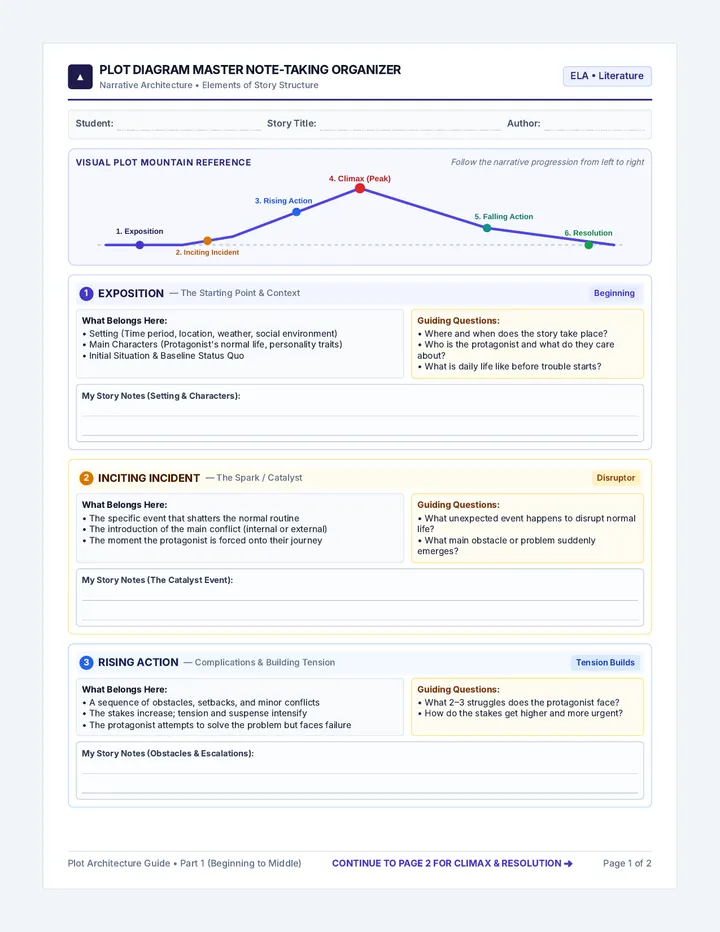
Plot Mountain Graphic Organizer▲ Plot Diagram Master Note-Taking Organizer Narrative Architecture • Elements of Story Structure ELA • Literature Student: Story Title: Author: Visual Plot Mountain Reference Follow the narrative progression from left to right 1. Exposition 2. Inciting Incident 3. Rising Action 4. Climax (Peak) 5. Falling Action 6. Resolution 1 Exposition — The Starting Point & Context Beginning What Belongs Here: • Setting (Time period, location, weather, social environment) • Main Characters (Protagonist's normal life, personality traits) • Initial Situation & Baseline Status Quo Guiding Questions: • Where and when does the story take place? • Who is the protagonist and what do they care about? • What is daily life like before trouble starts? My Story Notes (Setting & Characters): 2 Inciting Incident — The Spark / Catalyst Disruptor What Belongs Here: • The specific event that shatters the normal routine • The introduction of the main conflict (internal or external) • The moment the protagonist is forced onto their journey Guiding Questions: • What unexpected event happens to disrupt normal life? • What main obstacle or problem suddenly emerges? My Story Notes (The Catalyst Event): 3 Rising Action — Complications & Building Tension Tension Builds What Belongs Here: • A sequence of obstacles, setbacks, and minor conflicts • The stakes increase; tension and suspense intensify • The protagonist attempts to solve the problem but faces failure Guiding Questions: • What 2–3 struggles does the protagonist face? • How do the stakes get higher and more urgent? My Story Notes (Obstacles & Escalations): Plot Architecture Guide • Part 1 (Beginning to Middle) CONTINUE TO PAGE 2 FOR CLIMAX & RESOLUTION ➜ Page 1 of 2 Plot Diagram Master Note-Taking Organizer • Continued Stages 4 – 6 & Theme Analysis 4 Climax — The Turning Point & Peak Tension Highest Stakes What Belongs Here: • The peak moment of emotional intensity or physical action • The ultimate confrontation with the primary conflict/antagonist • A crucial choice or realization that permanently changes everything Guiding Questions: • What is the most intense, suspenseful moment? • What decisive action does the protagonist take? My Story Notes (The Decisive Turning Point): 5 Falling Action — Unraveling the Aftermath Tension Eases What Belongs Here: • The immediate consequences of the climactic showdown • Loose ends begin to be tied up; secondary subplots resolve • Tension steadily subsides as characters process the change Guiding Questions: • What happens immediately after the climax? • How do the characters react to the outcome? My Story Notes (Aftermath & Reactions): 6 Resolution / Denouement — The New Normal & Closure Closure What Belongs Here: • A new sense of equilibrium / status quo is established • Final outcome of the main character (how they have grown/changed) • The deeper theme or moral of the story is brought to light Guiding Questions: • How has the protagonist transformed since the beginning? • What lasting truth or lesson did the journey reveal? My Story Notes (Final Outcome & Character Growth): Story Synthesis: Conflict & Theme Connect the parts to the whole Primary Type of Conflict: [ ] Character vs. Character [ ] Character vs. Self [ ] Character vs. Nature [ ] Character vs. Society Specific Conflict: Theme (The Author's Core Message): State as a complete sentence, not just one word: Plot Architecture Guide • Part 2 (Peak to Resolution) ORGANIZER COMPLETED Page 2 of 2
Plot Architecture Teacher GuideTEA Plot Architecture Teacher Guide & Exemplar Model Instructional Script • Exemplar Notes Based on "The Signal at Beacon Shoals" Teacher Reference Teaching Note Guide students to view plot not merely as a list of sequential events, but as a dynamic engine driven by conflict, character choices, and emotional stakes. Use the anchor model below to demonstrate high-quality textual note-taking. EXEMPLAR NOTES: "The Signal at Beacon Shoals" by Clara Hensley Part 1: Stages 1 – 3 1 Exposition — Baseline Context & Characters Paragraphs 1 – 2 Exemplar Student Notes: • Setting: Isolated Beacon Shoals lighthouse on the rocky Maine/Atlantic coast; late afternoon turning to twilight; a violent nor'easter gale is building and thick fog is rolling in. • Characters: 14-year-old Maeve (observant, cautious, hesitant) and her father (exhausted head keeper, nursing an injured ankle from earlier inspection). • Baseline Situation: The lighthouse beacon alone cannot pierce the dense fog bank to warn approaching ships. Facilitation Tip: Have students highlight specific sensory details in the text (e.g., "barometer needle shivering like a trapped moth," "slate-gray brine") that establish mood. 2 Inciting Incident — The Catalyst Paragraph 2 Exemplar Student Notes: • The Catalyst Event: The father announces that the passenger/mail packet from Portland is due to pass the shoals at twilight. Without the auxiliary steam foghorn running, the ship will crash onto the Devil’s Ribs reef. • The Core Conflict: The steam horn must be activated immediately, but the father cannot walk down the treacherous rocky cliff due to his sprained ankle, leaving Maeve as the only one who can do it. Facilitation Tip: Emphasize that the inciting incident is NOT just the storm arriving; it is the specific announcement of the impending ship that creates the urgent deadline. 3 Rising Action — Escalating Obstacles Paragraphs 3 – 5 Exemplar Student Notes (Sequence of Complications): 1. Maeve overcomes her internal terror, refuses to let her injured father walk, and insists on going down alone. 2. She battles howling gale-force winds and stinging spray down the slippery granite cliff stairs using the iron guide rope. 3. Inside the shuddering shed, she lights the boiler kindling with trembling hands and monitors the pressure gauge as it creeps dangerously toward 45 pounds. Facilitation Tip: Ask students: "How does each successive obstacle raise the emotional or physical stakes?" Teacher Guide • Plot Architecture CONTINUE TO PAGE 2 FOR STAGES 4 – 6 ➜ Page 1 of 2 Plot Architecture Teacher Guide • Continued Stages 4 – 6 & Pitfall Diagnostics EXEMPLAR NOTES: "The Signal at Beacon Shoals" (Continued) Part 2: Stages 4 – 6 4 Climax — The Turning Point of Maximum Tension Paragraph 5 Exemplar Student Notes: • The Moment of Climax: Standing beside the hissing, highly pressurized valve, Maeve conquers her fear by focusing entirely on the lives of the imperiled passengers. She plants her boots and pulls down the heavy brass counterweight lever with steady, deliberate force. • Immediate Result: An earth-shattering blast roars out across the stormy waters. 5 Falling Action — Immediate Aftermath Paragraph 5 Exemplar Student Notes: • Unraveling Events: Looking out the salt-streaked porthole, Maeve sees the distant mast lantern of the Portland packet pivot sharply westward away from the hidden reef and into the safe, deep waters of the open channel. 6 Resolution / Denouement — The New Normal Story Conclusion Exemplar Student Notes: • Resolution & Growth: The immediate catastrophe is averted. Maeve is no longer a dependent child waiting for her father's hand on the lever; she has proven herself a capable, courageous keeper in her own right. Synthesis & Theme Model: Evaluation Criteria Conflict Classification: • External: Character vs. Nature (Maeve fighting the brutal nor'easter storm and sea). • Internal: Character vs. Self (Maeve overcoming personal hesitation and fear of boiler failure). Exemplar Theme Statement: "True courage is not the absence of fear, but the willingness to act decisively when the safety of others depends on you." Common Student Pitfalls & Teacher Interventions Common Student Error Why It Occurs Targeted Teacher Remedy Confusing Inciting Incident with Climax Students see early dramatic action as the main climax. Ask: "Does this event solve the story, or does it start the troubles?" Writing 1-Word Themes (e.g. "Bravery") Conflating a thematic topic with the author's argument. Require a complete sentence: "What is the author saying about bravery?" Skipping Falling Action Jumping straight from the peak moment to the end. Ask: "What was the immediate consequence of the climax before closure?" Teacher Guide • Plot Architecture END OF GUIDE Page 2 of 2