A teacher's answer key for the Nature's Rhythm Test, providing clear answers and grading guidance for the 10 short answer questions.
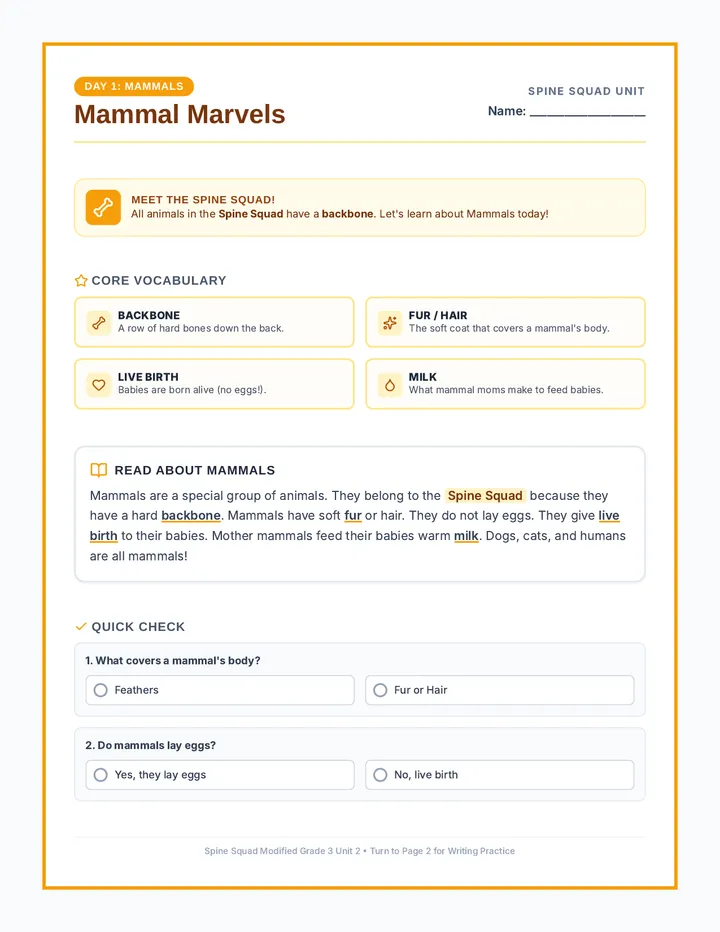
A five-day modified animal classification unit focusing on the five main vertebrate groups, designed with extensive visual support, sentence frames, and tracing options for modified learning.
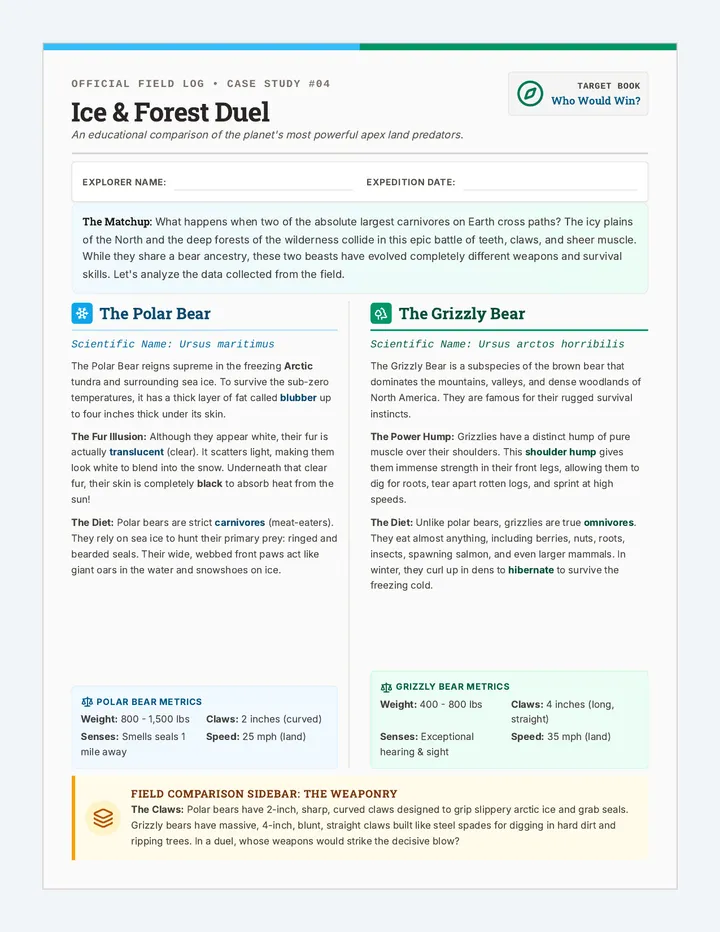
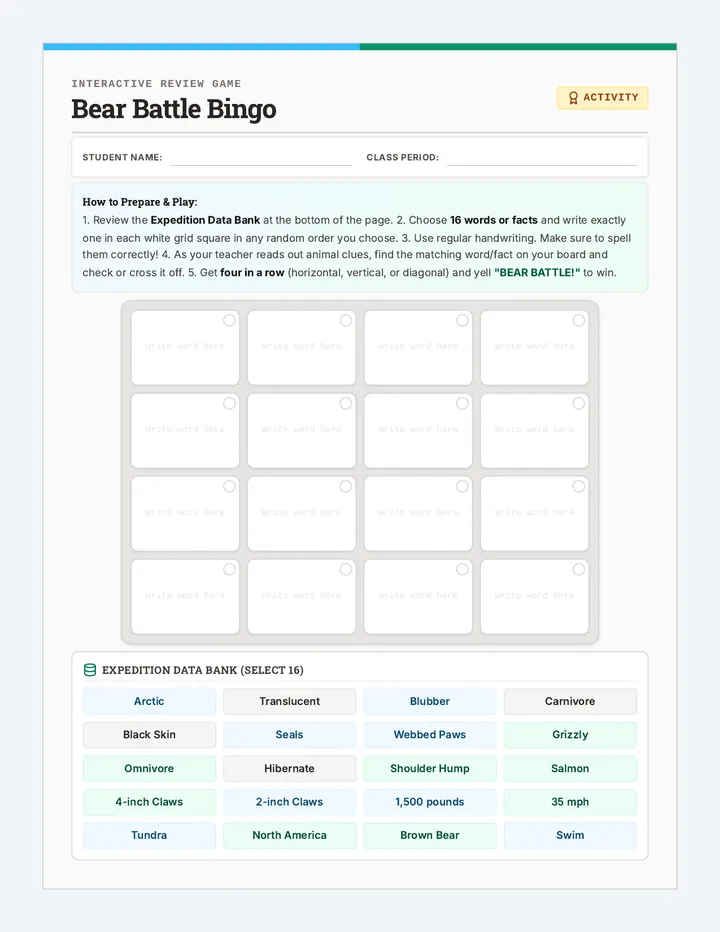
A thrilling comparison lesson focused on polar bears and grizzly bears. Students read a themed comparison passage, complete fact-retrieval questions, and play a write-in bingo review game based on the book 'Who Would Win? Polar Bear vs. Grizzly Bear'.
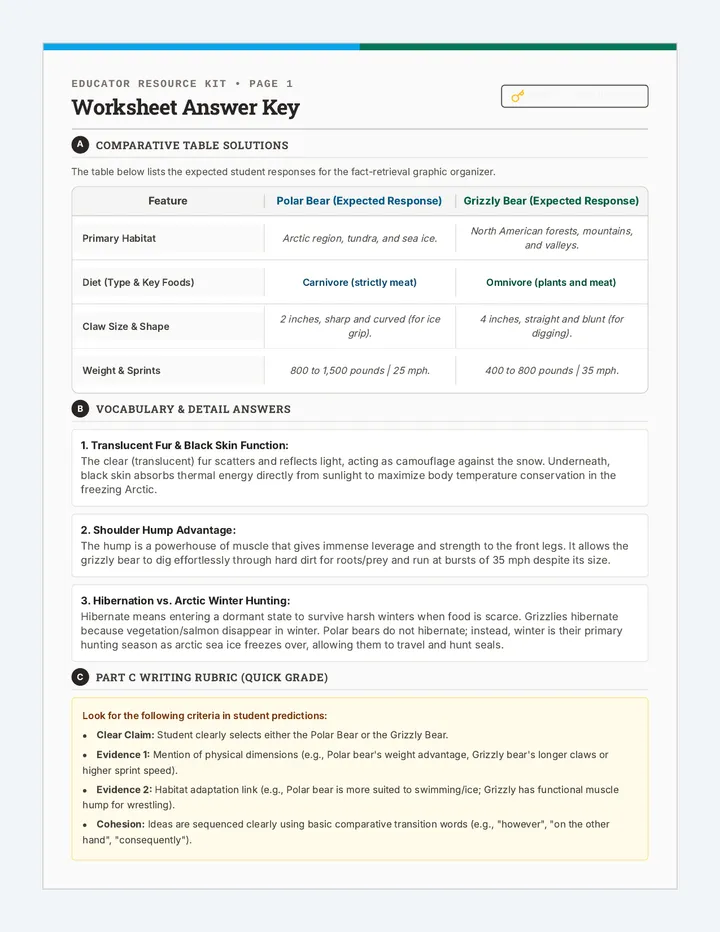
A 2-page teacher guide and answer key. Page 1 contains full answer keys and grading rubrics for the student dossier and comprehension worksheet. Page 2 consists of hosting instructions and a beautifully formatted 20-term Bingo calling sheet with ready-to-read educational clues.
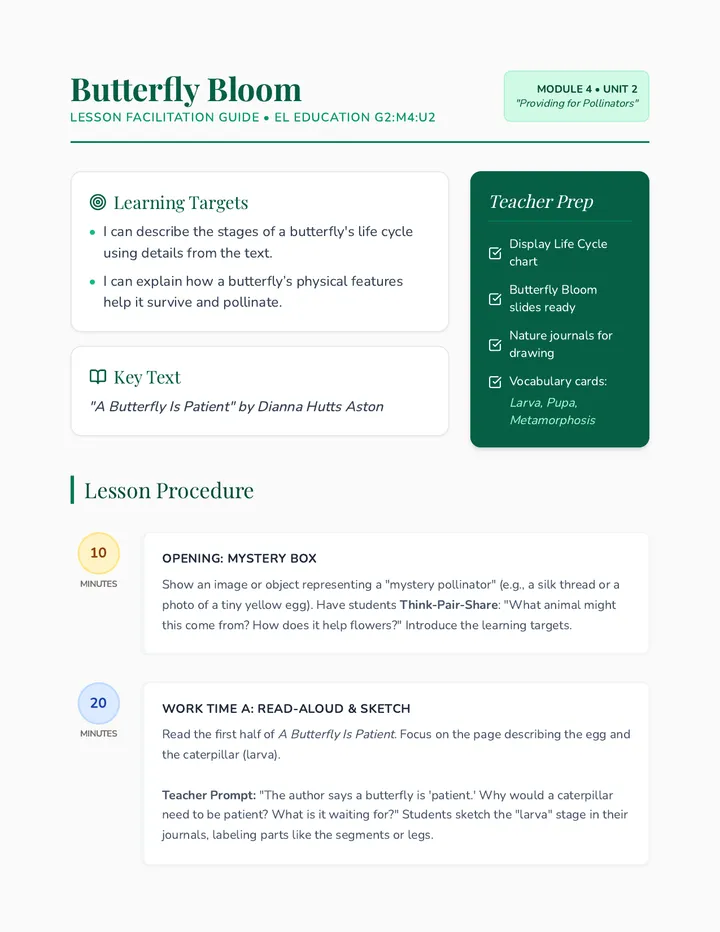
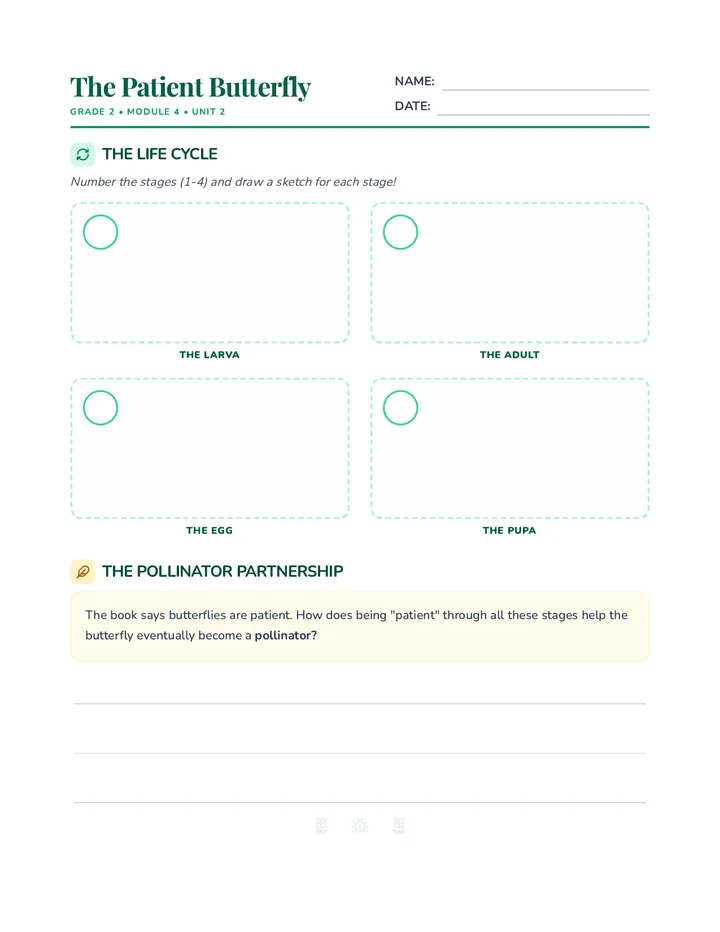
Grade 2, Module 4: 'Providing for Pollinators' focuses on the life cycles of pollinators, specifically butterflies, and how they interact with their habitats to support our environment. This sequence covers the core of Unit 2, moving from the physical characteristics and life cycles to the specific ways these insects provide for our ecosystem.
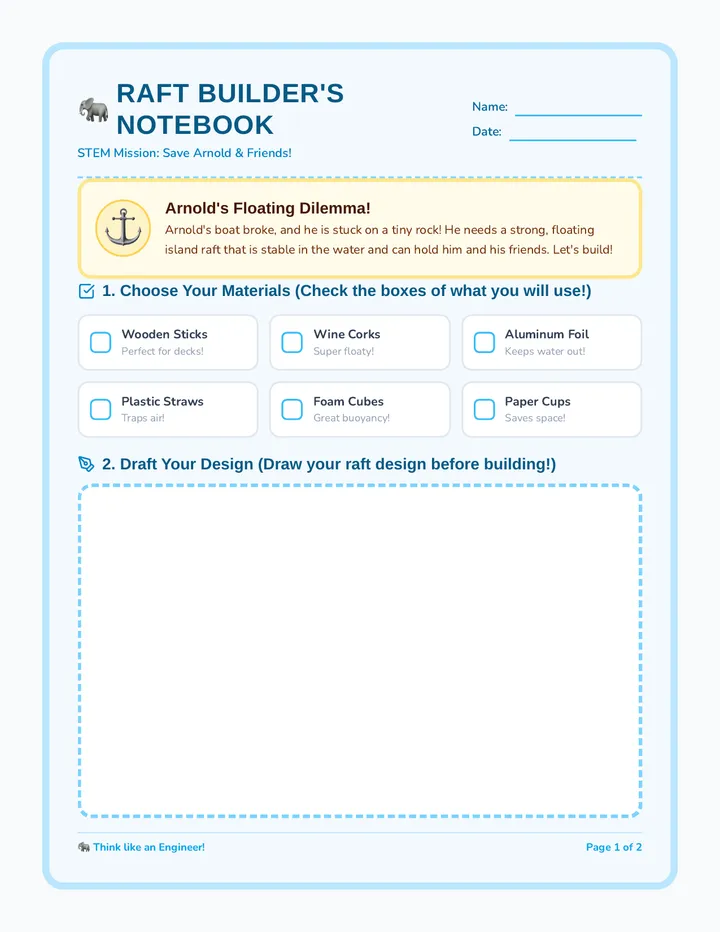
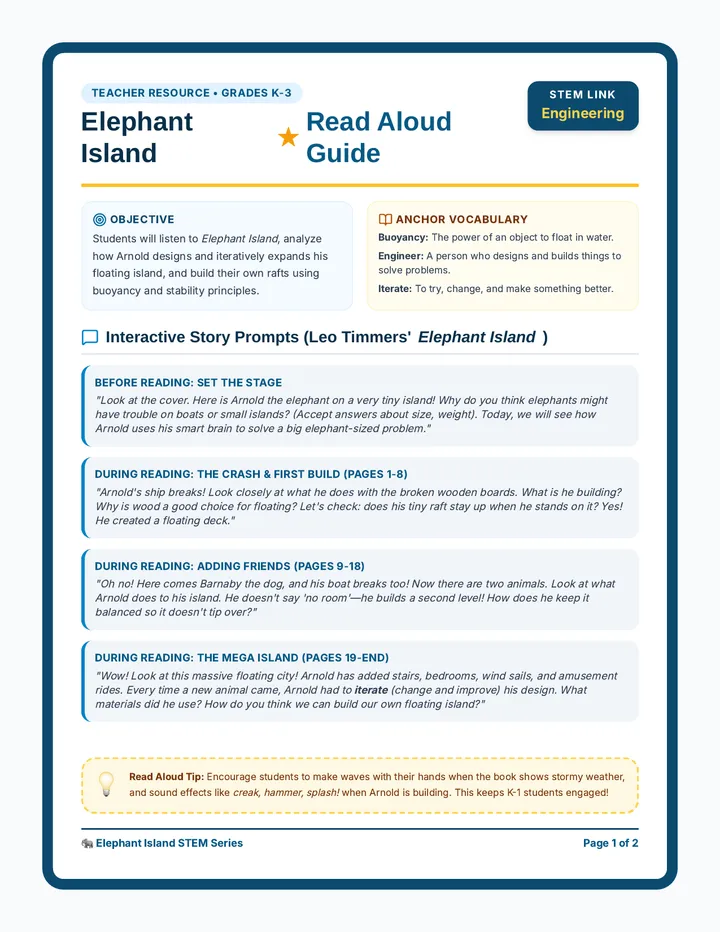
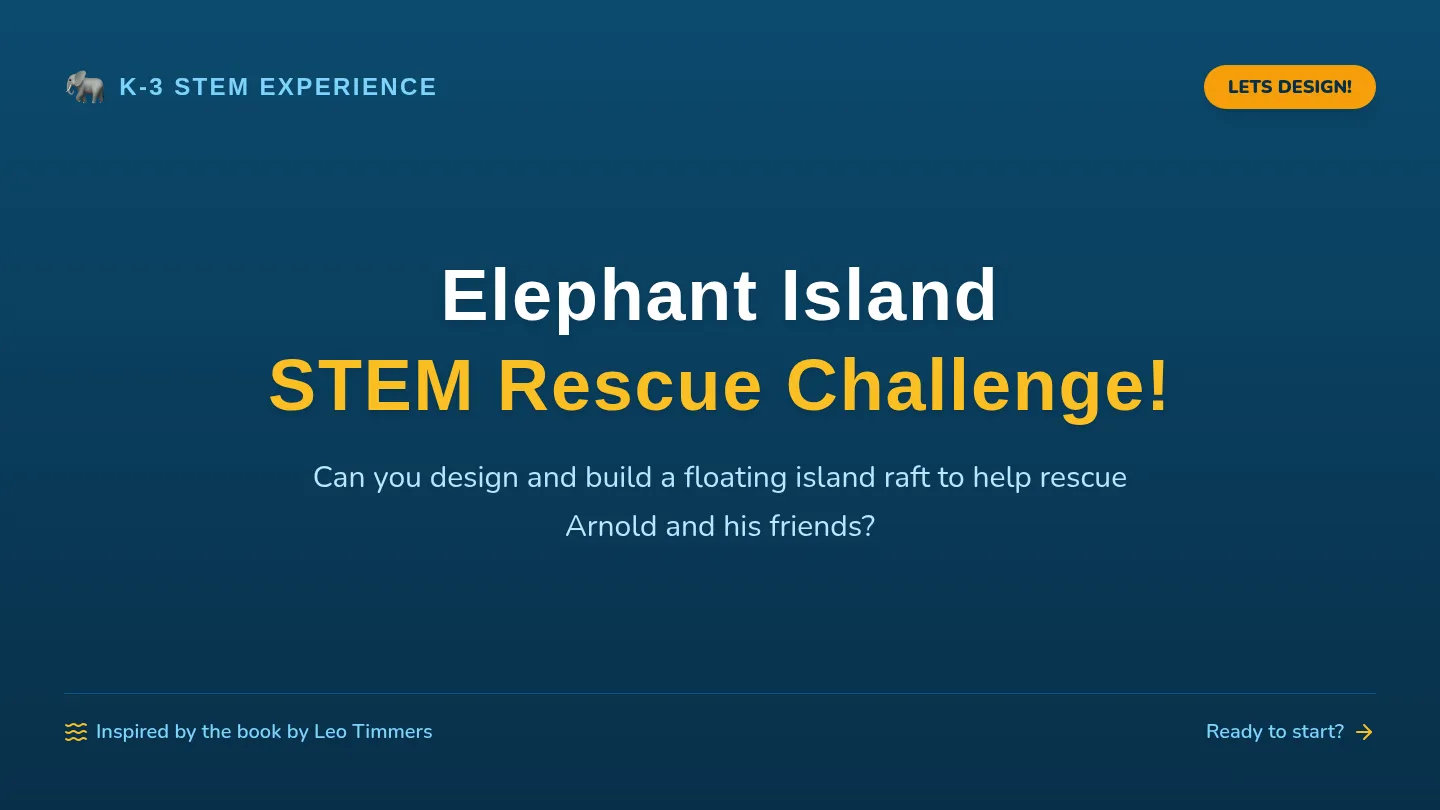
An interactive STEM challenge and read-aloud experience based on Leo Timmers' 'Elephant Island'. Students design and build floating island rafts to rescue Arnold and his friends.
A single-page student write-in Bingo board. Students select 16 terms from a provided 20-word data bank of polar and grizzly bear characteristics, write them onto a blank 4x4 grid in scrambled order, and check them off as clues are read.
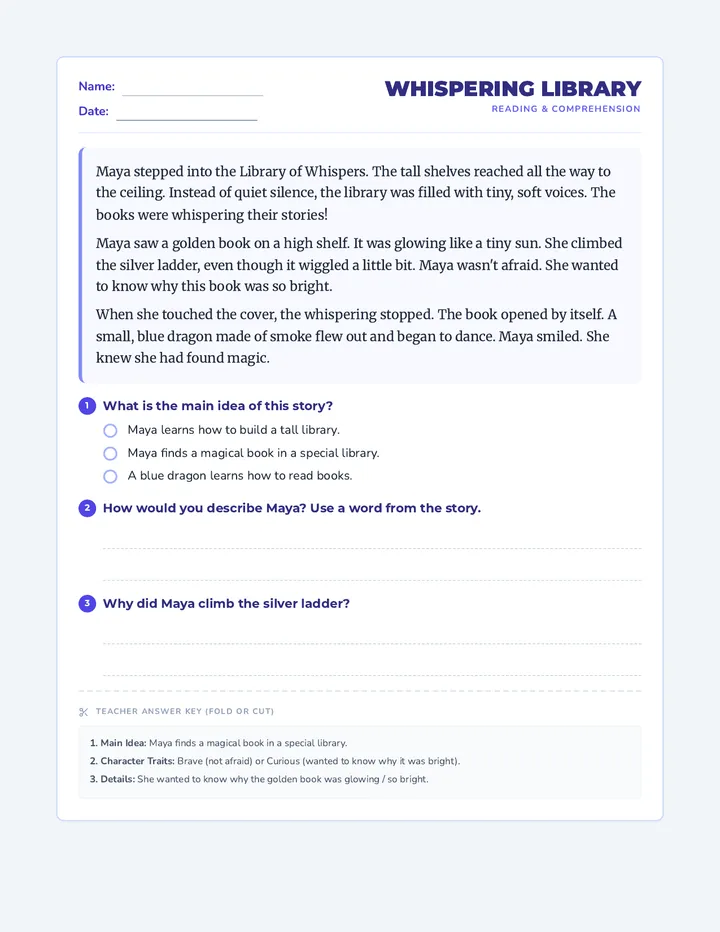
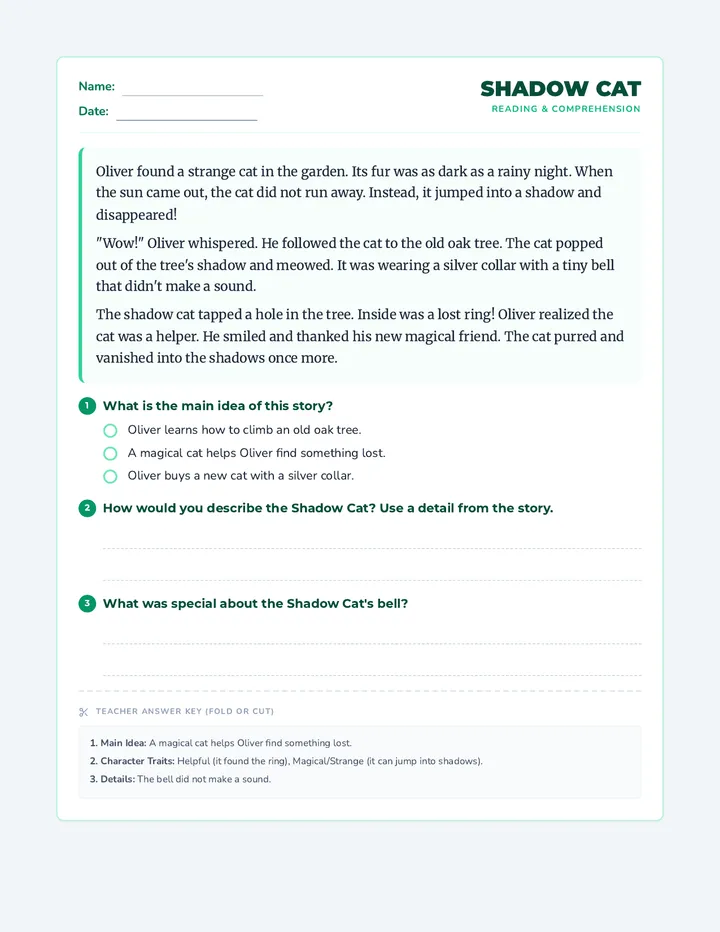
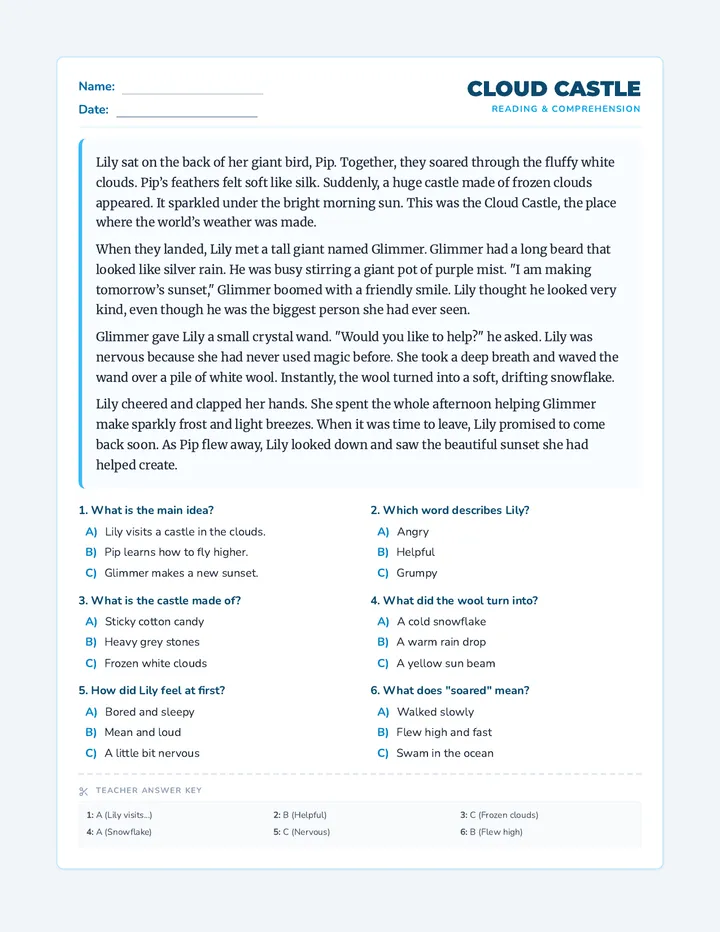
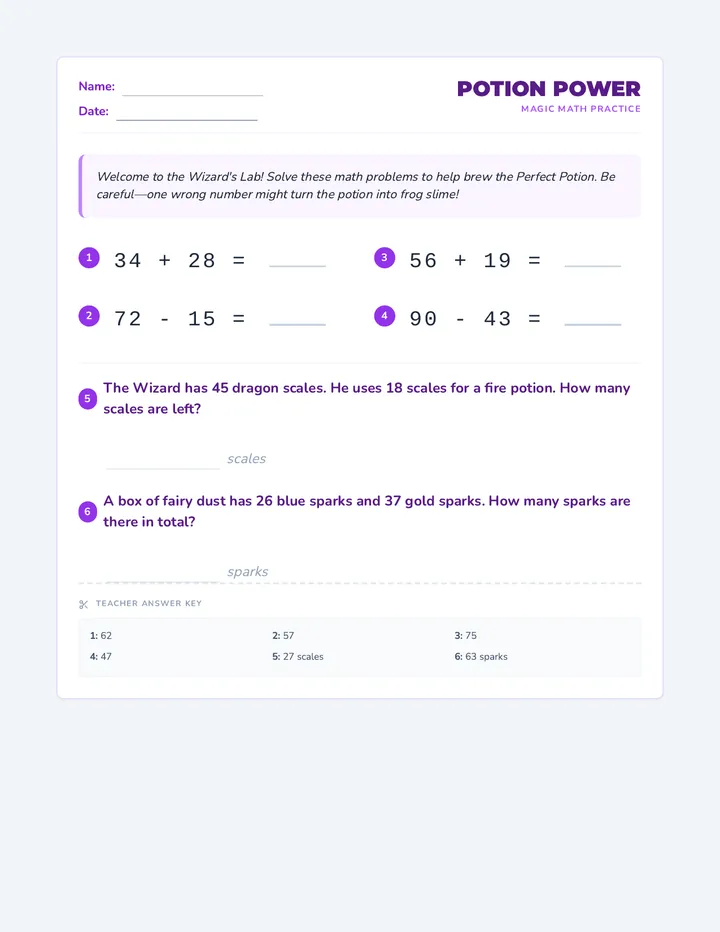
A collection of magical-themed lessons covering reading comprehension and early mathematics for primary students.
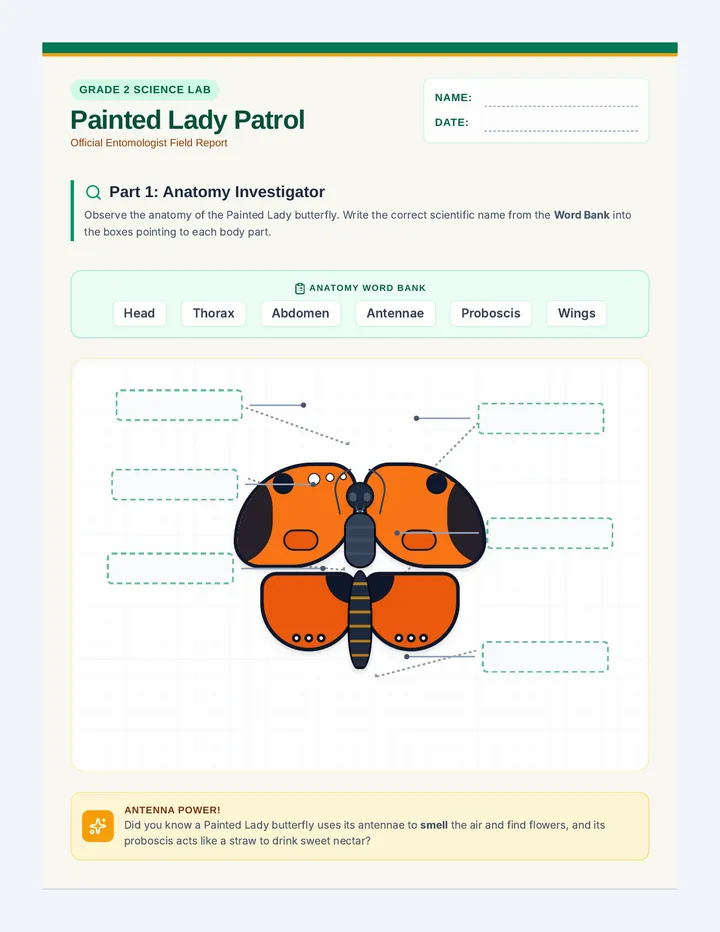
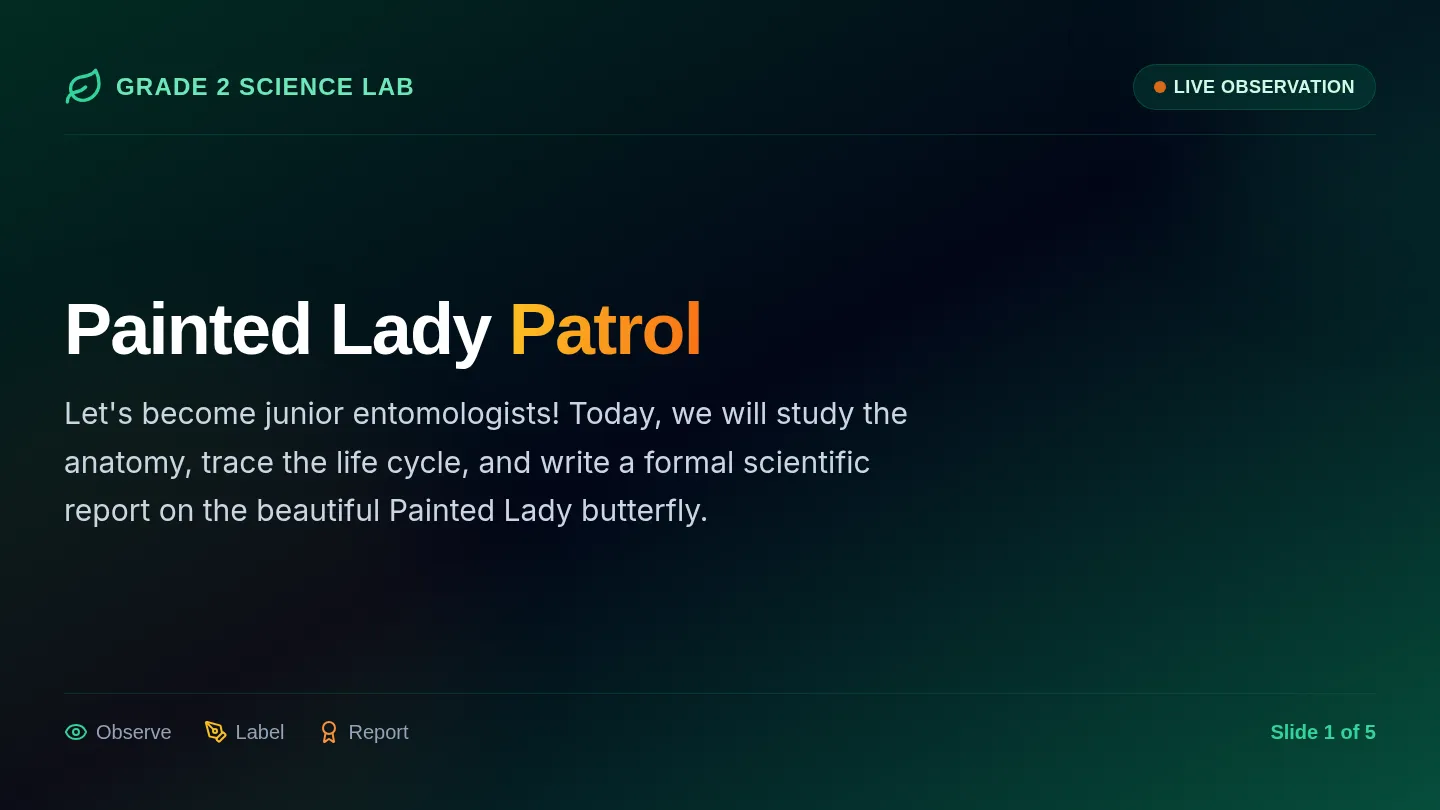
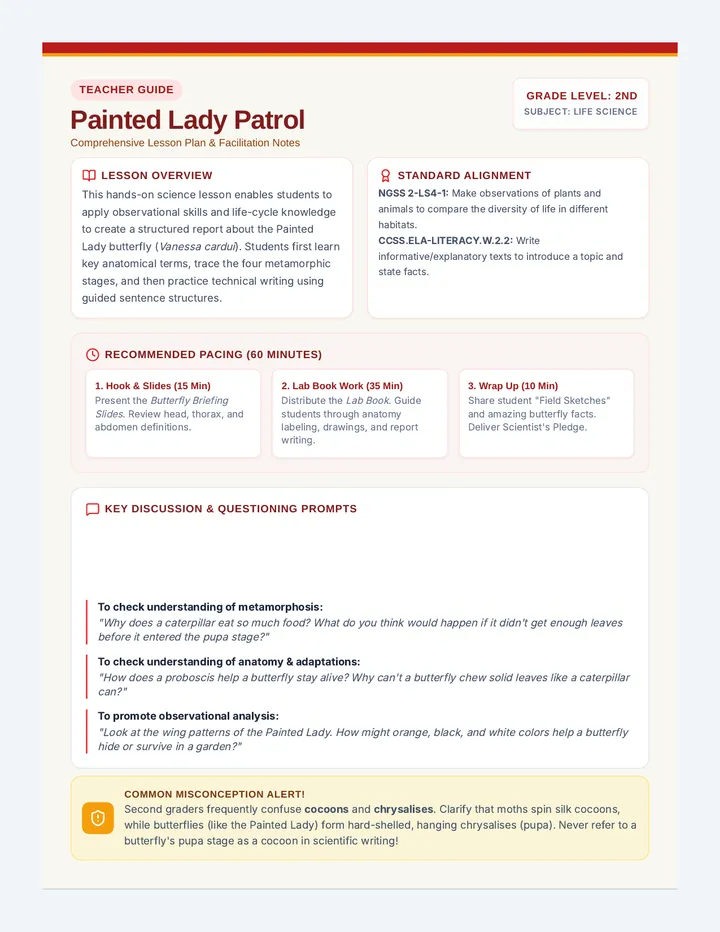
A hands-on 2nd-grade science unit where students study the Painted Lady butterfly's anatomy, trace its life cycle, and compile their findings into a guided research report. Includes interactive visual slides, a multi-page student lab book, and a detailed teacher facilitation guide with grading rubrics and answer keys.
A 2-page student comprehension dossier and comparison worksheet. Page 1 features a highly styled, informative reading passage comparing polar bears and grizzly bears with rich text features (sidebars, bold vocabulary, and captions). Page 2 consists of fact-retrieval questions, a comparative table, and a paragraph-writing prompt.
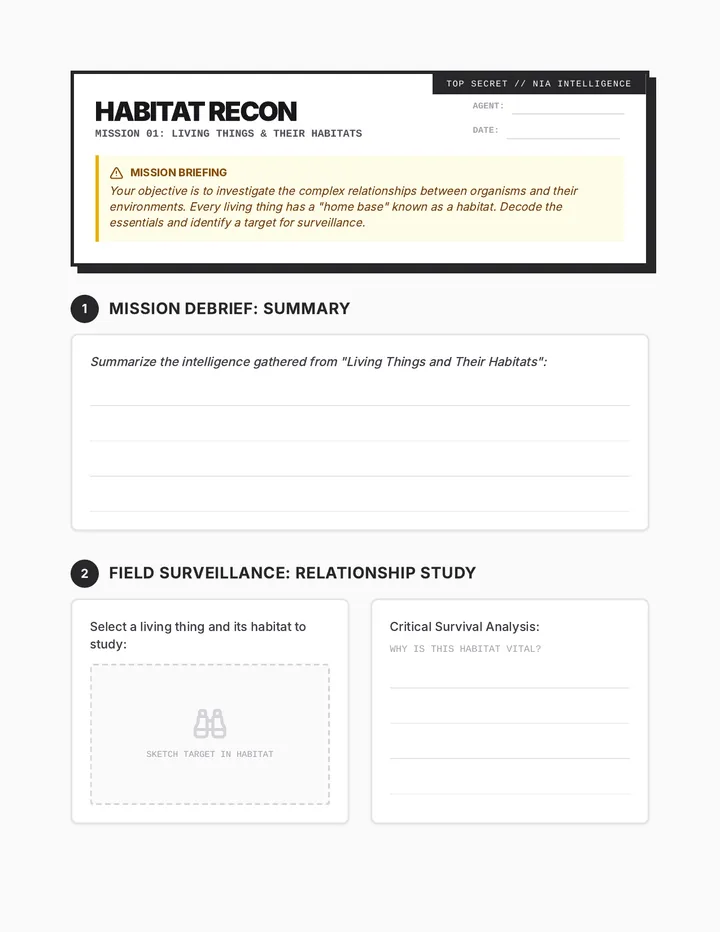
A series of secret agent-themed ecology missions where students act as Eco-Detectives for the Nature Intelligence Agency (NIA) to study habitats, food chains, and environmental impacts.
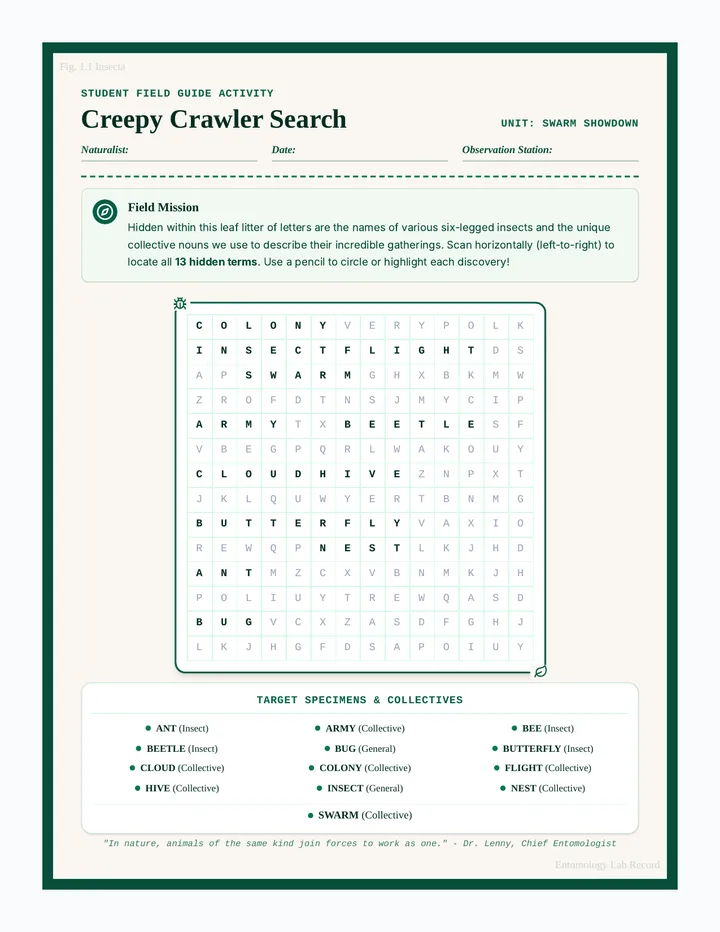
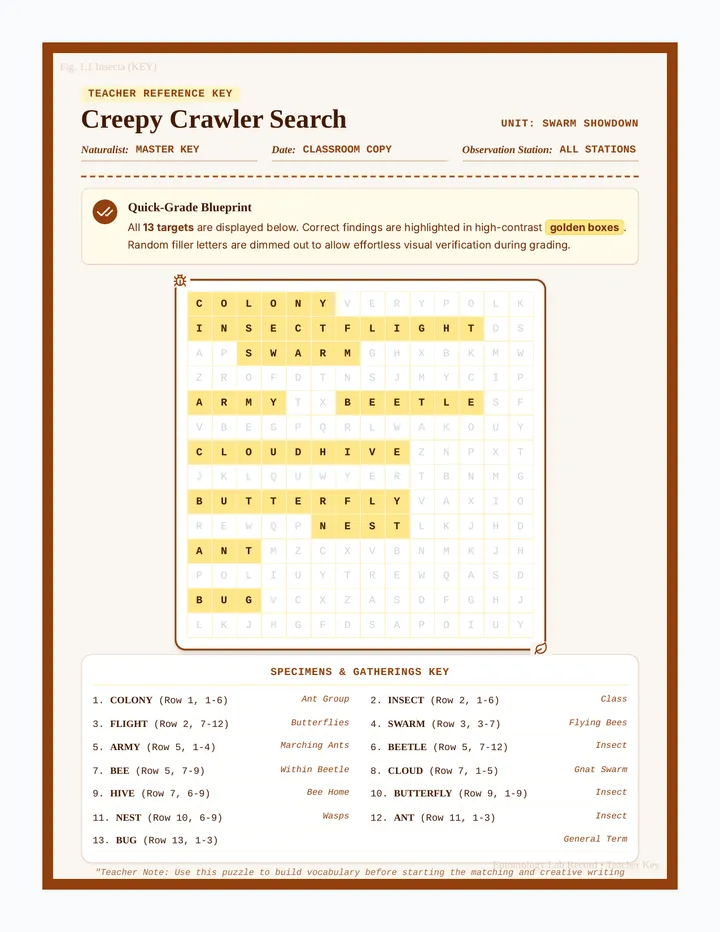
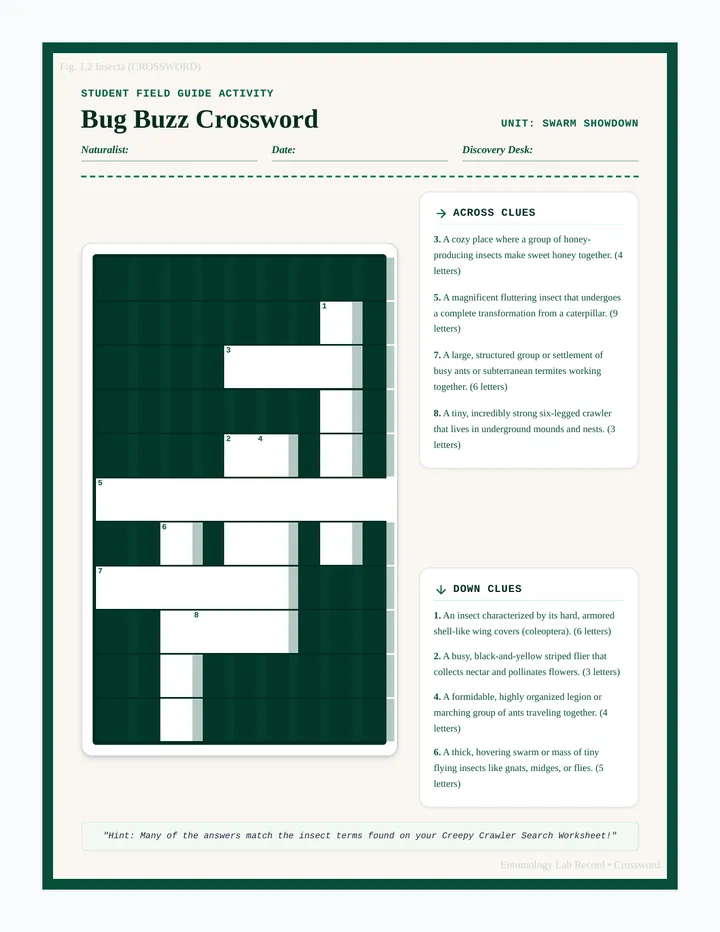
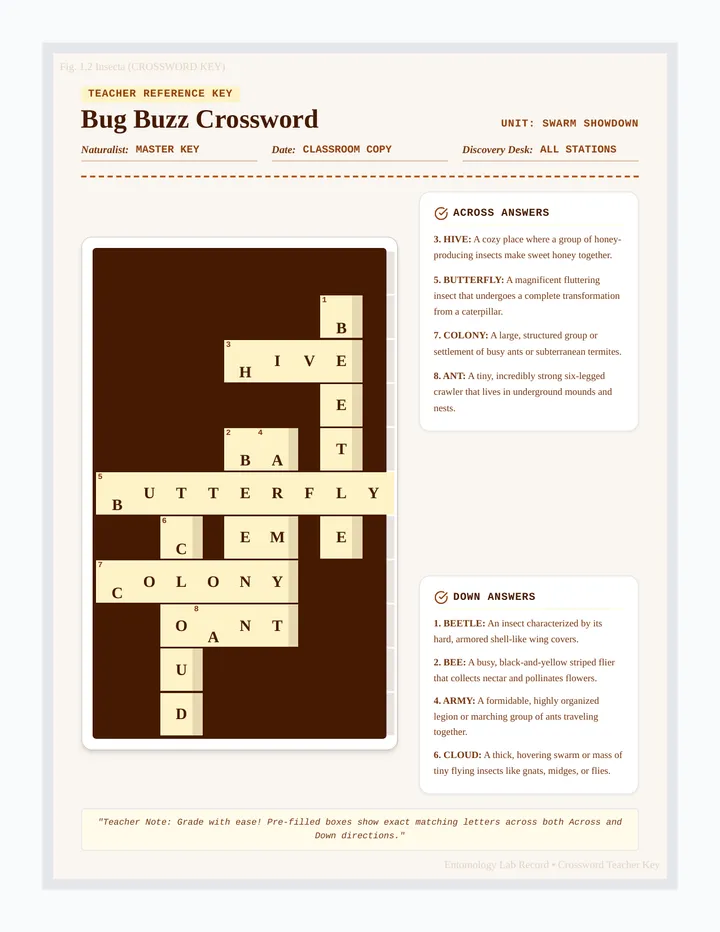
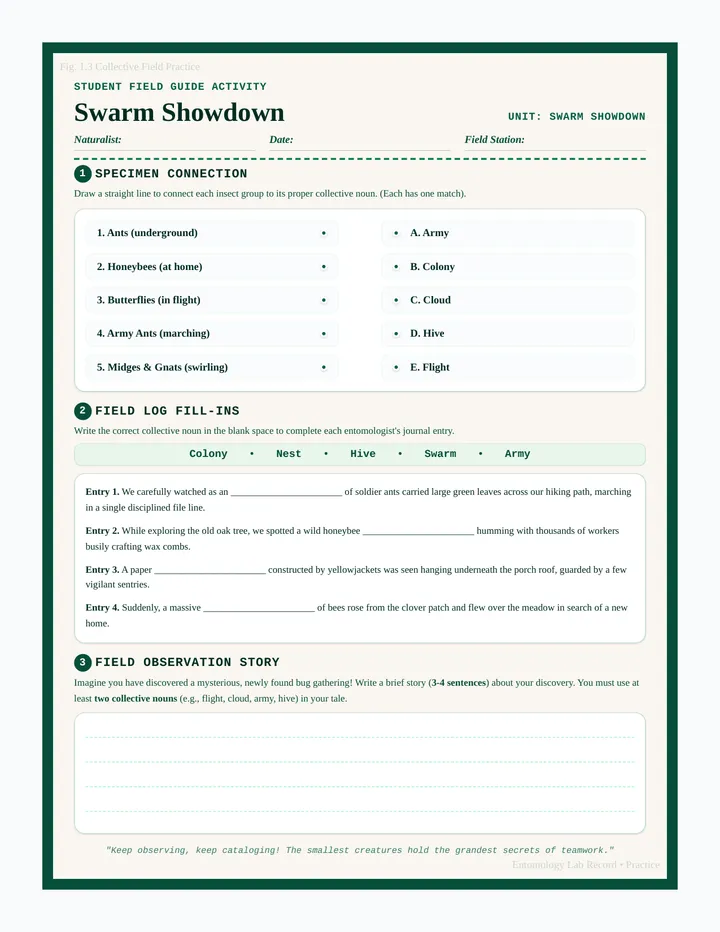
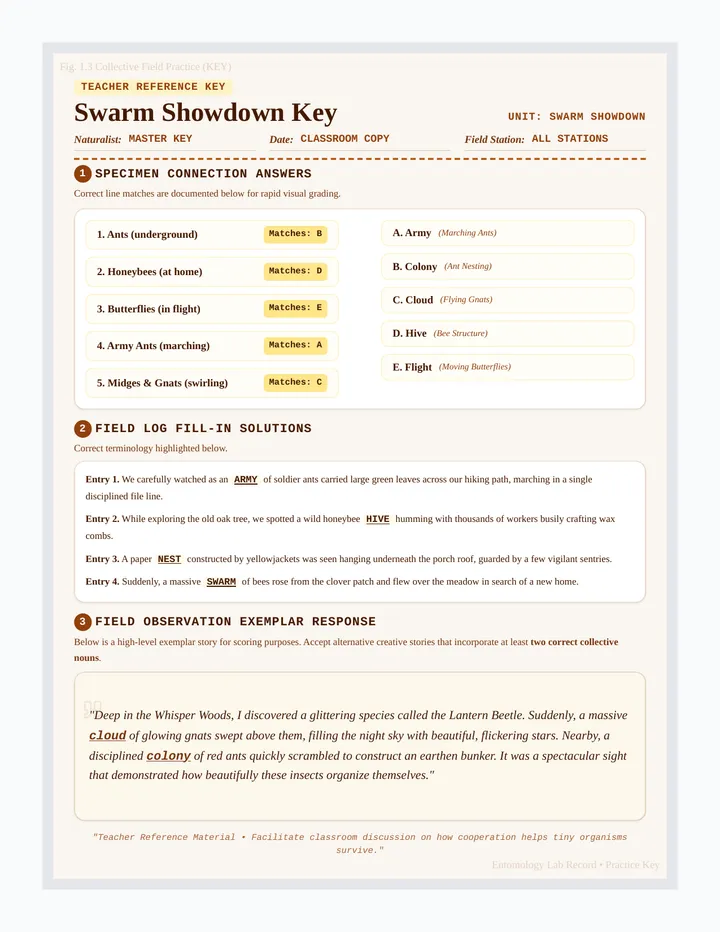
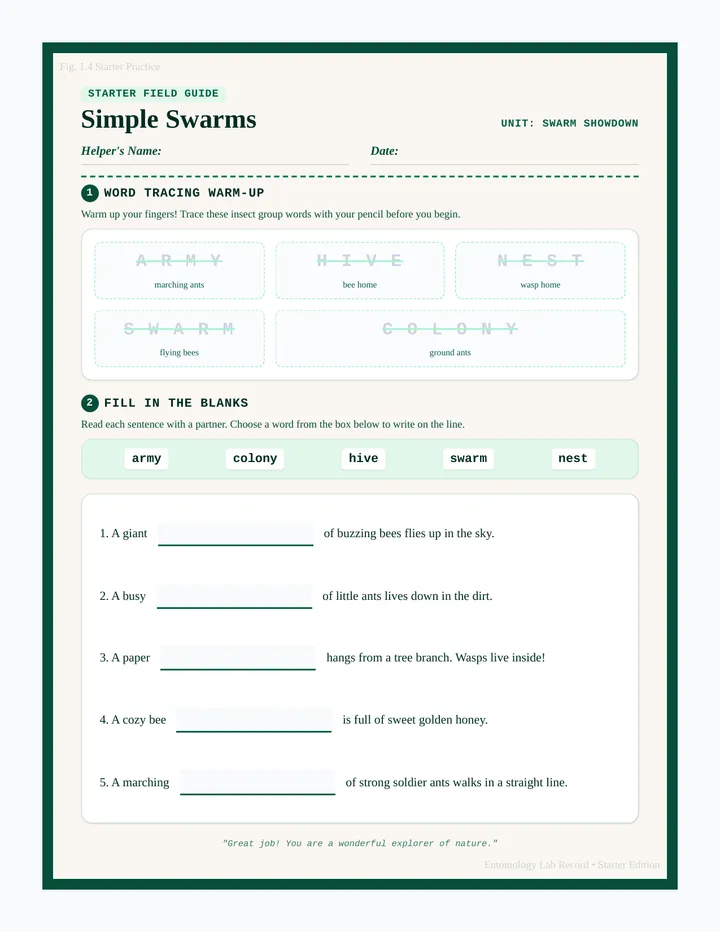
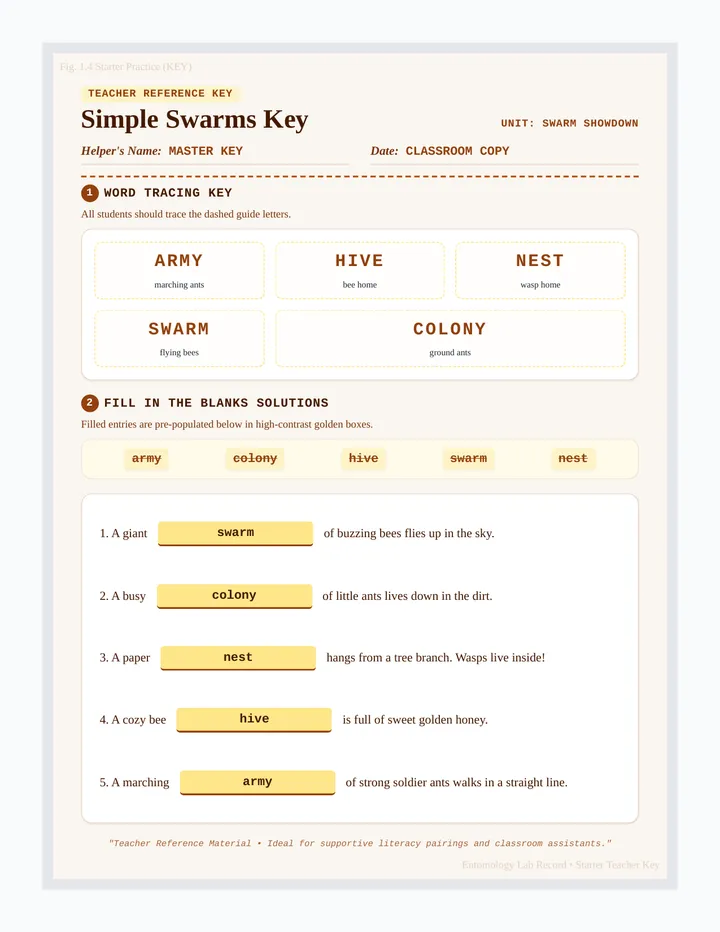
An engaging lesson on insect collective nouns and terminology, featuring a word search, crossword, and hands-on matching and writing activities exploring how bugs gather in groups.
A 5-slide visual presentation for projection in the classroom to guide the read-aloud, introduce the STEM raft challenge, show materials, and lead the final reflection.