A captivating sequence for 5th graders that compares the evolutionary history, biology, and ecological roles of sharks and dinosaurs to foster critical thinking and scientific inquiry.
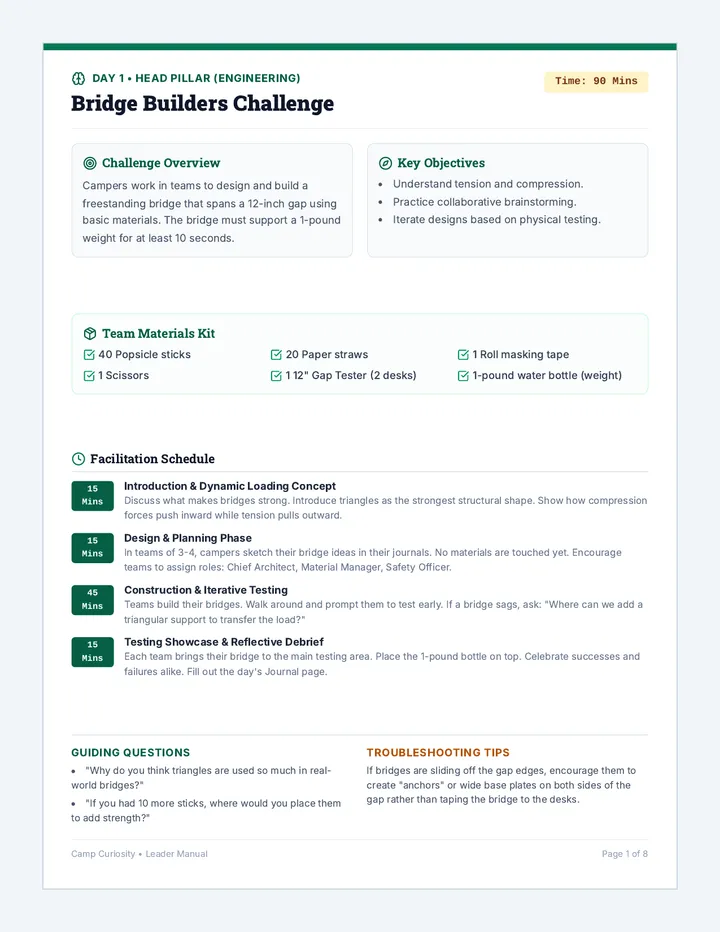
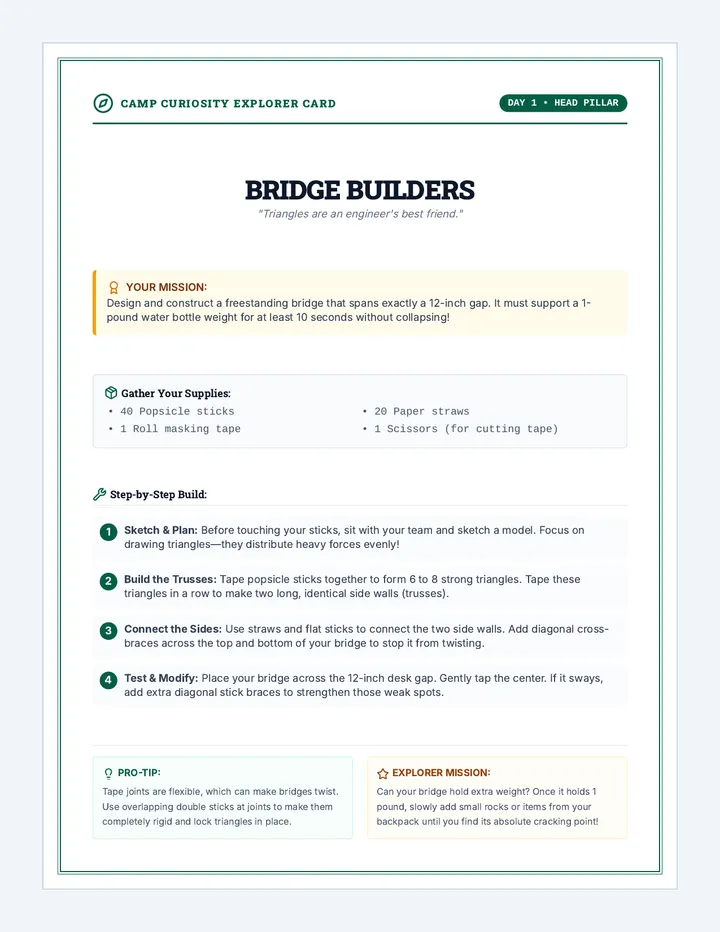
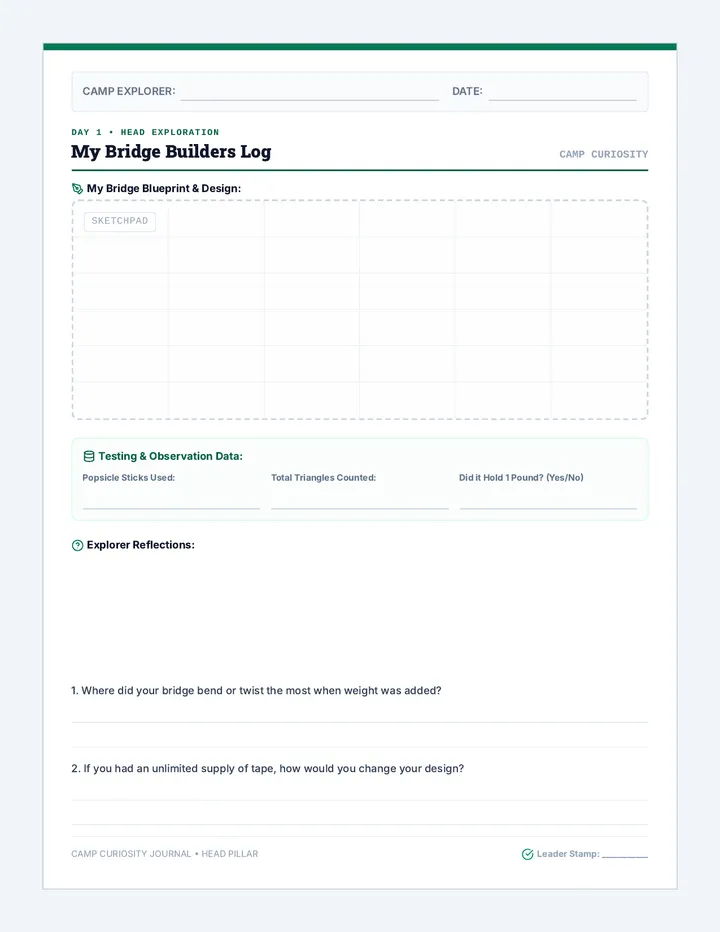
An action-packed, hands-on 8-day 4-H camp program focusing on Head, Heart, Hands, and Health. Students tackle engineering, teamwork, ecology, nutrition, and art challenges through daily active learning.
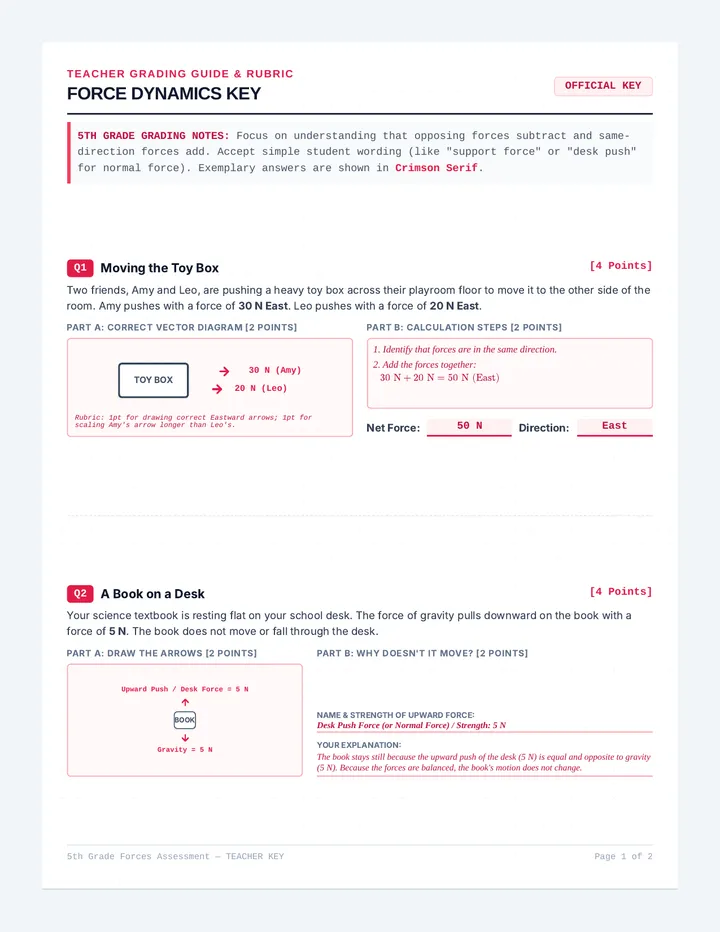
A high-rigor lesson framework focusing on deep understanding of forces, free-body diagrams, and unseen forces like friction and gravity. Contains a student assessment and a matching teacher answer key with grading rubrics.
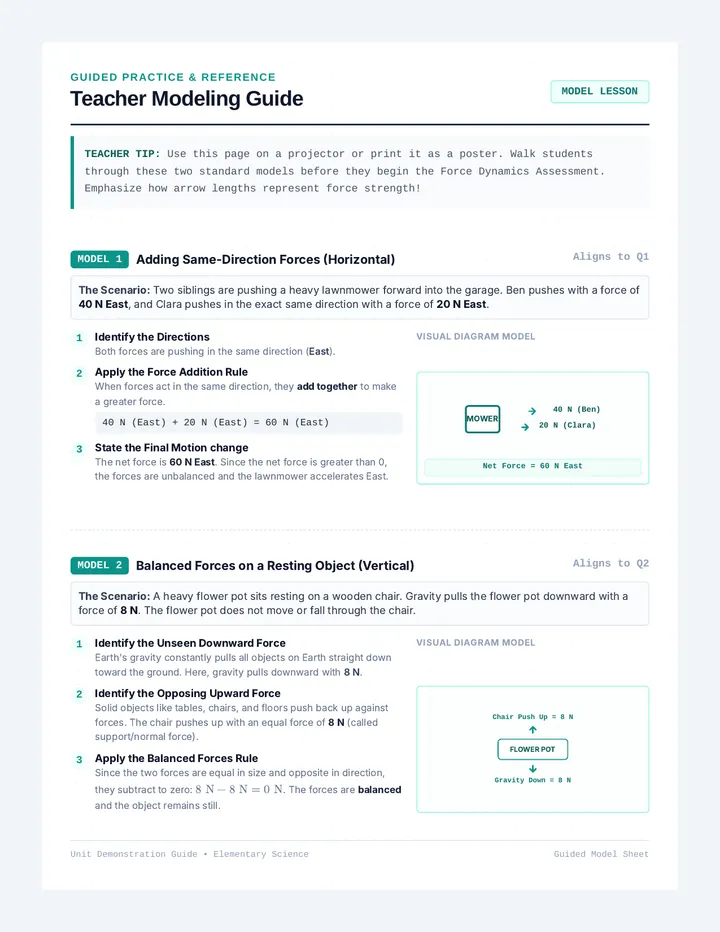
A single-page guided teaching model and reference handout that provides step-by-step demonstrations for solving horizontal net force and vertical balanced force problems.
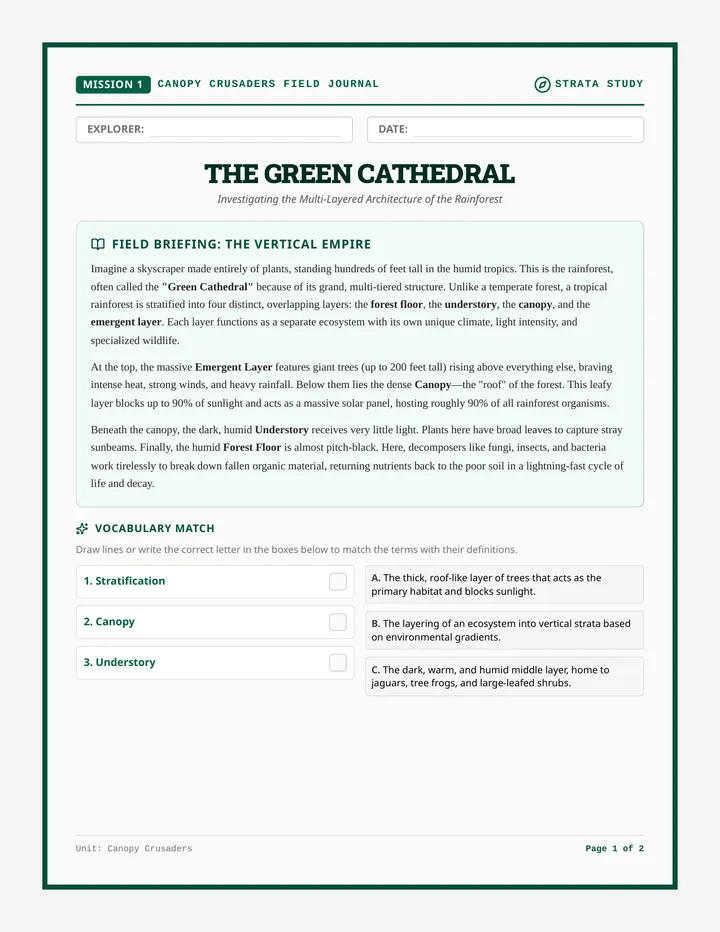
A comprehensive unit on rainforest ecology, climate regulation, and conservation. Students explore the structural layers of the rainforest, their roles as carbon sinks, the threats of deforestation, and collaborative solutions for preservation.
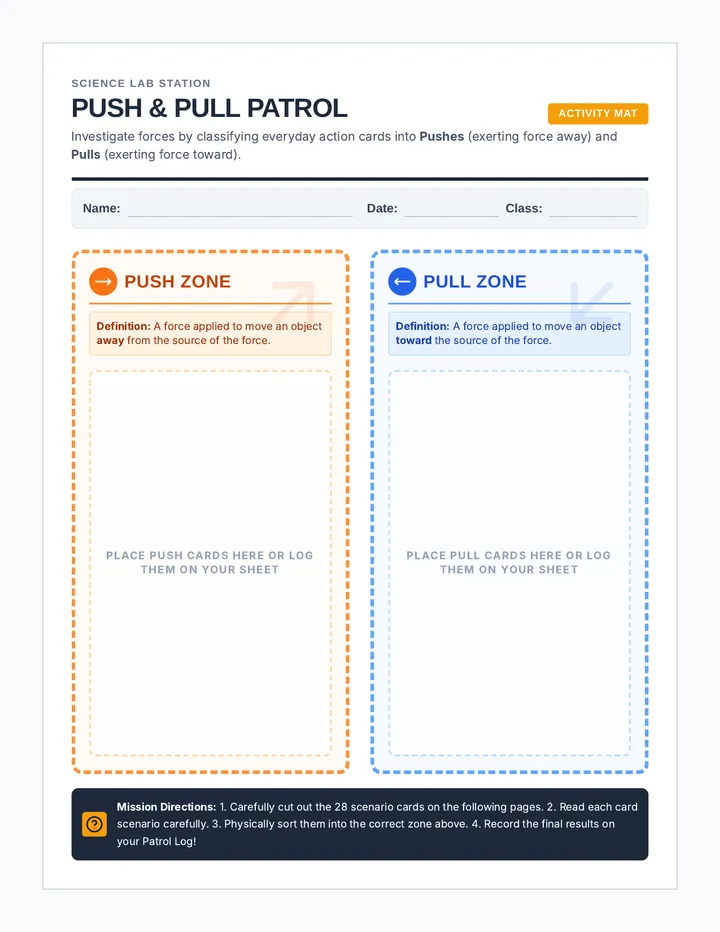
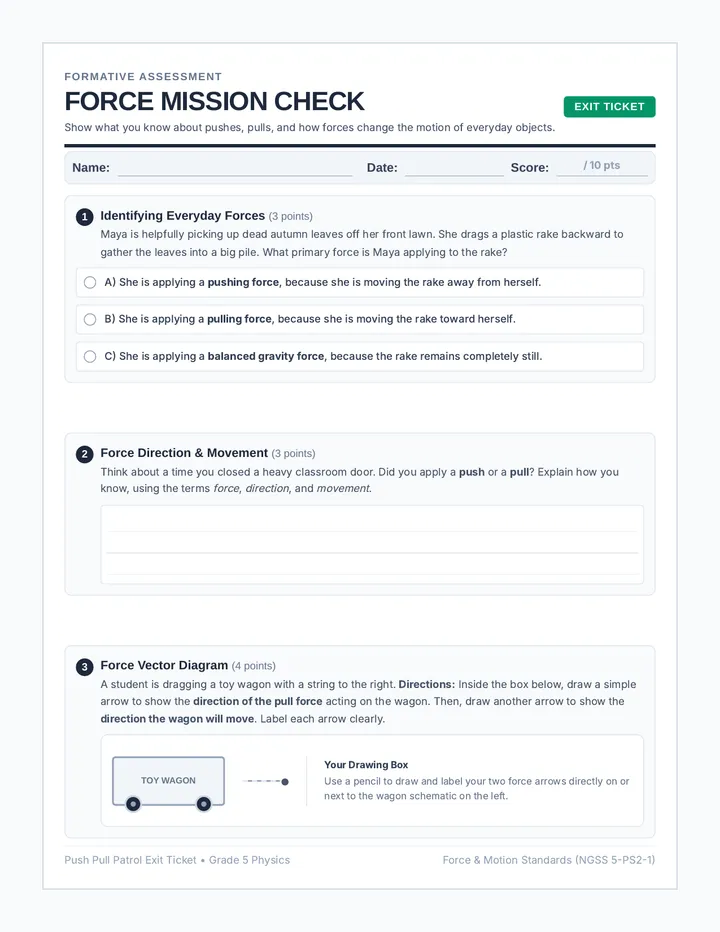
A hands-on force and motion lesson where 5th-grade students explore daily scenarios and classify forces as pushes or pulls, followed by a quick individual exit ticket check.
A comprehensive teacher grading guide and exemplar answer key for the Force Dynamics Assessment, detailing DOK levels, grading rubrics, and model student responses.
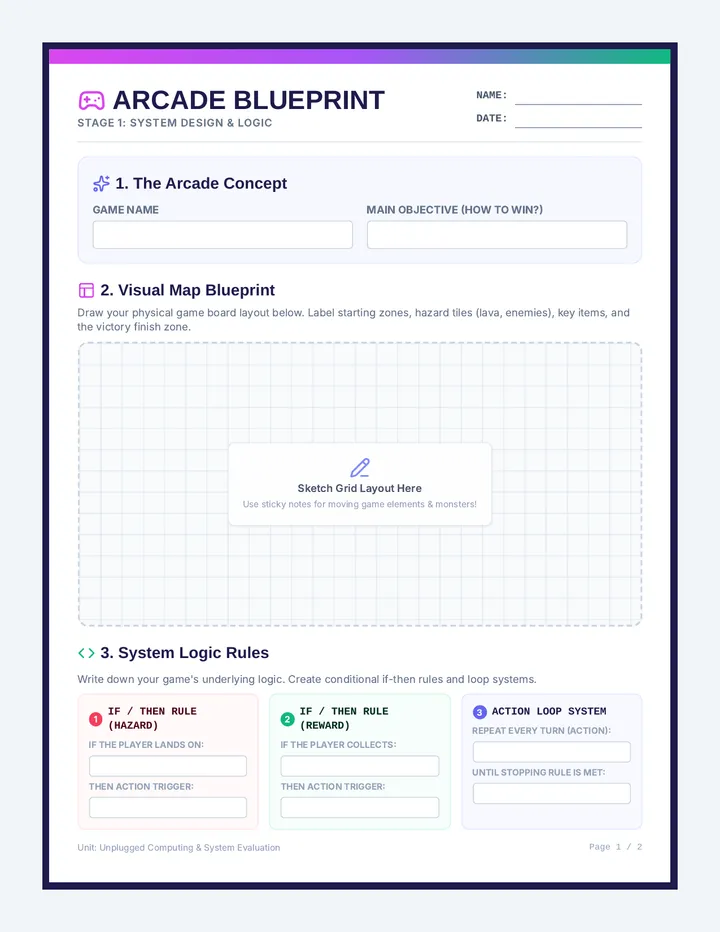
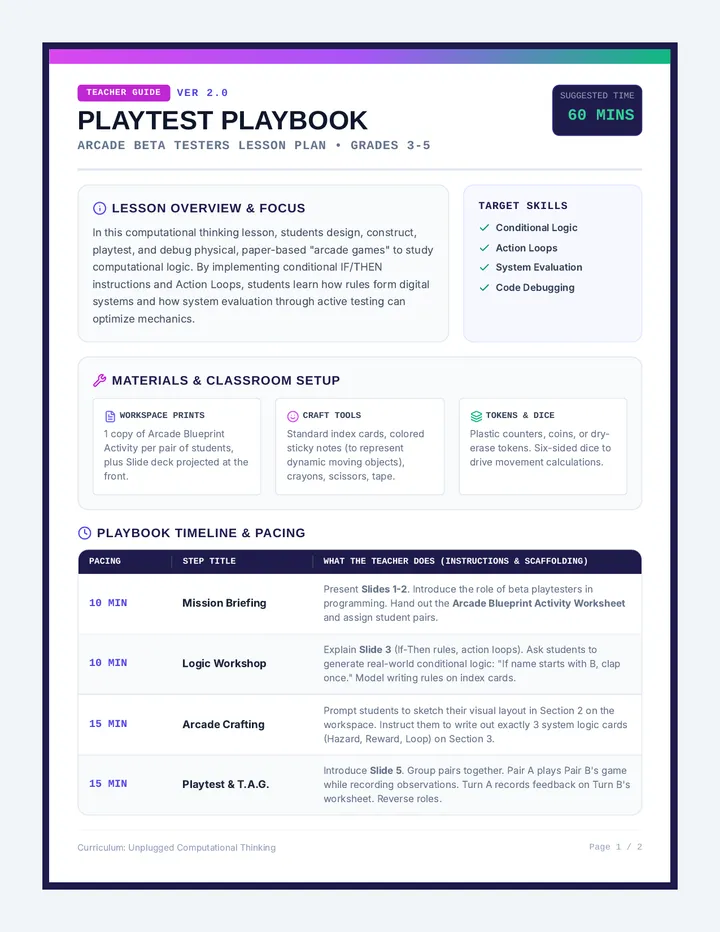
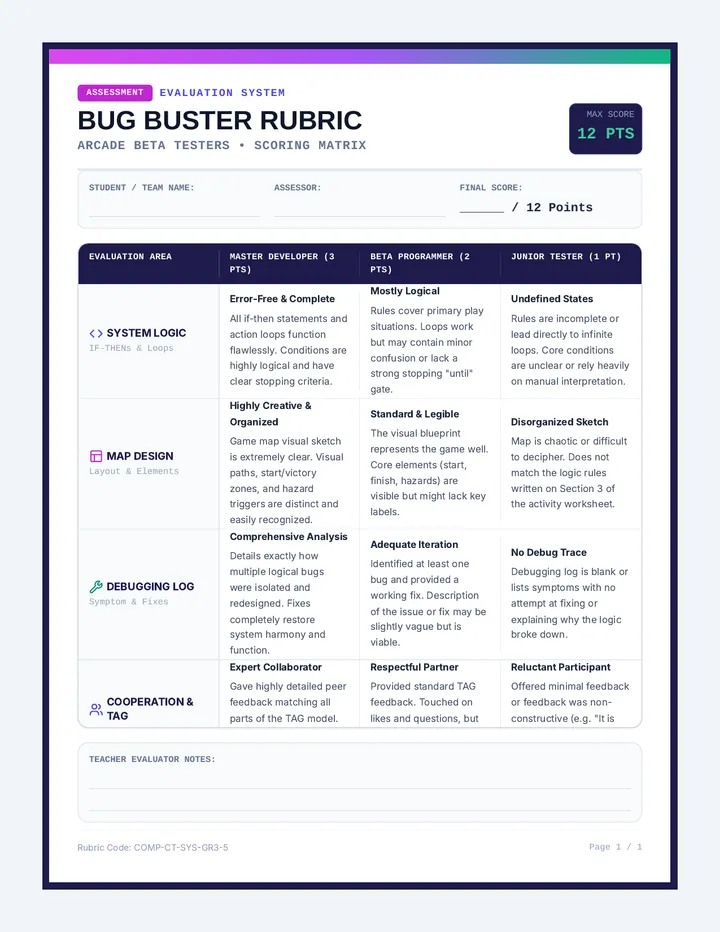
A lesson where students in grades 3 to 5 design paper-prototype arcade games, playtest them, and practice debugging loops and logic rules using constructive feedback.
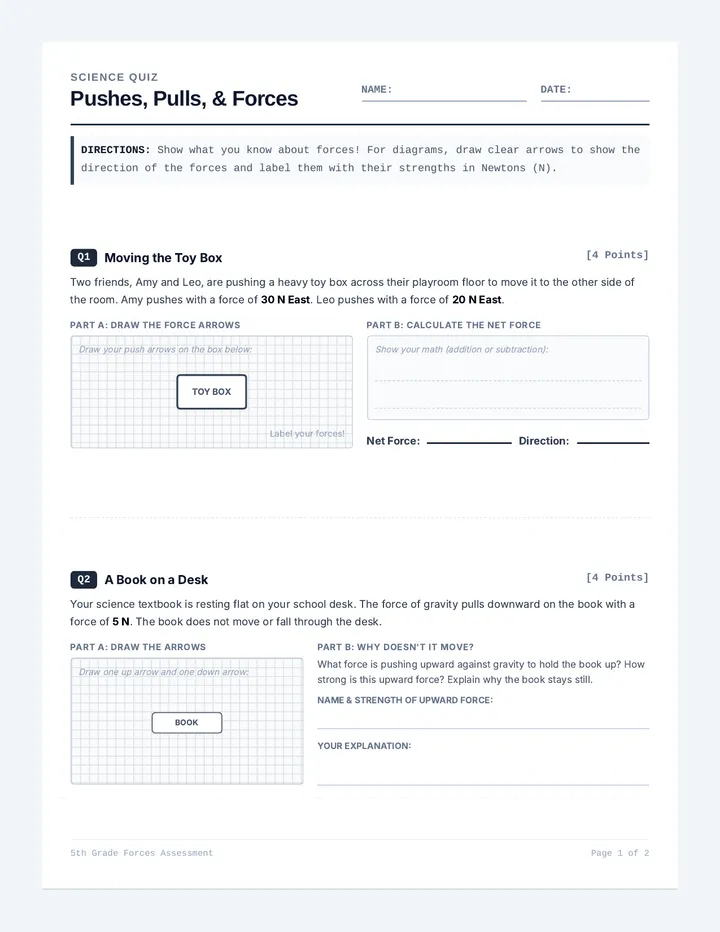
A simplified, 5th-grade friendly two-page student assessment featuring five DOK 2 and DOK 3 questions covering simple net force calculations, balanced vs. unbalanced sorting, and unseen forces like friction.
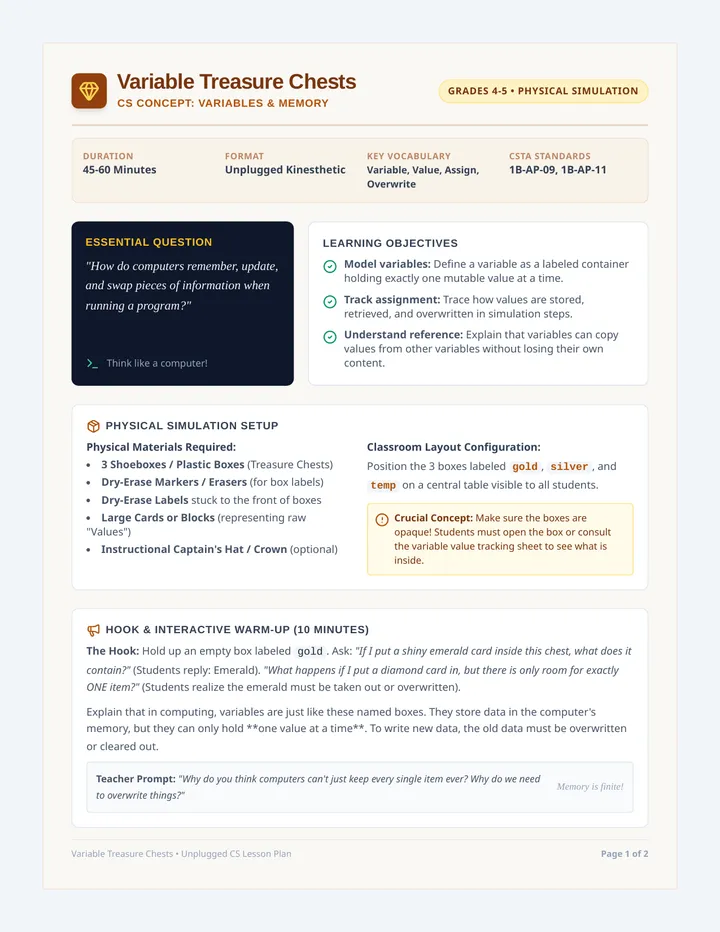
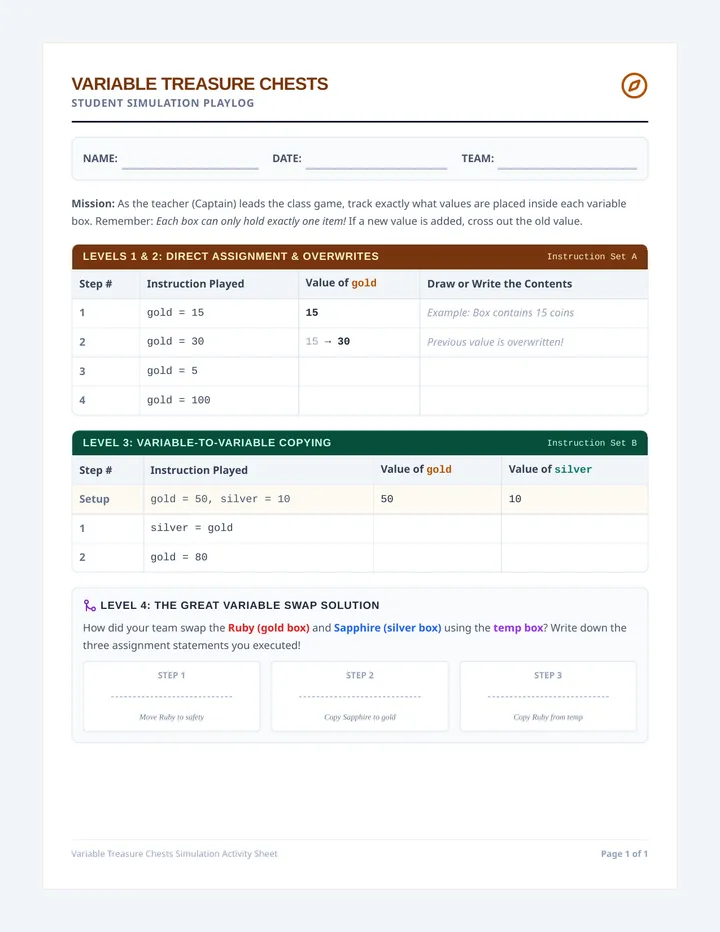
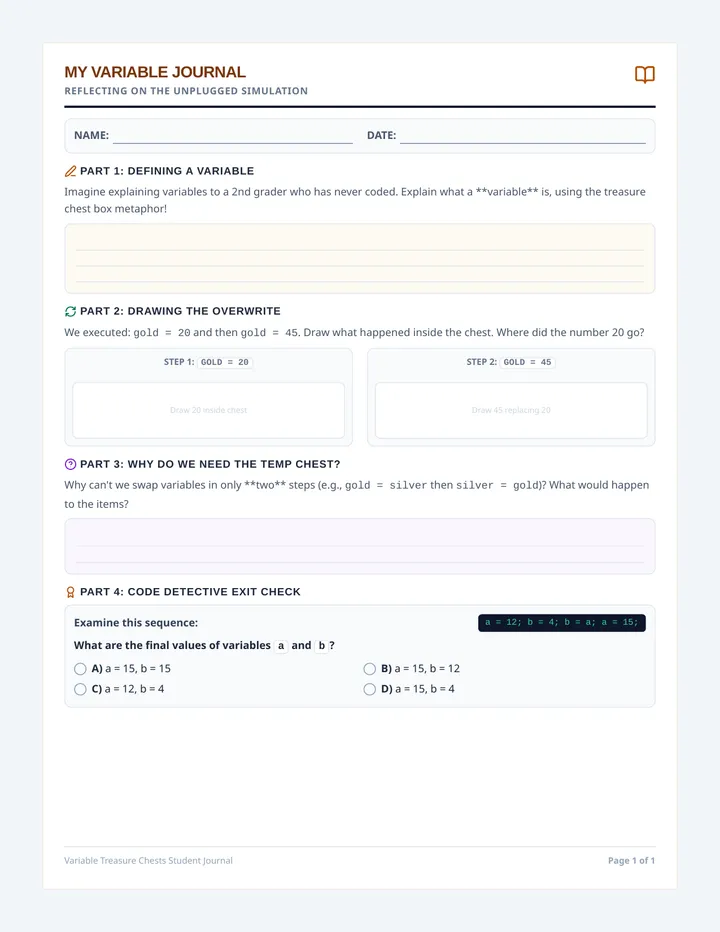
A hands-on physical simulation lesson where 4th and 5th graders act as computer processors and memory, using physical boxes as 'treasure chests' (variables) to learn how variables store, reference, and update values.
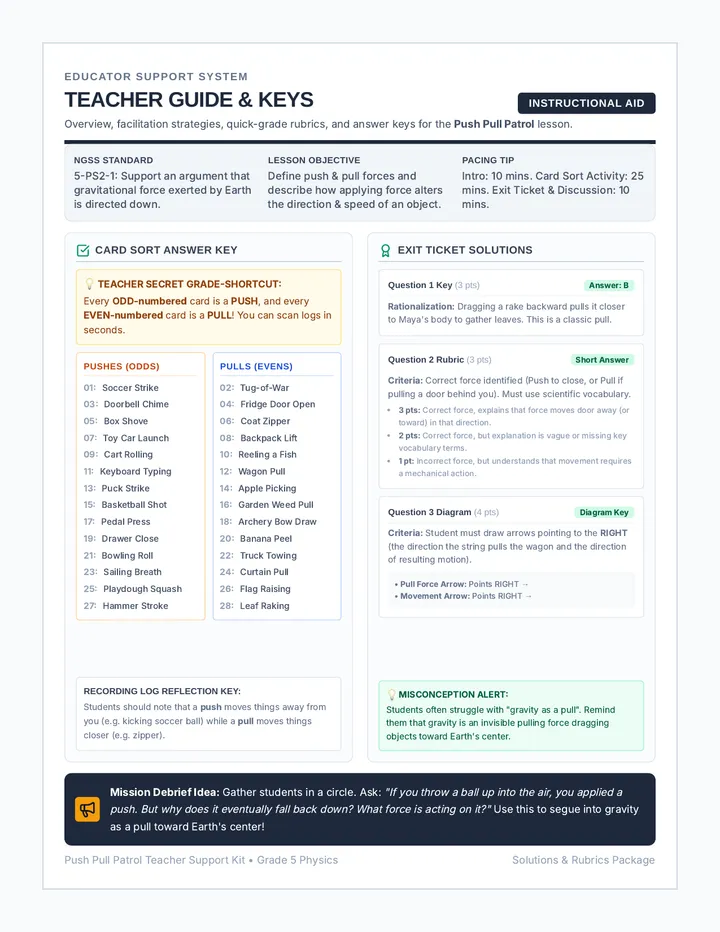
A high-yield, 1-page teacher reference dashboard containing the lesson planning guide, a complete answer key for the 28 scenario cards (including a secret quick-grade pattern), and grading criteria with solutions for the exit ticket assessment.
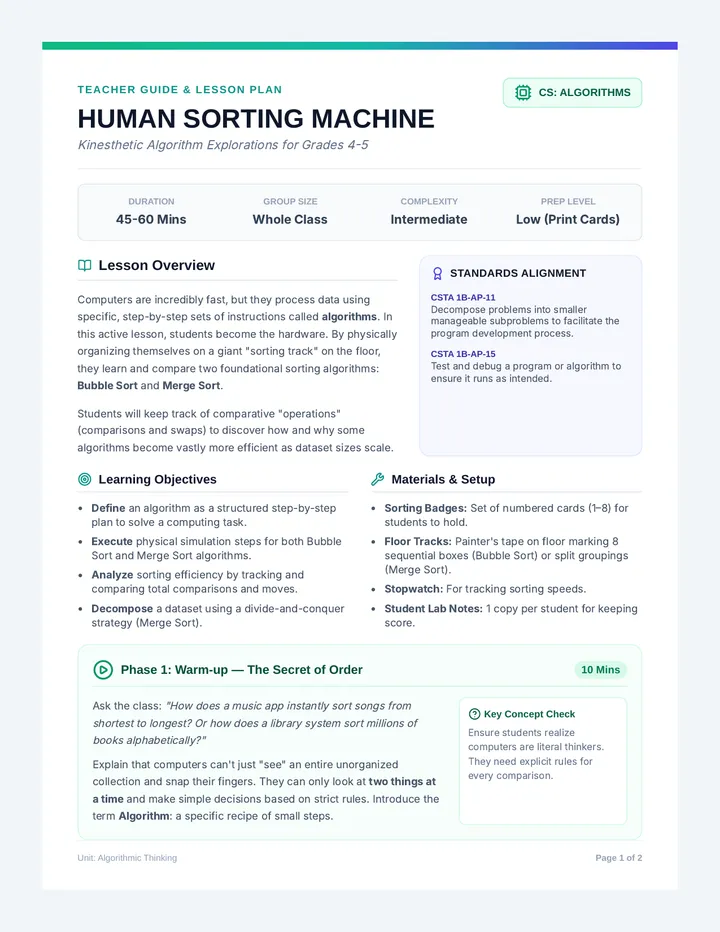
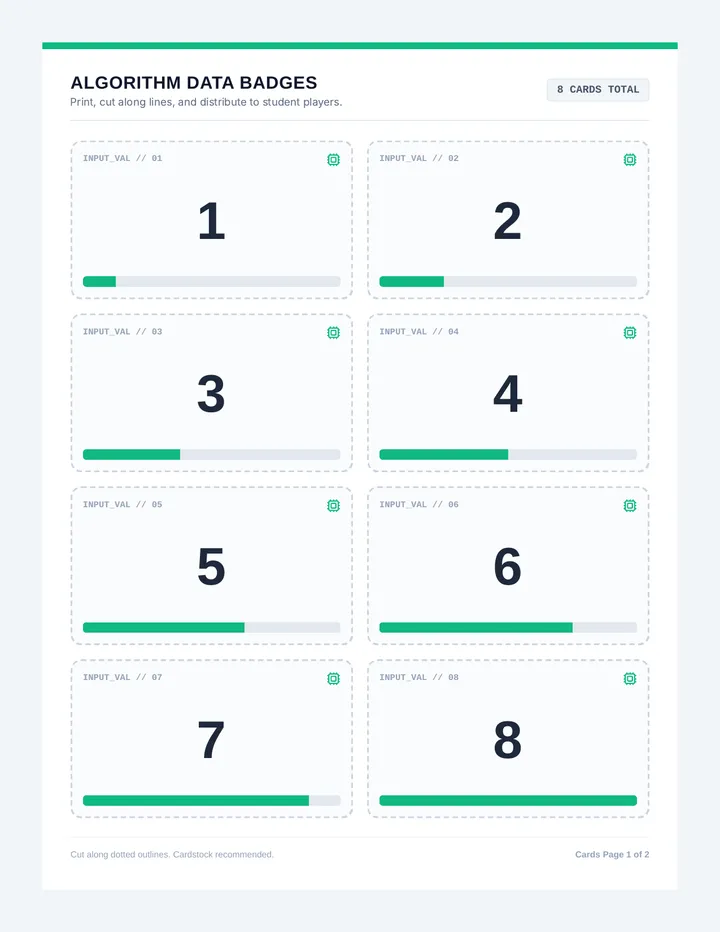
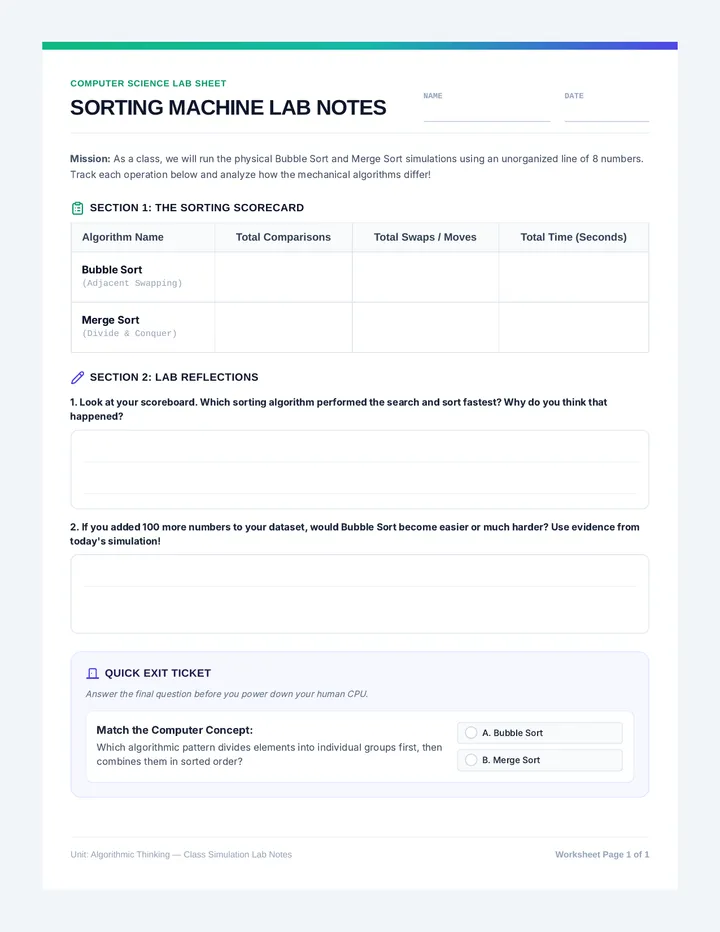
A hands-on, kinesthetic lesson where fourth and fifth-grade students physically act out bubble sort and merge sort algorithms to understand how computers organize data and compare step-by-step efficiency.
A quick, 3-question formative assessment checking student mastery after completing the card sort activity. It includes multiple-choice identification, a short written explanation, and a force arrow diagram task.