A teacher guide for Lesson 1, including learning objectives, a hook activity, materials list, instructional steps, and common misconceptions.
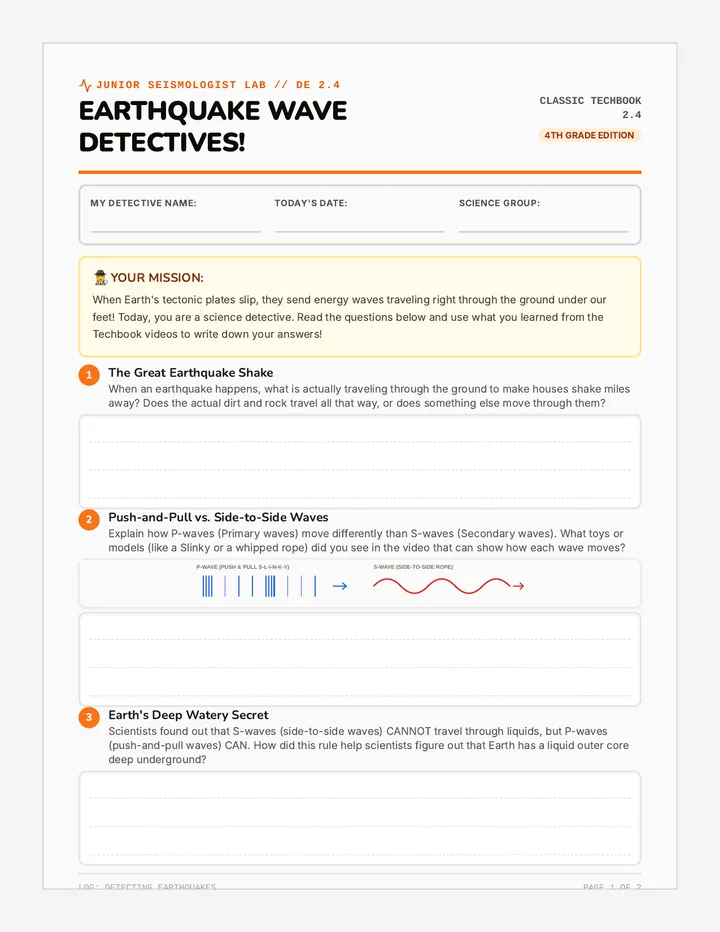
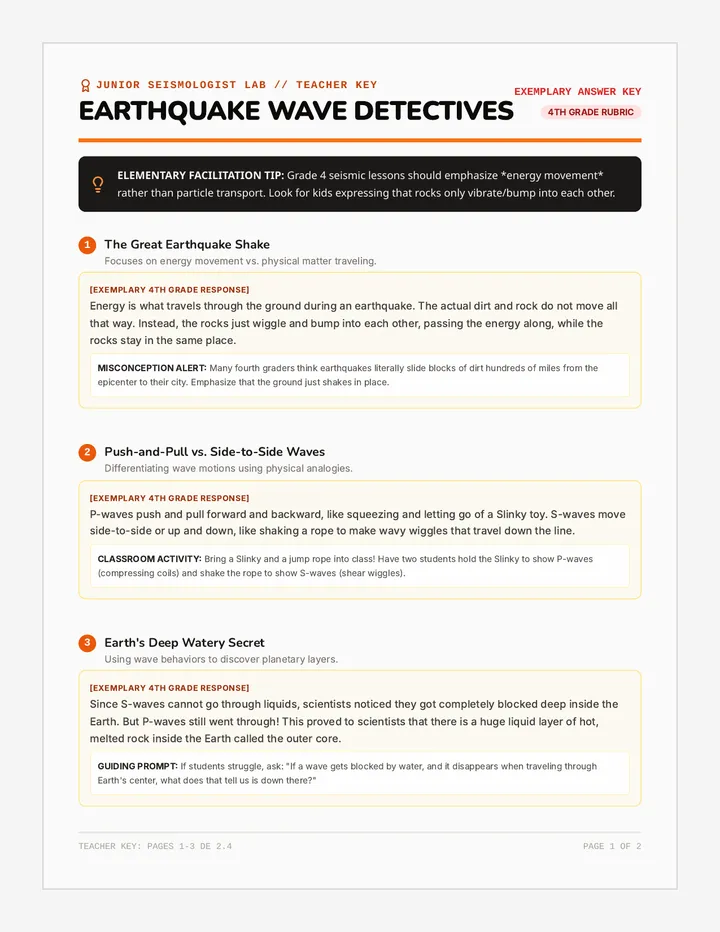
An earth and space science curriculum unit covering dynamic earth processes, earthquake wave mechanics, atmospheric pressure systems, and weather prediction techniques.
Explore the fascinating biology of seeds and germination guided by Lenny the Bean! Students will dissect a bean, identify its parts, and understand how a tiny seed contains everything needed to start a new life.
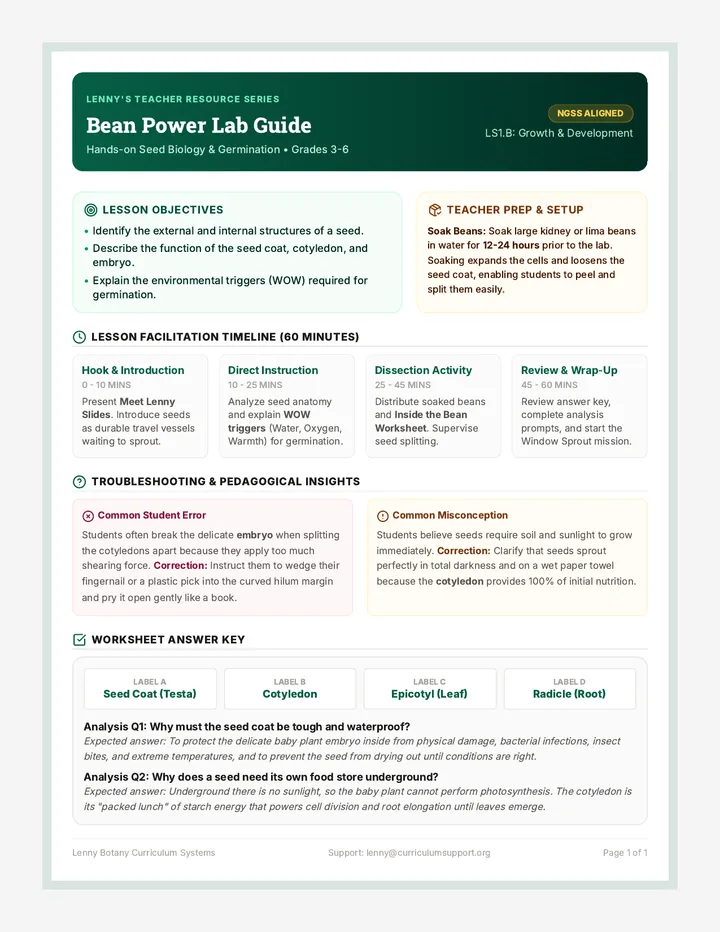
A comprehensive facilitation and answer guide for teachers using the Bean Power lesson. It features alignment with standards, a lesson timeline, lab safety/setup instructions, and a completed answer key for the student worksheet.
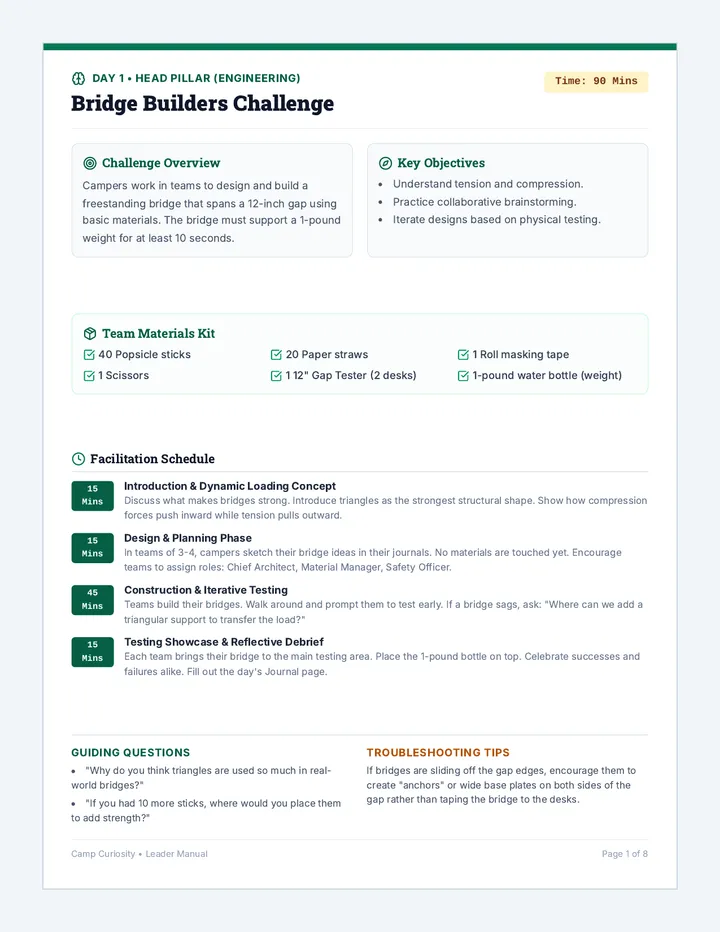
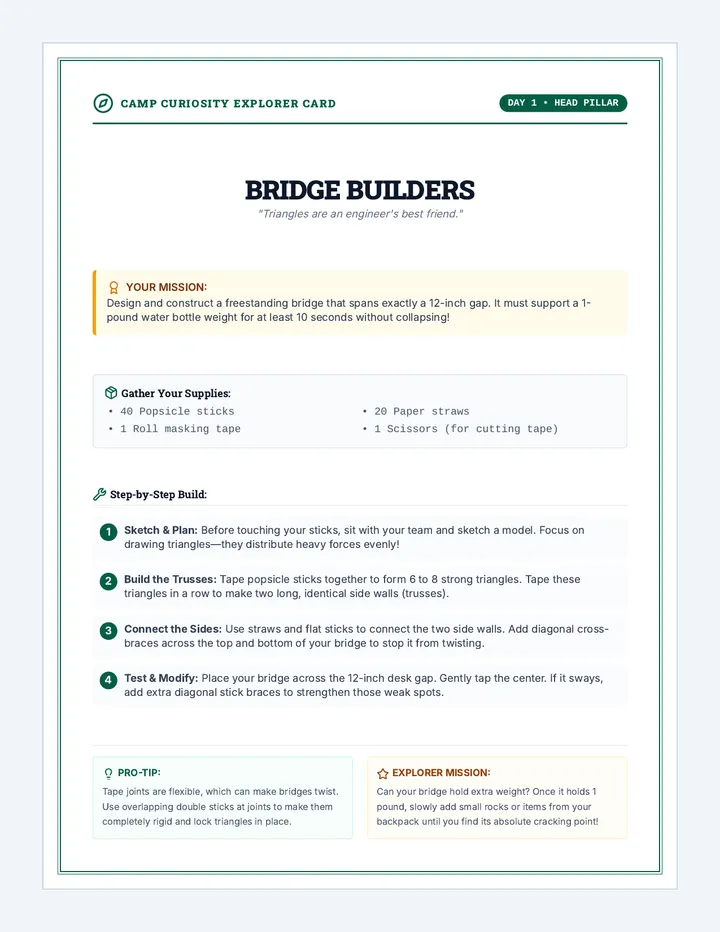
An action-packed, hands-on 8-day 4-H camp program focusing on Head, Heart, Hands, and Health. Students tackle engineering, teamwork, ecology, nutrition, and art challenges through daily active learning.
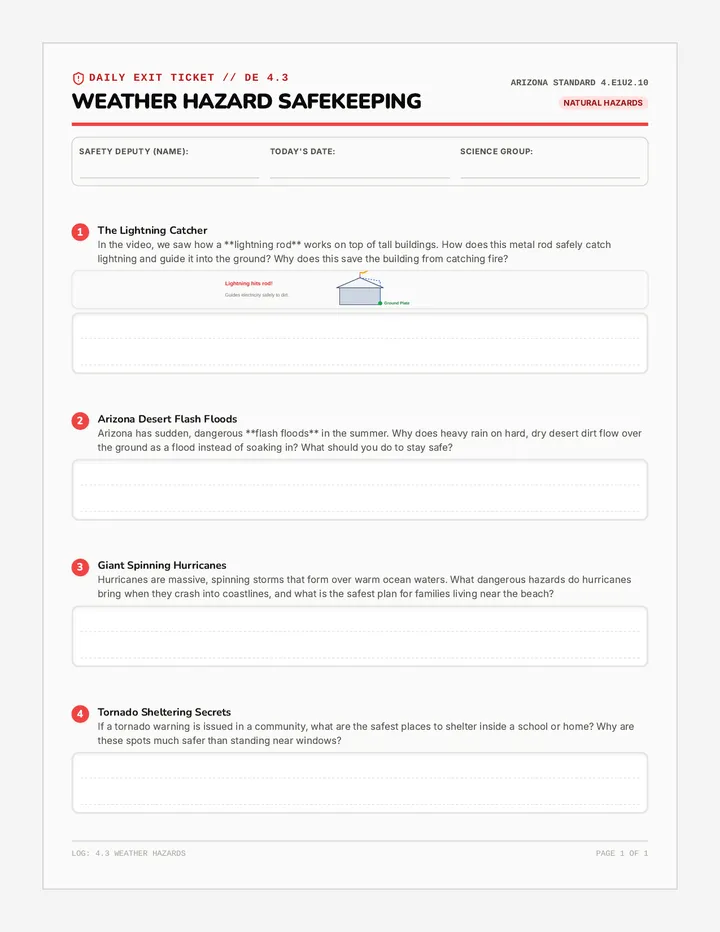
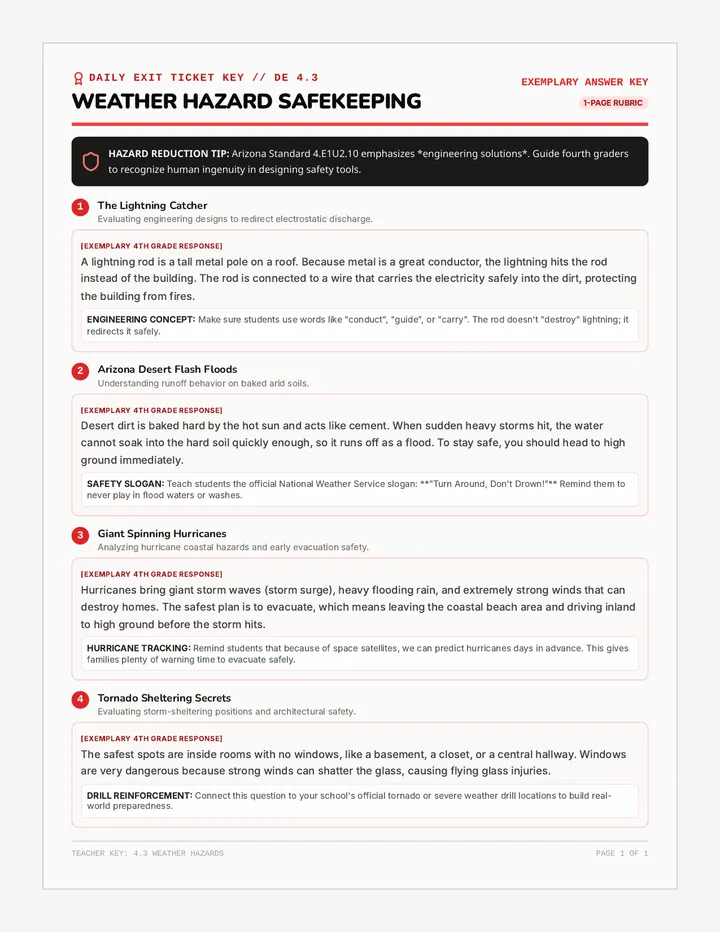
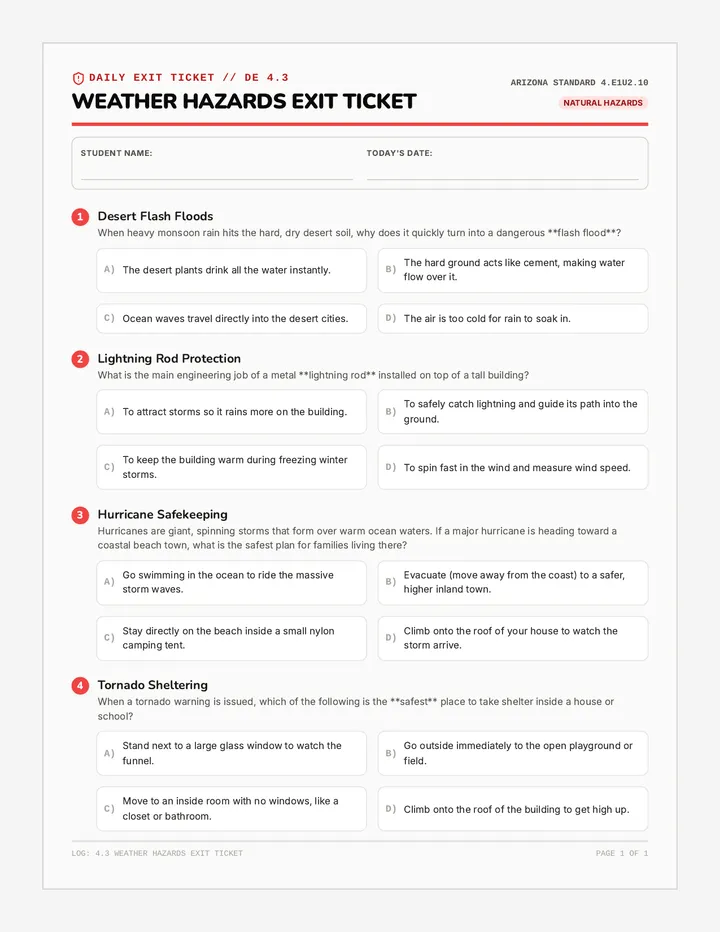
Students identify different types of severe weather hazards (like lightning, tornadoes, flash floods, and dust storms) and explore engineering solutions designed to keep communities safe.
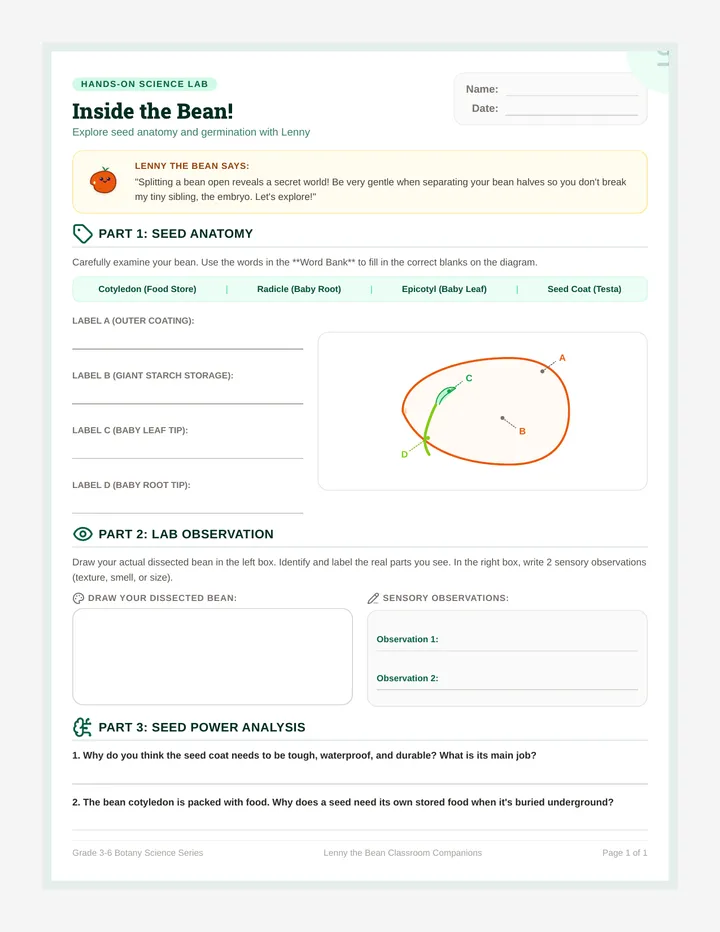
A printable student worksheet for the bean dissection activity. It features labeling exercises, space for hand-drawing observations, and comprehension questions, all guided by Lenny the Bean.
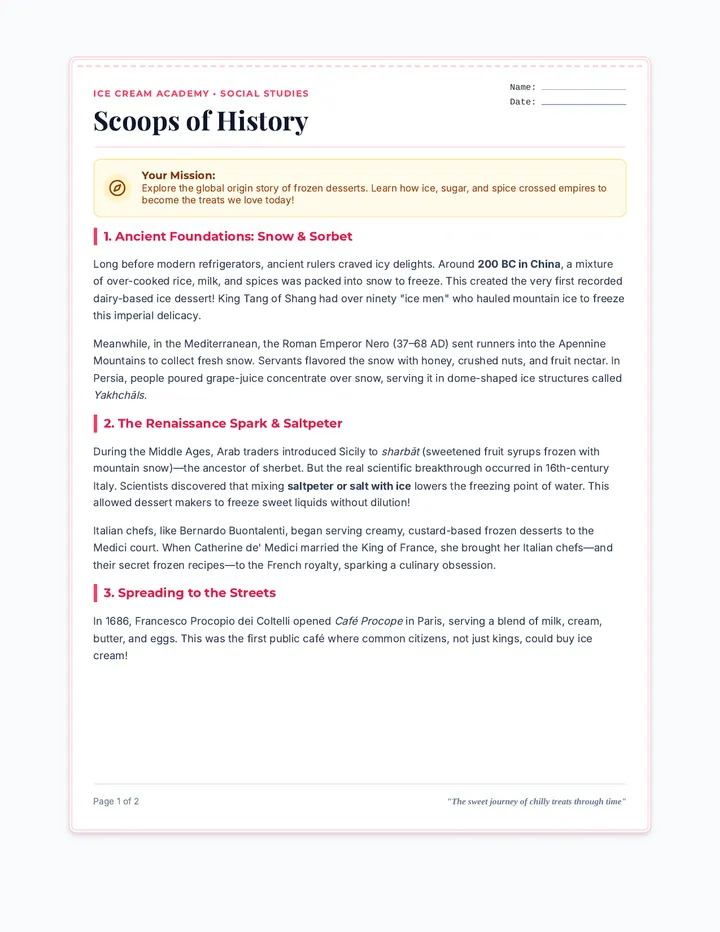
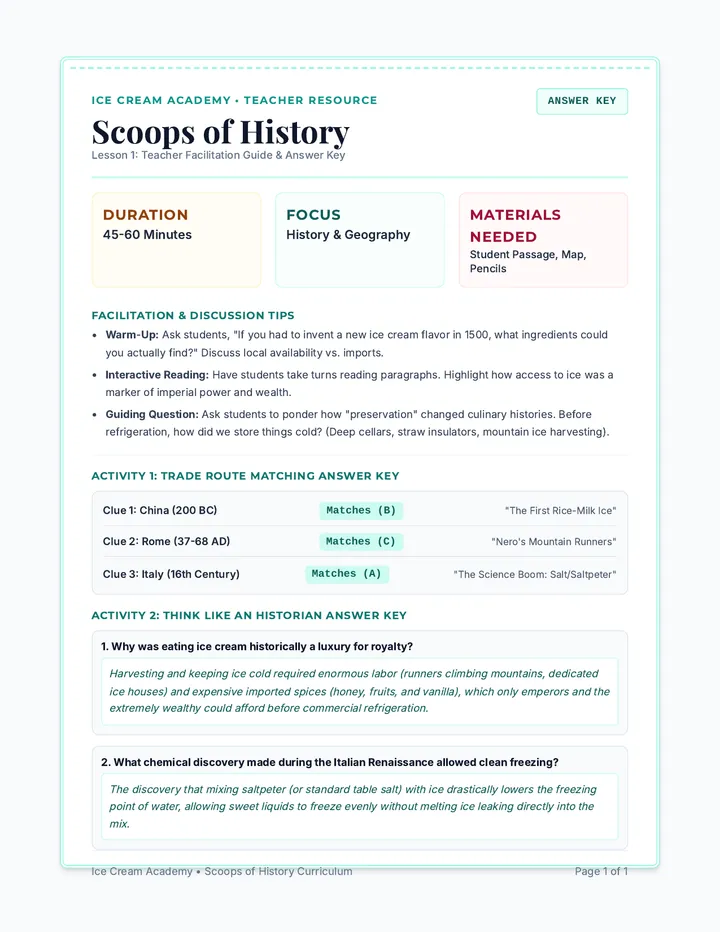
A multi-subject summer school unit exploring the history, science, math, and language arts of ice cream. Students scale recipes, conduct freezing-point experiments, trace historical origins, and design sensory marketing campaigns.
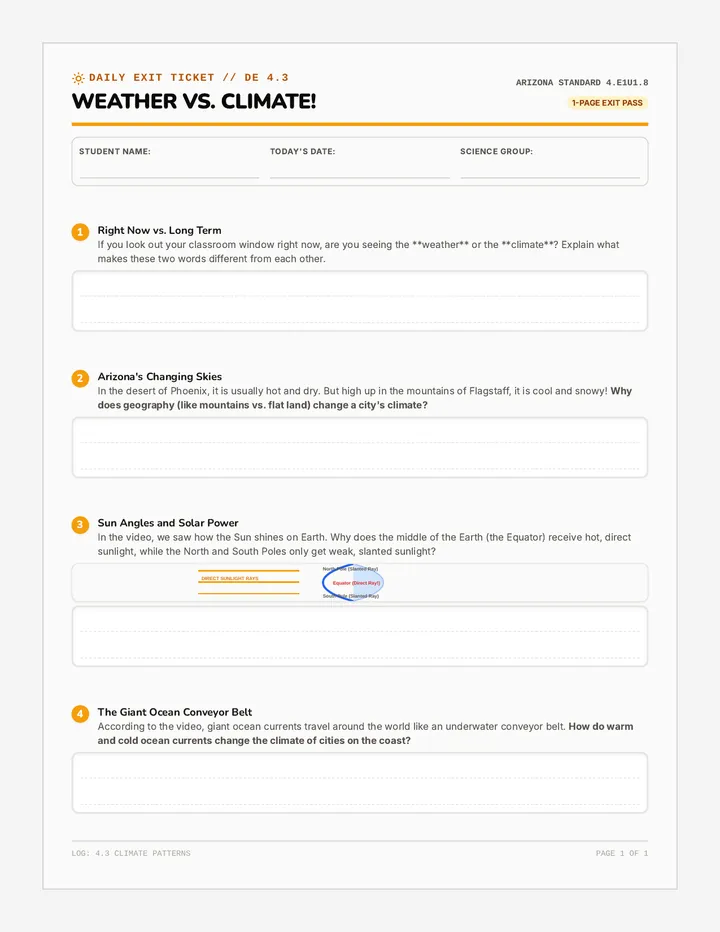
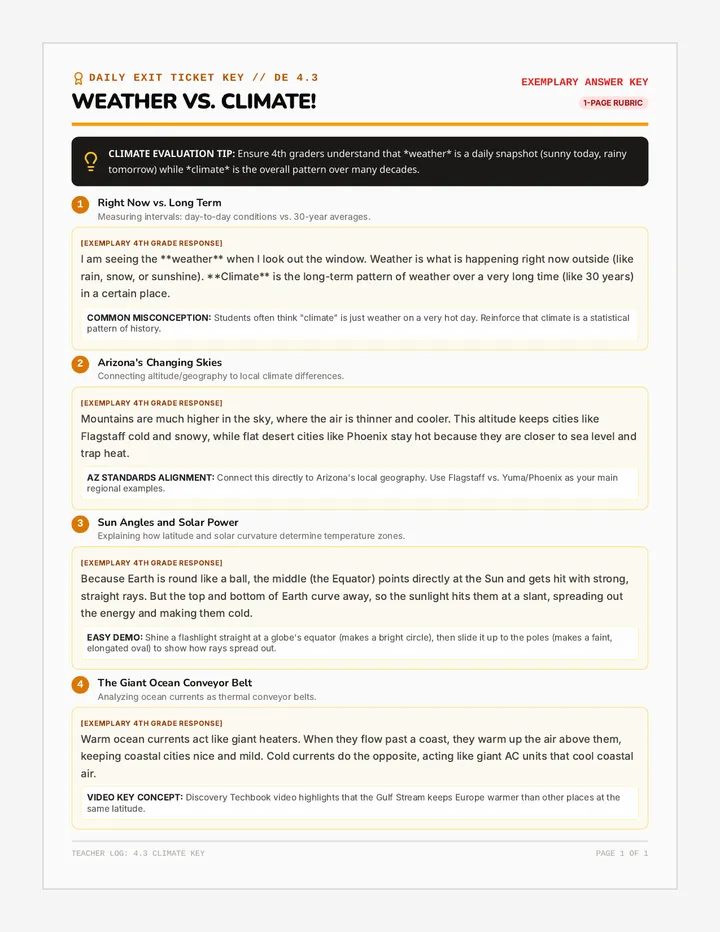
Students explore the key differences between weather and climate patterns, analyzing temperature, precipitation, and regional zones over time using global climate models.
A visually stunning, interactive slide deck featuring Lenny the Bean. This presentation teaches seed anatomy, germination, and guides students through a hands-on bean dissection with a fun, engaging science narrative.
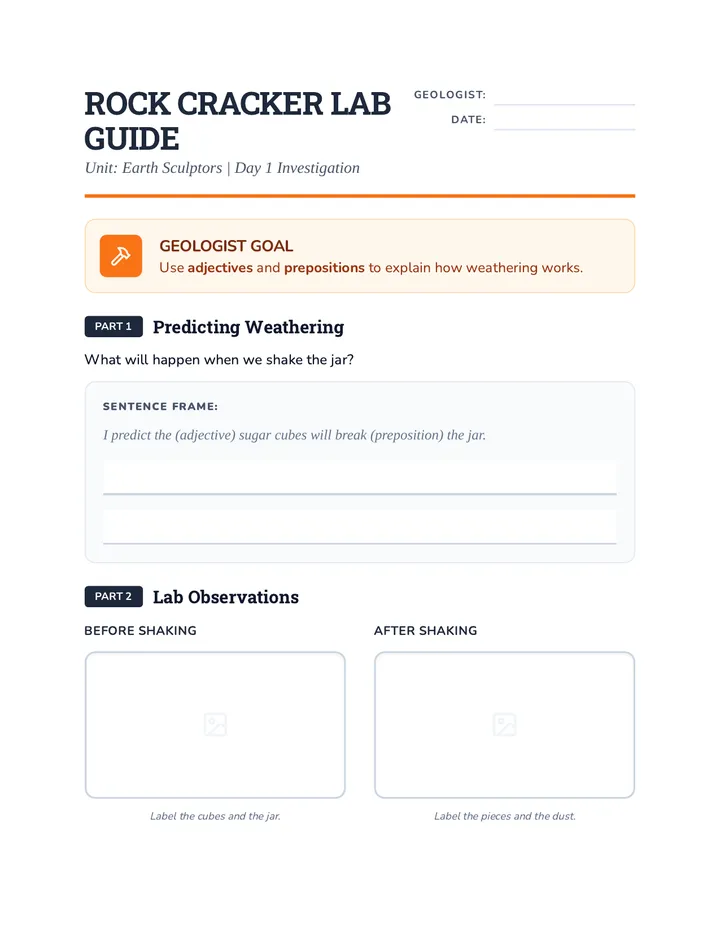
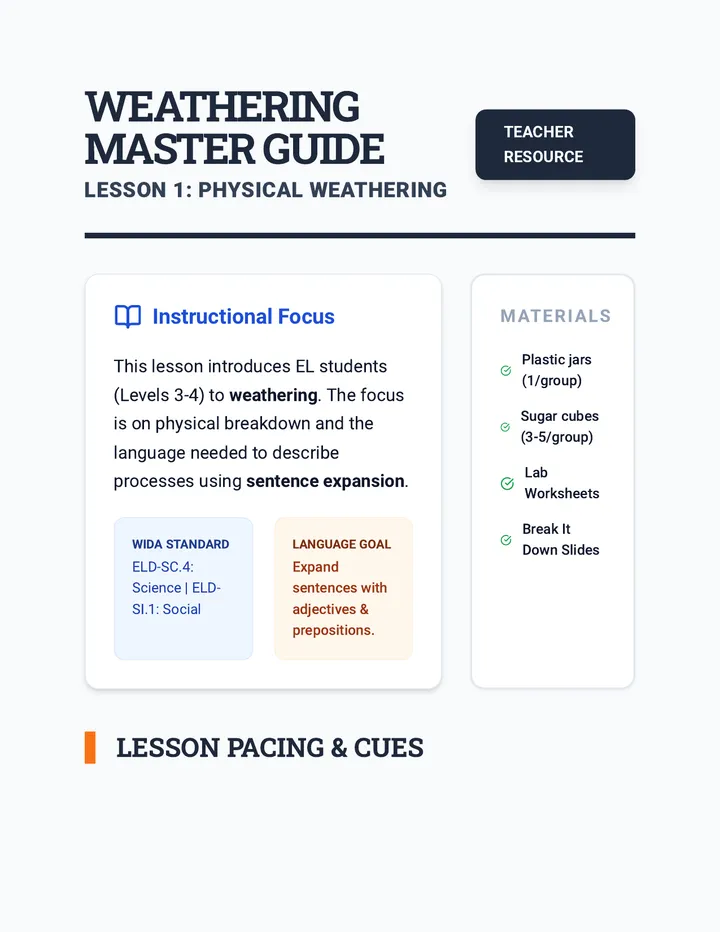
A two-day science unit for 4th-grade English Learners focusing on the processes of weathering and erosion. Students act as 'Earth Sculptors' to investigate how natural forces break down and move Earth's materials using WIDA-aligned language supports.
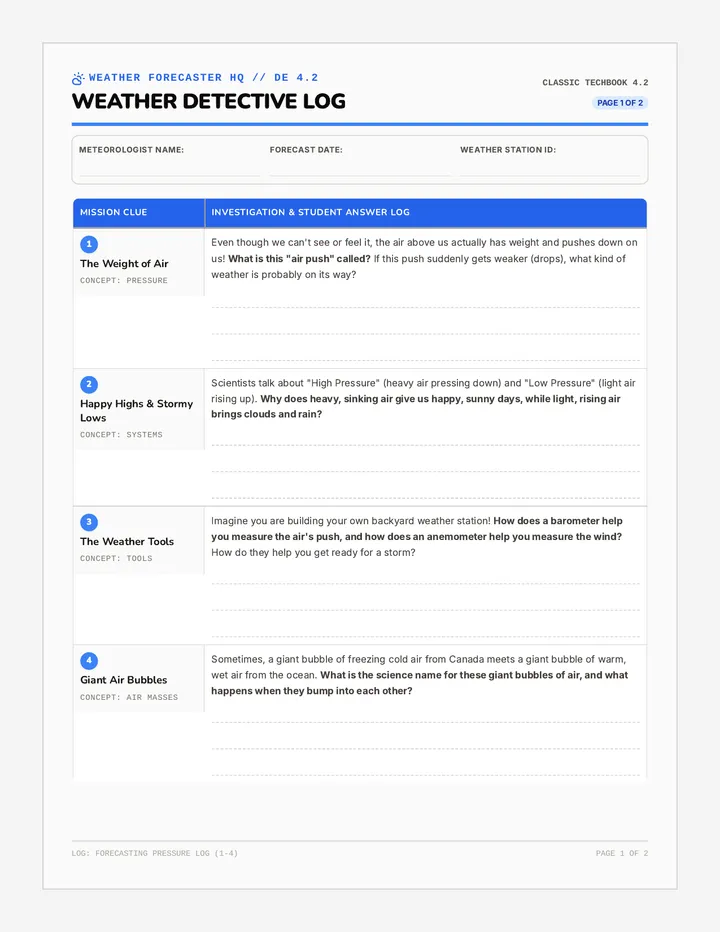
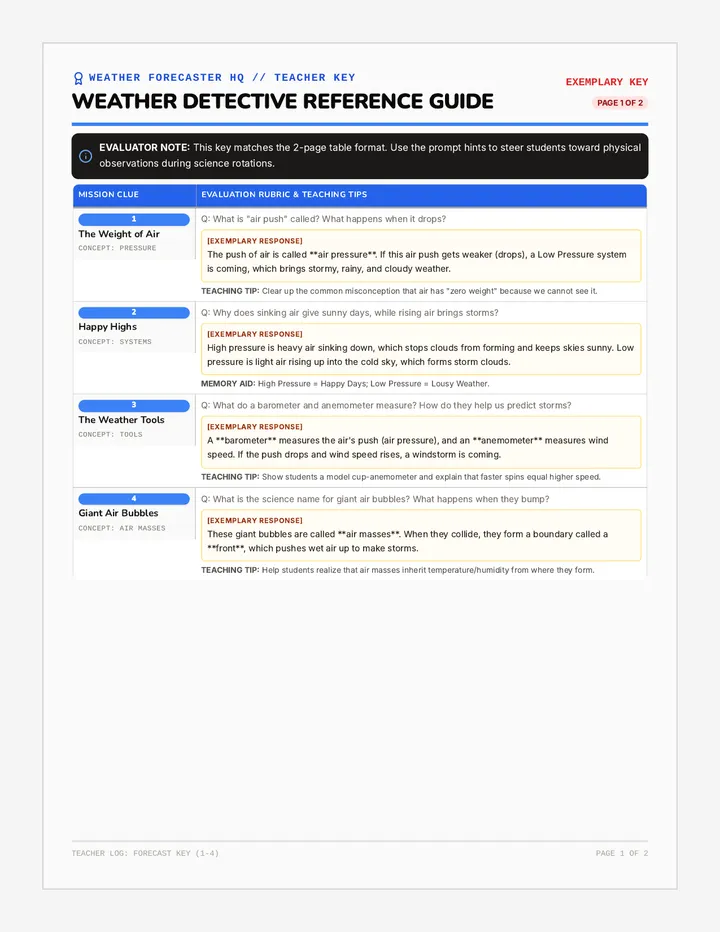
This lesson covers weather prediction techniques, atmospheric pressure systems, warm and cold fronts, and how meteorologists analyze satellite and radar data to forecast storms.
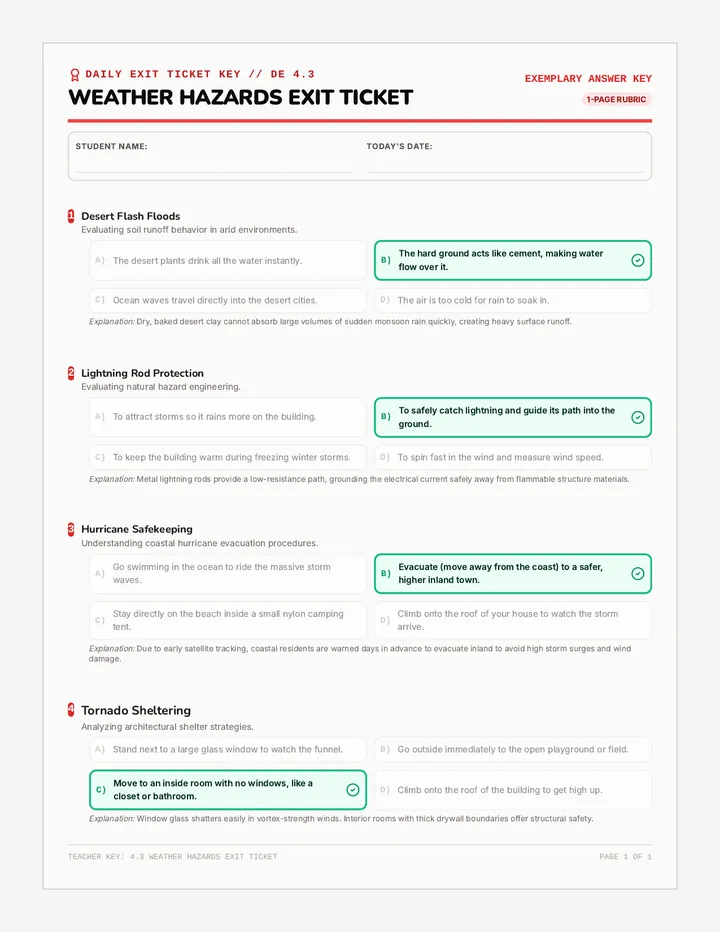
A comprehensive teacher answer key and scoring guide for the 4th-grade Weather Hazards Multiple Choice Quiz, clearly identifying correct choices and explanations.