The finalized answer key and step-by-step solutions for the Circuit Command practice problems, updated to match the specific values and configurations in the final reading guide.
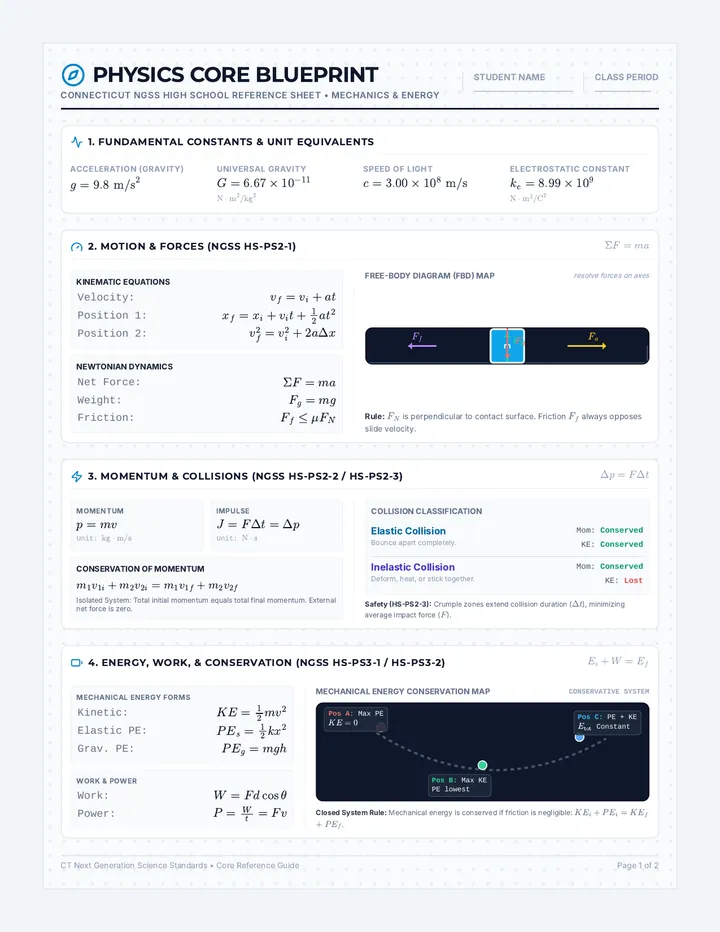
A comprehensive high school physics curriculum sequence aligned with the Connecticut Next Generation Science Standards (CT-NGSS), focusing on core concepts, quantitative problem-solving, and visual models.
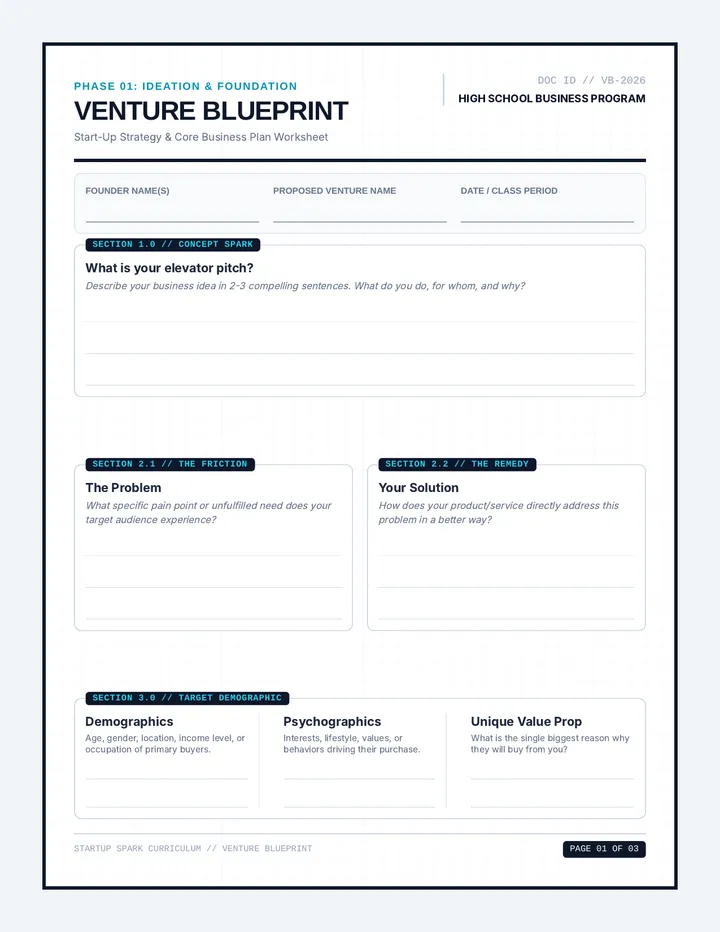
A comprehensive, step-by-step framework for high school students to design, structure, and refine a small business startup concept. Includes guided drafting templates, pacing checklists, and pitch preparation tools.
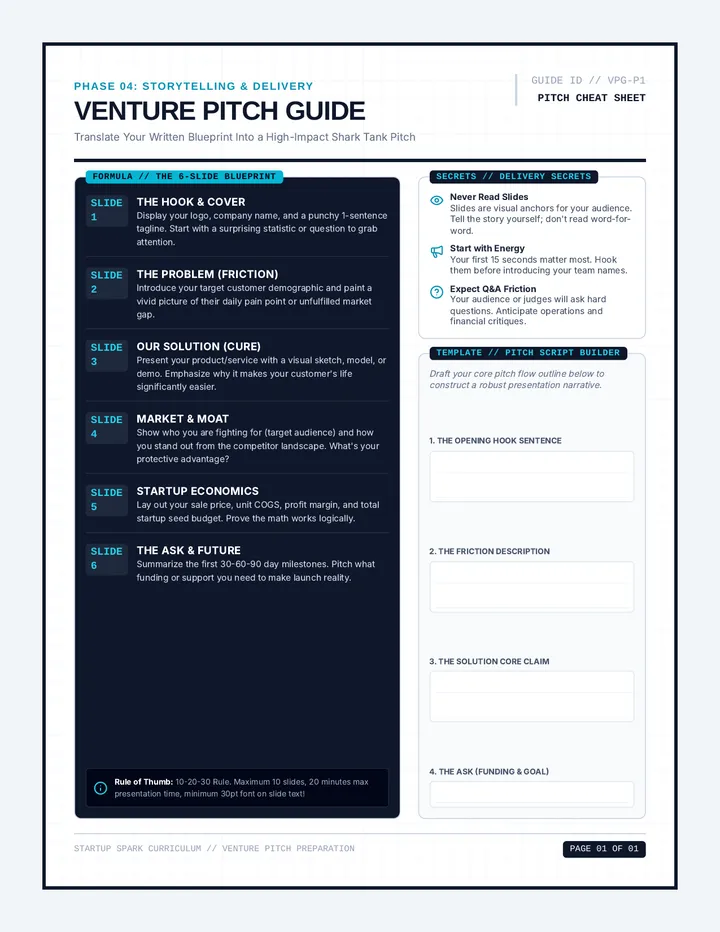
A student-facing companion reference and cheat sheet for building a 3-minute business pitch presentation. This single-page blueprint features a slide-by-slide content guide, executive delivery secrets, and an interactive presentation script builder.
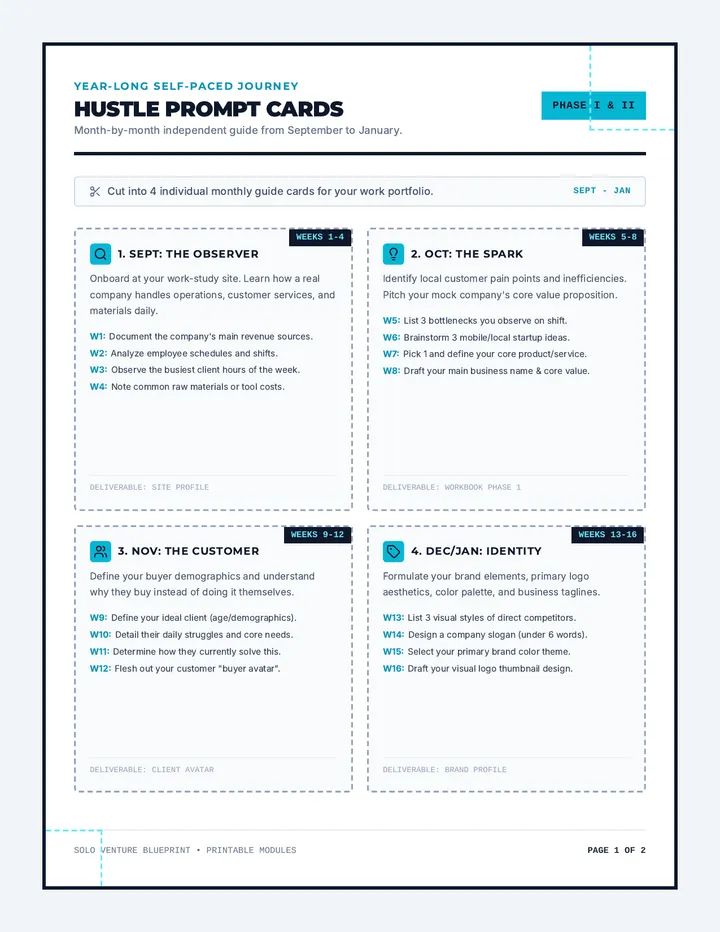
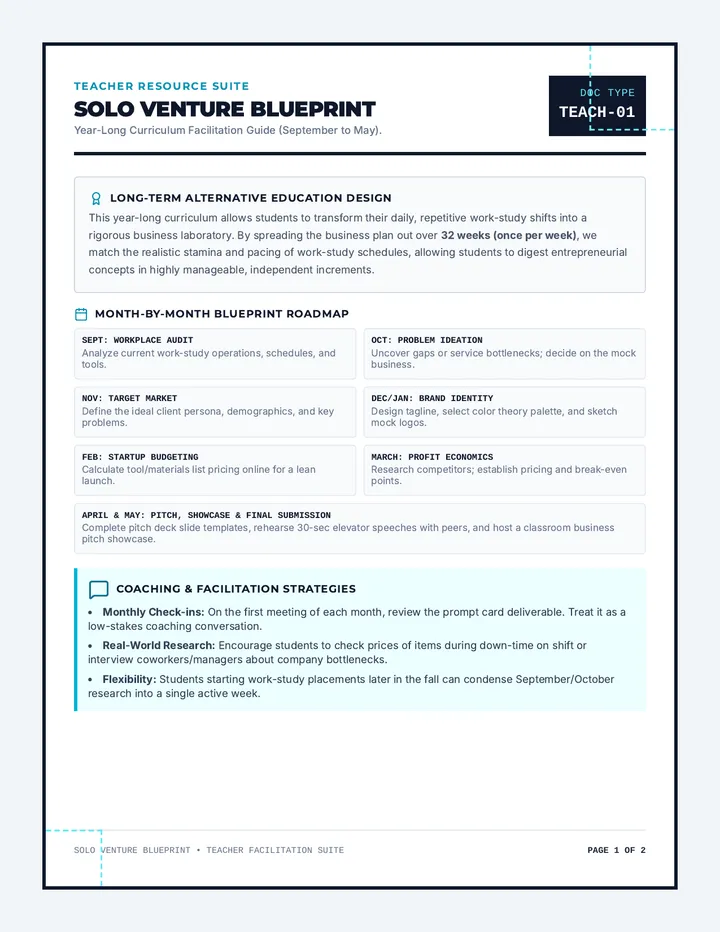
A year-long, self-paced entrepreneurship curriculum spanning September to May for alternative education students in work-study placements. Students transform real-world work experience into a modular business plan and slide presentation.
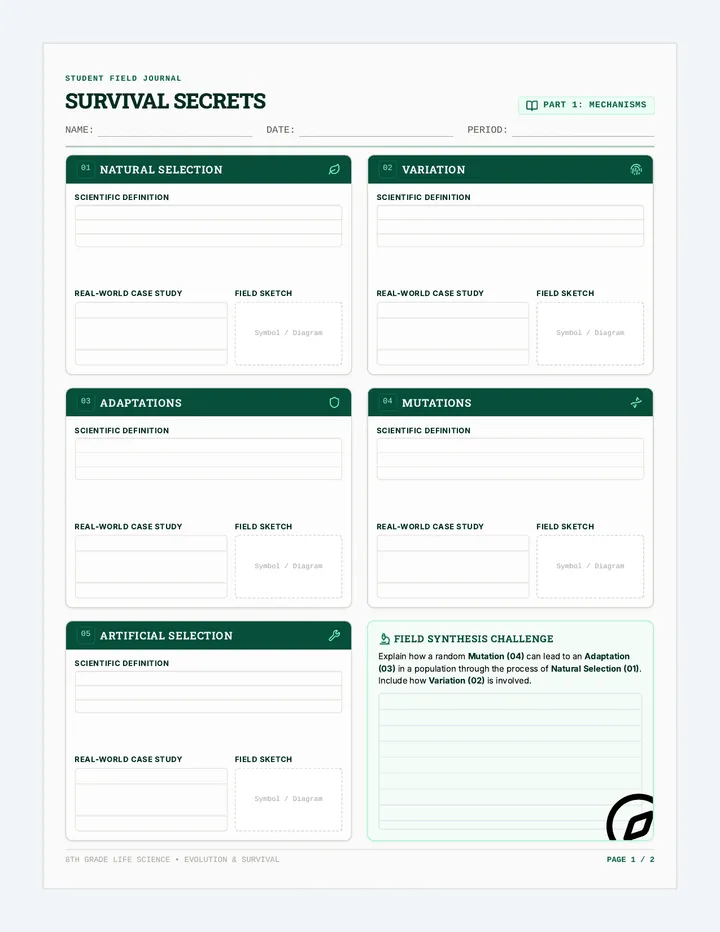
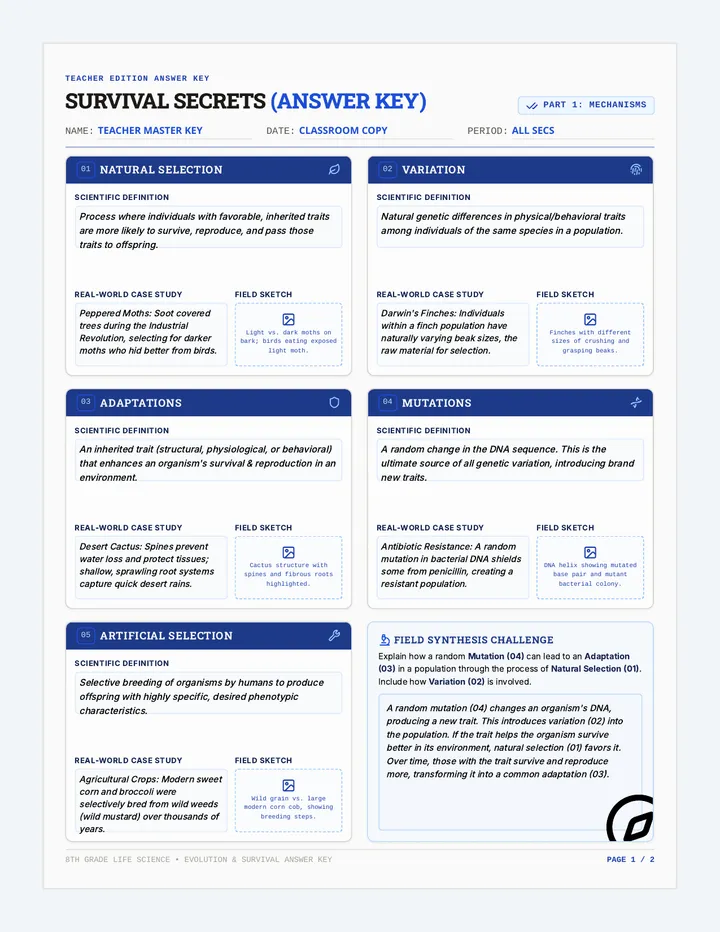
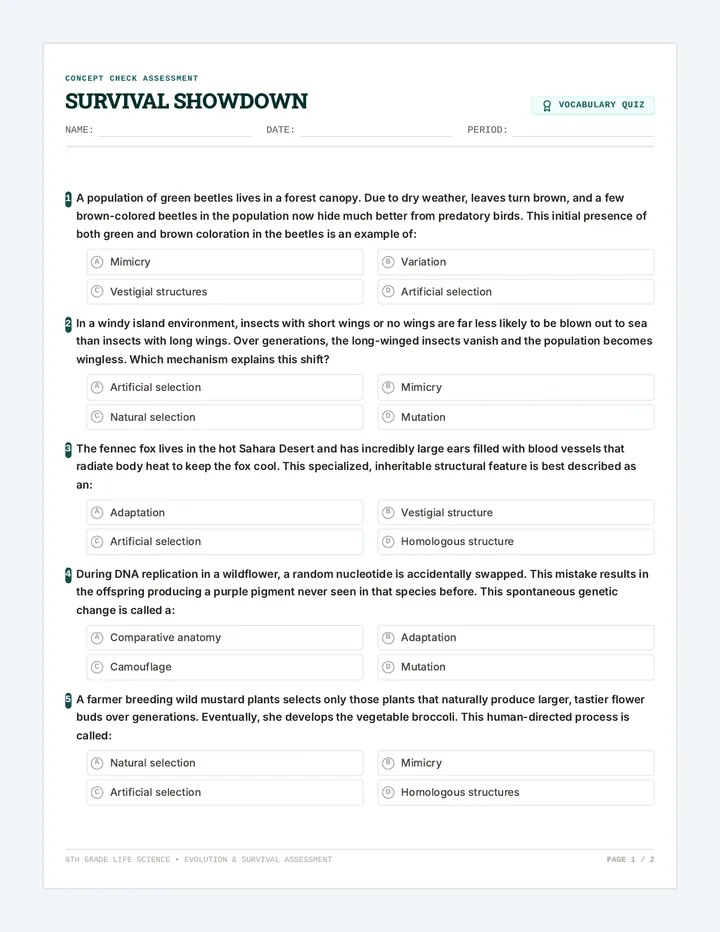
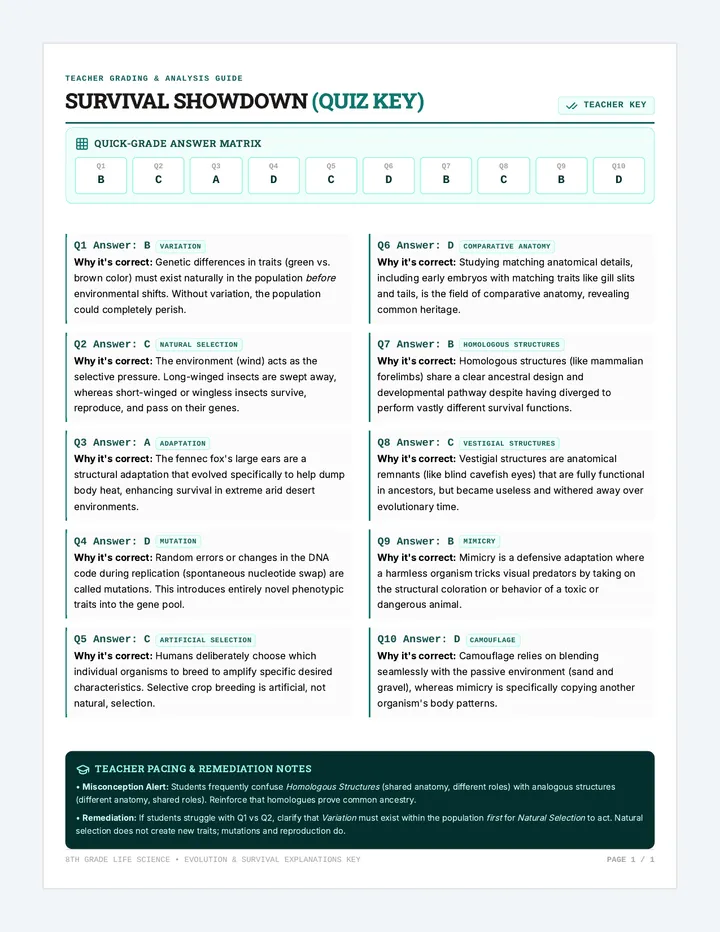
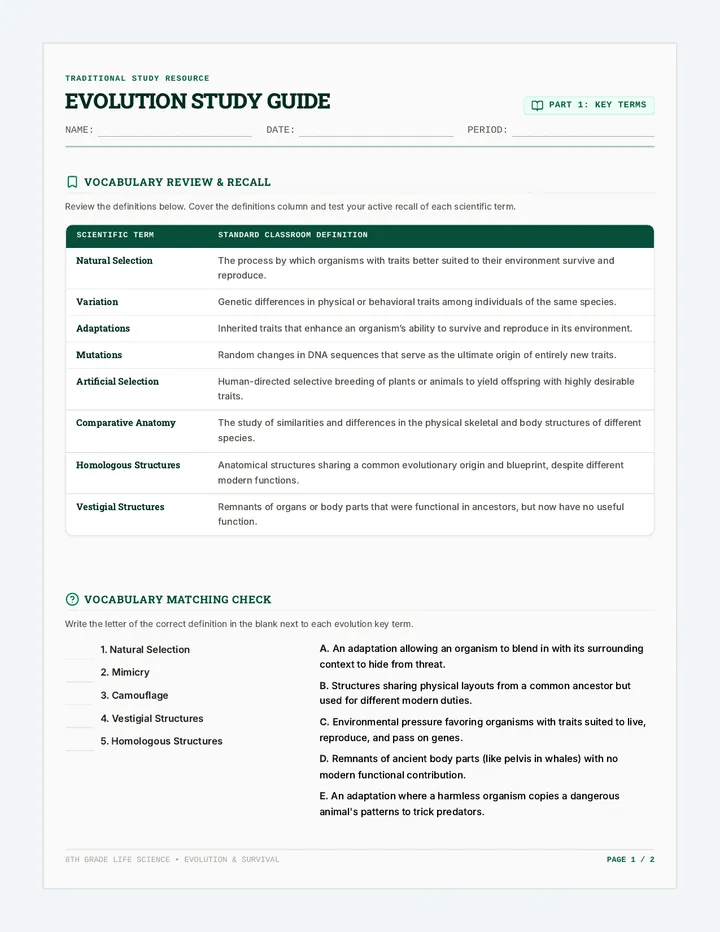
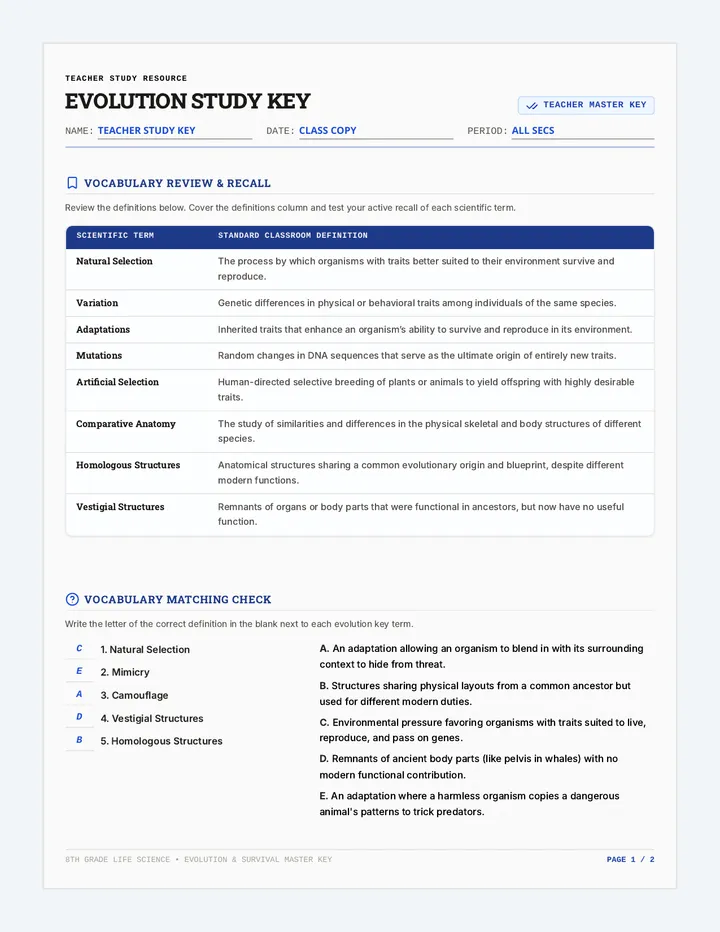
An active-recall study unit on natural selection and evolutionary evidence, featuring graphic organizers, application activities, and a practice quiz.
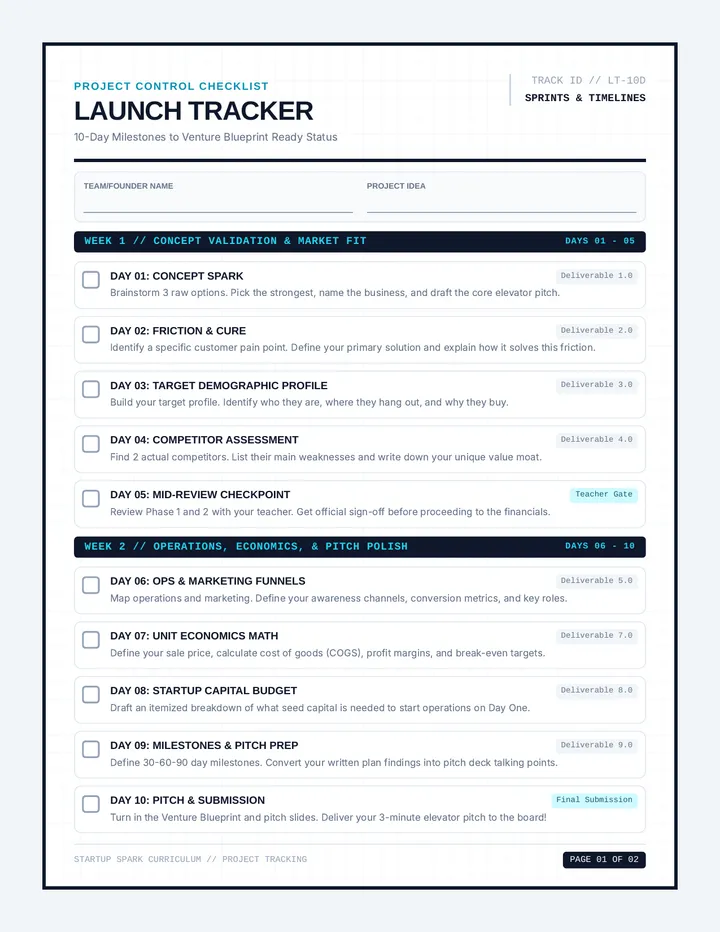
A student-facing daily pacing planner and a detailed teacher grading rubric. Styled with a professional project-tracking timeline grid, this 2-page document includes a 10-day sprint checklist and an analytical 100-point rubric matrix.
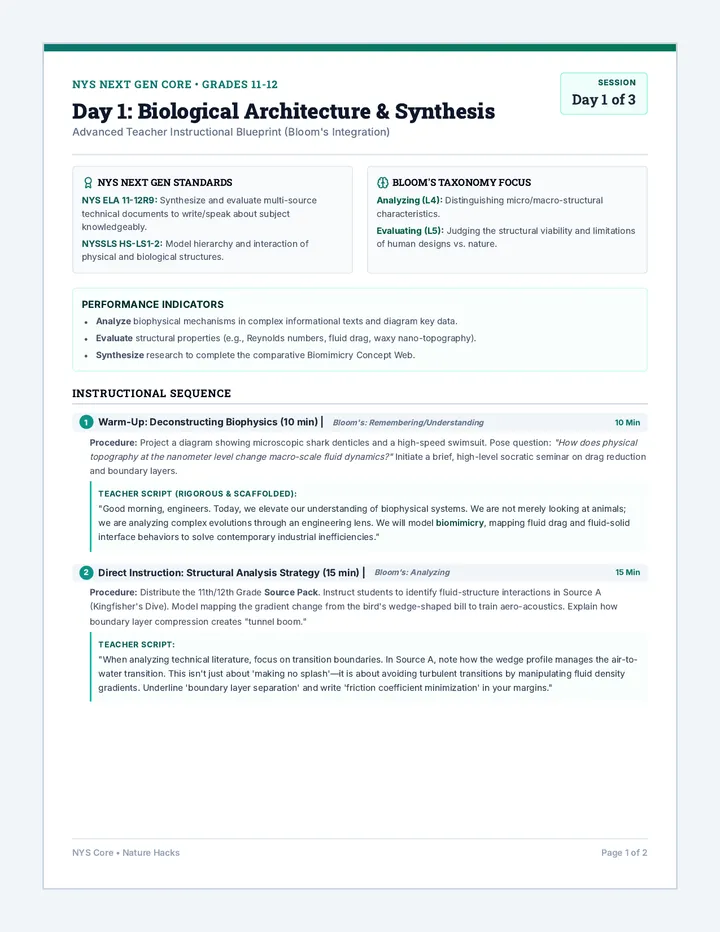
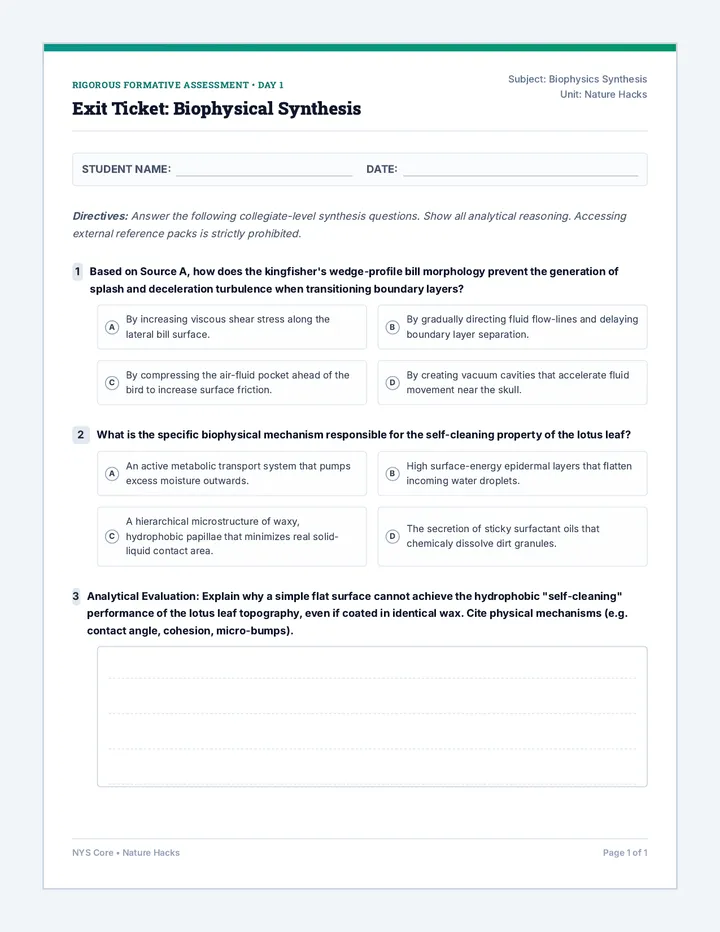
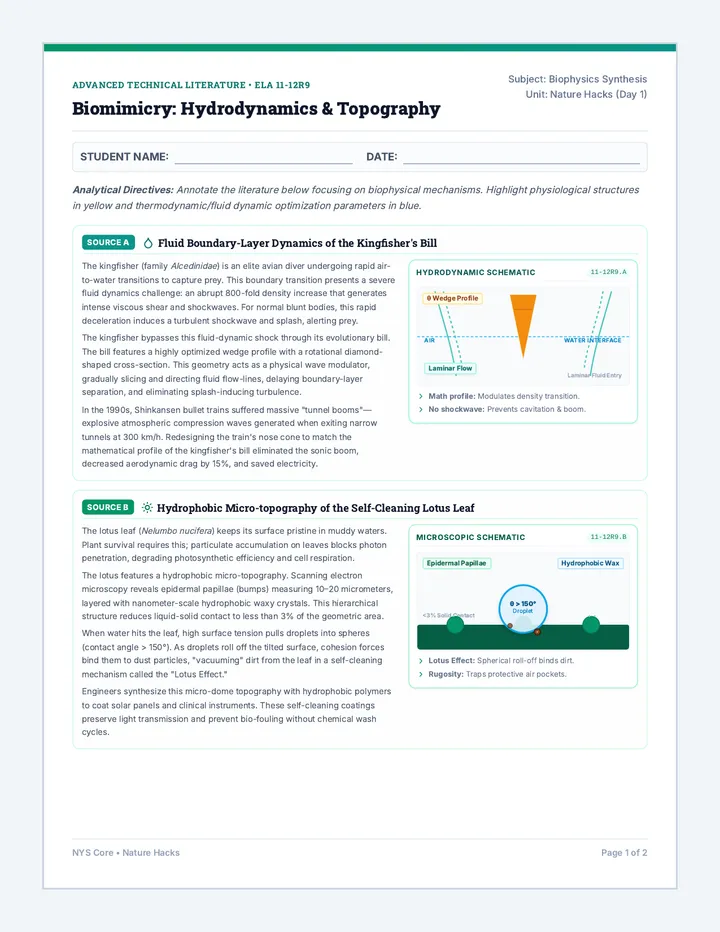
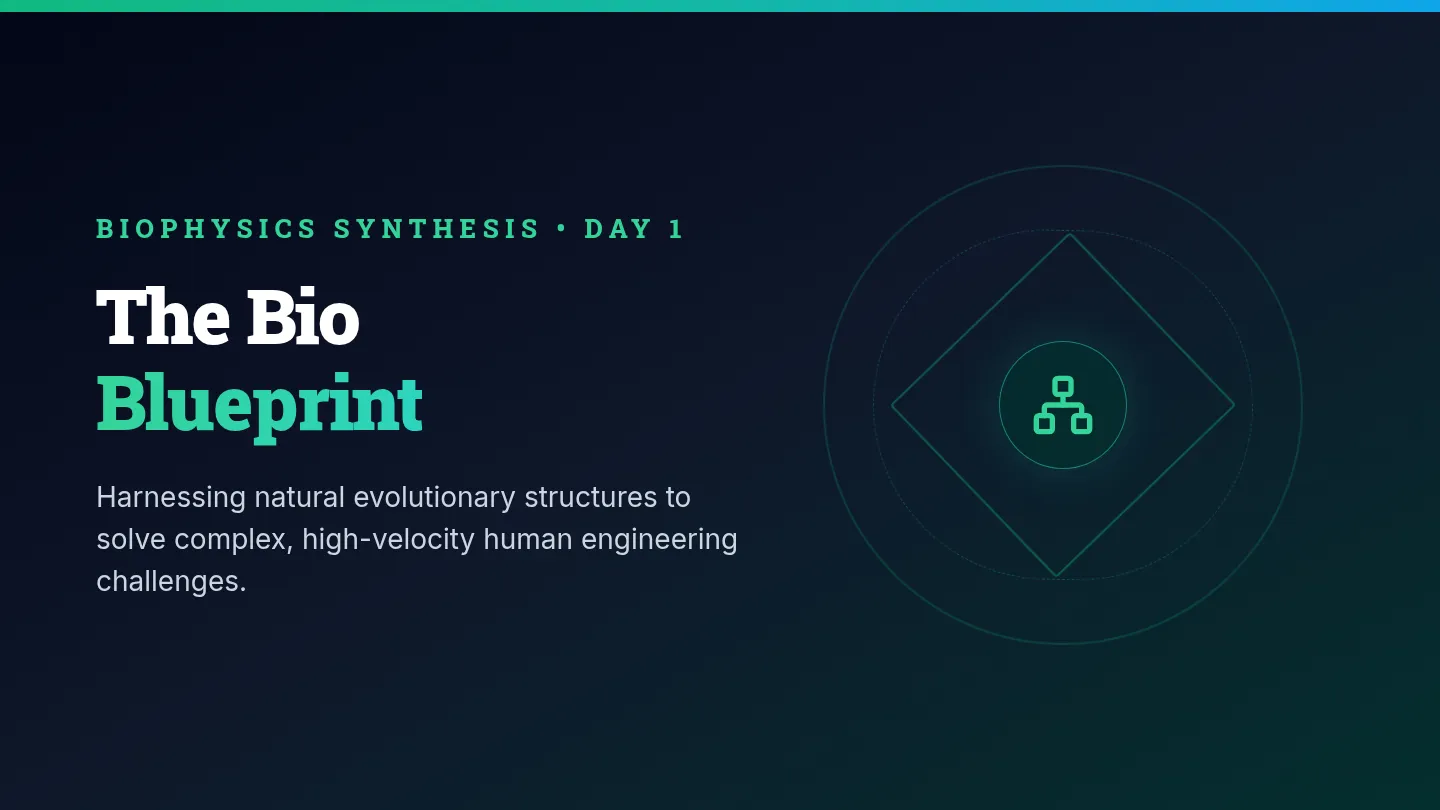
A 3-day cross-curricular STEAM unit where students research biological adaptations, design biomimetic engineering solutions, perform scale calculations, and write a synthesized informational article.
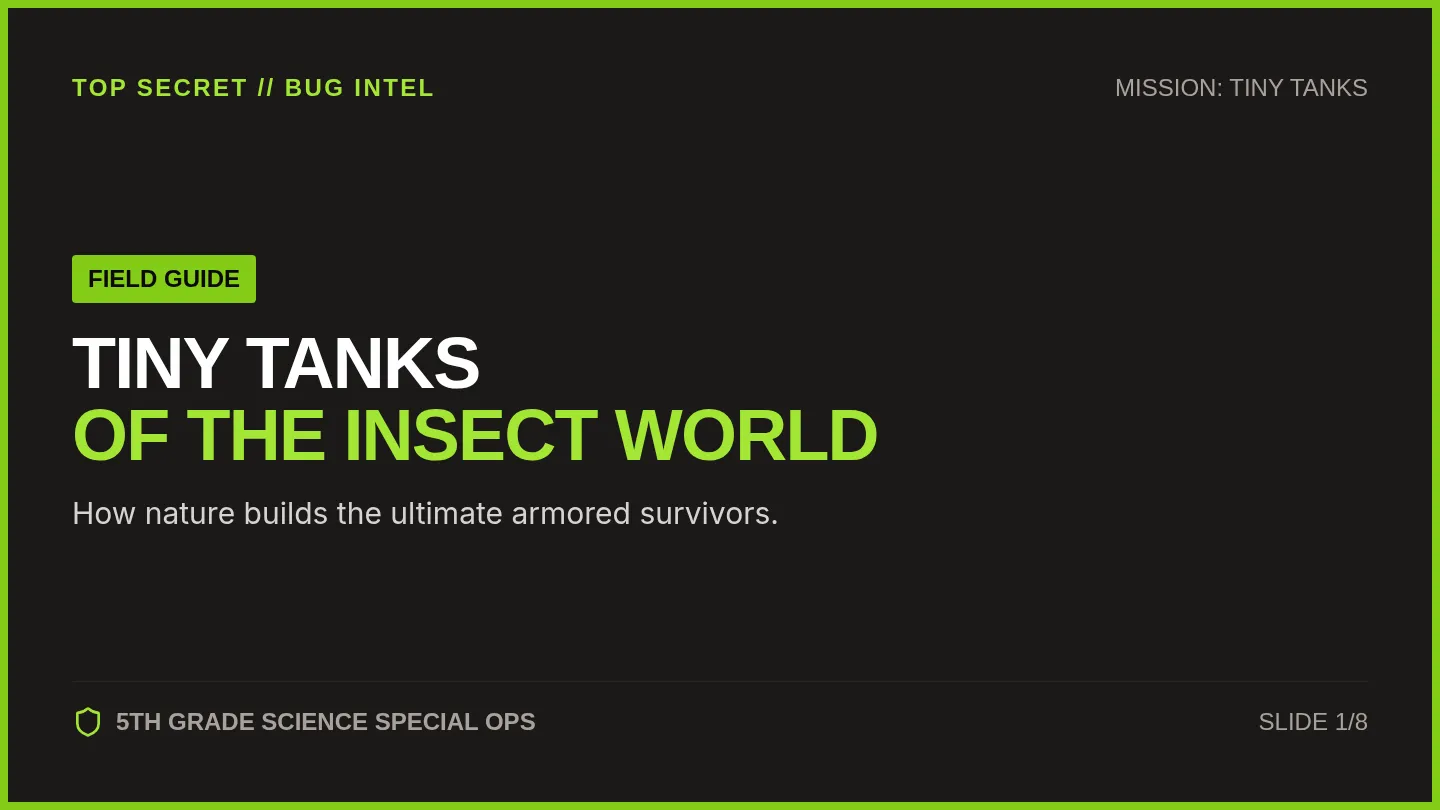
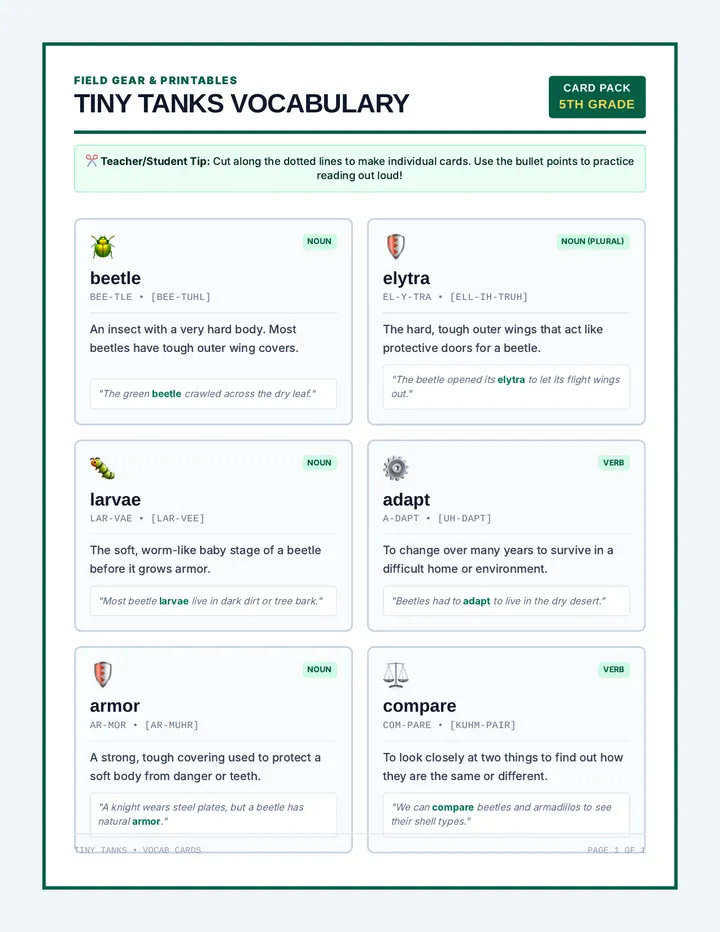
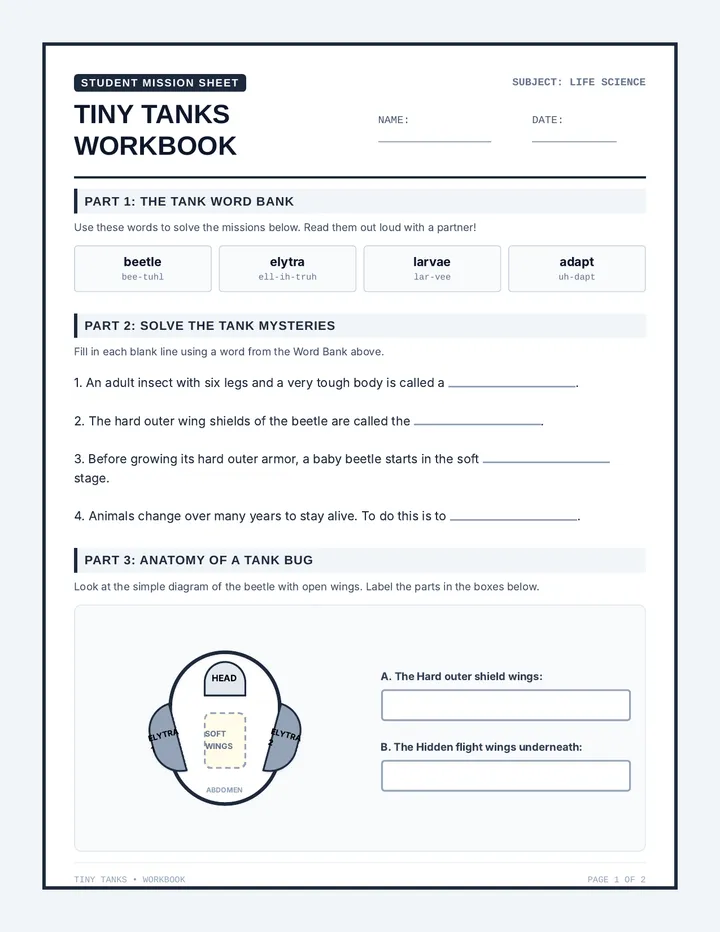
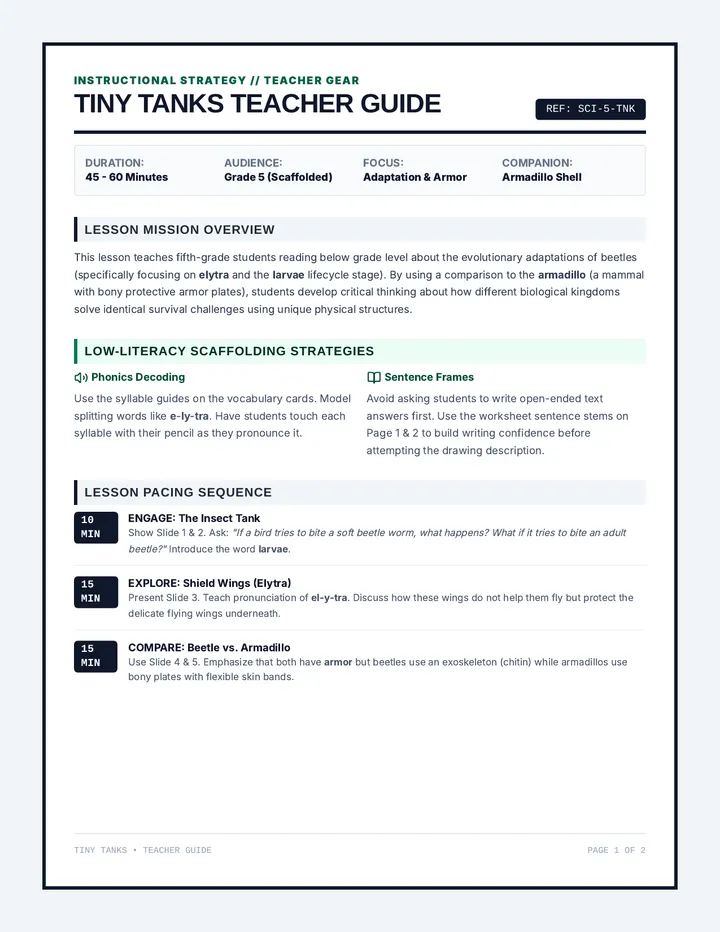
An engaging, highly visual science lesson exploring beetles as the armored tanks of the insect world, designed specifically for fifth-grade students reading below grade level. Students learn about elytra, beetle adaptation, and compare insect armor to that of the armadillo through scaffolded activities.
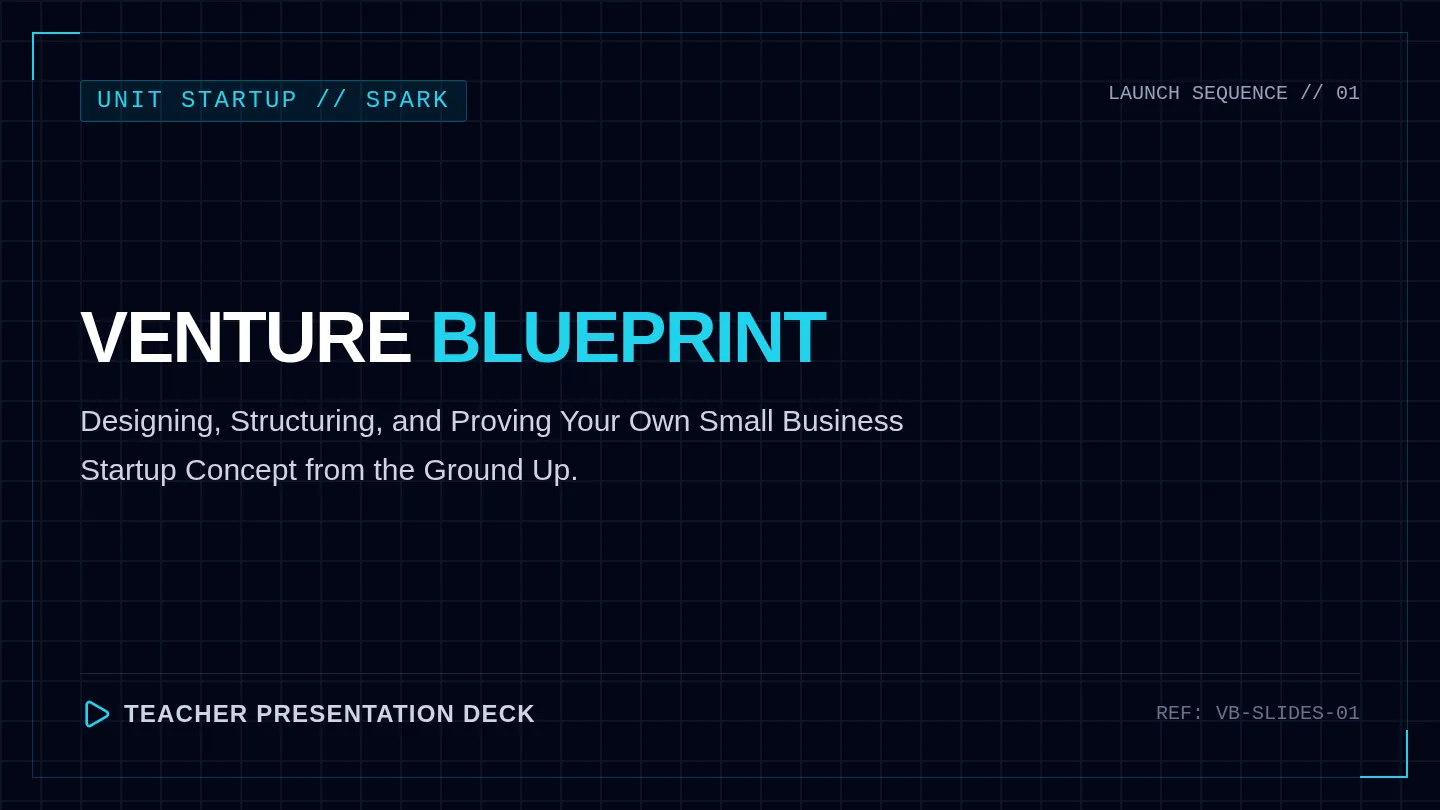
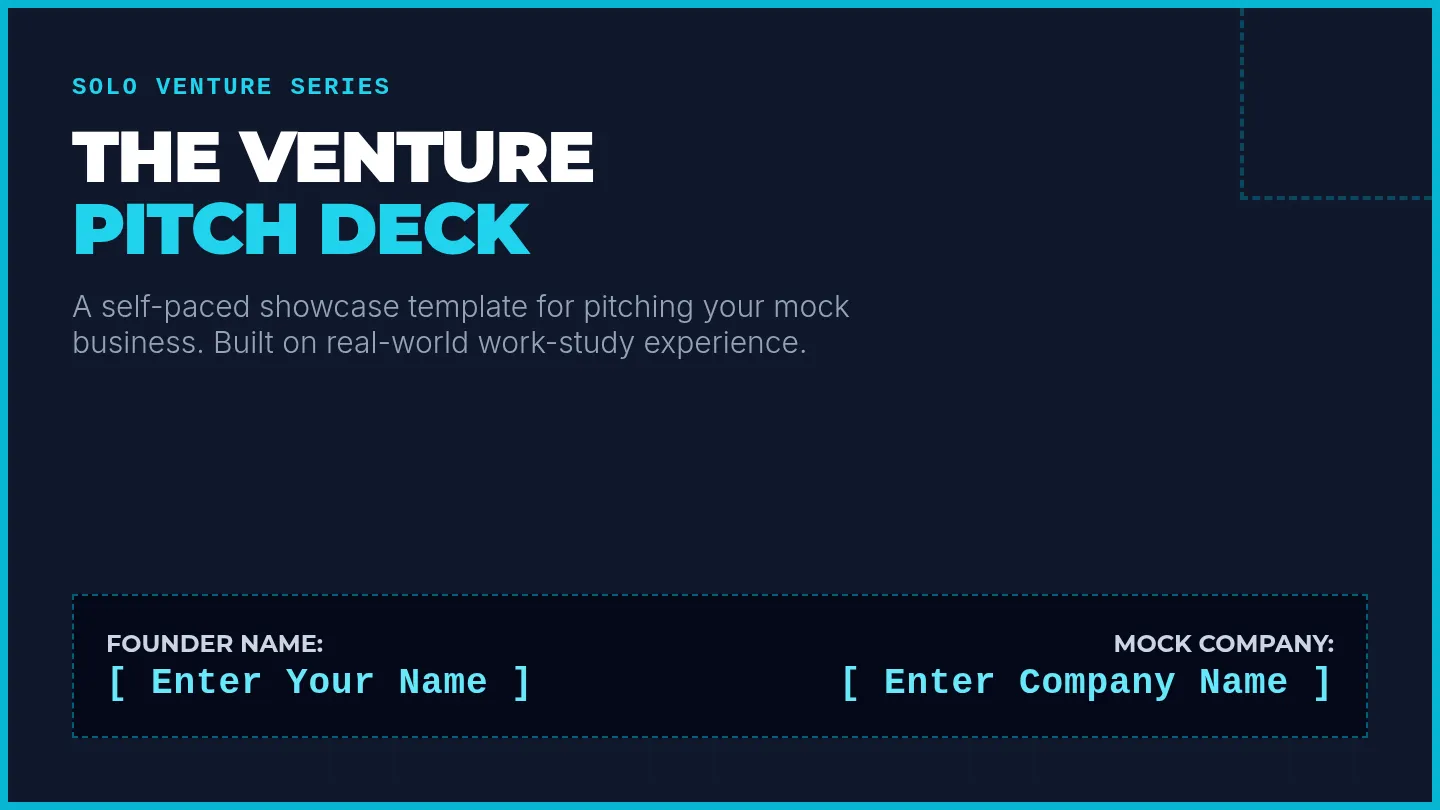
A high-impact, teacher-facing slide deck to introduce students to the Venture Blueprint. This 5-slide deck features big typography, structural blueprint line patterns, and core visual frames detailing startup fundamentals from elevator pitches to unit economics.
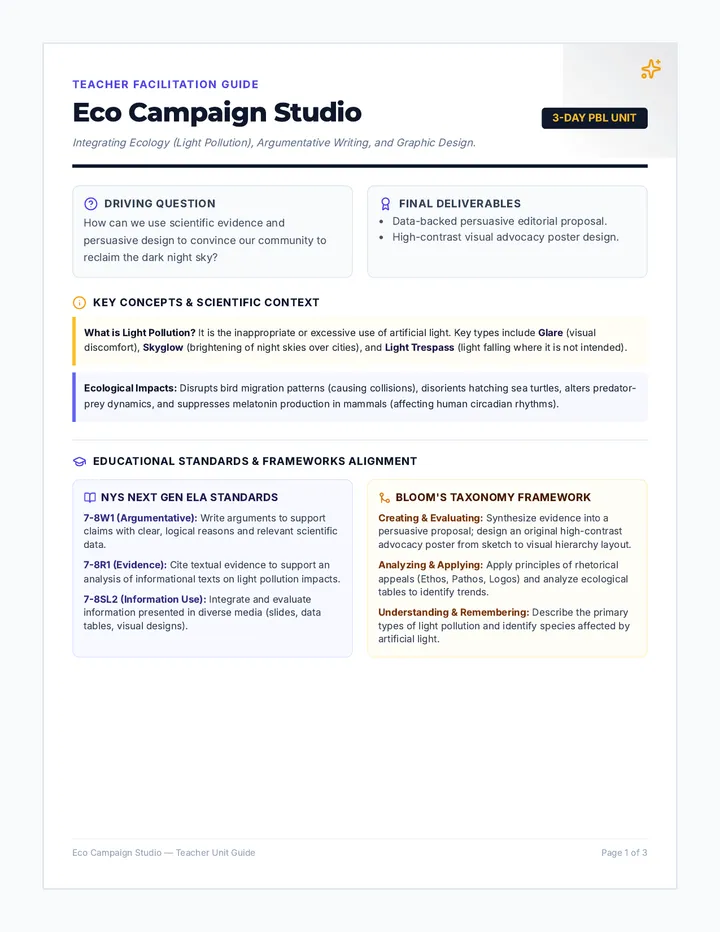
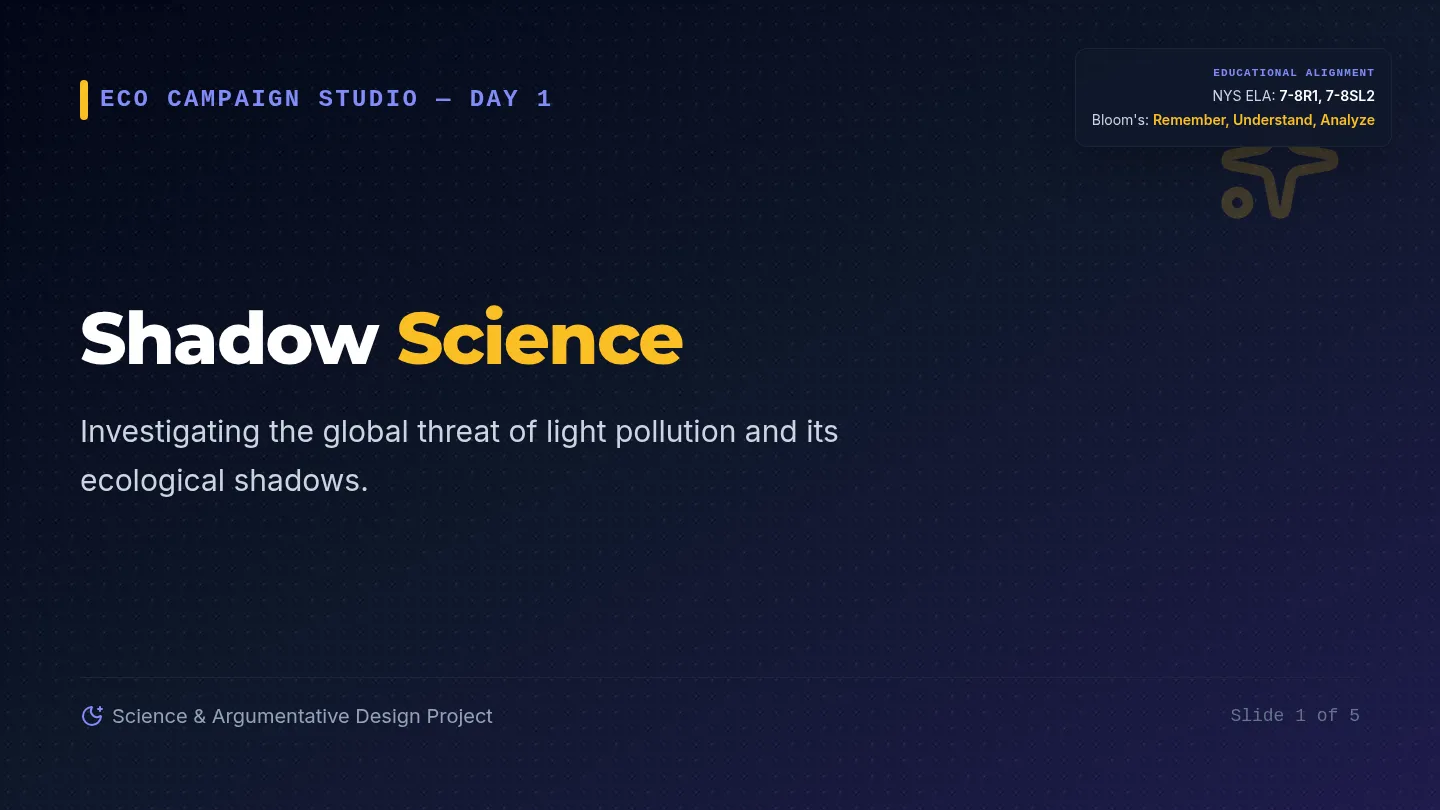
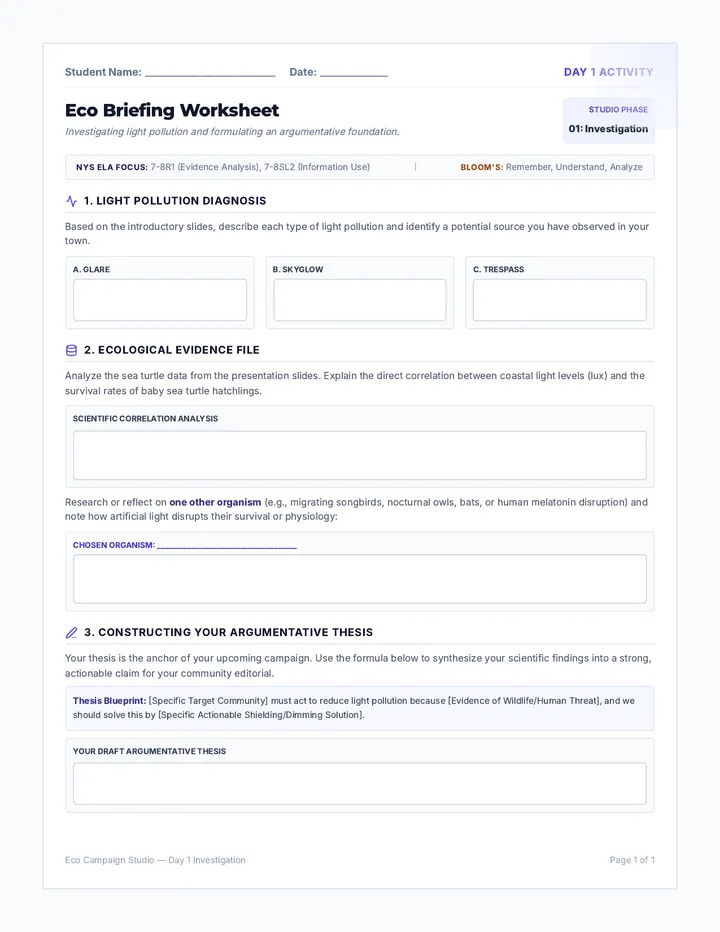
A cross-curricular, 3-day project-based unit combining science, argumentative writing, and graphic design. Students investigate the ecological impacts of light pollution, write a data-driven persuasive proposal, and design a community awareness campaign poster.
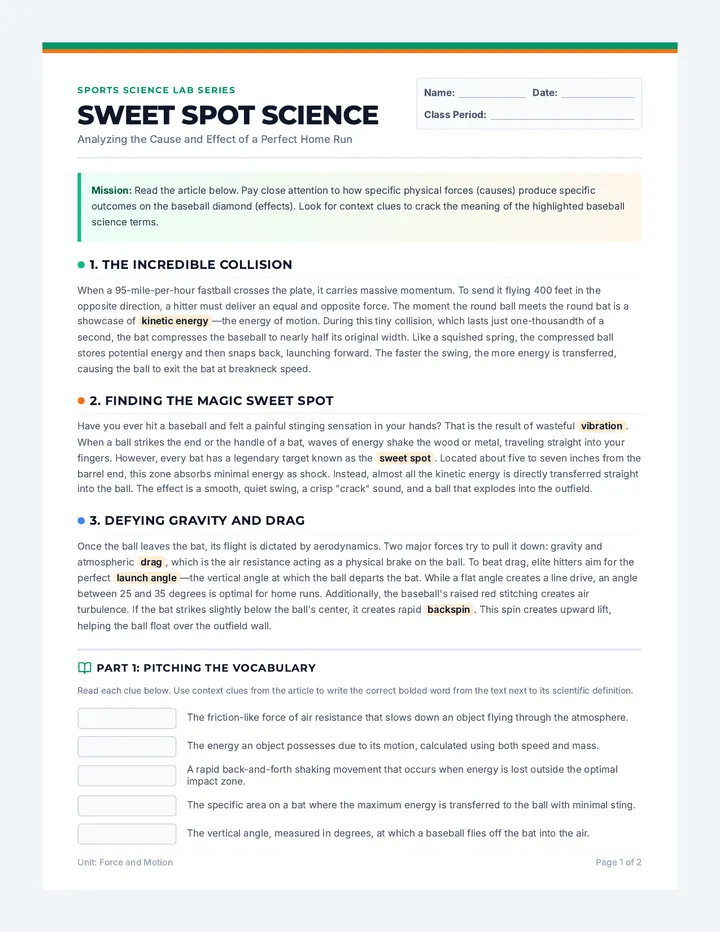
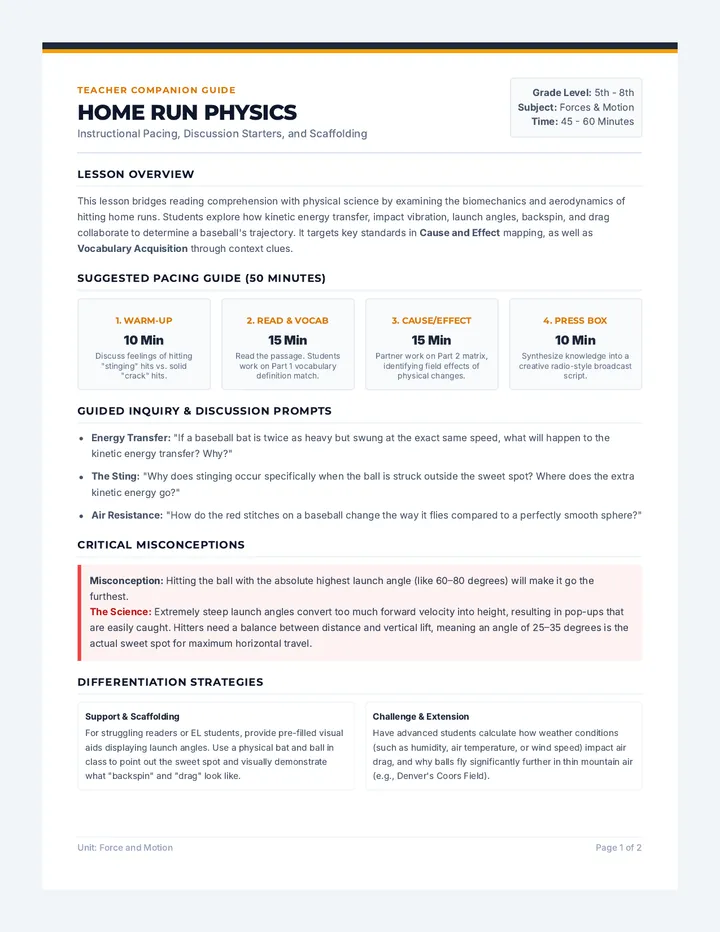
A lesson focused on the physics of hitting a home run in baseball. Students explore cause-and-effect relationships and vocabulary context clues through a reading passage, followed by comprehension questions and a creative writing prompt.
A comprehensive, 3-page student-facing startup planner and guided template. Using a modern blueprint theme, this resource provides scaffolds, questions, and structured writing areas for business profile, market analysis, operations, and financial plans.