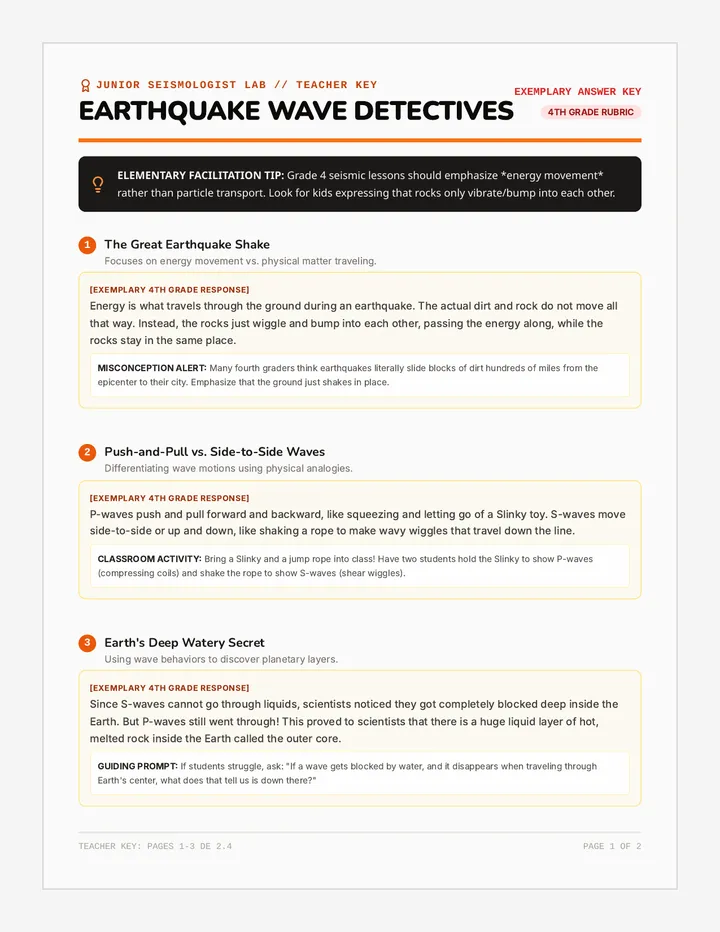
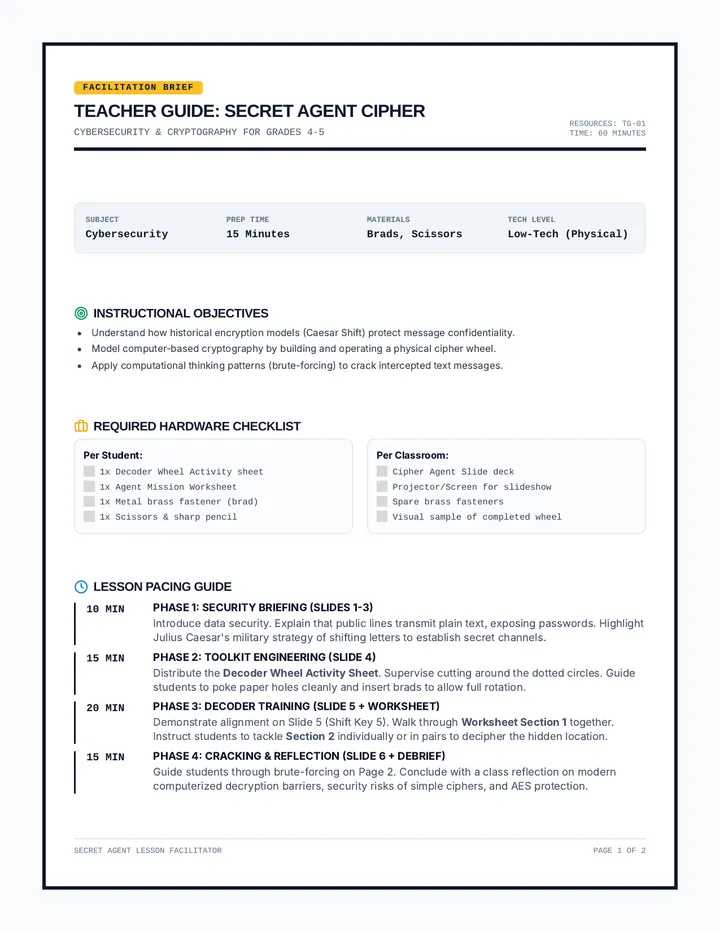
A 2-page teacher facilitation guide. Provides explicit pacing, materials lists, standard alignments, student misconceptions guide, and an complete answer key for the Agent Mission Worksheet.
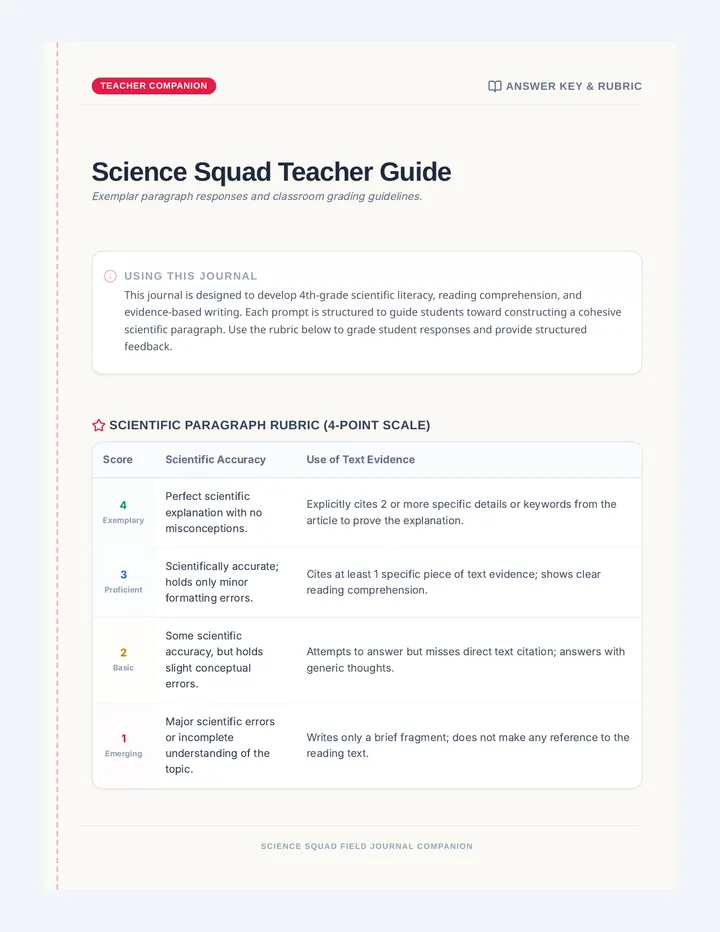
A multi-grade collection of scientific reading comprehension and response booklets designed to build disciplinary literacy in Earth, Life, and Physical sciences across elementary and middle school levels.
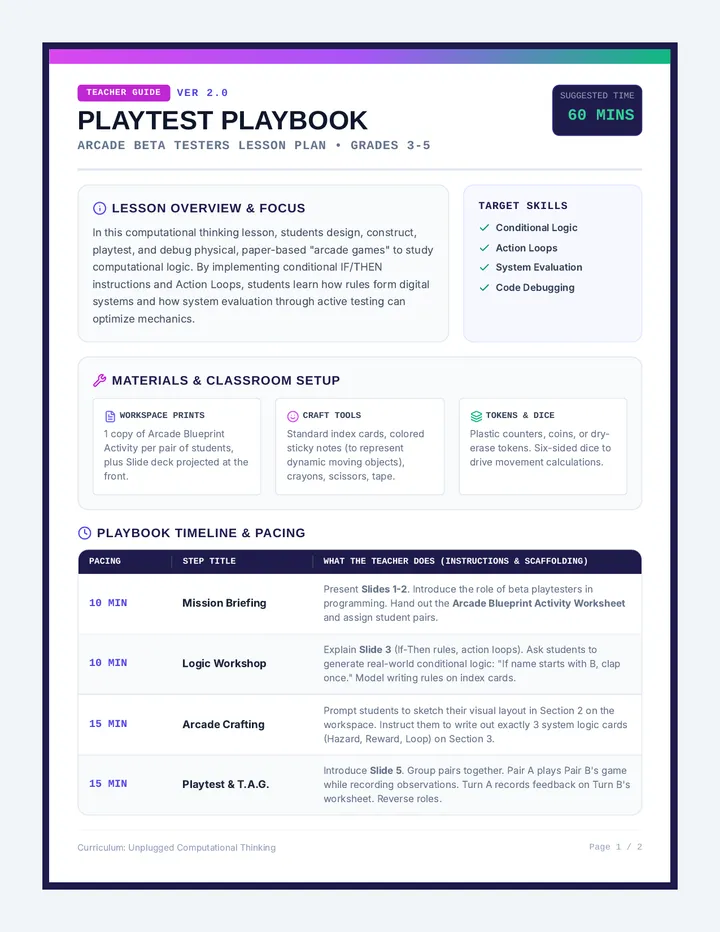
A lesson where students in grades 3 to 5 design paper-prototype arcade games, playtest them, and practice debugging loops and logic rules using constructive feedback.
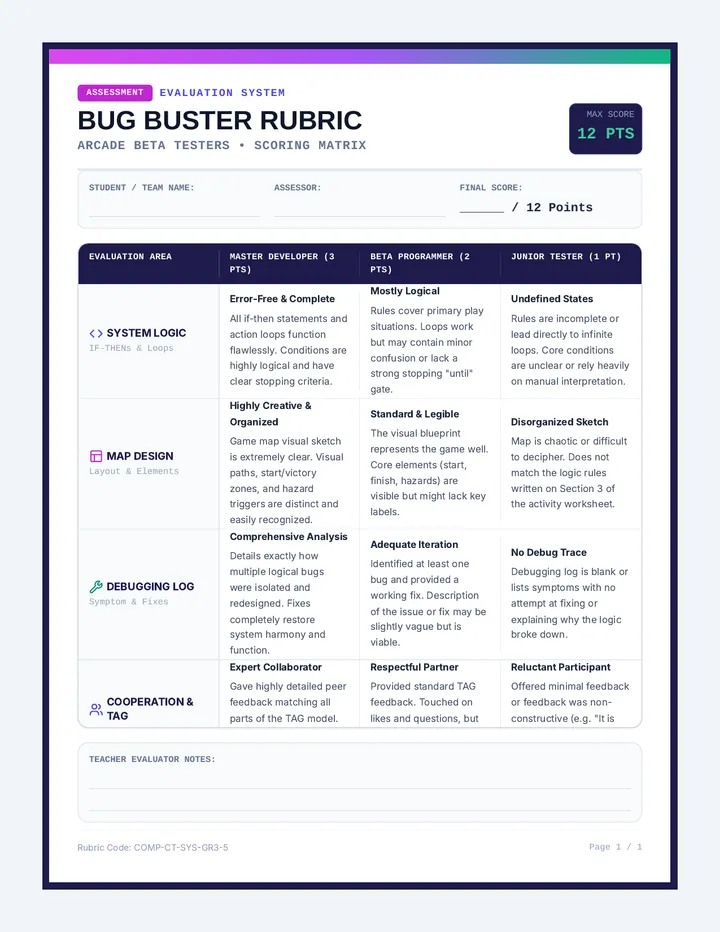
A 1-page comprehensive grading rubric for the Arcade Beta Testers design challenge, scoring game system logic, design, debugging tracker, and peer testing cooperation.
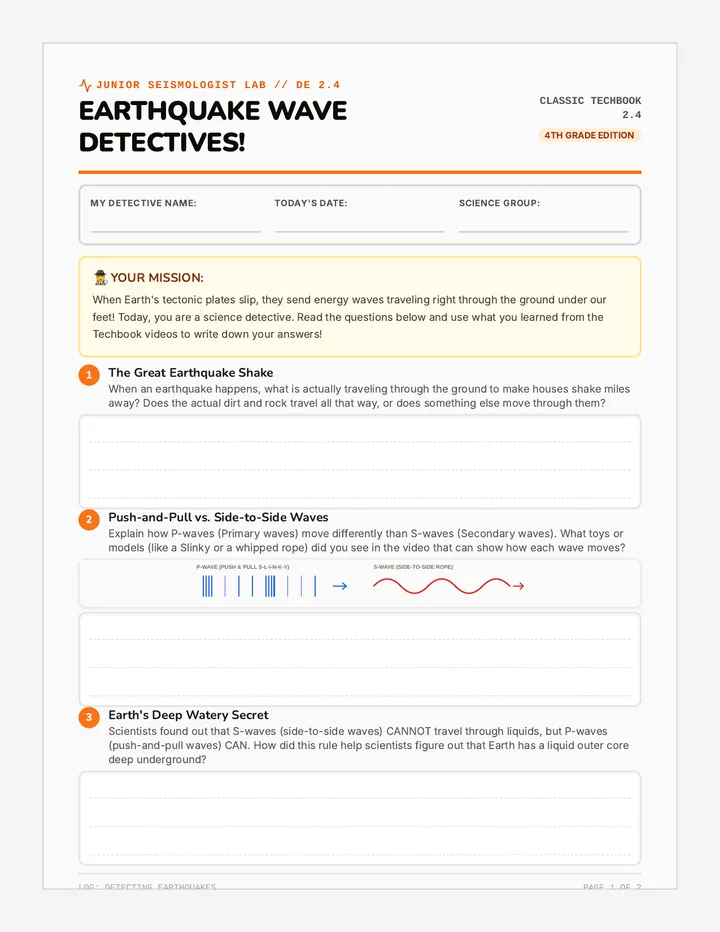
An earth and space science curriculum unit covering dynamic earth processes, earthquake wave mechanics, atmospheric pressure systems, and weather prediction techniques.
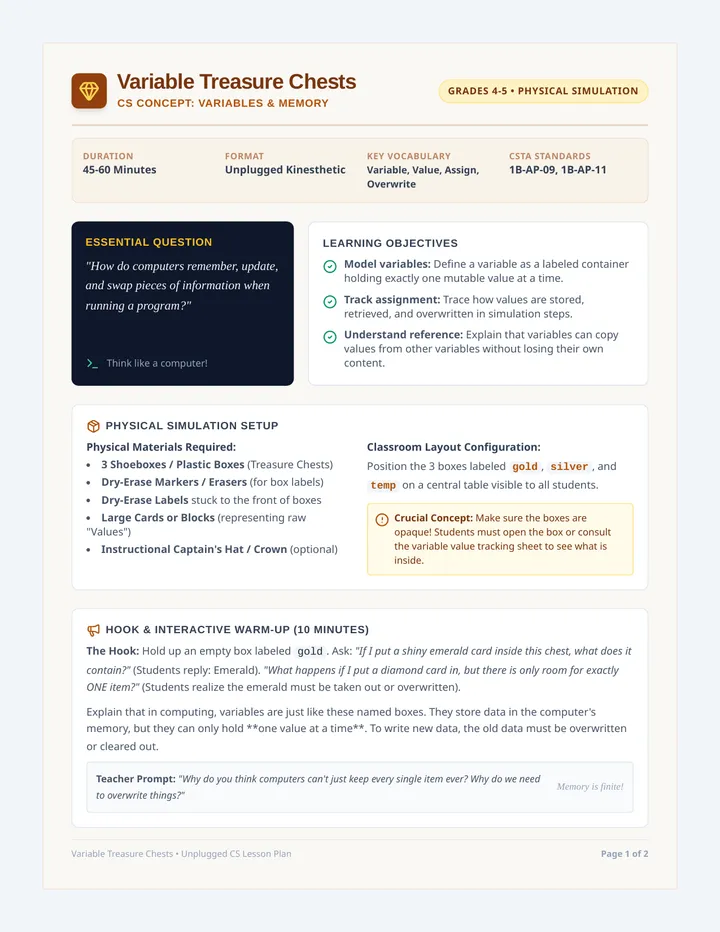
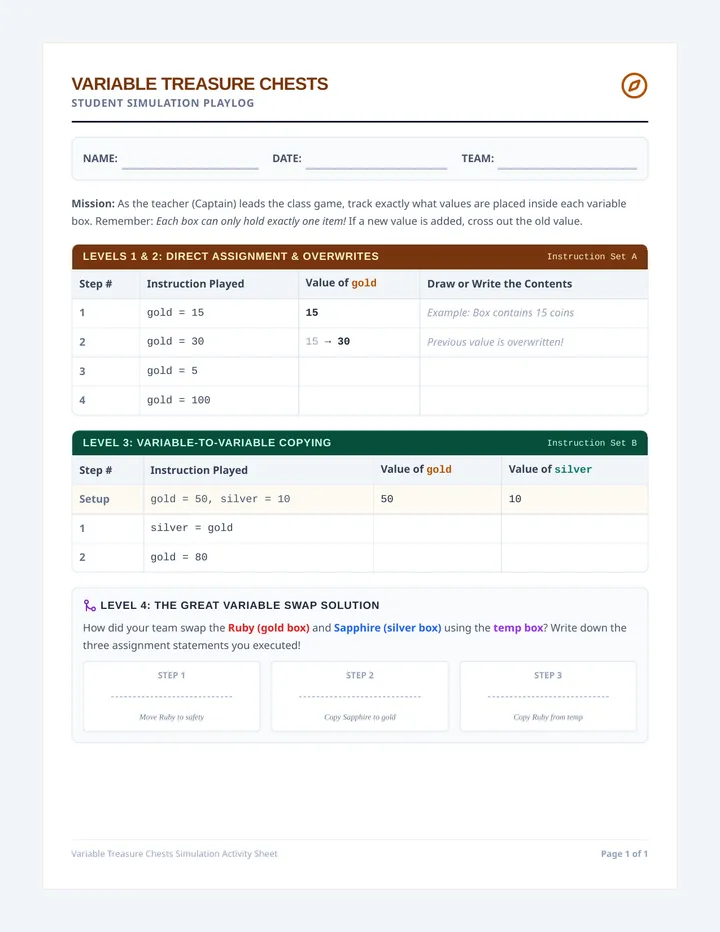
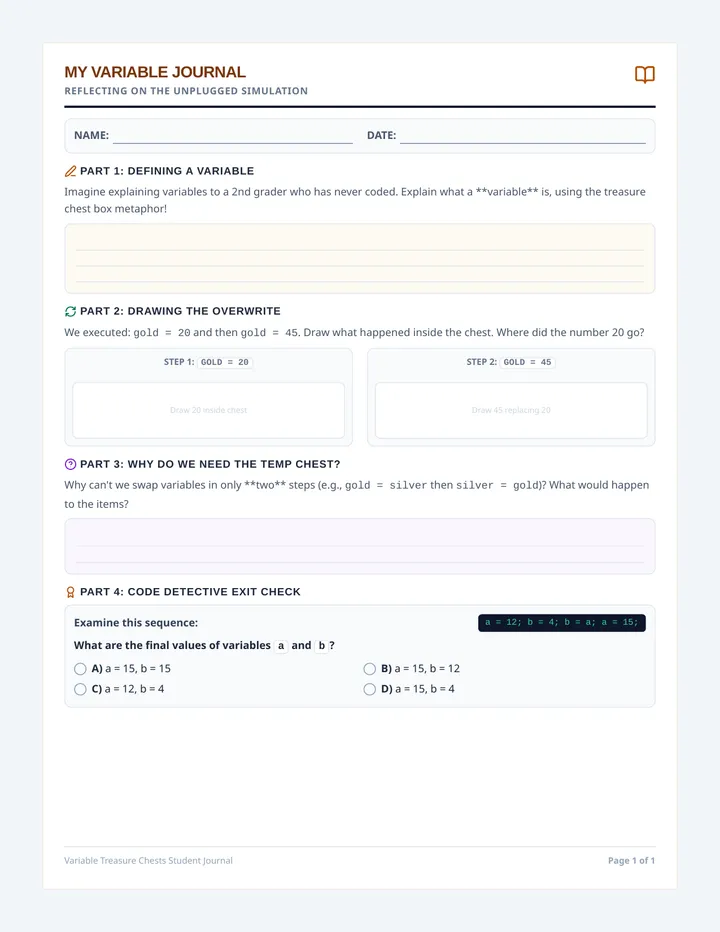
A hands-on physical simulation lesson where 4th and 5th graders act as computer processors and memory, using physical boxes as 'treasure chests' (variables) to learn how variables store, reference, and update values.
A 2-page teacher-facing playbook and lesson plan outlining classroom pacing, standards, preparation guidelines, and expert debugging support instructions.
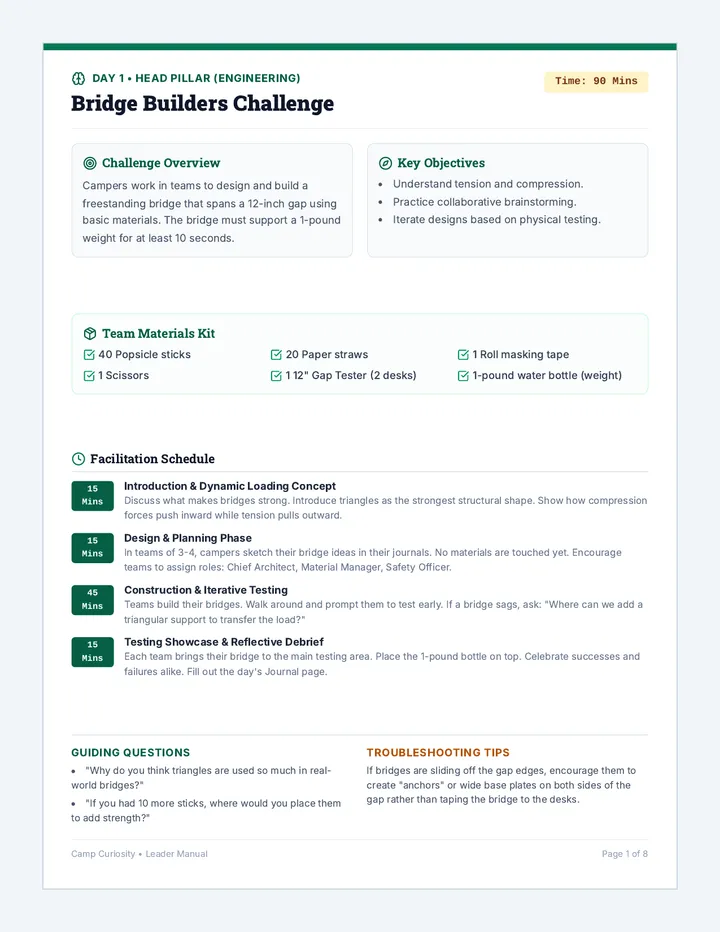
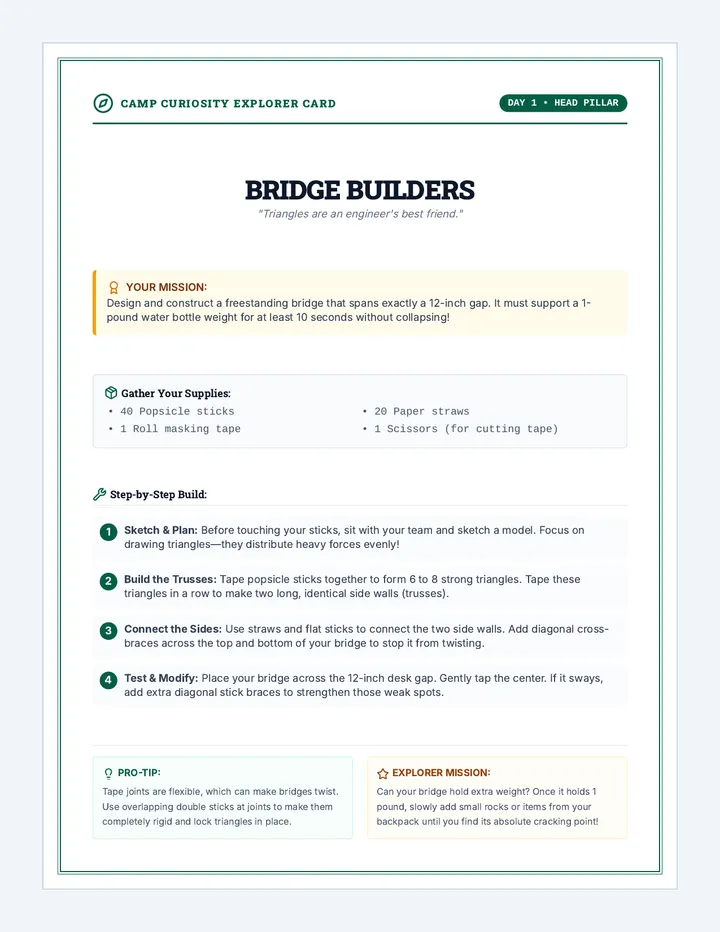
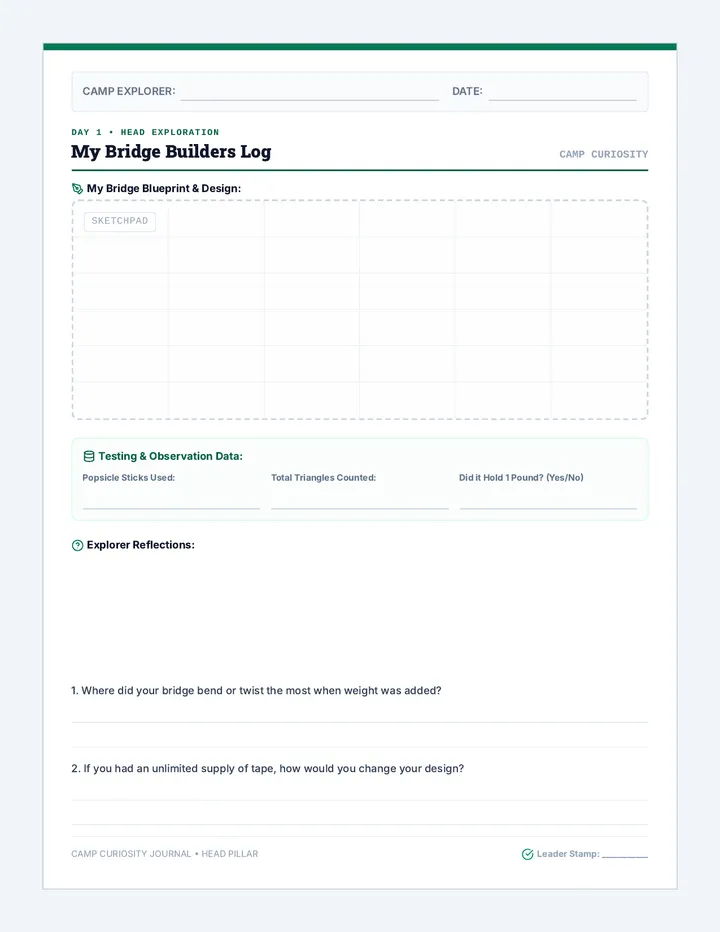
An action-packed, hands-on 8-day 4-H camp program focusing on Head, Heart, Hands, and Health. Students tackle engineering, teamwork, ecology, nutrition, and art challenges through daily active learning.
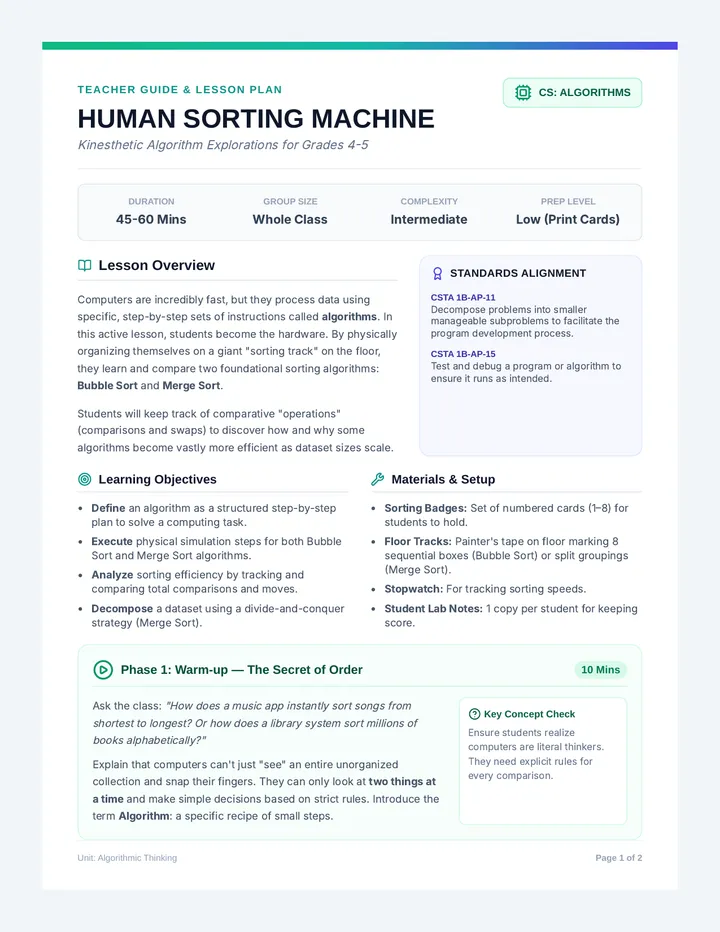
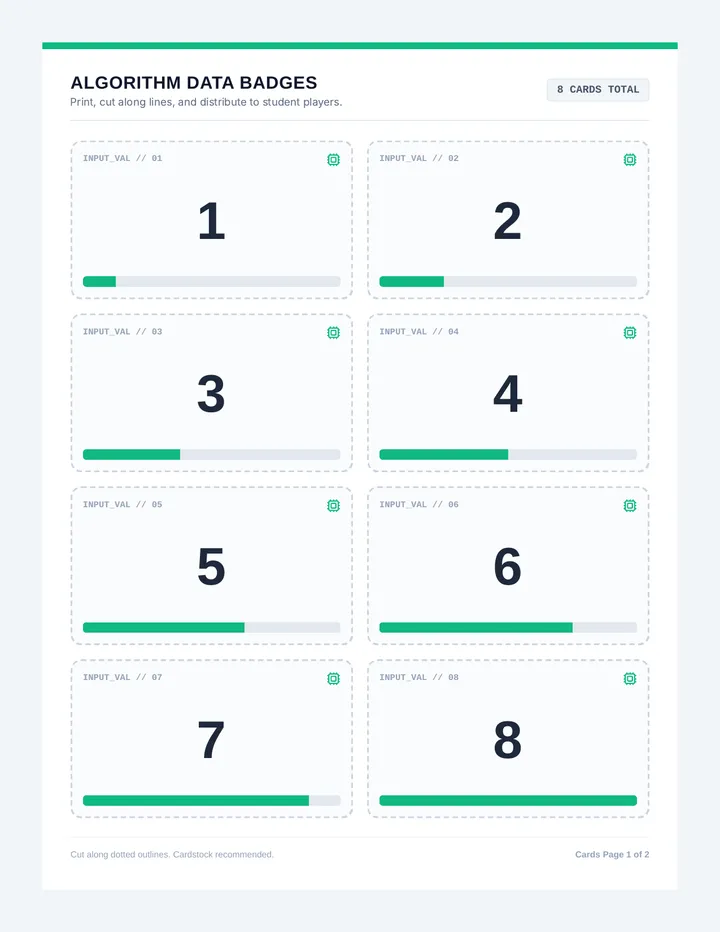
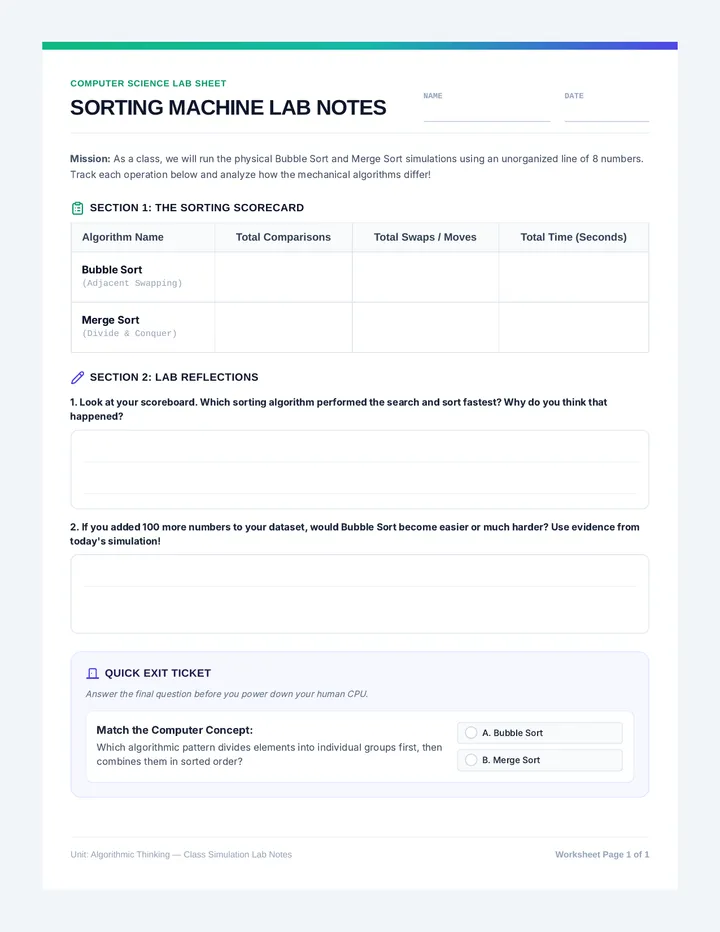
A hands-on, kinesthetic lesson where fourth and fifth-grade students physically act out bubble sort and merge sort algorithms to understand how computers organize data and compare step-by-step efficiency.
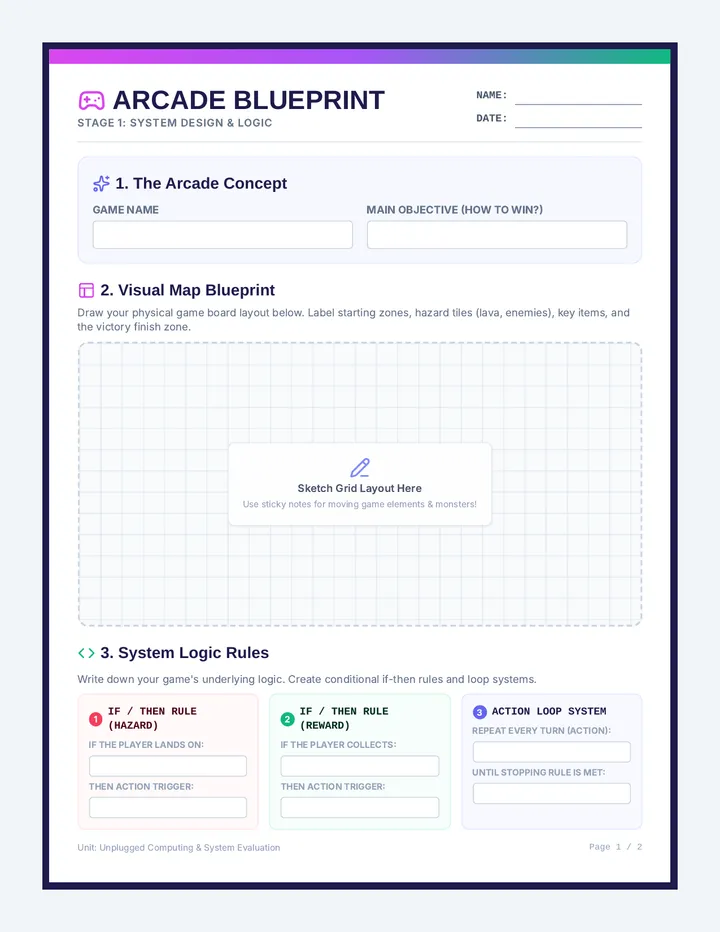
A 2-page printable student worksheet featuring a game blueprint planner, system logic rule editor (if-then & loops), playtest log, and bug-fixing tracker.
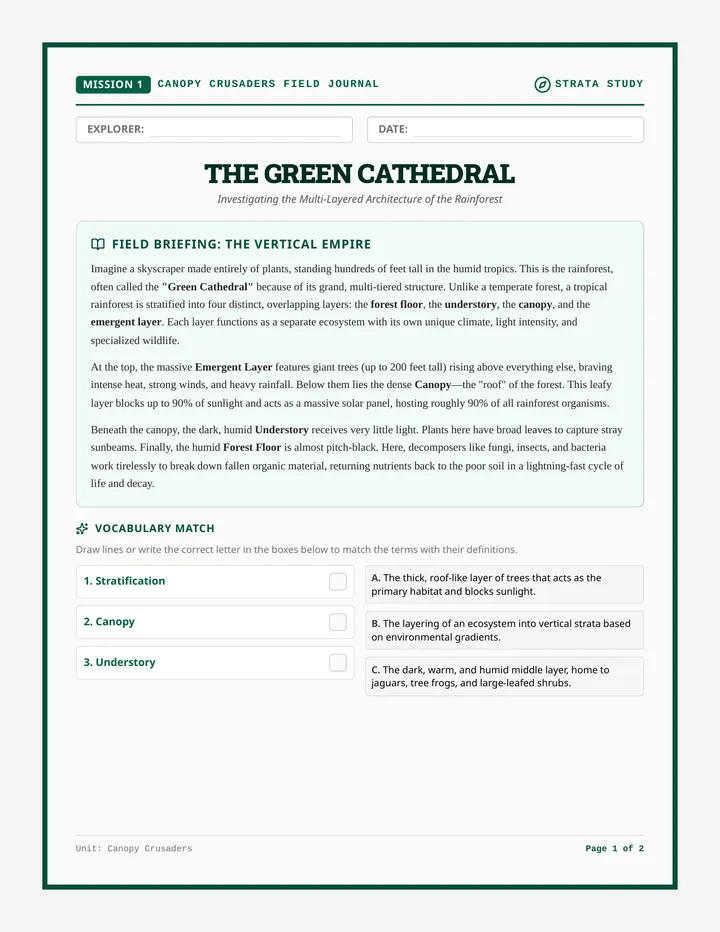
A comprehensive unit on rainforest ecology, climate regulation, and conservation. Students explore the structural layers of the rainforest, their roles as carbon sinks, the threats of deforestation, and collaborative solutions for preservation.
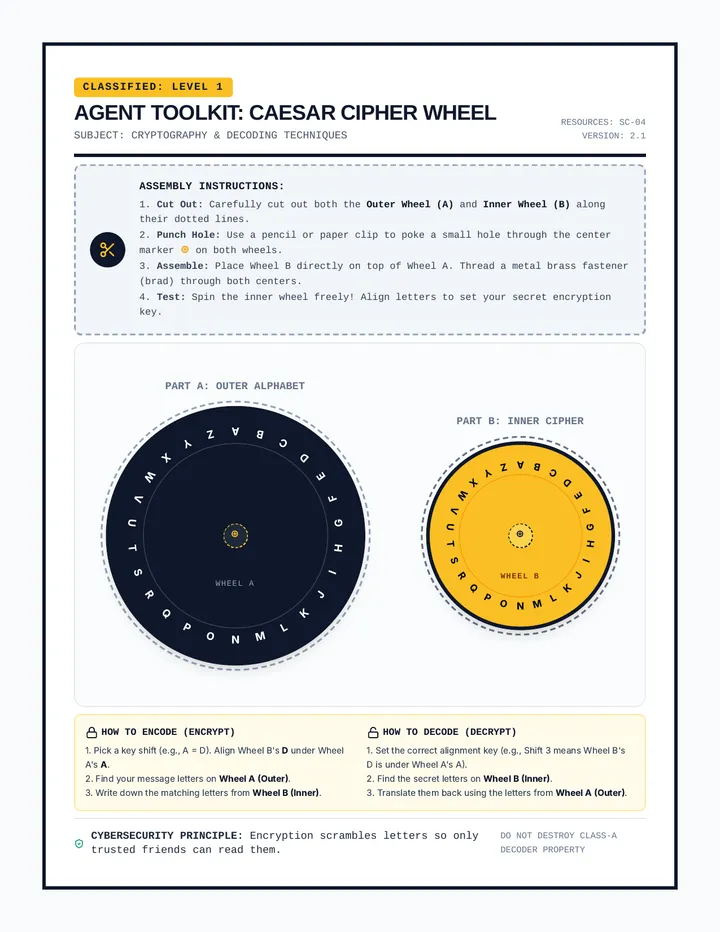
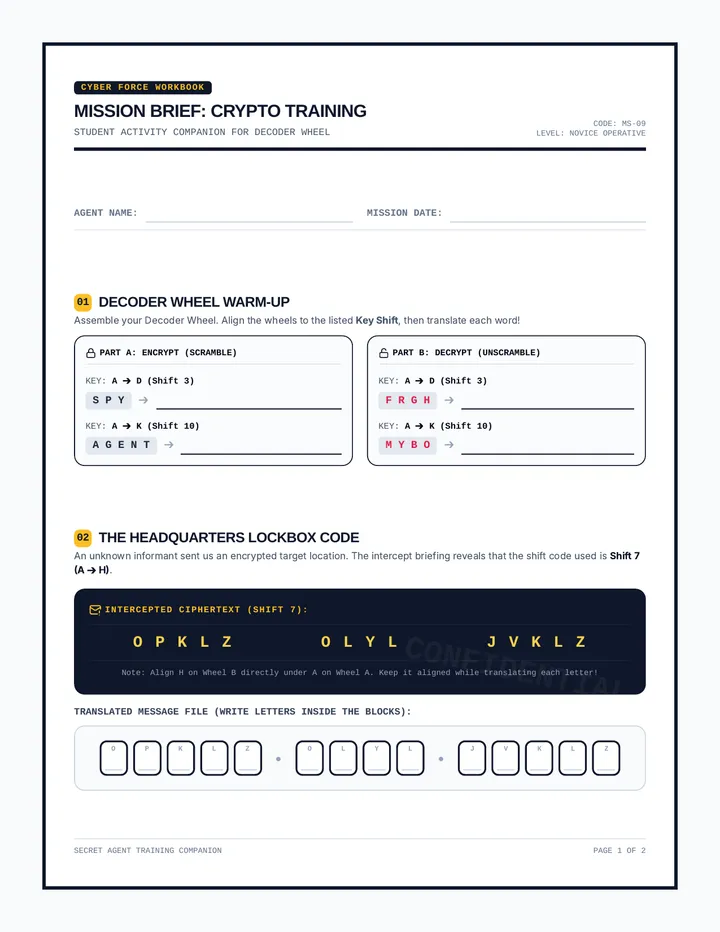
An interactive cybersecurity lesson for 4th-5th graders exploring cryptography through a DIY Caesar cipher wheel, computational thinking, and hands-on pattern matching.
A visually stunning, retro arcade-themed slide deck that guides grades 3-5 students through the design, computational logic, playtesting, and debugging of their paper prototypes.