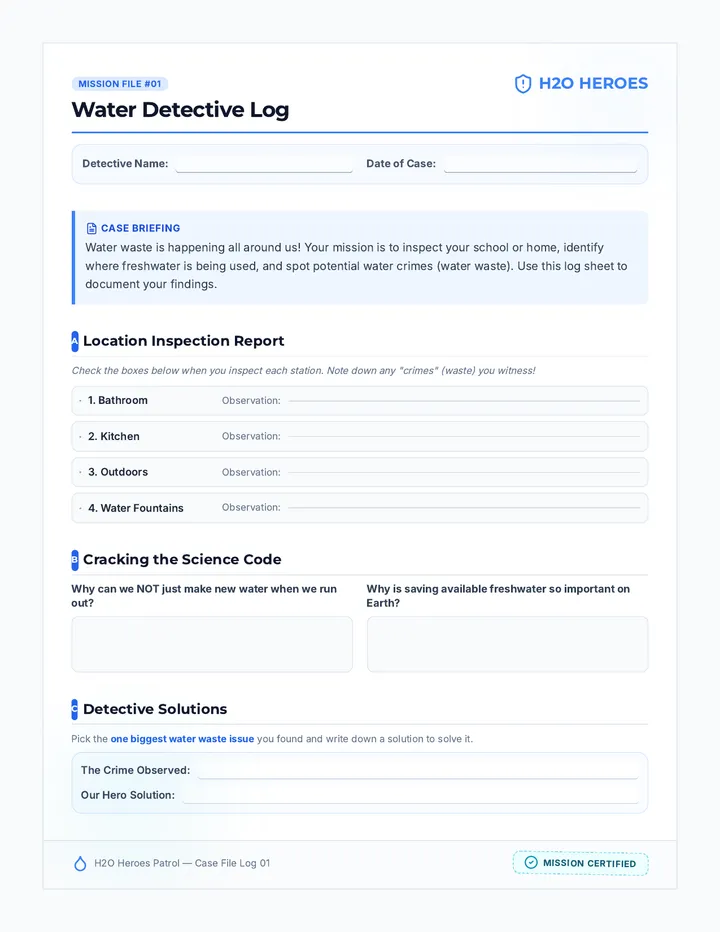
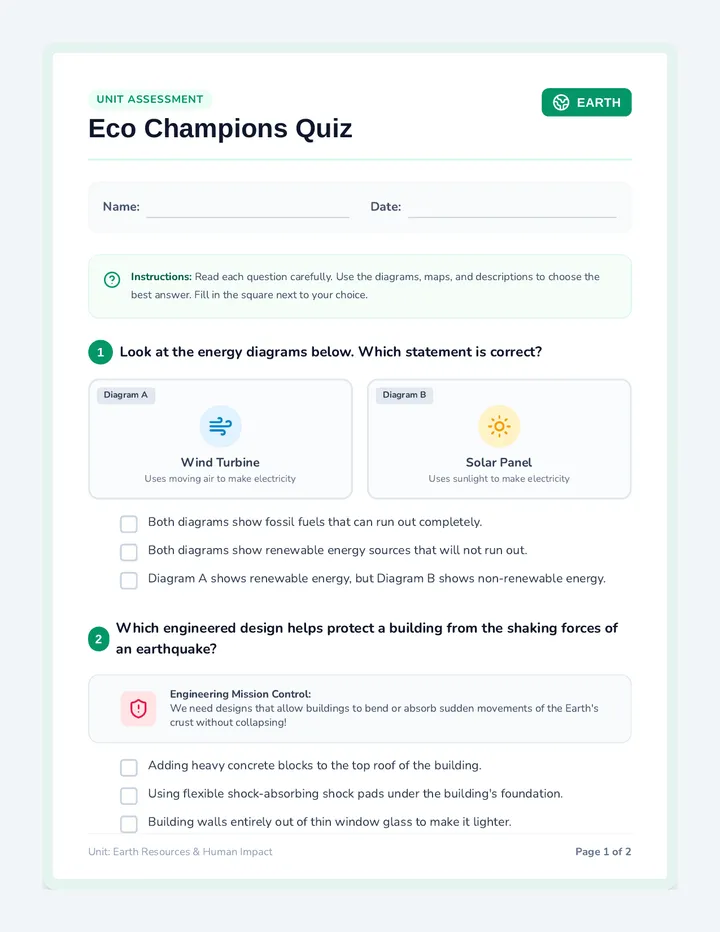
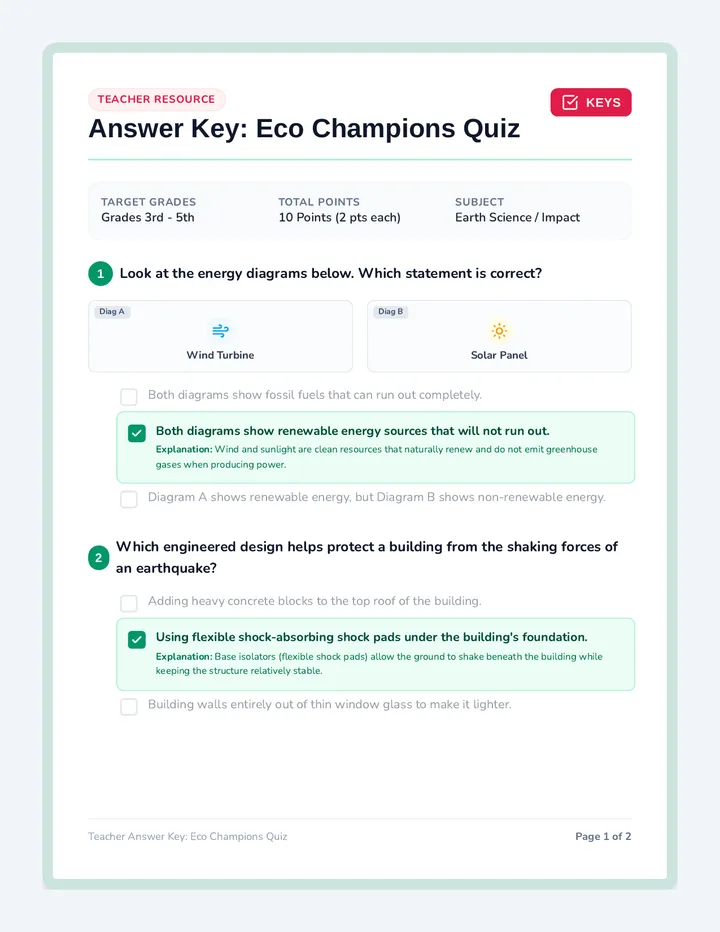
A vocabulary-focused lesson for 3rd grade ESL students to master key terms related to Earth's water, featuring interactive notebook activities and visual supports.
A sensory-rich lesson for K-3 students focusing on fine motor skills and plant life cycles through tactile seed sorting and indoor gardening. Students practice pincer grasps and follow visual directions to start their own sprout journey.
A comprehensive lesson to inspire and equip students to organize their own neighborhood or park cleanup for Earth Day. Includes background on Earth Day, the impact of waste, and a practical planning framework for student-led action.
An exploration of stars, constellations, and the technology humans use to study deep space.
A simplified tour of the eight planets in our solar system, categorized into rocky inner planets and gas giant outer planets.
An introduction to our nearest neighbors in space: the Sun and the Moon, focusing on their basic characteristics and roles.
Students culminate their AI literacy journey by designing an AI solution for a real-world problem. They focus on responsible design, identifying potential biases, and ensuring societal benefit.
Students analyze the ethical implications of AI on privacy and identity. They explore deepfakes, facial recognition, and the balance between security and personal freedom.
Middle school students dive into the mechanics of Large Language Models (LLMs). They learn about tokenization, probability, and how AI "predicts" the next word in a sequence.
Students explore the "ingredients" of AI: datasets. They learn how biased or incomplete data can lead to unfair or inaccurate AI systems and practice creating a balanced dataset.
Students learn to critically evaluate AI outputs by identifying "hallucinations" and factual errors. They explore why AI sometimes makes mistakes and how to verify information.
Students explore Generative AI and the importance of prompt engineering. They learn how to communicate effectively with AI to create specific images and text.
Students discover how AI works as a "smart assistant" in daily life. They identify AI in common devices and reflect on how it helps people solve problems.
Students explore the foundation of AI learning: pattern recognition. They learn that computers need many examples (data) to understand rules and make predictions.
Introduces the concept of AI by distinguishing between a robot's physical body and its digital 'brain'. Students explore how AI 'thinks' differently than humans and machines.
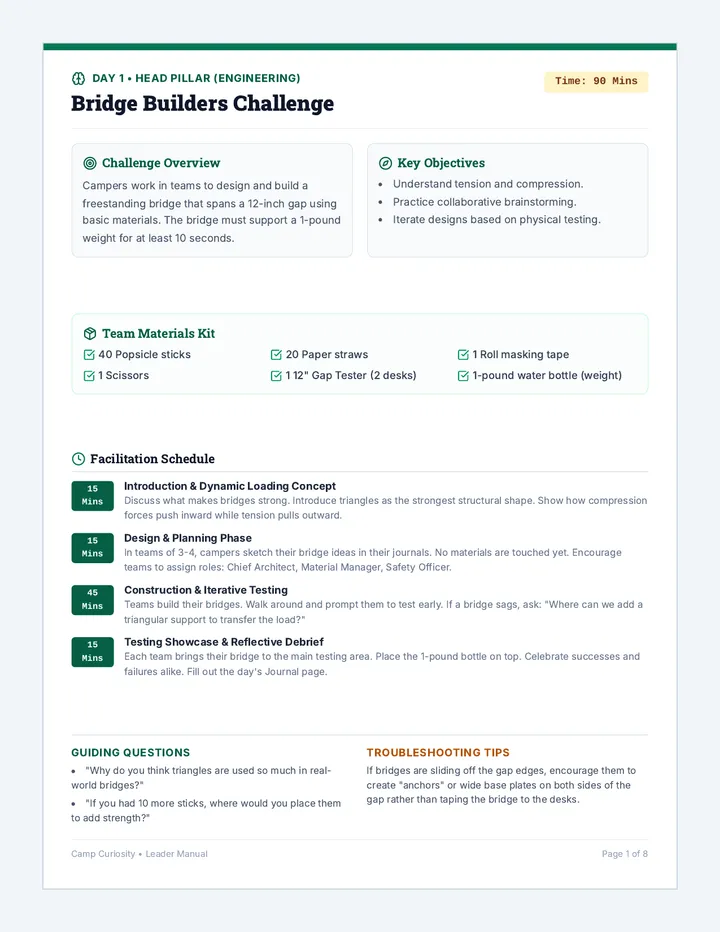
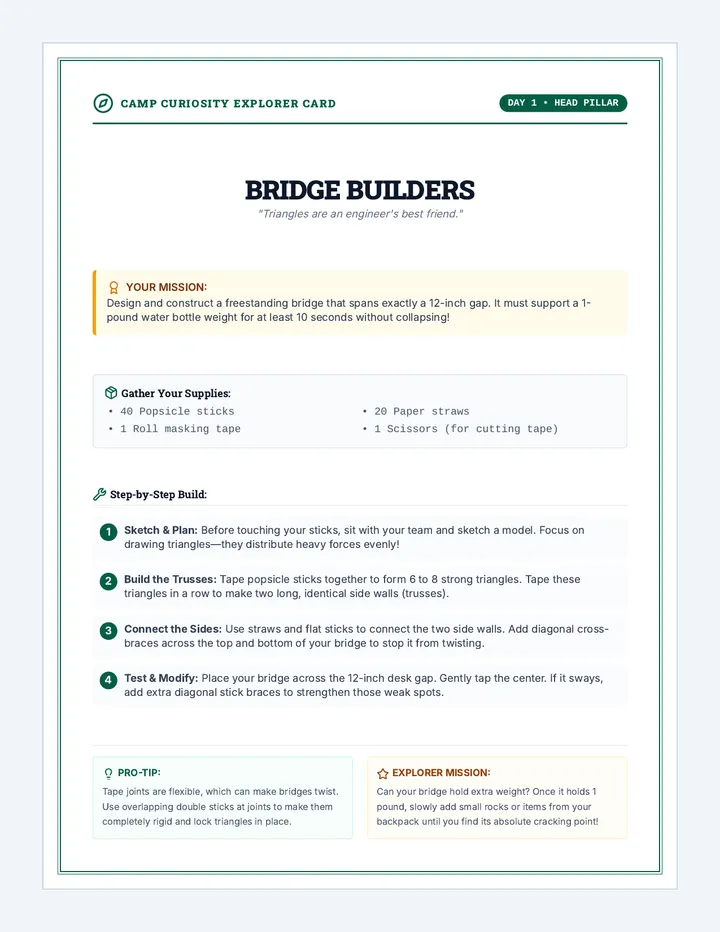
A foundational toolkit for setting up a physical engineering and maker space, covering physical layout, collaborative roles, and essential classroom routines.
A creative engineering lesson where students use LEGO bricks to design and build detailed animal models based on specific prompt constraints. Focuses on spatial reasoning, creative problem-solving, and descriptive writing.
A foundational lesson on the three main stages of the water cycle: evaporation, condensation, and precipitation. Includes a visual anchor chart and a hands-on labeling activity.
A guided reading lesson for 3rd graders exploring the fundamental differences between stars and planets, focusing on light production, composition, and movement.
A fascinating look at decomposers for 3rd graders, explaining how fungi, bacteria, and worms break down dead matter to recycle nutrients back into the food chain.
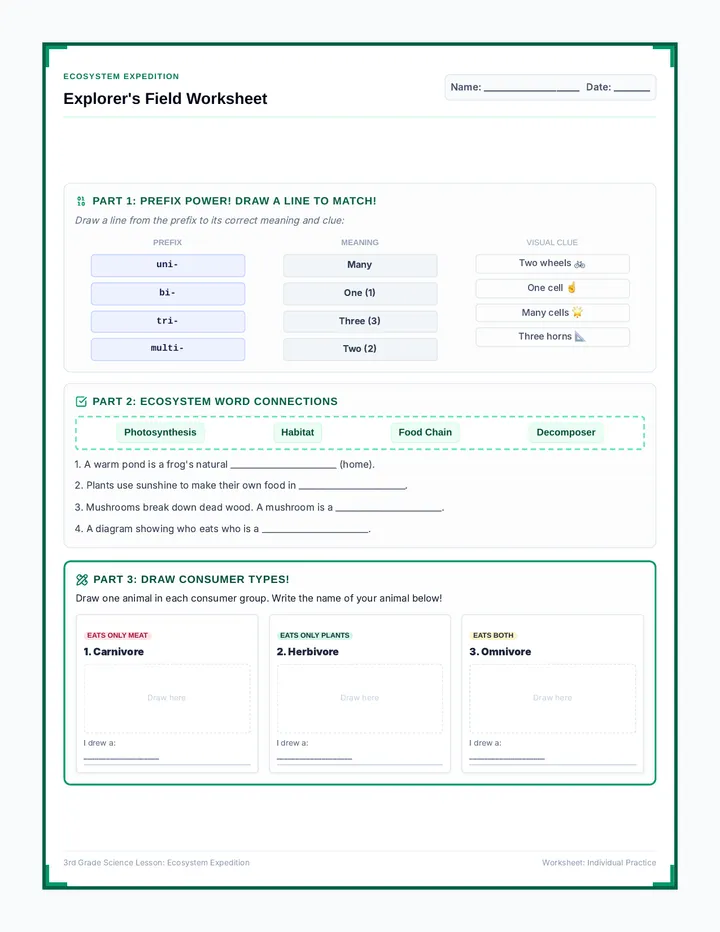
An engaging lesson for 3rd graders on consumers in a food chain, exploring herbivores, carnivores, and omnivores, and how they get their energy from eating other living things.
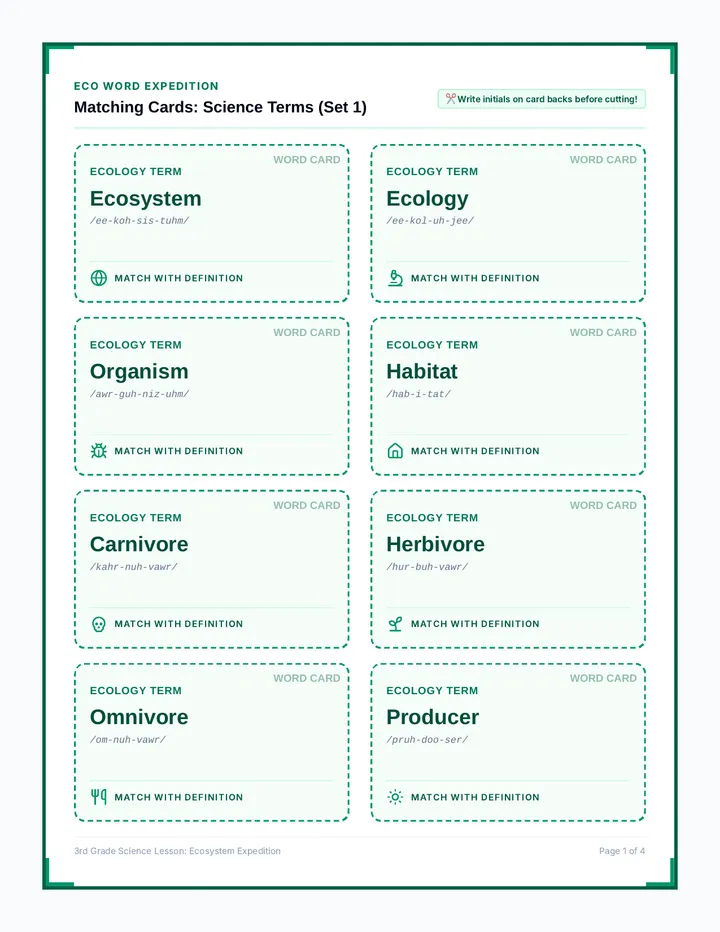
A foundational lesson on food chains for 3rd graders, focusing on producers as the start of energy flow and the correct use of arrows to represent that energy movement.
A 3rd-grade integrated science and literacy lesson exploring inheritance and variation in traits. Using 'Plants and Animals' by Rose Padilla, students analyze how animals are like their parents yet different from each other, gathering explicit text evidence to support scientific explanations.
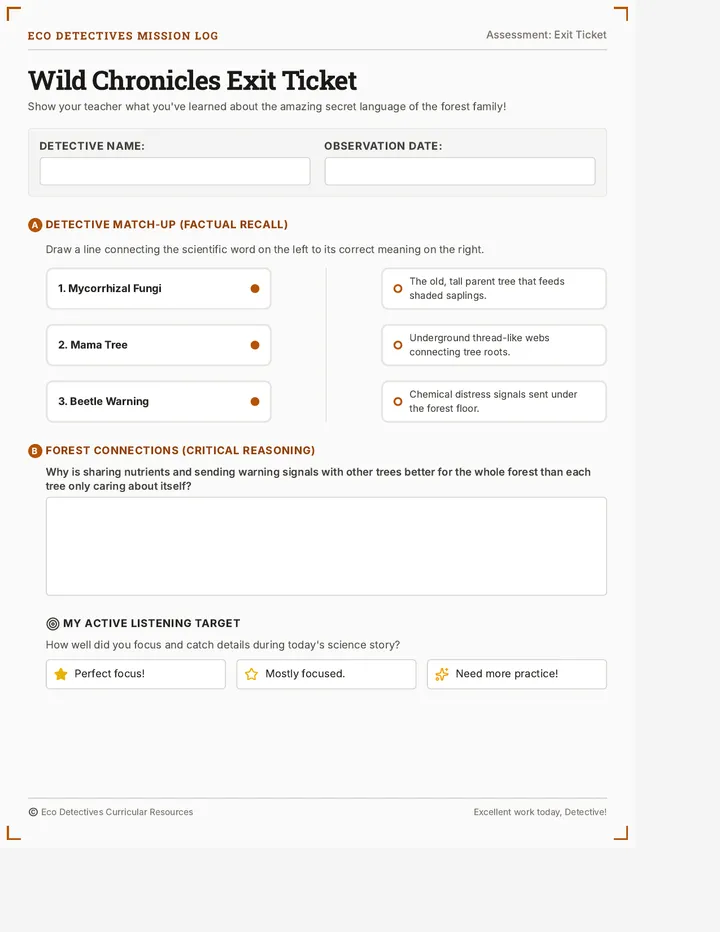
Students explore the flow of energy in a grassland ecosystem by identifying producers, consumers, and decomposers. They will construct their own food chains through a hands-on sorting and linking activity.
Students explore the various ways life from the past became preserved in stone, distinguishing between body and trace fossils while identifying specific preservation methods like amber, casts, and carbon films.
A hands-on STEM lesson for 6th-grade students where they learn the physics and technology of stop-motion animation, from frame rates and persistence of vision to storyboarding and filming their own creative shorts.
A project-based lesson where 3rd-grade students explore the physical characteristics of mountains, wetlands, plains, and deserts through a variety of creative choices.
A 20-minute outdoor investigation where students compare the diversity of life in two different micro-habitats to understand patterns of biodiversity. This lesson integrates art through scientific sketching and a nature color hunt.
A comprehensive lesson on identifying and marking broad vowel sounds for A, O, and U. Students learn the phonetic differences between short and broad sounds and master the marking conventions for single-letter vowels and multi-letter phonograms.
Students explore the essential relationship between plants and pollinators, identifying how they depend on each other for survival. The lesson culminates in a hands-on project where students design a pollinator-friendly garden tailored to their local ecosystem.
A hands-on gardening lesson that turns natural distractions into learning opportunities. Students learn seasonal planting, water conservation, tool safety, and wildlife cohabitation through the lens of being 'Earth Architects'.
A high-energy, station-based review session designed to build testing stamina and subject-switching agility for NC EOGs. Students rotate through ELA, Math, and Science challenges in timed 'sprints'.
A 30-minute introductory lesson for 3rd graders on the integumentary system, focusing on skin layers, sweating for temperature control, and the healing process of scabs.