Students analyze real-world scenarios requiring temperature regulation, defining the criteria and constraints for their chemical engineering project. They explore the 'MRE' hook to understand the potential of chemical heating.
This lesson covers the logic and programming required to create a digital switch interface using Python, focusing on key bindings and signal processing.
An introductory lesson on how the periodic table is organized, covering atomic numbers, mass, types of elements, and periodic trends.
A lesson exploring the evolution of early computing machines and the varying historical perspectives on which machine deserves the title of the 'first' computer. Students will analyze different viewpoints based on technical criteria like programmability, electronics, and logic.
Students use an interactive ecology simulator to explore population dynamics by testing various combinations of producers, primary consumers, and secondary consumers. They record their findings in a structured field journal to identify patterns of stability and extinction.
A comprehensive lesson exploring Earth's four major systems: the geosphere, hydrosphere, atmosphere, and biosphere. Students will learn to identify each sphere and describe the complex ways they interact to sustain life and shape the planet.
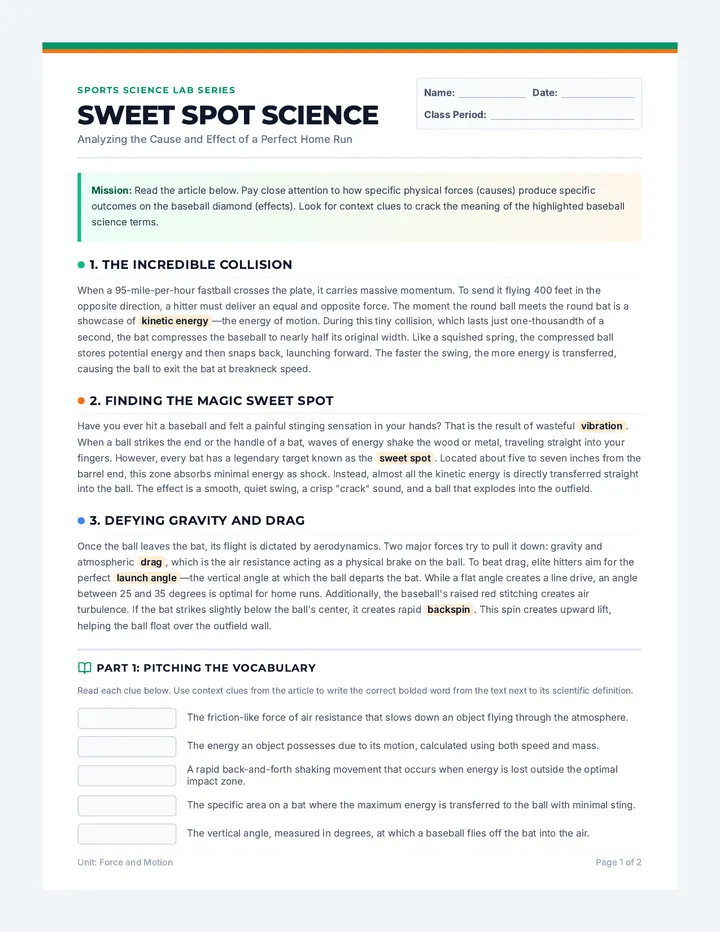
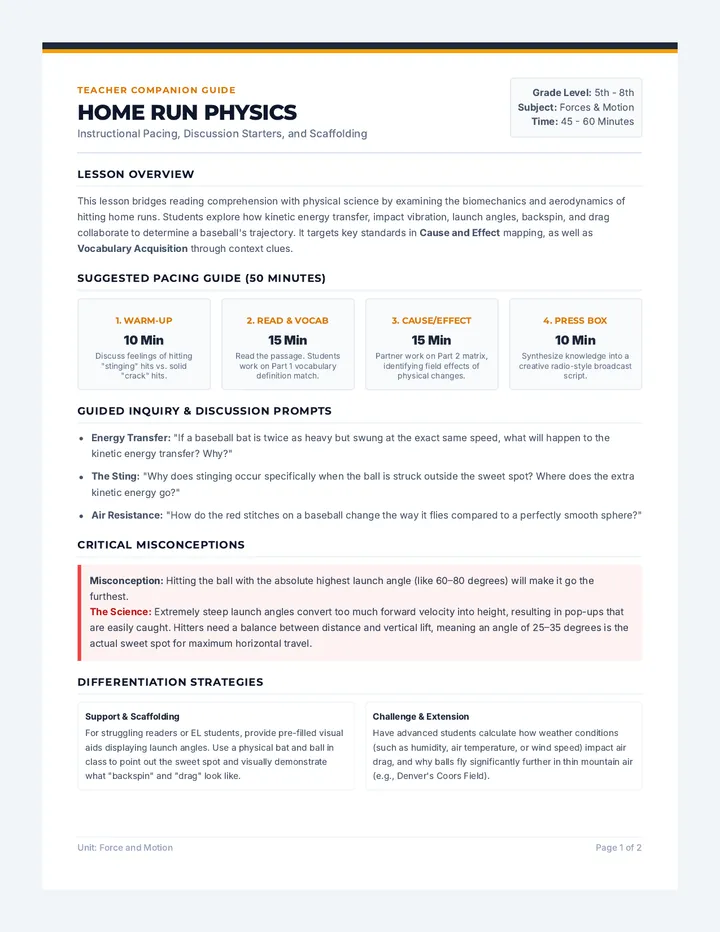
An independent study unit exploring the relationships between the Earth, Moon, and Sun, covering rotation, revolution, moon phases, and gravity.
An exploration of the fundamental building blocks of Earth's crust, focusing on the differences between minerals and rocks, the dynamic processes of the rock cycle, and the economic importance of geologic resources.
A lesson exploring genetic inheritance using alien and monster traits, focusing on genotypes, phenotypes, and Punnett square probability. Includes visual aids with color-coded alleles and scaffolded analysis prompts.
A complete introductory lesson on the lunar cycle, covering the eight phases of the moon, the concepts of waxing and waning, and the orbital relationship between the Earth, Moon, and Sun.
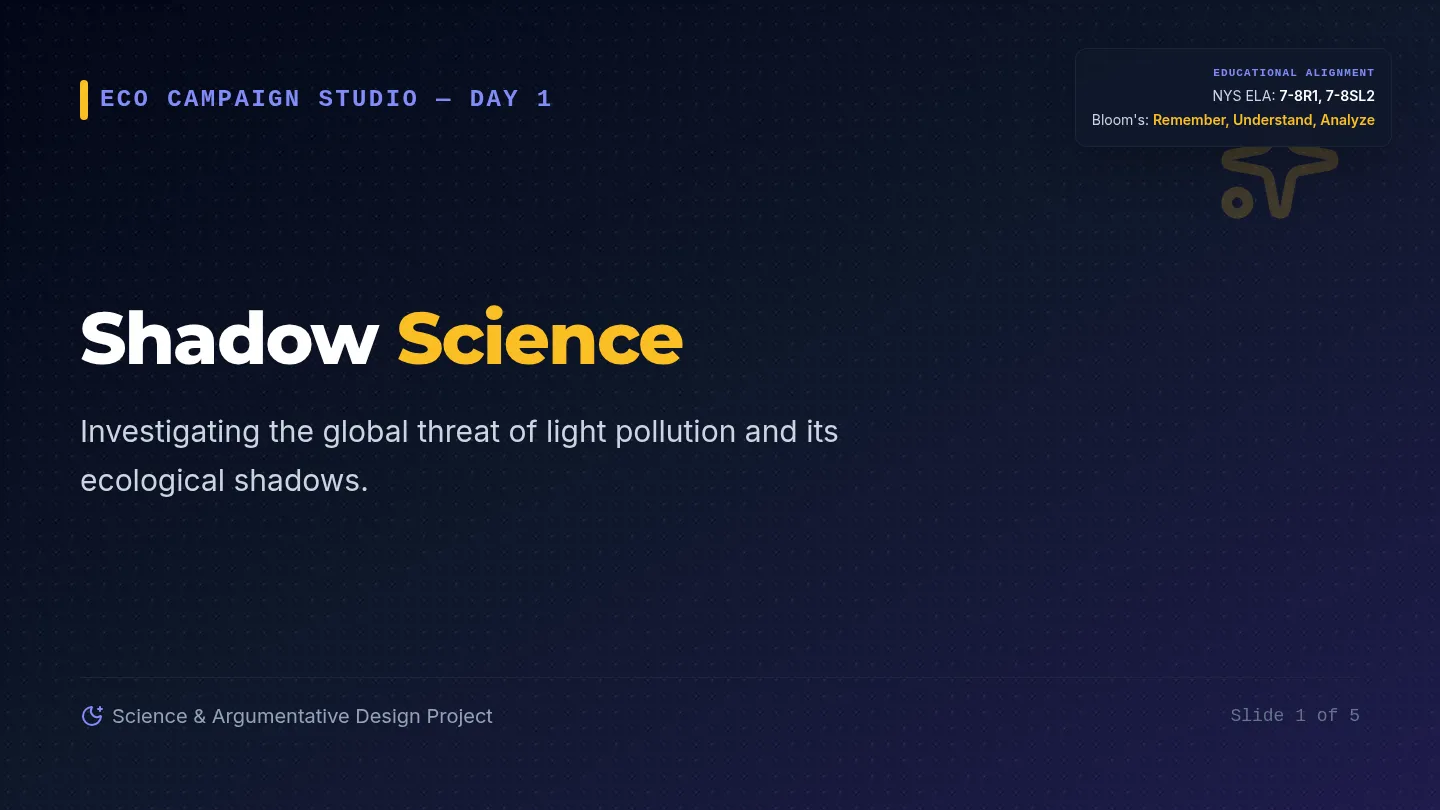
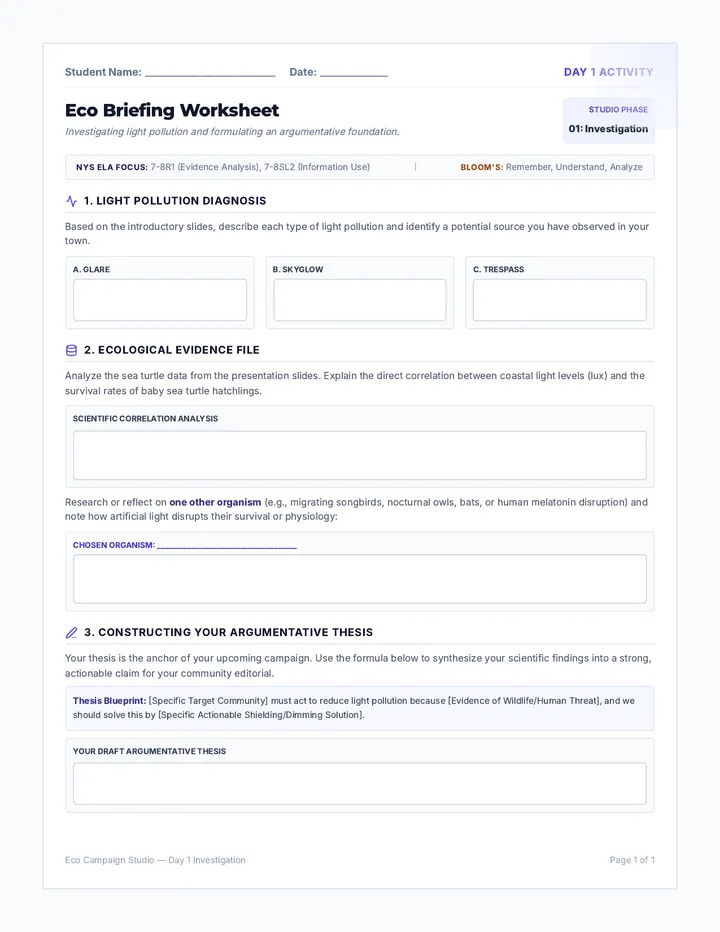
An investigative look into the cause-and-effect relationships of environmental pollution, focusing on how human activities impact Earth's ecosystems.
Students learn key terms related to online safety, privacy, and responsible digital behavior.
Students explore vocabulary related to software applications, the internet, and digital navigation.
Students identify and define common physical components of a computer system.
A comprehensive set of rubrics designed for evaluating paired ecosystem observation activities, focusing on scientific accuracy, inquiry, and collaboration.
A comprehensive lesson on invasive species focusing on their dramatic impact on local populations and ecosystems through data analysis and food web mapping.
A comprehensive lesson exploring the science, benefits, and ethical considerations of GMOs through the story of Gloria's garden. Includes a reading passage, multiple-choice assessment, and short-answer reflections with supporting scientific diagrams.
Students investigate severe weather patterns in Indiana and apply engineering principles to design and build structures capable of withstanding high-speed winds. This STEM-focused lesson combines earth science with a hands-on engineering challenge.
A hands-on simulation lesson where students act as routers and servers to understand how data packets travel across the internet using IP addresses and physical infrastructure.
Une séquence complète sur l'utilisation des robots dans les missions de sauvetage et de secours, comprenant vocabulaire technique, lecture et atelier d'écriture.
A comprehensive lesson exploring the three primary types of symbiotic relationships: mutualism, commensalism, and parasitism. Students analyze animal interactions through task cards, case studies, and visual organizers.
Teachers learn to break complex tasks into smaller, manageable steps using classroom routines and Iowa Core standards as examples.
An extra credit project challenging students to live plastic-free for two weeks while researching the impacts of bioaccumulation and exploring sustainable alternatives. Students document their journey and findings in a formal scientific lab report.
Students learn to craft compelling marketing messages by developing a Value Proposition using a specific formula and applying visual text hierarchy principles to design website 'Hero Text'.
Students finalize their Unit 3 Portfolio, checking for technical errors and exporting their report as a professional PDF for final submission.
Students synthesize their Unit 3 research by creating a professional Market Analysis Report, integrating personas and charts from previous lessons.
Students learn the fundamentals of financial forecasting, calculating revenue vs. profit, and using absolute cell referencing ($) to project business growth over time.
Students learn to transform raw spreadsheet data into impactful Pie and Bar charts to visualize market trends and customer intent.
Students learn to use sorting, filtering, and conditional formatting in Google Sheets to identify target audience trends and organize large datasets efficiently.
Students transition from data entry to data analysis by learning essential Google Sheets formulas like =SUM, =AVERAGE, and =COUNT, as well as the efficiency of the Fill Handle.
Students gain 'x-ray vision' over large datasets by learning to sort and filter information. They explore conditional formatting to visualize trends and identify specific target segments within their market research data.
Students transition from data entry to data analysis by mastering fundamental spreadsheet formulas. They learn the power of the equals sign, cell referencing, and essential functions like =SUM, =AVERAGE, and =COUNT to automate business calculations.
Students explore the efficiency of automated data collection by linking their market research forms to live spreadsheets. They learn the concept of real-time data syncing and master the 'Freezing Rows' skill to manage large datasets effectively.
Students learn the art of professional survey design to gather market intelligence. They distinguish between quantitative and qualitative data, identify biased questioning, and build a multi-format survey in Google Forms or Microsoft Forms to collect clean data from their target audience.
This lesson introduces students to the fundamental structure of spreadsheet software. They learn about cells, rows, columns, and addresses while performing basic data entry and formatting to align with their brand identity.
Students transition from brand design to market analysis by distinguishing between demographic data (external facts) and psychographic data (internal values). They apply these concepts by building a formal User Persona for their brand, justifying their earlier design choices based on audience data.
Students participate in a professional 'Gallery Walk' to provide and receive constructive feedback on their Brand Style Guides and One-Pagers. They apply the 'Glow and Grow' framework to refine their designs, fulfilling standards for artistic critique and professional communication.
Students master the principle of visual hierarchy to lead a customer's eye through a design. They apply the 'Rule of Three' (Size, Weight, and Contrast) to create a professional brand 'One-Pager' in Canva, ensuring their most important brand assets receive maximum visibility.
Students define their brand's 'personality' by selecting and filtering imagery that aligns with a specific tone. They complete their formal Brand Style Guide by documenting photography standards and brand keywords, focusing on the principles of repetition and unity.
Students transition from brand creation to documentation by building a formal Style Guide. They learn the importance of brand consistency through 'The Brand Police' concept and document their logo usage, hex codes, and typography pairings in Canva using alignment rulers and guides.
Students transition to Canva as a layout tool to assemble their brand assets into a professional Mood Board. They learn to 'break' templates by replacing generic elements with their own custom logos and colors, focusing on brand consistency and visual harmony.