A comprehensive 5E lesson exploring electromagnetic induction through the construction of motors and generators, modeling field interactions, and analyzing real-world applications like transformers.
A comprehensive review of the urinary system based on Concept 3 notes, focusing on kidney structure, nephron function, and systemic regulation.
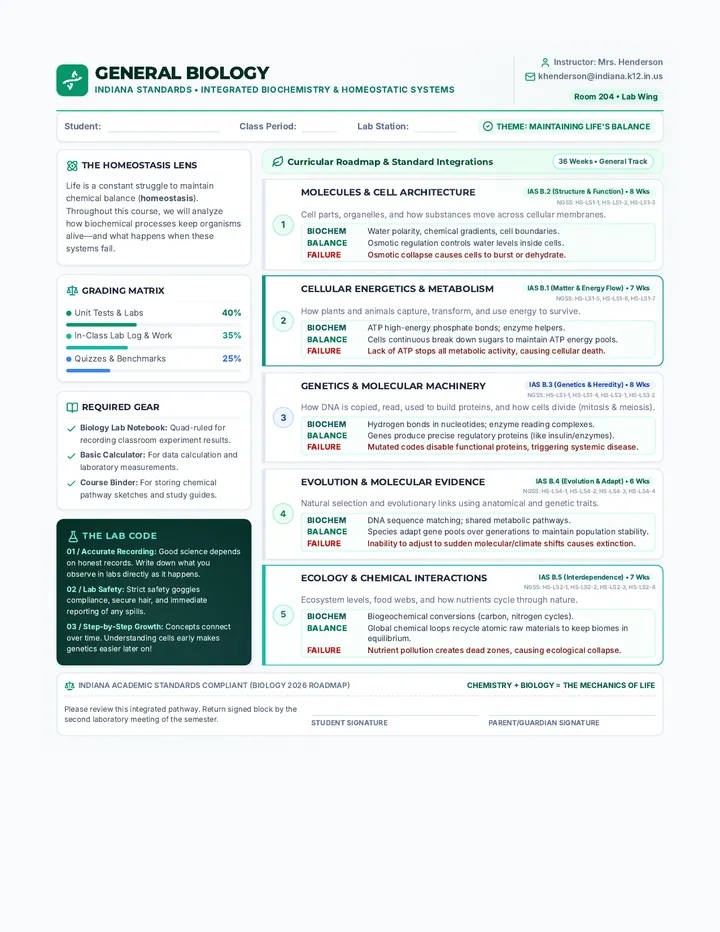
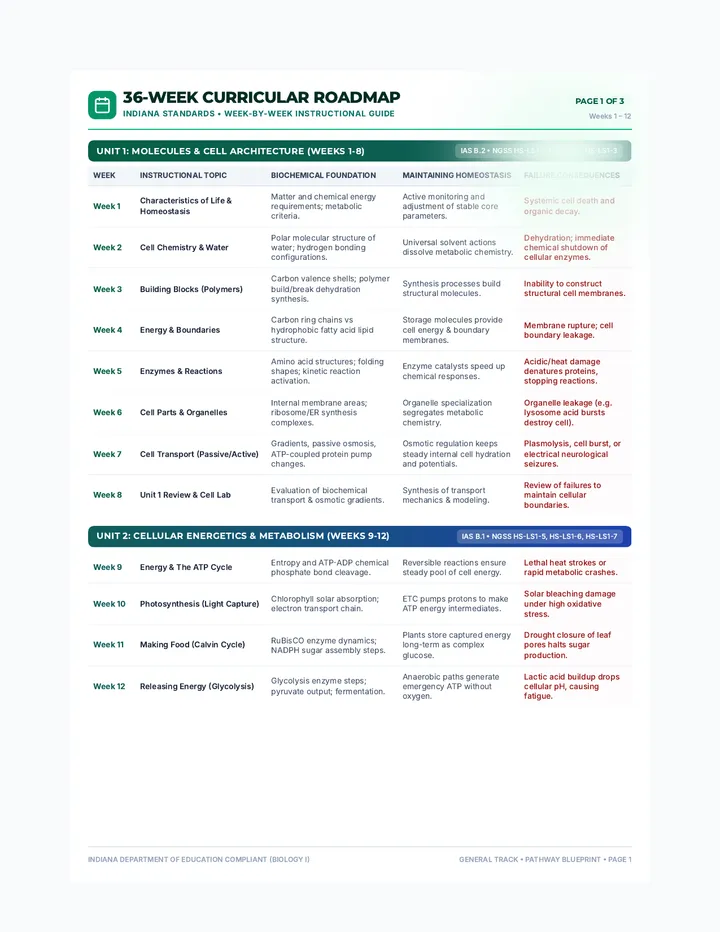
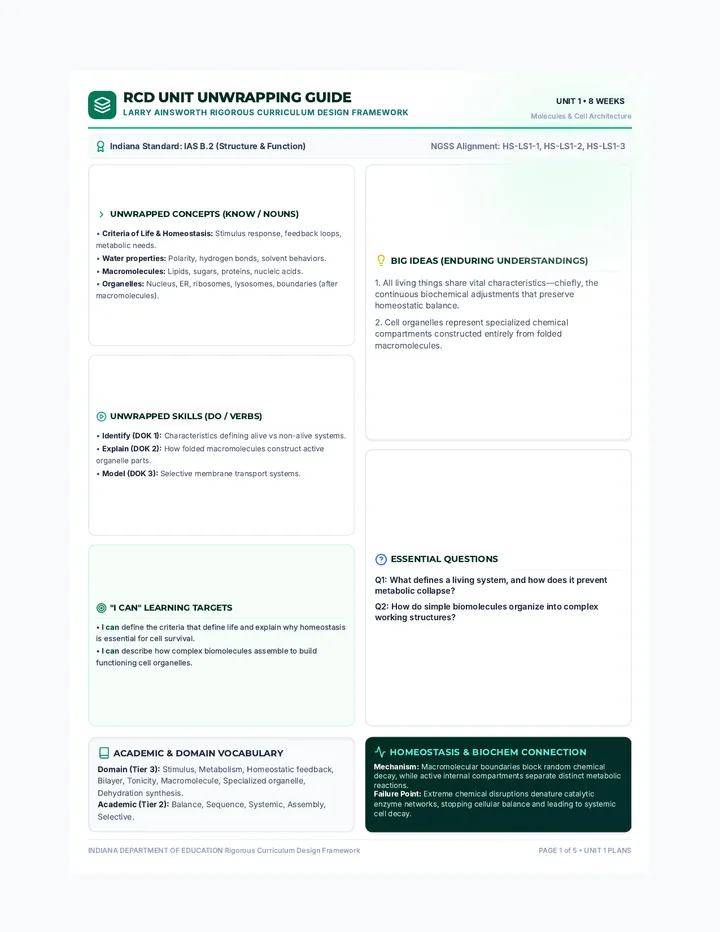
A foundational module containing the comprehensive year-long curriculum map, standards alignment documents, and essential vocabulary resources for 9th-grade biology.
A lesson focused on the relationship between pH, pOH, and ion concentrations, featuring step-by-step methods for converting between them.
This lesson explores how genetic variation within a population influences survival during environmental changes, using peppered moths and Darwin's finches as primary case studies.
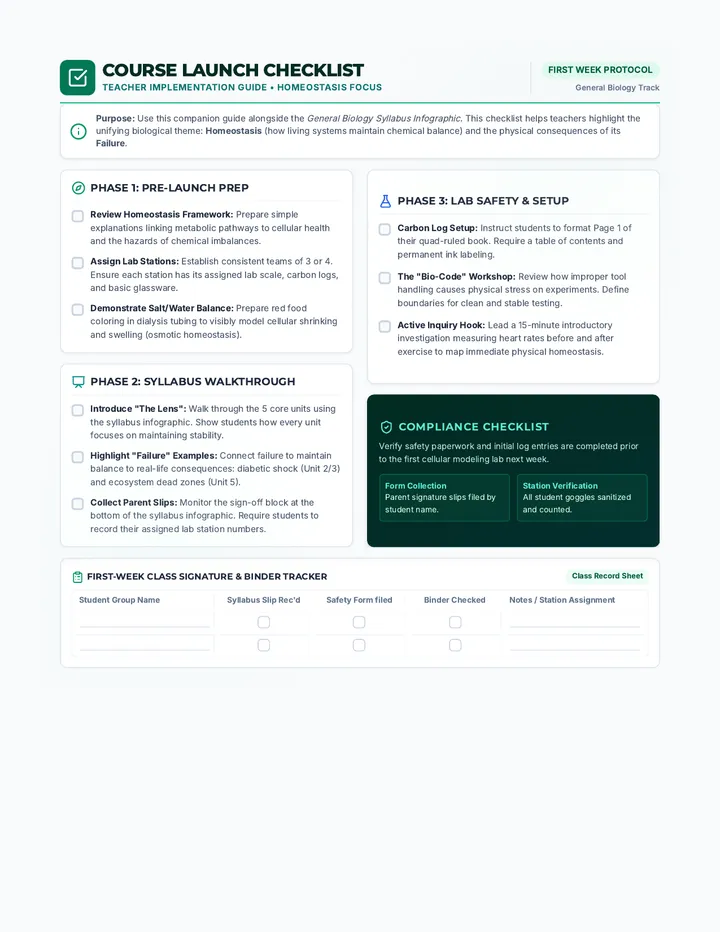
A curriculum planning lesson for biology teachers to organize a full year of high school biology instruction aligned with Indiana State Standards.
Students step into the role of forensic scientists to solve a school lab robbery. They will explore PCR, gel electrophoresis, and DNA fingerprinting to analyze evidence and identify a suspect using a Claim-Evidence-Reasoning framework.
An integrated Biology and SEL lesson for 11th grade that explores the relationship between DNA, inheritance, and personal identity. Students analyze the science of genetics while reflecting on what makes them unique and how much of their 'self' is written in their code.
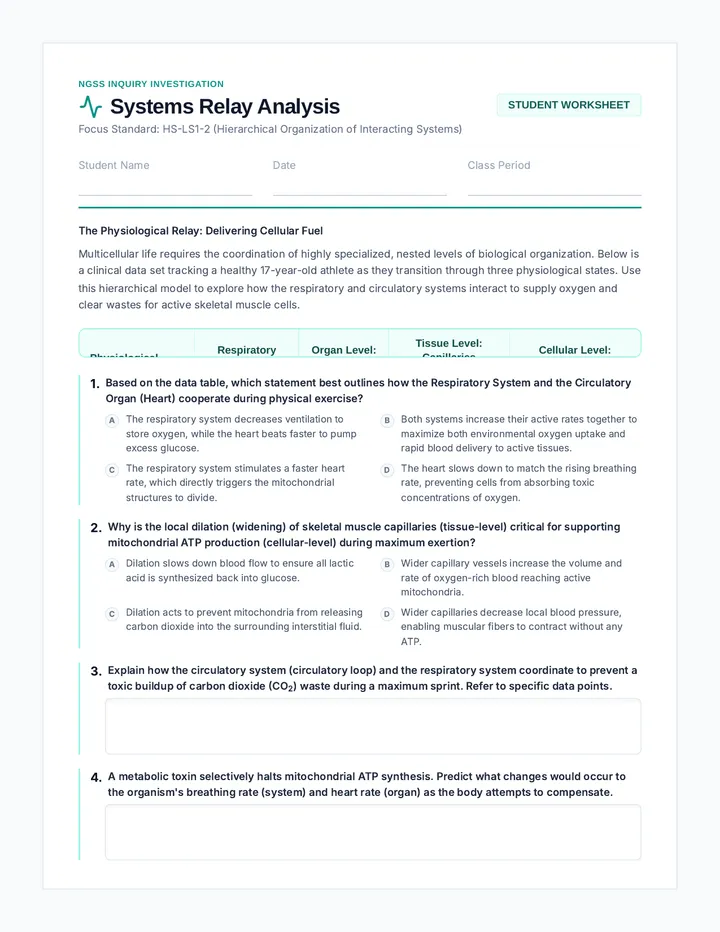
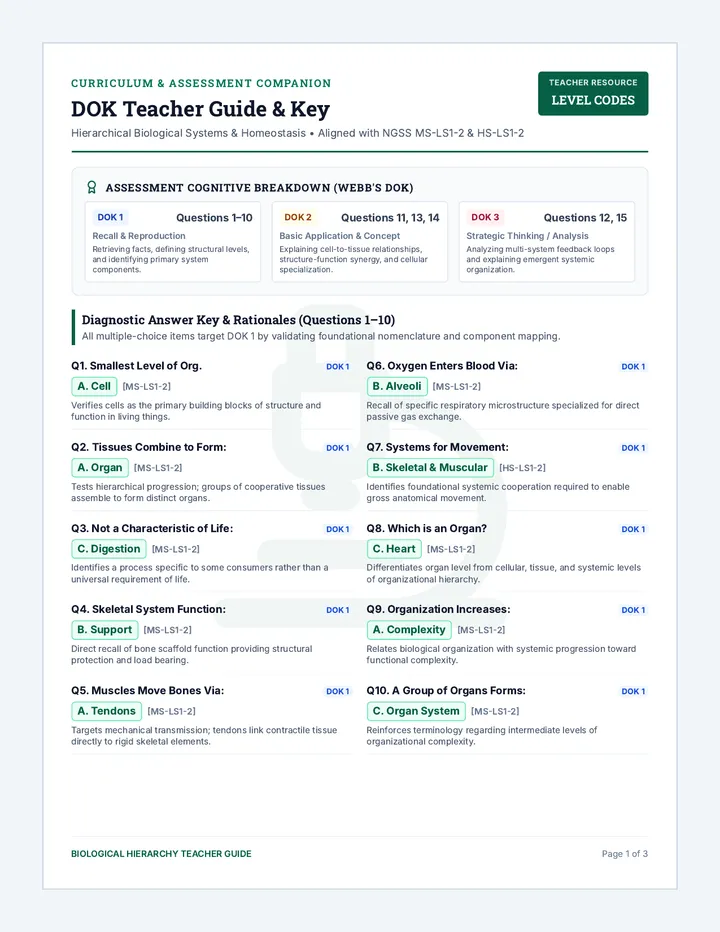
A comprehensive assessment suite to evaluate student understanding of the major human body systems, including their functions and key organs.
A comprehensive review phase for the Reaction Dynamics unit. Students synthesize their knowledge of collision theory, energy pathways, and equilibrium shifts through a focused study guide and a unit-wide conceptual assessment.
An interdisciplinary capstone project where students synthesize concepts from AP Physics 1, AP Physics 2, and AP Calculus BC into a comprehensive research poster. Students will model complex phenomena using advanced mathematical techniques and multi-disciplinary physics frameworks.
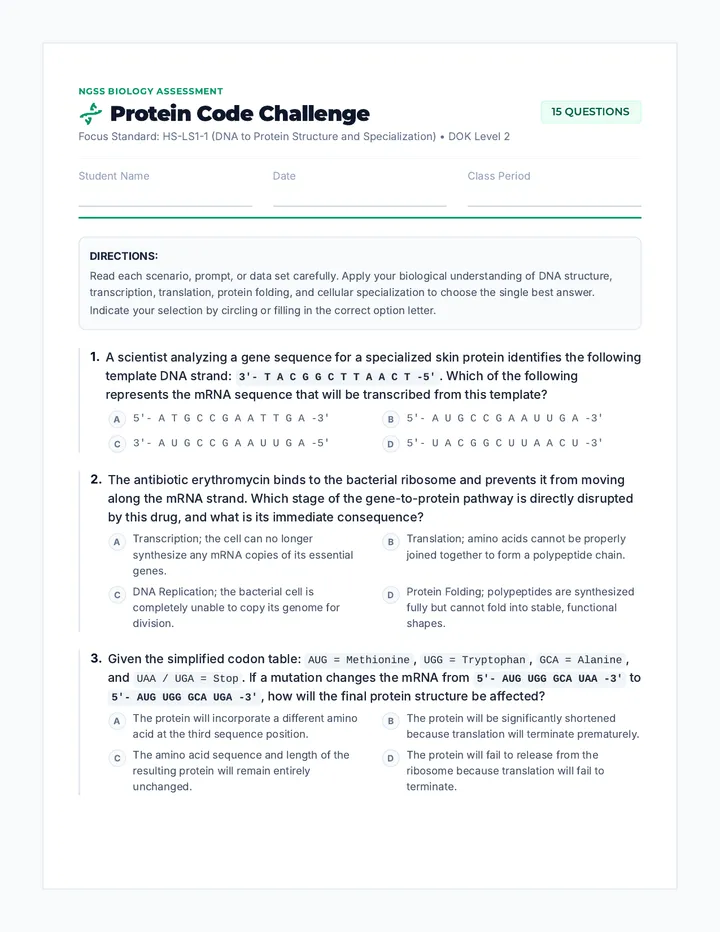
A comprehensive lesson on genetic mutations, exploring how changes in DNA structure affect protein function and organism traits through a high-tech laboratory lens.
An introductory lesson on biotechnology and the Human Genome Project, covering fundamental concepts, DNA technology tools, and ethical considerations.
A lesson focused on interpreting distance-time graphs through creative storytelling and structured analysis. Students will translate visual data into narrative descriptions of motion, including constant speed, acceleration, and rest.
A comprehensive assessment and reference set covering mechanical and electromagnetic waves, including mathematical calculations for frequency, period, and speed.
A focused lesson on the fundamental properties of mechanical waves, covering transverse and longitudinal types, and the mathematical relationships between velocity, frequency, wavelength, and period.
A practical introduction to electrical circuits for shop students, focusing on the fundamental differences between series and parallel configurations and their real-world applications in wiring.
A foundational lesson on physics calculations focusing on speed, force, and work using single-step formulas. Perfect for introducing quantitative science to middle schoolers.
This lesson introduces foundational vocational skills for aspiring AI engineers, focusing on the practical steps required to manage environments, data, and models in a professional setting.
An independent, mystery-themed activity where students act as "Kingdom Detectives." They analyze a series of clues, definitions, and evidence files to determine why fungi are not plants and clarify the role of the sun in ecosystems.
A focused review lesson on graphing independent and dependent variables, the constant pull of gravity, and the fundamental laws of magnetism.
This lesson explores the invisible forces of gravity and magnetism, while teaching students how to organize and visualize scientific observations through graphing. Students will learn to identify variables and create accurate line graphs from experimental data.
Students will learn to identify the ten primary cloud types, categorize them by altitude, and predict weather outcomes based on cloud formations.
A high-impact review lesson designed to help students master the essential concepts of Karyotyping, Biotechnology (PCR/Gel Electrophoresis), and Mutations before their unit test. Includes visual anchor charts and structured practice.
A comprehensive investigation into the biological mechanisms of seasonal allergies, focusing on the immune system's overreaction to pollen and the role of histamine. Students will explore hypersensitivity, physical symptoms, and evidence-based management strategies.
An introductory lesson on renewable and non-renewable energy resources, focusing on the science behind solar, wind, and hydroelectric power. Students will explore how these energy sources work and their impact on the environment.
A foundational lesson on the geometry of motion, covering position, distance, displacement, and frames of reference for AP Physics 1.