Lenny.com
Explore
Create
ActivitiesNewMathEnglish Language ArtsScience & EngineeringSocial StudiesGlobal LanguagesHealth & Physical EducationSpecial EducationCounseling & Life SkillsArts & CreativityESL
Lenny.com
Lenny.com
Explore
Create
ActivitiesNewMathEnglish Language ArtsScience & EngineeringSocial StudiesGlobal LanguagesHealth & Physical EducationSpecial EducationCounseling & Life SkillsArts & CreativityESL
Lenny.com
Lenny.com

Solutions

Lenny for EducatorsLenny for SchoolsLenny for Districts

Product

ExploreSign inCreateSupportAbout

Resources

Getting startedMTSS Acceleration Program

Newsletters

School Funding Newsletter

© 2026 Lenny Learning Inc.

TermsPrivacyAccessibility
LinkedInInstagramX
Lenny
English Language ArtsPhonics & Reading FoundationsLetter IdentificationLearn Letters A-ZLowercase and Uppercase LettersConsonants and VowelsLetter-Sound AssociationsLetter-Sound Associations: LowercaseLetter-Sound Associations: UppercaseBeginning and Ending SoundsRhymingBlending And SegmentingShort VowelsShort Vowel SoundsConsonant BlendsConsonant DigraphsBlends, Digraphs, and TrigraphsDigraphs, Blends, and Silent LettersLong Vowel SoundsLong Vowel PatternsShort and Long VowelsShort and Long Vowel PatternsSilent EVowel SoundsVowel TeamsR-Controlled VowelsDiphthongs: Oi, Oy, Ou, OwVariant VowelsVariant, Diphthong, And R Vowel PatternsSoft G And CSight WordsIrregular WordsWord RecognitionSyllablesSyllable TypesTwo-Syllable WordsMultisyllabic WordsPhoneme ManipulationDecodable TextsVocabularyAction WordsQuestion WordsNouns and AdjectivesClassify WordsCompound WordsSynonyms and AntonymsHomophonesHomophones and HomonymsShades of MeaningContext CluesPrefixes and SuffixesGreek and Latin RootsAnalogiesIdioms and AdagesForeign Words and ExpressionsWord Choice and UsageReference SkillsReading ComprehensionRead-Along Literary TextsRead-Along Informational TextsReality vs. FictionStory ElementsCharacterSequenceMain IdeaCause And EffectCompare And ContrastReading StrategiesText StructureAuthor's PurposeAuthor's Purpose And ToneAuthor's PerspectivePoint Of ViewThemeInference And ThemeInference And AnalysisPoetry ElementsLiterary DevicesAnalyzing LiteratureAnalyzing Informational TextsComparing TextsAudience, Purpose, And ToneBusiness DocumentsNovel StudyNonfiction Book StudyGrammar & MechanicsSentencesNounsVerbsAdjectivesPronounsCapitalizationPunctuationContractionsConjunctionsPrepositionsArticlesAdjectives And AdverbsVerb TypesVerb TensePronouns And AntecedentsPronoun TypesSubject-Verb AgreementDirect And Indirect ObjectsSentences, Fragments, And Run-OnsPhrases And ClausesCommasSemicolons, Colons, And CommasDashes, Hyphens, And EllipsesSpellingAbbreviationsFormattingVerb Tense And MoodMisplaced ModifiersWritingDescriptive DetailsCreative WritingOpinion WritingTopic SentencesOrganizing WritingLinking WordsSentence VarietyIntroductions And ConclusionsPersuasive And Opinion WritingExpository WritingPersuasive StrategiesDeveloping And Supporting ArgumentsTopic Sentences And Thesis StatementsSummarizingResearch SkillsEditing And RevisingActive And Passive Voice=Writing Clearly And ConciselyDebate & Public SpeakingPublic Speaking BasicsPersuasive TechniquesClaims and EvidenceTypes of ArgumentsReasoning TypesLogical FallaciesTopic ResearchOrganizing EvidenceDebate Speech OrganizationAttacking and Defending ArgumentsClash and EngagementImpact CalculusQuestioning and Cross-ExaminationCritical ThinkingInformal LogicFormal LogicInductive Reasoning

Silent Sound Sleuths

A comprehensive UFLI-aligned foundational reading lesson for Lesson 98 covering silent letter combinations kn /n/, wr /r/, and mb /m/. Students discover orthographic patterns through systematic explicit instruction, three full-length decodable stories, a timed fluency passage with comprehension checks, and a diagnostic verbal exit ticket.

MLMarti Lushin
knelt

Glen pulled a fresh oat crumb from his pouch. The lamb took the treat from his hand. Glen used a woolen blanket to wrap the lamb safely and brought it home to the barn. Later that night, he used a fine comb to untangle stickers from its coat.

Comprehension & Word Check

1. Where was the lamb trapped when Glen spotted it?

2. How did Glen lure the frightened lamb to come close to him?

Code Master Badge: • Circle every silent ‘b’ word in the text.

Target ‘mb’ Count: 8 Found

Decodable Story 3 UFLI Lesson 98 Review: kn /n/ • wr /r/ • mb /m/

Wren and the Wrecked Chest

Name:

Date:

Code Word Warm-Up: All three silent patterns! 160 Words

Wren wreck wrench wrist wrap knife knot knob knelt thumb comb numb

Young Wren liked to hike along the stormy coast. Giant waves crashed upon the reef where a pirate ship had suffered a terrible wreck decades ago. As Wren strolled past the dunes, her boot tapped against a wooden chest buried in wet sand.

Wren knelt down into the damp weeds. A tangle of seaweed made a tight knot around the latch. Wren took a pocket knife from her pocket to slice through the stubborn cord. Next, she took a small steel wrench from her kit to twist open the rusted iron knob.

Her left thumb throbbed from the cold breeze, and her wrist began to tire. Still, she gave one more fierce yank. With a loud snap, the lid popped open!

Inside the old box was a silver hair comb wrapped in faded blue velvet. Beside it lay an old map with notes written by a ship captain. Wren grinned, feeling proud she had solved the secret of the old coastal wreck.

Comprehension & Word Check

1. What two tools did Wren use to open the locked chest?

2. What two treasures did Wren find inside the velvet-wrapped box?

Secret Code Detective: □ Read with Partner □ Retell 3 Details □ Star Favorite Word

Mastery Level: 100%

A To gather dry firewood for the stone hearth

B To solve a mystery and investigate the cabin

C To buy a new wrench from the blacksmith

D To build a wooden shed near the cliffs

2. In the story, Kent’s fingers felt numb because of the bitter cold. What does numb mean?

A Hot and sweating from hard work

B Covered in thick black dust

C Unable to feel normal sensation

D Strong and ready to lift rocks

3. What tools did Kent pull from his pocket to unlock the shed door?

A A steel wrench and a pocket knife

B A hammer and a long brass nail

C A golden key and a crowbar

D A fine hair comb and scissors

4. Why did Wren kneel down quietly upon the wooden floorboards?

A She had tripped and twisted her ankle

B She wanted to avoid scaring the lost lamb

C She was searching for dropped silver coins

D She was exhausted from the long mountain hike

5. What did Wren do at the end of the passage after wrapping the lamb?

A She ran down the hill without telling anyone

B She baked fresh oat bread for the villagers

C She locked the door and took the lamb home

D She wrote a note telling the shepherd the lamb was safe

Orthographic Word Detective Sort

Find & copy words from the passage!

kn = /n/ List 3 words

wr = /r/ List 3 words

mb = /m/ List 3 words

Comprehension Score: _____ / 5 (____ %) Word Sort: _____ / 9 correct

Tier Recommendation

9-10: Mastered (Lesson 99)

7-8: Small Group Review

0-6: Intensive Reteach

Student Written Check UFLI Lesson 98 Exit Ticket

Silent Letters Dictation Slip

Name:

Date:

Part 1: Sound Spelling • Write the silent letter spelling for each sound Teacher says sound, you write letters

1. Sound: /n/

2. Sound: /r/

3. Sound: /m/

Part 2: Word Dictation • Listen, tap the sounds, and write 3 words

Part 3: Sentence Dictation • Listen and write the complete sentence Teacher dictates sentence twice

How do you feel about silent letters?

□ I got it! 🌟 □ Getting there! 👍 □ Need more help ❓

Teacher Written Score:

Sounds: ___ / 3

Words: ___ / 3

Sentence: ___ / 4

Written Total: ___ / 10

UFLI Foundations • Lesson 98 Exit Ticket • University of Florida Literacy Institute Alignment

“write the two letters for /n/ with silent k”

Part 2 Words: 1. knit (/n/ /i/ /t/) • 2. wrap (/r/ /a/ /p/) • 3. thumb (/th/ /u/ /m/)

Part 3 Sentence: “The small lamb ate every crumb.” (6 words • Check capital T, silent 'mb' in lamb and crumb, period).

Teacher Answer Key & Rubric Lesson 98 Answer Keys

Answer Keys & Intervention Protocols

Master Copy • Grading Reference

Fluency Reader Multiple Choice Answer Key (Passage 182w)

1. B

To solve a mystery and investigate the cabin. (Text evidence: “Wren and her twin brother Kent hiked up the trail to solve a riddle.”)

2. C

Unable to feel normal sensation. (Context: “The icy wind was so fierce that Kent’s fingers felt completely numb.”)

3. A

A steel wrench and a pocket knife. (Text evidence: “Kent reached into his pocket and grasped a steel wrench and a pocket knife.”)

4. B

She wanted to avoid scaring the lost lamb. (Text evidence: “Wren knelt quietly upon the floorboards so she would not startle the lamb.”)

5. D

She wrote a note telling the shepherd the lamb was safe. (Text evidence: “Wren began to write a note to the shepherd saying the lamb was safe.”)

Orthographic Word Sort Key

kn /n/ words (Any 3): known, Knob, knit, knapsack, knot, knob, knife, knee, knelt

wr /r/ words (Any 3): Wren, wreck, wrapped, wrench, wrap, write

mb /m/ words (Any 3): numb, thumb, lamb, crumb

10-Word Verbal Reading Probe Pronunciation Guide

Real Words:
1. knock: /n/ /o/ /k/ • 2. wrist: /r/ /i/ /s/ /t/
3. crumb: /k/ /r/ /u/ /m/ • 5. wrench: /r/ /e/ /n/ /ch/
6. climb: /k/ /l/ /i/ /m/ (long i) • 8. lamb: /l/ /a/ /m/

Nonsense Words (Pure Decoding):
4. knep: /n/ /e/ /p/ (NOT /k/-/nep/)
7. wrig: /r/ /i/ /g/ (NOT /w/-/rig/)
9. thamb: /th/ /a/ /m/ (NOT /tham-b/)
10. knost: /n/ /o/ /s/ /t/ (NOT /k/-/nost/)

Targeted Diagnostic Interventions

Misconception: Pronouncing /k/ or /w/

Use a tactile masking card. Cover the silent 'k' or 'w' with a miniature “ghost sticker” or index card so student sees and vocalizes only the /n/ or /r/.

Misconception: Voicing /b/ in 'mb'

Mouth cue: Have student keep lips together on the humming /m/ sound for 2 seconds. Teach that the /b/ went to sleep and never opens the mouth.

Spelling Dictation Reversals

Elkonin sound boxes: Use 1 box for 'kn' (/n/), 1 box for 'wr' (/r/), and 1 box for 'mb' (/m/) to reinforce that two letters represent exactly one sound.
You might also like

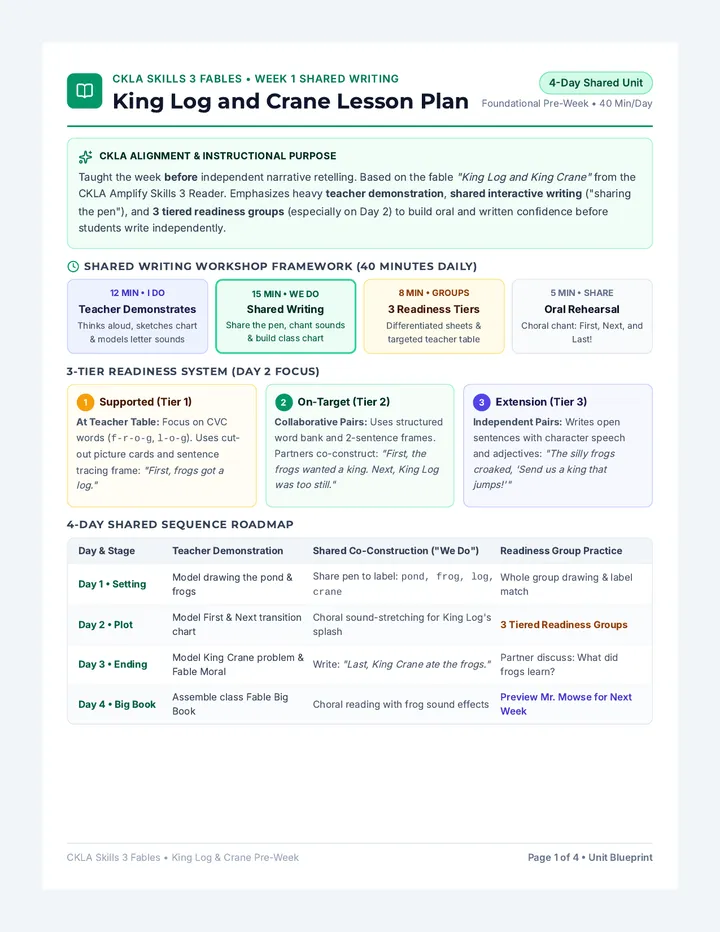
King Log Lesson Plan

Fable Writers

A two-part foundational early first-grade CKLA narrative writing sequence. Week 1 introduces shared and interactive fable retelling with King Log and King Crane and tiered readiness groups. Week 2 progresses to student-led retelling and opinion book reports with Mr. Mowse.

K

Katherine.Land

6
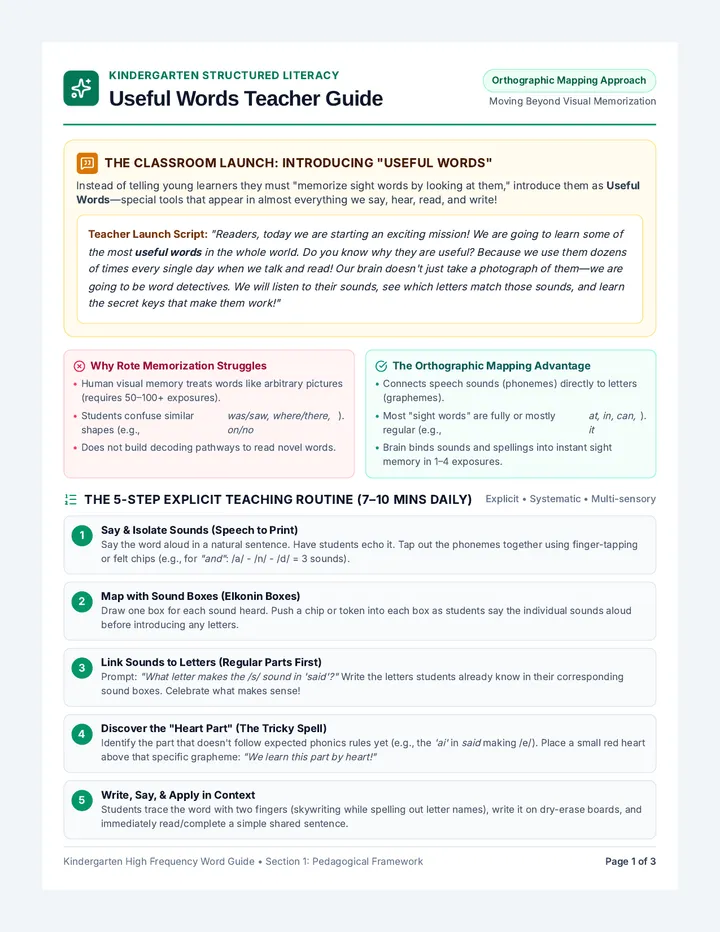
Useful Words Teacher Guide

Useful Words Mastery

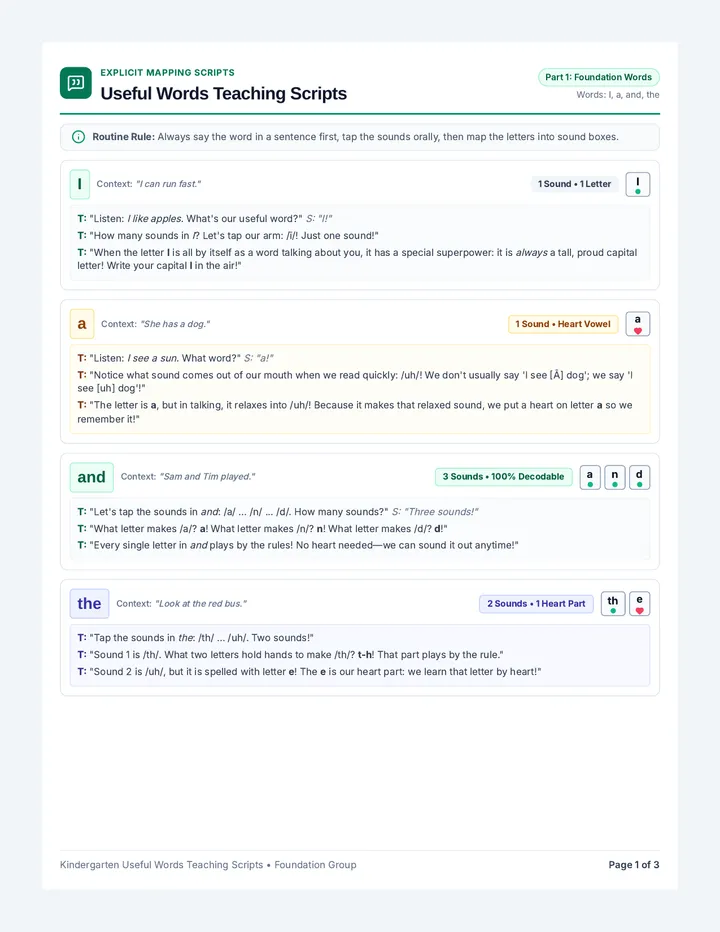
A kindergarten structured literacy lesson introducing high-frequency words through explicit sound-spelling mapping, heart word analysis, and interactive classroom routines.

CG

Cameron Grimes

2
Useful Words Teaching Scripts

Useful Words Teaching Scripts

Explicit, dialogue-based instructional scripts for teaching 11 core kindergarten high-frequency words (the, a, I, and, are, to, is, his, as, has, was) using orthographic mapping and sound-letter connections. It includes phoneme breakdowns, sound boxes with heart indicators, verbatim teacher prompts, and a master sound-spelling matrix.

CG

Cameron Grimes

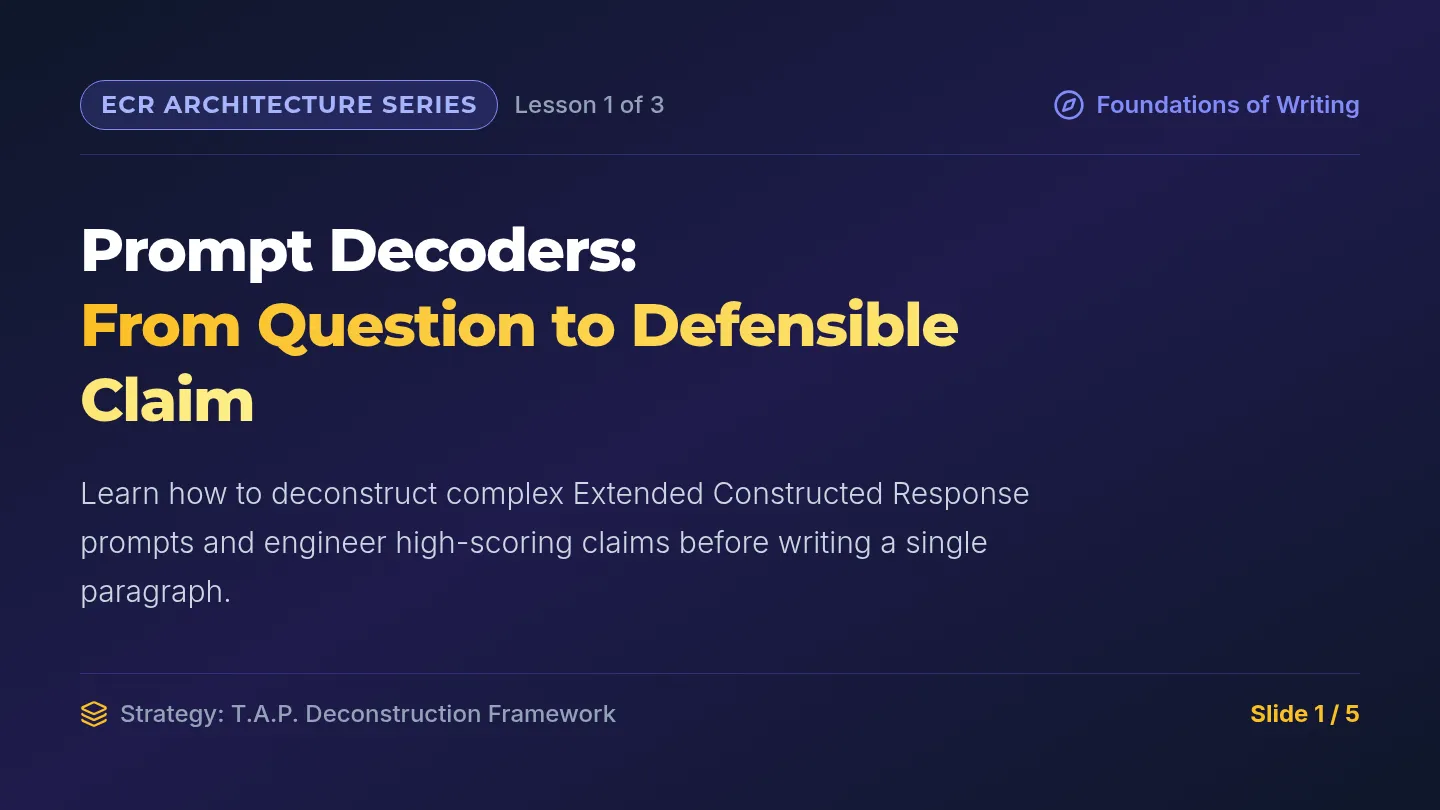
Prompt Decoder Slides

Argument Architecture

A comprehensive middle school writing sequence guiding students through the Extended Constructed Response process, from prompt deconstruction and claim generation to evidence integration and multi-paragraph synthesis.

Lenny Avatar
Lenny
6
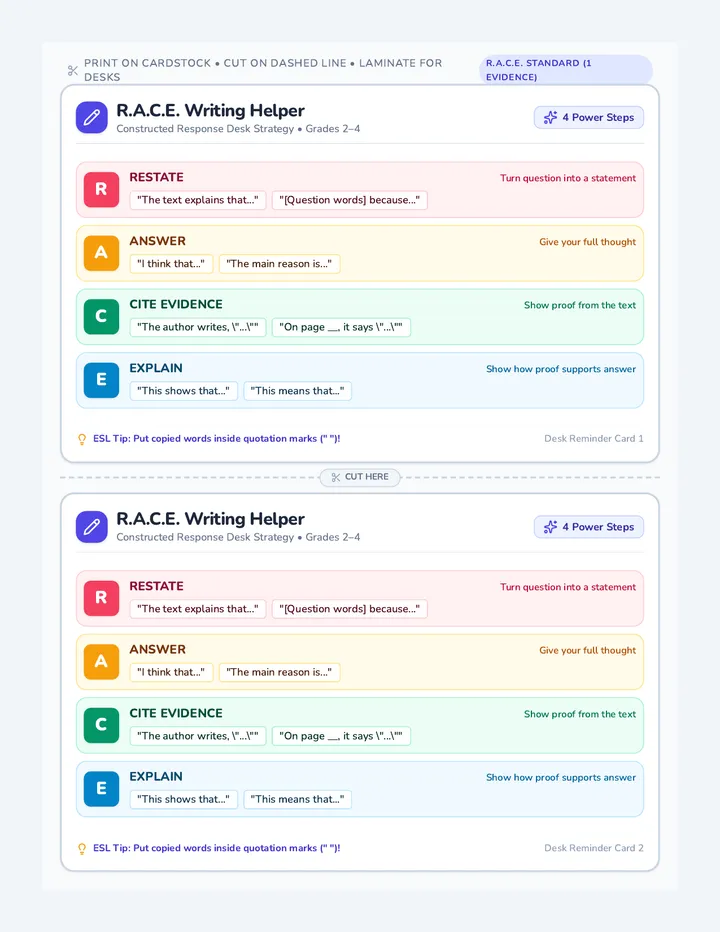
RACE Writing Reminder Cards

RACE Writing Strategy

A structured writing toolkit for teaching elementary ESL students how to construct evidence-based responses using the R.A.C.E. and R.A.C.C.E. writing strategies.

S

stacyann.sardison

2
Useful Words Teacher Guide

Useful Words Teacher Guide

A comprehensive kindergarten teacher guide detailing how to explicitly introduce and teach high-frequency words as 'useful words' through orthographic mapping rather than rote memorization. It features launch scripts, an explicit 5-step routine, sound-to-heart word analysis, interactive routines, and classroom implementation tools.

CG

Cameron Grimes

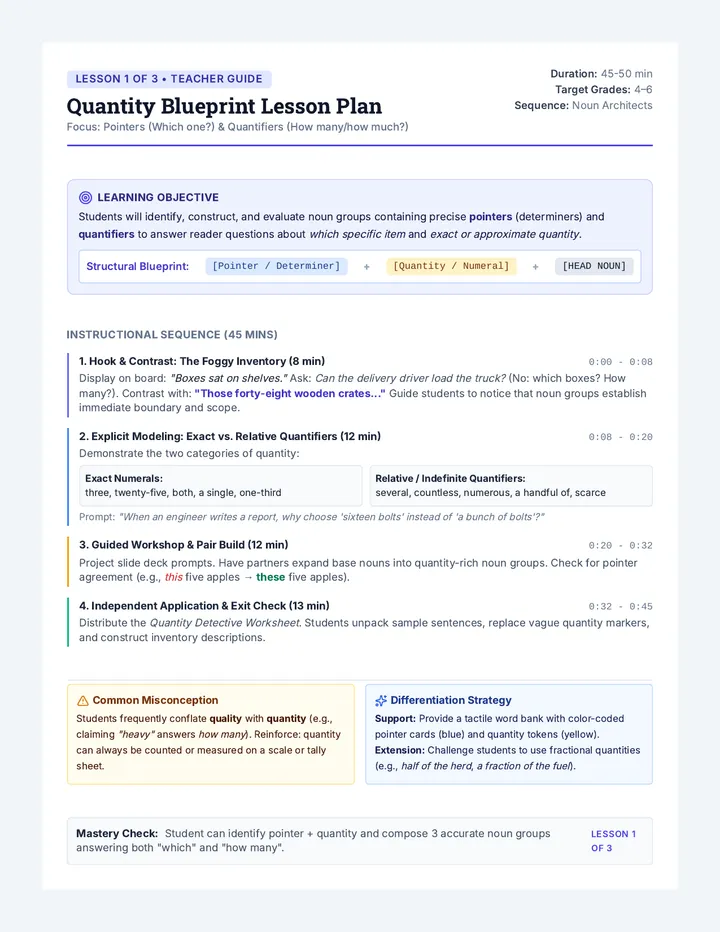
Quantity Blueprint Lesson Plan

Noun Group Architects

A three-part grammar and writing unit where students investigate, assemble, and refine precise noun groups. Learners progress from tracking quantity and pointer determiners to layering vivid qualities and specific classifiers for rich descriptive writing.

A

arlavoie-ridings

9
Sound Scouts Lesson Slides

Loud Sound Scouts

An explicit, systematic phonics lesson for UFLI Lesson 96 focusing on diphthongs /ow/ spelled 'ou' and 'ow'. Includes instructional routines, spelling generalizations, three extended decodable stories, a timed fluency reader with text-dependent comprehension questions, and an oral exit ticket check.

ML

Marti Lushin

4
Character Craft Answer Key

Character Craft Answer Key

A comprehensive teacher answer key and scoring guide for all versions of the Character Craft Quiz, including a quick-grading matrix, item rationales, exemplar student responses, and an analytic rubric.

N

nlewis

Traits in Action Lesson Plan

Fable Wisdom Unit

A comprehensive three-day literature sequence exploring Aesop's fable *The Ant and the Grasshopper*. Students analyze character traits, trace choices to consequences, and examine character growth and moral themes using scaffolded text-evidence routines.

QP

Quinn Pink

6
Magic E Power Slides

Magic E Power

An engaging early phonics lesson exploring how the silent or 'magic' e transforms short vowel sounds into long vowel sounds. Students discover CVC to CVCe word transformations through interactive slides, guided phonics routines, and multi-tiered practice activities.

KR

Katie Rangel

4
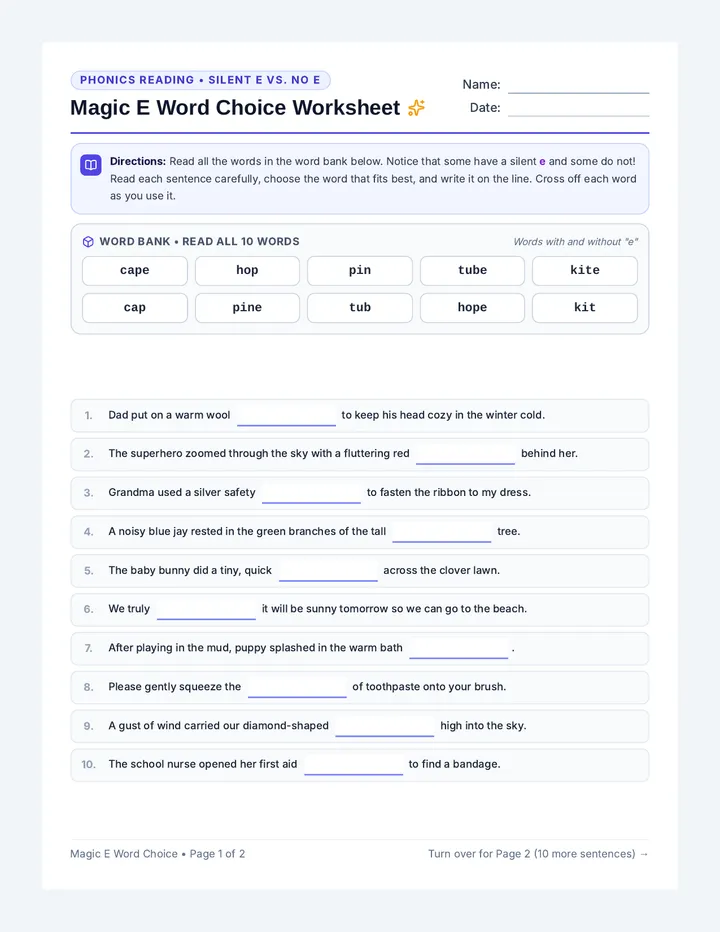
Magic E Word Choice Worksheet

Magic E Word Choice Worksheet

A 2-page print-ready worksheet featuring mixed word banks of short-vowel and silent-e words (not paired up), requiring students to read all options and apply sentence context to select and write the correct word.

KR

Katie Rangel