This engaging 30-minute lesson guides Pre-K students through the creation of personalized sensory jars, fostering exploration of sight, sound, and touch while developing fine motor skills and sensory awareness.
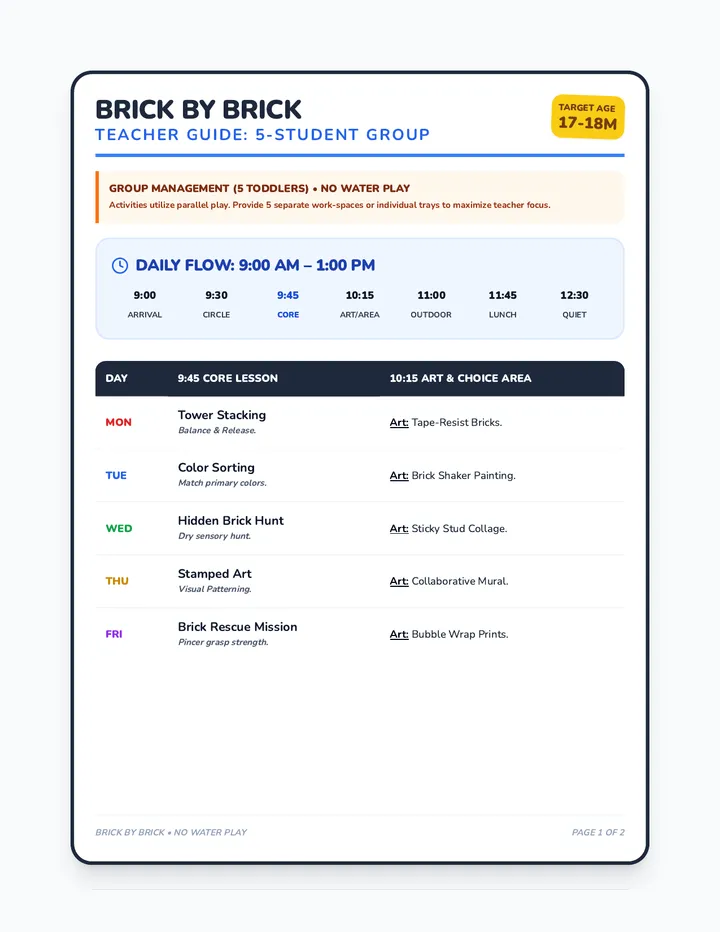
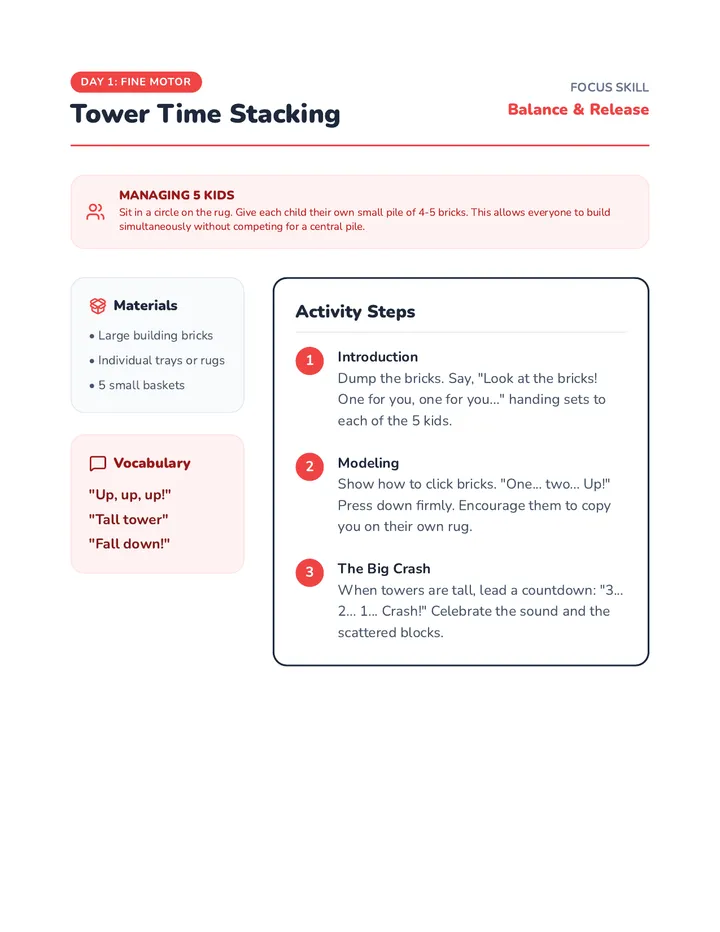
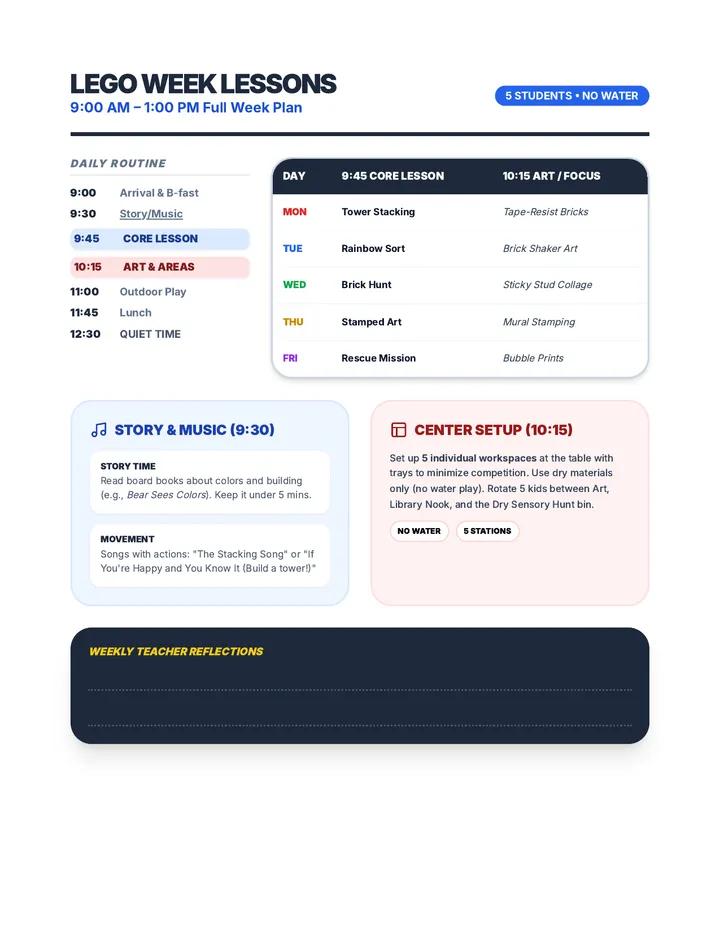
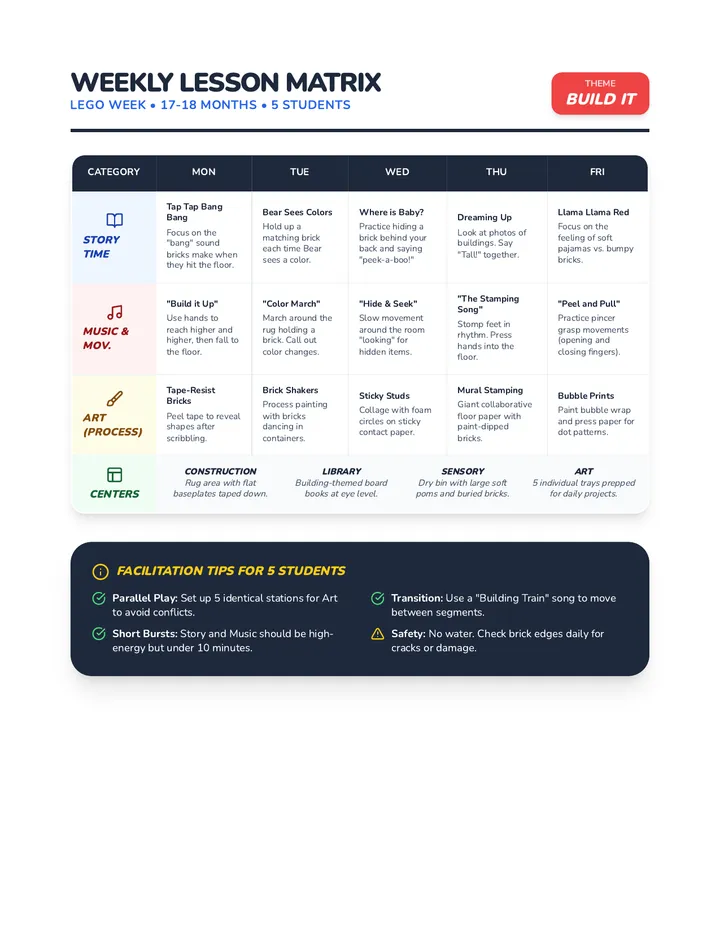
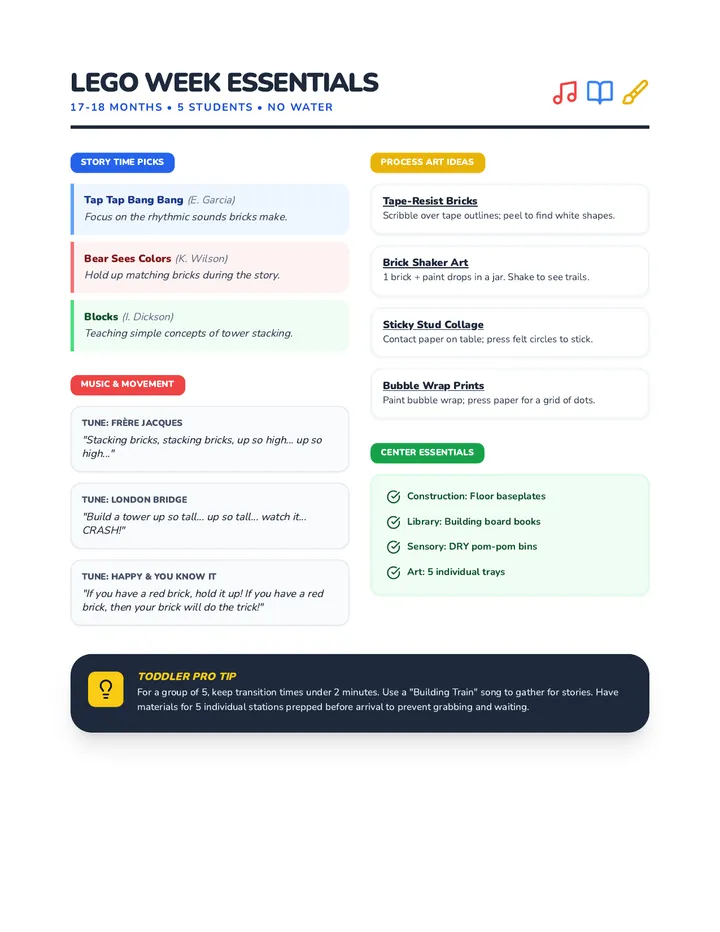
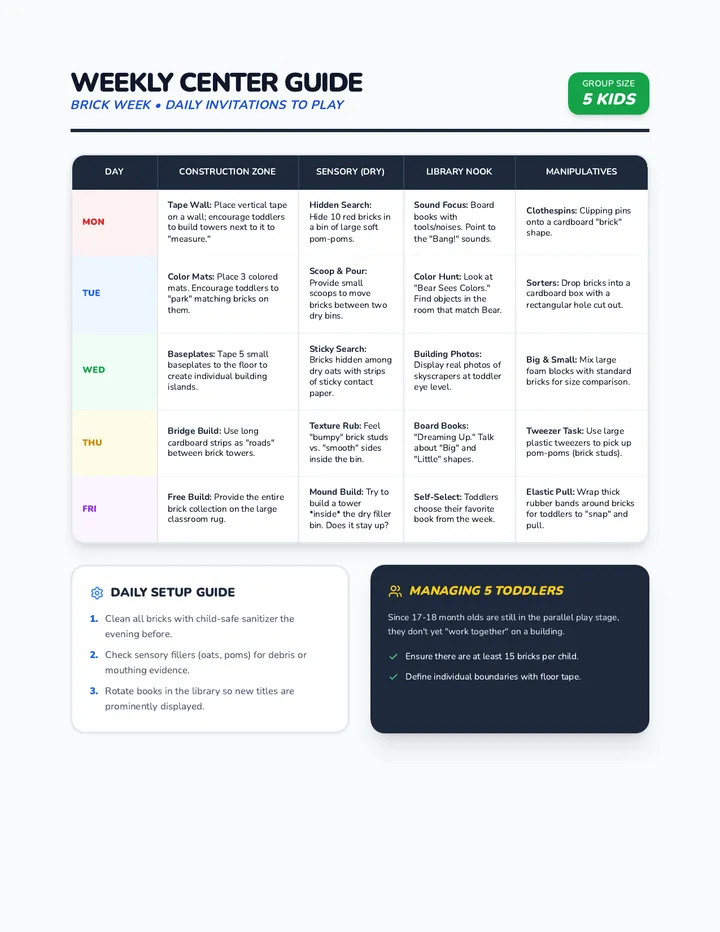
A collection of comprehensive week-long curricula for toddlers aged 17-18 months. Each themed week focuses on developmental play, sensory exploration, and fine motor skills for a group of 5 students with zero water play.
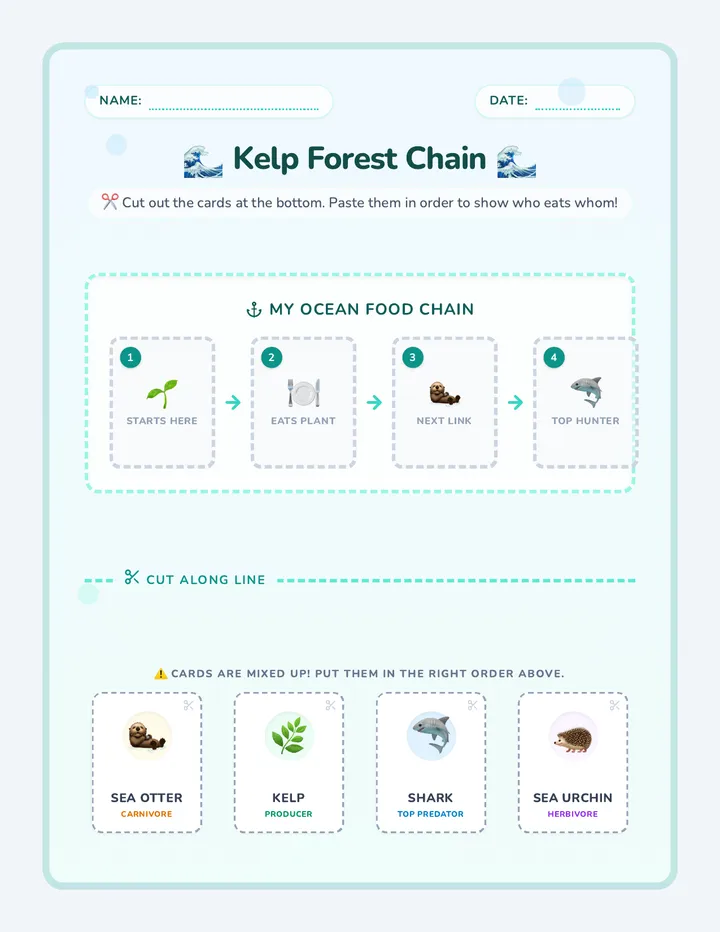
A hand-on science lesson for early learners (Pre-K to 1st grade) to understand simple ocean food chains using the kelp forest ecosystem. Students explore how energy moves from kelp to urchins, otters, and sharks through a tactile cut-and-paste activity.
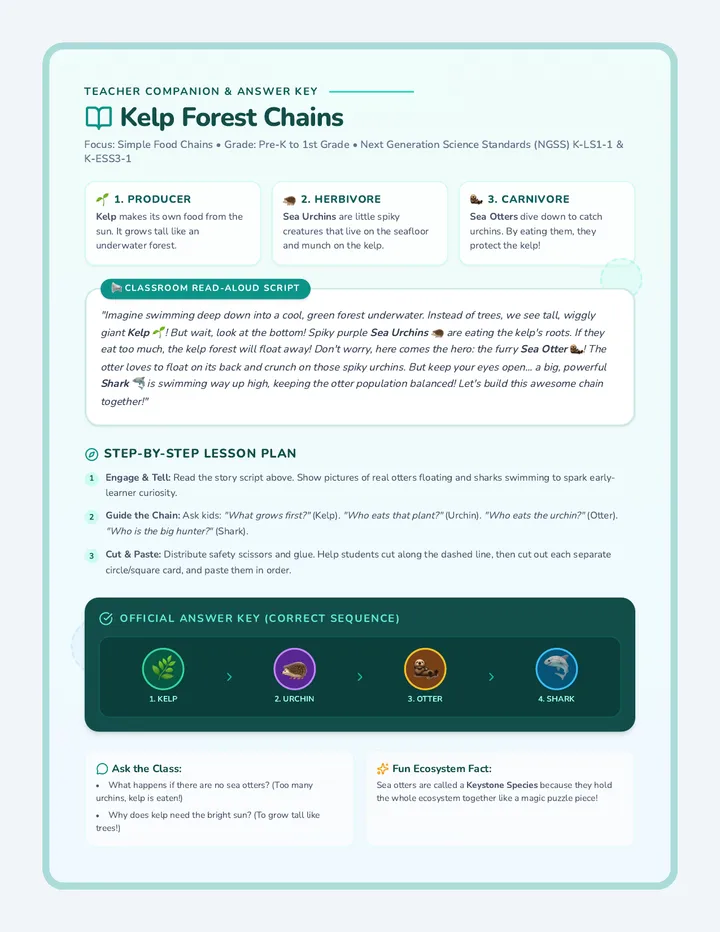
A teacher guidance sheet and visual answer key for the Kelp Forest Chain activity, featuring standard alignment, a simple read-aloud script, teaching tips, and a mini visual map of the completed chain.
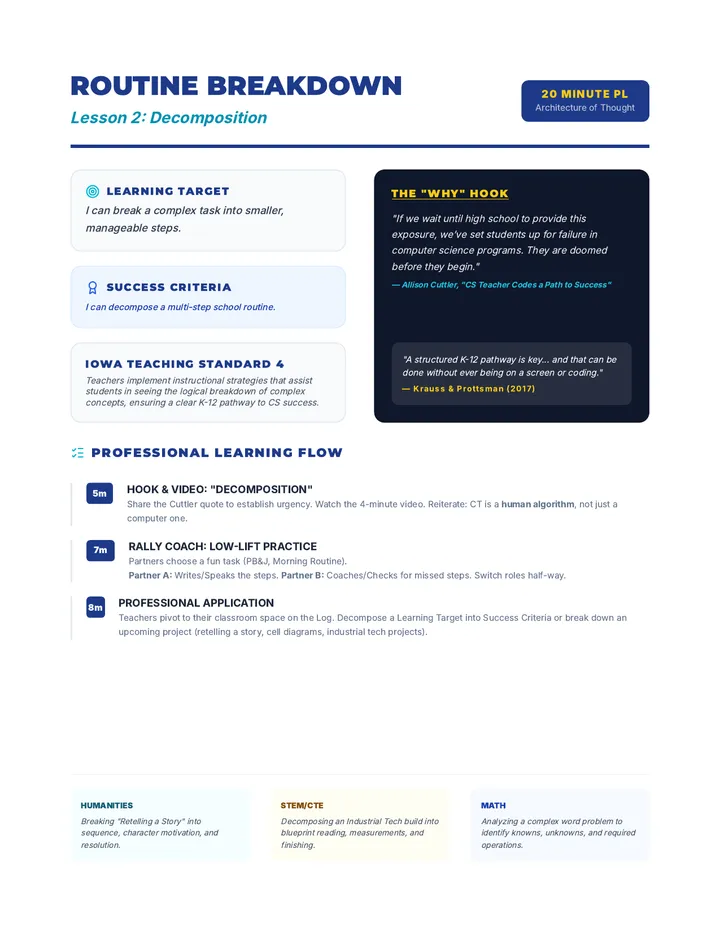
A professional development series for PreK-12 educators that reframes Computer Science as a "Superpower" through Computational Thinking. Teachers explore how CS concepts like decomposition, abstraction, and automation are already present in their daily instructional practices and Iowa Core content.
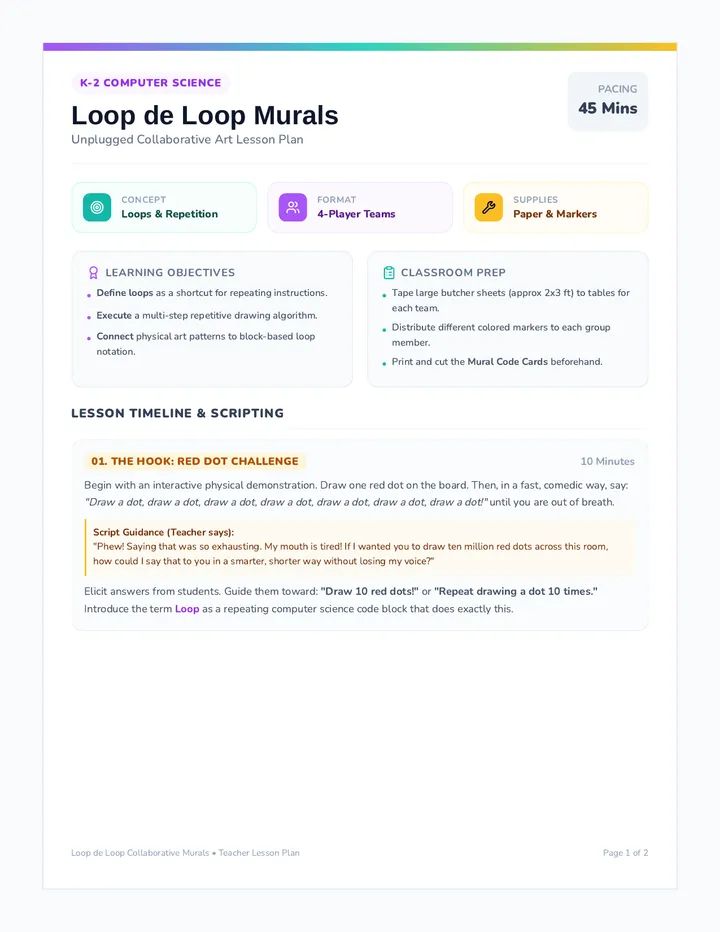
An active, hands-on unplugged computer science lesson for K-2 students. Students learn the concept of loops (repetition) by creating collaborative art masterpieces using simple drawing algorithms.
A cute, engaging cut-and-paste activity worksheet for Pre-K to 1st grade students to arrange a 4-part kelp forest food chain (Kelp -> Sea Urchin -> Sea Otter -> Shark) in the correct ecological sequence.
A five-part multi-sensory journey for preschoolers exploring the life cycle of a chick, from incubation to hatching. This sequence emphasizes fine motor skills, communication, and sensory exploration through hands-on activities.
A lesson on oceanography covering shorelines, coastal features, and the deep seafloor, adapted with a friendly My Little Pony decorative theme and chunked, accessible text for Standard Modified Special Education students.
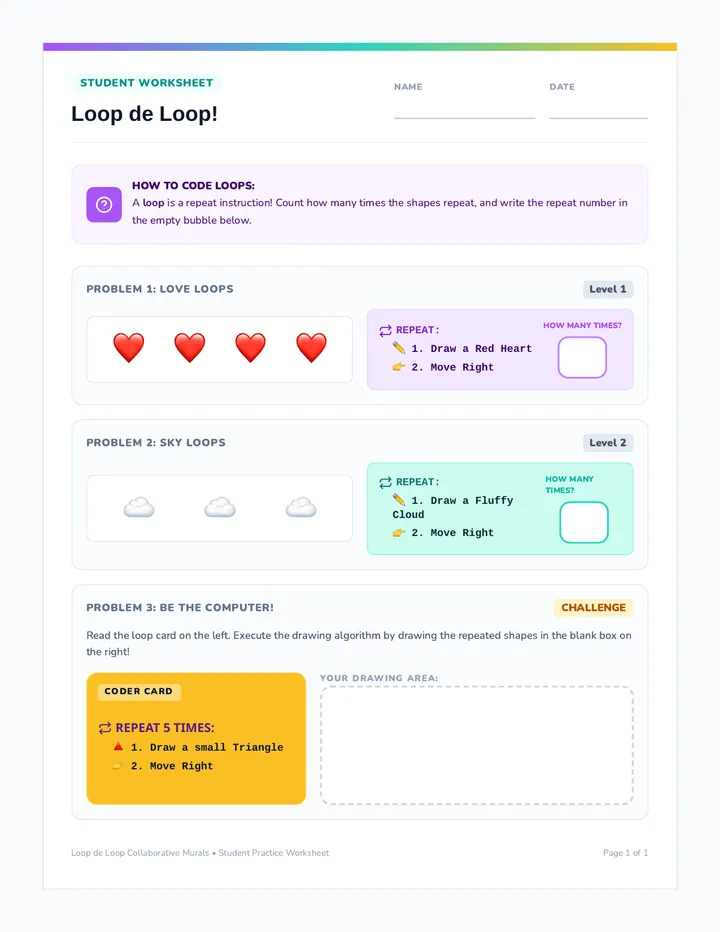
A hands-on, highly visual 1-page individual student worksheet for K-2. Students practice identifying repeat counts for visual patterns and execute a loop code block by drawing the repeated shapes.
A functional science unit for Essential Skills classrooms focusing on identifying push and pull forces within daily household chores and routines. Students explore forces through visual identification, movement-based games, and guided group activities.
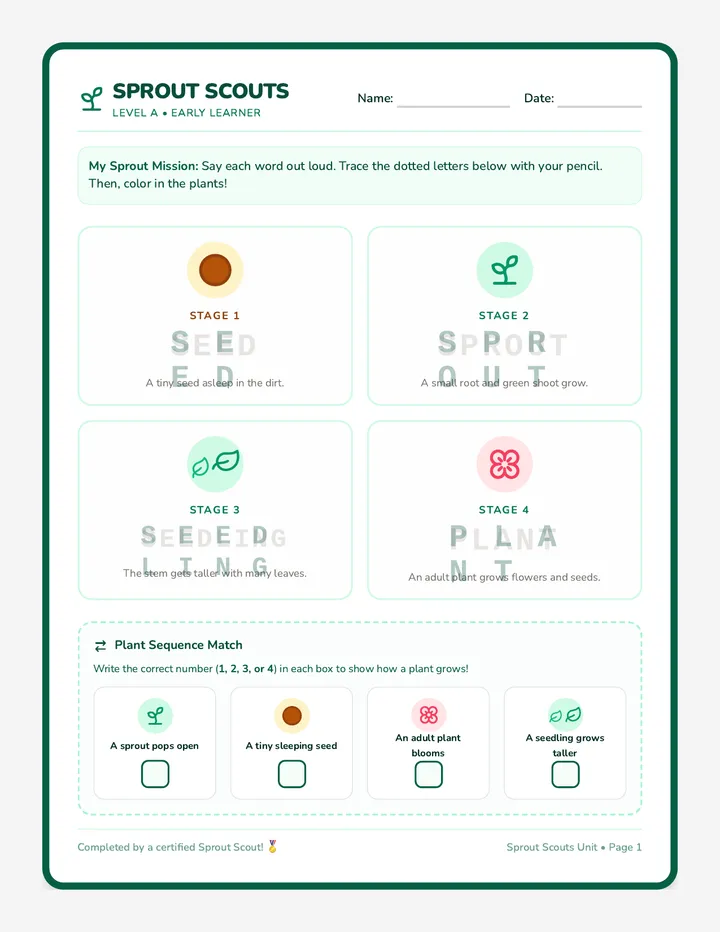
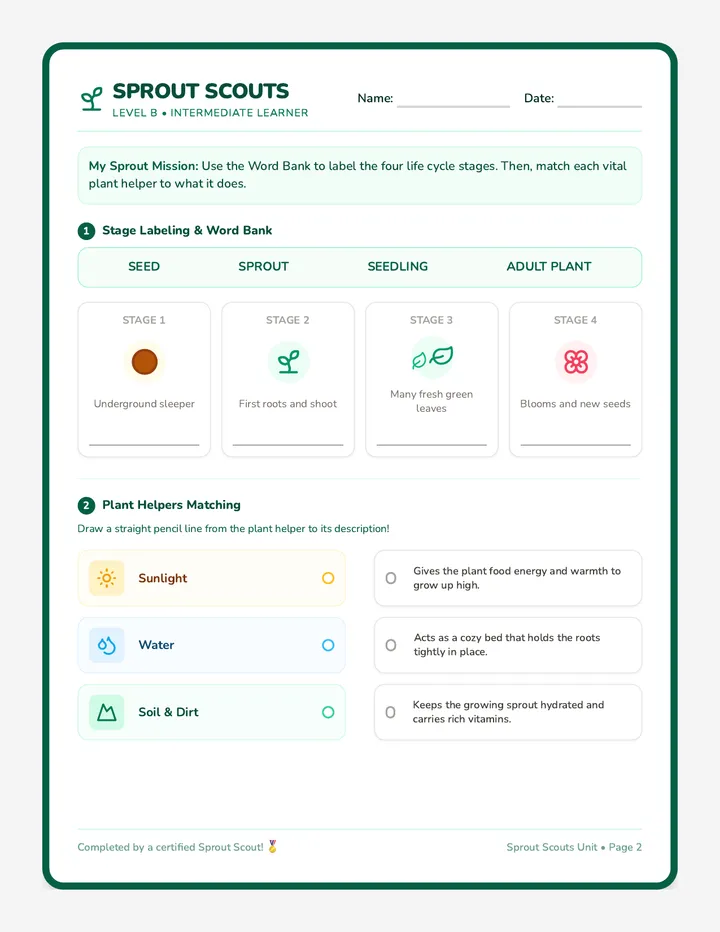
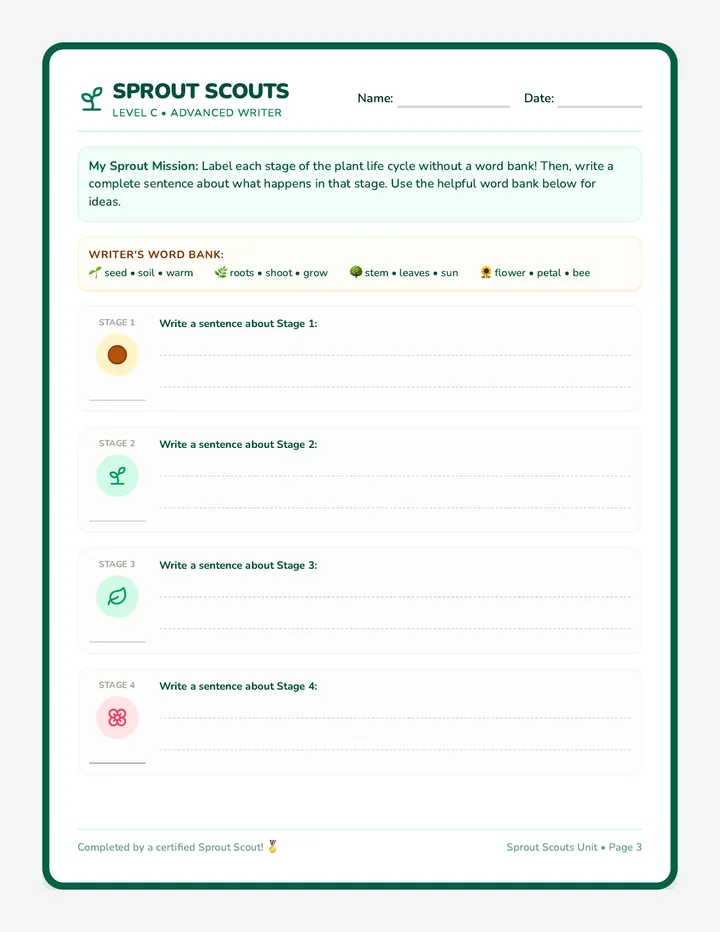
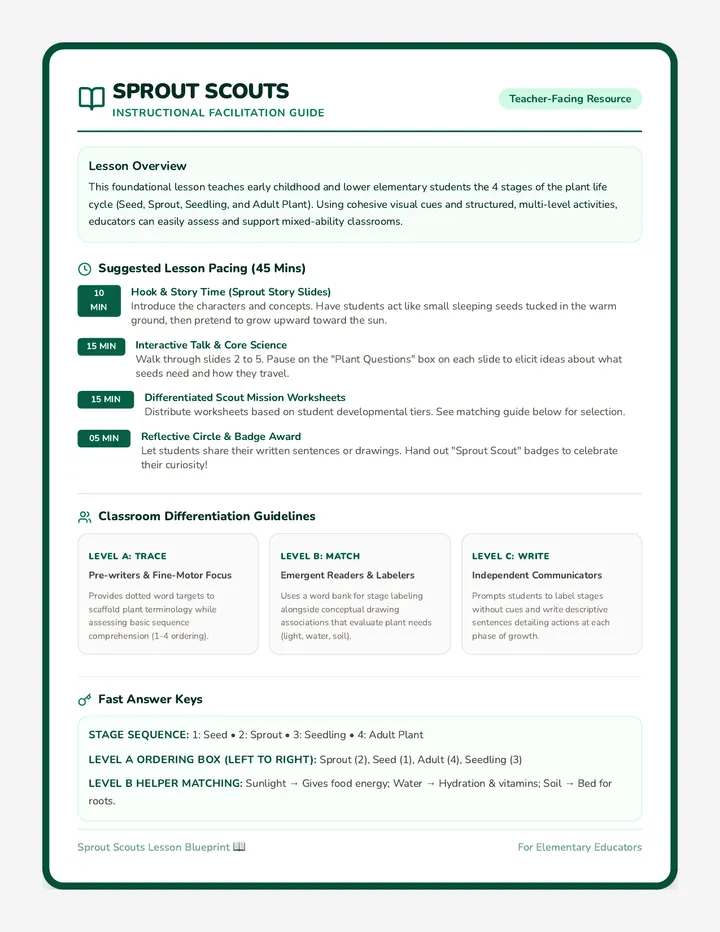
A foundational biology lesson exploring the simple life cycle of a plant from seed to sprout to adult. Includes interactive slides, a comprehensive teacher guide, and three tiers of differentiated worksheets to support early writers, matchers, and independent sentence-builders.
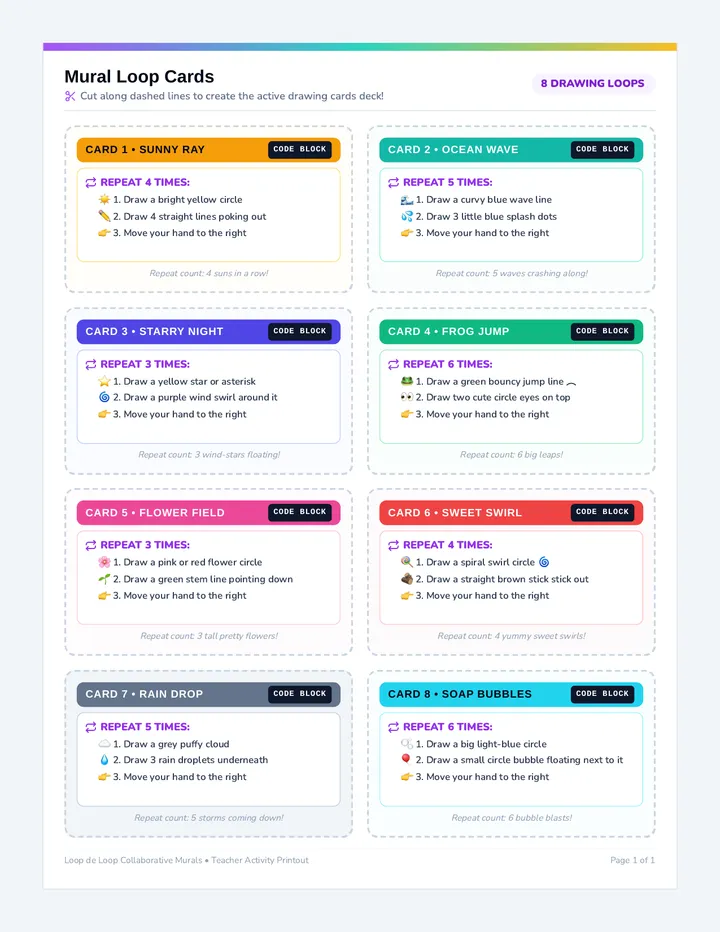
A set of 8 printable, highly visual coding loop cards for the team activity. Each card displays an artistic loop pattern (e.g. spiral, wave, stars) styled like friendly block code blocks, with clear dashed lines for teachers to cut.