Students use their senses to identify current weather conditions during a guided walk. They learn descriptive vocabulary for sun, wind, and rain.
A hands-on STEAM lesson where students explore the stages of a plant's life cycle through visual aids, vocabulary building, and a planting activity.
A series of reading comprehension materials exploring major human body systems, focusing on the respiratory and circulatory systems. Aligned to 3rd-grade NC ELA standards for main idea, cause and effect, and academic vocabulary.
Students simulate the pollination process through a high-energy movement game, learning about the symbiotic relationship between bees and flowers and its importance to our food system.
Teacher guidance and student tracking tools for the 5-week Tech Capstone project, including evaluation rubrics and progress monitoring.
A hands-on inquiry into the vital role of pollinators in the Indiana ecosystem. Students explore local species, simulate the pollination process, and record their findings in a field journal.
Utilisez des sous-requêtes et des CTE pour structurer des analyses de haut niveau prêtes pour le Big Data.
Apprenez l'art de combiner plusieurs tables pour créer des vues de données complètes et complexes.
Maîtrisez les fonctions d'agrégation et le regroupement pour transformer des lignes de données en statistiques actionnables.
Découvrez l'anatomie d'une base de données et apprenez à extraire vos premières informations avec SELECT, FROM et WHERE.
Students explore the anatomy of the ear and the physics of sound waves to understand how noise impacts their health and focus. The lesson includes hands-on noise monitoring and the development of protective strategies for auditory well-being.
A lesson exploring the science of how ice cools water through the transfer of thermal energy. Students will learn that heat moves from warm to cold, dispelling the common myth that 'cold' moves into the water.
Cette leçon explore le fonctionnement de l'intelligence artificielle appliquée à un distributeur de croquettes intelligent. Les élèves découvrent l'apprentissage supervisé pour distinguer les chiens des chats en utilisant l'interface Vittascience.
Une séquence complète sur l'utilisation des robots dans les missions de sauvetage et de secours, comprenant vocabulaire technique, lecture et atelier d'écriture.
A comprehensive teacher evaluation suite focused on an architectural scaling lesson, incorporating the Marzano framework for formal feedback and professional growth.
A 5-block (10 period) investigation into the human genome, focusing on patterns of inheritance, chromosomal disorders, and molecular biotechnology through the lens of polydactyly.
Teachers learn to break complex tasks into smaller, manageable steps using classroom routines and Iowa Core standards as examples.
A critical examination of how systemic inequities influence environmental health outcomes, focusing on Flint's water and urban air quality. Students analyze data and develop advocacy products to promote environmental justice.
A hands-on project where students explore waste management through the lens of Shoji Yamasaki's art, culminating in a creative video showcasing their own upcycling process or performance.
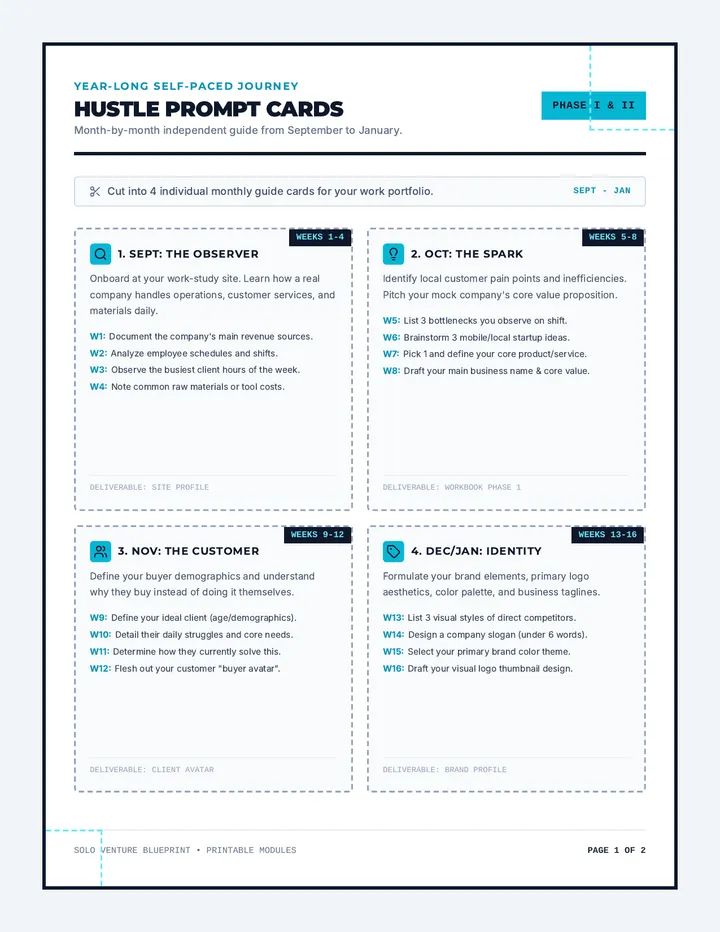
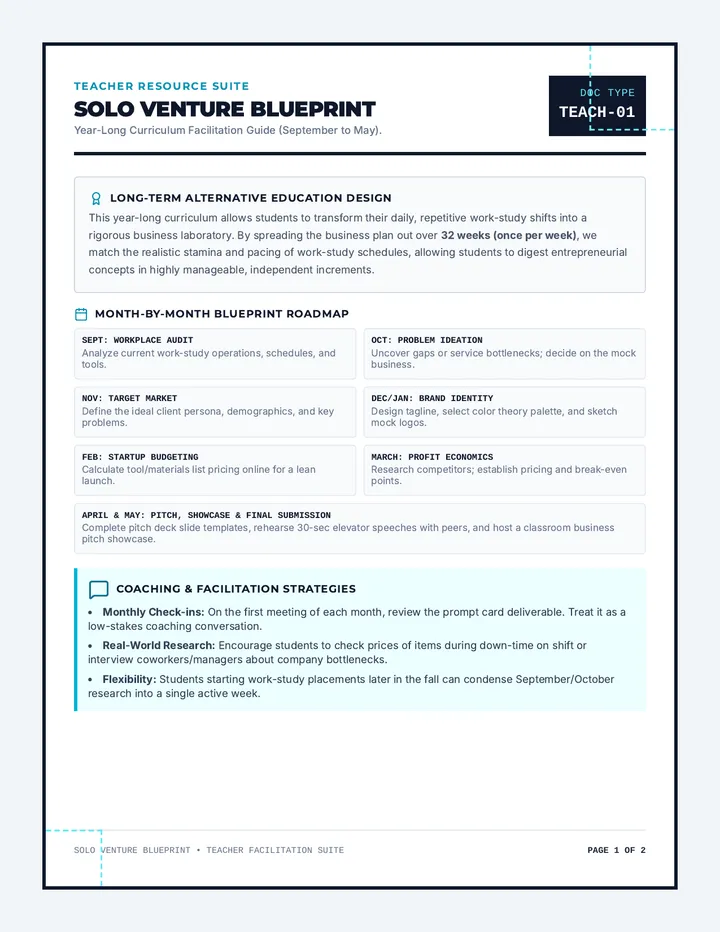
Students define their brand's personality and photography style, using image filters and curation to complete the final section of their professional style guide.
Students create a formal brand style guide, documenting rules for logo usage, color palettes with Hex codes, and typography to ensure brand consistency.
Students learn to use Canva as a professional layout tool, transitioning from building individual design components to assembling a cohesive Brand Board using custom assets, frames, and positioning tools.
Students refine their logo drafts by applying principles of negative space and contrast, creating color and black-and-white versions for professional export.
Students combine their icon and typography choices to build an official brand logo draft, focusing on balance, alignment guides, and the 'Squint Test' for simplicity.
Students master custom shape creation using polyline and curve tools, exploring line weights and the importance of vector scalability for professional branding.
Students move from curating to creating, using Google Drawing to build complex objects with simple geometric shapes while learning the fundamentals of vector design and layering.
Students learn how font choices communicate a brand's tone of voice, distinguishing between serif, sans serif, and display fonts to select a pair that fits their business identity.
Students explore the emotional impact of color in branding, learning to use Hex codes and curated imagery to build a brand mood board that reflects their product's personality.
Students perform quality control on their business proposals through peer review, grammar tools, and text-to-speech auditing before exporting their final work as professional PDFs.
Students learn about intellectual property, source reliability, and technical citation skills like hyperlinking and footnotes to perform ethical competitor research.
Students integrate market research data and customer testimonials into their formal proposals, using evidence to validate their product concepts and finalizing the Solution section.
Students learn to distinguish between product features and customer benefits, drafting the Executive Summary and Problem sections of their business proposal using persuasive formatting.
Students learn the importance of professional document formatting and hierarchy, setting up a formal business proposal template with structured headings and standardized typography.
Students conduct a market research sprint, interviewing classmates to validate their product ideas and learning to 'pivot' based on real user feedback and data synthesis.
Students learn the difference between leading and open-ended questions, developing a research table and interview script to gather unbiased feedback from potential customers.
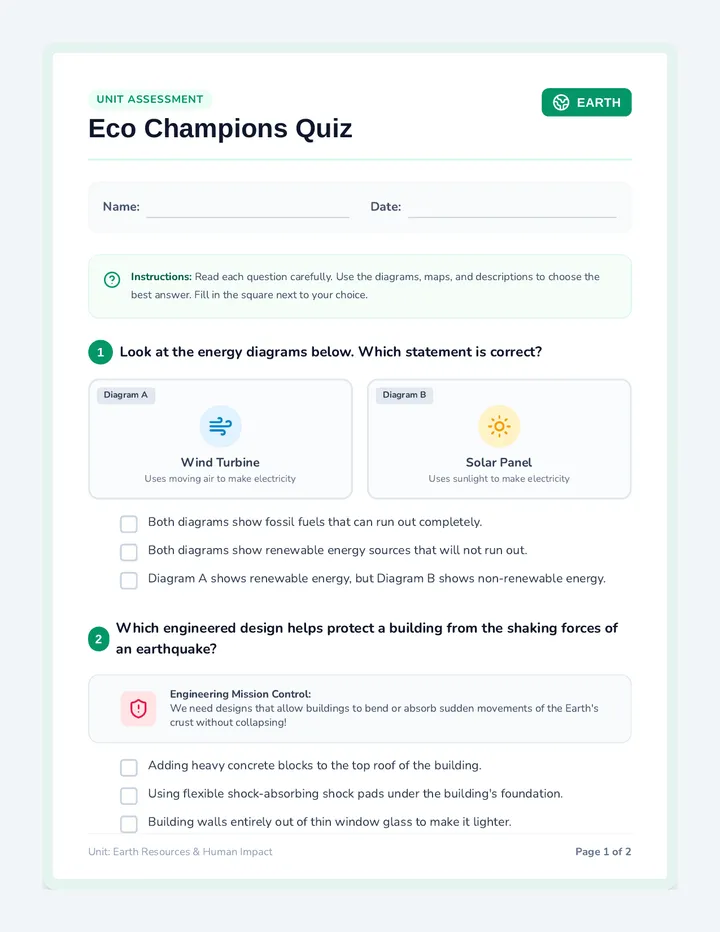
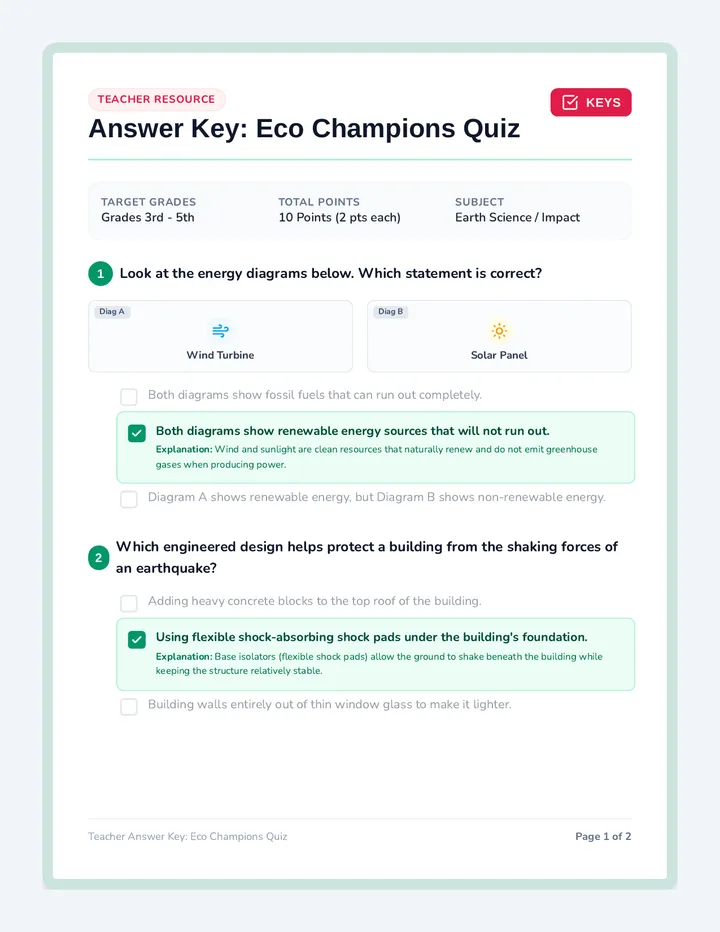
An exploration of how carbon moves through the atmosphere, hydrosphere, geosphere, and biosphere, and why this cycle is vital for living organisms.