A 1st-grade lesson introducing the cyclical nature of the four seasons using a video, discussion, and a hands-on wheel-making activity. Students learn to sequence the seasons and use the phrase 'comes after' to describe the cycle.
Students explore five major world habitats—Forest, Ocean, Desert, Arctic, and Rainforest—identifying key characteristics and the animals that call them home through visual presentation and hands-on sorting activities.
A lesson focused on the Anglerfish and its bioluminescent trap, designed for early elementary students with IEP supports. Students will learn about deep-sea adaptations through a simple reading passage and structured comprehension activities.
An introductory lesson on waste management and recycling where students practice sorting materials and learning key environmental vocabulary.
A lesson focused on simple, actionable steps students can take to reduce energy consumption at home and school.
A beginner-friendly exploration of the four stages of a butterfly's life cycle, featuring a reading passage and comprehension activities focused on sequencing and Wh- questions.
A comprehensive set of practice materials for the ILEARN assessment focusing on vowel and consonant patterns (CVC, CCVC, CVCe, etc.). Includes grouped practice, a mixed test, task cards, and an answer key.
A lesson focused on mastering syllable division patterns through interactive tracking and assessment.
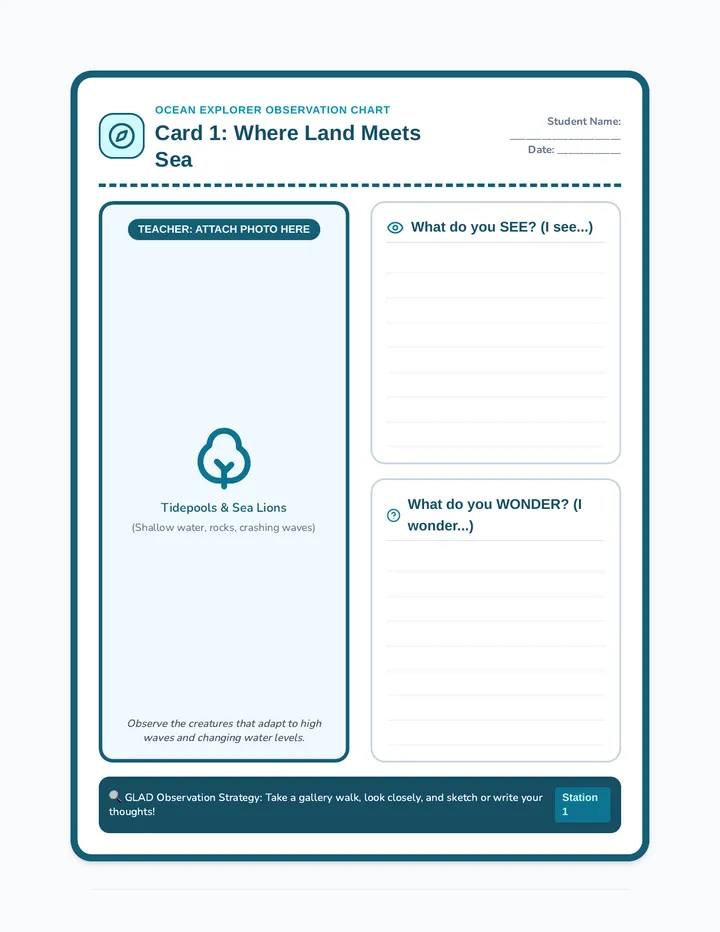
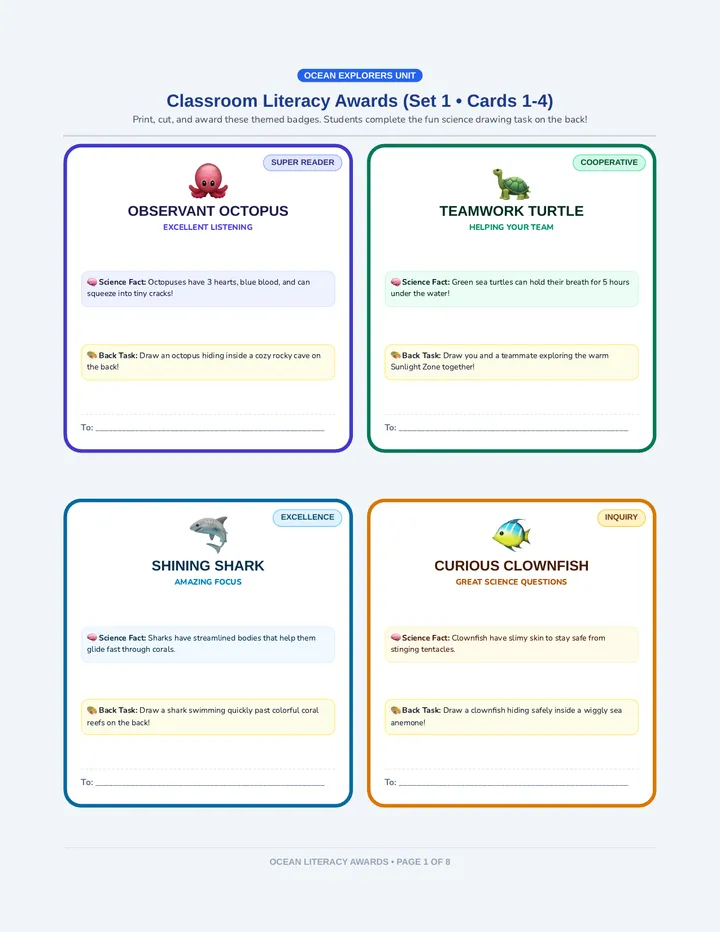
An immersive literacy and science lesson for 1st-2nd graders exploring the wonders of the ocean through handwriting practice and marine life exploration.
A field trip exploration guide for the Anne Kolb Nature Center, featuring a scavenger hunt BINGO activity and a counselor answer key.
Una lección interactiva sobre las estructuras externas de los animales y cómo estas partes les ayudan a sobrevivir en su entorno, alineada con TEKS 1.13A.
A high-energy, 10-minute Earth Day activation designed to inspire immediate student action through impactful visuals and a personal pledge.
A foundational lesson introducing the concept of growth and change in plants and animals. Students practice generating curious questions based on visual and auditory media to drive their learning throughout the unit.
A high-energy STEM event for kids in foster care, focusing on engineering design, collaborative building, and social connection through hands-on challenges.
A lesson designed for emerging Multilingual Learners to practice vocabulary in context and sequencing through an engaging story about Earth Day and a park cleanup. Students will learn facts about the environment while building narrative comprehension skills.
A comprehensive suite of data tracking tools for students to monitor their reading progress, including benchmark assessments and IMSE Orton-Gillingham concept checks from Kindergarten through 5th grade.
A library-focused lesson for K-2 students that celebrates Earth Day through a nature-themed read-aloud and interactive activities that encourage appreciation and care for the environment.
A multi-sensory exploration of spring through the lens of the five senses, designed to build observation skills and descriptive language in K-5 students.
A review lesson where students sort various chores into push or pull categories and participate in a class-wide 'Chore Challenge' game.
An introduction to the concept of 'Pull' through tasks like opening drawers, raking leaves, and pulling a wagon.
An introduction to the concept of 'Push' through common household tasks like sweeping, vacuuming, and pushing a grocery cart.
A beginner-friendly introduction to Mechanical, Electrical, and Light energy, featuring a hands-on classification activity.
A fun and engaging animal-themed coloring book that encourages students to identify, draw, and color 51 different animals. This lesson focuses on animal diversity and recognition through a creative field-guide approach.
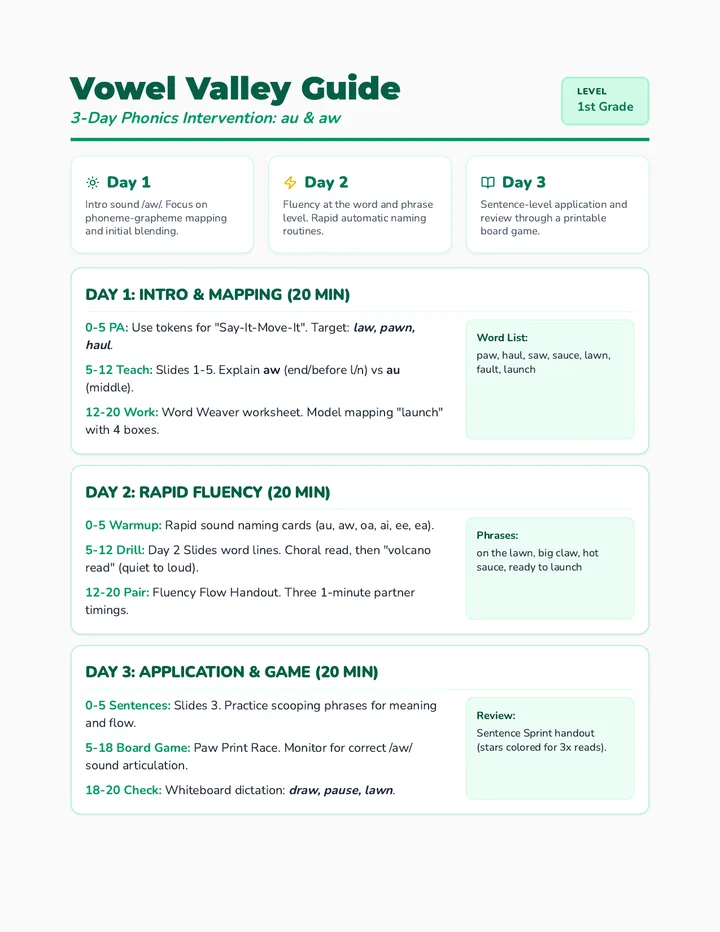
A comprehensive week of instruction covering the introduction of ai and ay, multisensory practice, heart words, and connected text reading.
A foundational phonics lesson focused on identifying and matching initial consonant sounds through detective-themed activities and hands-on matching.
A focused activity on identifying and distinguishing between vowels and consonants using the visual style of plastic reading rods.
A series of outdoor observation activities where students explore human impact, plant adaptations, and geological changes while practicing the ELA skill of distinguishing between fact and opinion.
An immersive outdoor exploration where students become 'Eco-Detectives' to identify the essential components of local habitats through observation and sketching.
A hands-on science lesson for Kindergarten and 1st grade students to explore density and chemical reactions by creating a DIY lava lamp. Students will learn why oil and water don't mix and observe the 'magic' of gas bubbles.
A hands-on science lesson exploring density and chemical reactions through the creation of a DIY lava lamp. Students will learn why oil and water don't mix and how gas bubbles transport liquids.
A hands-on sensory center lesson where students explore plastic animal toys to learn basic science concepts like classification, anatomy, and habitats while building descriptive vocabulary.
This lesson empowers students, including Multilingual Learners, to lead sustainable lives by transforming their daily lunch habits. Through visual aids, scaffolded vocabulary, and collaborative activities, students identify environmental impacts and plan actionable eco-friendly changes.
A phonics-based card game lesson where students practice reading words with short vowels, blends, digraphs, vowel teams, and various affixes through an Old Maid style game called Losing Lizard.
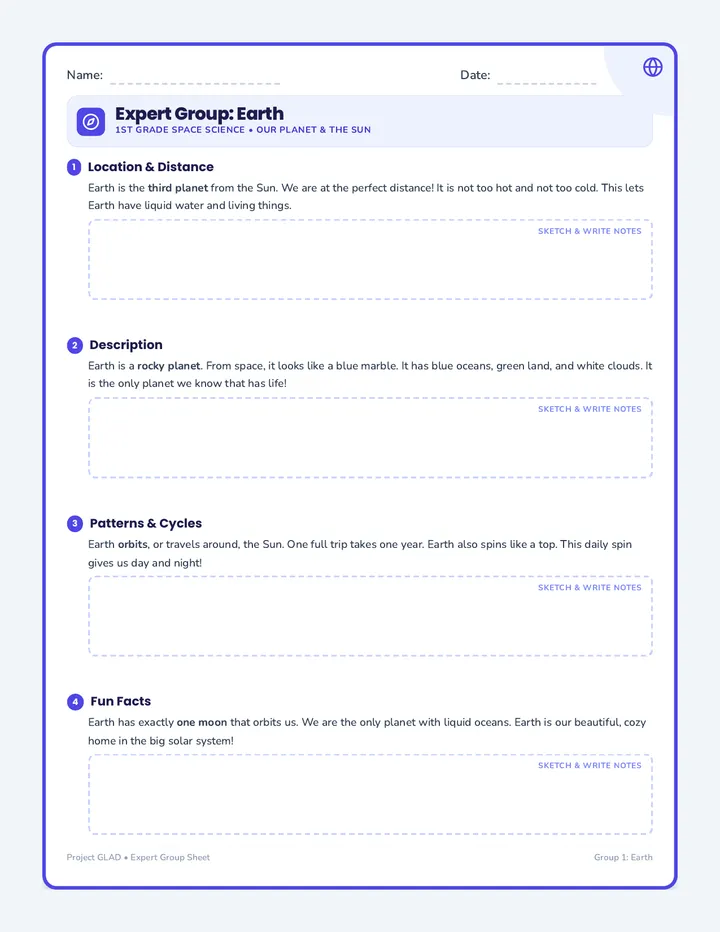
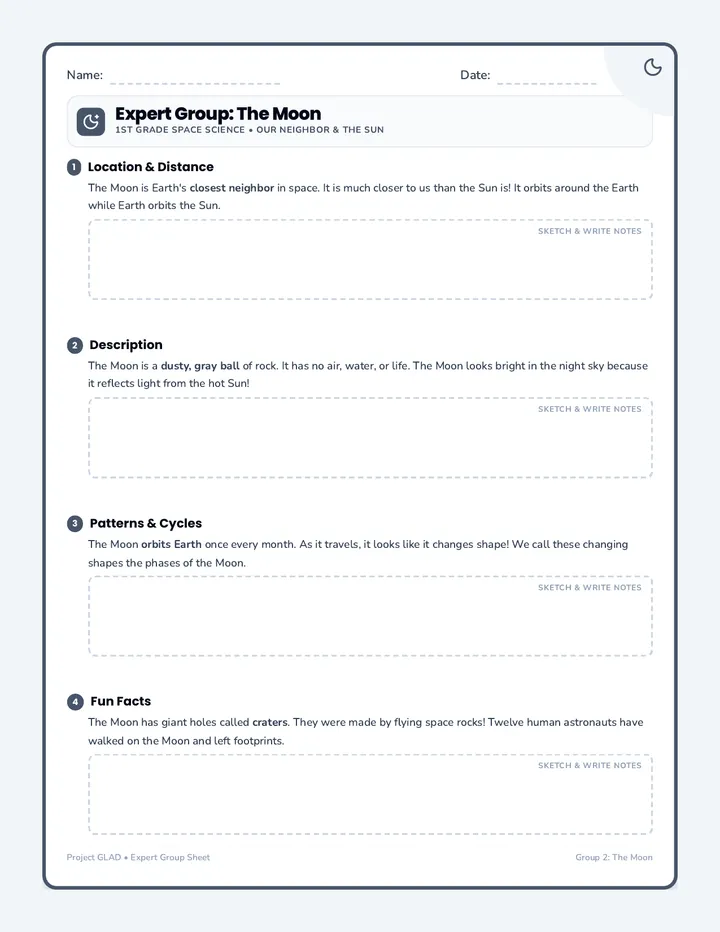
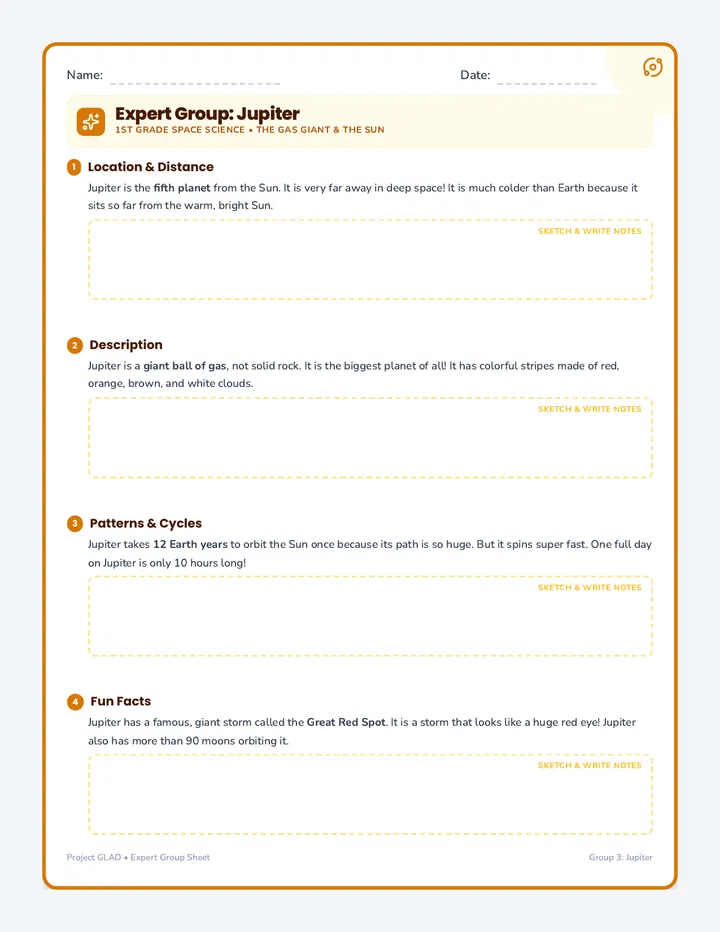
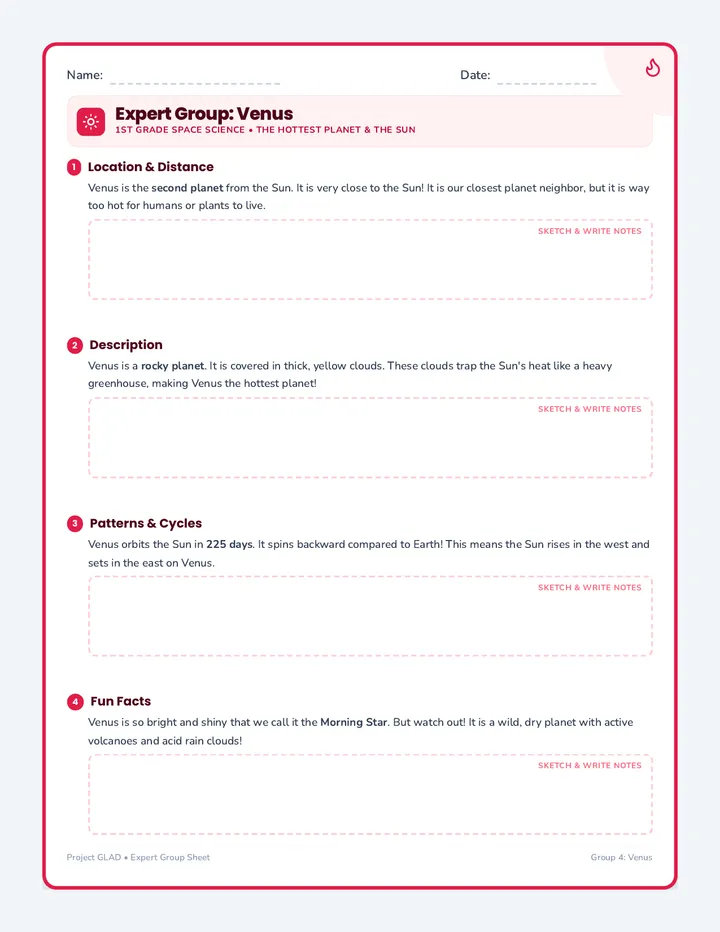
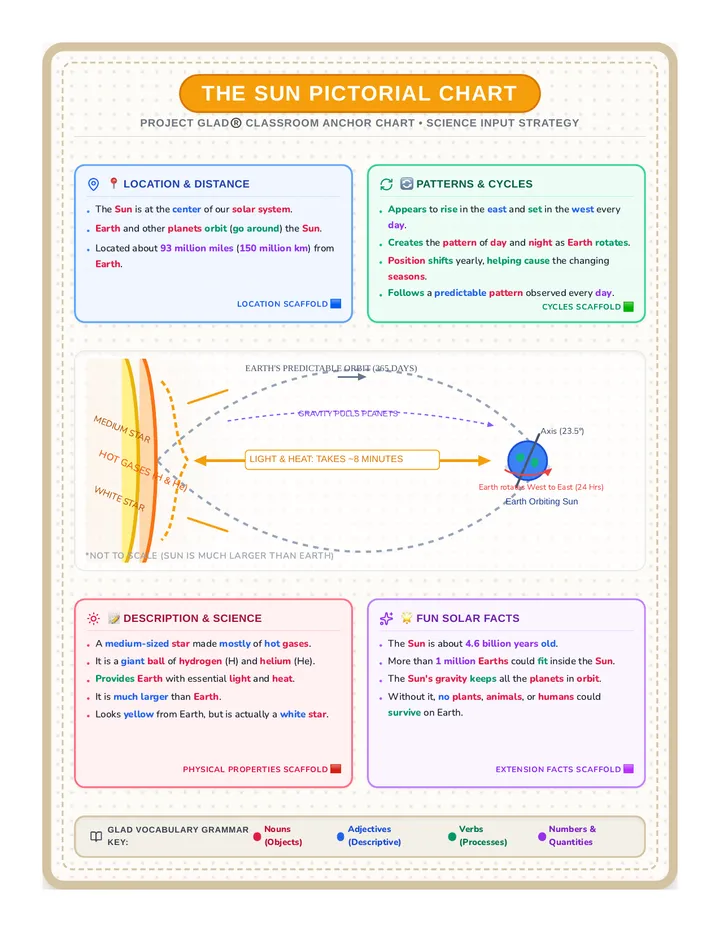
A lesson exploring the components of our solar system, focusing on reading comprehension, sequencing, and identifying key details from informational text.
Students will learn the four distinct stages of a butterfly's life cycle and practice sequencing them in the correct chronological order.
An extension lesson delving deeper into how plants grow, focusing on the specific functions of roots, stems, and leaves, as well as the essential nutrients found in soil.
A hands-on STEM lesson where 1st graders design and build structural adaptations to help animals solve specific survival problems.
A research unit focused on the physical characteristics and adaptations of marine animals, designed for K-1 learners to build scientific observation and writing skills.
An introductory science lesson for K-1 students exploring the signs of spring in April, including weather patterns, plant growth, and animal activity.