Rock Solid Density Practice Worksheet ROCK SOLID DENSITY
Name: ____________________________________
Date: __________________ Period: ___________
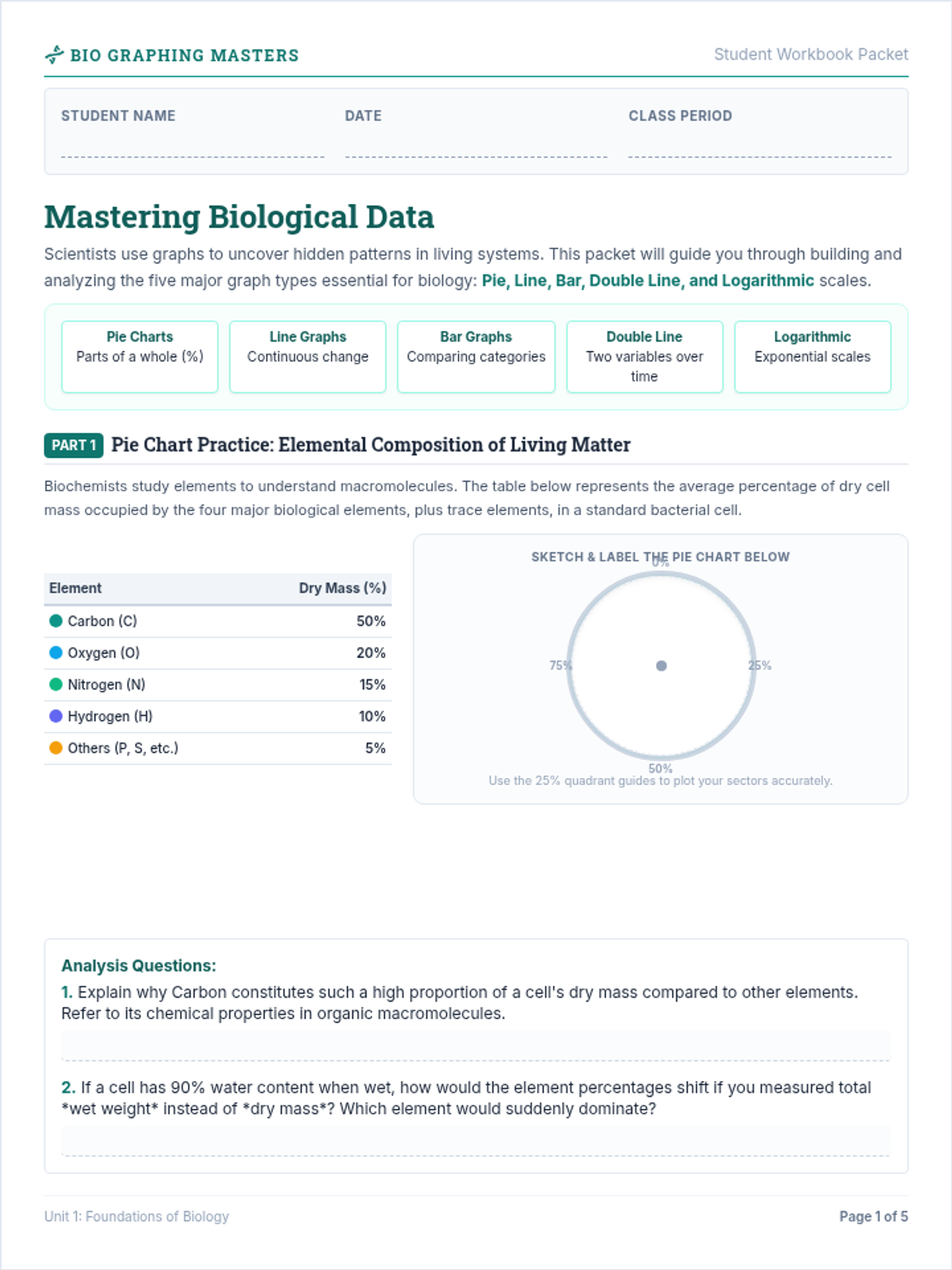
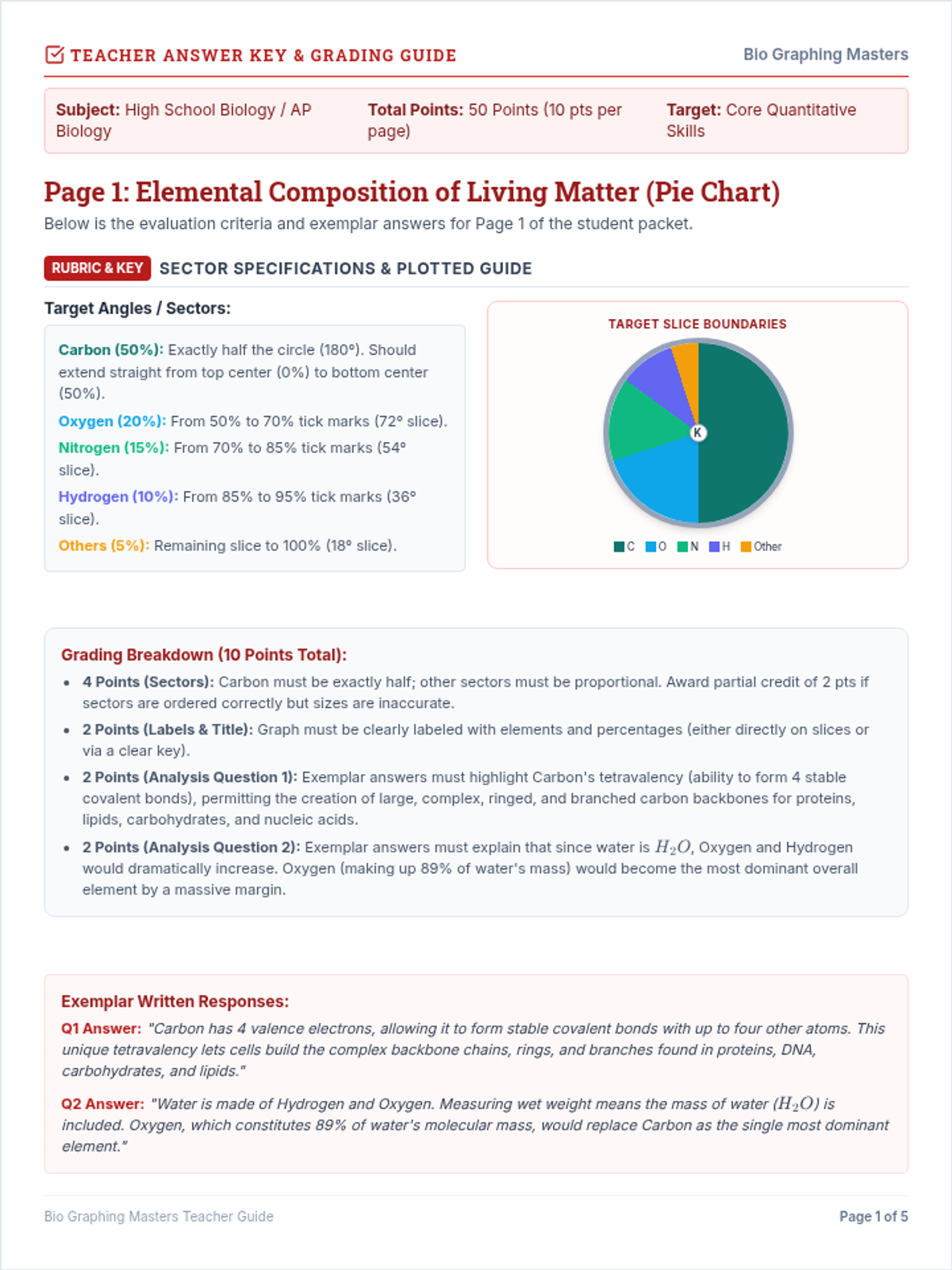
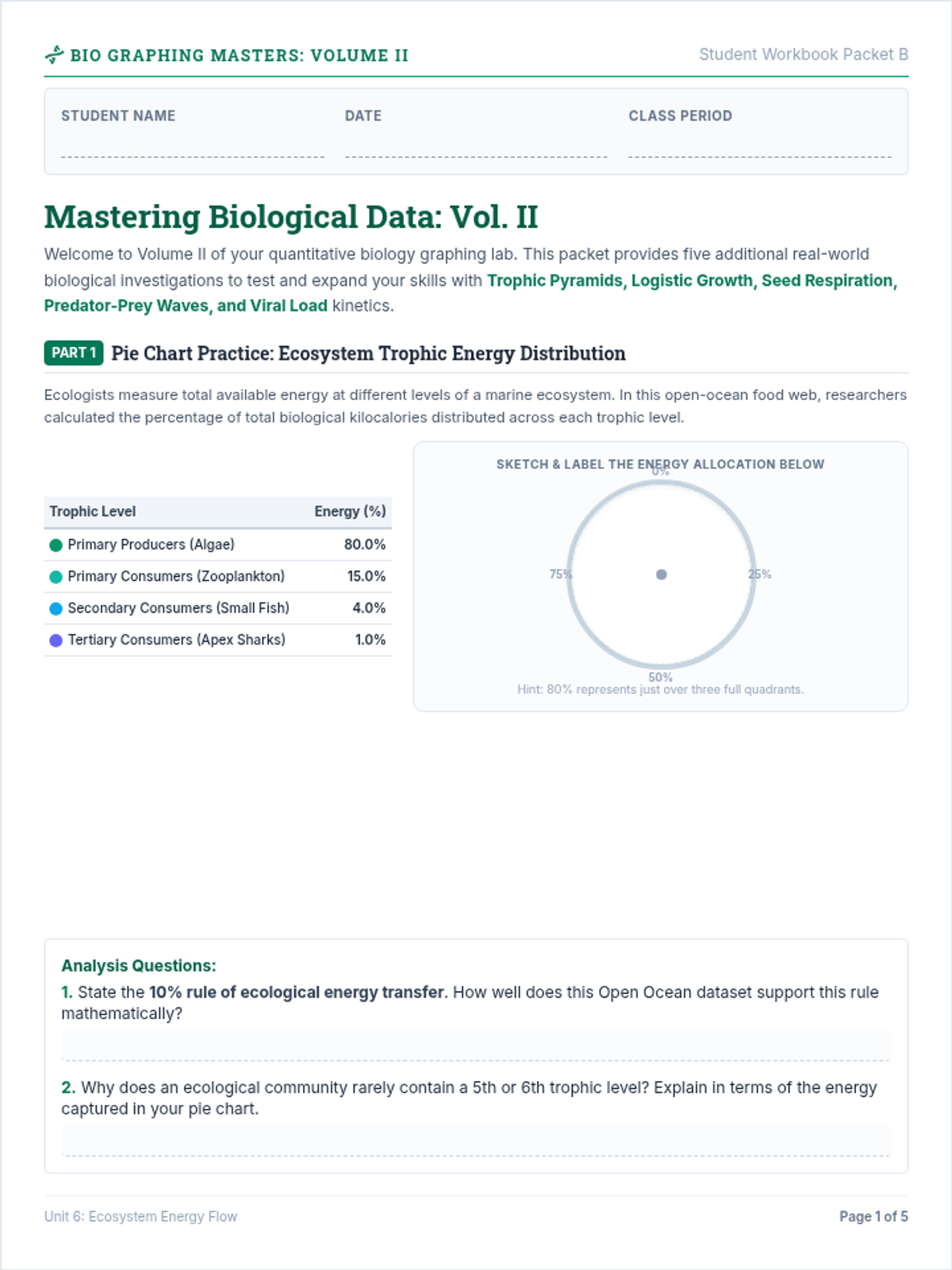
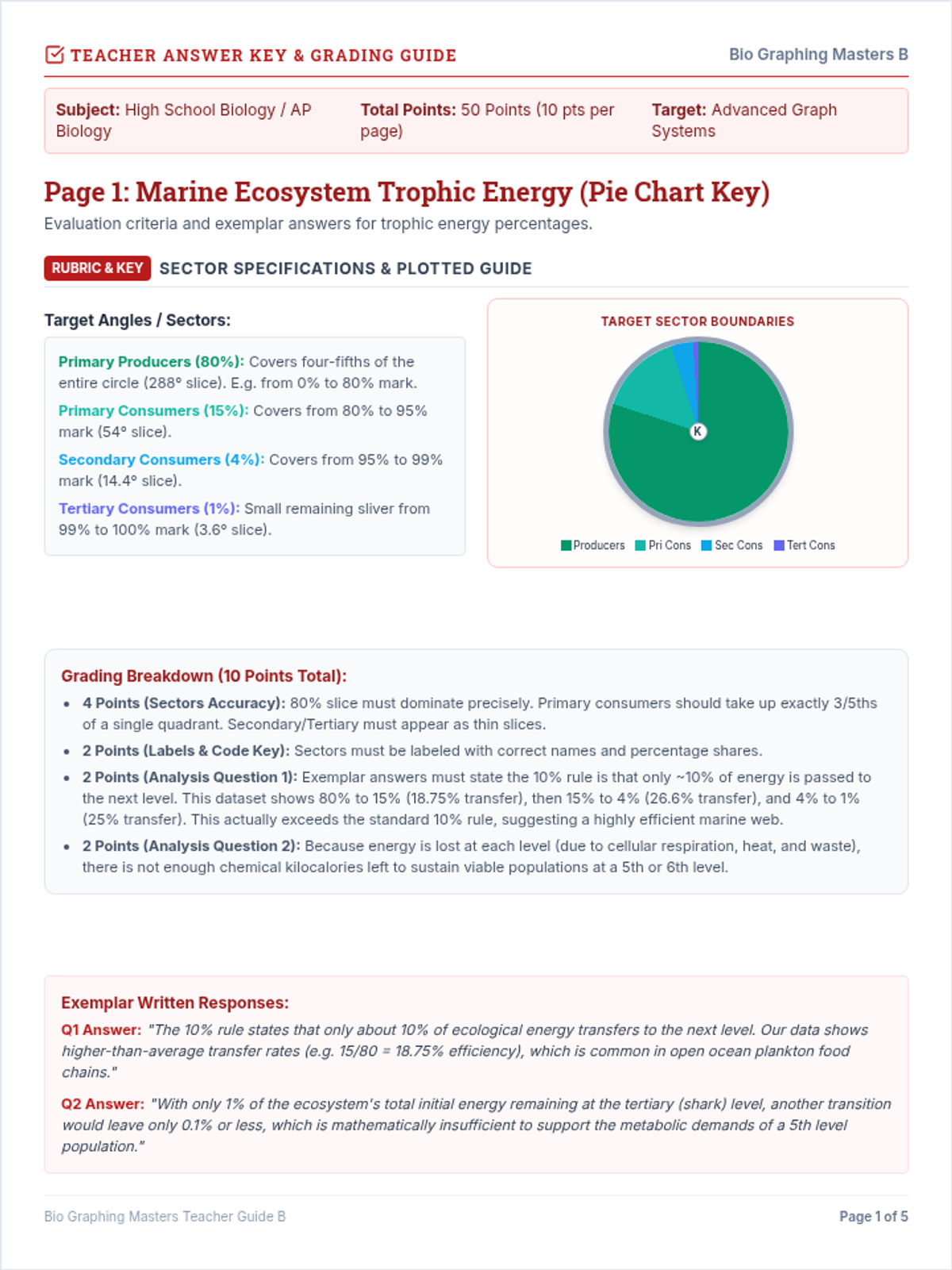
Density is an intrinsic property of matter, meaning it doesn't change based on how much of a substance you have. Scientists use density to identify unknown materials and understand how substances interact (like why tectonic plates subduct or float).
1. The Big Three
Mass (\(m\))
The amount of "stuff" (matter) inside an object.
Unit: Grams (g)
Volume (\(V\))
The amount of space an object takes up.
Unit: \(cm^3\) or mL
Density (\(D\))
How tightly packed that "stuff" is in that space.
\(D = \frac{m}{V}\)
The Chocolate Bar Breakdown
Imagine you have a large chocolate bar with a mass of 100g and a volume of 50 \(cm^3\) . You snap the bar exactly in half. Now you have two smaller bars, each with a mass of 50g and a volume of 25 \(cm^3\) .
Calculate the density for the WHOLE bar and for the HALF bar. Does the density change? Explain why this happens using the words "ratio," "mass," and "volume."
2. Lab Evaluation: Percent Error
In science, we compare our experimental results to a "true" or theoretical value. We use the Percent Error formula to see how accurate our lab was:
\[ \text{Percent Error} = \left| \frac{\text{Experimental} - \text{Theoretical}}{\text{Theoretical}} \right| \times 100 \]
Rock Type Theoretical Density (\(g/cm^3\)) Your Lab Density (\(g/cm^3\)) Calculate Percent Error (%) Basalt 2.9 Granite 2.7
*Note: Show your work for at least one of these calculations in the space below.*
3. Practice Calculations
Round all answers to two decimal places and include units!
1. A sample of Obsidian has a mass of 48.0 grams and a volume of 20.0 \(cm^3\). What is its density?
Work Area
Final Answer
2. A piece of Pumice has a density of 0.60 \(g/cm^3\). If its volume is 150 \(cm^3\), what is the mass of the pumice sample?
Work Area
Final Answer
3. A heavy chunk of Galena (lead ore) has a mass of 450 grams. If its density is 7.5 \(g/cm^3\), how much space (volume) does it take up?
Work Area
Final Answer
4. Final Reflection: If you found a tiny grain of Granite on the floor, would its density be higher, lower, or the same as the large granite block you used in the lab? Why?
Conceptual Physics | Unit 2: Earth Systems & Matter
Source: Lithosphere Lab Series
Rock Solid Density Answer Key ANSWER KEY
Rock Solid Density Practice Worksheet
1. The Big Three
Mass (\(m\))
Matter content.
Volume (\(V\))
Space occupied.
Density (\(D\))
\(D = m/V\)
The Chocolate Bar Breakdown
Calculate density for whole/half bar and explain.
Whole Bar: \(100g / 50cm^3 = 2.0 g/cm^3\)
Half Bar: \(50g / 25cm^3 = 2.0 g/cm^3\)
The density is the SAME because density is a ratio. When you half the volume, you also half the mass. The "tightness" of the atoms doesn't change just because you have less of the object.
2. Lab Evaluation: Percent Error
Rock Type Theoretical Answer Guidance Basalt 2.9 \(g/cm^3\) Check student formula use: \( Granite 2.7 \(g/cm^3\) Check student formula use: \(
3. Practice Calculations
1. Density of Obsidian (\(48g / 20cm^3\))
2.40 g/cm³
2. Mass of Pumice (\(0.60 \times 150\))
90.00 g
3. Volume of Galena (\(450 / 7.5\))
60.00 cm³
4. Reflection (Grain vs Block)
The density would be the SAME. Since it is still the same material (granite), the mass and volume decrease proportionally, keeping the density constant.
Rock Solid Density Practice Worksheet v2 SigFigs Beaker ROCK SOLID DENSITY
Name: ____________________________________
Date: __________________ Period: ___________
The 3-Digit Rule
In this class, we always round our final answers to 3 significant digits . Significant digits show the precision of our measurement.
1.234 rounds to 1.23
0.005678 rounds to 0.00568
150.9 rounds to 151
Reading the Meniscus
Liquid in a container curves. Always read the volume at the bottom of the meniscus (the curve) while looking at it at eye level.
1. Measuring Volume
0 mL
20
40
60
80
100
Fig A: Beaker with blue liquid
A. Reading the Scale
Look at the beaker in Fig A. The labels are every 20 mL, and the unlabelled lines are every 10 mL.
What is the volume of the liquid in Fig A?
B. Water Displacement
You start with 50 mL of water. You drop in a piece of Basalt. The water level rises to the 78 mL mark. What is the volume of the rock?
The Chocolate Bar Breakdown
Reminder: Density is an intrinsic property (it doesn't change with size).
A large chocolate bar has a mass of 105.4g and a volume of 52.2 \(cm^3\) . Calculate the density. Then, explain what happens to the density if you break the bar in half. Round to 3 significant digits!
Space for calculation and explanation...
2. Lab Evaluation: Percent Error
Round your final Percent Error percentages to 3 significant digits.
Rock Type Theoretical (\(g/cm^3\)) Your Lab (\(g/cm^3\)) Percent Error (%) Basalt 2.90 Granite 2.70
3. Practice Calculations (Round to 3 Sig Digits!)
1. A sample of Obsidian has a mass of 48.062 grams and a volume of 20.12 \(cm^3\). What is its density?
Answer
2. A piece of Pumice has a density of 0.641 \(g/cm^3\). If its volume is 155.5 \(cm^3\), what is the mass?
Answer
3. A heavy chunk of Galena has a mass of 450.81 grams and a density of 7.58 \(g/cm^3\). What is its volume?
Rock Solid Density Answer Key v2 SigFigs Beaker ANSWER KEY (V2 - Sig Figs)
1. Measuring Volume
A. Beaker Reading:
70 mL
(The liquid level is on the line exactly between 60 and 80).
B. Water Displacement:
28 mL
(Calculation: 78 mL - 50 mL = 28 mL)
Conceptual Analogy
Chocolate Bar Density Calculation:
105.4g / 52.2 cm³ = 2.02 g/cm³ (3 sig digits)
Explanation: The density remains the SAME . Breaking it in half reduces the mass and volume by the same ratio, keeping the ratio \(m/V\) constant.
3. Practice Calculations (3 Sig Digits)
1. Obsidian Density:
2.39 g/cm³
(48.062 / 20.12 = 2.3887... → 2.39)
2. Pumice Mass:
99.7 g
(0.641 * 155.5 = 99.6755 → 99.7)
3. Galena Volume:
59.5 cm³
(450.81 / 7.58 = 59.4736... → 59.5)
4. Gold Reflection:
Gold is a pure substance with a fixed density. While the mass and volume are different for each piece, their ratio (\(m/V\)) is identical because they are made of the same atoms packed in the same way.