A concise, 5-day science unit covering plant structures, life cycles, environmental needs, and soil types designed for 20-minute instructional blocks.
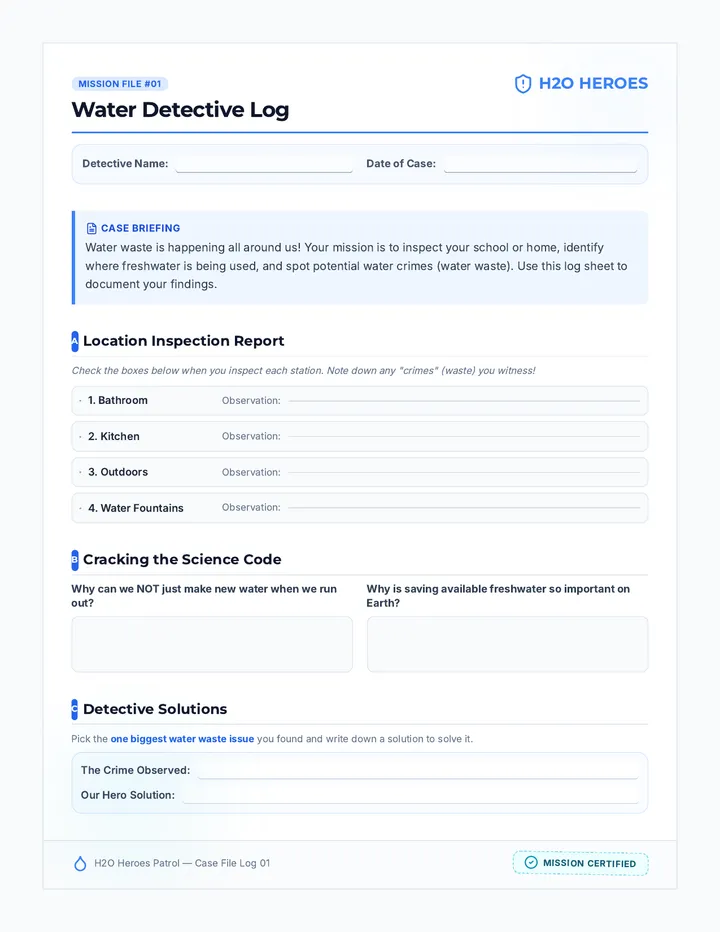
A comprehensive third-grade science and ELA unit focusing on freshwater distribution, conservation, and persuasive public service announcements. Students learn about global water resources and work in teams to design and produce a persuasive PSA to save water in their school or community.
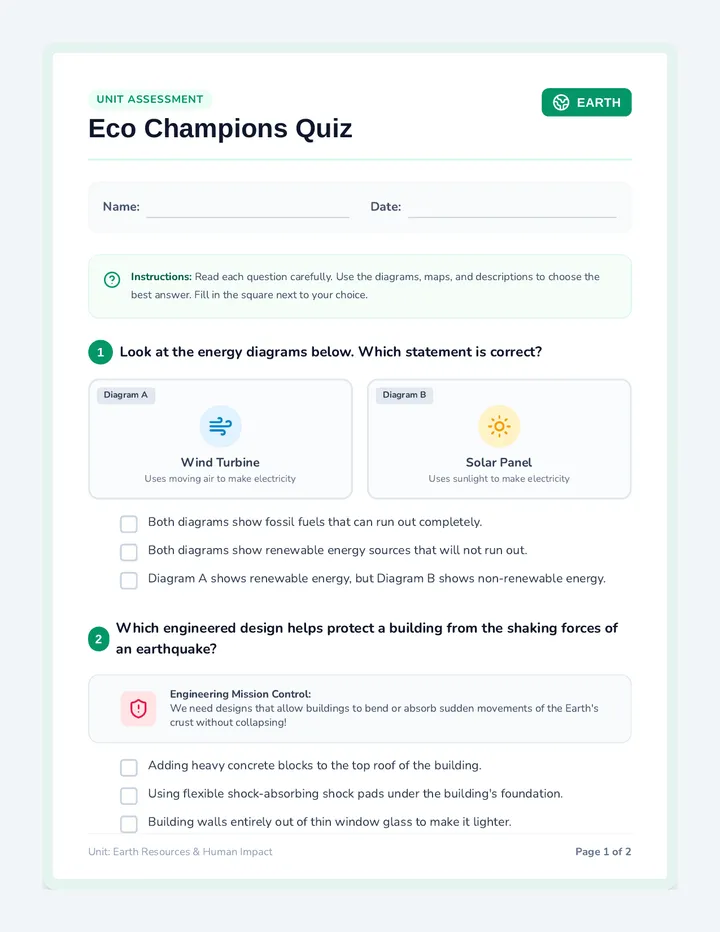
An elementary Earth Science lesson focusing on renewable energy, natural hazards, conservation, and human impact. Includes a highly visual student quiz and a corresponding teacher answer key.
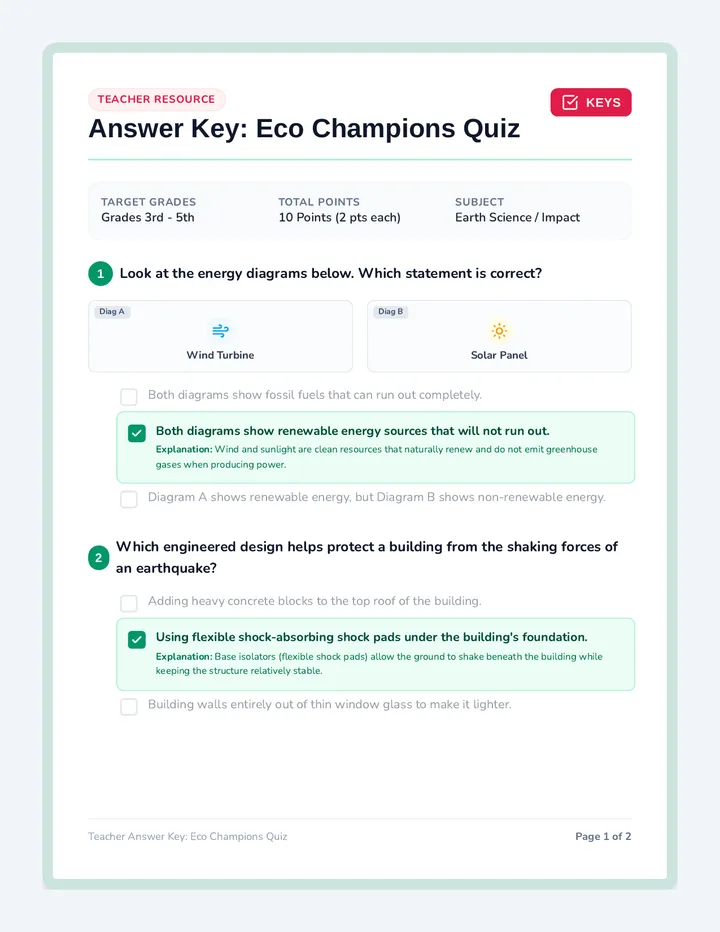
A teacher-facing 2-page Answer Key for the Eco Champions Quiz, providing highlighted correct answers, explanations, and grading criteria for the open-ended action plan question.
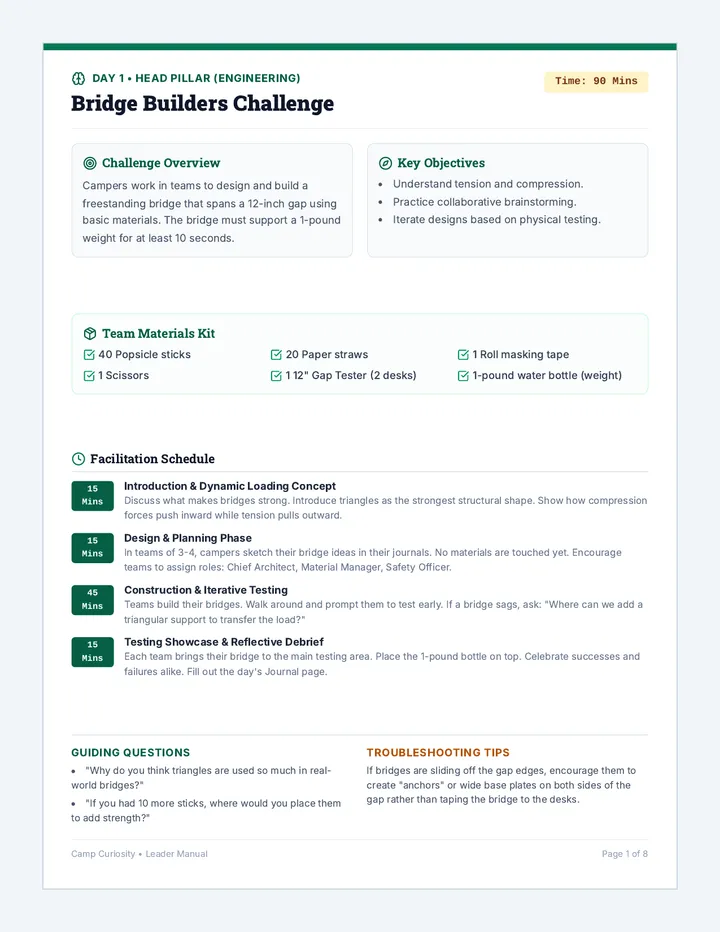
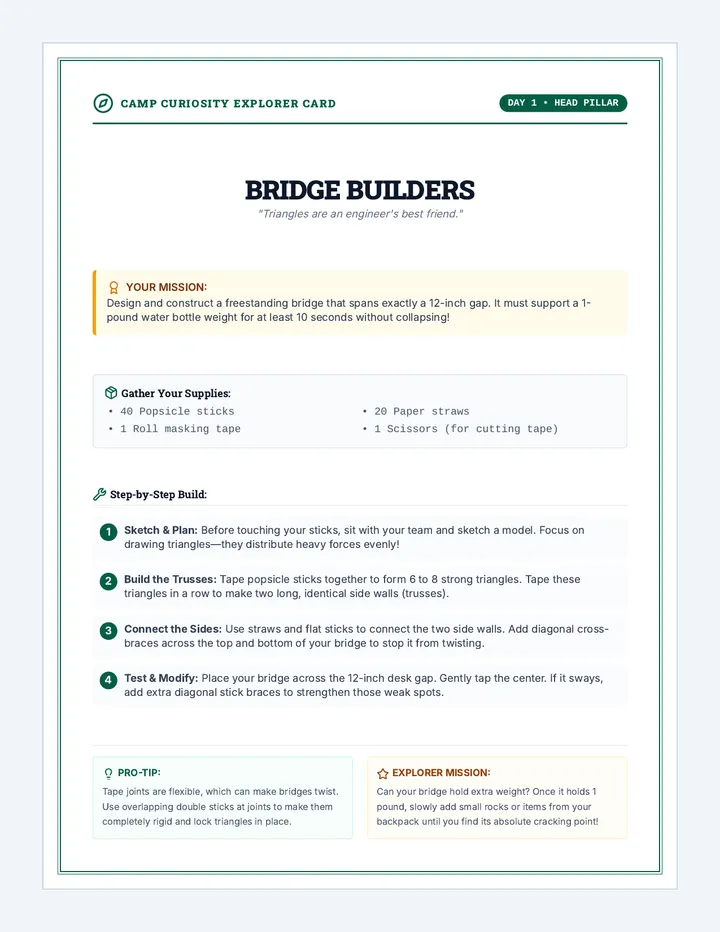
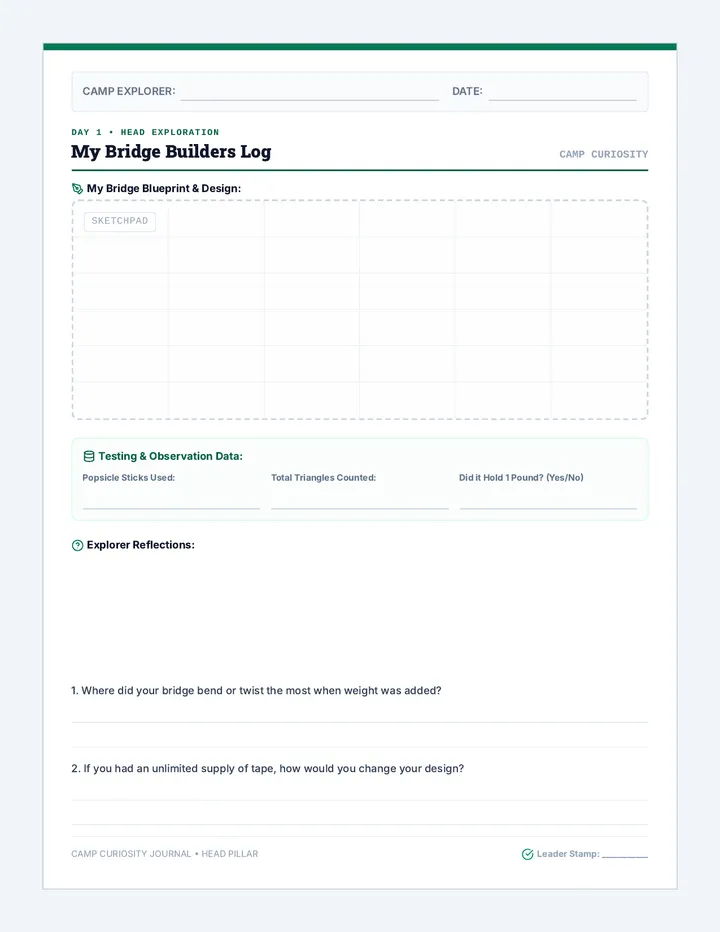
An action-packed, hands-on 8-day 4-H camp program focusing on Head, Heart, Hands, and Health. Students tackle engineering, teamwork, ecology, nutrition, and art challenges through daily active learning.
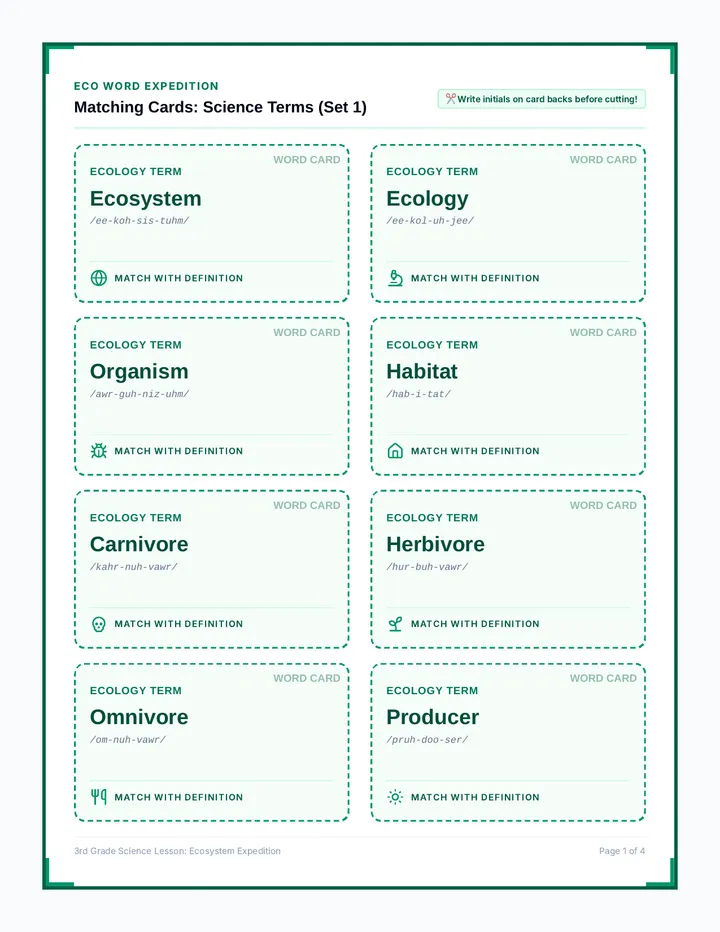
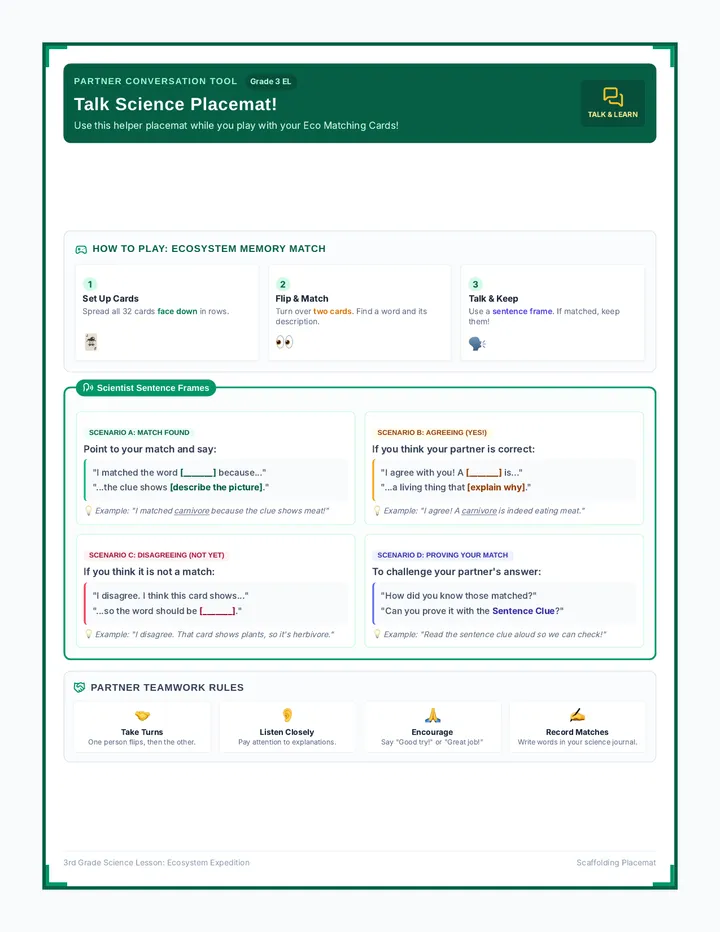
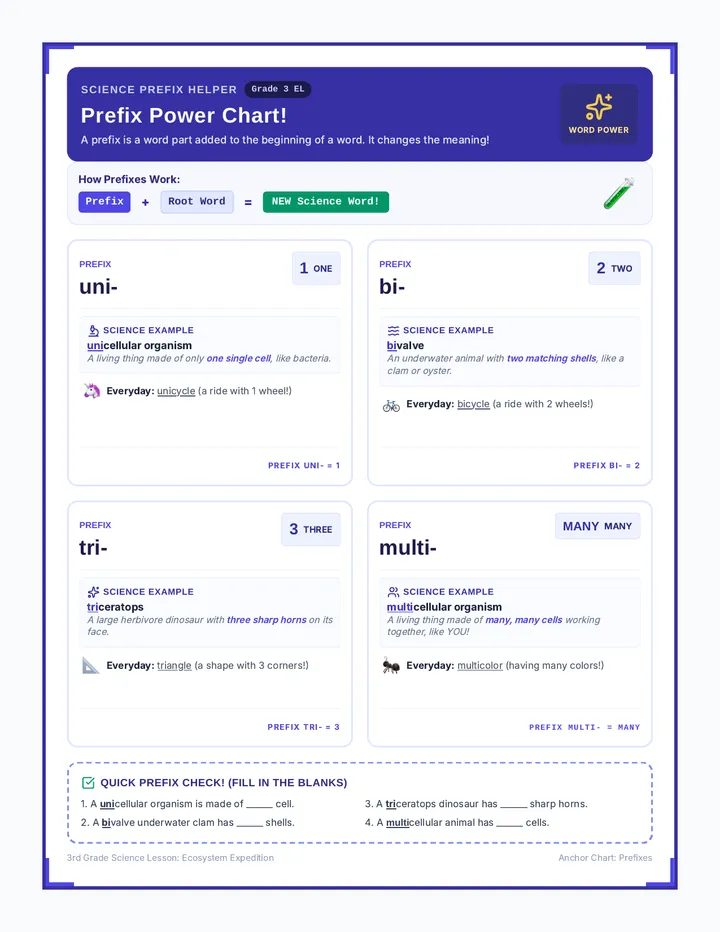
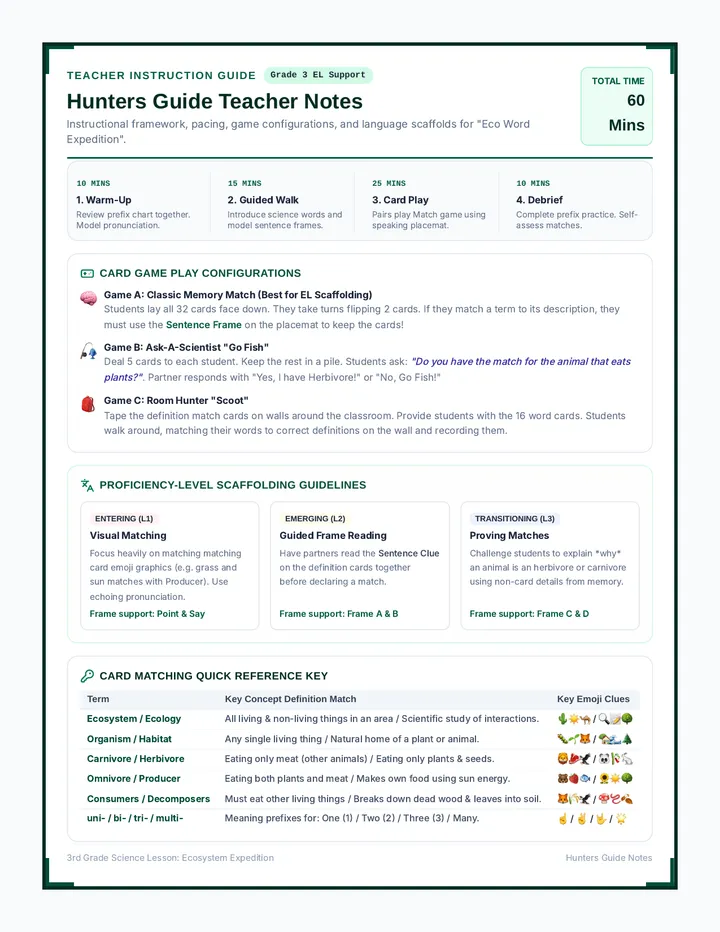
An interactive, visual vocabulary and prefix learning lesson designed specifically for 3rd-grade English Learners. Students explore key ecology terms and prefix combinations through hands-on illustrated cards, speaking scaffolds, and visual charts.
A visually engaging, 2-page Earth Science quiz designed for grades 3-5, focusing on renewable energy, natural hazards, conservation, and climate change with clean diagram boxes and student writing space.
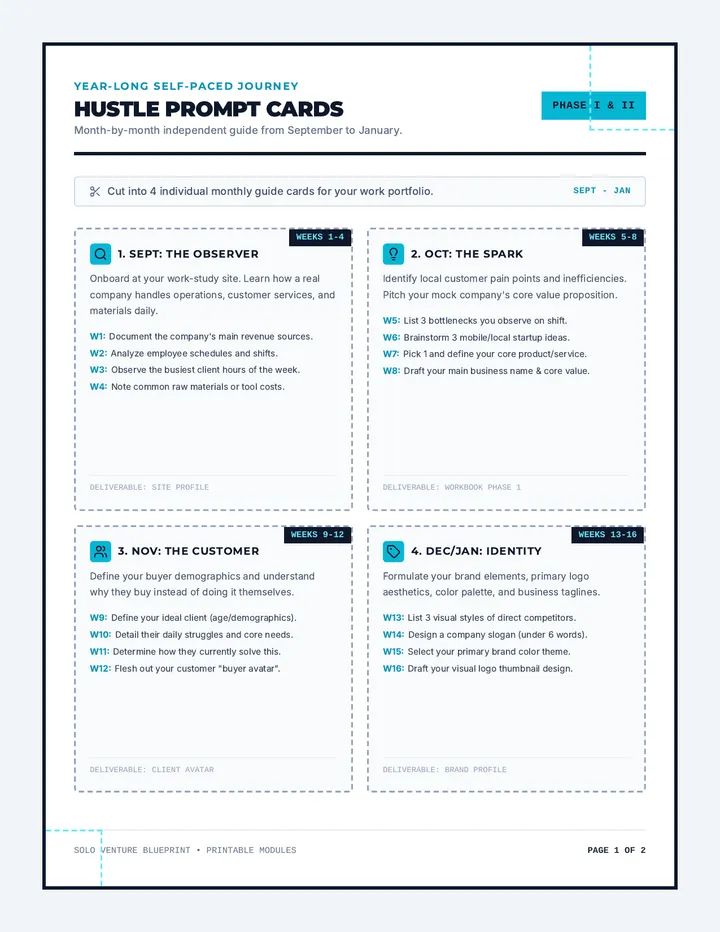
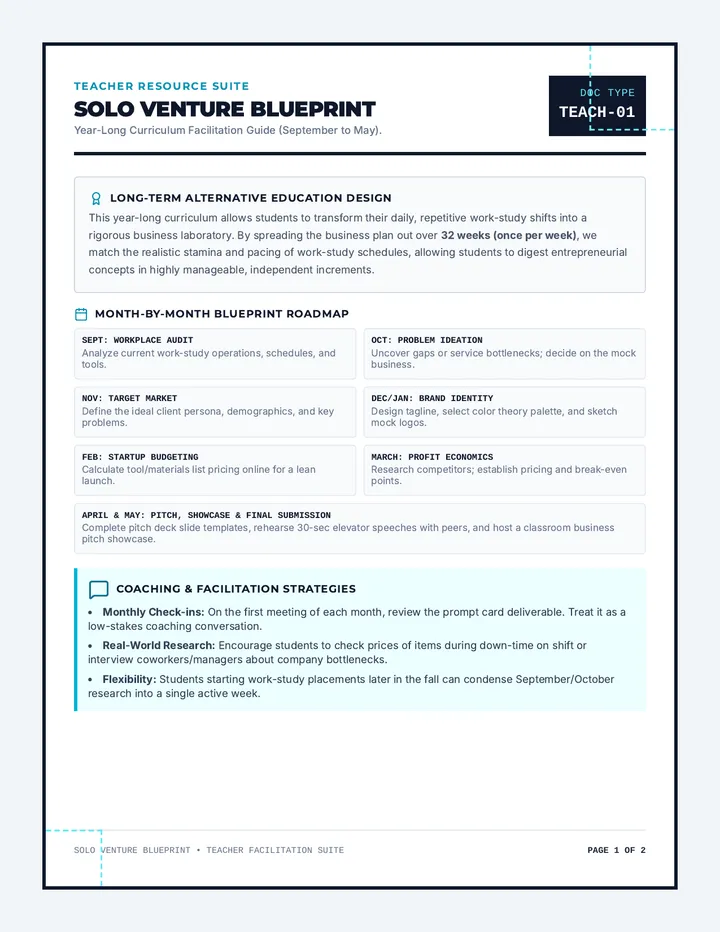
A year-long, self-paced entrepreneurship curriculum spanning September to May for alternative education students in work-study placements. Students transform real-world work experience into a modular business plan and slide presentation.
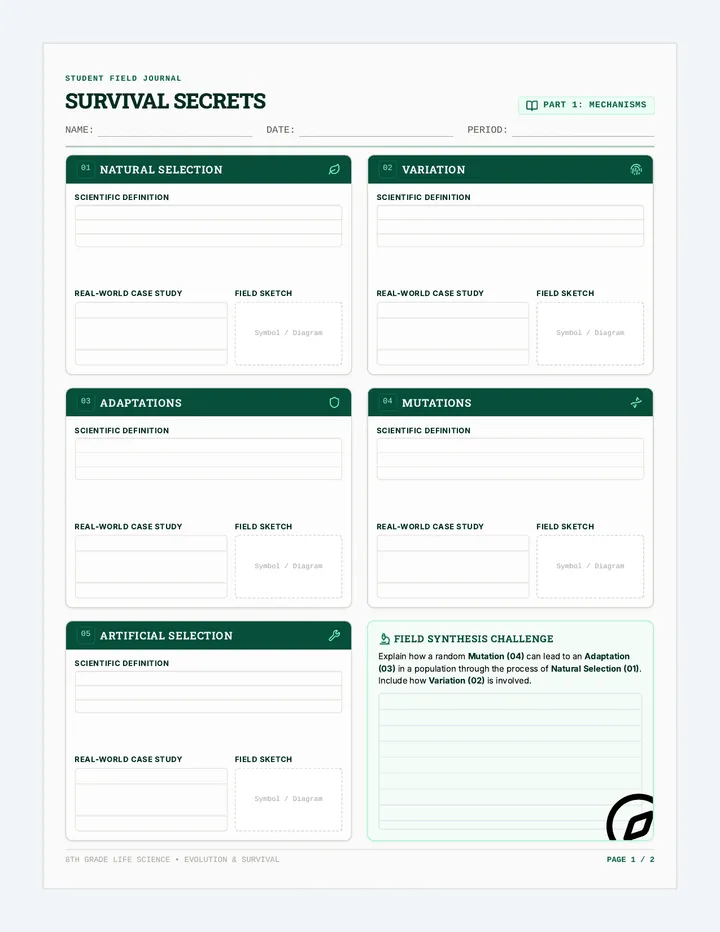
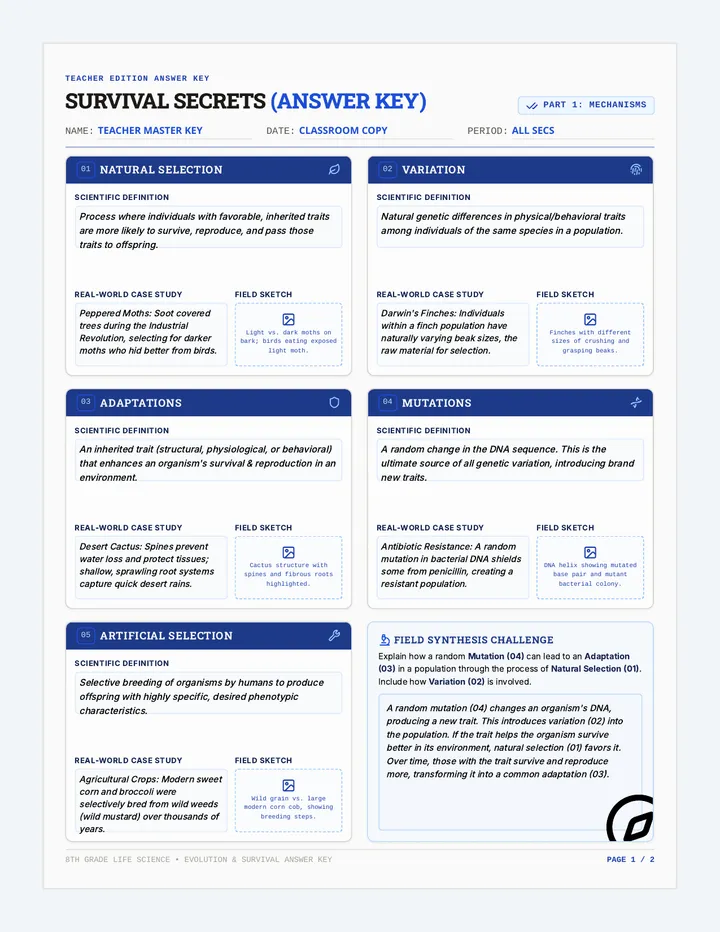
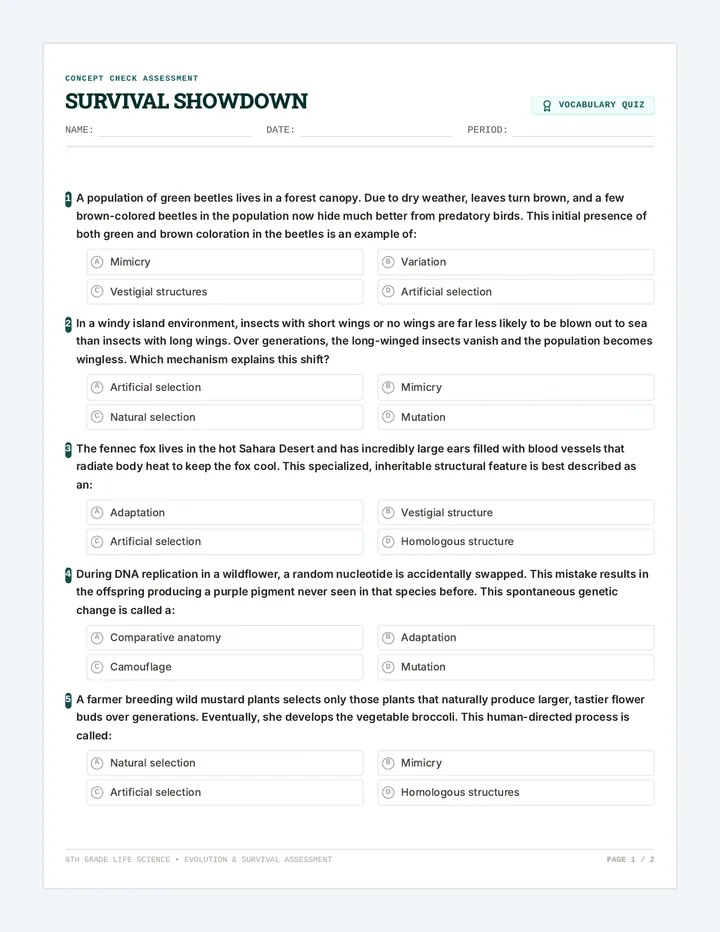
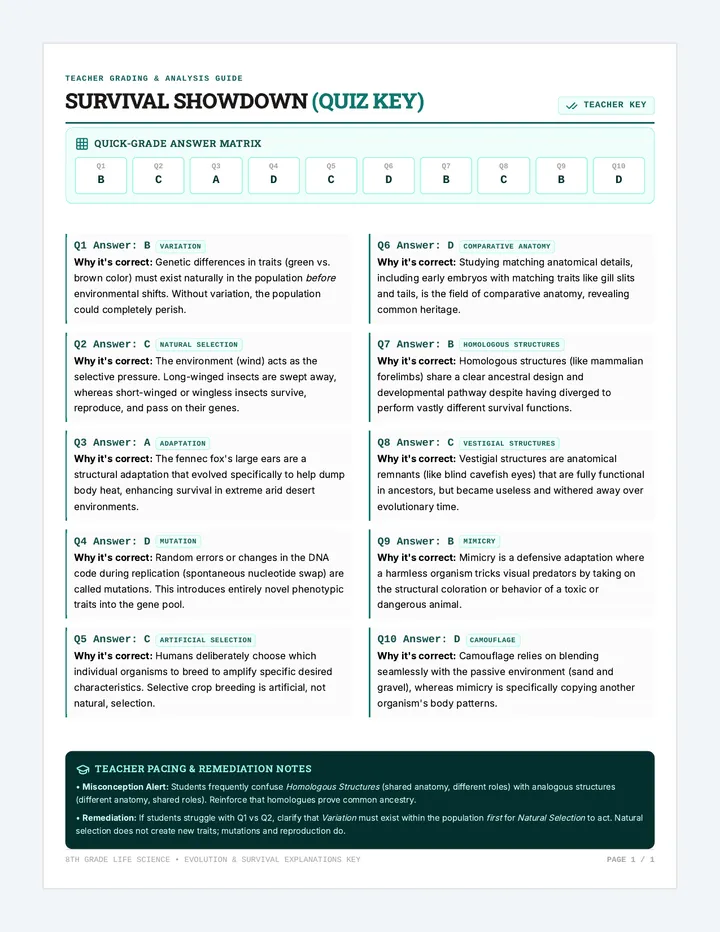
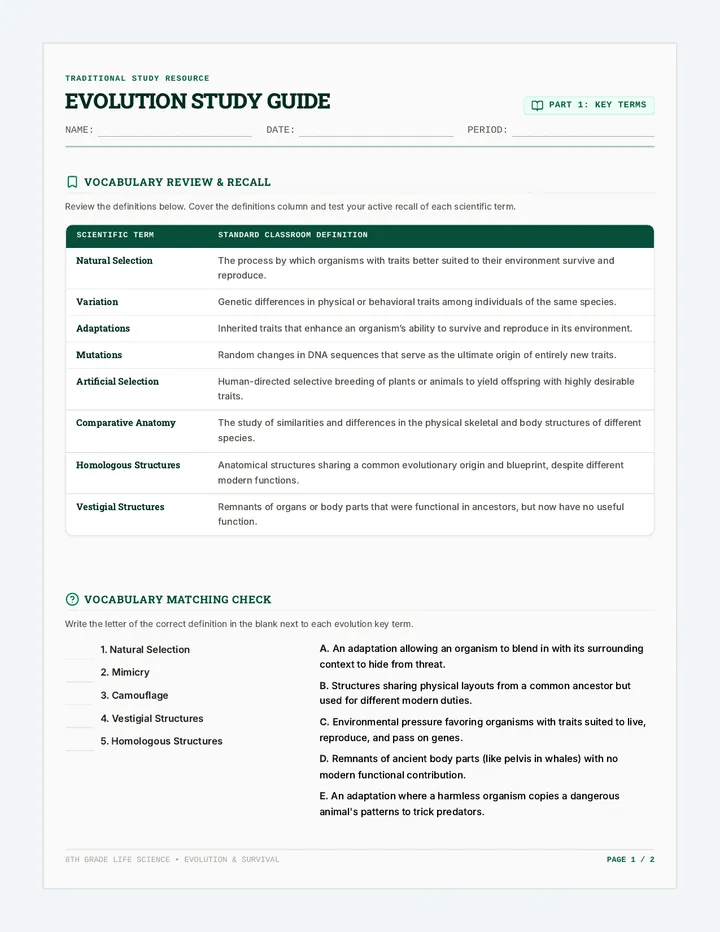
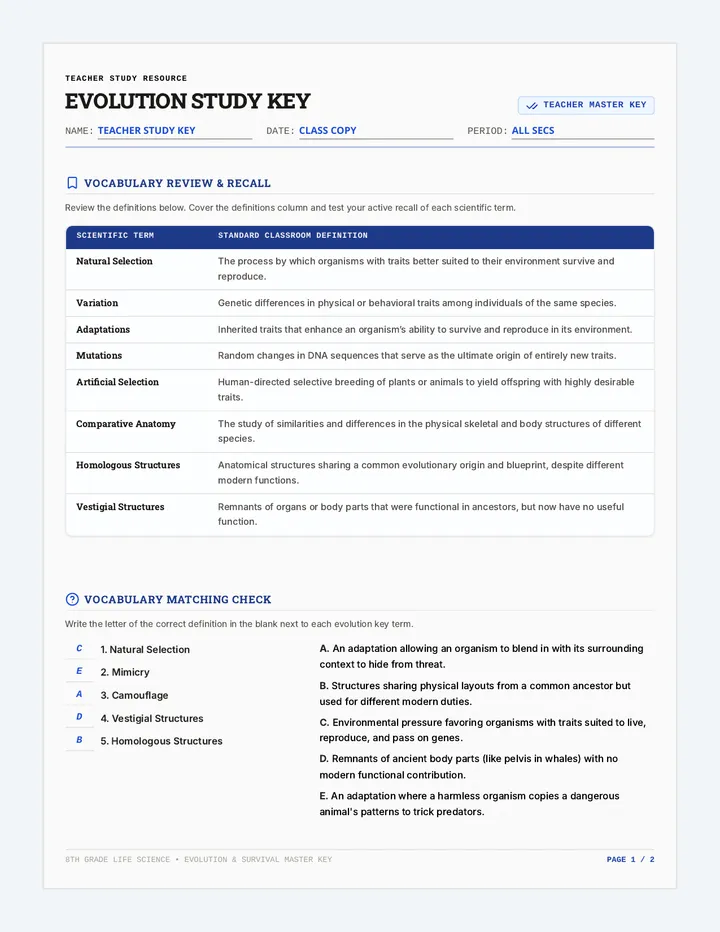
An active-recall study unit on natural selection and evolutionary evidence, featuring graphic organizers, application activities, and a practice quiz.
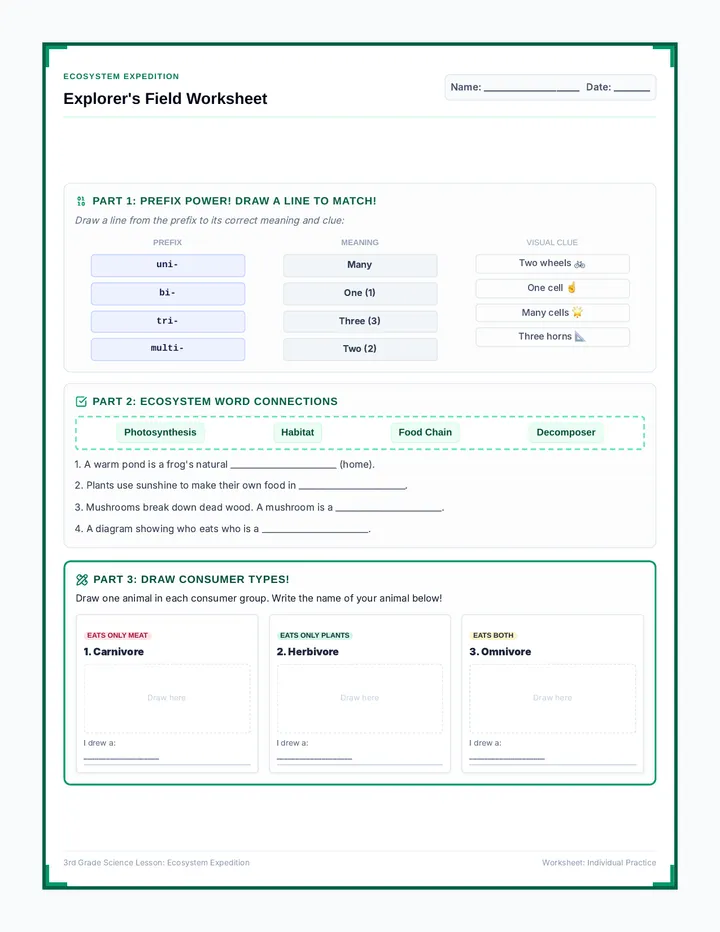
A student-facing individual practice worksheet designed for 3rd-grade English Learners. Features prefix equation math, a vocabulary fill-in-the-blank with word banks, and a visual 'Draw & Label' consumer classification matrix.
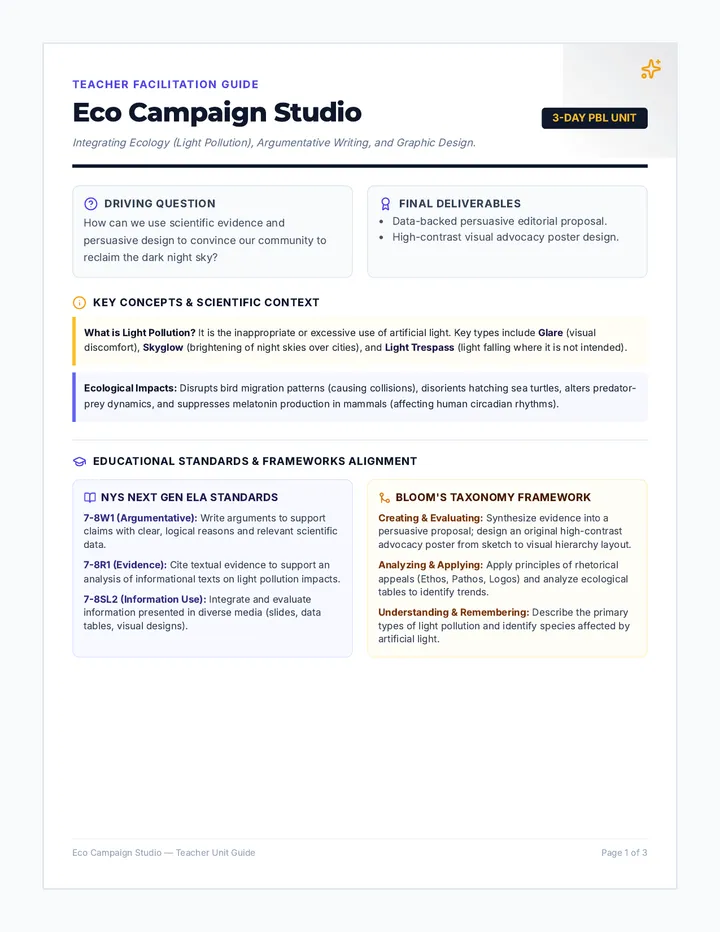
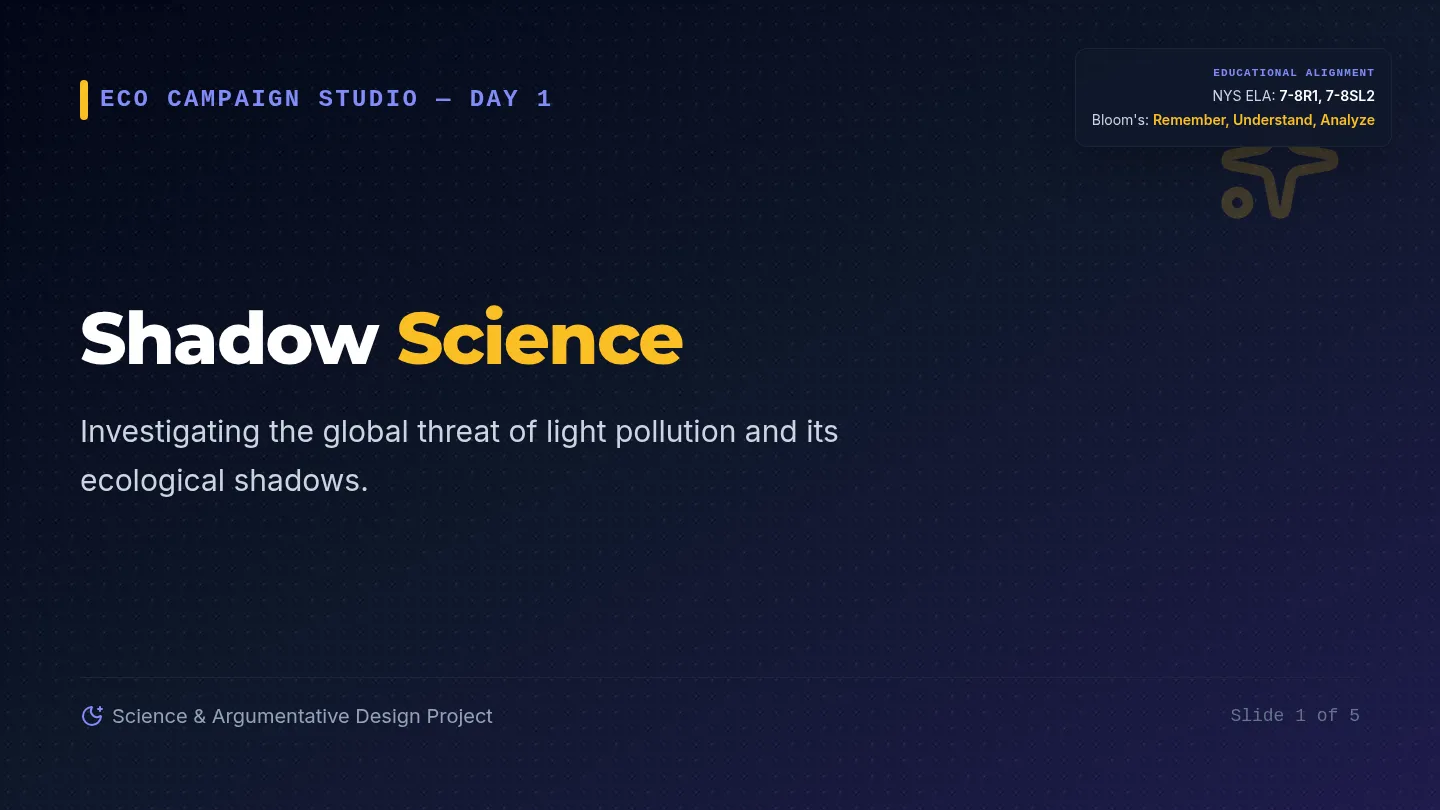
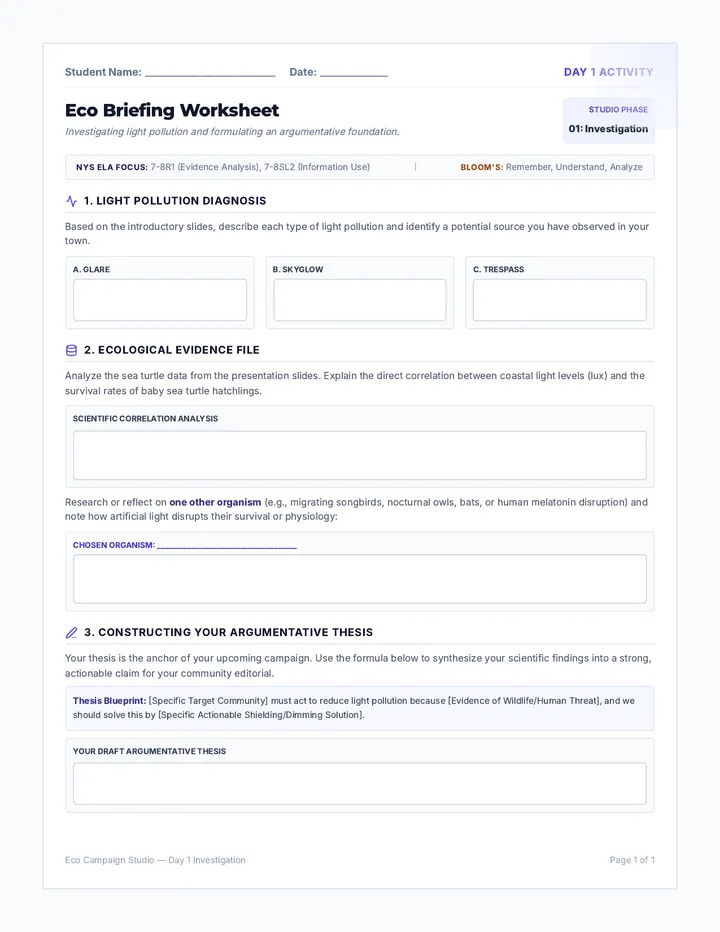
A cross-curricular, 3-day project-based unit combining science, argumentative writing, and graphic design. Students investigate the ecological impacts of light pollution, write a data-driven persuasive proposal, and design a community awareness campaign poster.
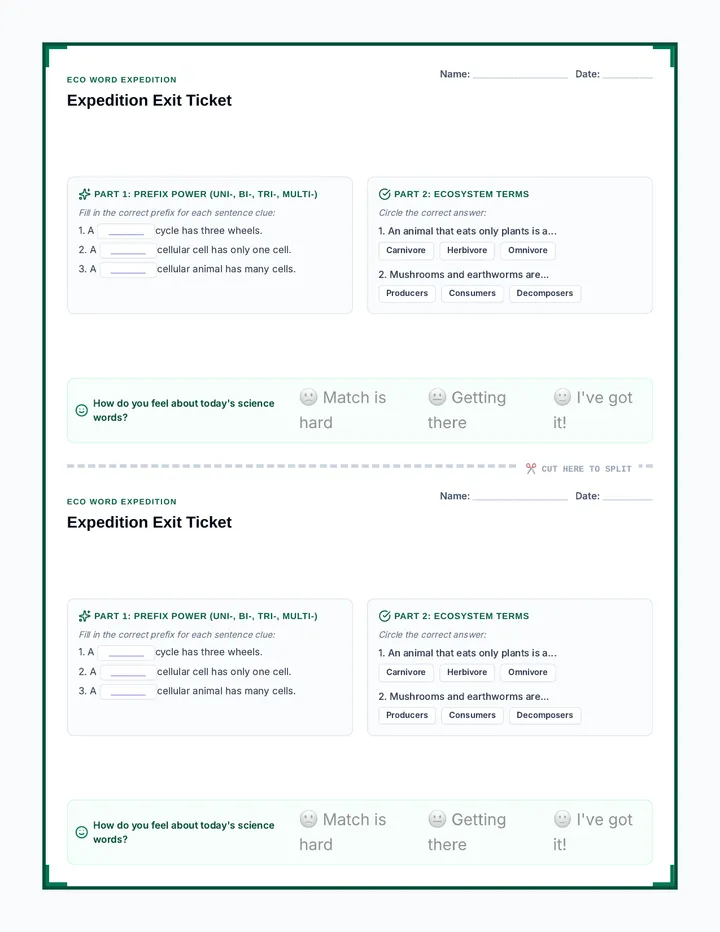
A highly practical half-page double exit ticket printable for 3rd-grade students. It features prefix and vocabulary matching, child-friendly visual self-assessments, and a paper-saving layout.