Students learn how to translate a high-level financial model into a departmental operating budget, focusing on budget authority and expenditure approval workflows.
Cette séquence de formation de 14 heures sur 2 jours est conçue spécifiquement pour les praticiens de terrain en Nouvelle-Calédonie (milieu tropical). Elle couvre la physiologie des graines, la germination, les techniques de conservation à court et long terme (séchage, conditionnement) et intègre un module spécialisé sur la conservation des semences de tubercules locaux (igname, patate douce, manioc, taro).
A differentiated stoichiometry assessment suite tiered by mathematical complexity, visual scaffolding, and conceptual depth. Features three distinct, parallel versions of a 2-page quiz centered around unique real-world chemistry applications.
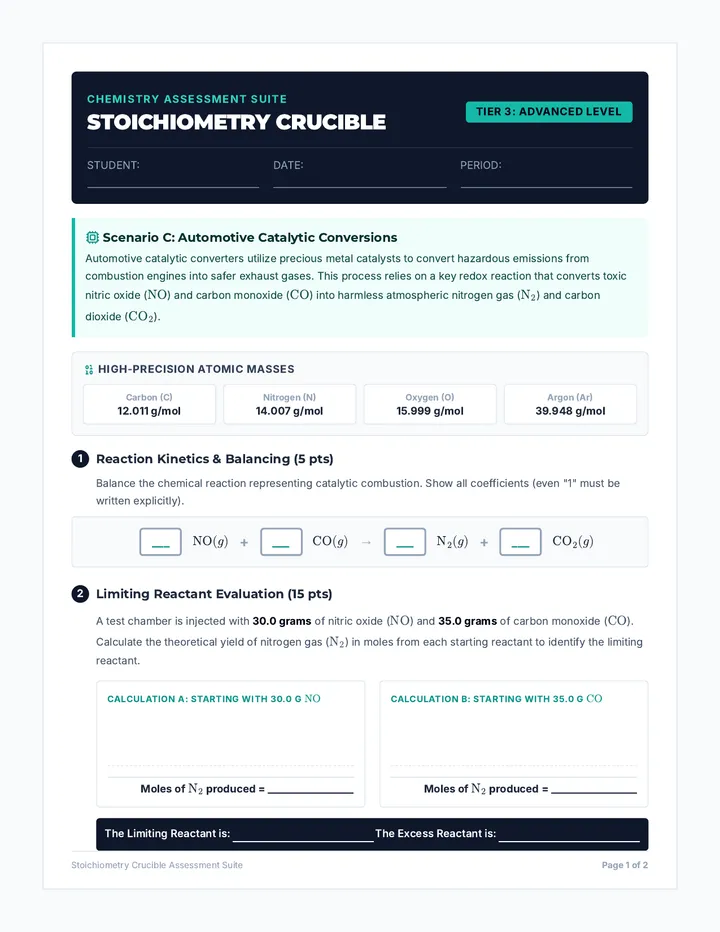
Tier 3 (Advanced) Stoichiometry Quiz focusing on green chemistry & automotive emissions (catalytic converters), featuring complex limiting reactant analyses, theoretical yield, and atom economy calculations.
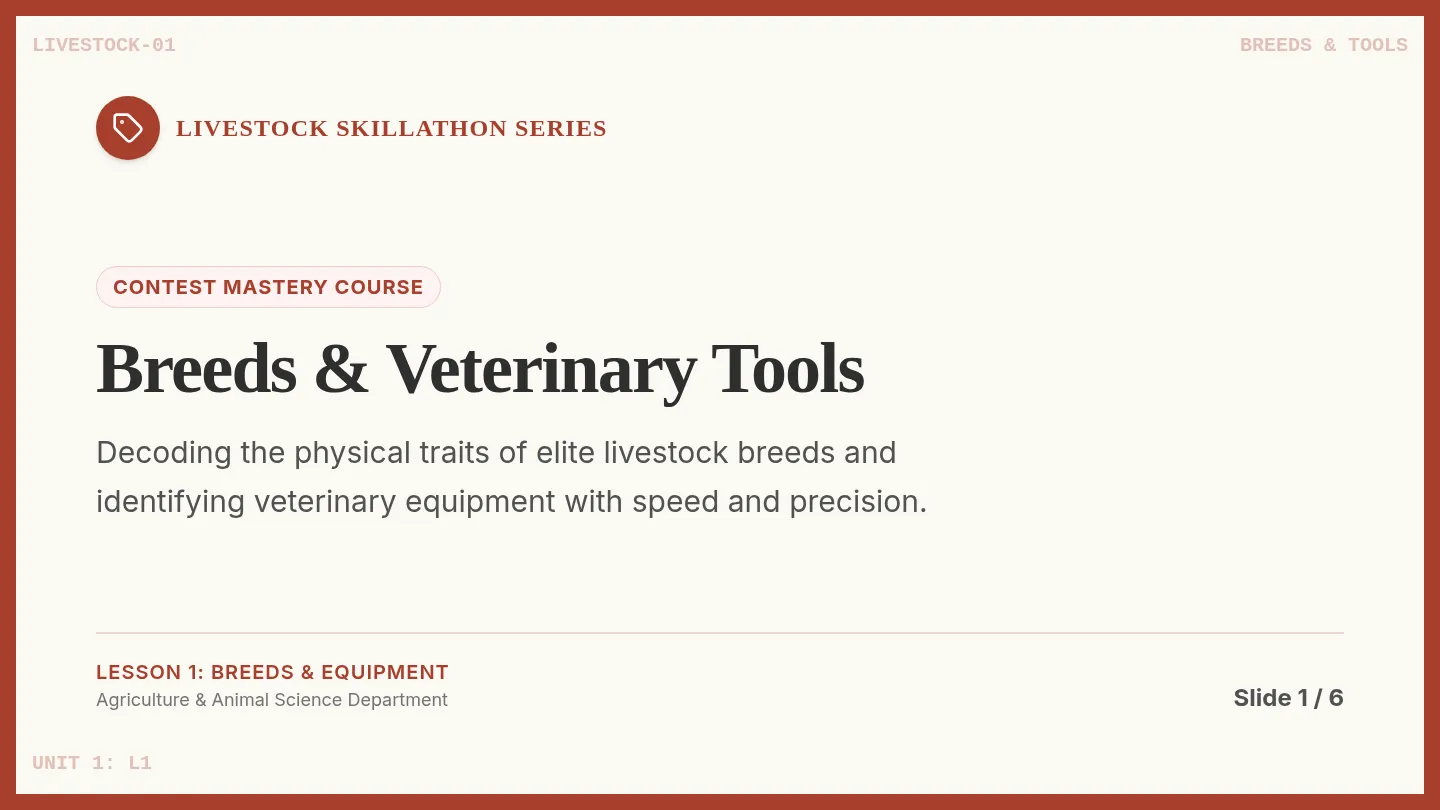
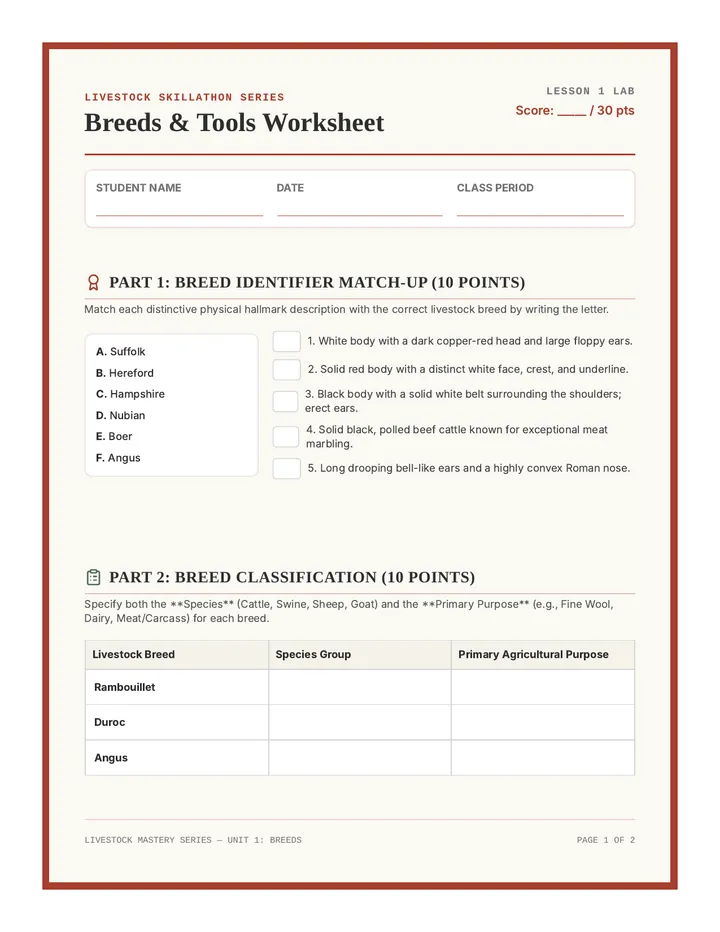
An immersive preparation program that equips agriculture students with the hands-on identification and evaluation skills needed to conquer competitive Livestock Skillathon contests.
Jour 2 de la formation de 7 heures, couvrant la conservation des graines (traitement, séchage, conditionnement), la mise en place de banques de semences locales, la traçabilité et un module spécifique de 3 heures sur la conservation des semences de tubercules (igname, patate douce, manioc, taro).
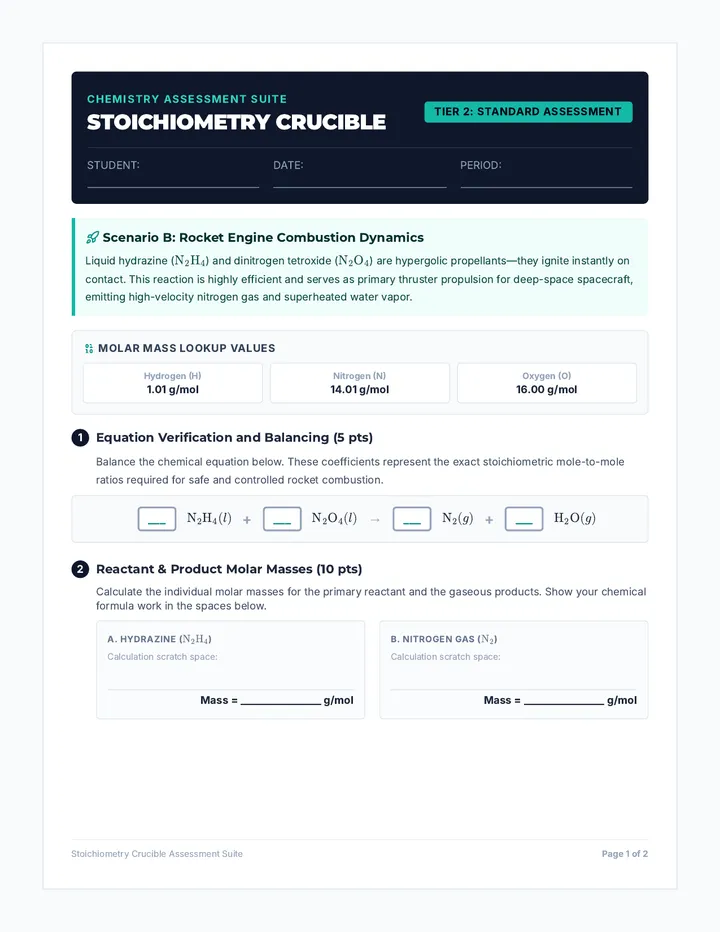
Tier 2 (Standard) Stoichiometry Quiz focusing on aerospace propulsion (hydrazine rocket propellant combustion) with intermediate scaffolding, theoretical yield calculations, and percent yield analysis.
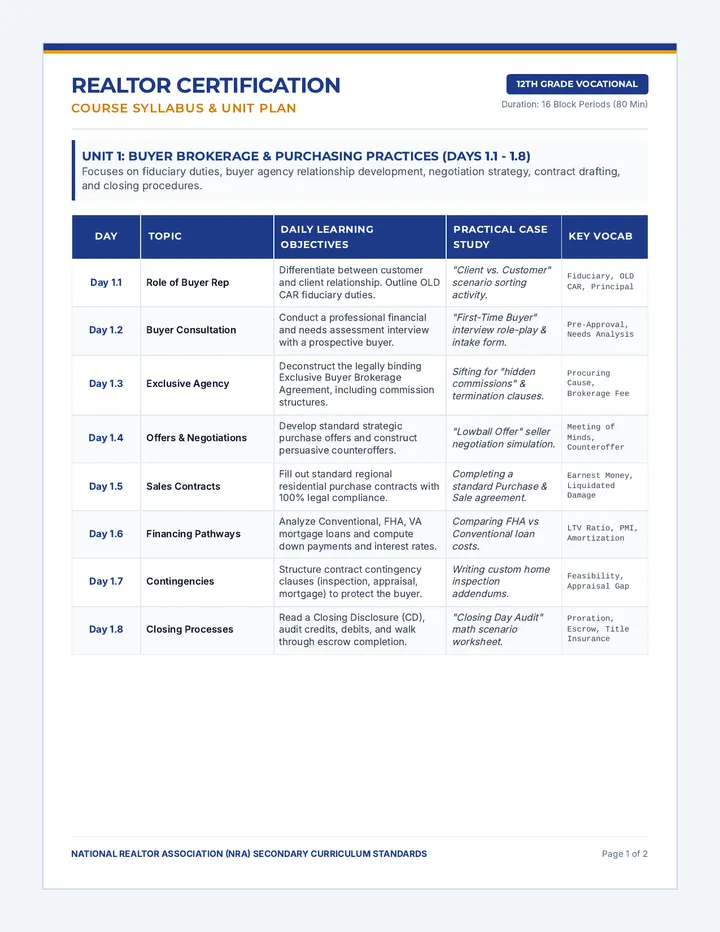
A two-unit, 16-day curriculum sequence for a 12th-grade real estate certification course. Unit 1 covers buying practices (buyer agency, contracts, negotiations, closing), and Unit 2 covers listing practices (listing agency, listings, marketing, closing).
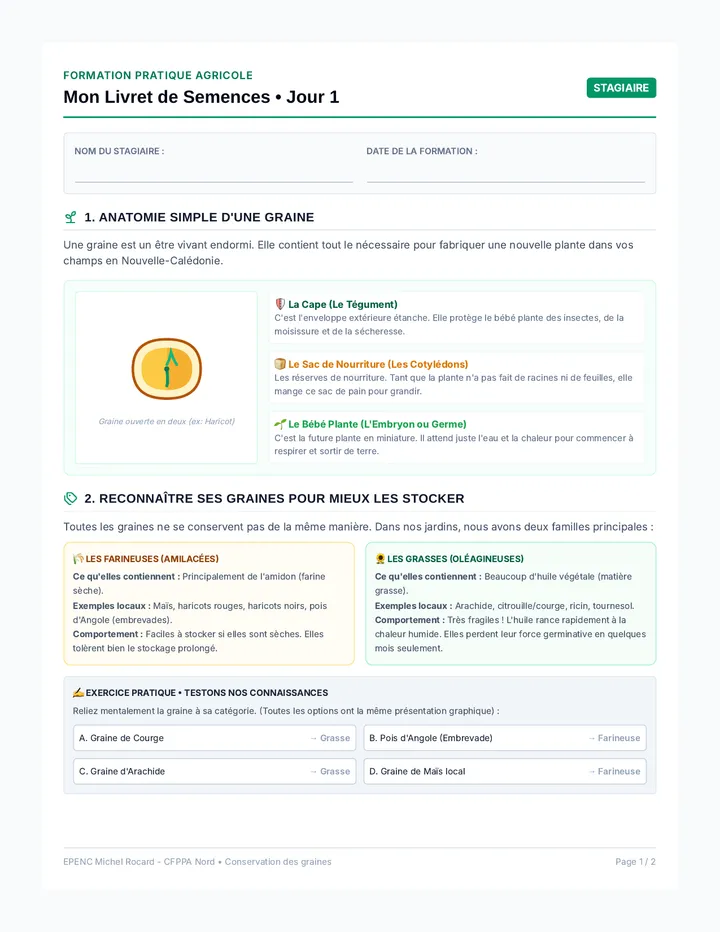
Jour 1 de la formation de 7 heures, couvrant la physiologie des graines, la reconnaissance des types de semences, le cycle de vie, les mécanismes de dormance et les conditions optimales de germination. Ce module pose les bases théoriques et pratiques nécessaires pour comprendre la vie de la graine.
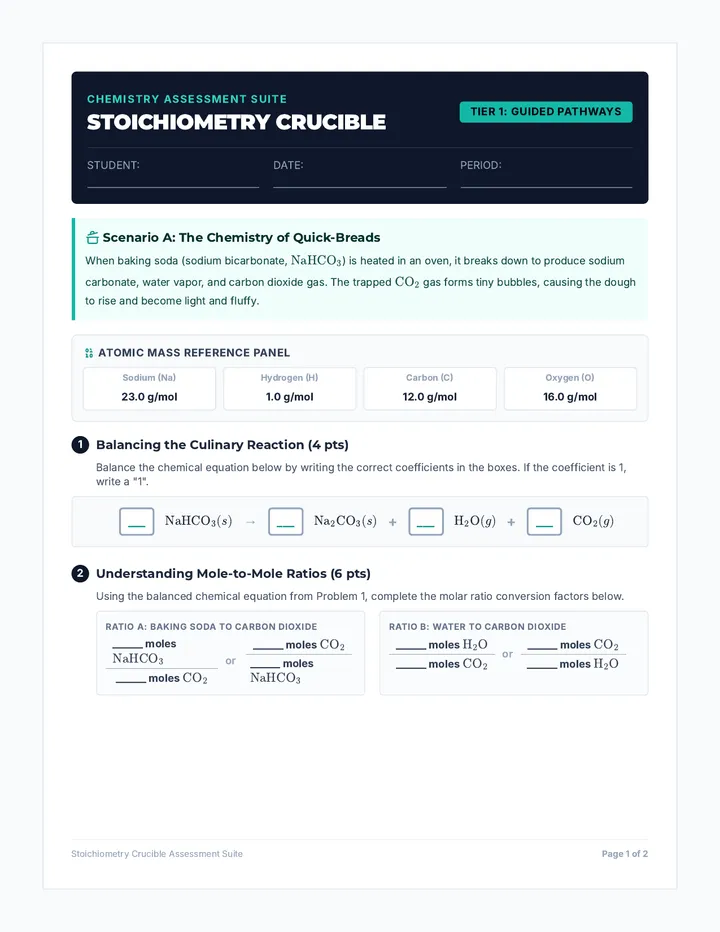
Tier 1 (Scaffolded) Stoichiometry Quiz focusing on culinary chemistry (baking soda decomposition) with visual roadmaps, pre-structured dimensional analysis grids, and atomic mass reference cards.
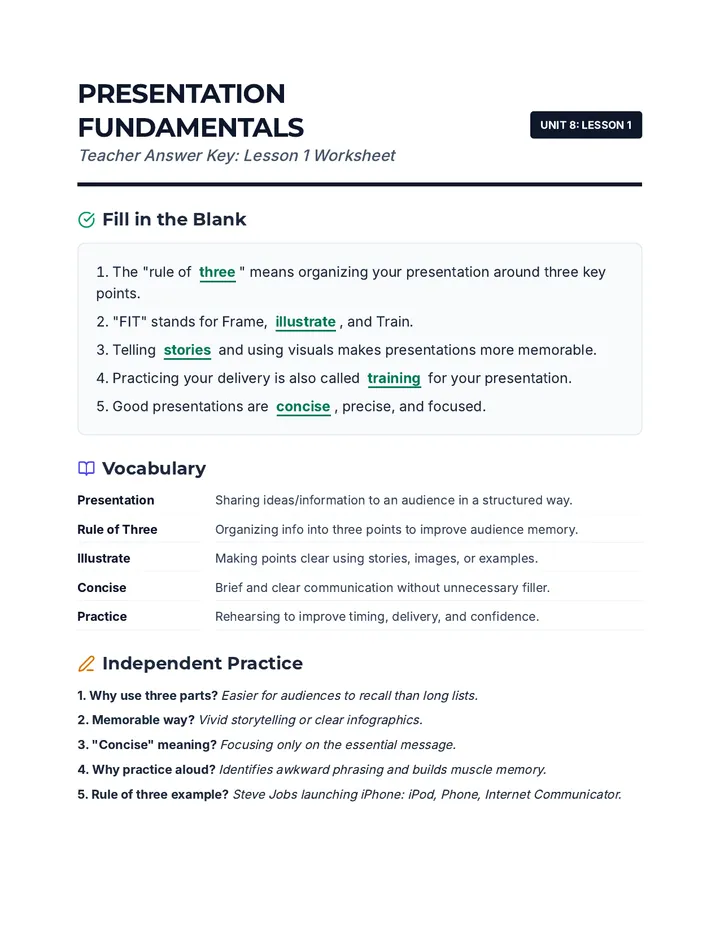
A comprehensive sequence focused on mastering business presentation skills and understanding company valuation for a professional audience.
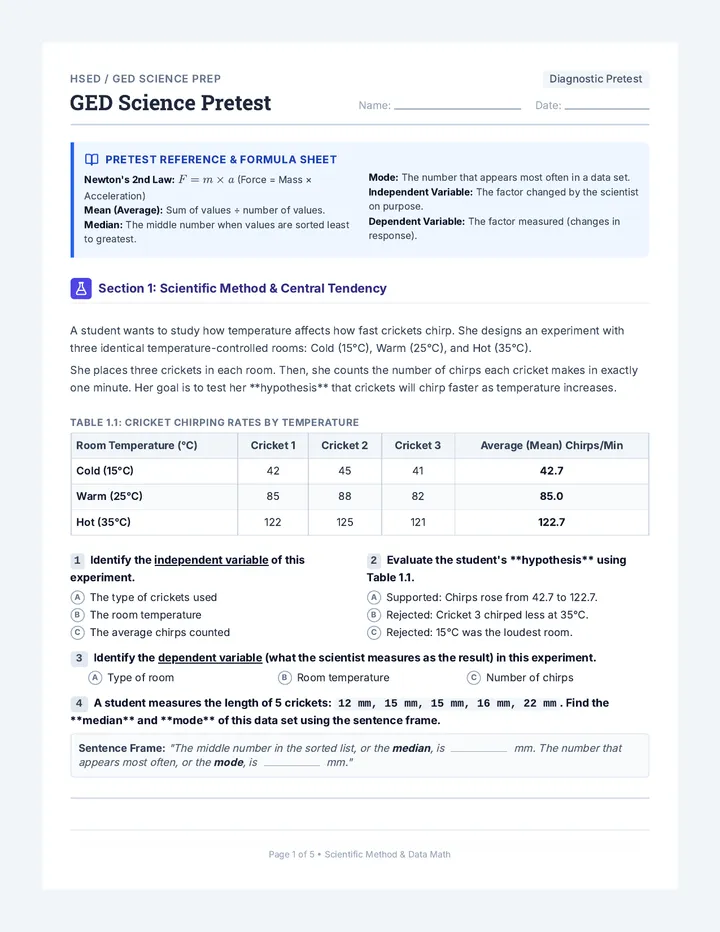
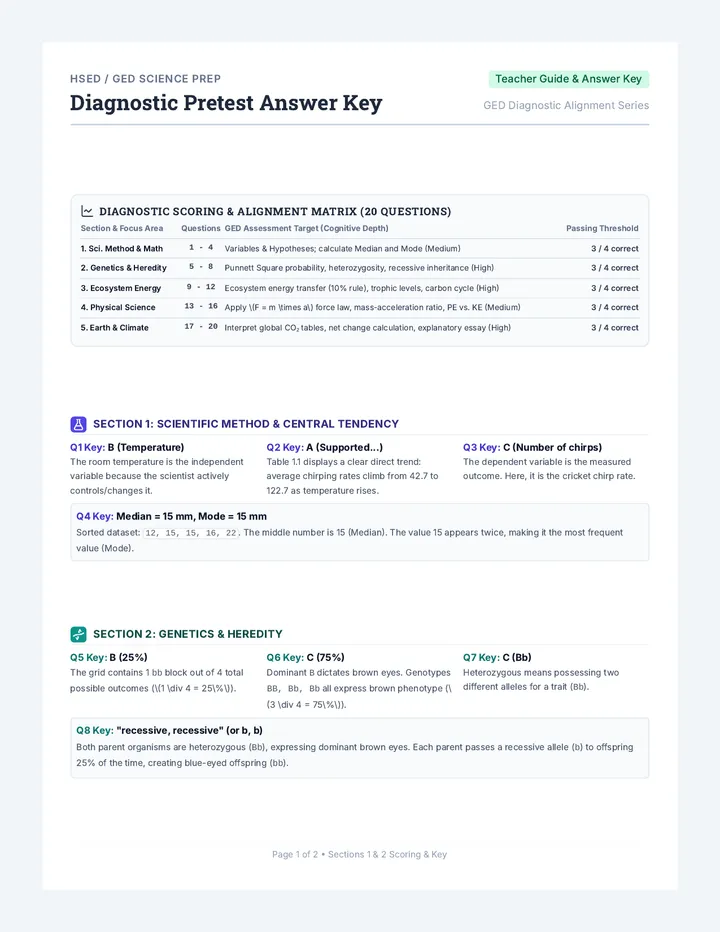
A comprehensive, scaffolded pretest aligned to the GED Science test. It includes student-facing diagnostics for life, physical, earth, and space sciences, alongside a detailed teacher answer key with explanatory feedback.
Livret pratique et visuel du stagiaire pour le Jour 2. Comporte des fiches de calcul pour le test de germination, des guides visuels pour le test du sel et la préparation de mini-sets d'igname, ainsi qu'une fiche d'exercice pratique de traçabilité de stock.