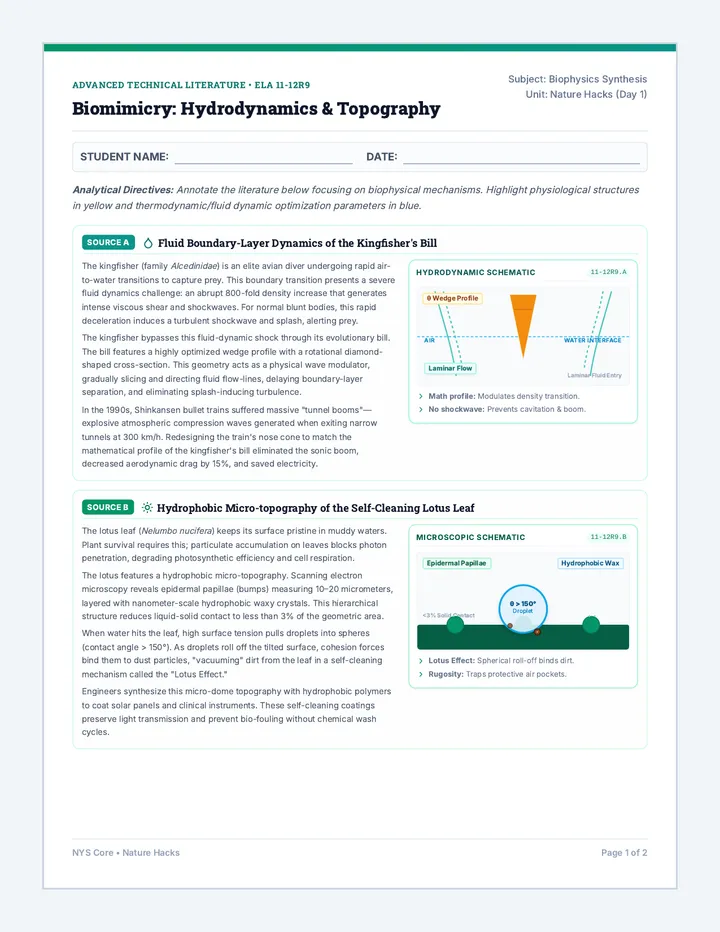
Great Exchange Worksheet THE GREAT EXCHANGE
Lab Report: Capillary Networks
NAME:
DATE:
Microscopic Logistics: The Body's Delivery Network
The human circulatory system is often compared to a massive highway system, with the heart as the engine and the large arteries and veins as multi-lane interstates. However, the most critical part of this journey doesn't happen on the highways. It happens at the very end of the line, in the microscopic capillaries . These vessels are so narrow—roughly 5 to 10 micrometers in diameter—that red blood cells must often squeeze through them in single file.
"The wall of a capillary consists of a single layer of endothelial cells. This structure is the key to their function: they are thin enough to allow for the rapid exchange of materials via diffusion."
Diffusion is the movement of particles from an area of high concentration to an area of low concentration. In the body, capillaries use this passive process to drop off "cargo" like oxygen and glucose to thirsty cells, while simultaneously picking up "trash" like carbon dioxide and metabolic waste. To ensure this happens efficiently, capillaries are organized into specialized networks within three major organ systems.
1. The Respiratory System: The Alveolus
Every time you inhale, air travels deep into your lungs until it reaches tiny, grape-like clusters of air sacs called alveoli (singular: alveolus ). Each alveolus is wrapped in a dense web of capillaries. Because the wall of the alveolus and the wall of the capillary are both incredibly thin, gas exchange happens instantly. Oxygen in the alveolus is at a higher concentration than in the incoming blood, so it diffuses into the capillary. Conversely, carbon dioxide is higher in the blood, so it diffuses out into the alveolus to be exhaled.
2. The Excretory System: The Nephron
Your kidneys act as the body's filtration plant, and the nephron is the specialized unit that does the heavy lifting. Within the nephron, a specialized ball of capillaries called the glomerulus pushes blood through a filter. Small molecules like urea (a toxic waste product), excess salts, and water are "pushed out" of the capillaries and into the kidney tubules. This process cleans the blood, ensuring that waste doesn't build up to toxic levels, while the "clean" blood continues back to the heart.
3. The Digestive System: The Small Intestine
After you eat, your food is broken down into simple nutrients like glucose and amino acids. To get these nutrients into your bloodstream, the walls of the small intestine are lined with millions of tiny, finger-like projections called villi . Each villus contains a dedicated network of capillaries. The shape of the villi is essential because it drastically increases the surface area of the intestine. More surface area means more room for capillaries to come into contact with nutrients, allowing your body to absorb the maximum amount of energy from your food.
In conclusion, capillaries are the essential link that connects your various organ systems to the individual cells of your body. Whether it is the alveolus providing oxygen, the nephron removing waste, or the villi absorbing nutrients, these microscopic vessels are the unsung heroes of human survival.
1 Multiple Choice Check
1. According to the text, what physical property of capillaries allows diffusion to happen quickly?
They have high blood pressure compared to arteries
Their walls are only a single cell thick
They are the longest vessels in the body
They are made of thick muscular tissue
2. In the alveolus , why does oxygen move into the blood?
Because it is being pushed by the heart
Because the concentration of oxygen is higher in the alveolus than in the blood
Because carbon dioxide is pulling it into the capillary
Because the capillaries in the lungs are wider than elsewhere
3. What is the primary waste product removed by capillaries in the nephron ?
Carbon Dioxide
Glucose
Urea
Oxygen
4. How do villi in the small intestine aid in nutrient absorption?
By speeding up the flow of blood
By increasing the surface area for exchange
By filtering out toxins like urea
By storing glucose for later use
2 Deep Dive Analysis
5. The text describes the circulatory system using a "highway" analogy. In your own words, explain why the "exit ramps" (capillaries) are more important than the "highways" (arteries) for the survival of cells.
6. Based on the passage, explain the relationship between diffusion and the concentration of carbon dioxide in the alveolus versus the blood.
7. Comparison Challenge: Contrast the role of capillaries in the small intestine (villi) with their role in the kidneys (nephron). How does the direction of material movement differ?
Visual Lab: Diffusion Diagram
Sketch a capillary next to a tissue cell. Use arrows to show the direction of movement for Oxygen (\(O_2\)) and Carbon Dioxide (\(CO_2\)).
Great Exchange Answer Key ANSWER KEY
The Great Exchange: Capillary Networks
Teacher Resource
Multiple Choice Solutions
1. According to the text, what physical property of capillaries allows diffusion to happen quickly?
Answer: Their walls are only a single cell thick
2. In the alveolus, why does oxygen move into the blood?
Answer: Because the concentration of oxygen is higher in the alveolus than in the blood
3. What is the primary waste product removed by capillaries in the nephron?
Answer: Urea
4. How do villi in the small intestine aid in nutrient absorption?
Answer: By increasing the surface area for exchange
Short Answer Response Guide
5. Highway Analogy ("Exit Ramps" vs "Highways"):
"While arteries and veins transport blood over long distances, no exchange happens there because their walls are too thick. Capillaries are the 'exit ramps' where the actual delivery of oxygen and nutrients to the cells occurs. Without these points of contact, cells would never receive what they need to survive."
6. Diffusion and CO2 concentration in the alveolus:
"Diffusion moves substances from high to low concentration. Carbon dioxide is at a higher concentration in the blood returning from the body than it is in the air inside the alveolus. Therefore, CO2 diffuses out of the blood and into the alveolus to be exhaled."
7. Comparison Challenge (Small Intestine vs. Kidneys):
Direction of Movement: In the small intestine (villi), materials like glucose and nutrients move into the capillaries from the intestine. In the kidneys (nephron), waste materials like urea and excess salts are pushed out of the capillaries and into the tubules.
Similarities: Both systems rely on specialized structures that increase the opportunity for exchange and use the thin walls of capillaries to move substances between the bloodstream and another system (digestive or excretory).
Grading Tips for Pull-Out Setting
Look for the keyword Concentration Gradient or "High to Low" in question 6.
In question 7, ensure they correctly identify the direction of travel (In for nutrients, Out for waste).
For the diagram: Oxygen should have an arrow pointing towards the cell; Carbon Dioxide should point away from the cell/into the capillary.
Great Exchange Slides The Great Exchange
Biology: Capillary Systems
Alveolus
Nephron
Villi
The Ultimate Connector
Capillaries are the body's smallest blood vessels.
Walls are only one cell thick
Allows for diffusion of materials
Cells travel in single file lines
Microscopic transport centers
STOP #1: RESPIRATORY
The Alveolus
Gas Exchange
Tiny air sacs in the lungs where gases move in and out of the bloodstream.
EXITING
CO2
ENTERING
O2
"Like an airport where passengers (gases) swap planes."
STOP #2: EXCRETORY
The Nephron
The Filter
The functional unit of the kidney that cleans the blood.
Removes Urea (waste)
Balances Water
"The water treatment plant of your bloodstream."
STOP #3: DIGESTIVE
The Villi
Nutrient Pickup
Finger-like projections in the small intestine that maximize absorption.
Surface Area Check:
More fingers = more surface area = more room for capillaries to grab nutrients.
"The busy cargo shipping docks for your fuel."
Big Picture Check
ALVEOLUS
Gas Exchange
NEPHRON
Waste Filtration
VILLI
Absorption
Without these stops, your cells would starve, suffocate, or be poisoned by their own waste.
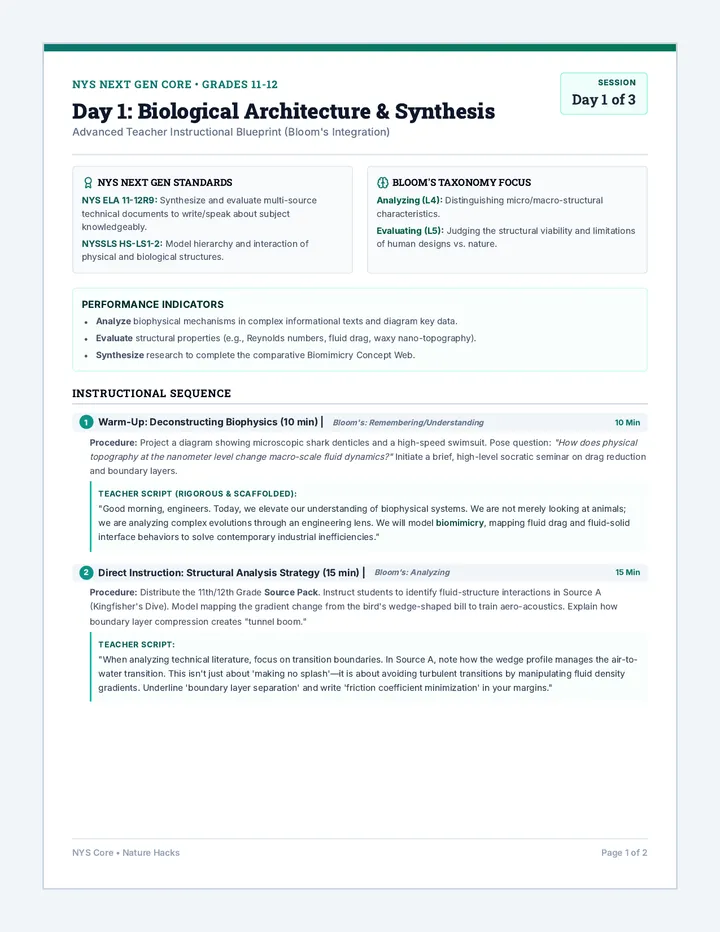
Microscopic Logistics Teacher Guide TEACHER GUIDE
Lesson: Microscopic Logistics
Instructional Plan
Lesson Objective
Students will describe the specialized structures (alveolus, nephron, villi) where capillaries facilitate the exchange of gases, wastes, and nutrients in the human body.
Key Vocabulary
Capillary: Tiny, thin-walled vessel for exchange.
Diffusion: Passive movement from high to low concentration.
Alveolus: Air sac in lungs (CO2/O2 exchange).
Nephron: Kidney filter (Urea removal).
Villi: Small Intestine projections (Nutrient pickup).
Pacing Guide (60 Min)
05 Do Now Activity: Logistics Check
15 Instruction: Slides & Infographics
05 The Anthem: Class Read-Aloud/Song
20 Worksheet: Reading & Comp Check
10 Bloom's Challenge: Tiered Work
05 Exit Ticket: 3-2-1 Summary
Teaching Tips for Pull-Out Setting
Musical Memory
Use the Great Exchange Anthem as a transition. Music helps students in pull-out settings memorize complex terminology. You can have them snap or clap to the beat of the chorus.
Visual Anchors
The Alveolus Infographic provides a concrete visual for the first verse of the song. Have students point to the arrows on the infographic as you read the corresponding lyrics.
Small Intestine Focus
Remind students that villi are located in the small intestine. Verse 3 of the song explicitly links these to nutrient pickup (glucose/amino acids).
Differentiation Strategies
For Scaffolding
Provide a printed copy of the anthem lyrics for each student to highlight as they listen. Use the "Screen Door" analogy for the capillary wall thickness.
For Extension
Ask students to write a 4th verse for the song that explains how diffusion works or why one cell thick walls are necessary.
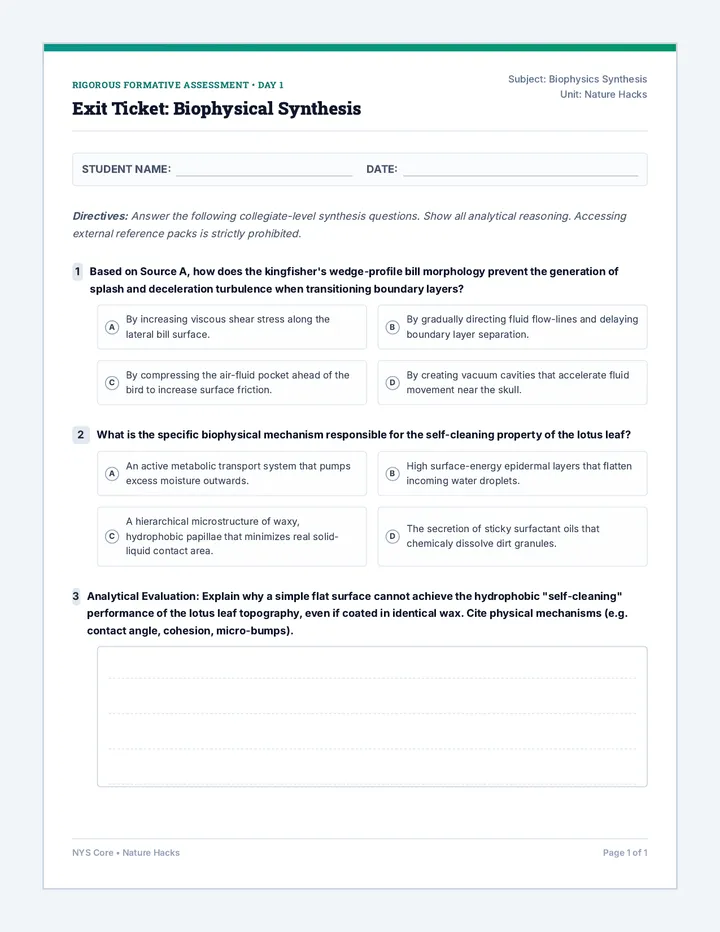
Capillary Cognition Challenge CAPILLARY COGNITION
Tiered Challenge: Bloom's Taxonomy
NAME:
Complete the challenges below. As you move down the page, the tasks will require deeper thinking and creativity!
Level 1: Remember
The Basics
Identify the three specialized structures where capillary exchange occurs and label which organ system they belong to.
1. __________ System: ____________________
2. __________ System: ____________________
3. __________ System: ____________________
Level 2: Understand
Mechanism of Movement
In your own words, summarize why capillaries are effective at moving materials while arteries are not.
Level 3: Apply
Real-World Scenarios
A patient has a condition that causes their blood to thicken significantly. Predict how this would specifically affect exchange in the nephron .
Level 4: Analyze
Structural Comparison
Both villi and alveoli maximize surface area but they do it using different shapes. Analyze the advantages of the "finger-like" villi shape for digestion compared to the "sac-like" alveoli shape for air.
Level 5: Evaluate
System Priority
If a person's blood pressure drops dangerously low, the body prioritizes sending blood to certain areas. Argue which capillary exchange site (alveolus, nephron, or villi) is the most critical for immediate survival in the next 5 minutes. Defend your choice.
Level 6: Create
Synthetic Innovation
Design a "Smart Capillary" for a medical patch that delivers medicine to the skin. In the box below, describe or sketch one unique feature of its wall structure that would make it better than a natural capillary.
Capillary Cognition Answer Key ANSWER KEY
Capillary Cognition: Bloom's Tiered Challenge
Teacher Resource
Level 1: Remember
1. Alveolus - Respiratory System
2. Nephron - Excretory (Urinary) System
3. Villi - Digestive System
Level 2: Understand
"Capillaries have walls that are only one cell thick, which allows materials to move through them via diffusion. Arteries have thick, muscular walls designed to withstand high pressure, which makes it impossible for oxygen or nutrients to pass through them."
Level 3: Apply
"Thick blood would move much slower through the tiny capillaries of the nephron. This would likely decrease the pressure needed to 'push' waste products out of the blood and through the filter, leading to less efficient blood cleaning and a possible buildup of toxins like urea."
Level 4: Analyze
"Villi are finger-like projections that increase surface area for picking up solid/liquid nutrients as they pass by in the digestive tract. Alveoli are sac-like structures that hold air, allowing gas to diffuse in all directions across the spherical surface. Villi are optimized for absorbing from a moving liquid stream, while alveoli are optimized for gas exchange with trapped air."
Level 5: Evaluate
"The alveolus is the most critical. While the nephron (waste removal) and villi (nutrition) are essential for long-term survival, the body can only survive for a few minutes without oxygen. If capillary exchange stops at the alveolus, the brain and heart will fail almost immediately due to lack of oxygen."
Level 6: Create
"Accept any creative design that addresses structural efficiency. Examples: A wall with 'micro-valves' that only open for specific medicine molecules; a wall with an increased surface area using a honeycomb pattern; or a wall that changes permeability based on skin temperature."
Pedagogical Note
This tiered challenge is designed to push students beyond simple recall. In a pull-out setting, you may want to have students work in pairs for Levels 4-6, or use these as extension tasks for students who finish the main worksheet early. Focus on the rationale provided by the student rather than just the 'correct' answer for the higher levels.
Alveolus Exchange Infographic Molecular Border Crossing
Gas Exchange in the Alveolus
Diffusion
Molecules naturally move from High Concentration to Low Concentration . Since there is more Oxygen in the lungs than in the blood, it naturally "flows" into the capillary.
The Membrane
The Respiratory Membrane consists of the alveolar wall and the capillary wall. Being only one cell thick allows gas exchange to happen instantly.
Your lungs contain roughly 480 million alveoli, providing a surface area equal to a tennis court.
Logistics Do Now Activity DO NOW: LOGISTICS CHECK
Daily Entry Task
Date
Imagine your body is a giant city. Every "neighborhood" (your cells) needs supplies delivered and trash removed to stay alive. Use your prior knowledge to answer the questions below.
1 System Match
Draw a line matching the "Supply/Waste" to the organ system that handles it:
Oxygen (Supply)
Urea (Waste)
Glucose (Supply)
Digestive System
Respiratory System
Excretory System
2 The "Last Mile" Problem
The "highway" (arteries) is too big to reach individual houses (cells). What tiny vessels do you think act like the "delivery trucks" that actually touch the cells?
Microscopic Logistics Exit Ticket EXIT TICKET: SYSTEM SHUTDOWN
3-2-1 Summary Check
NAME
3 Name the 3 Specialized Structures
2 Define 2 Physical Features
Describe 2 physical features of capillaries that help them do their job.
1 Predict 1 Breakdown
If capillary exchange at the villi stopped working today, what would happen to your body by tomorrow?
Mastery Score: [ /10 ]
Needs Help
I've Got It!
Capillary Exchange Anthem Lyrics The Great Exchange
A Micro-Logistics Anthem
Chorus
One cell thick, that’s the capillary rule,
Making the exchange, keeping the body cool.
From the lungs to the gut to the filter in the back,
The micro-delivery stays on the right track!
Verse 1: The Lungs
Down in the alveolus , the air is fresh and new,
The capillary's waiting with a job it has to do.
Drop off the CO2 , let that gas fly away,
Pick up the Oxygen to power up your day!
Verse 2: The Kidneys
Roll into the nephron , the filter of the soul,
Cleaning out the bloodstream is the ultimate goal.
Pushing out the Urea and the extra salts and brine,
Leaving all the good stuff so you’re feeling fine!
Verse 3: The Small Intestine
Reach into the villi , finger-projections in a line,
Surface area maximized, everything is looking prime.
Absorb the Glucose , take the nutrients in,
With a capillary network, your body’s gonna win!
Repeat Chorus & Fade
Produced by Lenny's Lab Labs © 2026