Matter Morph Slides
Physical Science Unit
Matter Morph
Exploring Physical Changes & State Shifts
The "Same Stuff" Rule
A Physical Change alters the form or appearance of a substance, but it does not change its chemical identity.
Key Test:
Are the molecules still the same? If YES, it's a physical change!
Altering Form, Not Identity
Review: The Big Three
Solid
Fixed shape & volume. Particles vibrate in place.
Liquid
Fixed volume, but takes shape of container. Particles slide past.
Gas
No fixed shape or volume. Particles move fast & spread out.
Phase Change: Heat Up
+ ENERGY
Melting
Solid → Liquid
Particles gain energy, move faster, and break free from fixed positions.
Vaporization
Liquid → Gas
Includes boiling and evaporation. Particles move so fast they escape into the air.
Sublimation
Solid → Gas
Skips the liquid phase entirely! (Think: Dry Ice).
Phase Change: Cool Down
− ENERGY
Freezing
Liquid → Solid
Particles lose energy, slow down, and lock into a fixed structure.
Condensation
Gas → Liquid
Particles slow down and clump together. (Think: Dew on grass).
Deposition
Gas → Solid
Skips liquid! Vapor turns straight to solid crystals. (Think: Frost).
The Speed of Matter
Temperature is just a measure of how fast particles move!
Hot
High Energy
Cold
Low Energy
Dissolving: A Disappearing Act?
What Happens?
The Solute (sugar) breaks into tiny particles that are surrounded by the Solvent (water).
"Still there, just tiny!"
The sugar doesn't turn into water. It's still sugar! You can taste it, and you can get it back by evaporating the water.
Solute + Solvent = Solution
Mixtures: Hanging Out
Heterogeneous
You can easily see the different parts. They are not evenly mixed.
Examples: Fruit salad, trail mix, sand in water.
Homogeneous
The parts are so evenly mixed you can't see them individually.
Examples: Salt water, air, brass (metal mix).
Tools of the Trade
Filtration
Separates solids from liquids by size.
Magnetism
Pulls out magnetic metals.
Evaporation
Boils away liquid to leave solids.
Sifting
Separates solids of different sizes.
The Undo Button
Most physical changes are REVERSIBLE.
"I melted the ice..."
Refreeze it!
"I dissolved the salt..."
Evaporate it!
Global Physical Changes
The Water Cycle
The same water molecules have been evaporating, condensing, and freezing for billions of years.
- Ocean water evaporates (Liquid → Gas)
- Clouds form (Gas → Liquid)
- Glaciers melt (Solid → Liquid)
Quick Lab Check
Physical change? (Thumbs Up for Yes!)
1
Bending a copper wire.
2
Mixing sand and gravel.
3
Steam rising from a pot.
4
Dissolving hot cocoa.
Summary
Identity
Molecules stay the same.
Energy
State shifts are caused by heat energy.
Reversible
Most can be undone physically.
Matter Morphs!
Matter Morph Worksheet
Phase Change Lab Notes
Physical Changes & States of Matter Mastery
Name:
Date:
The Golden Rule
A physical change changes the or appearance of a substance, but it does not change its chemical .
Molecules stay the same!
Particle Party: State Review
Sketch the particle arrangement for each state:
Solid
Liquid
Gas
Phase Change Tracker
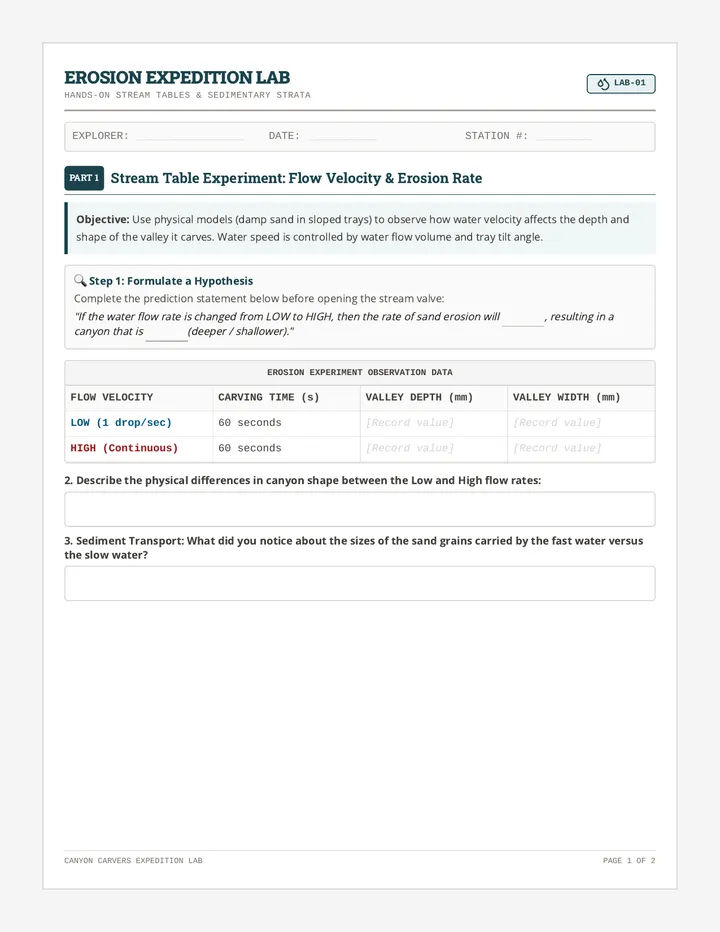
Fill in the missing states and circle if heat is added or removed:
| Process | State Shift | Heat Energy... (Circle one) |
|---|
| Melting | Solid → | ADDED / REMOVED |
| Freezing | → Solid | ADDED / REMOVED |
| Vaporization | Liquid → | ADDED / REMOVED |
| Condensation | Gas → | ADDED / REMOVED |
| Sublimation | Solid → | ADDED / REMOVED |
| Deposition | Gas → | ADDED / REMOVED |
Mixtures & Dissolving
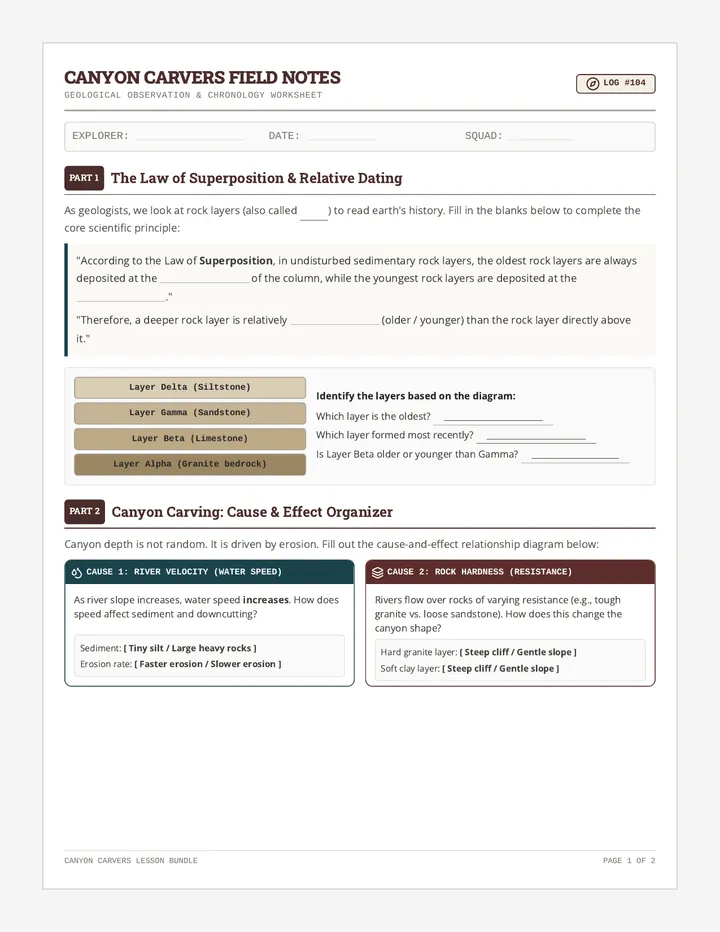
1. Why is dissolving salt in water a PHYSICAL change? Use the word "identity" in your answer.
2. CHALLENGE: You have a mix of sand, iron, and salt. How would you get the pure salt back?
Matter Morph • Physical Change Mastery
Matter Morph Teacher Guide
Molecular Shift
Teacher Facilitation Guide
Grade 6 Science
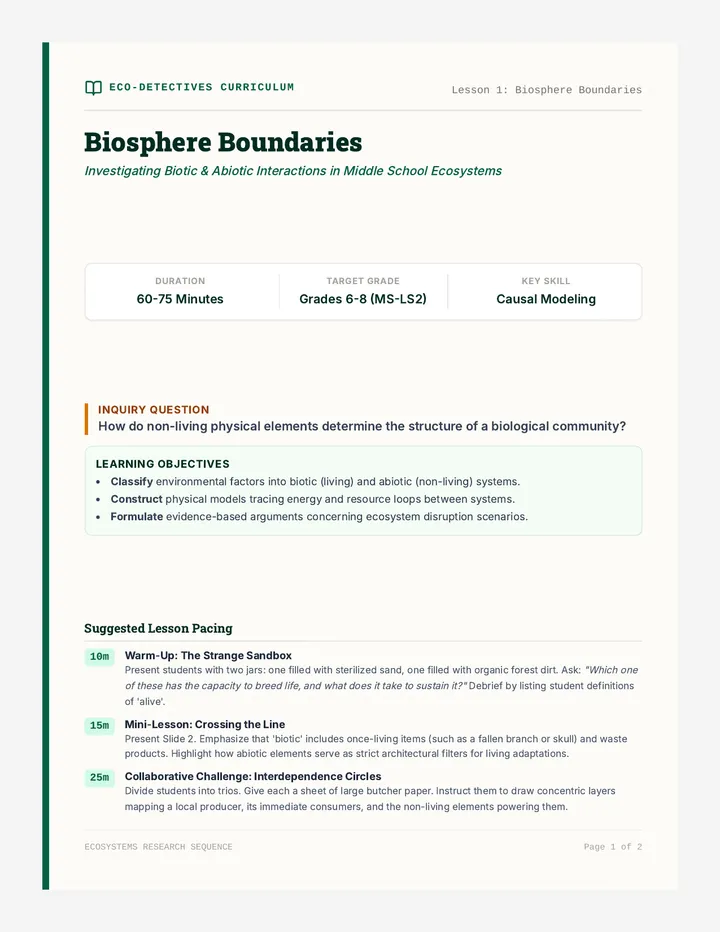
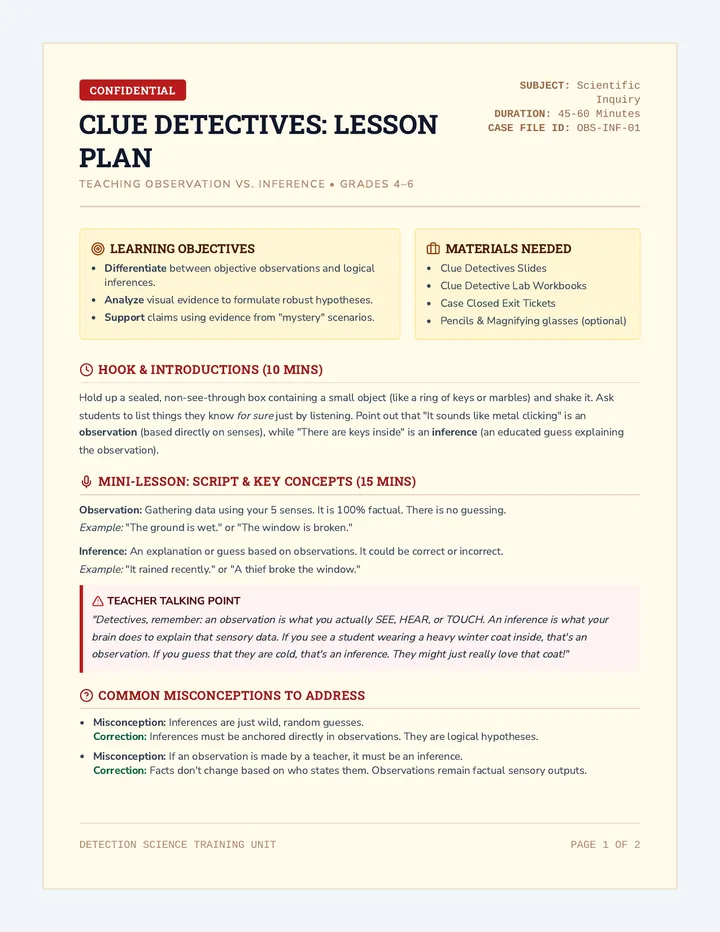
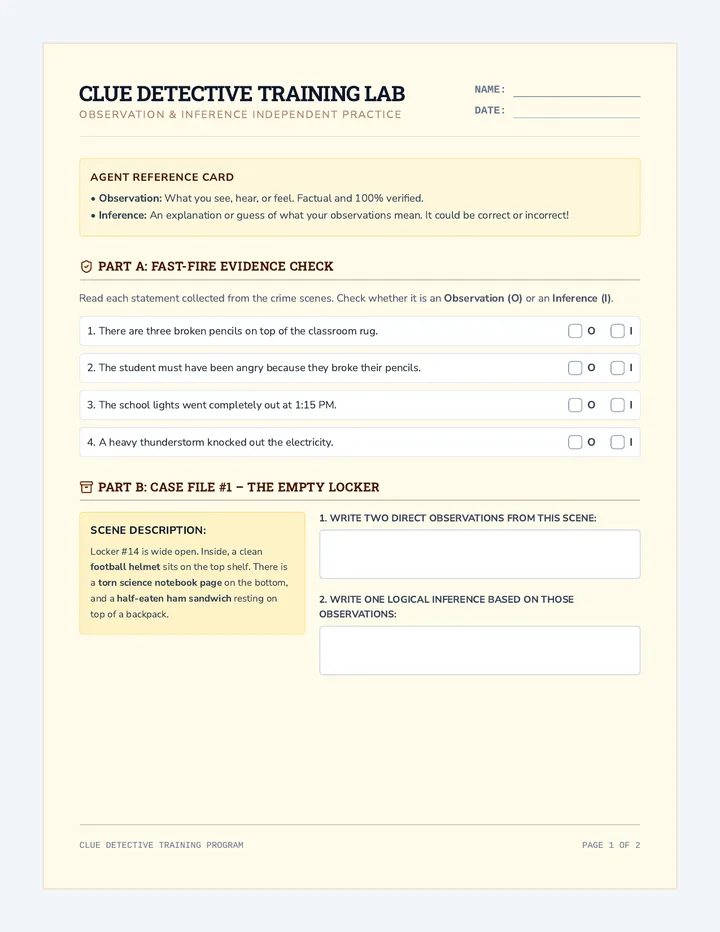
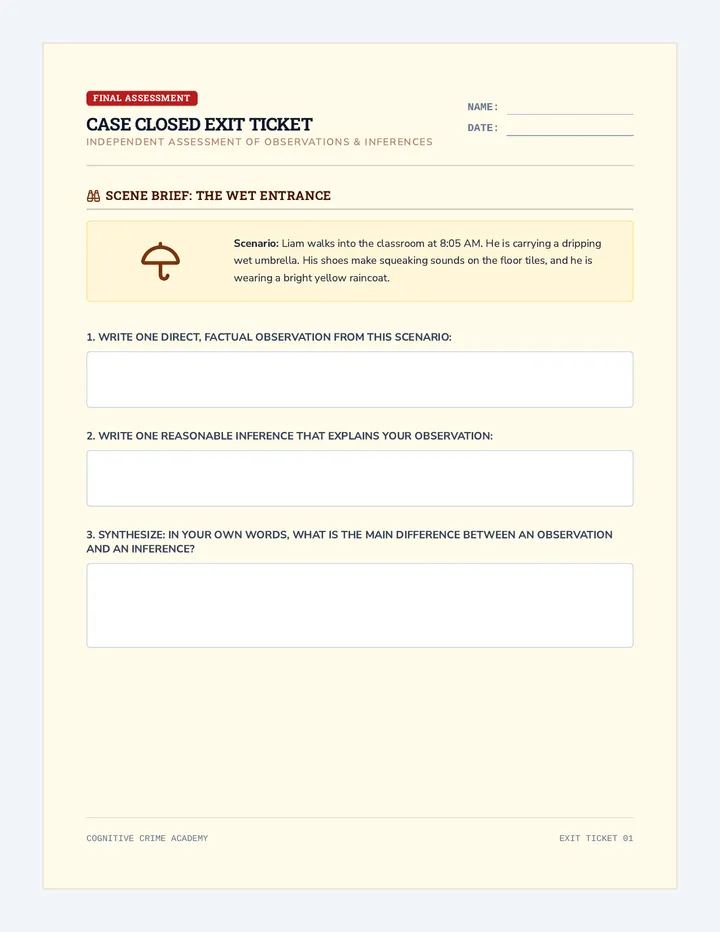
Lesson Objectives
- Students will distinguish between physical changes and identify phase shifts.
- Students will model particle arrangements in solids, liquids, and gases.
- Students will explain why dissolving and mixing are physical changes.
- Students will identify methods to reverse physical changes.
Materials Needed
- • Matter Morph Slides
- • Phase Change Lab Notes
- • (Optional) Ice cubes & hot plate
- • (Optional) Salt & beaker
Instructional Script & Tips
Slides 1-3: The Setup
Discussion Starter:
Ask students: "If I rip a $20 bill in half, is it still money? Yes! Is it as useful? No. That's a physical change." Emphasize that the identity (the molecules) stays exactly the same. Review the states of matter by having students stand up and "act out" the particles (vibrating for solids, sliding for liquids, jumping for gases).
Slides 4-6: Phase Shifts
Key Concept:
Connect phase changes to Energy. When heat is added, particles move faster. When it's removed, they slow down. Challenge students to name a substance that undergoes sublimation (Dry ice) or deposition (Frost on a windshield).
Slides 7-10: Mixtures
Common Misconception:
Students often think dissolving is a chemical change because the solute "disappears." Remind them that the solute is still there, just broken into particles too small to see. Use the "Undo Button" slide to reinforce that if you can physically separate it, it's a physical change.
Worksheet Answer Key
Phase Change Tracker
- • Melting: Solid → Liquid (Added)
- • Freezing: Liquid → Solid (Removed)
- • Vaporization: Liquid → Gas (Added)
- • Condensation: Gas → Liquid (Removed)
- • Sublimation: Solid → Gas (Added)
Mixtures & Dissolving
Dissolving: No, it does not create a new substance. The sugar/salt molecules are simply surrounded by water molecules.
Separating: Use a magnet to pull out the iron filings, leaving the salt behind.
Matter Morph Lesson Package © 2026 Science Lab Resources