This lesson explores the intersection of hydrology and history, focusing on how Karst landscapes and El Niño events shaped the rise and fall of the Maya and Khmer civilizations through hydraulic engineering.
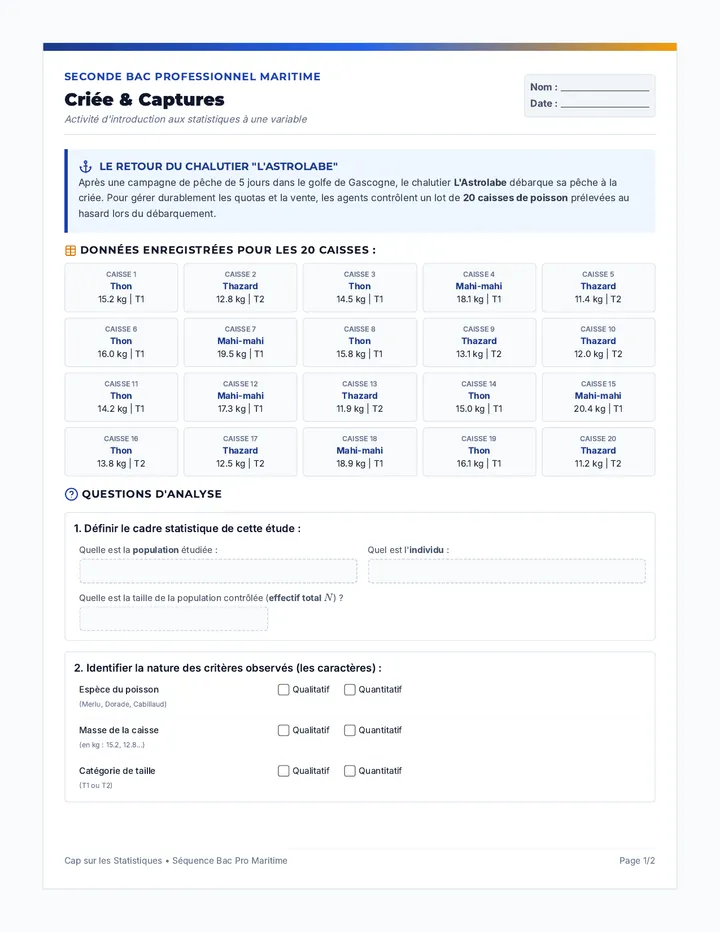
Séquence clé en main sur le module de chimie « Comment caractériser une solution ? » du programme de Seconde Bac Pro, contextualisée dans l'univers de la marine et de l'analyse des eaux.
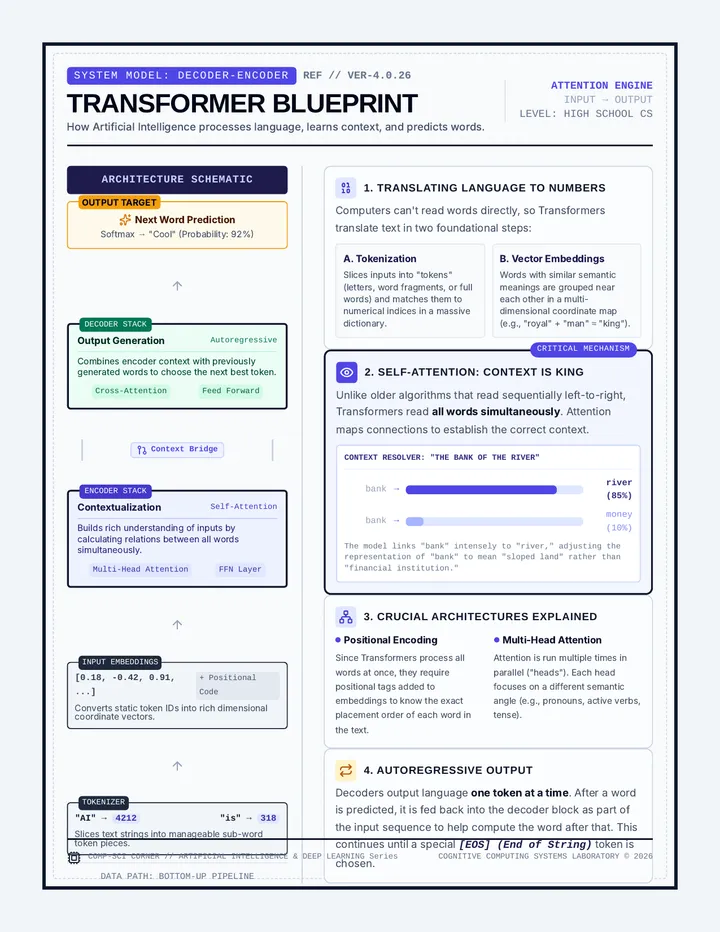
An introductory lesson introducing high school computer science students to the inner workings of AI Transformer models, specifically mapping the Encoder-Decoder architecture, tokenization, embeddings, and attention mechanisms through visual assets.
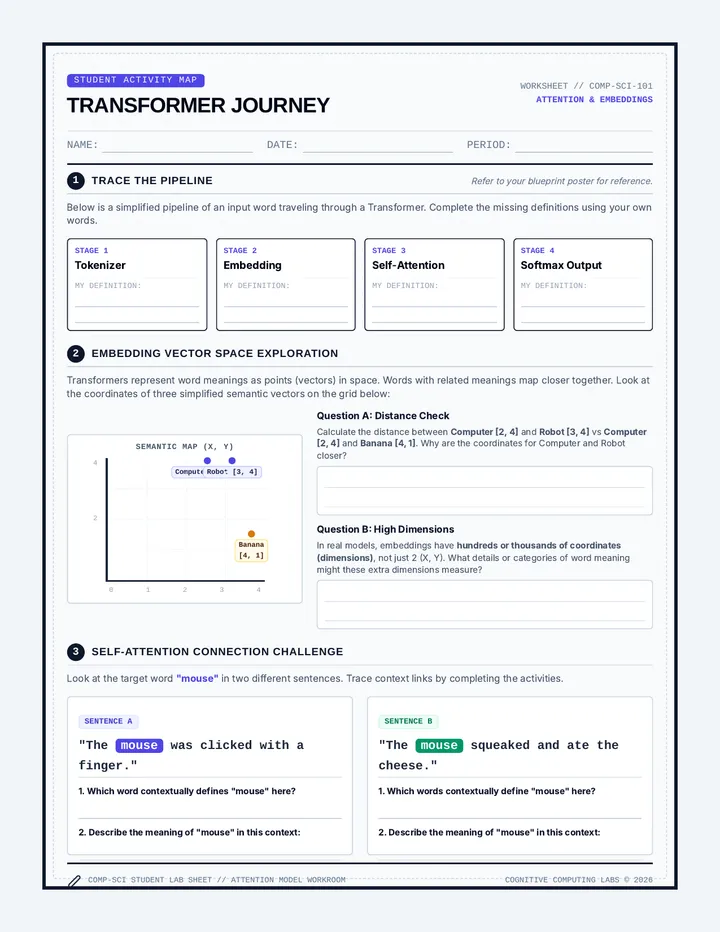
A student-facing graphic organizer worksheet mapping the journey of a word through a Transformer model, allowing students to label steps, analyze simple vector spaces, and trace self-attention context connections.
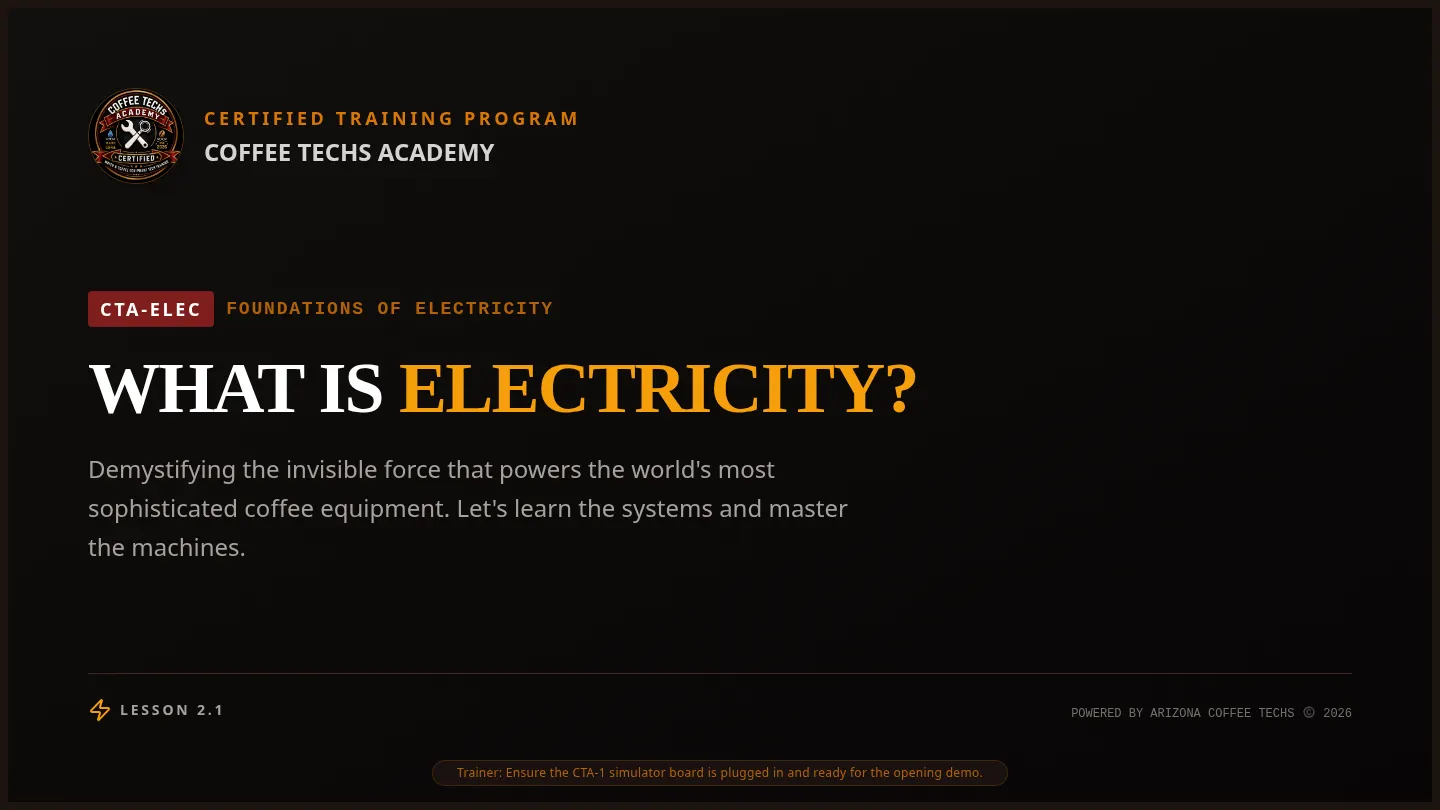
A comprehensive technical certification sequence designed to teach commercial coffee equipment technicians how to demystify electricity, safely troubleshoot components, and master electrical systems.
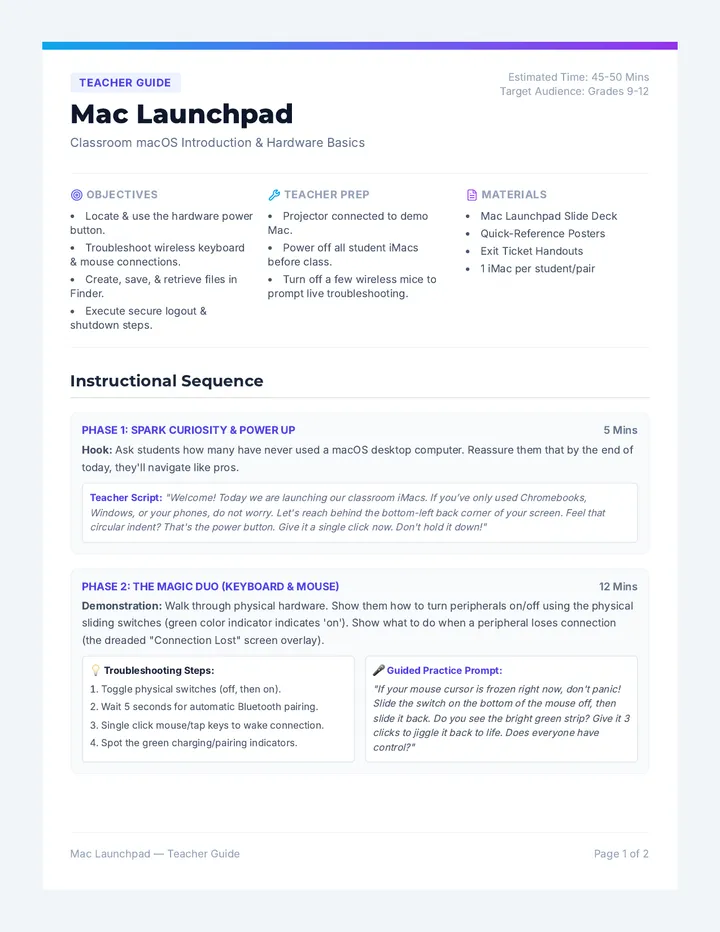
An introductory guide and demonstration lesson designed for students with little to no macOS experience. Covers hardware startup, wireless peripheral troubleshooting, file management in Finder, and proper logout procedures.
A visual anchor chart poster mapping out the Transformer architecture, tokenization, embeddings, and self-attention in a schematic blueprint format for introductory CS students.
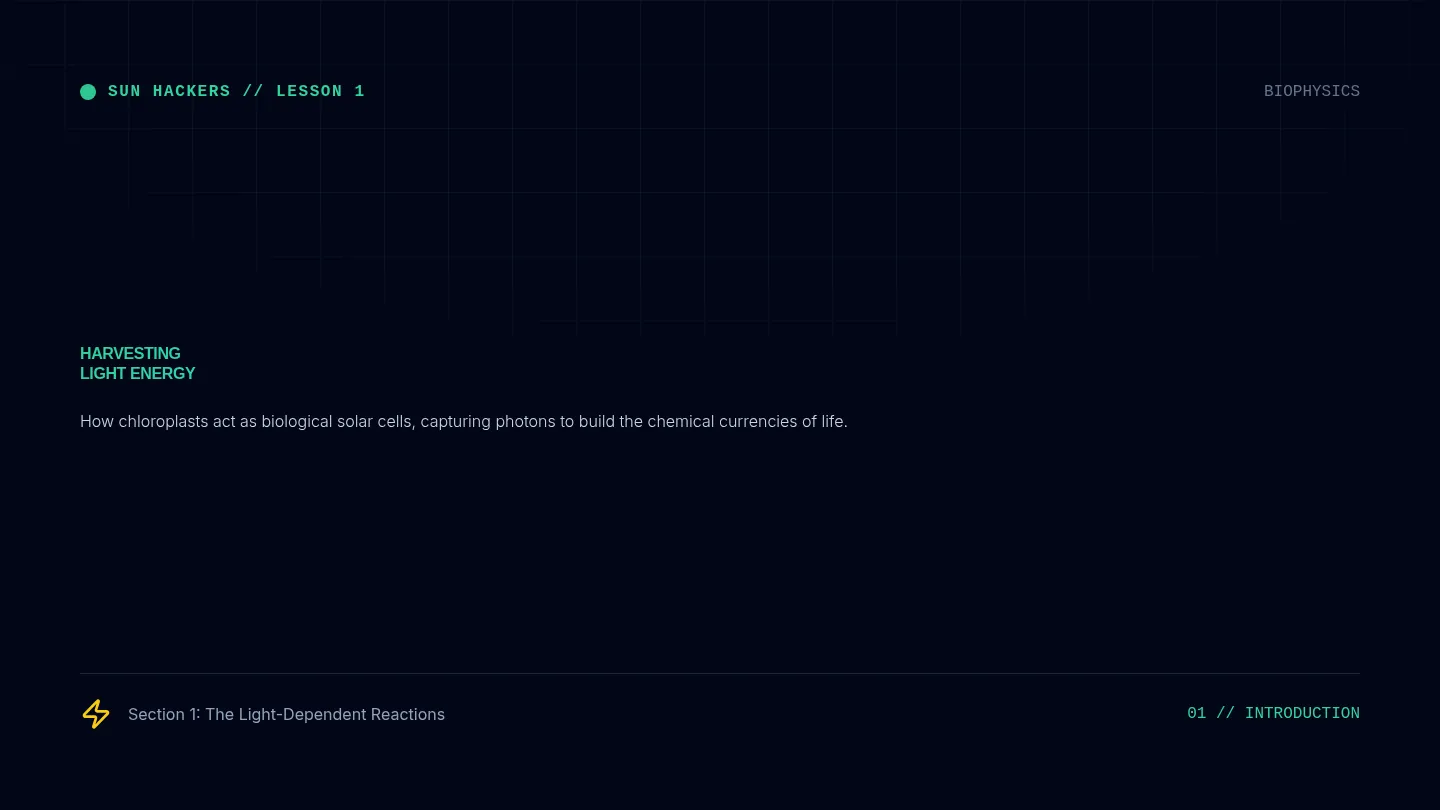
An intensive High School Biology sequence that dives deep into the biophysics and biochemistry of photosynthesis. Students explore the molecular machinery of the light-dependent reactions and the enzymatic steps of the Calvin cycle.
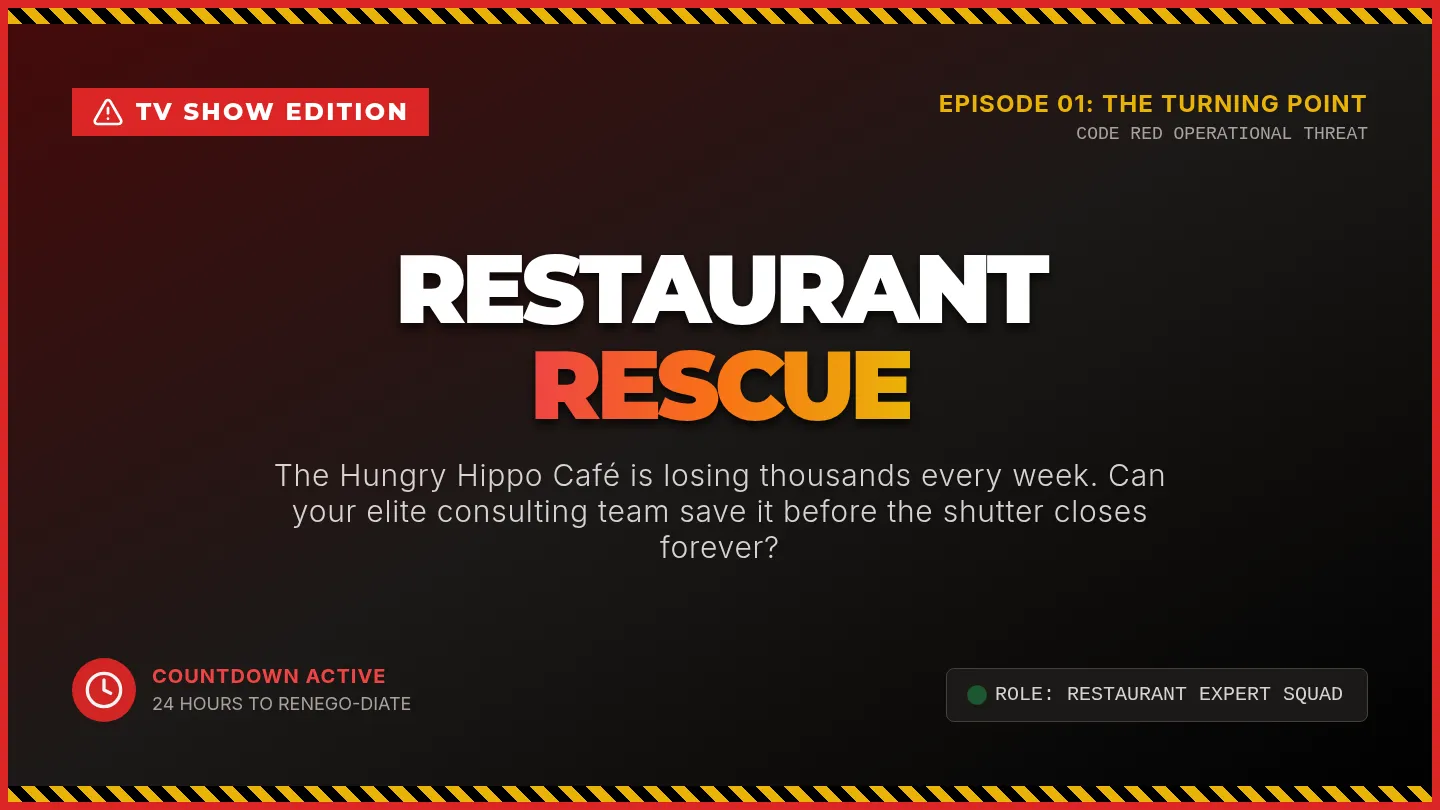
A dramatic, interactive problem-solving game disguised as a restaurant makeover reality TV show. Students act as Restaurant Rescue Experts investigating "The Hungry Hippo Café" to uncover and solve issues in restaurant operations, food safety, customer service, and budget.
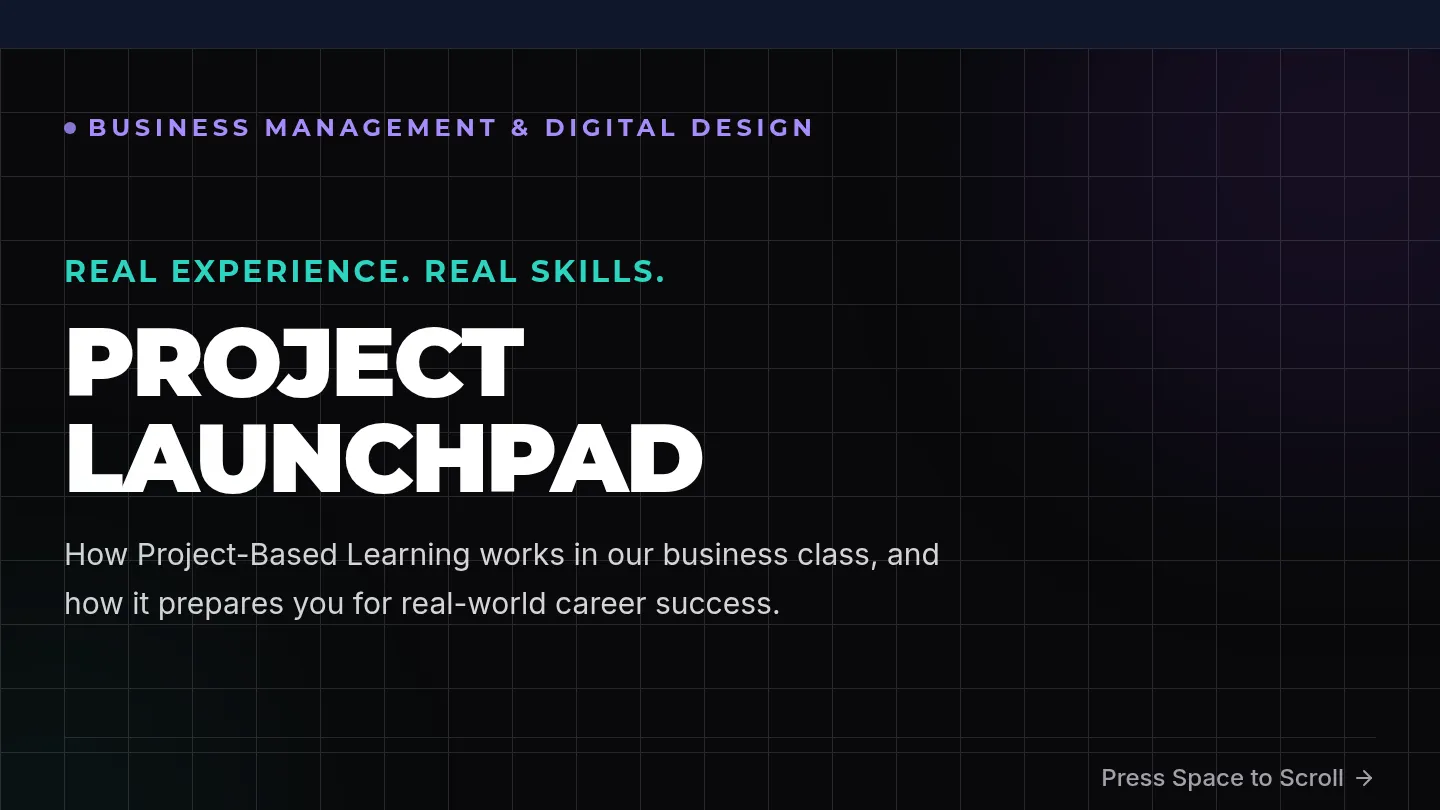
A modern and direct 7-slide introductory presentation explaining Project-Based Learning (PBL) in high school business classes. It replaces complex boardroom lingo with highly relatable, student-friendly terms while emphasizing career-ready skill building, independent class work time, milestone check-ins, and supportive peer feedback.
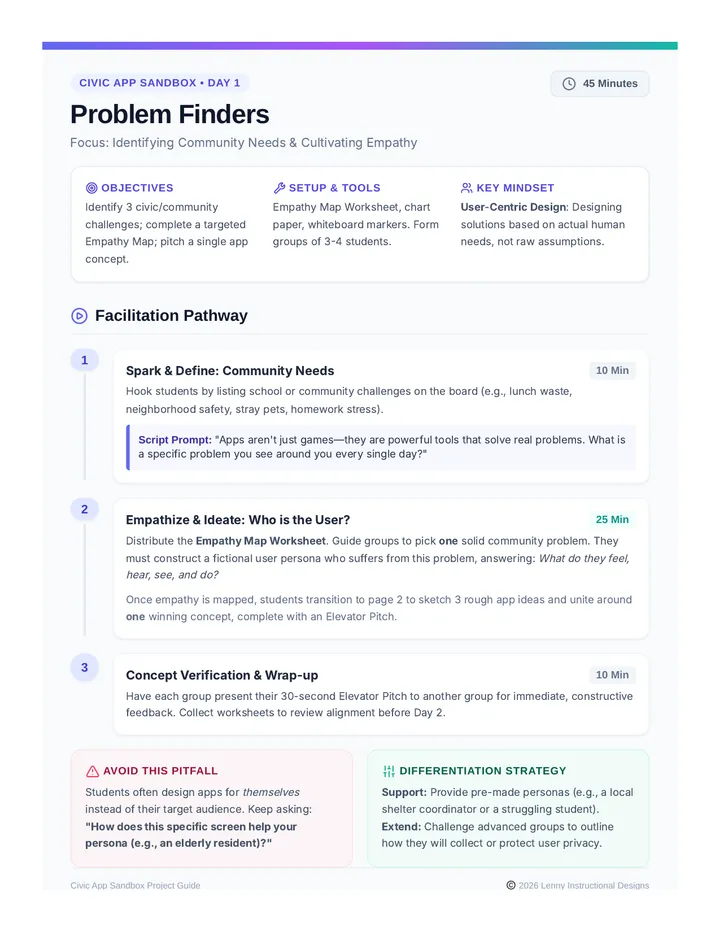
A three-day project-based learning unit where students design and pitch interactive paper prototypes of apps that address real-world community challenges.
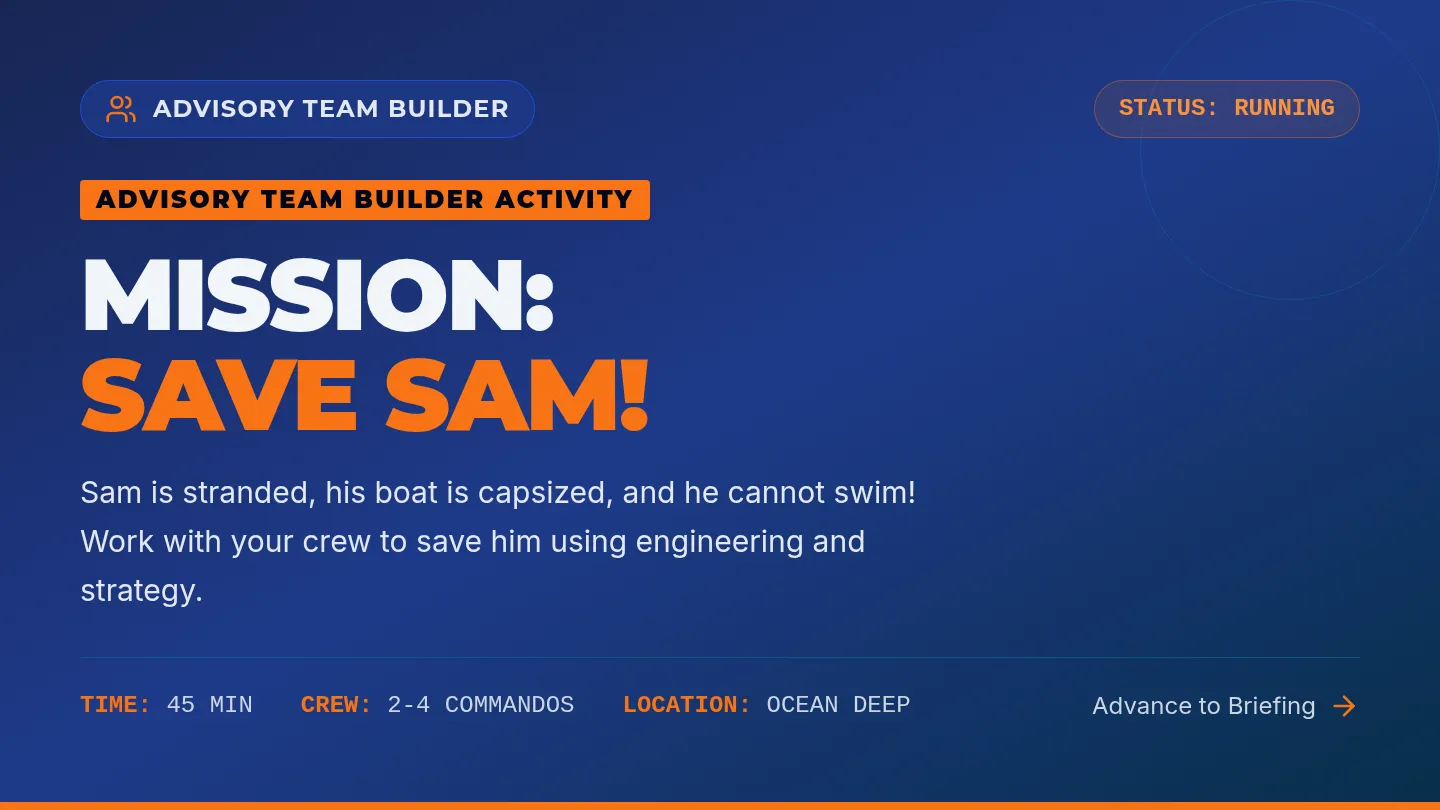
An introductory STEM and cooperative learning lesson where students work in teams to save Sam, a gummy worm stranded on a capsized boat, using only paperclips to retrieve and equip his life preserver.
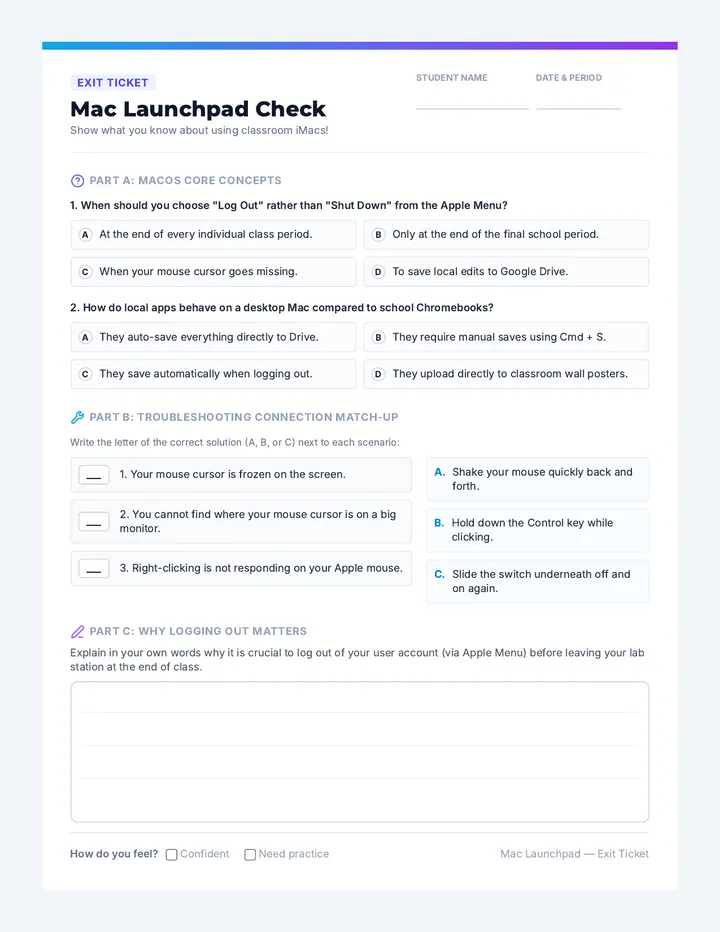
A clean, student-facing 1-page assessment sheet styled as an exit ticket. Includes fields for student credentials, multiple-choice questions with balanced options, troubleshooting matching challenges, and a dedicated response box with clear guidelines.