Students identify and categorize heat sources in their environment as natural or artificial.
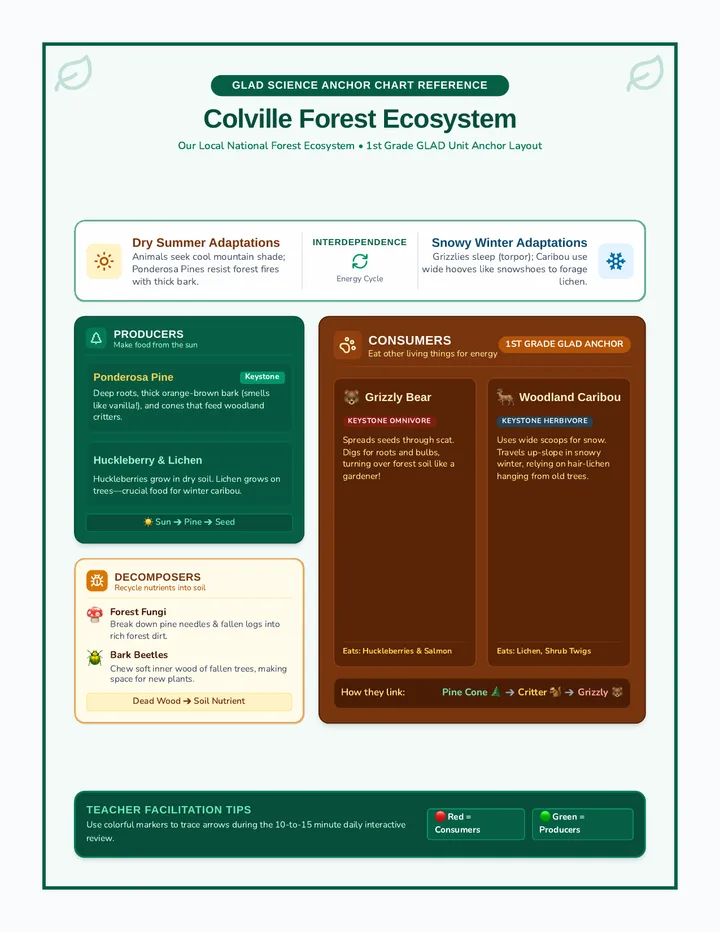
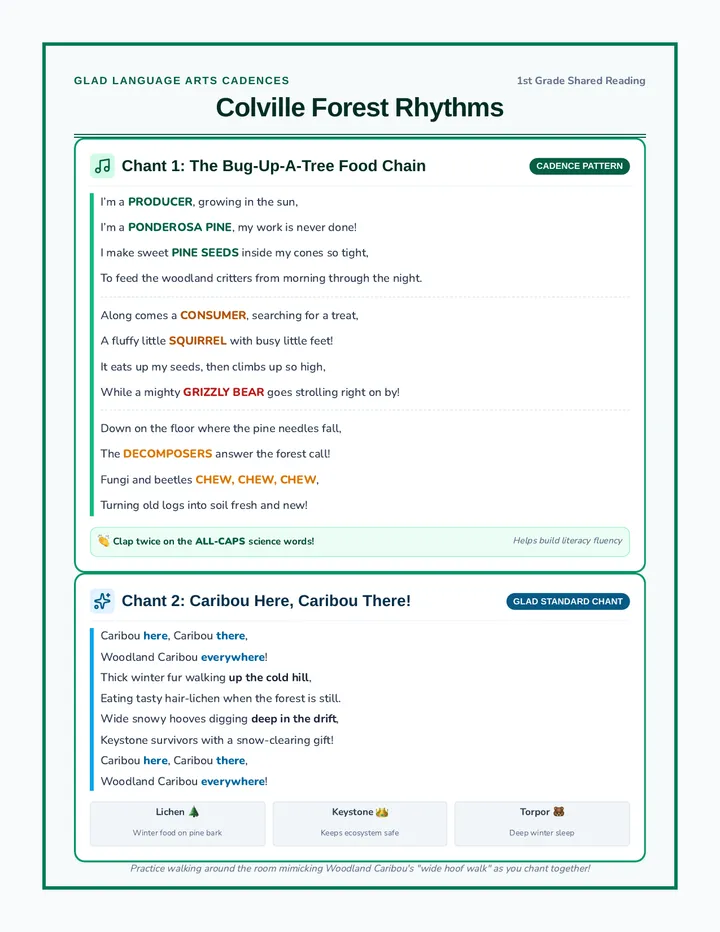
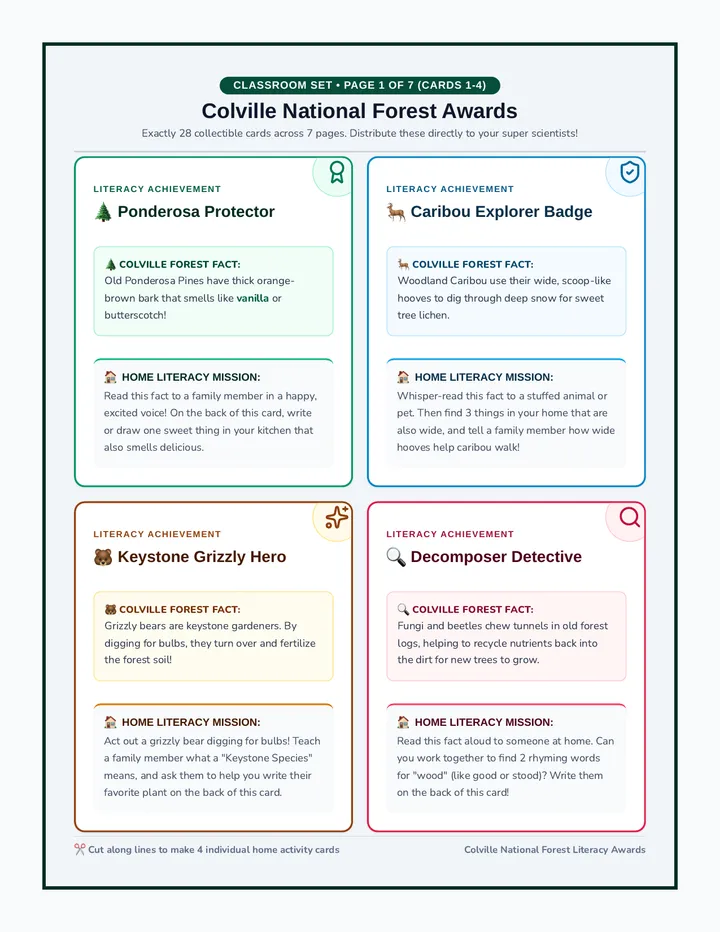
An immersive 1st-grade GLAD unit focused on the Colville National Forest ecosystem. Students explore food chains, interdependence, seasonal changes, and local keystone species through visual charts, rhythmic chants, and rewarding literacy achievements.
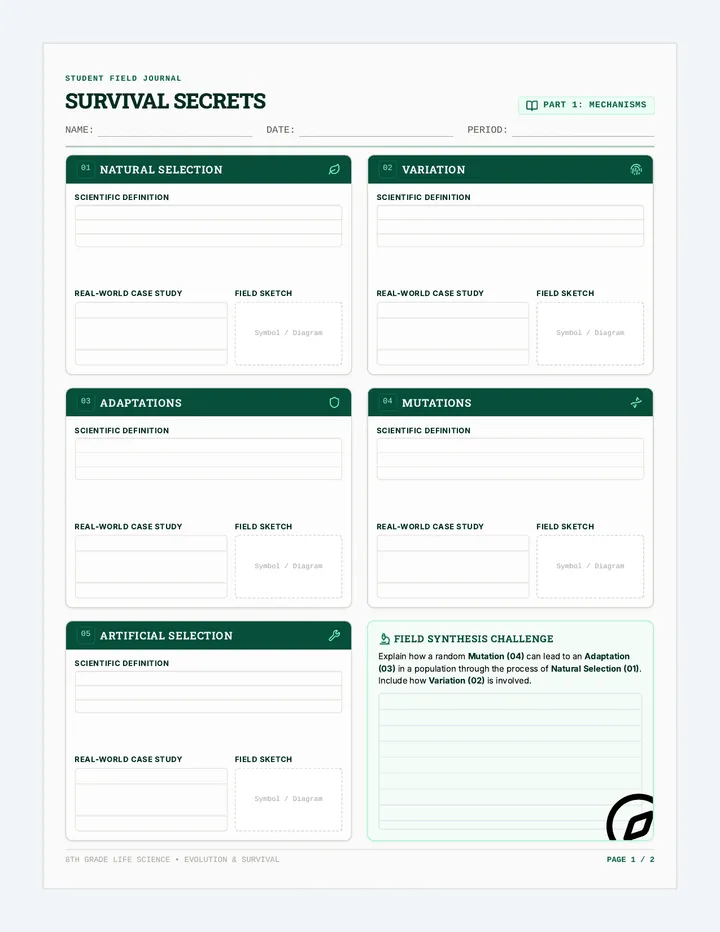
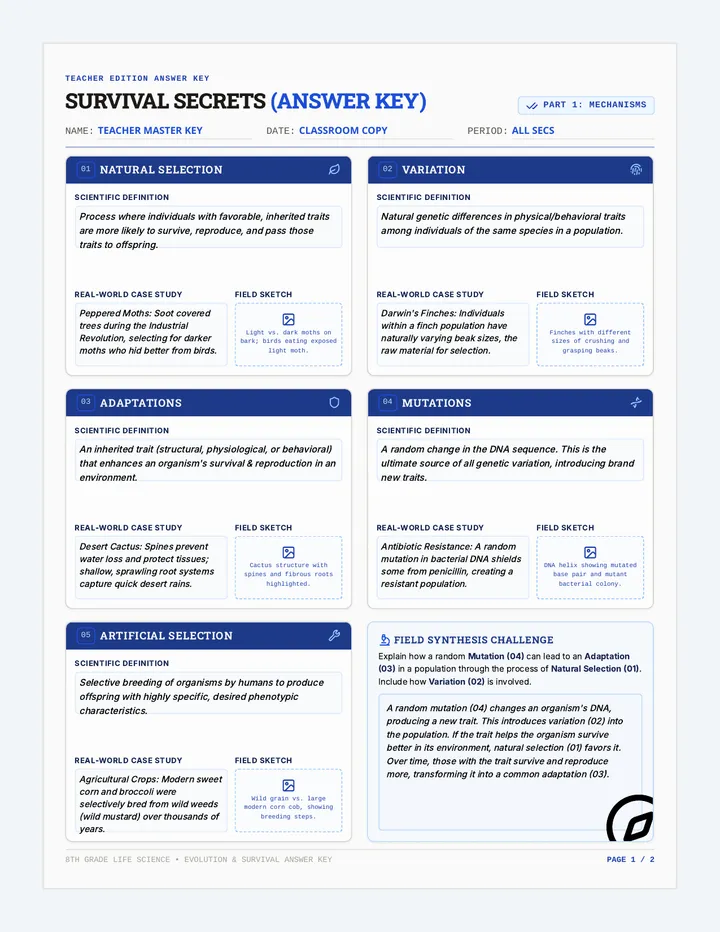
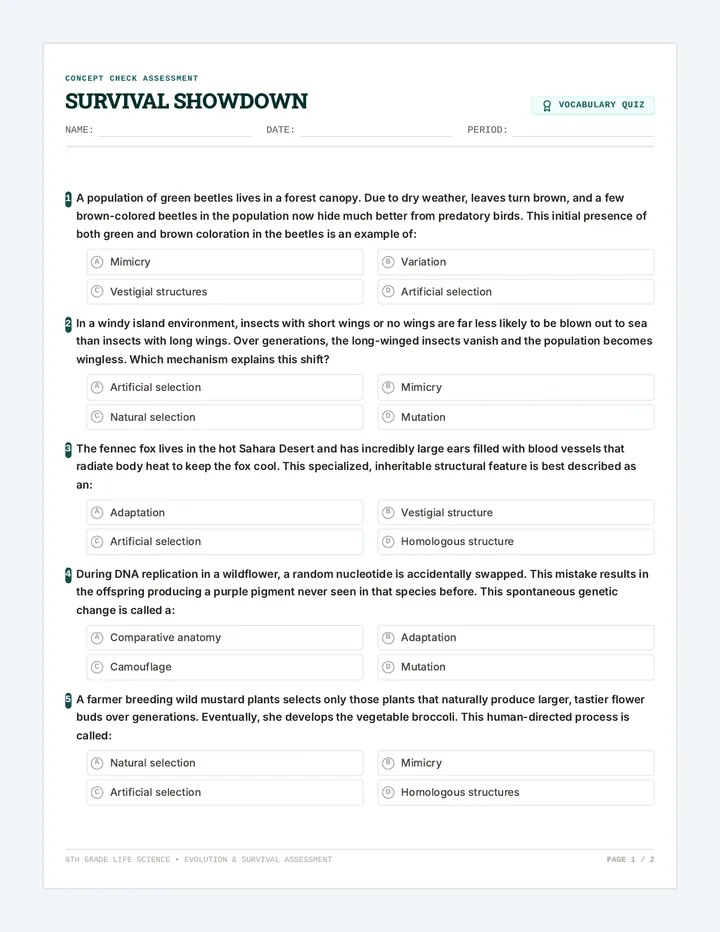
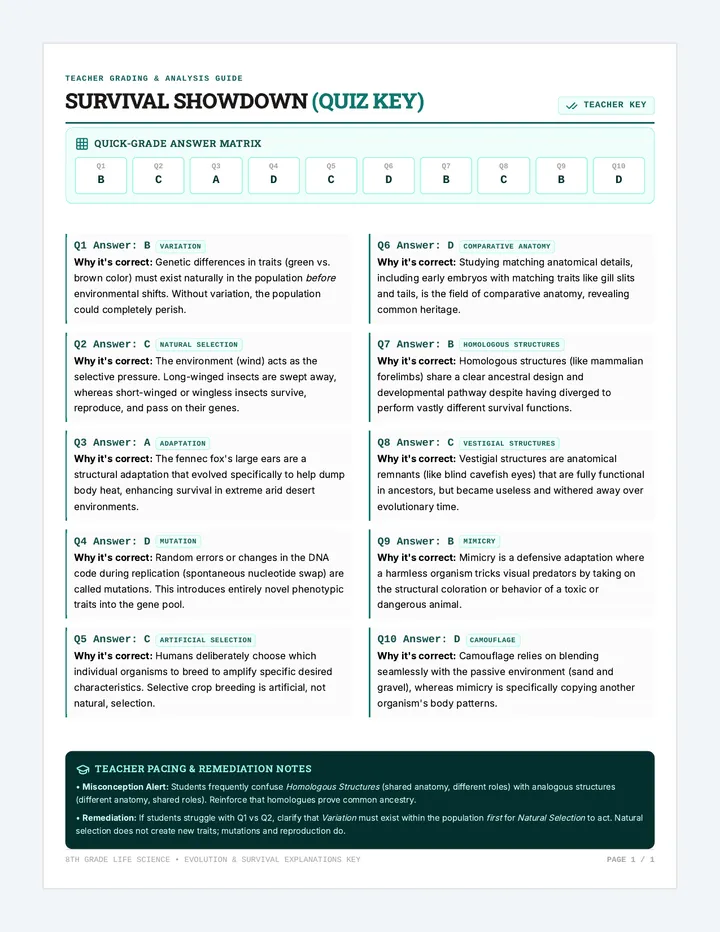
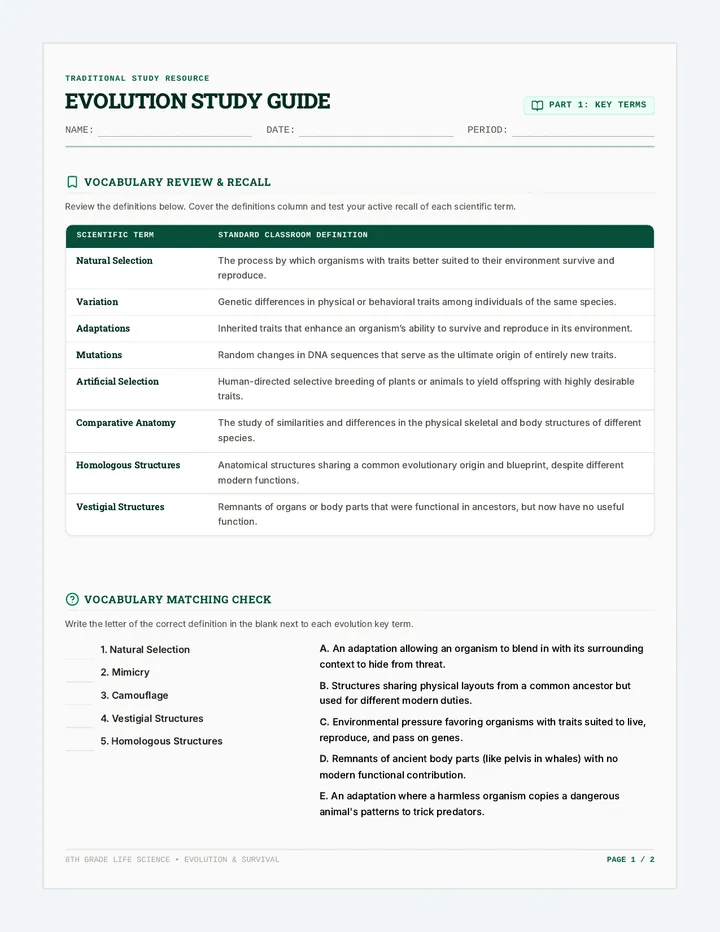
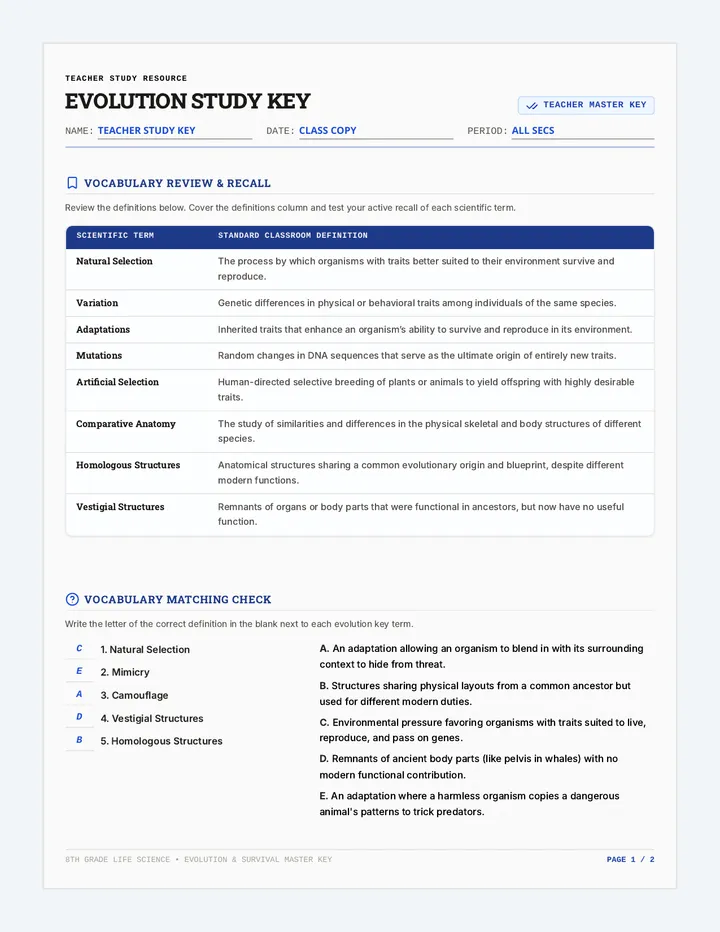
An active-recall study unit on natural selection and evolutionary evidence, featuring graphic organizers, application activities, and a practice quiz.
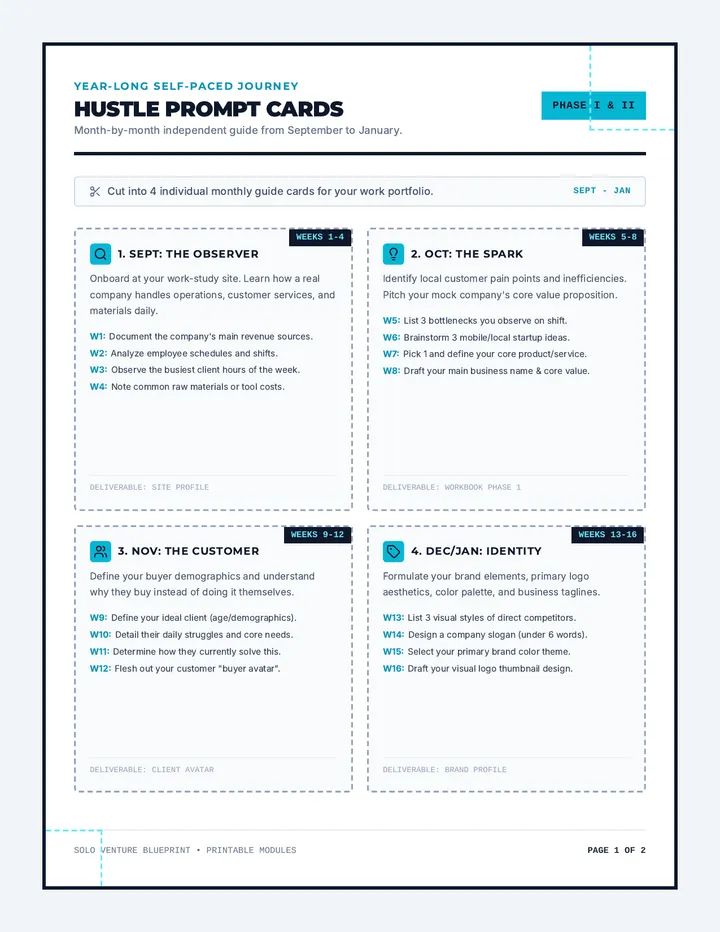
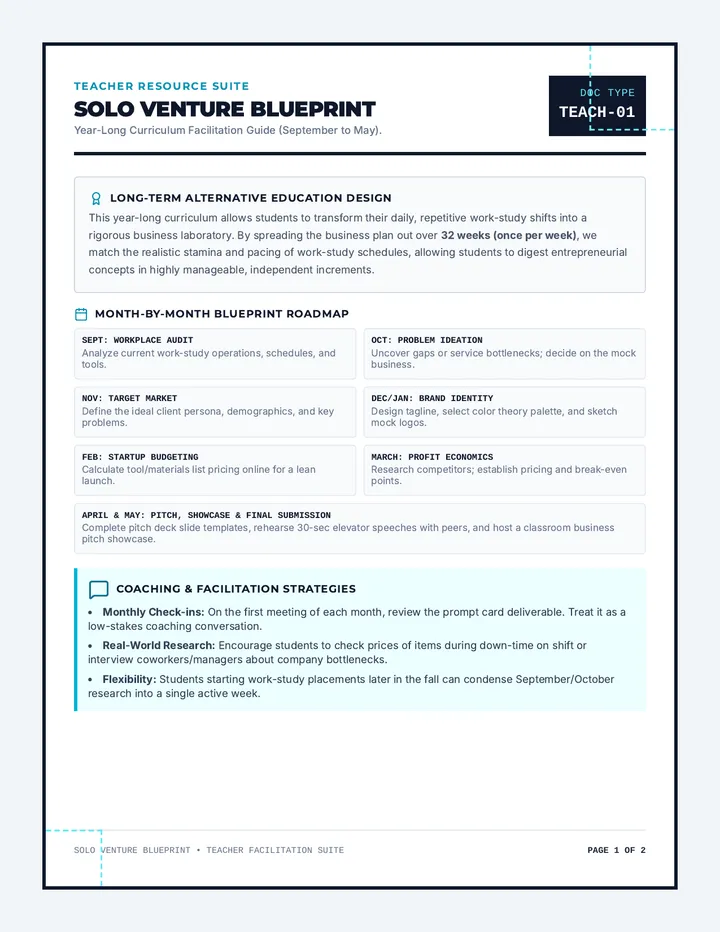
A year-long, self-paced entrepreneurship curriculum spanning September to May for alternative education students in work-study placements. Students transform real-world work experience into a modular business plan and slide presentation.
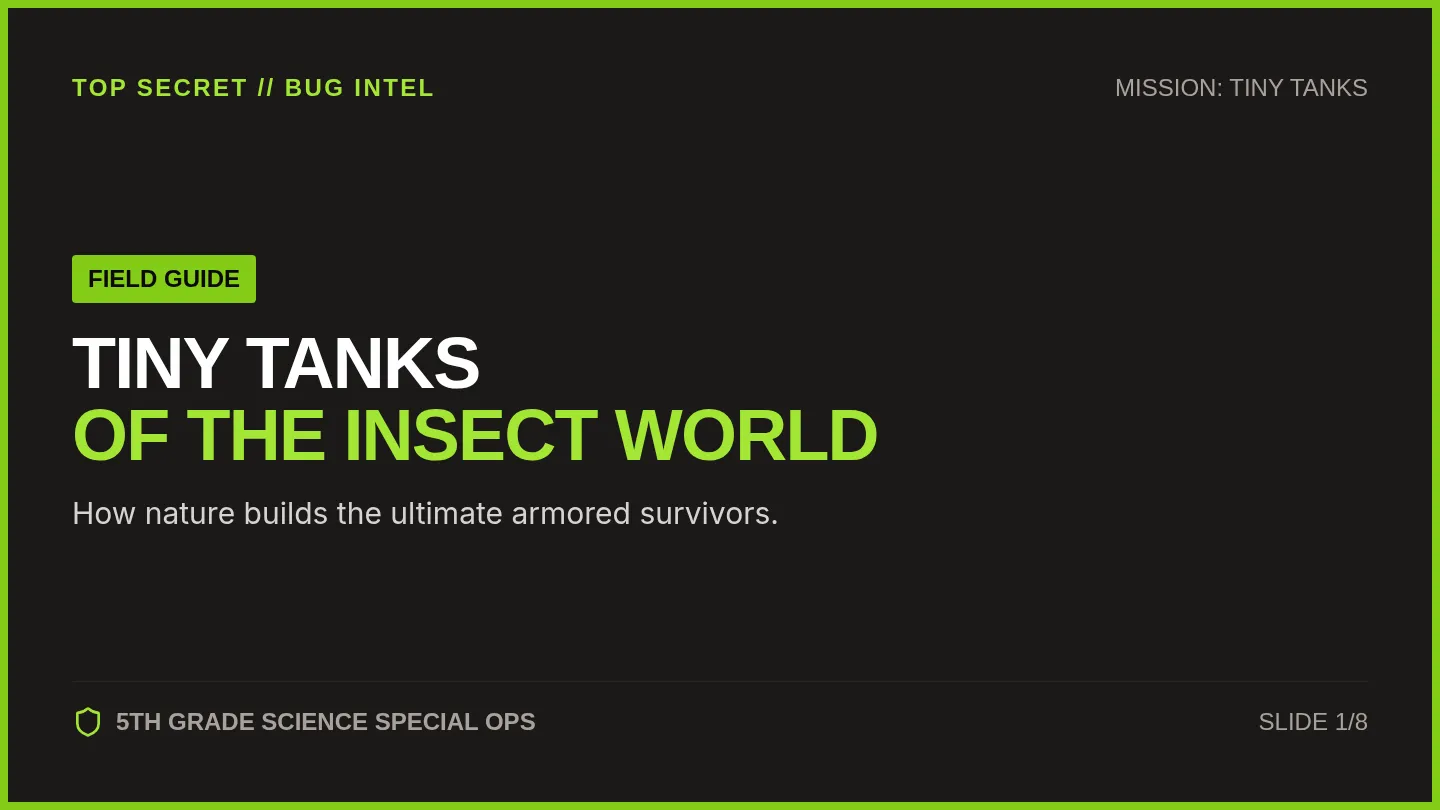
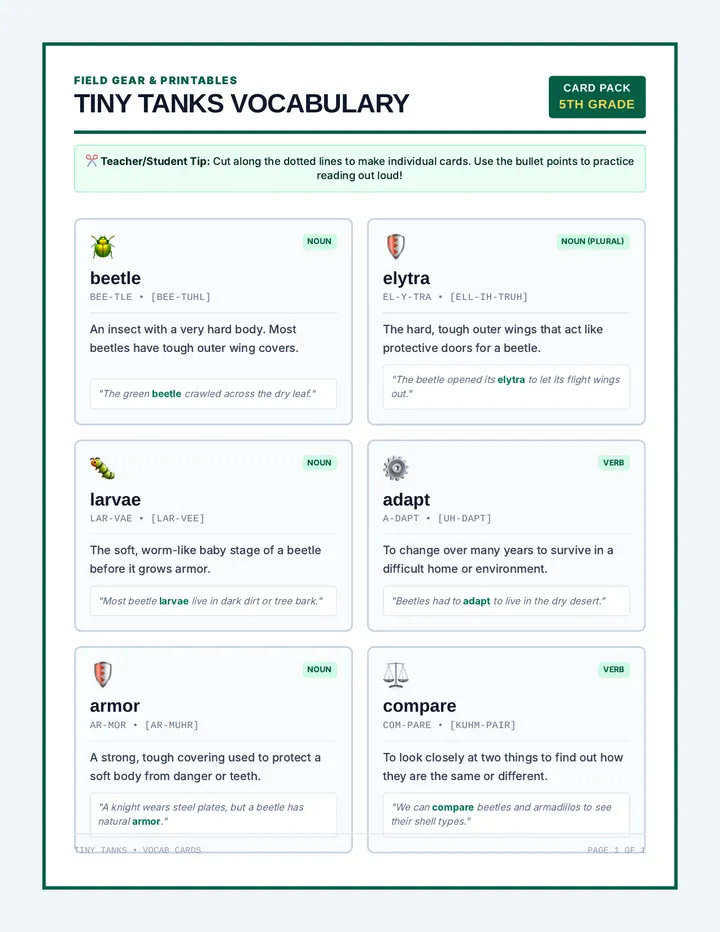
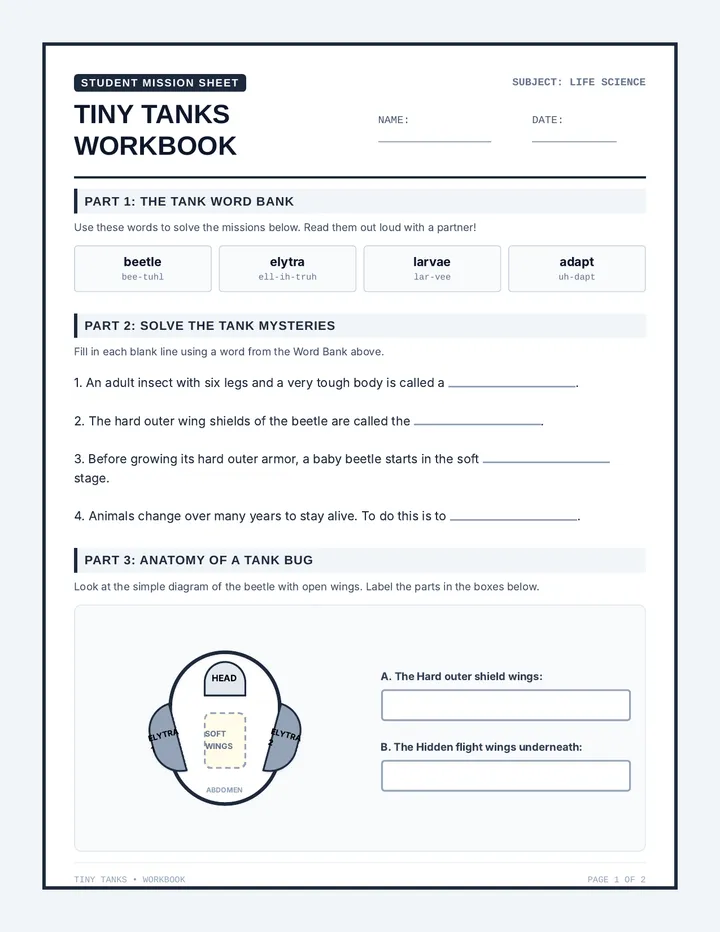
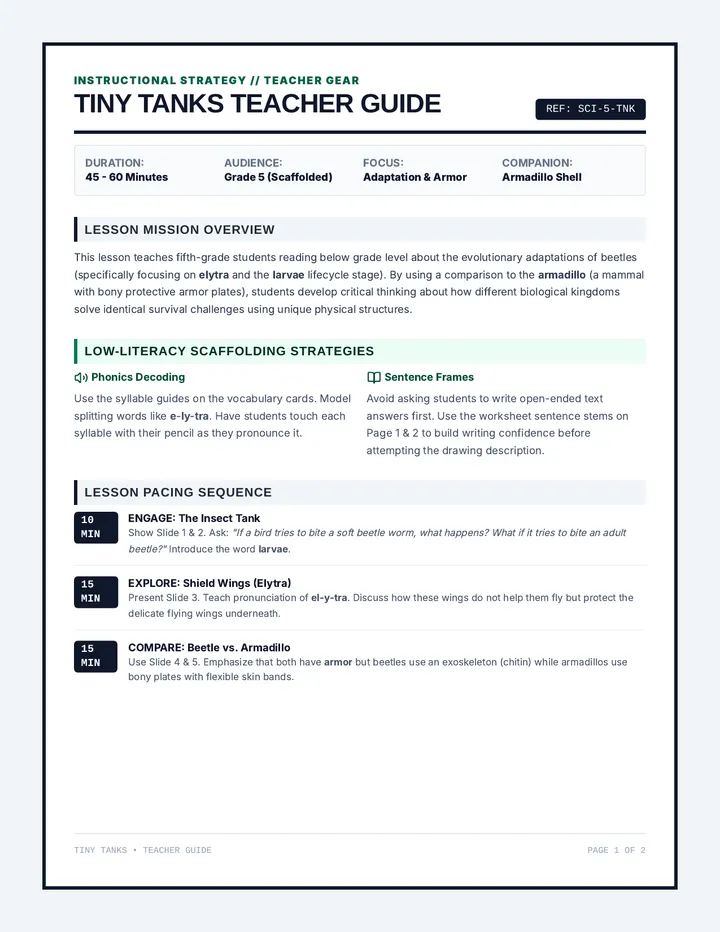
An engaging, highly visual science lesson exploring beetles as the armored tanks of the insect world, designed specifically for fifth-grade students reading below grade level. Students learn about elytra, beetle adaptation, and compare insect armor to that of the armadillo through scaffolded activities.
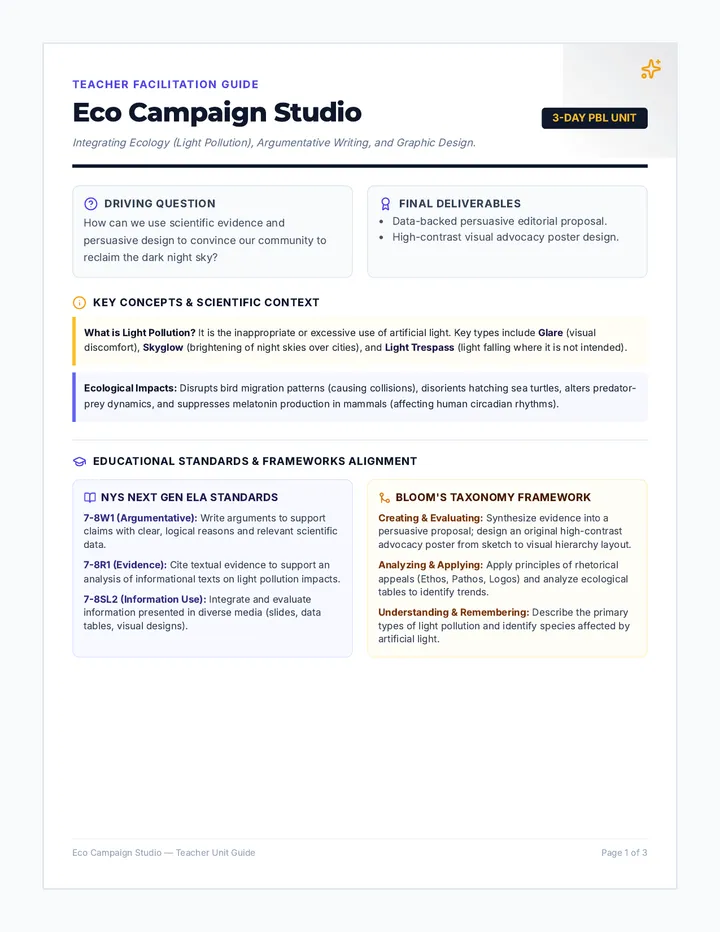
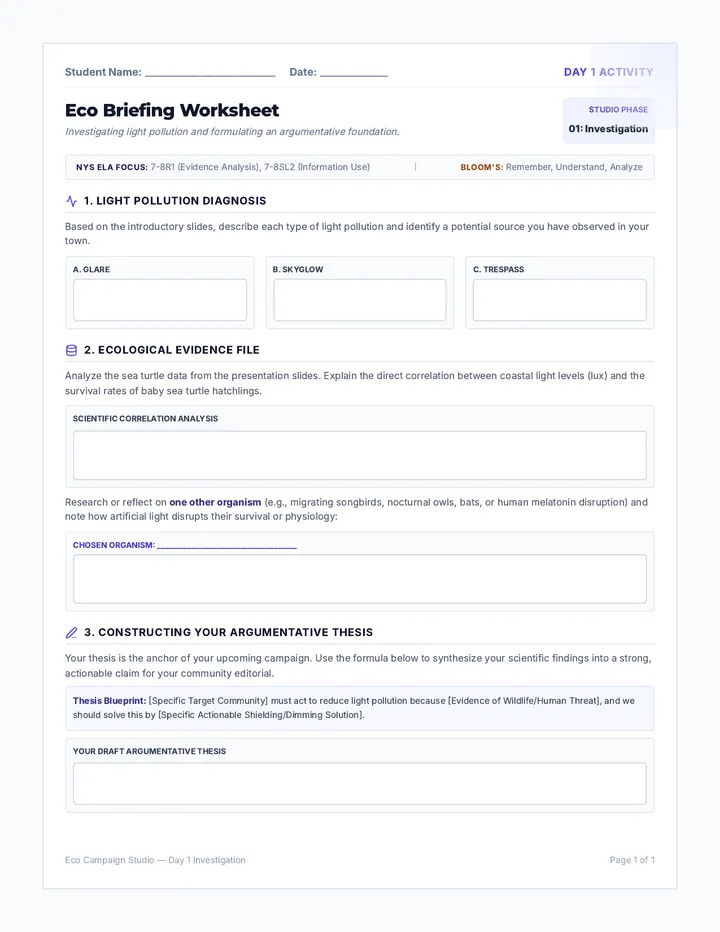
A cross-curricular, 3-day project-based unit combining science, argumentative writing, and graphic design. Students investigate the ecological impacts of light pollution, write a data-driven persuasive proposal, and design a community awareness campaign poster.
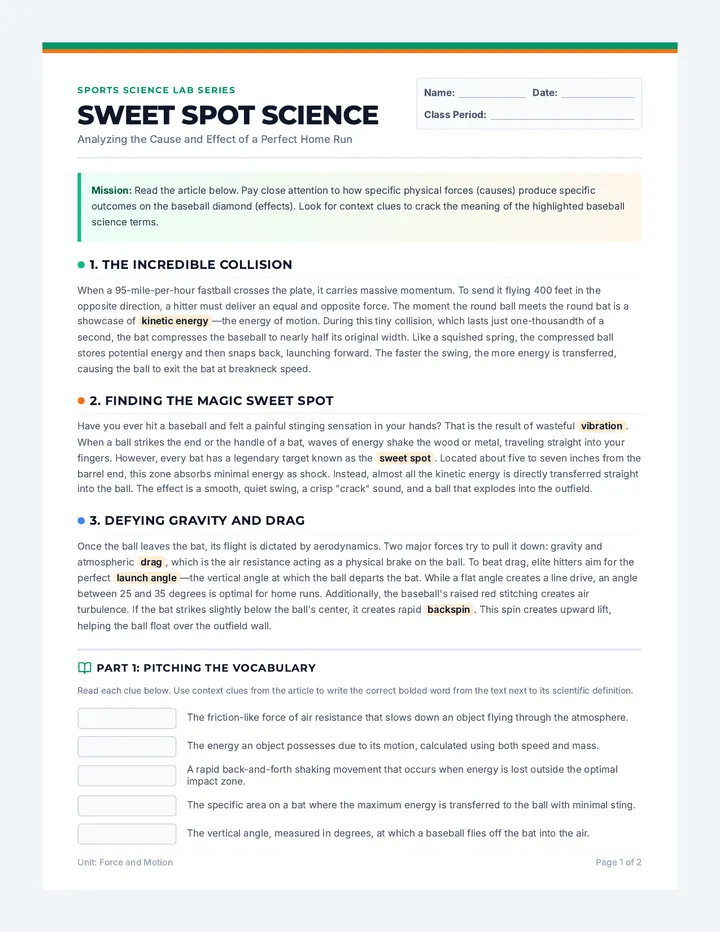
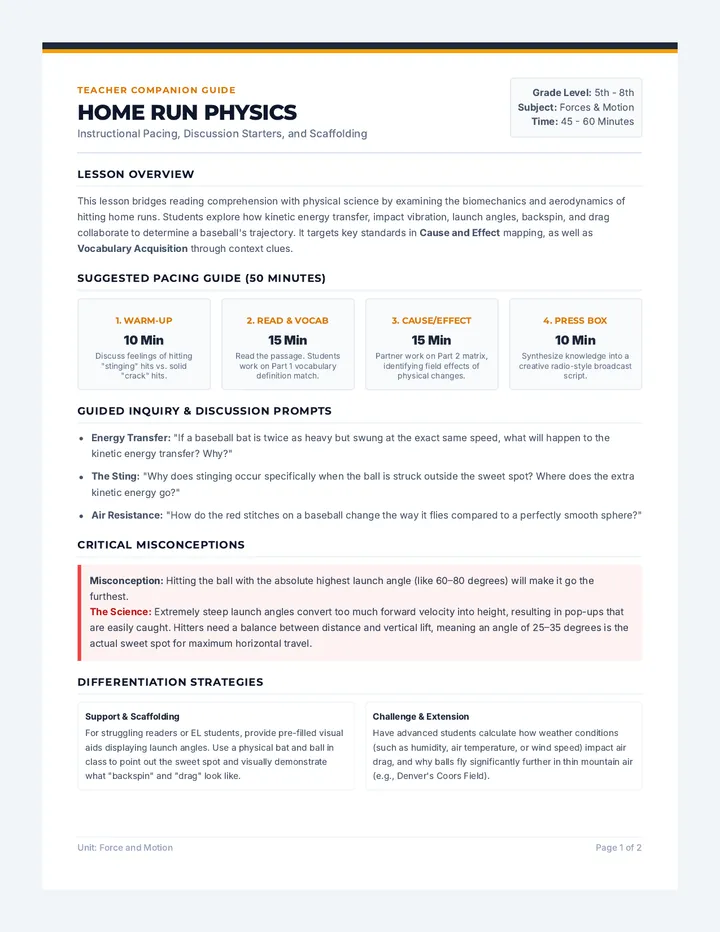
A lesson focused on the physics of hitting a home run in baseball. Students explore cause-and-effect relationships and vocabulary context clues through a reading passage, followed by comprehension questions and a creative writing prompt.
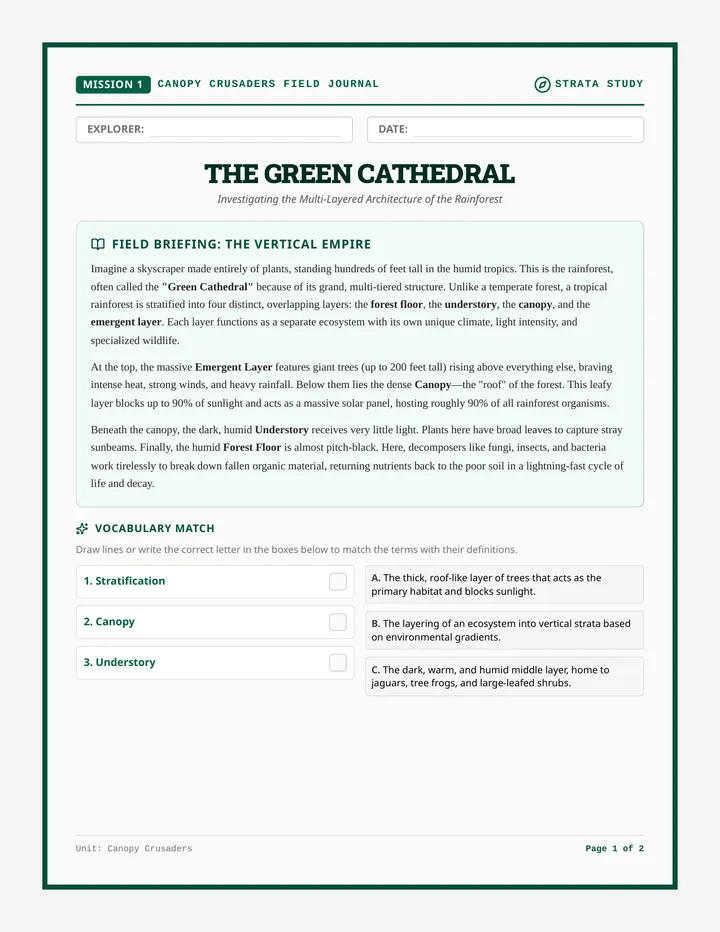
A comprehensive unit on rainforest ecology, climate regulation, and conservation. Students explore the structural layers of the rainforest, their roles as carbon sinks, the threats of deforestation, and collaborative solutions for preservation.
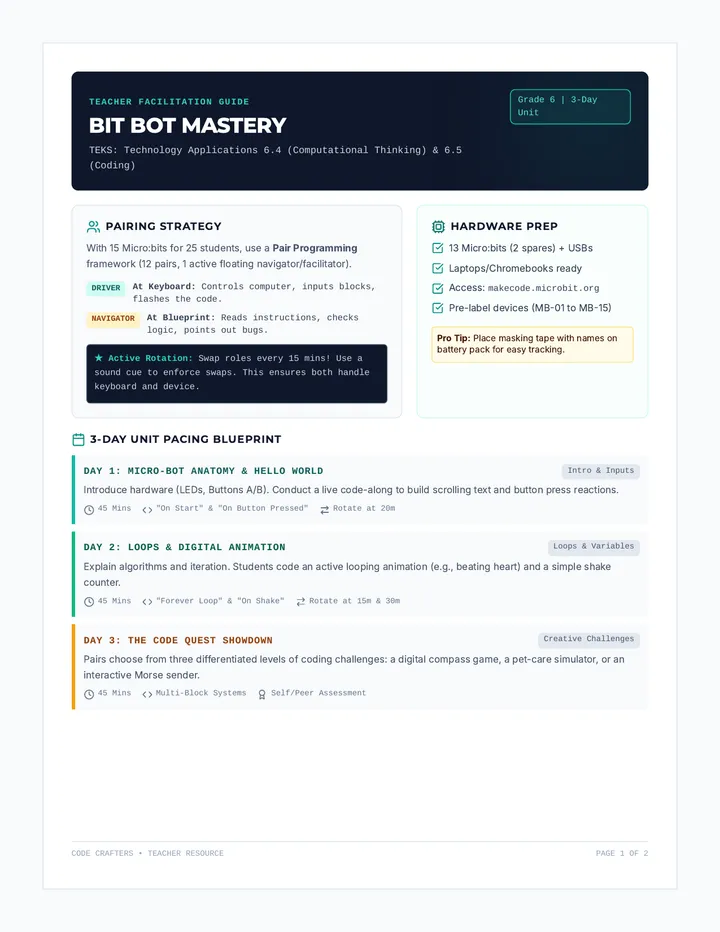
An introductory 3-day coding unit for 6th-grade students using Micro:bits. Students learn basic programming concepts like algorithms, loops, and event handlers through interactive physical computing and cooperative pair programming.
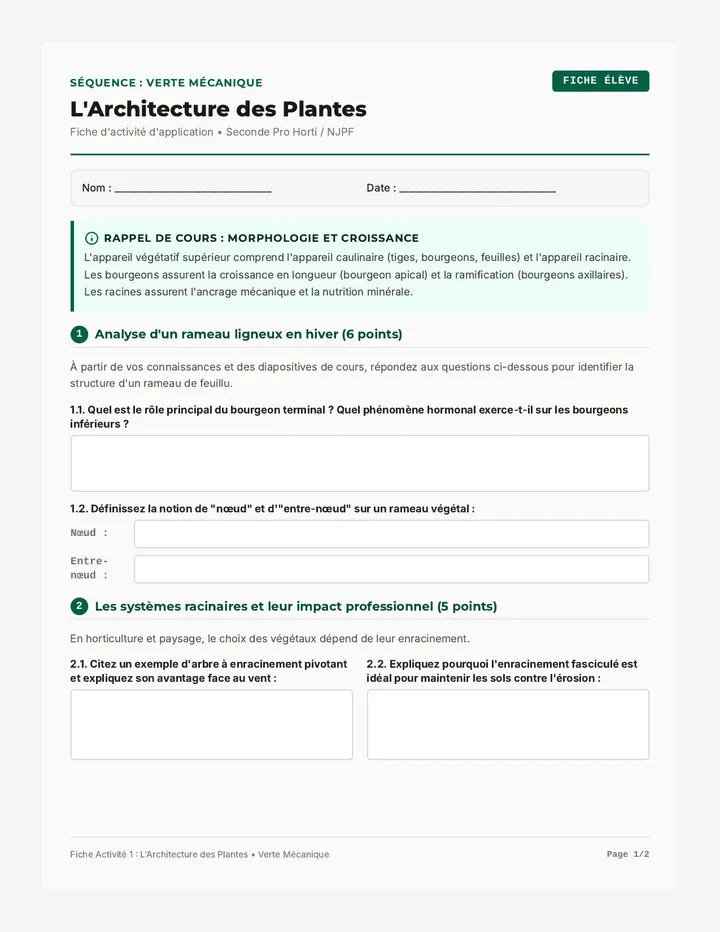
Séquence complète de biologie végétale appliquée pour les classes de Seconde Horticulture et Seconde NJPF (Nature, Jardins, Paysages, Forêt) en lycée agricole. Cette séquence aborde l'anatomie, la physiologie, la reproduction et l'écophysiologie végétale sous un angle technique, scientifique et professionnel.
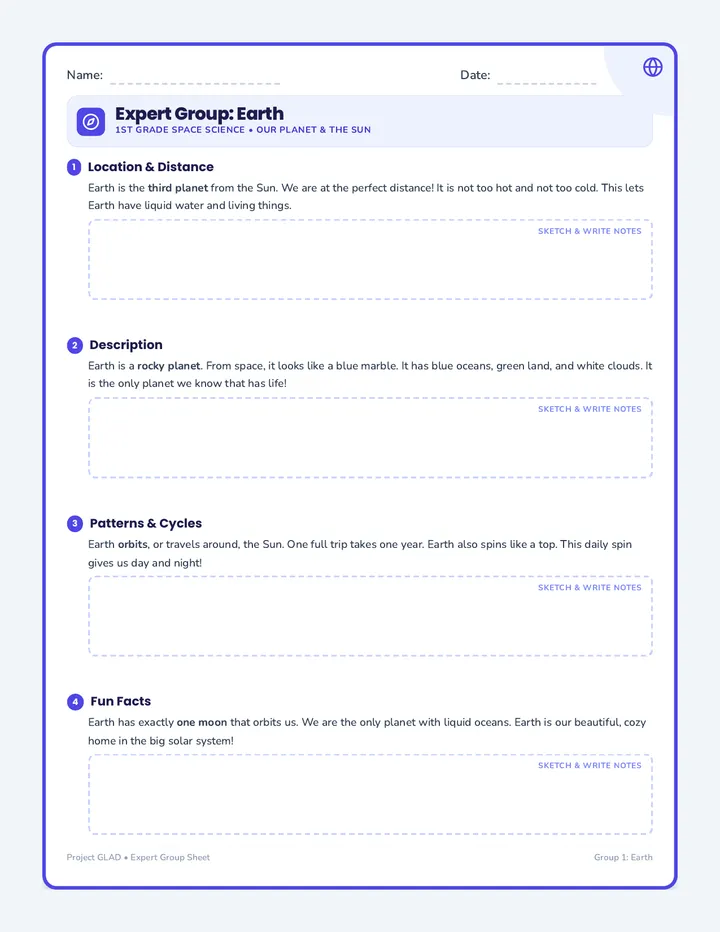
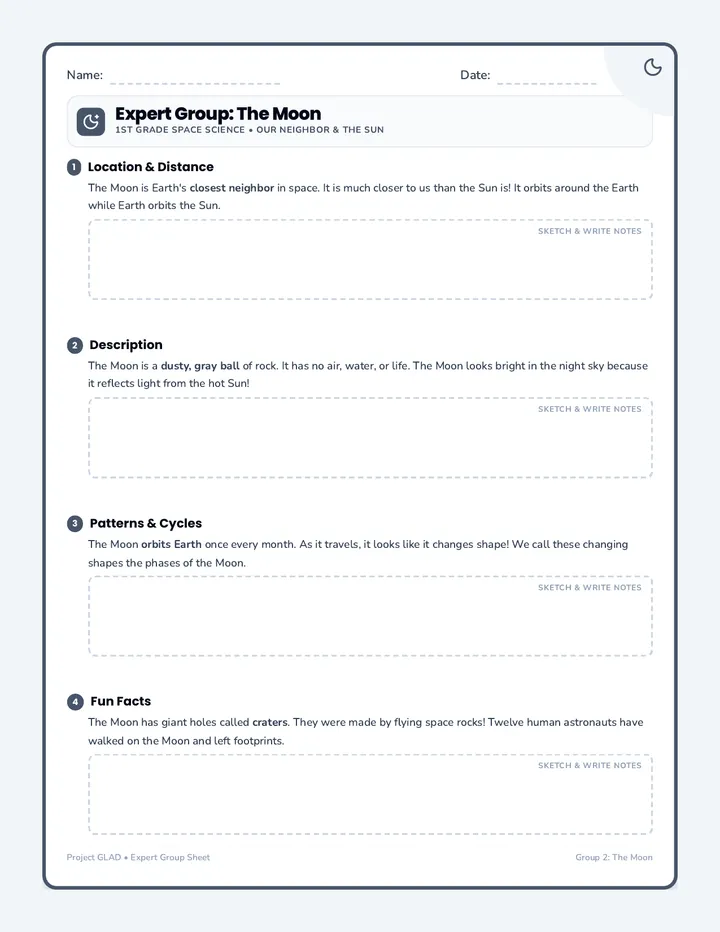
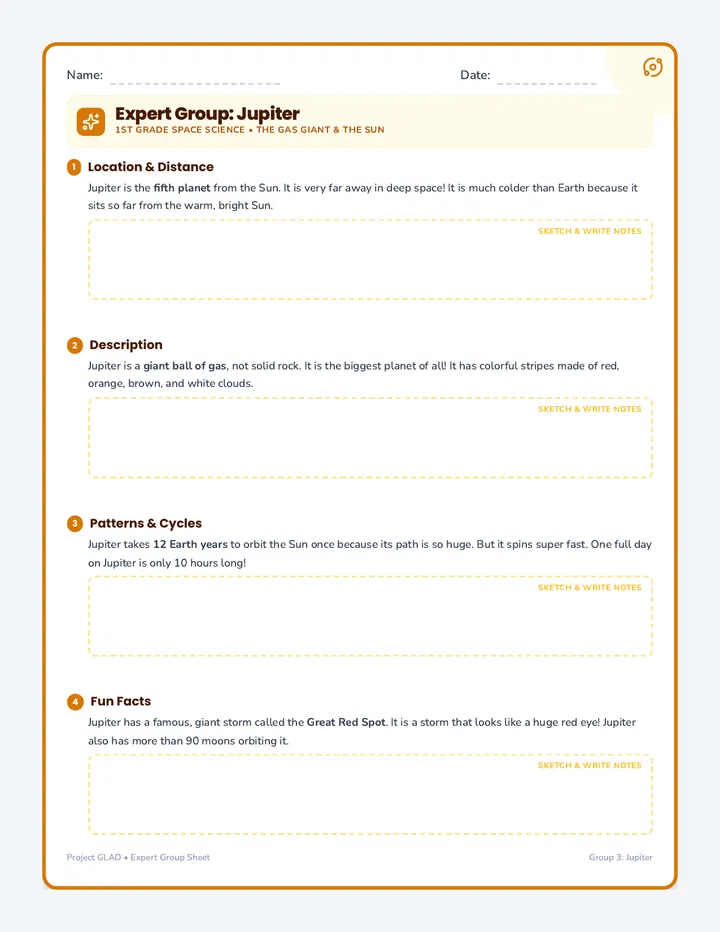
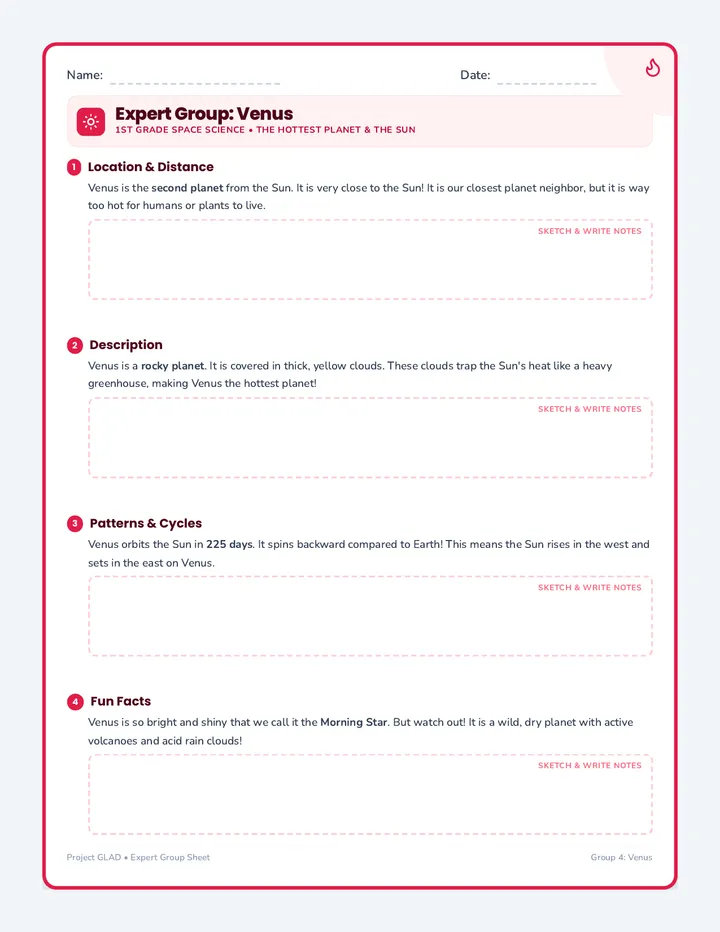
A 1st-grade science unit where students work in expert groups to explore Earth, the Moon, Jupiter, and Venus in relation to the Sun. Each group reads specialized text and sketches key observations to build collaborative knowledge.
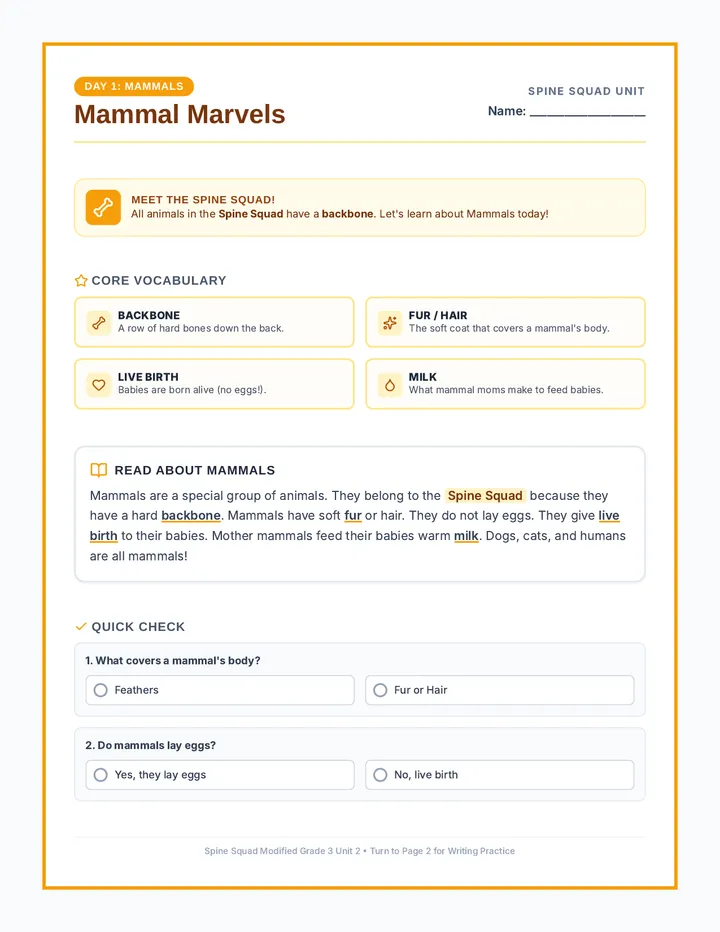
A five-day modified animal classification unit focusing on the five main vertebrate groups, designed with extensive visual support, sentence frames, and tracing options for modified learning.
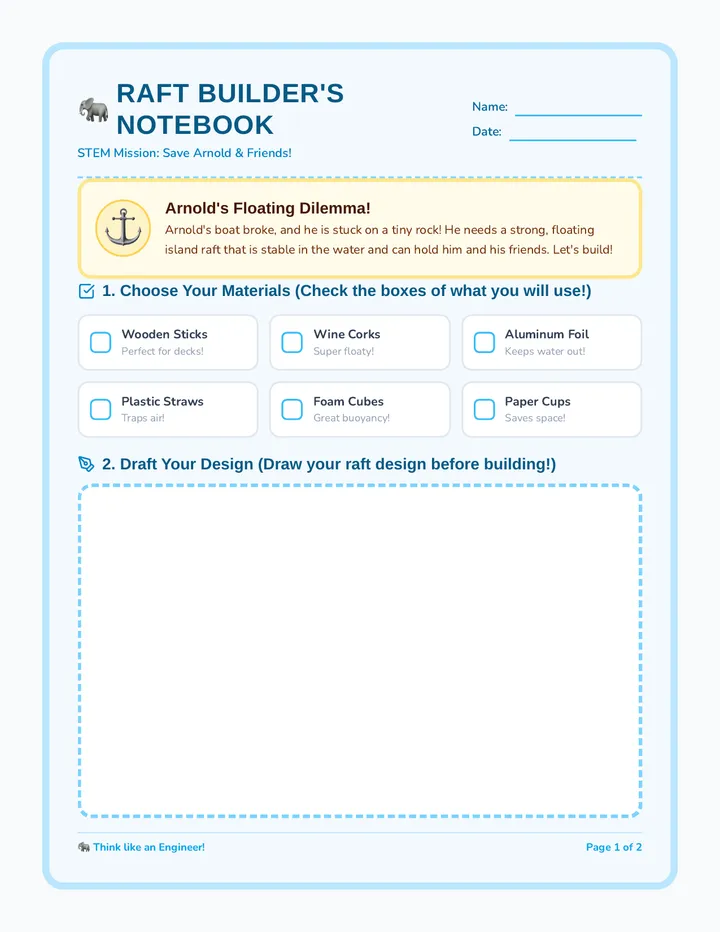
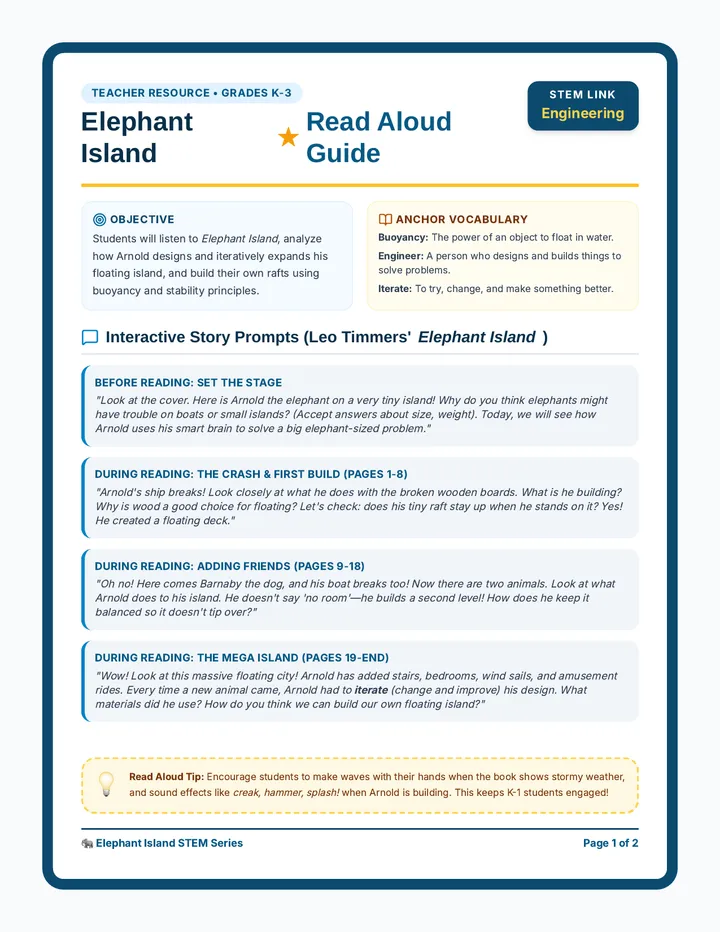
An interactive STEM challenge and read-aloud experience based on Leo Timmers' 'Elephant Island'. Students design and build floating island rafts to rescue Arnold and his friends.