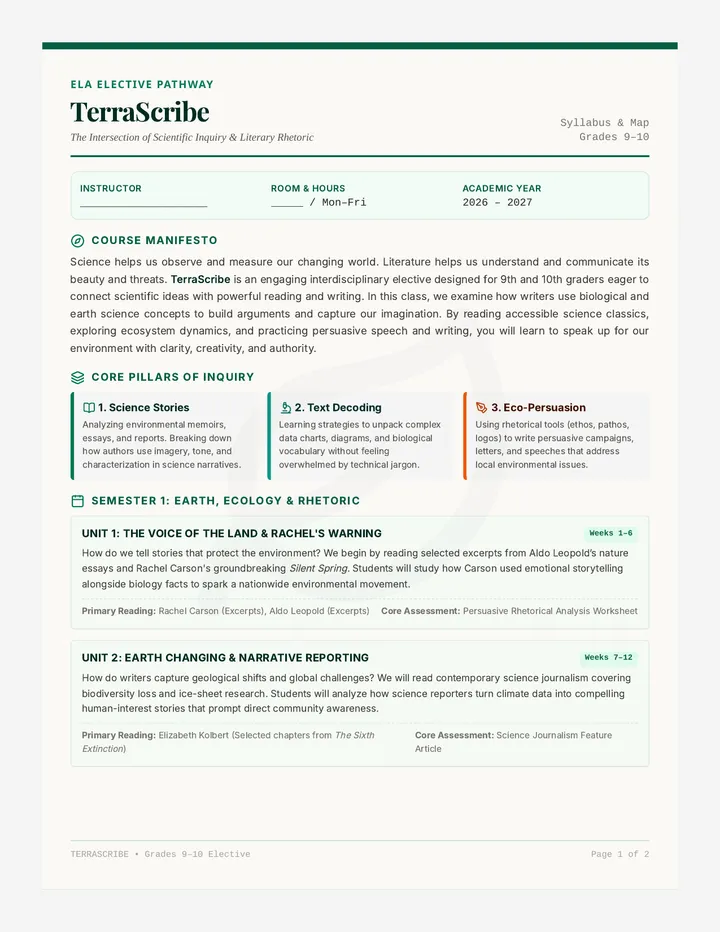
THERE FOLLOWED days and nights of traveling. Occasionally, we would pass through German towns. Usually, very early in the morning. German laborers were going to work. They would stop and look at us without surprise.
One day when we had come to a stop, a worker took a piece of bread out of his bag and threw it into a wagon. There was a stampede. Dozens of starving men fought desperately over a few crumbs. The worker watched the spectacle with great interest.
YEARS LATER, I witnessed a similar spectacle in Aden. Our ship's passengers amused themselves by throwing coins to the "natives," who dove to retrieve them. An elegant Parisian lady took great pleasure in this game. When I noticed two children desperately fighting in the water, one trying to strangle the other, I implored the lady:
"Please, don't throw any more coins!"
"Why not?" said she. "I like to give charity..."
— 100 —
IN THE WAGON where the bread had landed, a battle had ensued. Men were hurling themselves against each other, trampling, tearing at and mauling each other. Beasts of prey unleashed, animal hate in their eyes. An extraordinary vitality possessed them, sharpening their teeth and nails.
A crowd of workmen and curious passersby had formed all along the train. They had undoubtedly never seen a train with this kind of cargo. Soon, pieces of bread were falling into the wagons from all sides. And the spectators observed these emaciated creatures ready to kill for a crust of bread.
A piece fell into our wagon. I decided not to move. Anyway, I knew that I would not be strong enough to fight off dozens of violent men! I saw, not far from me, an old man dragging himself on all fours. He had just detached himself from the struggling mob. He was holding one hand to his heart. At first I thought he had received a blow to his chest. Then I understood: he was hiding a piece of bread under his shirt. With lightning speed he pulled it out and put it to his mouth. His eyes lit up, a smile, like a grimace, illuminated his ashen face. And was immediately extinguished. A shadow had lain down beside him. And this shadow threw itself over him. Stunned by the blows, the old man was crying:
"Meir, my little Meir! Don't you recognize me... You're killing your father... I have bread... for you too... for you too..."
He collapsed. But his fist was still clutching a small crust. He wanted to raise it to his mouth. But the other threw himself on him. The old man mumbled something, groaned, and died. Nobody cared. His son searched him, took the crust of bread, and began to devour it. He didn't get far. Two men had been watching him. They jumped him. Others joined in. When they withdrew, there were two dead bodies next to me, the father and the son. I was sixteen.
— 101 —
IN OUR WAGON, there was a friend of my father's, Meir Katz. He had worked as a gardener in Buna and from time to time had brought us some green vegetables. Less undernourished than the rest of us, detention had been easier on him. Because he was stronger than most of us, he had been put in charge of our wagon.
On the third night of our journey, I woke up with a start when I felt two hands on my throat, trying to strangle me. I barely had time to call out:
"Father!"
Just that one word. I was suffocating. But my father had awakened and grabbed my aggressor. Too weak to overwhelm him, he thought of calling Meir Katz:
"Come, come quickly! Someone is strangling my son!"
In a few moments, I was freed. I never did find out why this stranger had wanted to strangle me. But days later, Meir Katz told my father:
"Shlomo, I am getting weak. My strength is gone. I won't make it..."
"Don't give in!" my father tried to encourage him. "You must resist! Don't lose faith in yourself!"
But Meir Katz only groaned in response:
"I can't go on, Shlomo!... I can't help it... I can't go on..."
My father took his arm. And Meir Katz, the strong one, the sturdiest of us all, began to cry. His son had been taken from him during the first selection but only now was he crying for him. Only now did he fall apart. He could not go on. He had reached the end.
On the last day of our journey, a terrible wind began to blow. And the snow kept falling. We sensed that the end was near; the real end. We could not hold out long in this glacial wind, this storm. Somebody got up and yelled:
"We must not remain sitting. We shall freeze to death! Let's get up and move..."
We all got up. We all pulled our soaked blankets tighter around our shoulders. And we tried to take a few steps, to shuffle back and forth, in place. Suddenly, a cry rose in the wagon, the cry of a wounded animal. Someone had just died.
Others, close to death, imitated his cry. And their cries seemed to come from beyond the grave. Soon everybody was crying. Groaning. Moaning. Cries of distress hurled into the wind and the snow. The lament spread from wagon to wagon. It was contagious. And now hundreds of cries rose at once. The death rattle of an entire convoy with the end approaching. All boundaries had been crossed. Nobody had any strength left. And the night seemed endless.
Meir Katz was moaning:
"Why don't they just shoot us now?"
That same night, we reached our destination. It was late. The guards came to unload us. The dead were left in the wagons. Only those who could stand could leave. Meir Katz remained on the train. The last day had been the most lethal. We had been a hundred or so in this wagon. Twelve of us left it. Among them, my father and myself. We had arrived in Buchenwald.
— 103 —
A) The Limits of Resilience:
Even the strongest have a breaking point, challenging the belief that willpower alone can sustain identity.
B) Emotional Collapse:
Suppressed grief eventually overwhelms, indicating that emotional well-being is tied to the ability to believe in a future.
C) Contagion of Despair:
Giving up illustrates how a lack of belief can be contagious, affecting the collective identity of the survivors.
Explain your reasoning: