A comprehensive dive into the Design Thinking process specifically tailored for creating digital solutions. Students will move from empathy-driven problem solving to rapid prototyping through real-world case studies.
A 75-minute deep dive into the cardiovascular system, covering the composition of blood, the structure of vessels, and the mechanics of the heart.
A high-paced, single-period lesson covering the biosphere's structure, the role of biodiversity in stability, and human environmental impacts.
A high-stakes collaborative escape room where student teams navigate five distinct rooms of a mysterious manor, solving interconnected puzzles to solve a murder.
A comprehensive lesson on scientific inquiry and cellular biology, focusing on experimental design, organelle function, and membrane transport. Students will analyze data, compare cell types, and investigate how cells maintain homeostasis.
A bilingual biology lesson focused on human impact on ecosystem stability, featuring field notes, comprehension activities, and a research project.
A comprehensive introduction to the pH scale, covering the characteristics of acids and bases, the logarithmic nature of the scale, and real-world applications across three differentiated levels (5th, 7th, and 9th grade).
A comprehensive makeup assessment covering Earth science topics including the water cycle, sedimentary rock formation, fossil fuels, natural resources, weather and climate, and the behavior of light.
A high-engagement Language Lounge focused on human impact on the environment, designed for emerging language learners in 9th-grade Biology. This lesson features four rotating stations (Reading, Writing, Speaking, Listening) with bilingual support and tactile activities.
A focused lesson on thermochemical stoichiometry, specifically calculating enthalpy changes for the combustion of butane. Students learn to relate molar enthalpy to total energy produced in exothermic reactions.
A comprehensive lesson focused on the science of waste management, covering the 4 R's (Reduce, Reuse, Recycle, Recover), the waste hierarchy, and the environmental impact of consumerism. Includes a high-school level assessment and supporting instructional slides.
A four-day series of 30-minute activities exploring spring weather and nature through two outdoor adventures and two indoor crafts.
A comprehensive exploration of cellular architecture and transport mechanisms. Students compare prokaryotic and eukaryotic cells, identify organelle functions through city analogies, and analyze how the cell membrane maintains homeostasis.
A comprehensive STAAR EOC review focusing on the fundamental principles of genetics, including DNA replication, protein synthesis, and inheritance patterns aligned with TEKS B.6A-F.
A comprehensive STAAR EOC Biology prep lesson covering cell structures, functions, and essential processes like mitosis, meiosis, and energy transformations. Includes visual aids and rigorous practice aligned to Texas TEKS.
A comprehensive STAAR EOC prep lesson covering DNA structure, protein synthesis, Mendelian genetics, and mutations, aligned to Texas Biology TEKS.
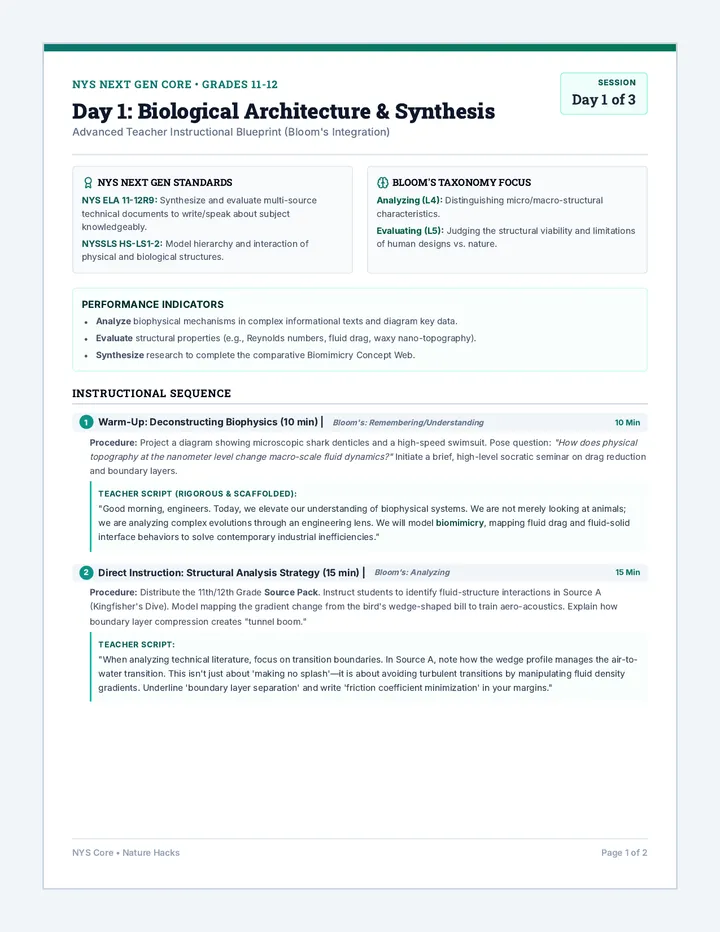
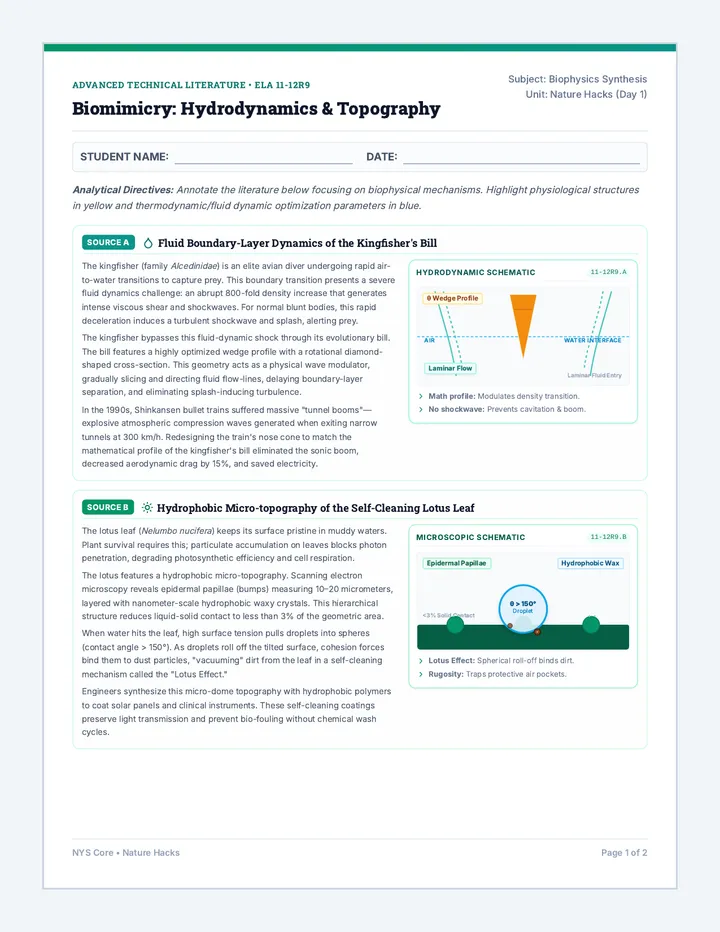
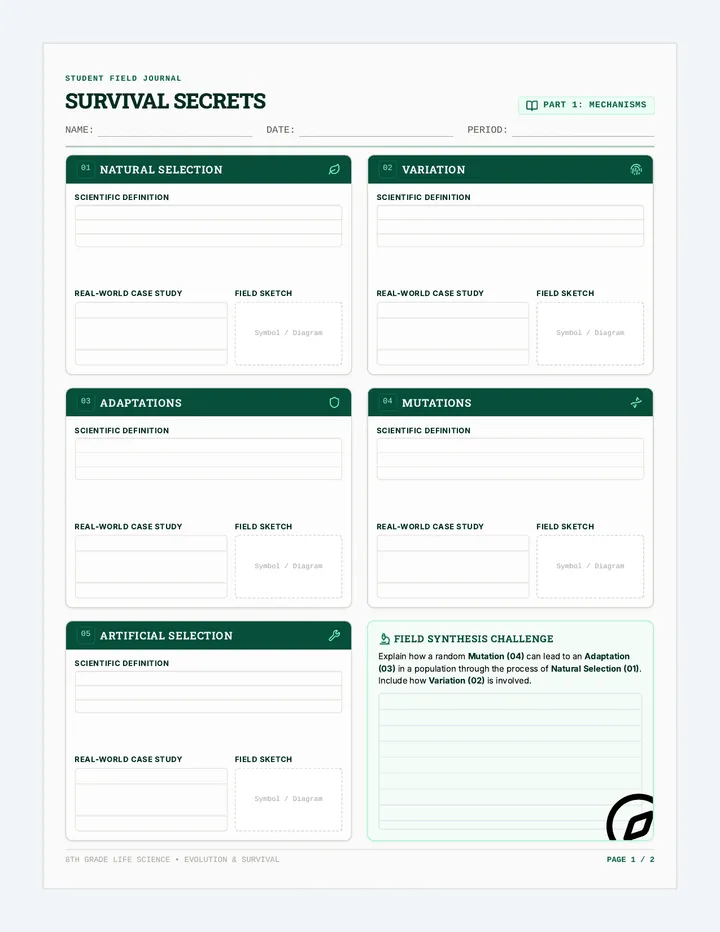
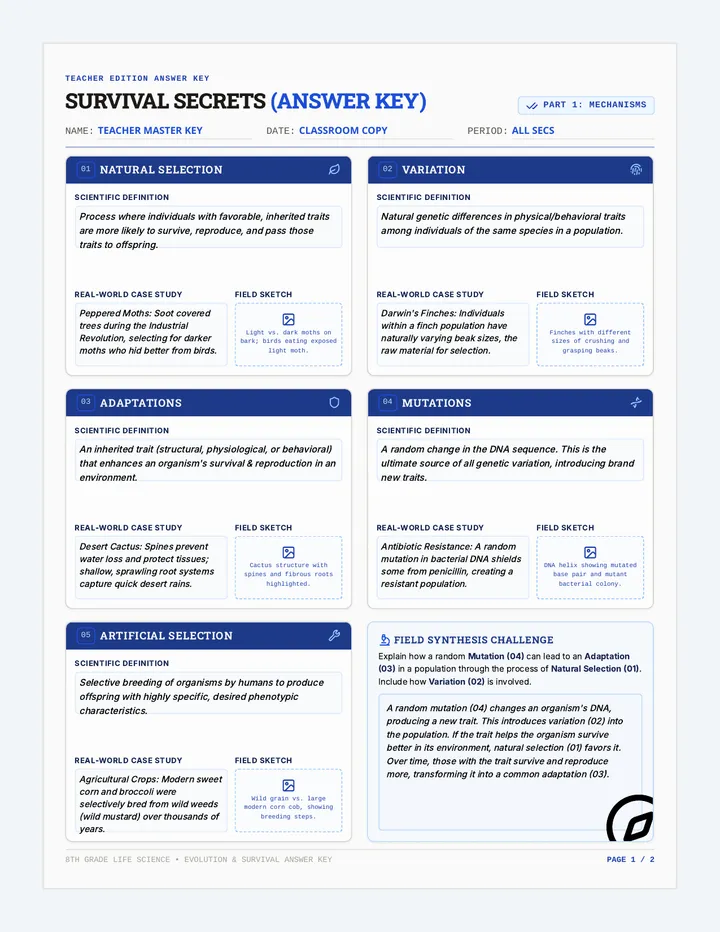
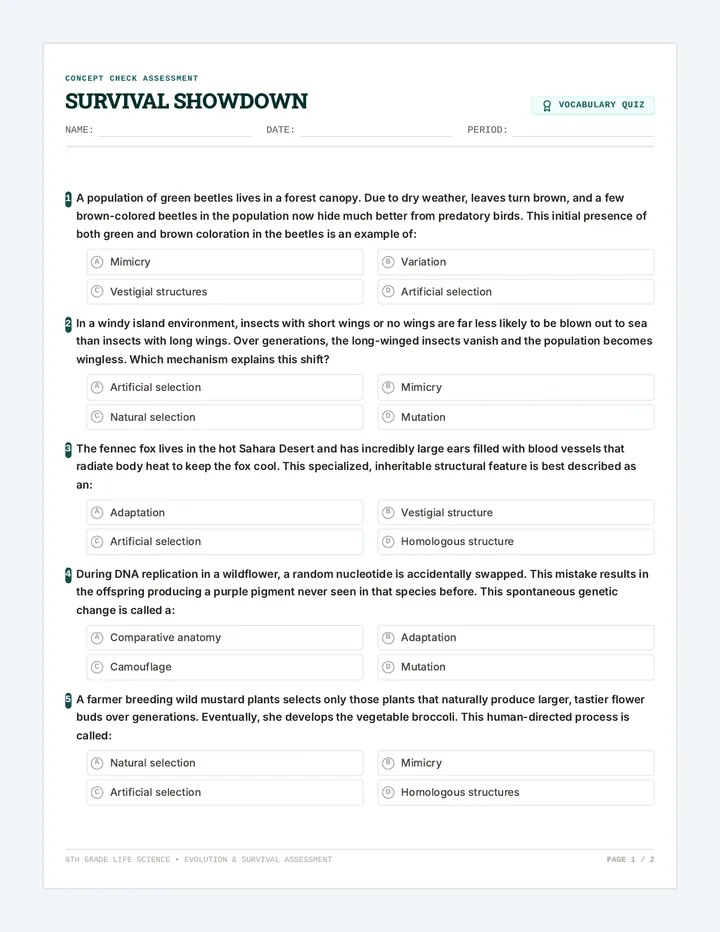
An advanced science lesson exploring how biological structures and processes inspire modern engineering and design solutions. Students analyze nature's efficiency to solve complex human challenges in architecture, robotics, and sustainability.
A foundational lesson on Photoshop clipping masks, covering the 'layer sandwich' concept and the technical steps to clip images into shapes.
A comprehensive introduction to the pH scale, its presence in everyday substances, and its critical role in environmental health. Students will engage in a hands-on lab to test household liquids and discuss real-world impacts like ocean acidification. Updated with purple indicator lab.
An extension lesson for a water filtration lab focusing on the chemical properties of water and the real-world impact of pollution on local ecosystems.
A hands-on science project where students research a bird species, investigate its unique adaptations, and create a life-sized model of its wingspan for a visual presentation.
A comprehensive lesson for 6th-grade students exploring the three methods of thermal energy transfer: conduction, convection, and radiation. Students will learn to identify these processes in everyday scenarios through visual diagrams and interactive examples.
An introductory lesson for 1st and 2nd graders focusing on block-based coding for Sphero and Marty on a 12-square grid. Students will learn how to sequence commands to move their robot from a start square to a target square.
An advanced introductory lesson for 3rd to 5th graders focusing on block-based logic, loops, and precise grid navigation. Students will use block coding to program Marty and Sphero to complete complex paths on a 12-square mat.
A project-based lesson where students create a poster advocating for sunscreen use in Australia, focusing on the biological and environmental factors that increase skin cancer risk in the region.
An introduction to how things move using pushes and pulls, and a look at simple machines like wheels and levers, designed with high visual support.
Essential documents and procedures for substitute teachers to ensure a seamless transition and productive classroom environment.
A foundational introduction to major internal organs (heart, lungs, stomach, and brain) and their basic functions, using highly visual and structured formats.
A foundational lesson exploring the five senses (sight, sound, smell, taste, and touch) through highly visual and interactive materials.
A visual lesson exploring what plants need to grow and identifying their basic parts, designed for students with autism.
A foundational science lesson designed for a freshman student with autism, introducing key concepts in space, weather, and animal habitats through highly visual and structured activities.
Focuses on long-term curriculum implementation strategies, data-driven scaling, and creating sustainable systems that align district goals with classroom reality.
Focuses on moving from curriculum on paper to instructional practice through high-quality coaching cycles and teacher support frameworks.
Focuses on the methodology of curriculum auditing, evaluating alignment to standards, and identifying gaps in instructional materials across a district landscape.