An introduction to the languages of manufacturing, covering the basics of G-Code for CNC operations and Ladder Logic for Programmable Logic Controllers (PLCs).
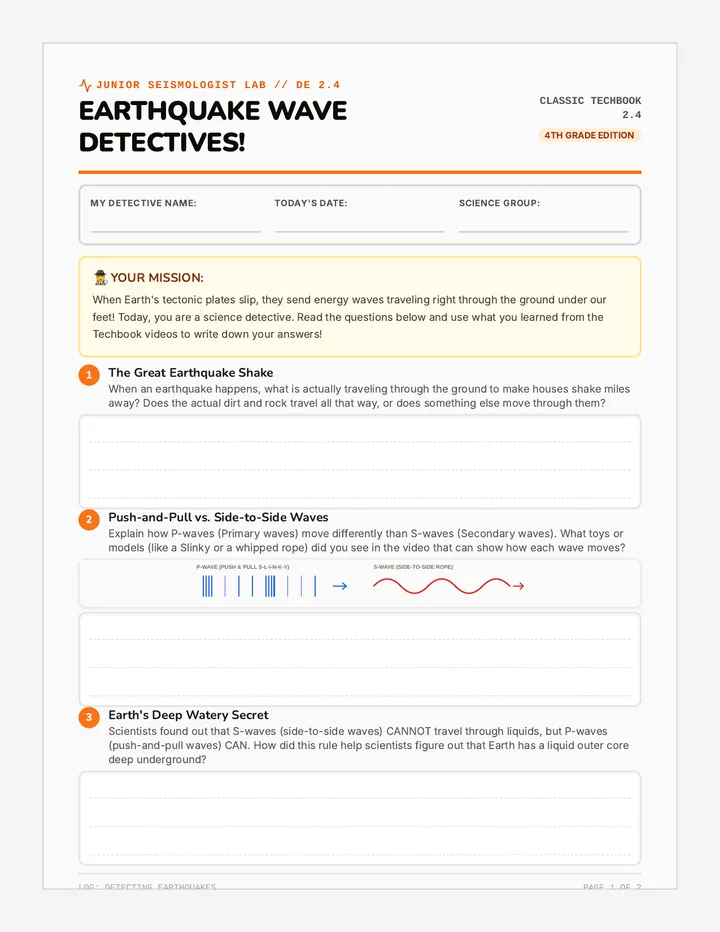
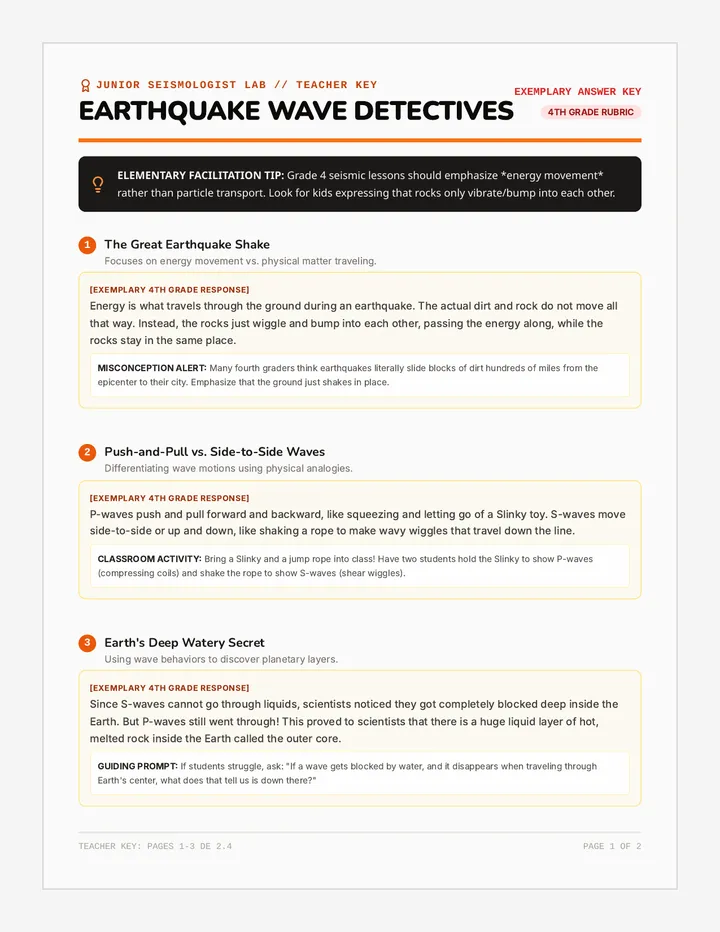
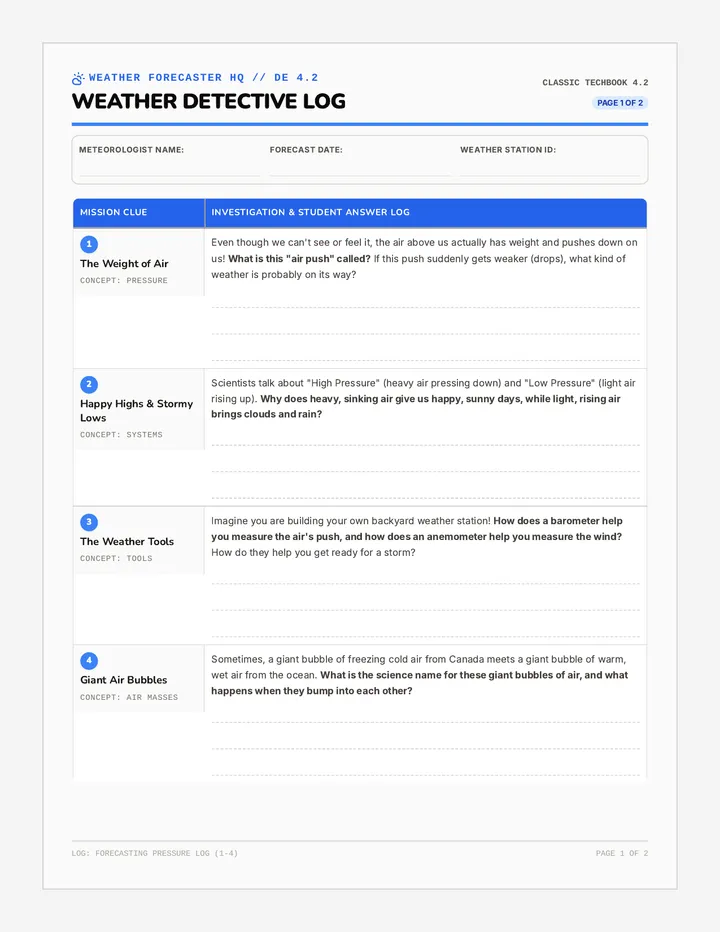
An earth and space science curriculum unit covering dynamic earth processes, earthquake wave mechanics, atmospheric pressure systems, and weather prediction techniques.
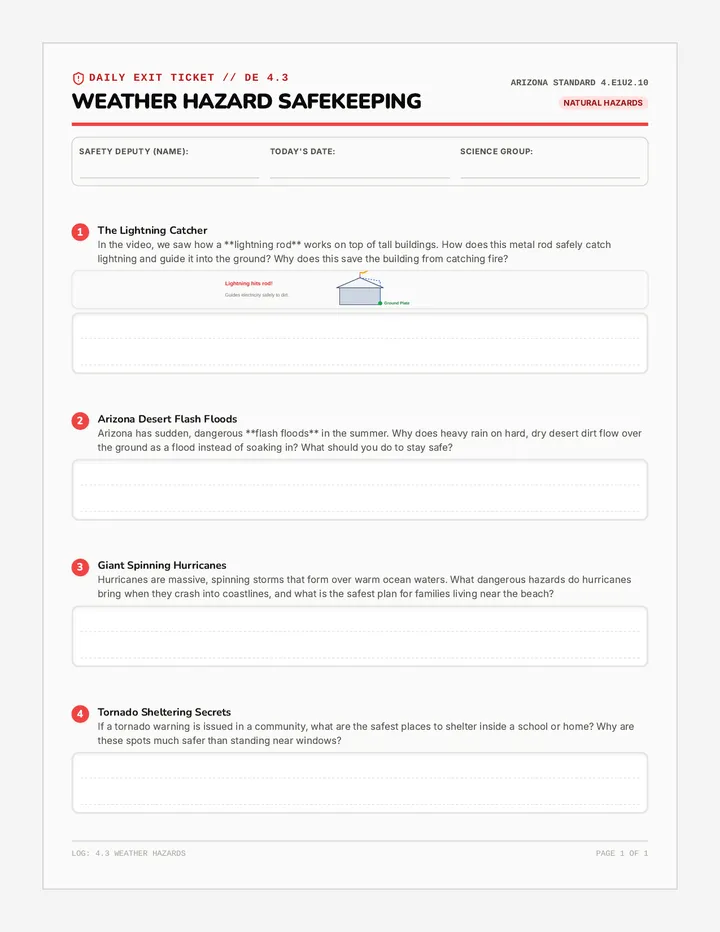
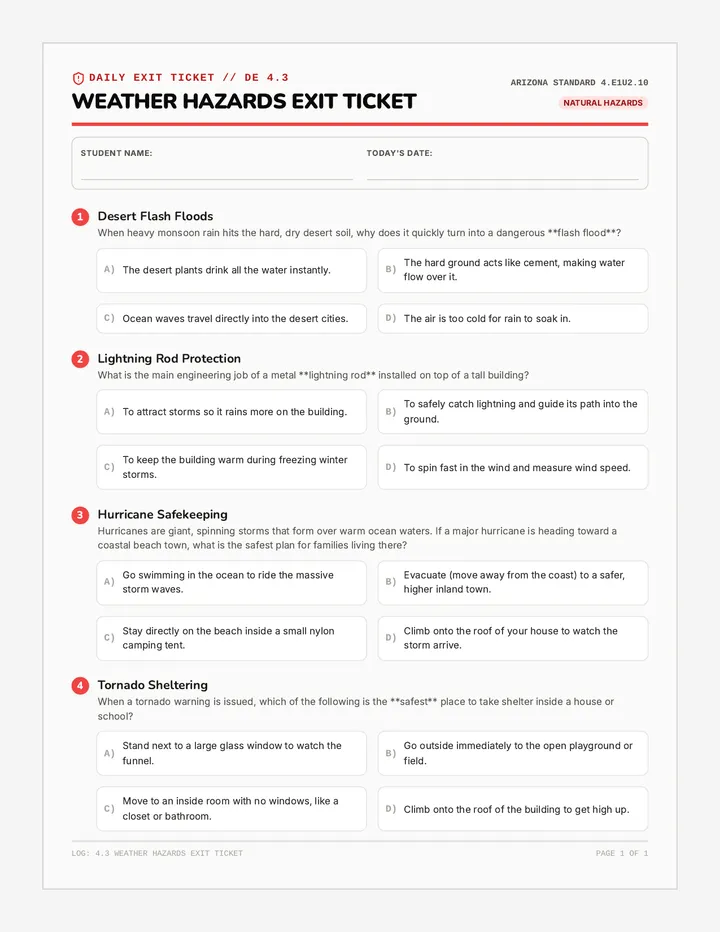
Students identify different types of severe weather hazards (like lightning, tornadoes, flash floods, and dust storms) and explore engineering solutions designed to keep communities safe.
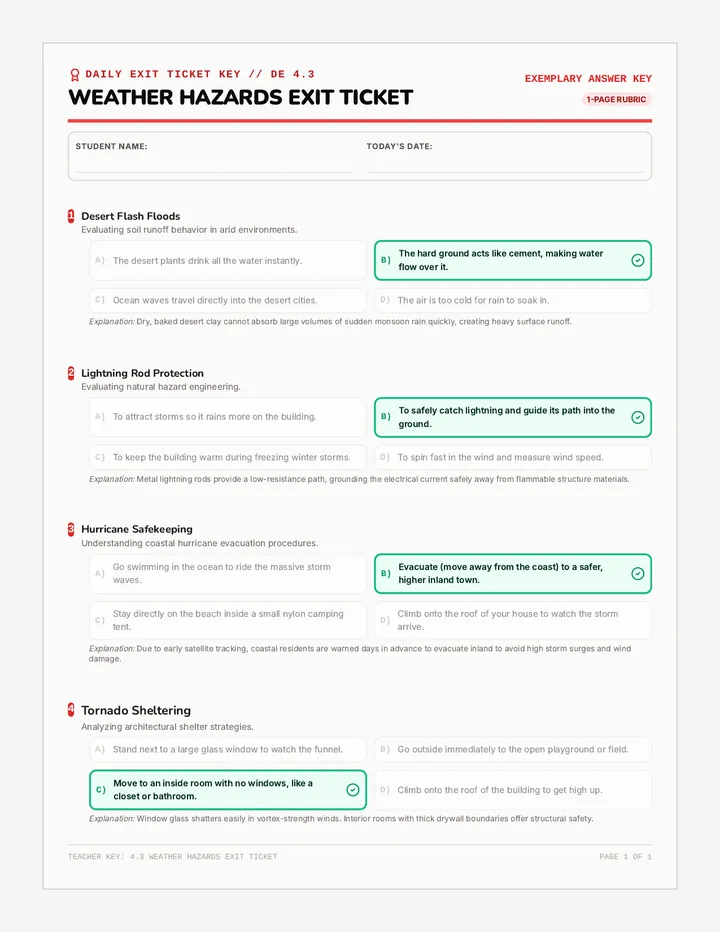
A comprehensive teacher answer key and scoring guide for the 4th-grade Weather Hazards Multiple Choice Quiz, clearly identifying correct choices and explanations.
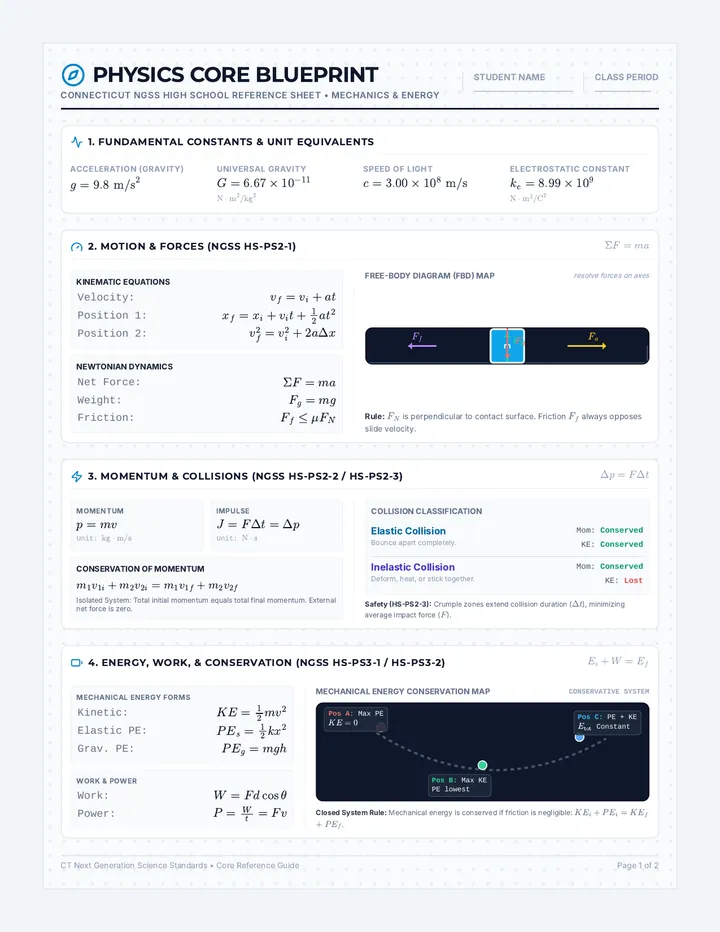
A comprehensive high school physics curriculum sequence aligned with the Connecticut Next Generation Science Standards (CT-NGSS), focusing on core concepts, quantitative problem-solving, and visual models.
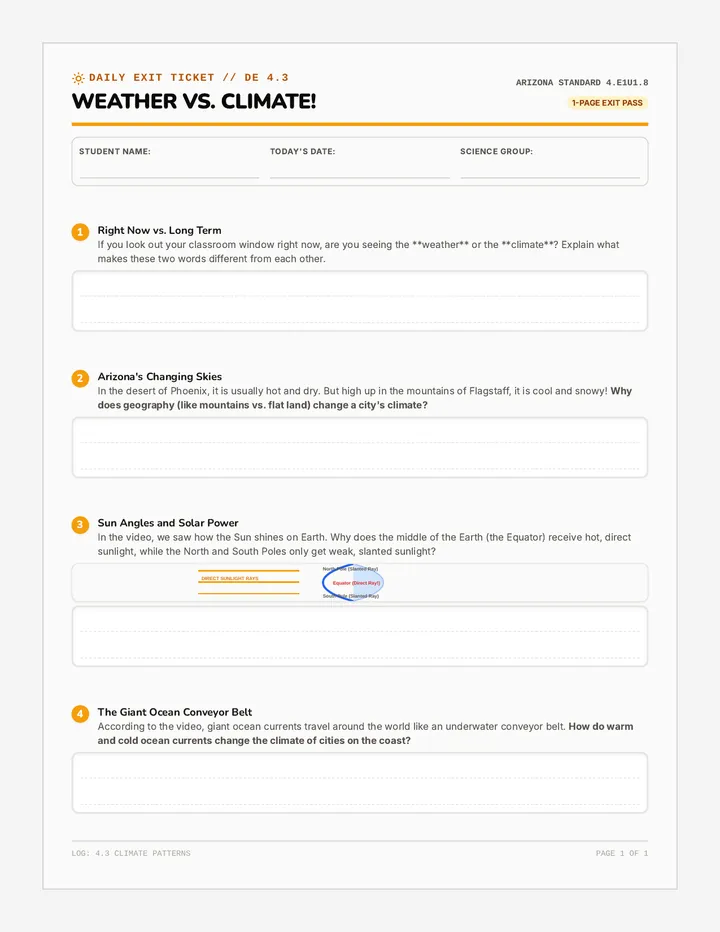
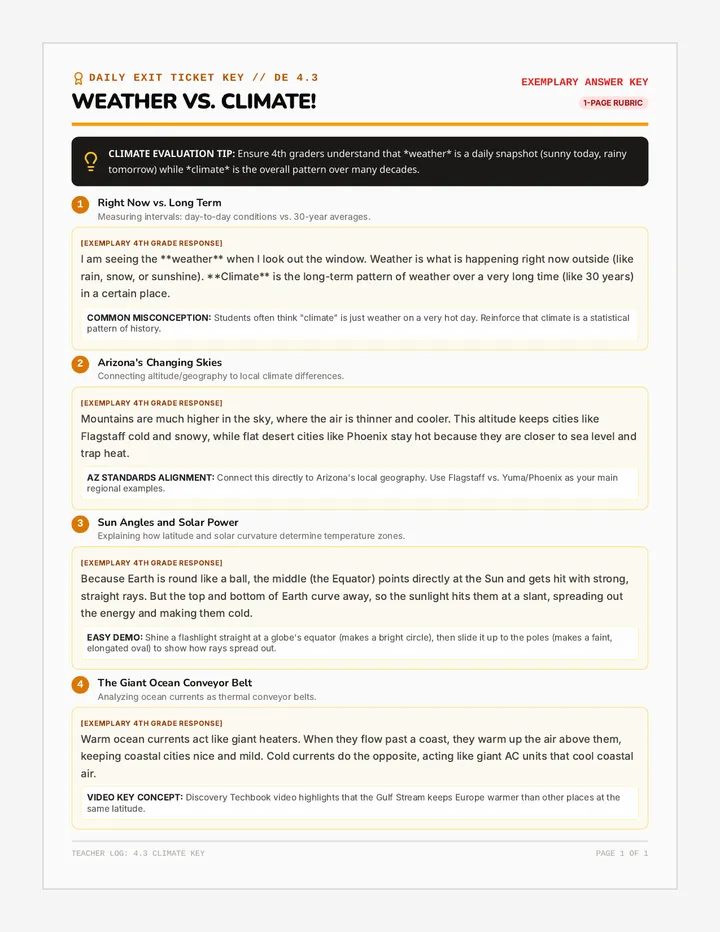
Students explore the key differences between weather and climate patterns, analyzing temperature, precipitation, and regional zones over time using global climate models.
A single-page 4th-grade student multiple choice worksheet featuring 4 conceptual questions on severe storm hazards, flash floods, hurricanes, and engineering protection, styled with identical options.
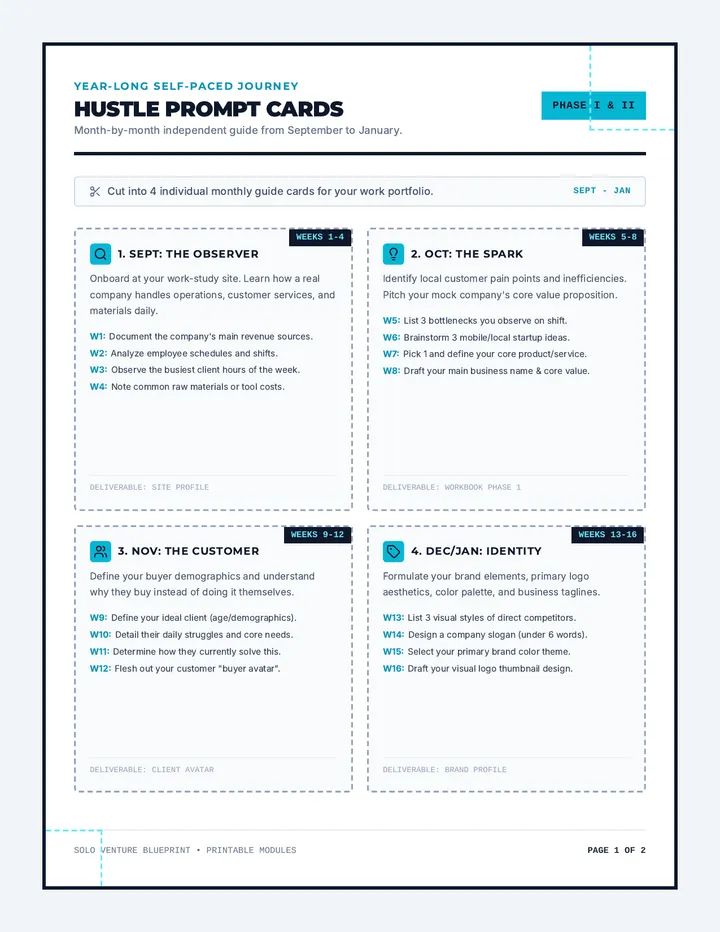
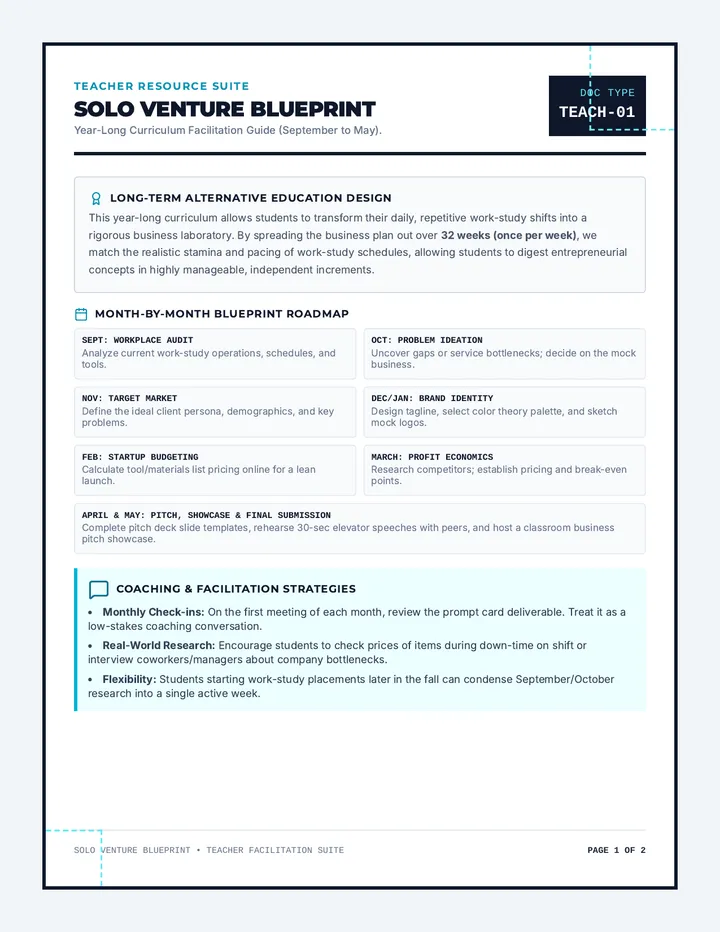
A year-long, self-paced entrepreneurship curriculum spanning September to May for alternative education students in work-study placements. Students transform real-world work experience into a modular business plan and slide presentation.
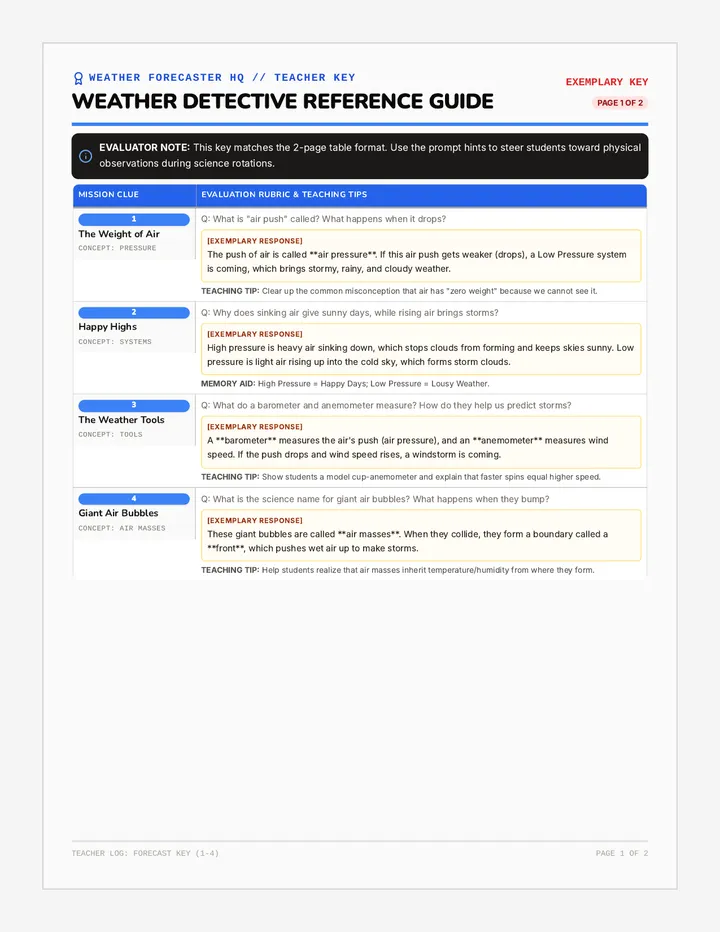
This lesson covers weather prediction techniques, atmospheric pressure systems, warm and cold fronts, and how meteorologists analyze satellite and radar data to forecast storms.
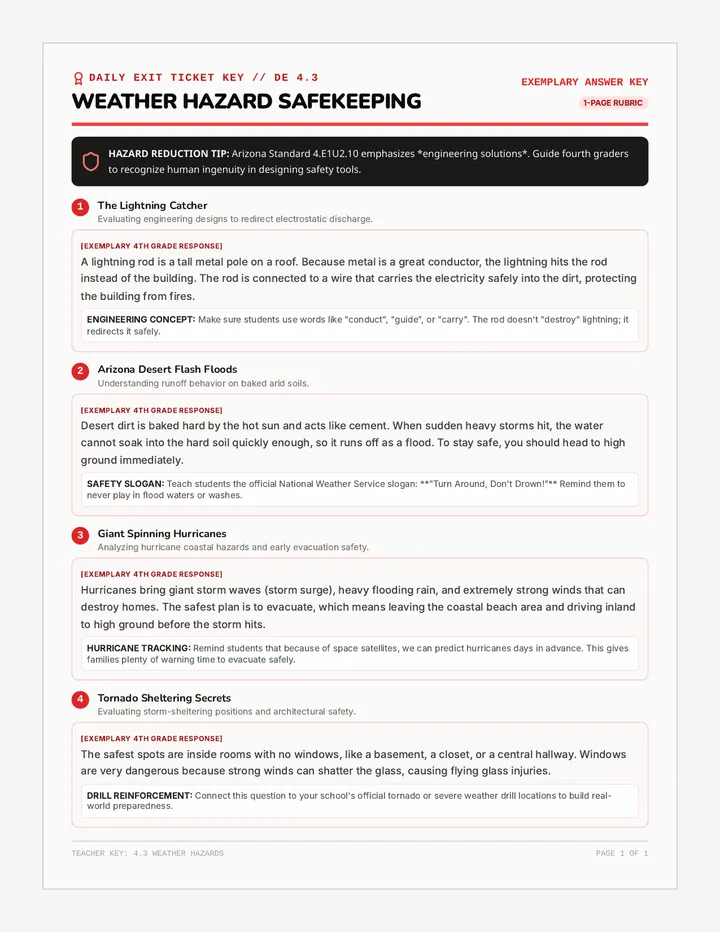
A comprehensive teacher answer key and evaluation guide for the 4th-grade Weather Hazards Exit Ticket, featuring model answers and common misconceptions.
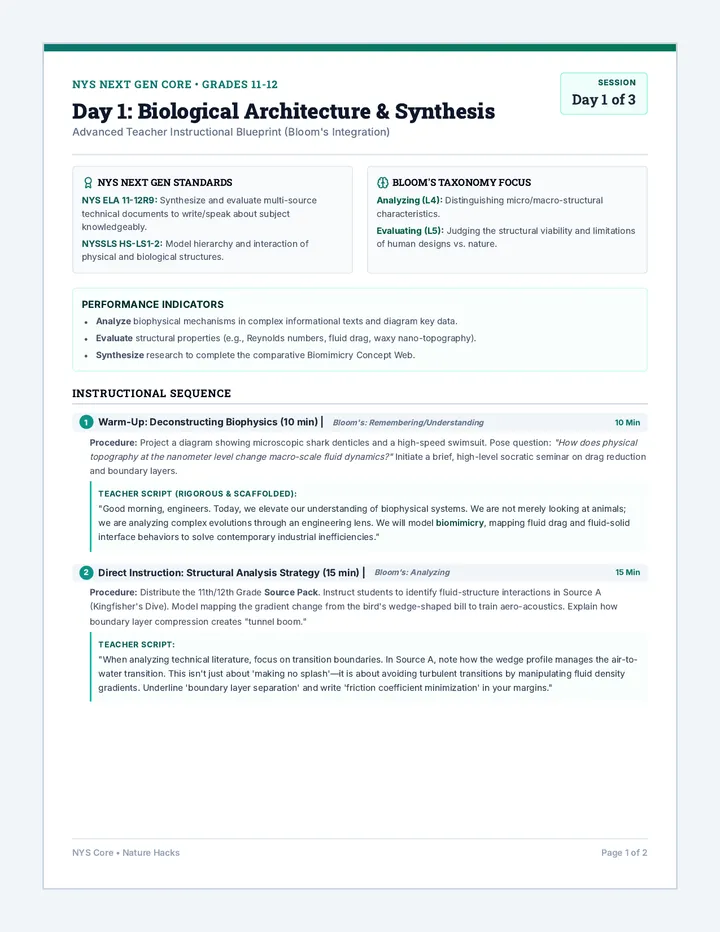
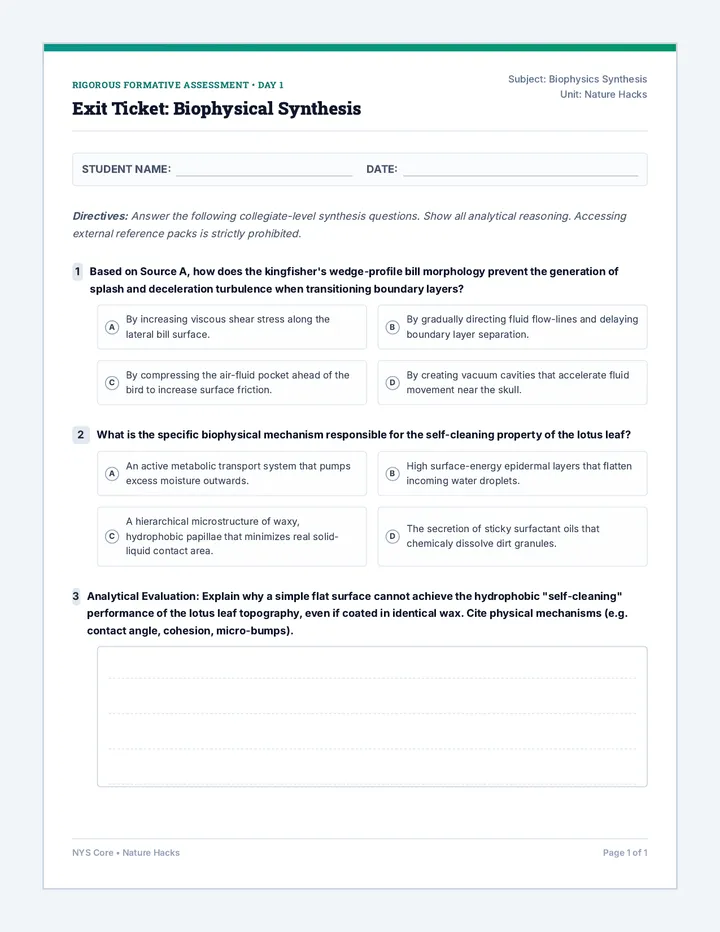
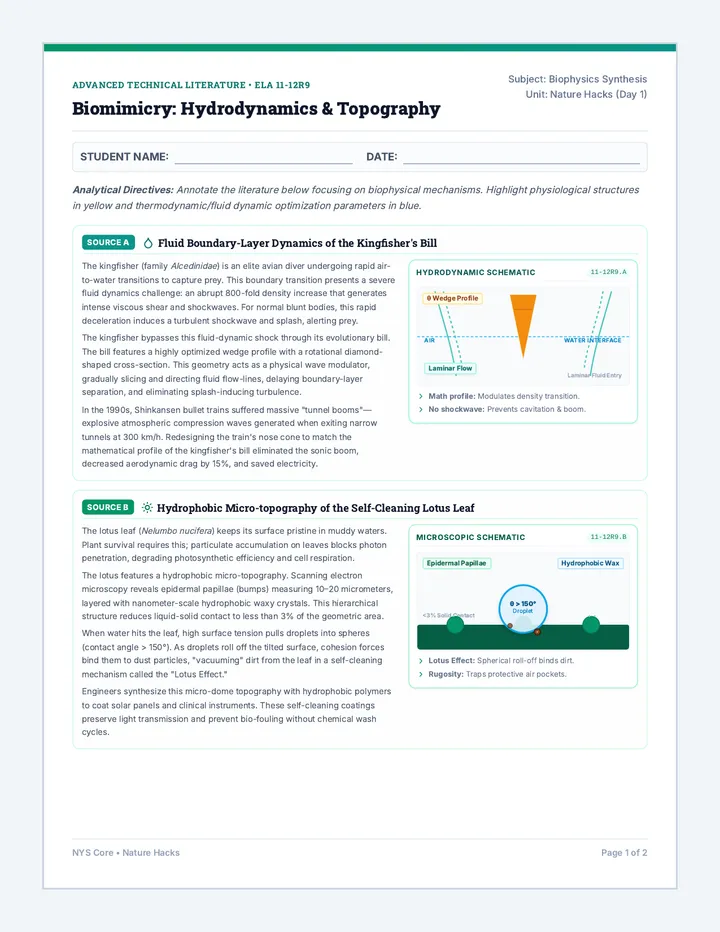
A 3-day cross-curricular STEAM unit where students research biological adaptations, design biomimetic engineering solutions, perform scale calculations, and write a synthesized informational article.
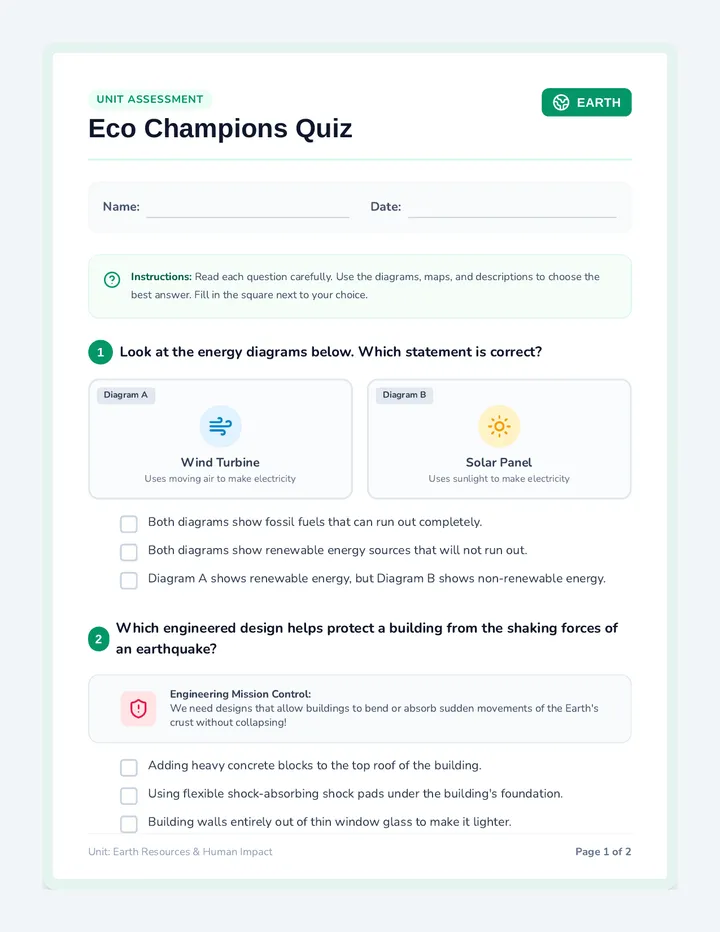
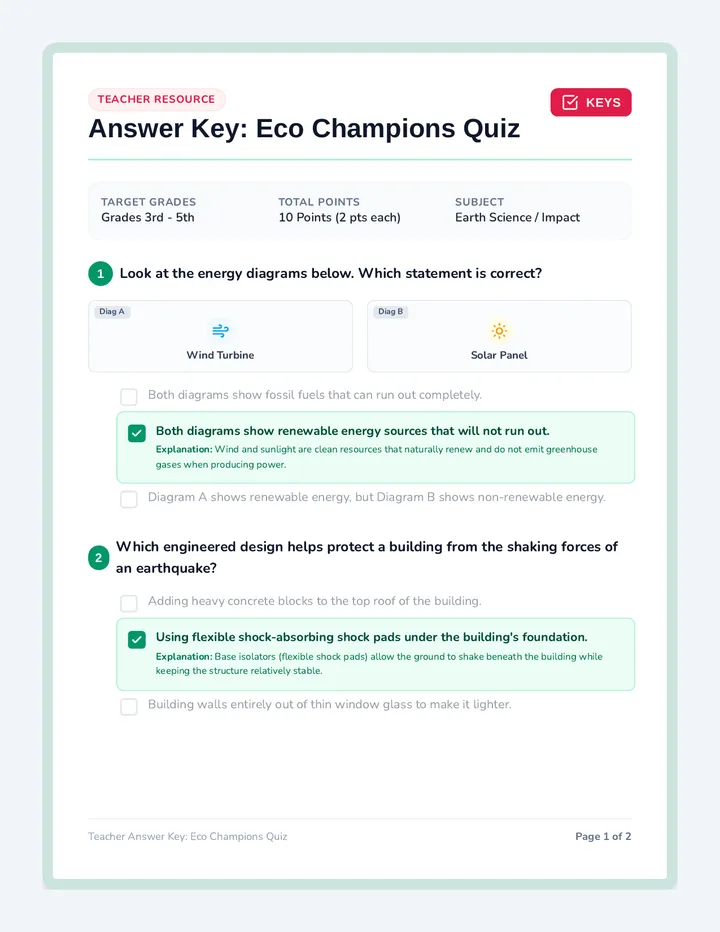
An elementary Earth Science lesson focusing on renewable energy, natural hazards, conservation, and human impact. Includes a highly visual student quiz and a corresponding teacher answer key.
A single-page 4th-grade student exit ticket with 4 open-ended conceptual questions on severe storm hazards, flash floods, hurricane safety, and engineering protection.