A hands-on science lesson for Kindergarten and 1st grade students to explore density and chemical reactions by creating a DIY lava lamp. Students will learn why oil and water don't mix and observe the 'magic' of gas bubbles.
A hands-on science lesson exploring density and chemical reactions through the creation of a DIY lava lamp. Students will learn why oil and water don't mix and how gas bubbles transport liquids.
A hands-on sensory center lesson where students explore plastic animal toys to learn basic science concepts like classification, anatomy, and habitats while building descriptive vocabulary.
An introduction to the heart and blood for kindergarteners, explaining how our blood travels through the body to keep us strong.
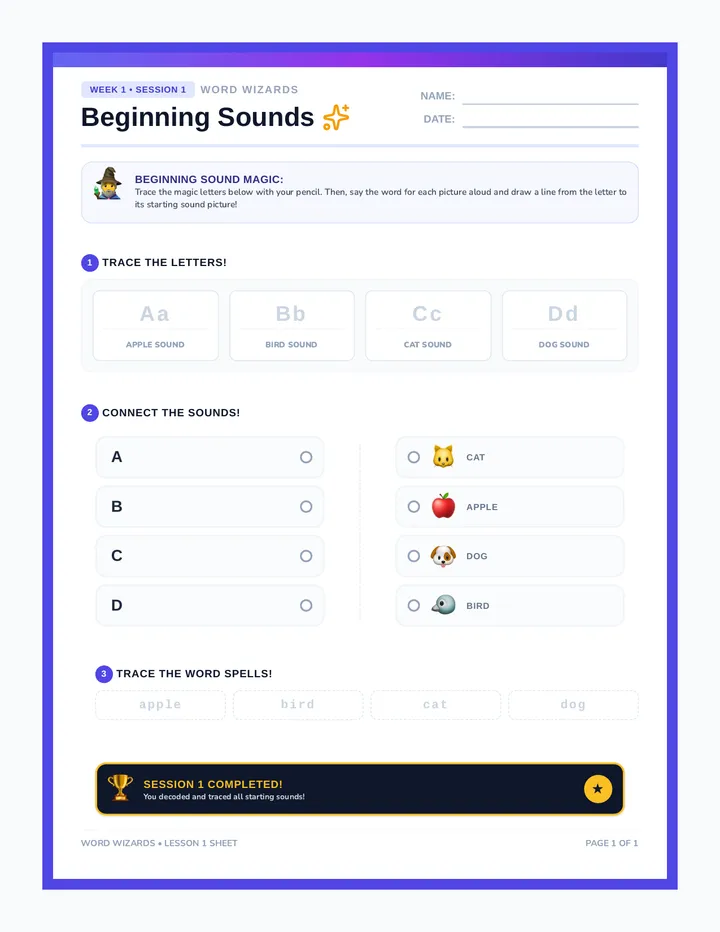
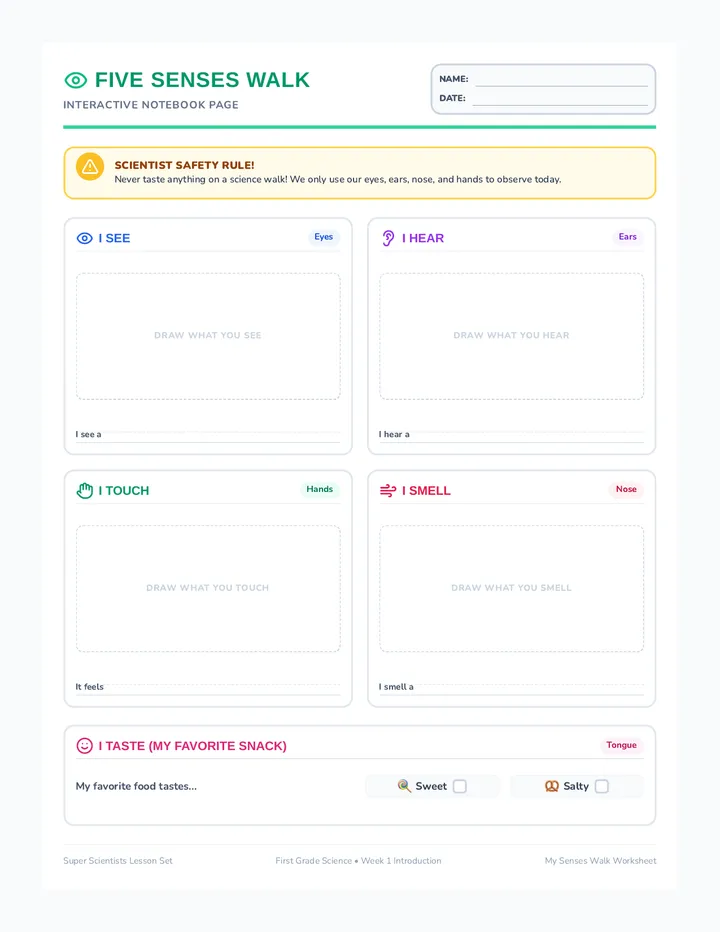
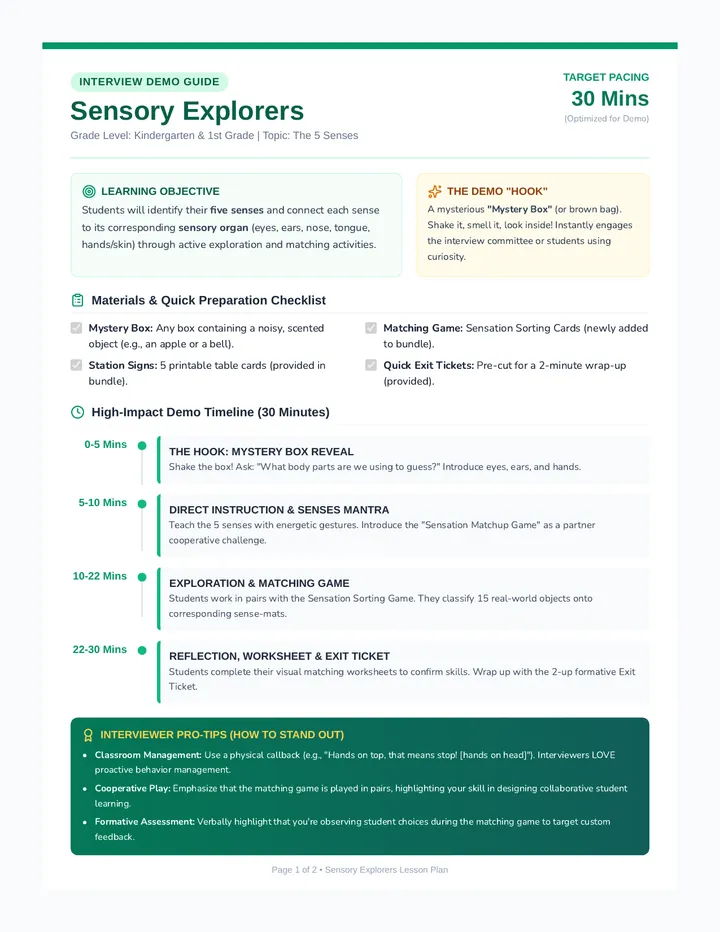
A foundational introduction to the five senses through simple reading and hands-on labeling activities designed for kindergarten learners.
This lesson empowers students, including Multilingual Learners, to lead sustainable lives by transforming their daily lunch habits. Through visual aids, scaffolded vocabulary, and collaborative activities, students identify environmental impacts and plan actionable eco-friendly changes.
A phonics-based card game lesson where students practice reading words with short vowels, blends, digraphs, vowel teams, and various affixes through an Old Maid style game called Losing Lizard.
A lesson exploring the components of our solar system, focusing on reading comprehension, sequencing, and identifying key details from informational text.
Students will learn the four distinct stages of a butterfly's life cycle and practice sequencing them in the correct chronological order.
An extension lesson delving deeper into how plants grow, focusing on the specific functions of roots, stems, and leaves, as well as the essential nutrients found in soil.
An introductory lesson where students meet different insects, learn what makes an insect an insect, and explore the various places they call home.
A hands-on STEM lesson where 1st graders design and build structural adaptations to help animals solve specific survival problems.
A research unit focused on the physical characteristics and adaptations of marine animals, designed for K-1 learners to build scientific observation and writing skills.
An introductory lesson for kindergarteners to identify and understand the importance of natural resources like sun, water, air, rocks, soil, and trees. Students will explore how these 'treasures' from Earth help us every day.
An introductory science lesson for K-1 students exploring the signs of spring in April, including weather patterns, plant growth, and animal activity.
An interactive vocabulary lesson for 1st graders focusing on animal and habitat terms through movement-based games and visual word wall exploration. Students engage with CKLA Unit vocabulary through physical play and visual aids.
A lesson exploring the fascinating world of Mallard ducks, covering their unique habitats, varied diet, and the stages of their life cycle from egg to adult.
A hands-on lesson teaching students to differentiate between reducing, reusing, and recycling through visual identification and sorting.
An exploration of the lush and rainy rainforest habitat, focusing on the layers of the forest and colorful animals like parrots and monkeys.
An exploration of the lush and rainy rainforest habitat, focusing on the layers of the forest and colorful animals like monkeys and parrots.
An exploration of the hot and dry desert habitat, focusing on how animals like camels and lizards survive with very little water.
A captivating lesson for young explorers to discover the vast ocean habitat, focusing on salt water and amazing creatures like whales, sharks, and crabs.
A foundational lesson for early elementary students exploring freshwater habitats like ponds and rivers, focusing on animals such as frogs, ducks, and fish.
An introductory lesson for young learners about the Arctic habitat and the unique animals that call it home, focusing on adaptations like white fur and blubber.
The final showcase where students present their futuristic weather suits and tracking inventions.
The construction phase for student-designed weather tracking tools using recycled and lab materials.
Investigating temperature extremes and material properties to plan for futuristic weather-resistant gear.
Analyzing patterns in clouds and storm systems to practice prediction and prototype rain-catching tools.
Exploring wind force and direction through logic grids and ideating ways to measure invisible weather elements.
Introduction to the Weather Lab, focusing on observational skills, basic weather logic, and the empathy phase of design thinking.
A hands-on introduction to using Venn diagrams to compare and contrast two unique birds: Penguins and Pelicans. Students will identify shared traits and unique characteristics through visual modeling and a cut-and-paste activity.
A hands-on introduction to Venn diagrams where 1st graders compare and contrast two unique bird species: the Penguin and the Pelican. Students will identify shared traits like feathers and egg-laying while distinguishing between flying and swimming abilities.
A collection of Grade 1 decodable passages focusing on bird adaptations, specifically beaks and feathers, featuring common North American and exotic birds.
A hands-on enrichment lesson for K-3 students to explore life on the International Space Station through a creative building project and interactive discussion. Students learn about how astronauts live and work in orbit while constructing their own space station models.
Students step into the shoes of meteorologists, using scripts and props to report on a wide variety of weather phenomena across a fictional map.
A hands-on chemistry session where students experiment with non-Newtonian fluids and acid-base reactions to create fizzing eruptions and gooey textures.
Students become engineers by designing a marble maze that incorporates simple machines like inclined planes and levers using cardboard and recyclables.