Students explore how the kidneys act as a biological filter to maintain balance in the body, culminating in a hands-on filtration experiment.
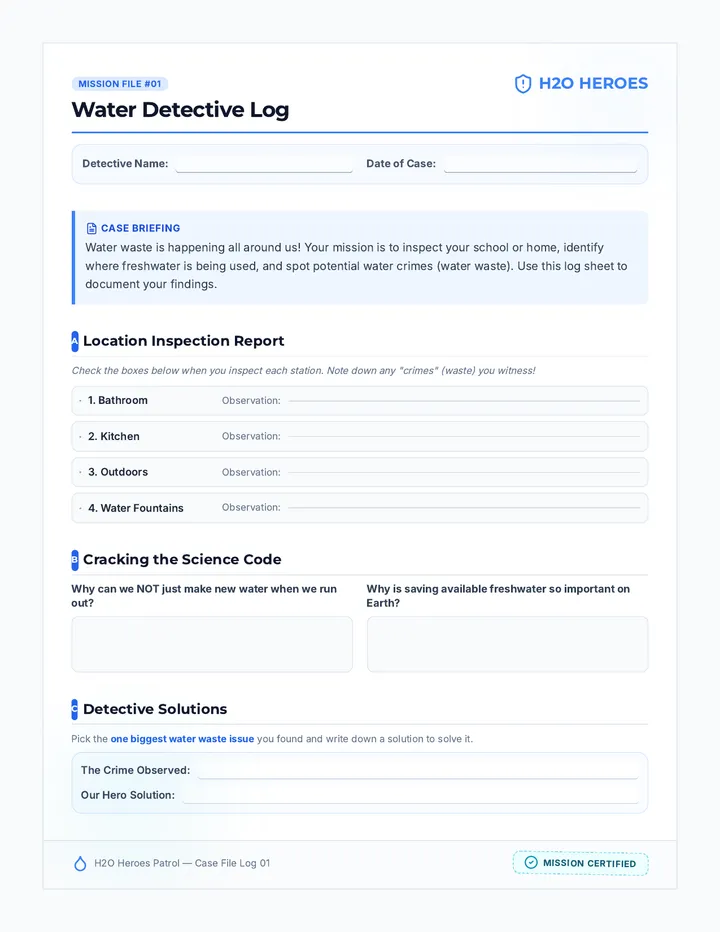
A comprehensive third-grade science and ELA unit focusing on freshwater distribution, conservation, and persuasive public service announcements. Students learn about global water resources and work in teams to design and produce a persuasive PSA to save water in their school or community.
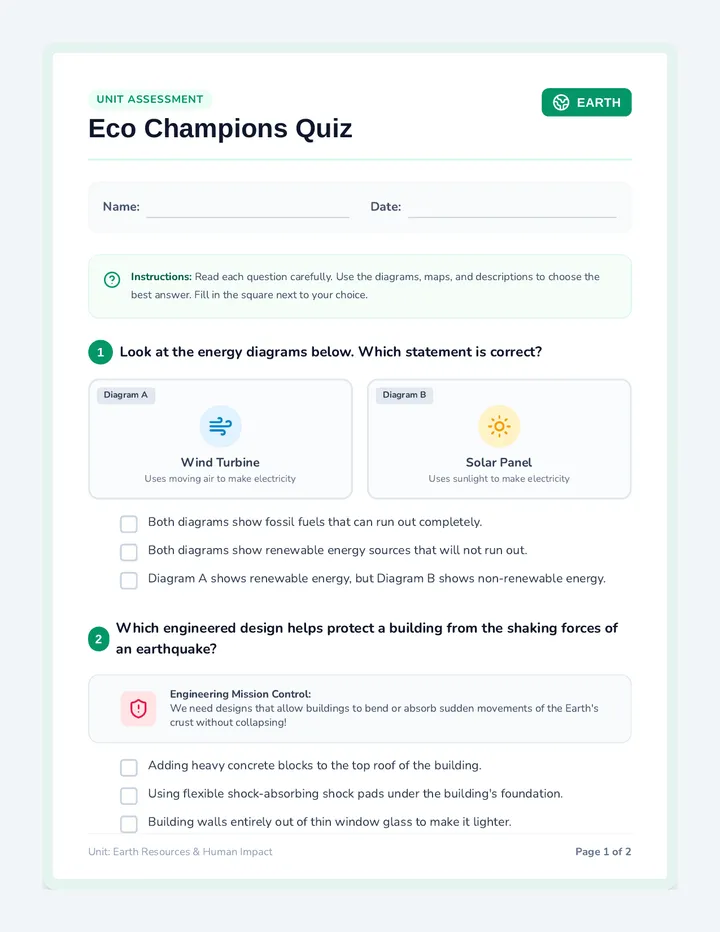
An elementary Earth Science lesson focusing on renewable energy, natural hazards, conservation, and human impact. Includes a highly visual student quiz and a corresponding teacher answer key.
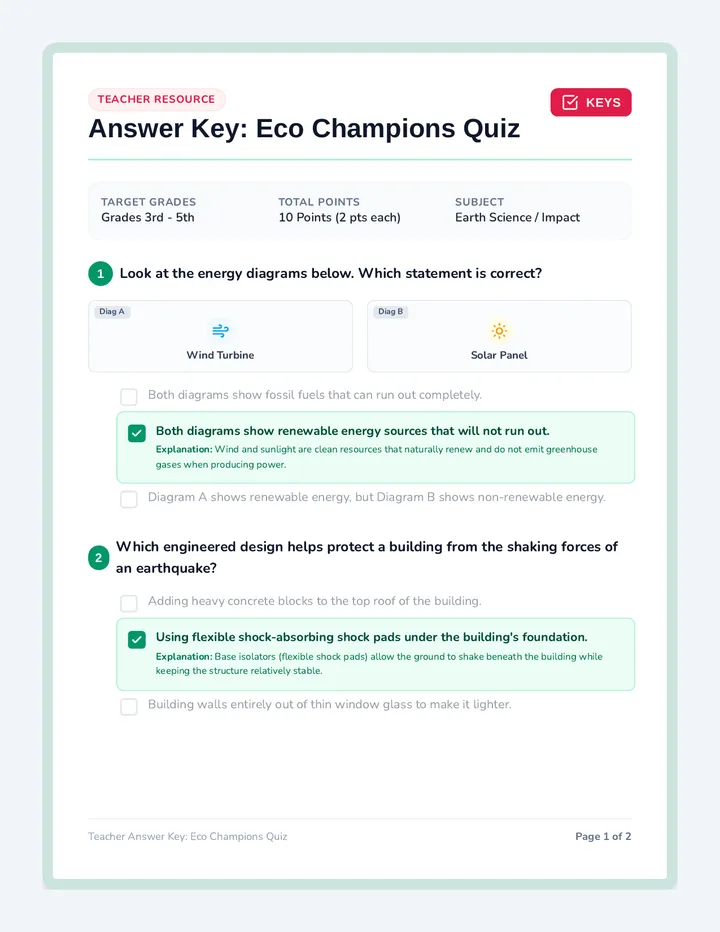
A teacher-facing 2-page Answer Key for the Eco Champions Quiz, providing highlighted correct answers, explanations, and grading criteria for the open-ended action plan question.
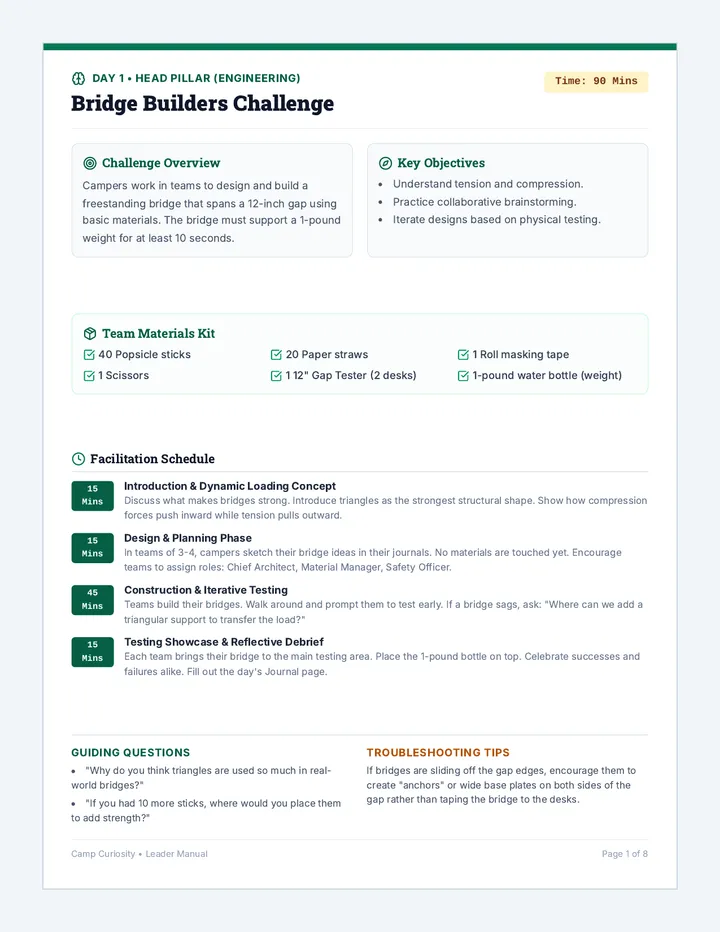
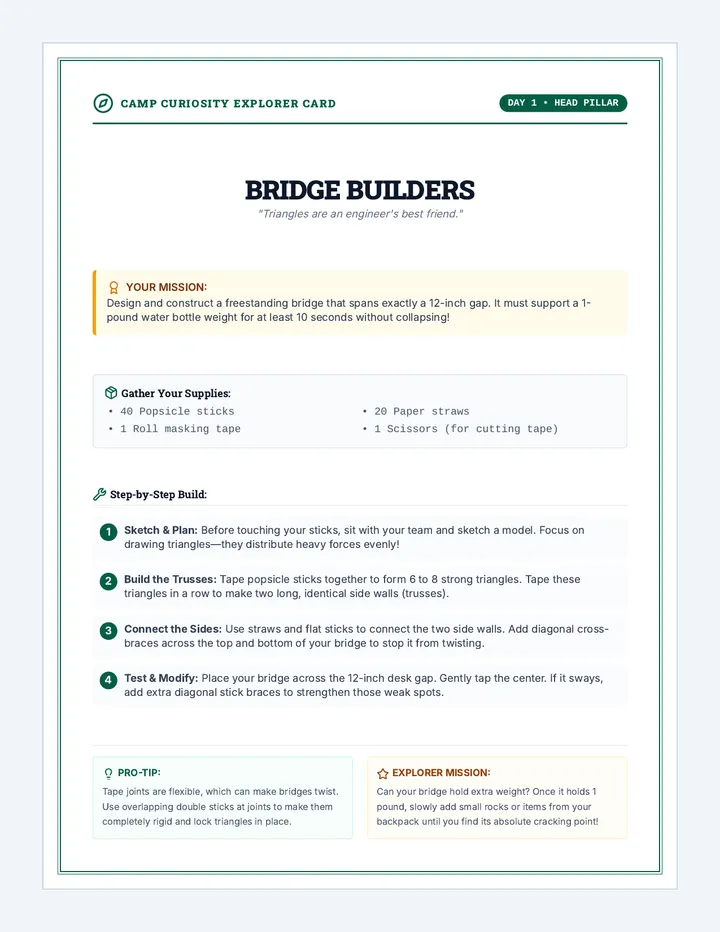
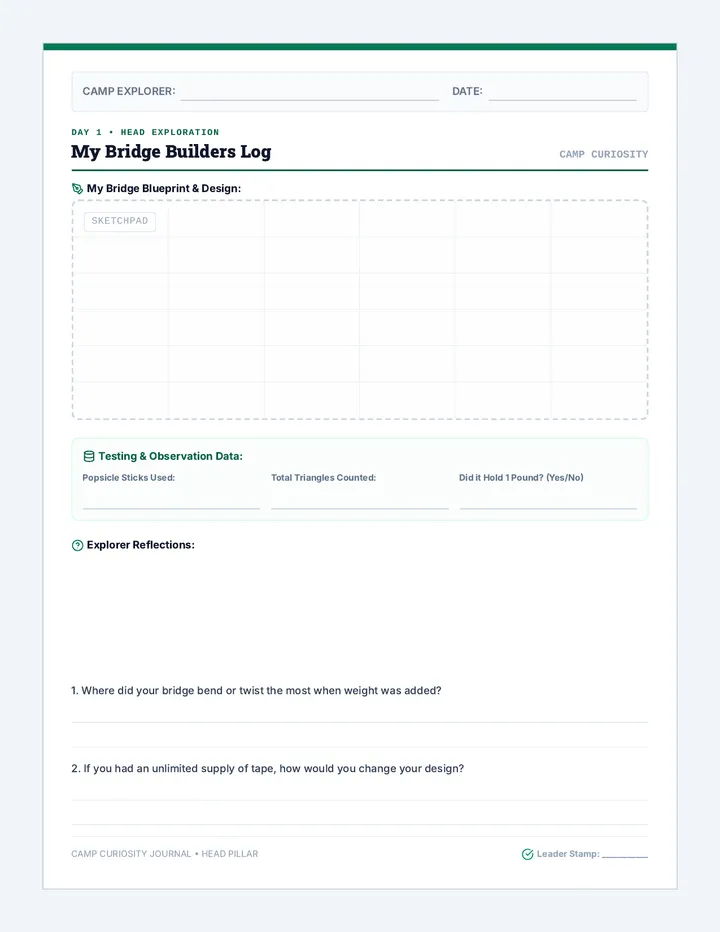
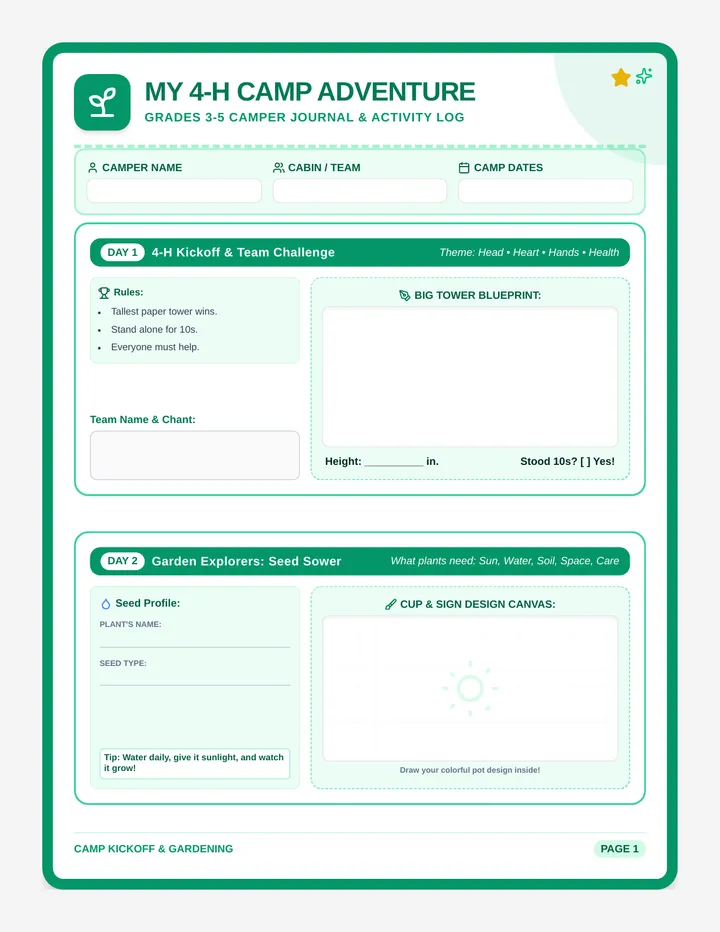
An action-packed, hands-on 8-day 4-H camp program focusing on Head, Heart, Hands, and Health. Students tackle engineering, teamwork, ecology, nutrition, and art challenges through daily active learning.
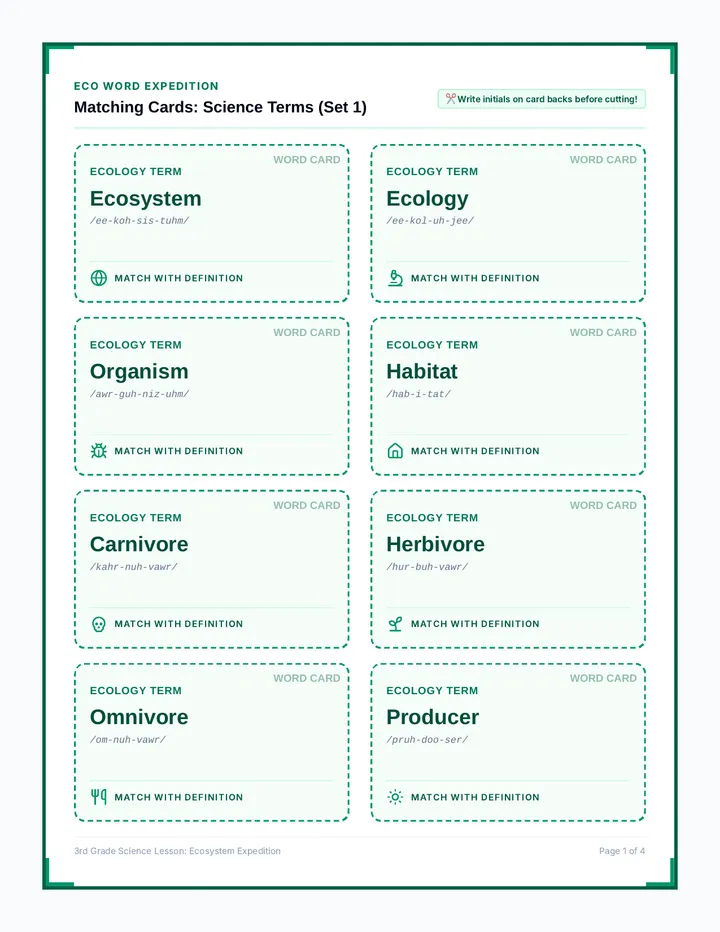
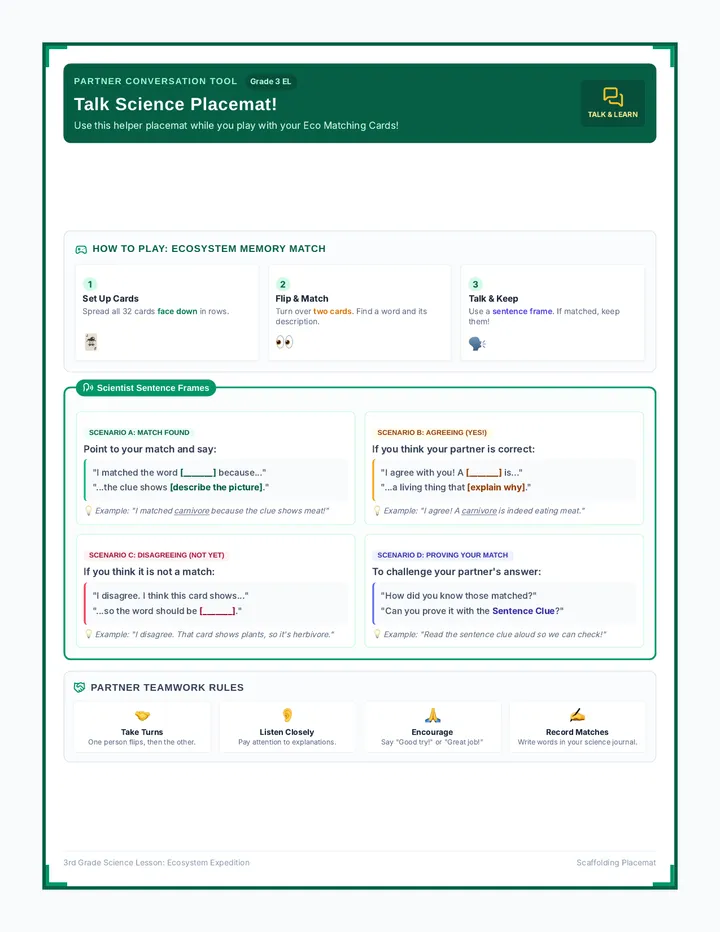
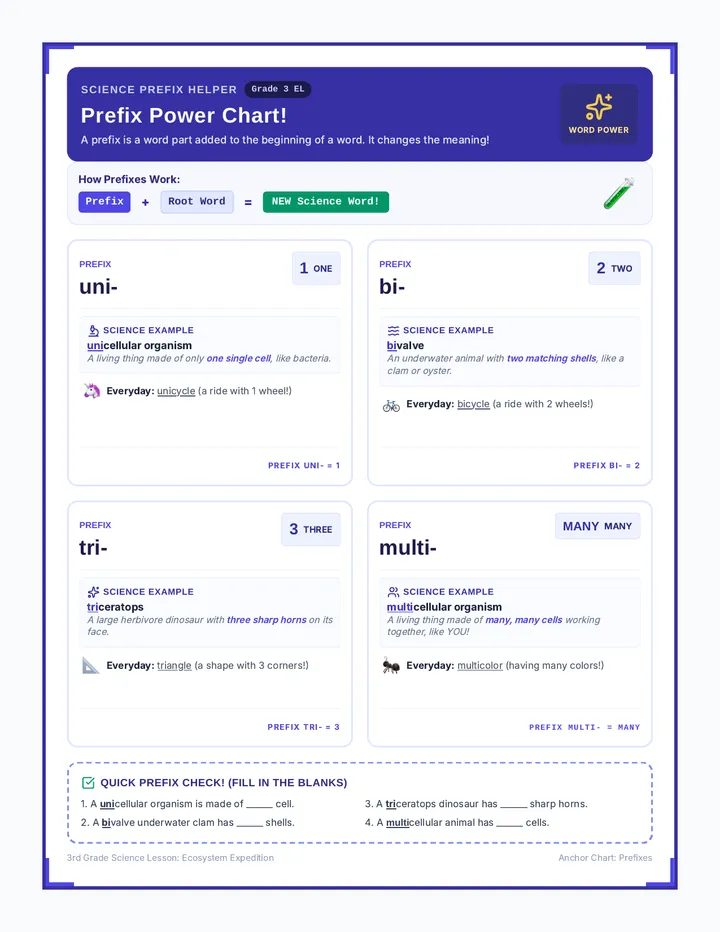
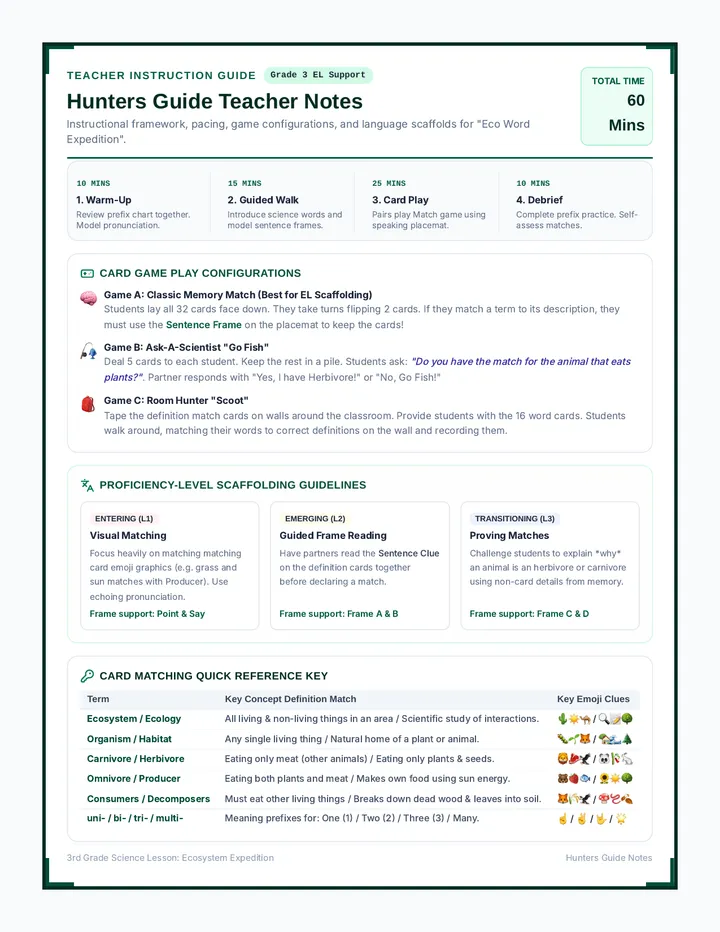
An interactive, visual vocabulary and prefix learning lesson designed specifically for 3rd-grade English Learners. Students explore key ecology terms and prefix combinations through hands-on illustrated cards, speaking scaffolds, and visual charts.
A visually engaging, 2-page Earth Science quiz designed for grades 3-5, focusing on renewable energy, natural hazards, conservation, and climate change with clean diagram boxes and student writing space.
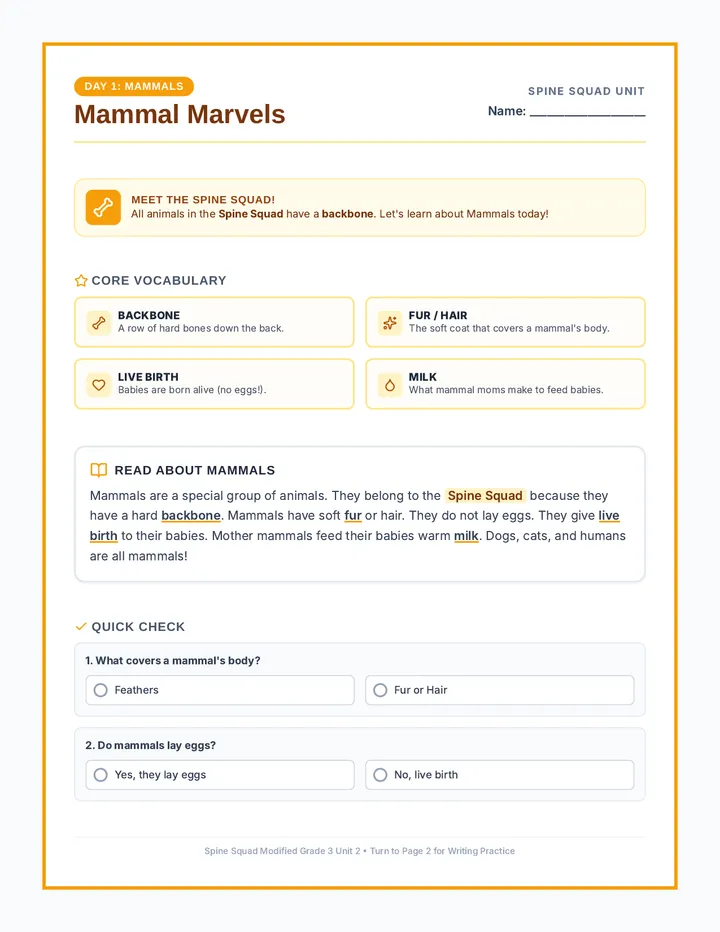
A five-day modified animal classification unit focusing on the five main vertebrate groups, designed with extensive visual support, sentence frames, and tracing options for modified learning.
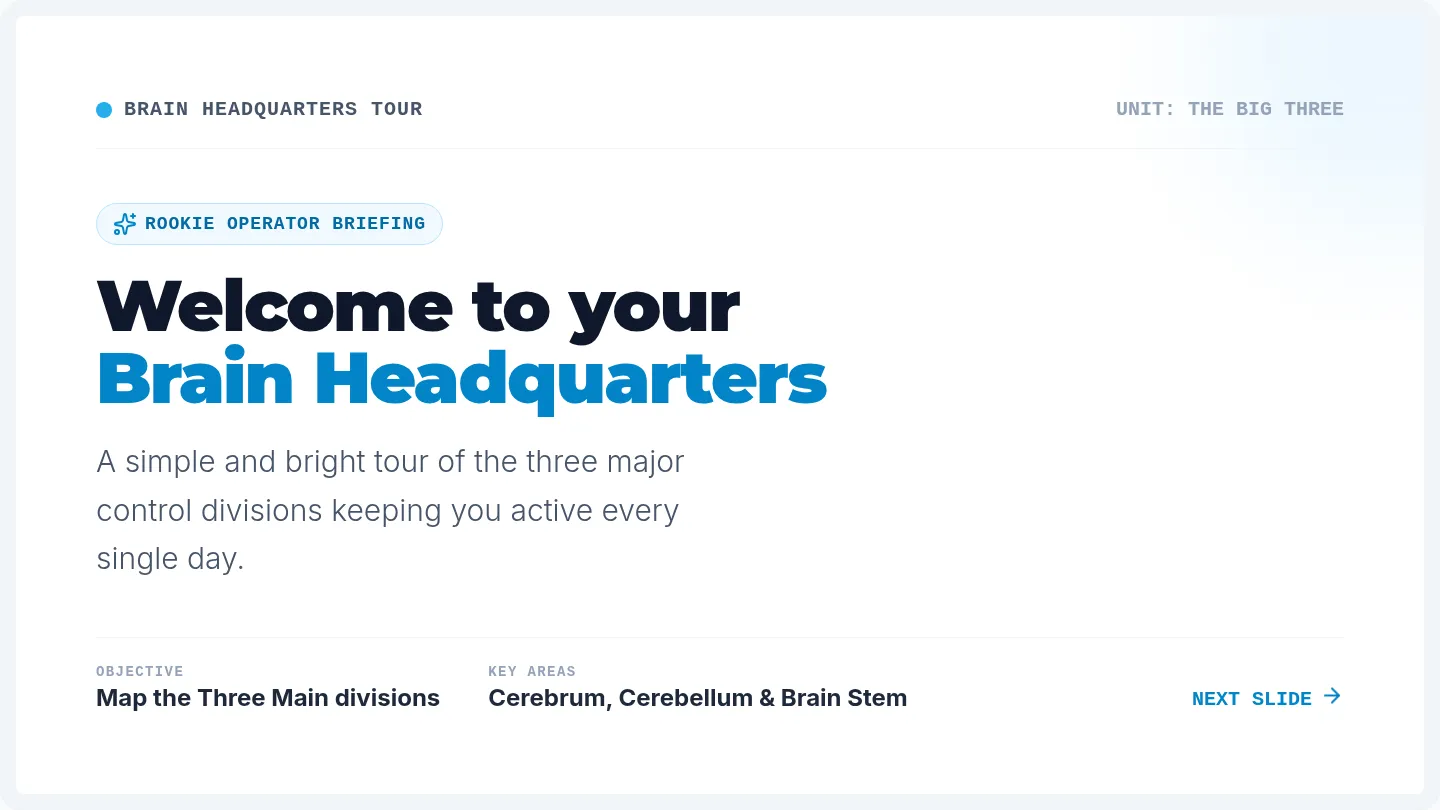
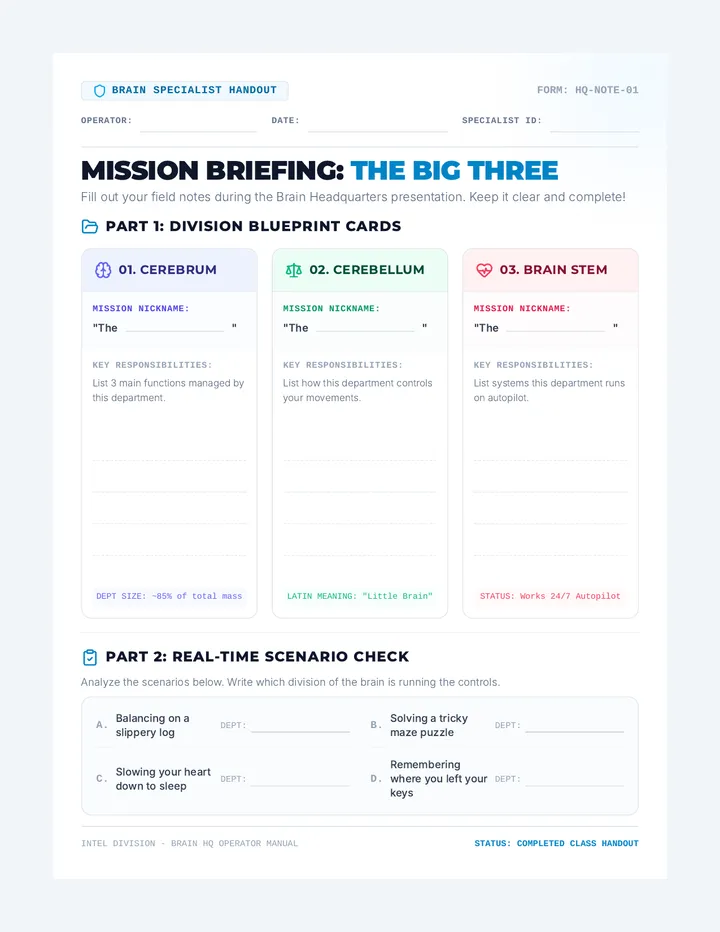
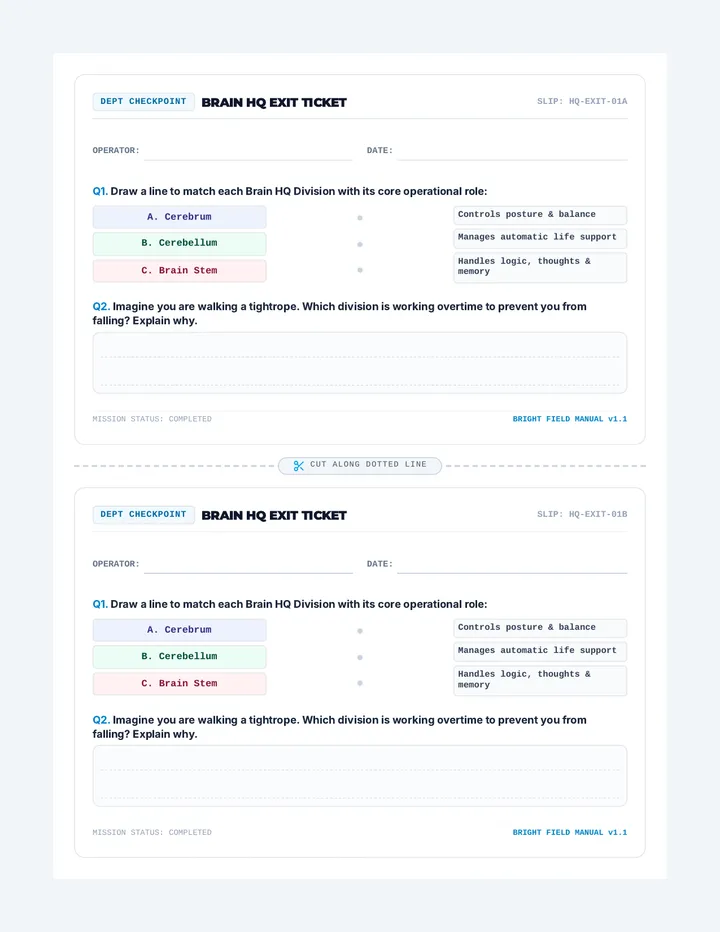
An interactive lesson introducing elementary or middle school students to the three major divisions of the brain: the Cerebrum, Cerebellum, and Brain Stem.
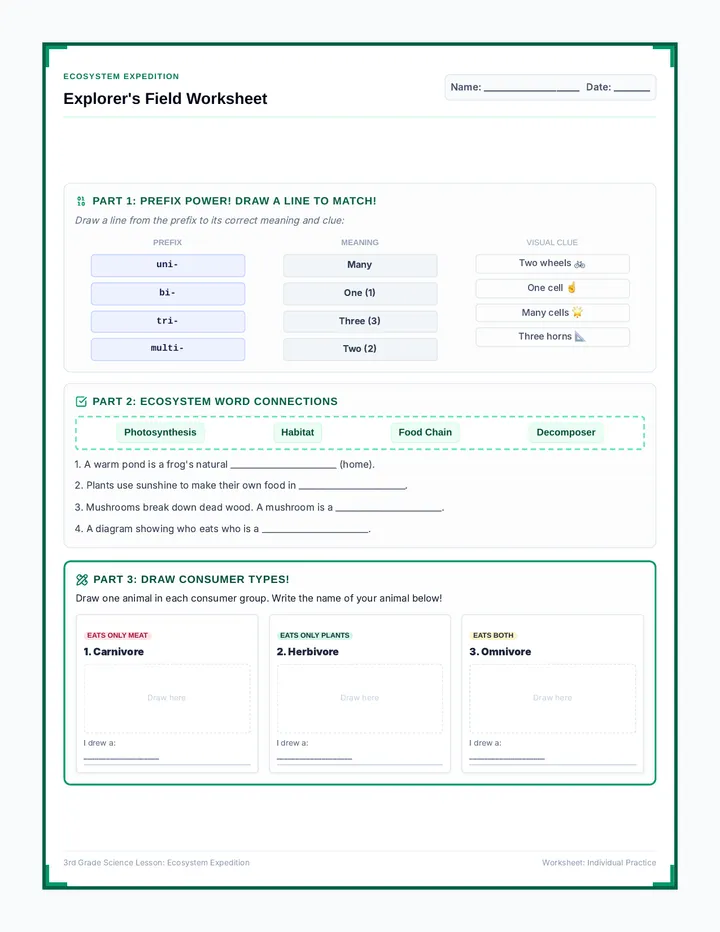
A student-facing individual practice worksheet designed for 3rd-grade English Learners. Features prefix equation math, a vocabulary fill-in-the-blank with word banks, and a visual 'Draw & Label' consumer classification matrix.
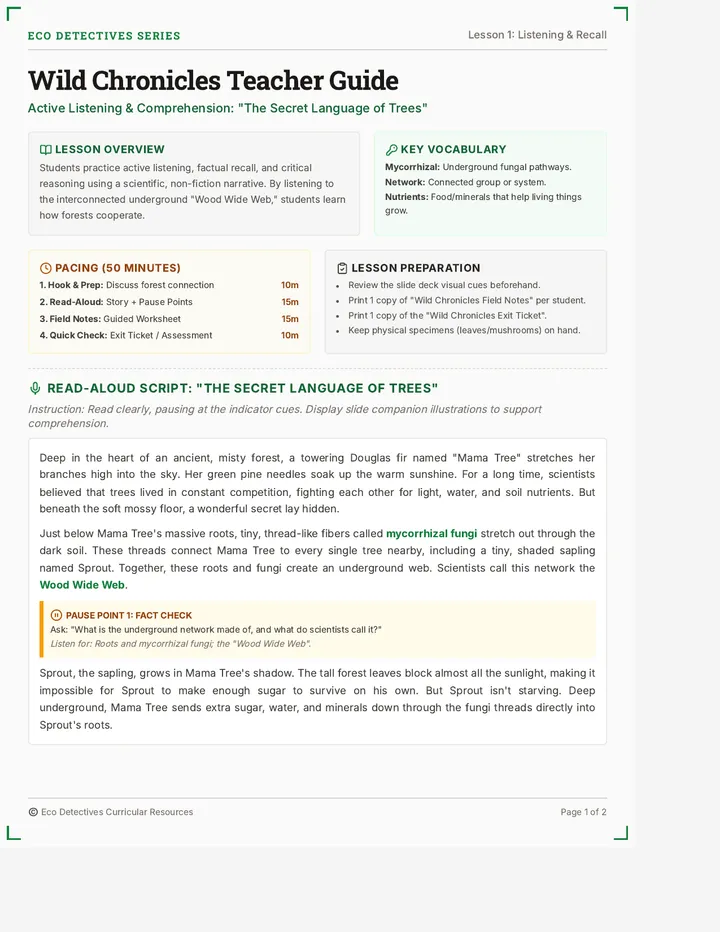
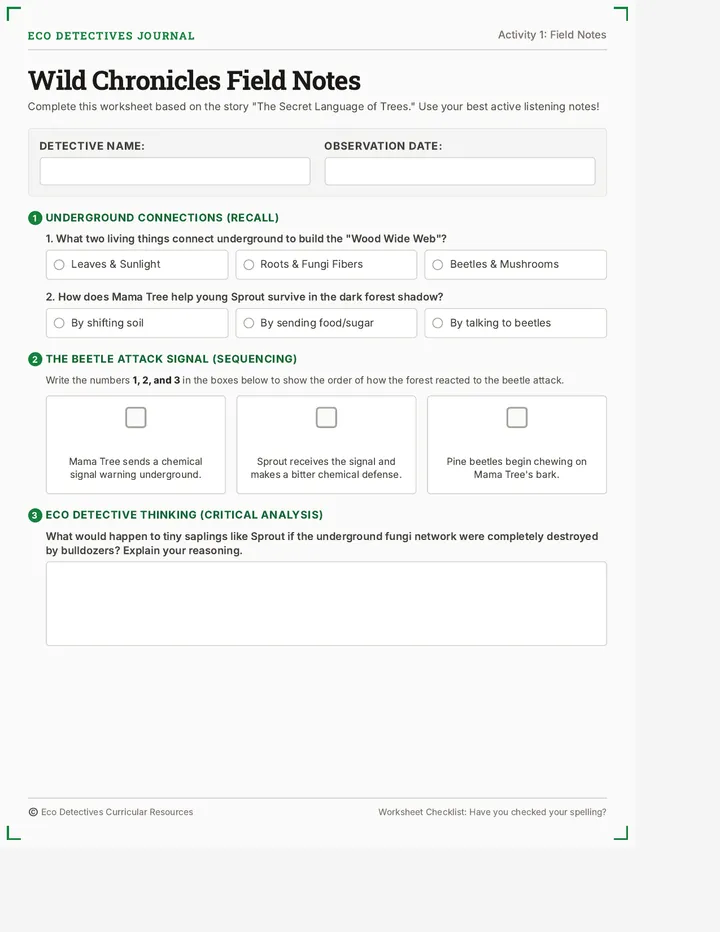
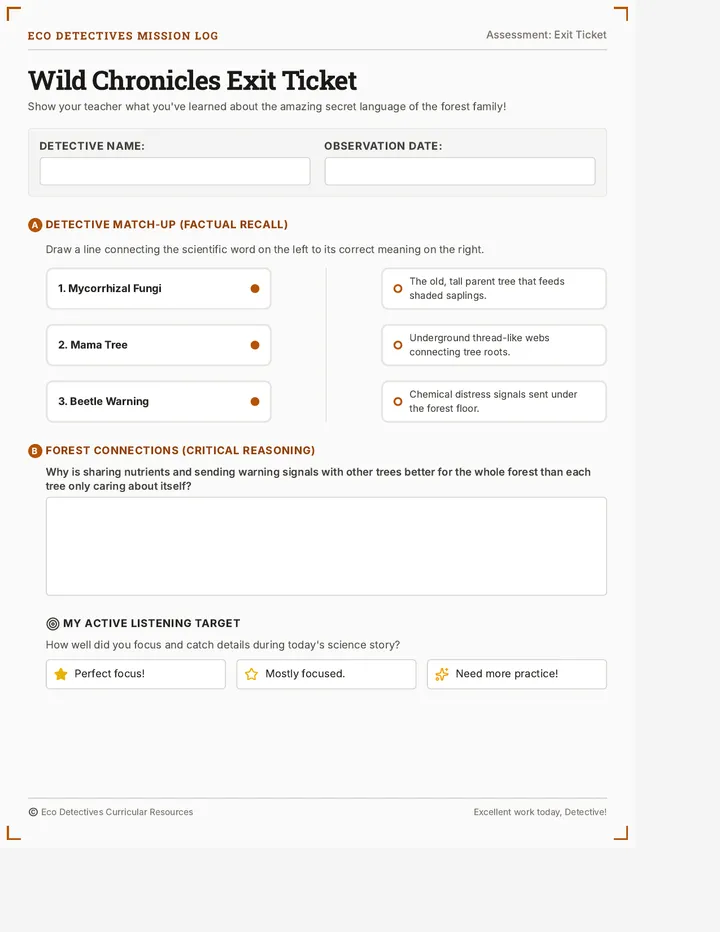
A short listening comprehension sequence for third graders focusing on non-fiction nature narratives. Students develop listening skills, factual recall, and critical thinking by exploring the interconnectedness of ecosystems.
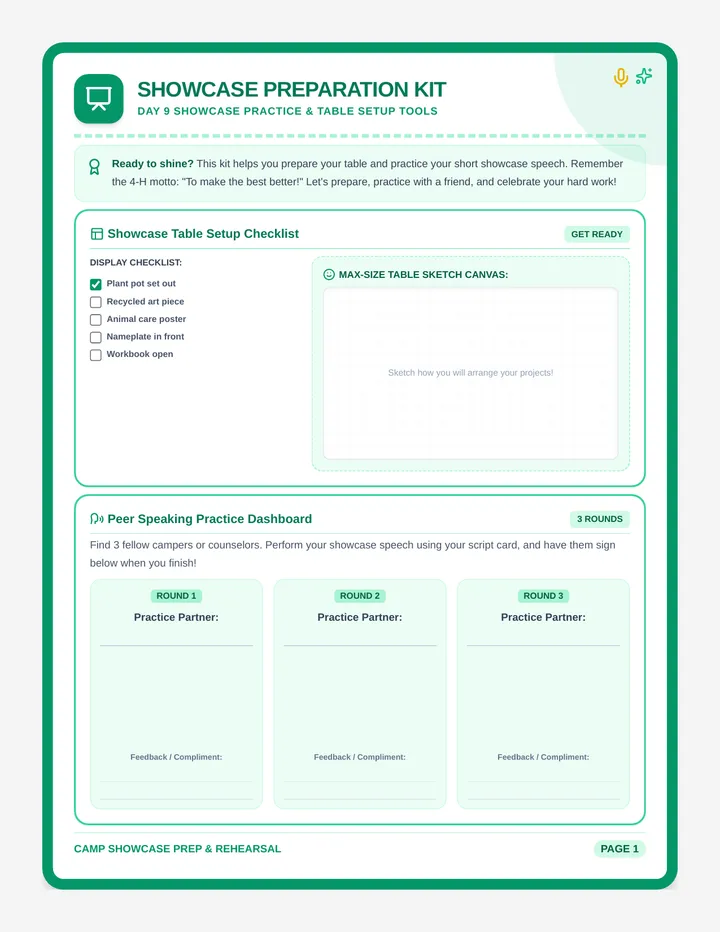
An engaging, hands-on summer camp series for grades 3-5 focusing on teamwork, STEM, gardening, healthy living, and creative problem-solving. This lesson includes a comprehensive multi-day student workbook and a showcase presentation preparation kit.
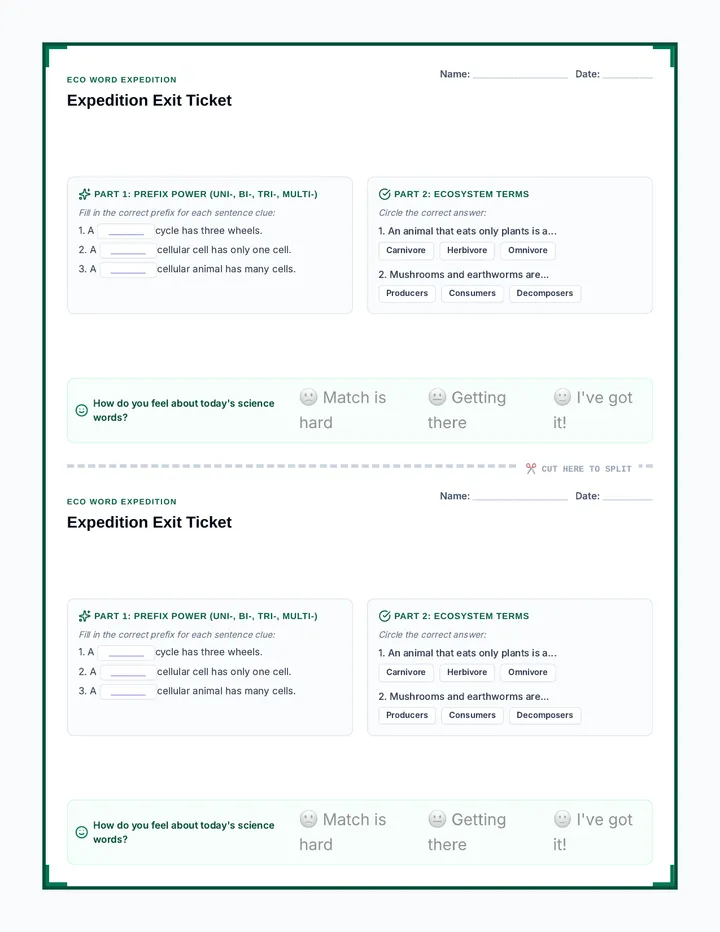
A highly practical half-page double exit ticket printable for 3rd-grade students. It features prefix and vocabulary matching, child-friendly visual self-assessments, and a paper-saving layout.