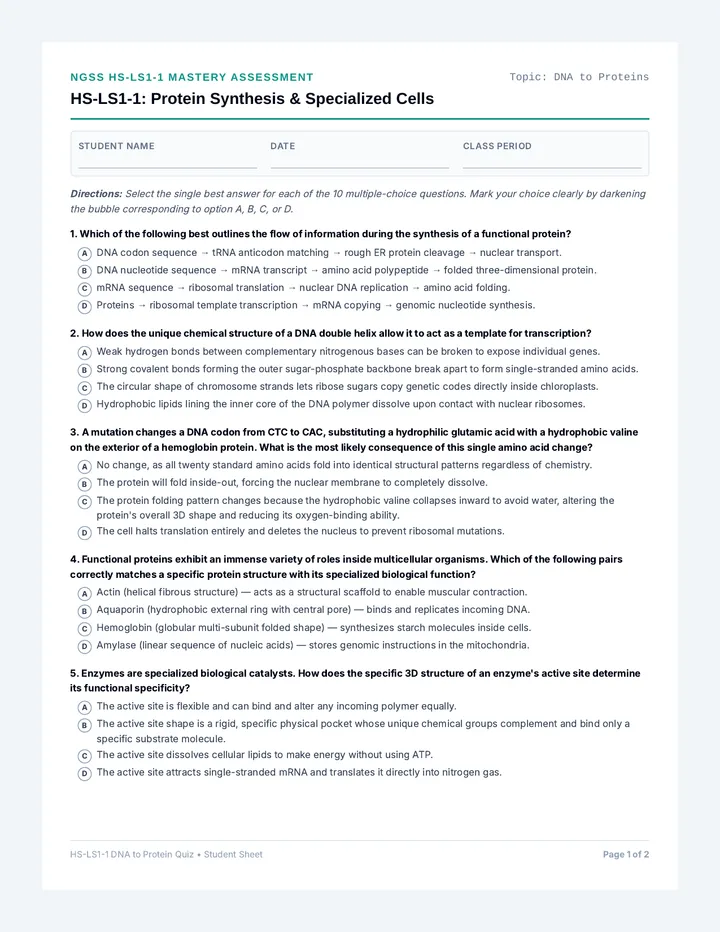
A comprehensive 40-question final examination covering the core units of Cell Biology, Genetics, and Evolution for freshman on-level students.
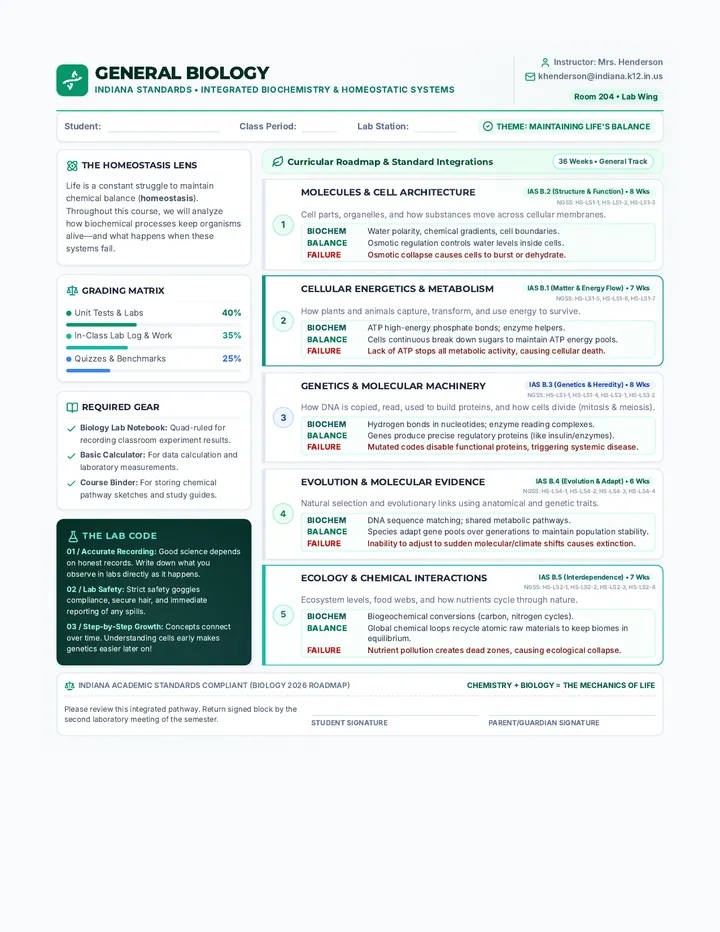
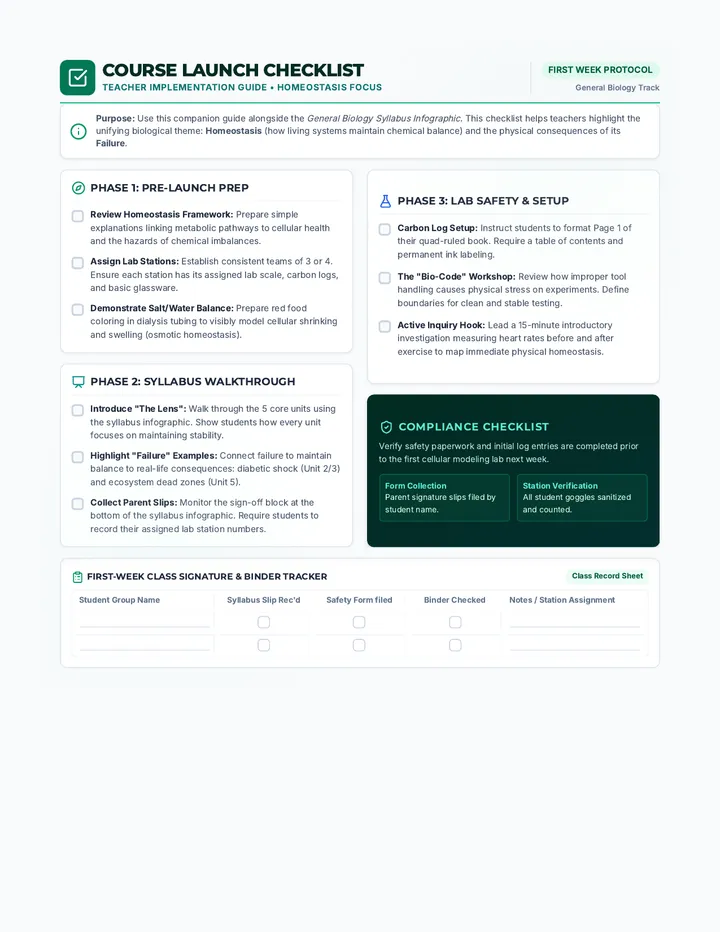
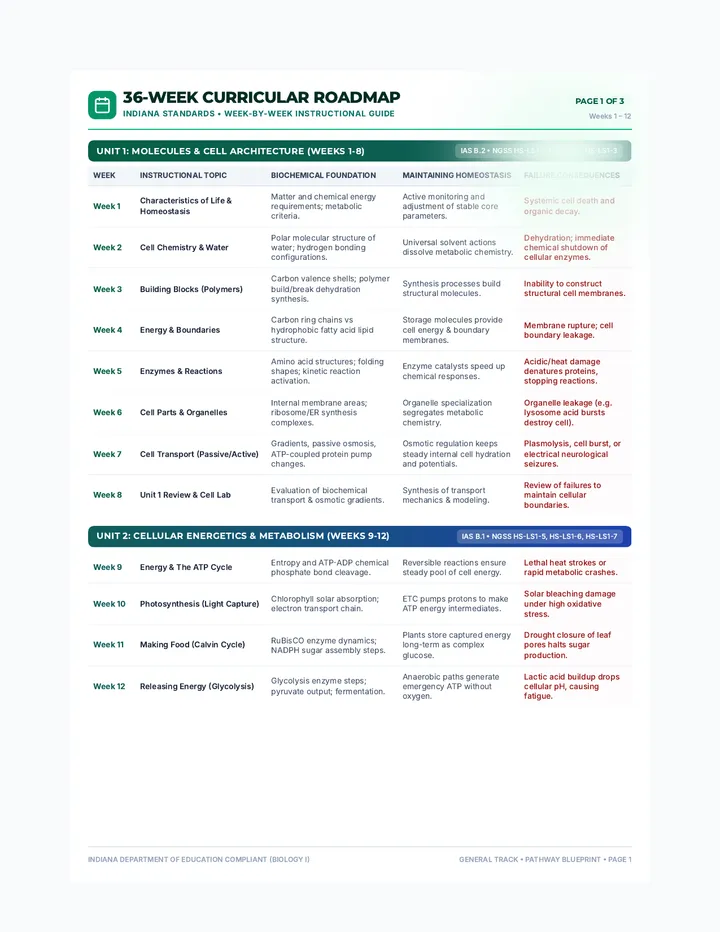
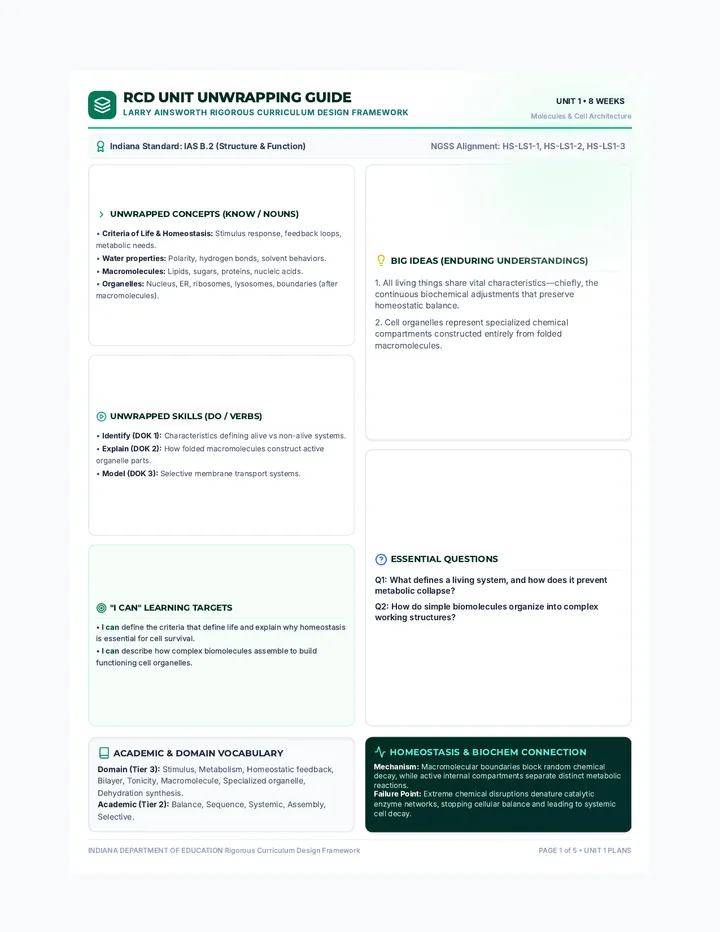
A comprehensive, 36-week General Biology curriculum aligned with Indiana Academic Standards, emphasizing the integration of biochemical foundations and metabolic homeostasis across all units.
A beginner-to-intermediate lesson introducing Jupyter Notebooks and Object-Oriented Programming (OOP) in Python. Students learn to navigate the Jupyter interface and design structured classes and objects block-by-block.
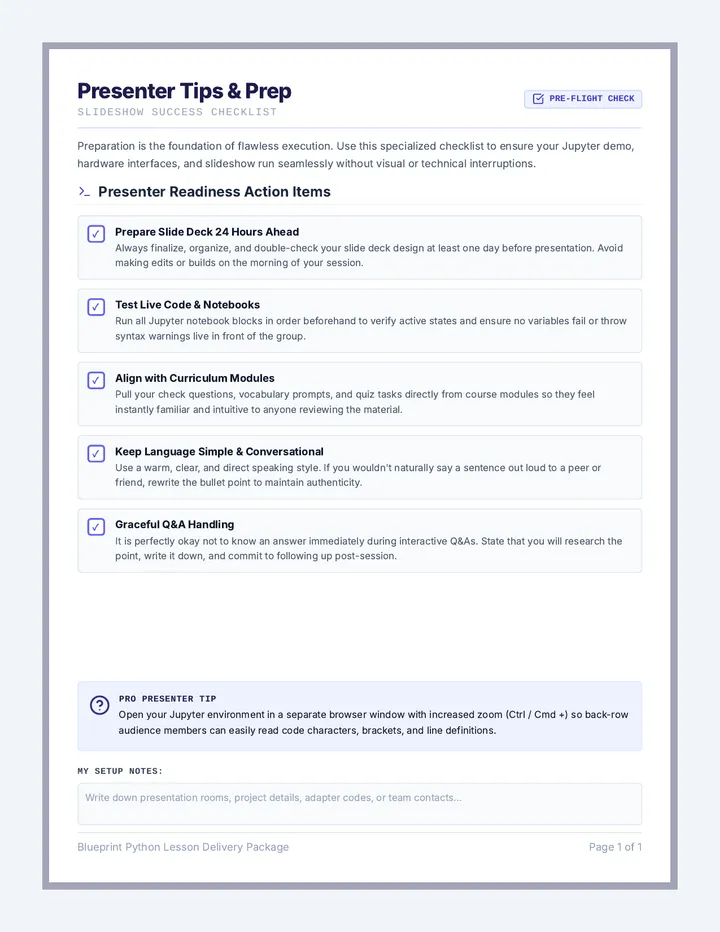
A quick-reference presenter's guide and preparation checklist designed to ensure a seamless classroom slideshow. Integrates session setup milestones, hardware checks, live-demo rules, and prompt cards for Q&A sessions.
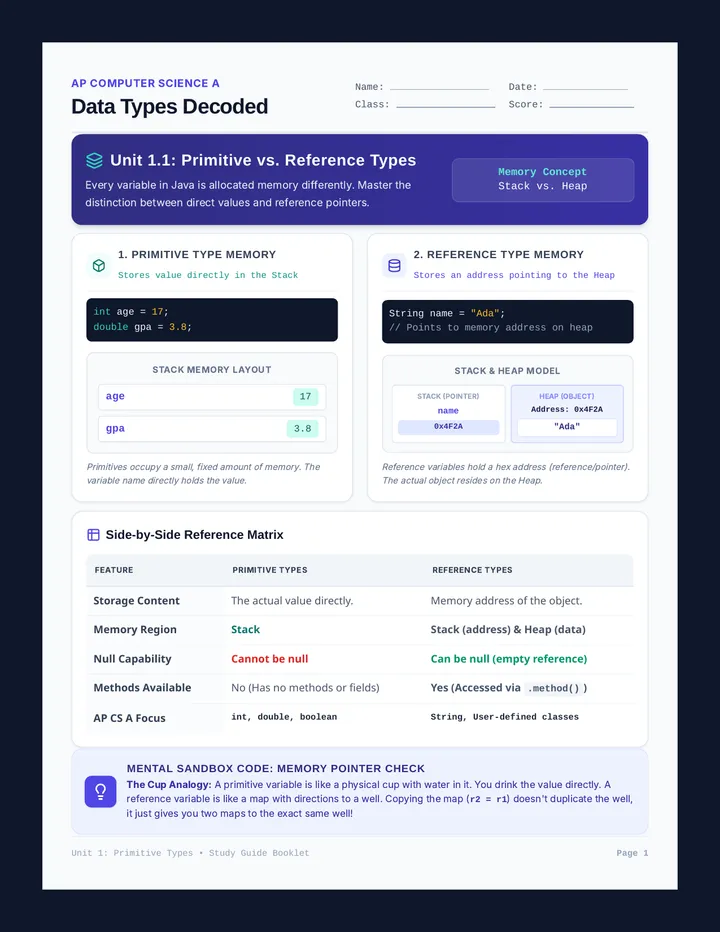
An AP Computer Science A lesson focusing on the differences between primitive and reference data types. It covers memory allocation, stack/heap models, and vocabulary using differentiated approaches for visual, scaffolded, and English Language learners.
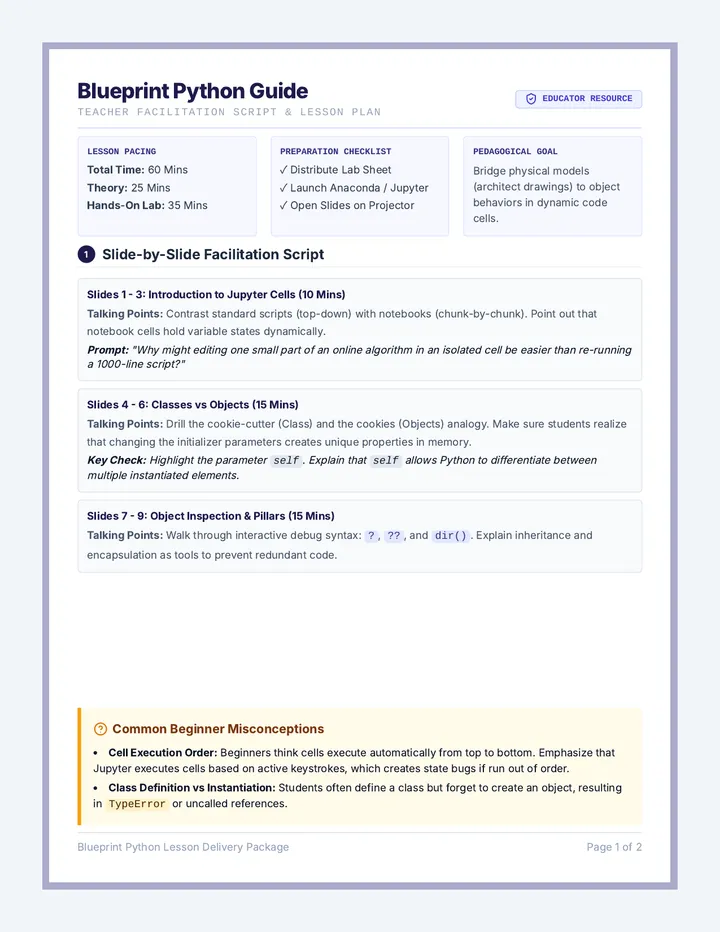
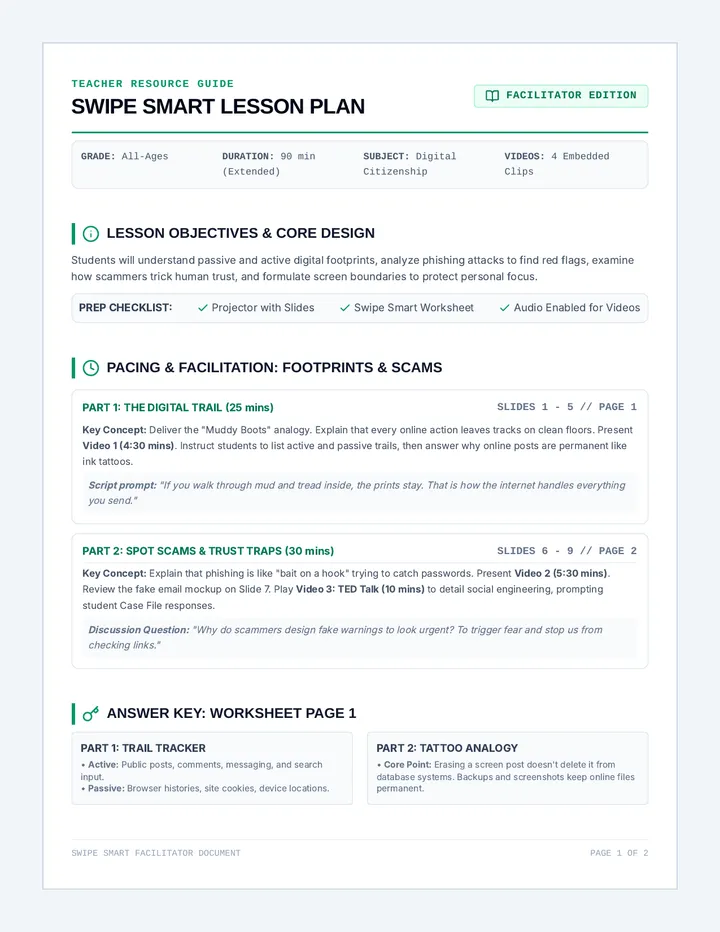
An educator's facilitation guide and lesson plan featuring slide-by-slide teaching scripts, discussion prompts, classroom activities, common student misconceptions, and the full answer keys to the student lab sheet.
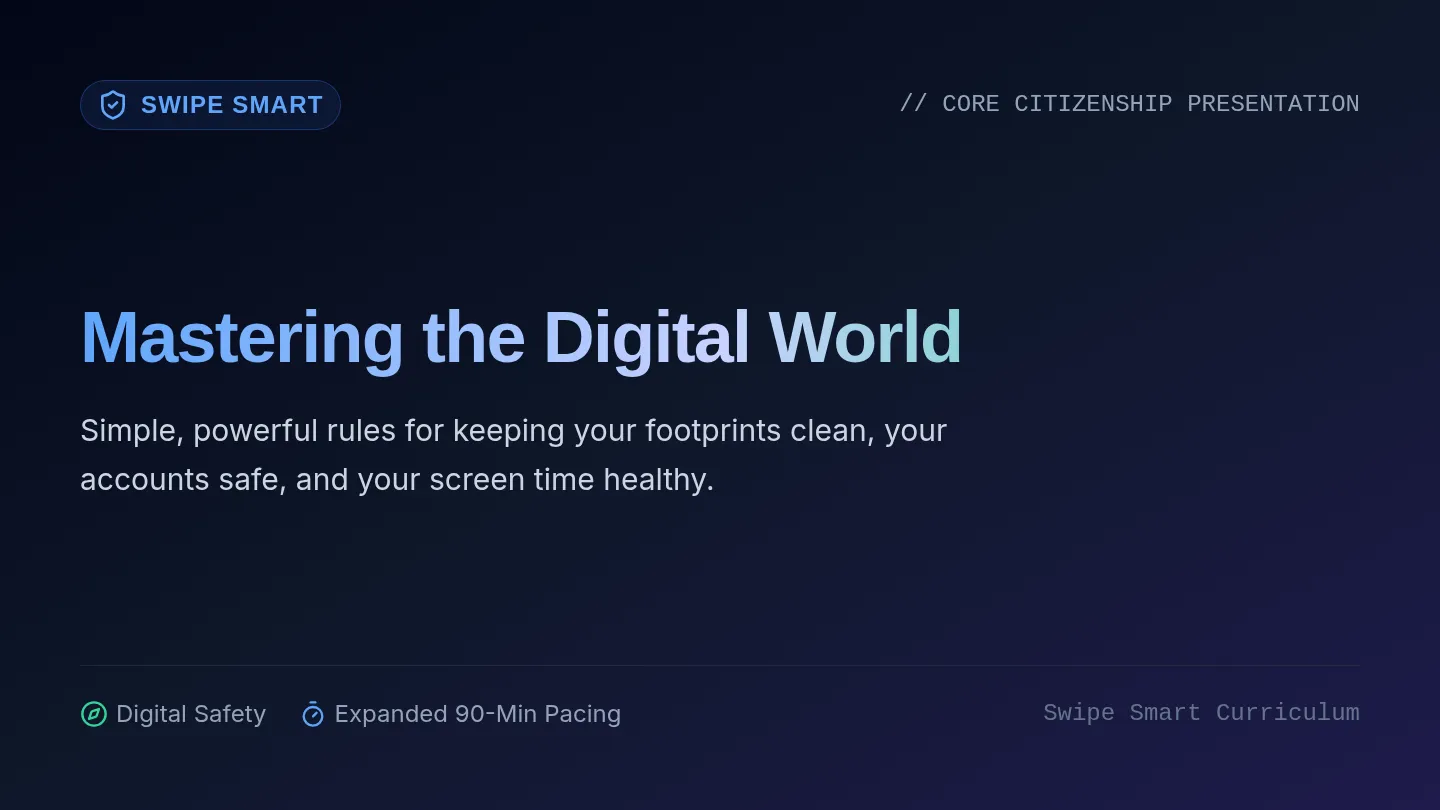
A comprehensive online safety curriculum combining key digital citizenship concepts: managing digital footprints, identifying online scams and phishing, and establishing healthy screen time habits.
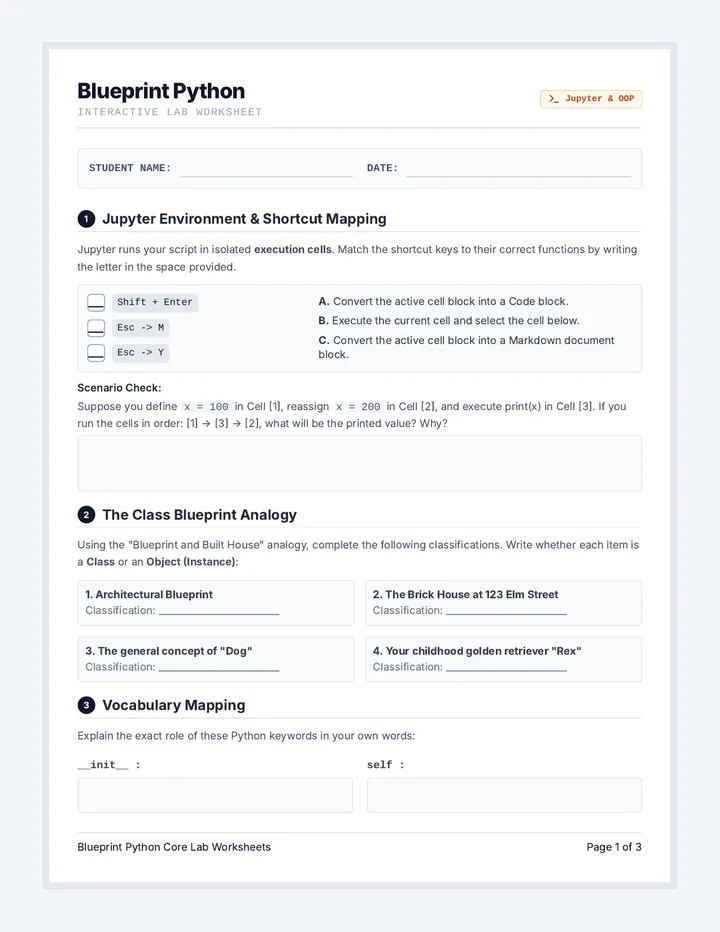
A structured, print-ready student lab worksheet designed as a hands-on companion to the OOP and Jupyter lessons. Includes keyboard shortcut mappings, concept checks, and code schema drafting spaces.
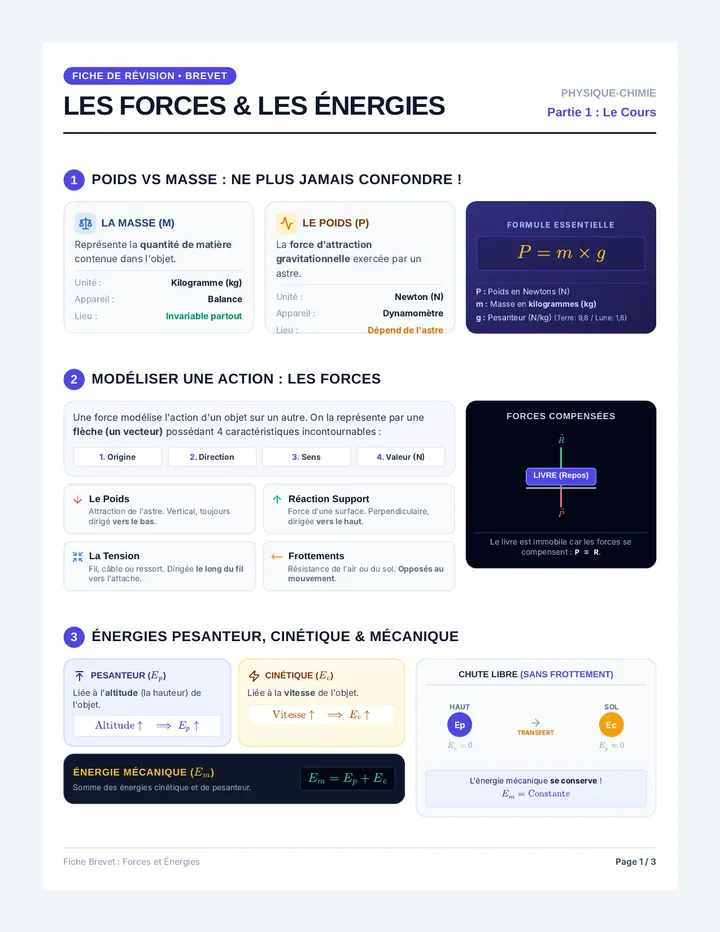
Fiches de révision et exercices corrigés pour préparer l'épreuve de Physique-Chimie du Brevet des Collèges. Ce cours couvre les forces, la relation poids-masse et la conservation de l'énergie mécanique.
An engaging and comprehensive slide deck introducing Jupyter Notebooks and Object-Oriented Programming (OOP) in Python. Ideal for beginners to intermediates, it balances interactive sandbox tips with OOP conceptual pillars like encapsulation, inheritance, and polymorphism.
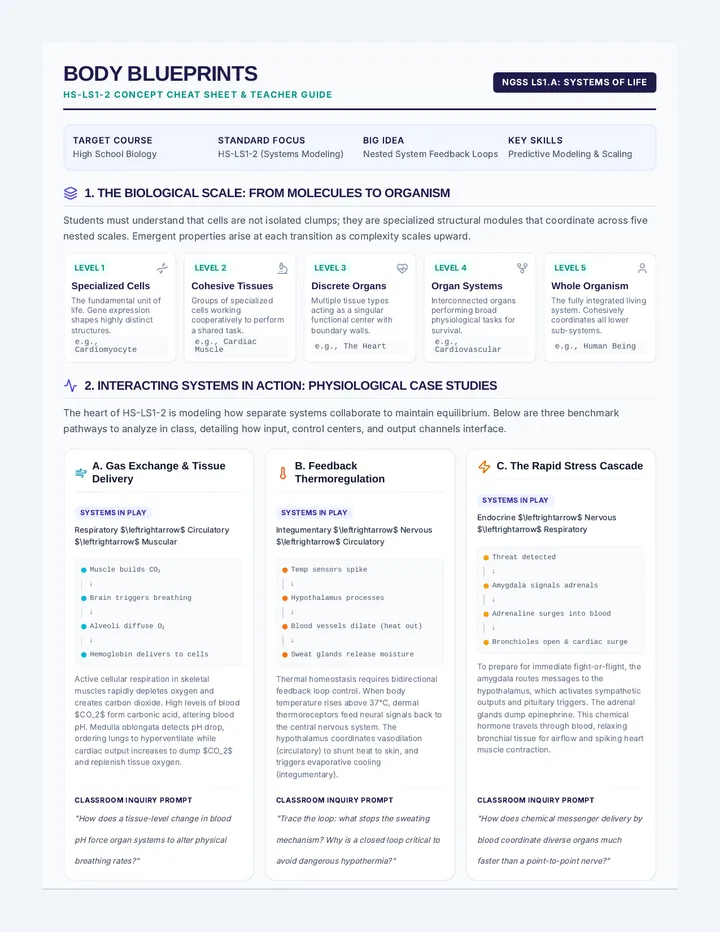
A teacher-focused lesson exploring how multicellular organisms organize cells, tissues, and organ systems into interacting networks to sustain life and maintain homeostasis.
A comprehensive 4-page student workbook containing high-impact visual comparisons of stack/heap memory, dual-language analogies, scaffolded guided notes with word banks, and step-by-step code tracing practice. Designed to guide students through the complex distinction between primitive and reference data types in AP CS A.
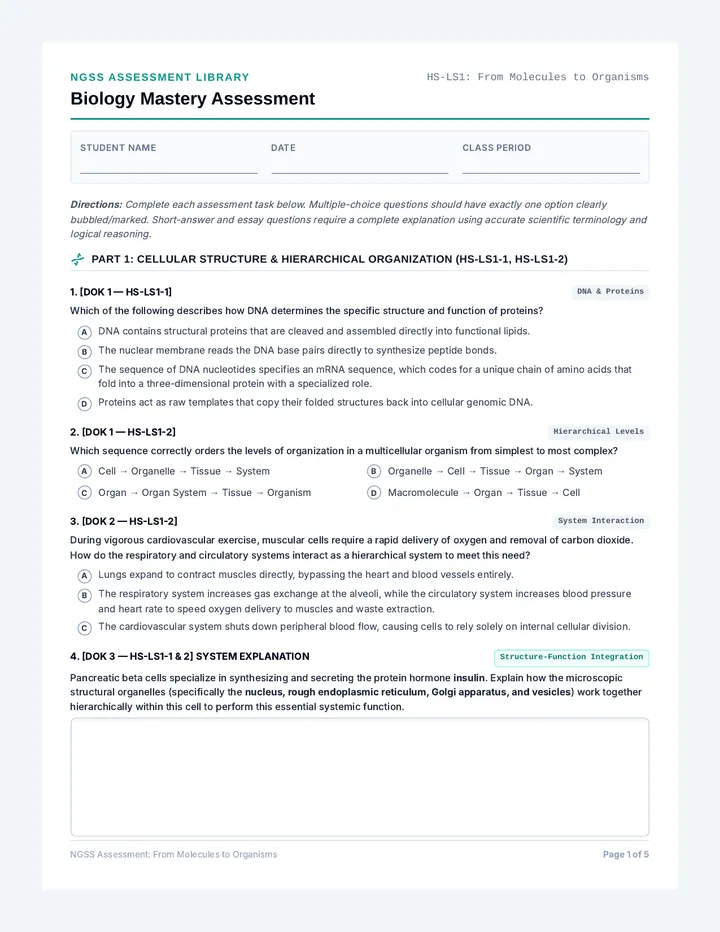
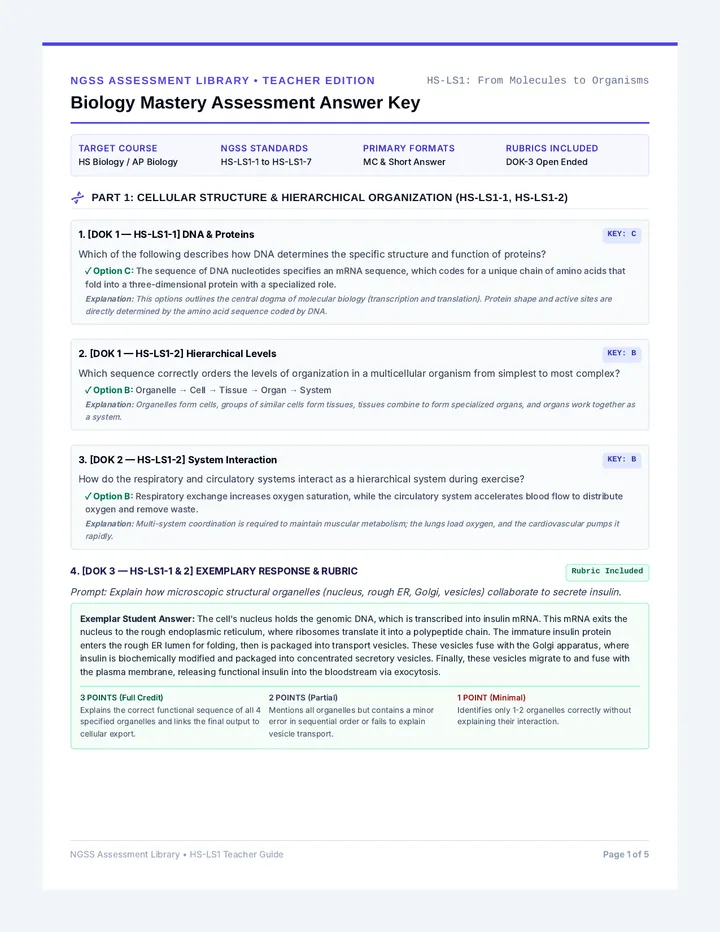
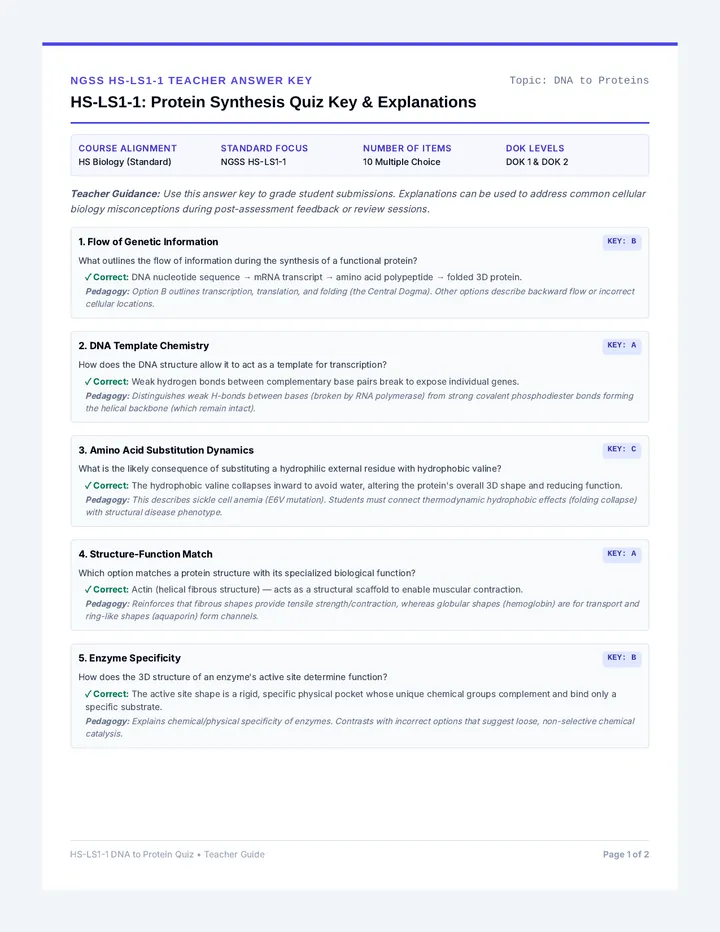
A comprehensive library of assessment questions for NGSS standard HS-LS1 (From Molecules to Organisms), categorized by DOK level (1, 2, and 3) and performance expectations. Includes both a printable student question bank and an in-depth teacher answer key with grading rubrics.