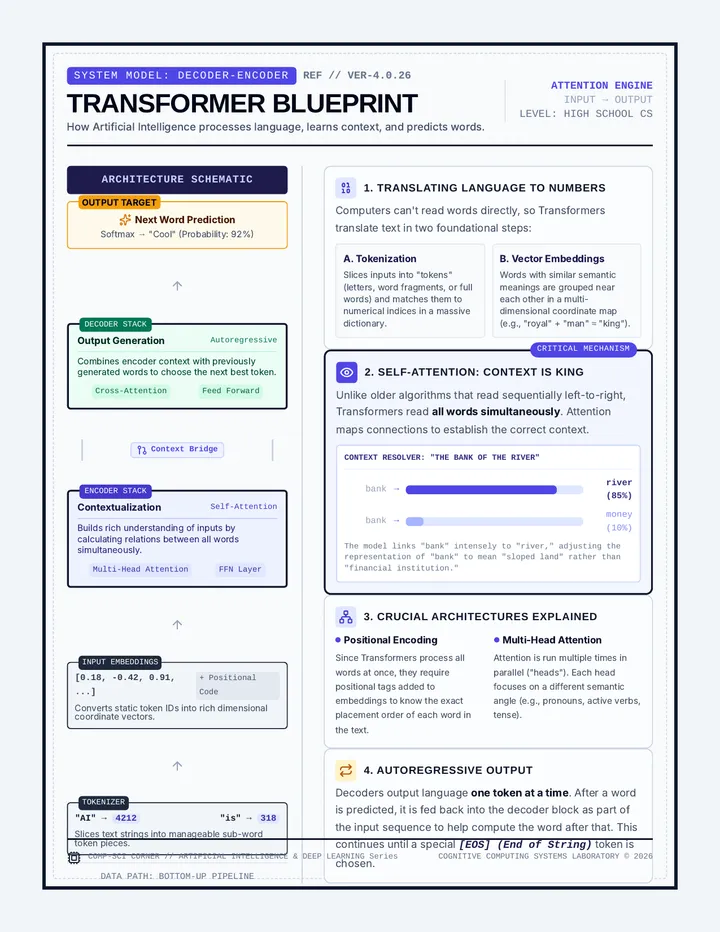
An introductory lesson introducing high school computer science students to the inner workings of AI Transformer models, specifically mapping the Encoder-Decoder architecture, tokenization, embeddings, and attention mechanisms through visual assets.
Séquence clé en main sur le module de chimie « Comment caractériser une solution ? » du programme de Seconde Bac Pro, contextualisée dans l'univers de la marine et de l'analyse des eaux.
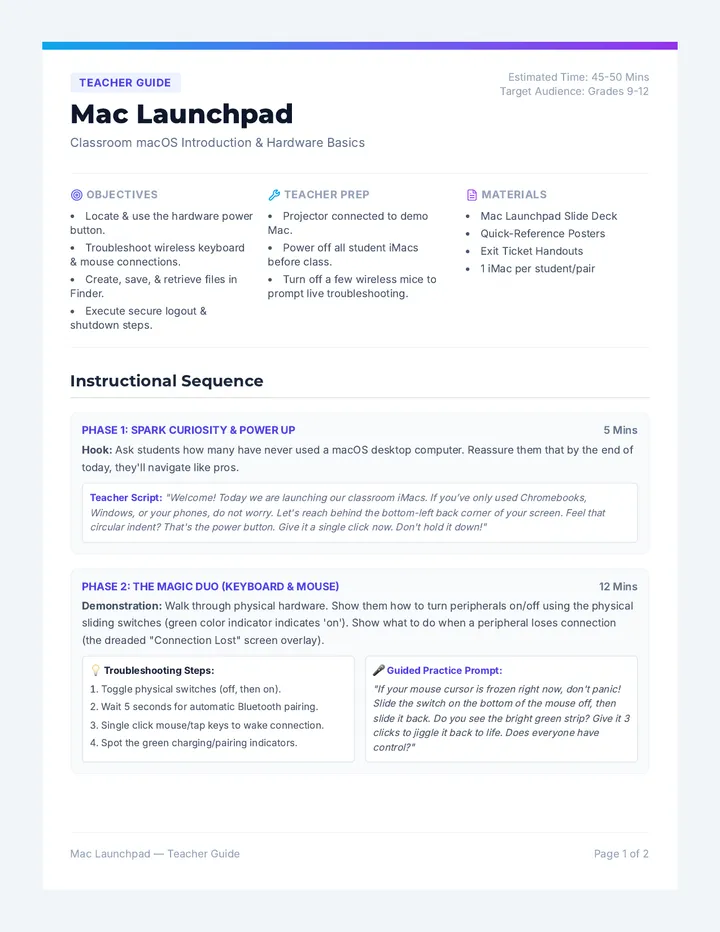
An introductory guide and demonstration lesson designed for students with little to no macOS experience. Covers hardware startup, wireless peripheral troubleshooting, file management in Finder, and proper logout procedures.
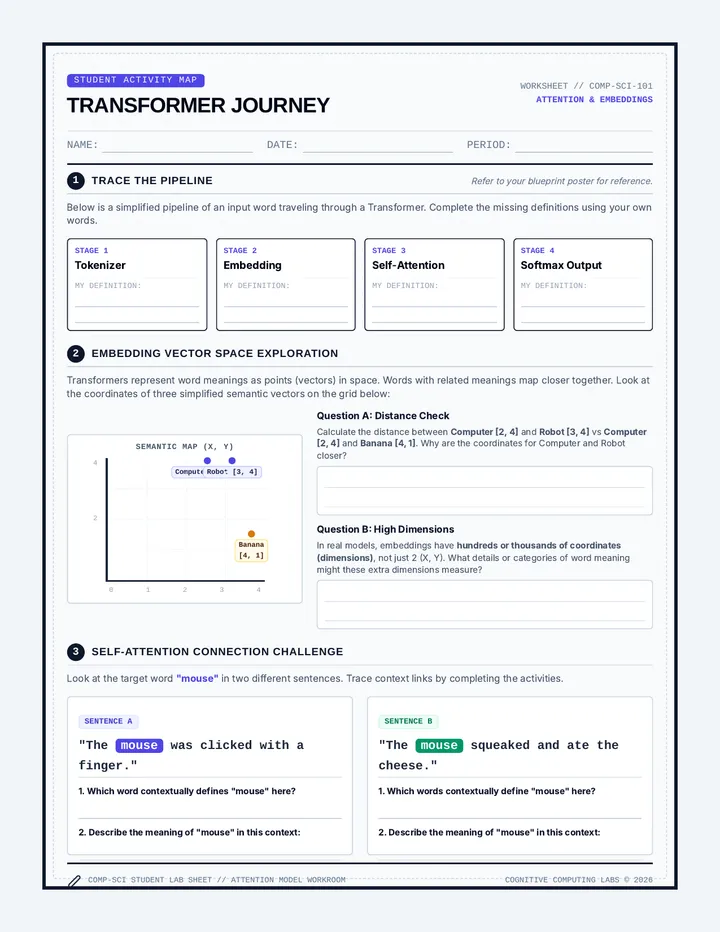
A student-facing graphic organizer worksheet mapping the journey of a word through a Transformer model, allowing students to label steps, analyze simple vector spaces, and trace self-attention context connections.
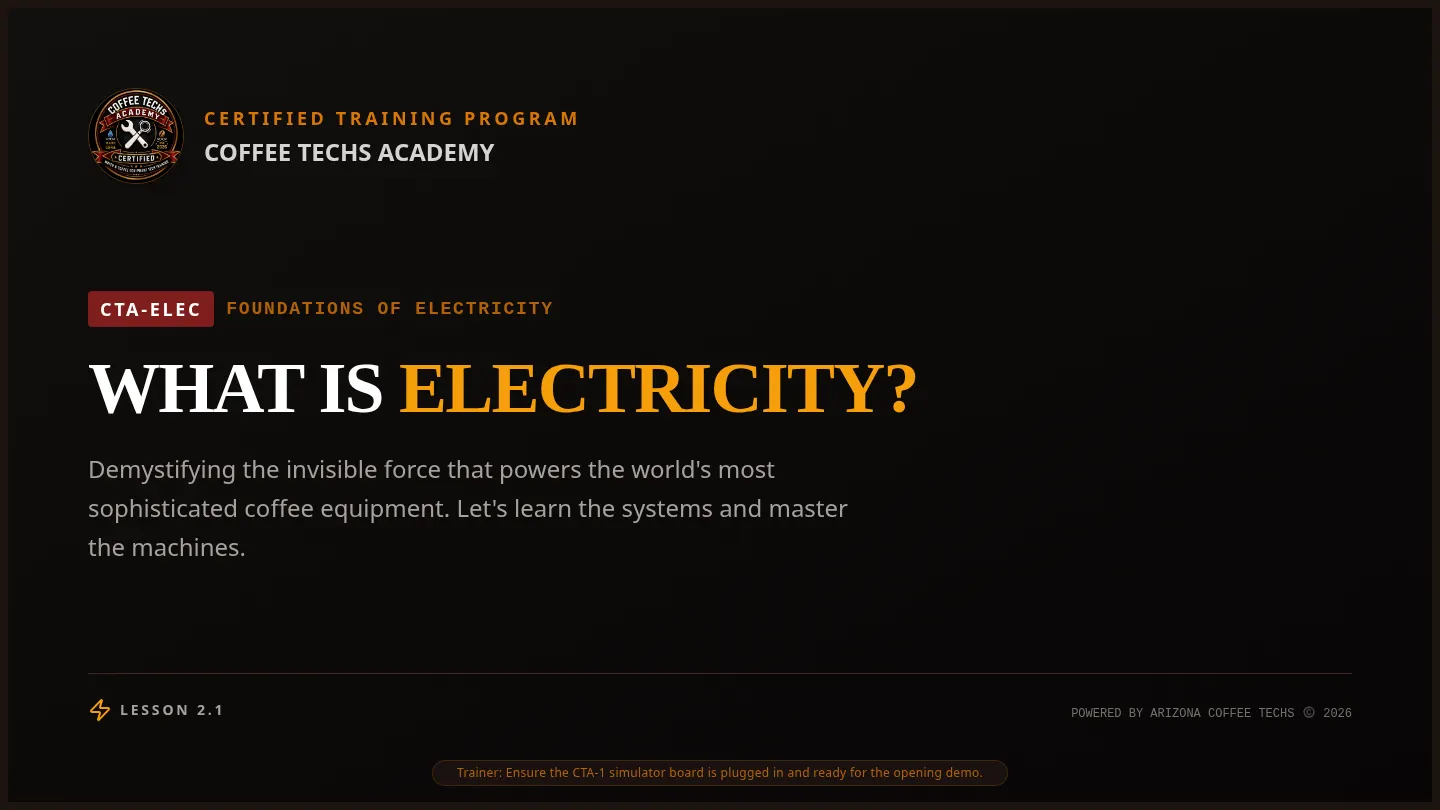
A comprehensive technical certification sequence designed to teach commercial coffee equipment technicians how to demystify electricity, safely troubleshoot components, and master electrical systems.
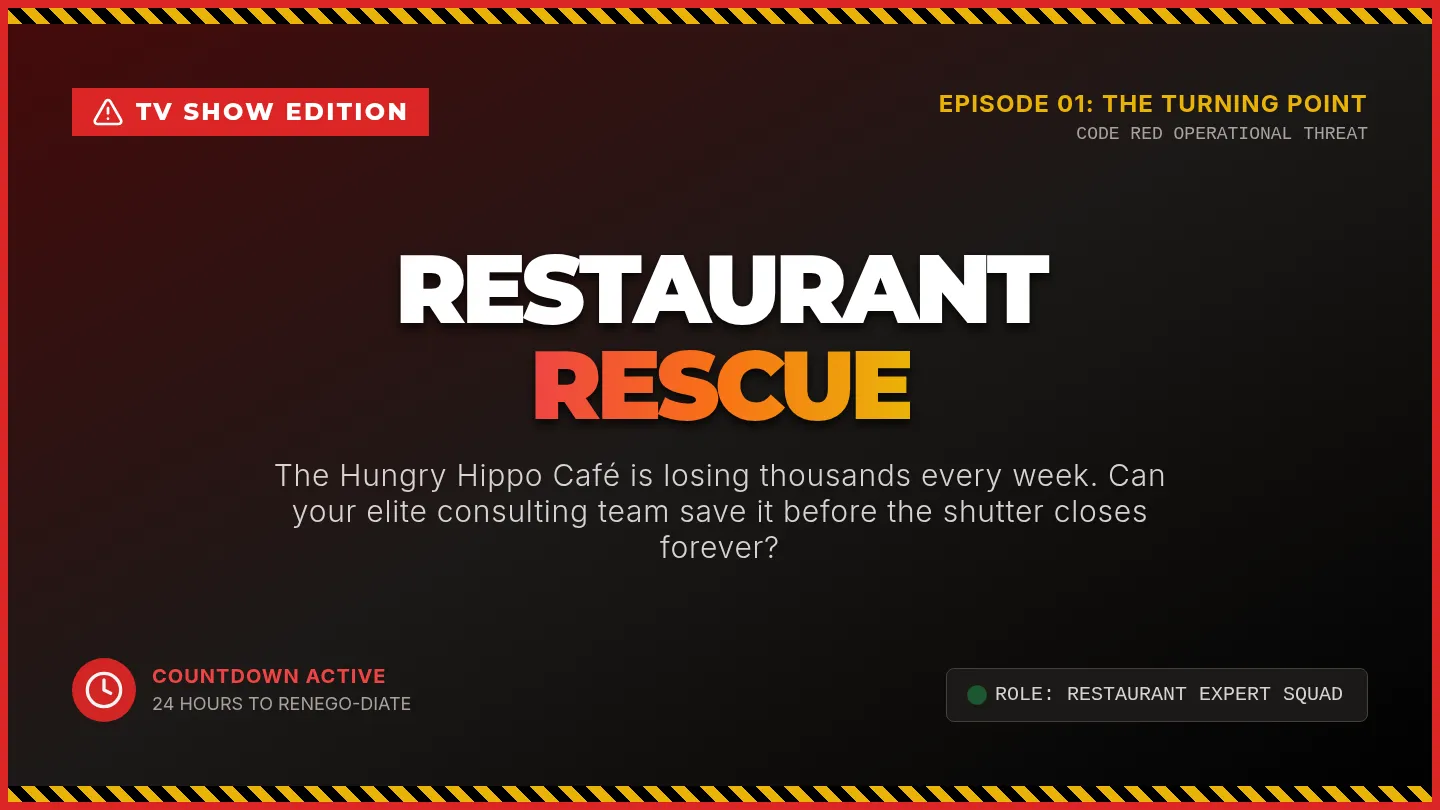
A dramatic, interactive problem-solving game disguised as a restaurant makeover reality TV show. Students act as Restaurant Rescue Experts investigating "The Hungry Hippo Café" to uncover and solve issues in restaurant operations, food safety, customer service, and budget.
A visual anchor chart poster mapping out the Transformer architecture, tokenization, embeddings, and self-attention in a schematic blueprint format for introductory CS students.
An intensive High School Biology sequence that dives deep into the biophysics and biochemistry of photosynthesis. Students explore the molecular machinery of the light-dependent reactions and the enzymatic steps of the Calvin cycle.
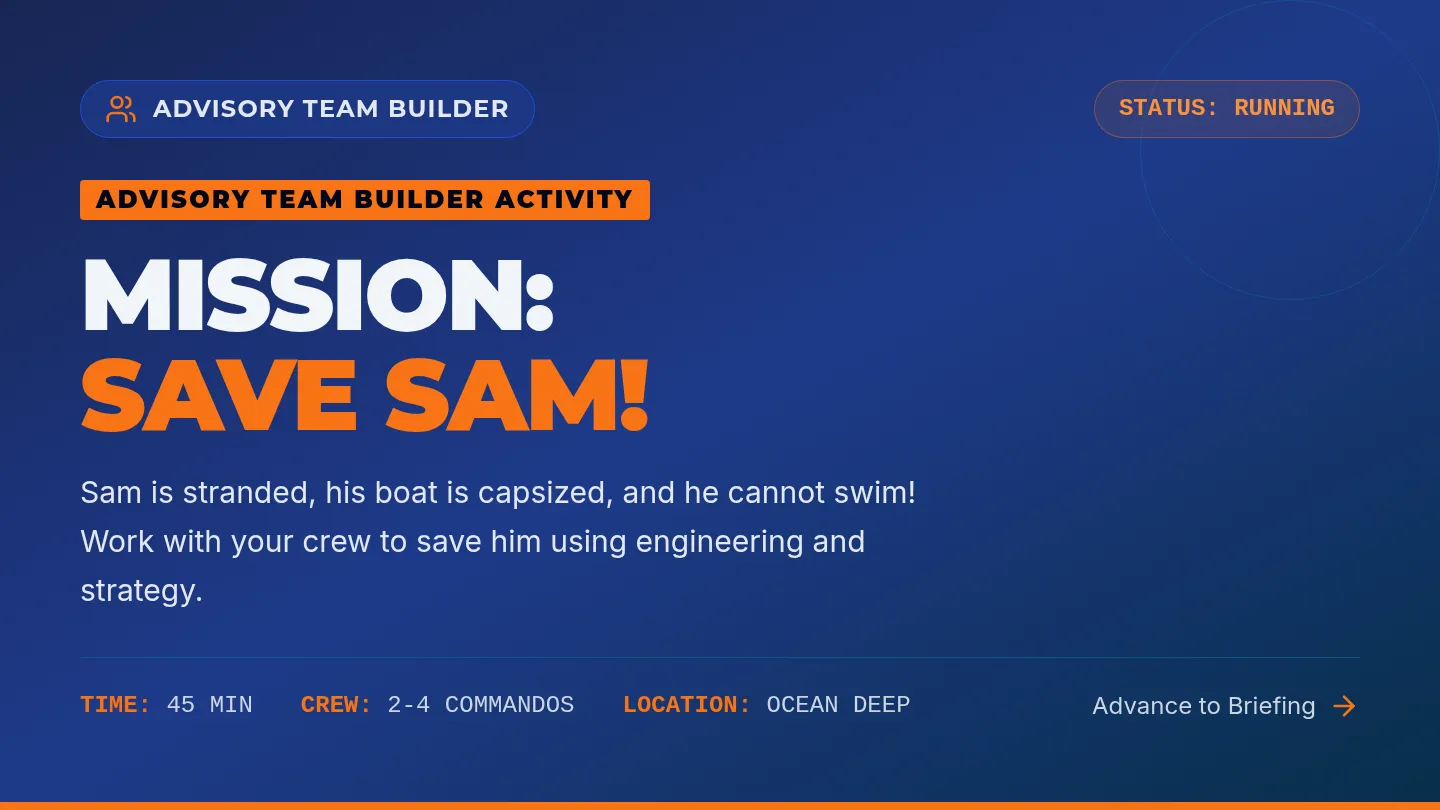
An introductory STEM and cooperative learning lesson where students work in teams to save Sam, a gummy worm stranded on a capsized boat, using only paperclips to retrieve and equip his life preserver.
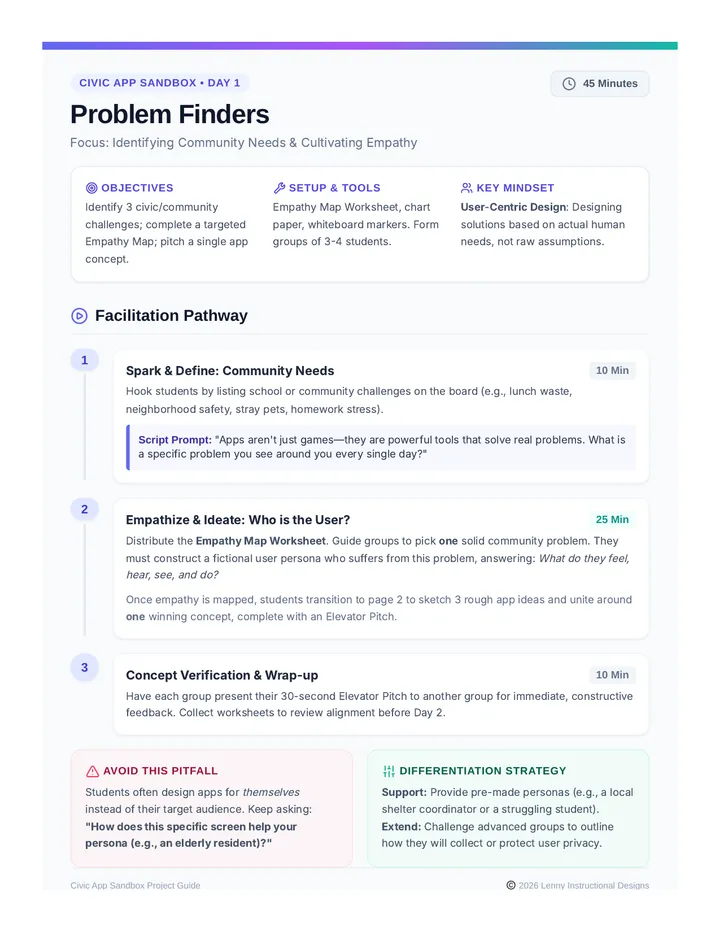
A three-day project-based learning unit where students design and pitch interactive paper prototypes of apps that address real-world community challenges.
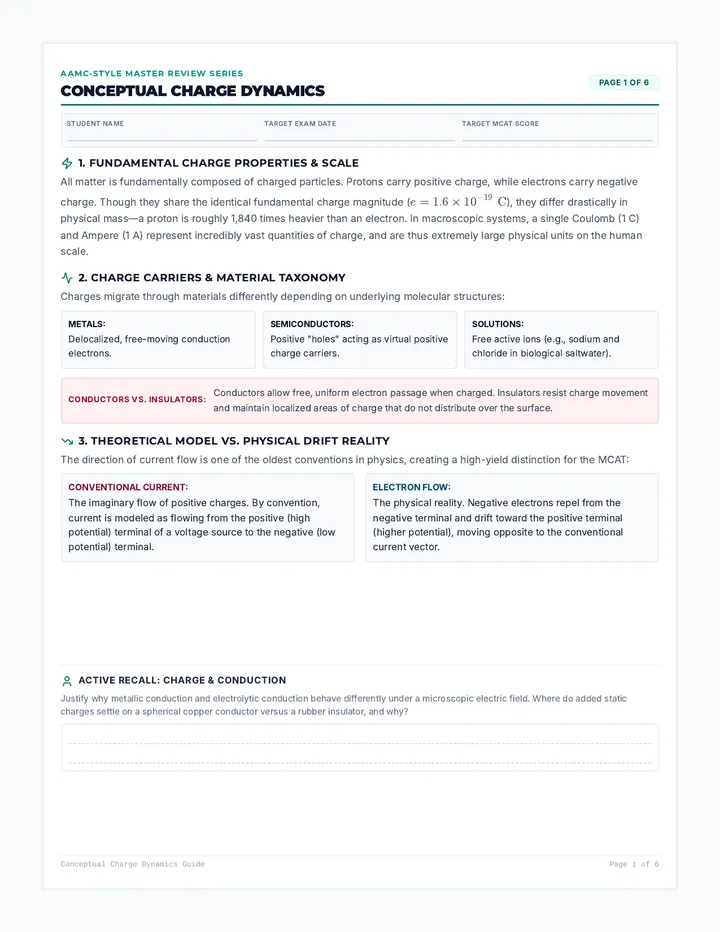
A high-yield, conceptual MCAT preparation lesson covering electrostatics, magnetism, and circuits. This lesson integrates core physical science principles with biological systems (like action potentials and MRI) and provides intuitive mental math shortcuts without relying on heavy mathematical formulas.
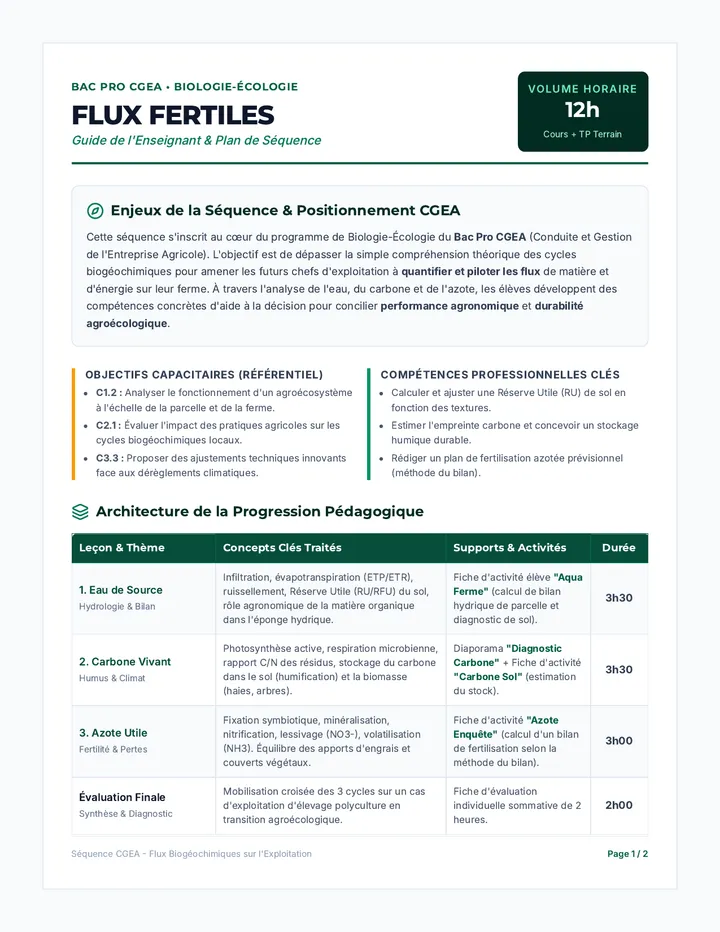
Une séquence pédagogique complète en Biologie-Écologie pour la classe de Bac Pro CGEA, centrée sur l'analyse et la quantification des cycles de l'eau, du carbone et de l'azote à l'échelle d'une exploitation agricole. Cette séquence articule approche agronomique pratique, fiches d'activités de diagnostic d'exploitation, diaporamas d'instruction et évaluations pour former les futurs chefs d'exploitation aux enjeux de la transition agroécologique.
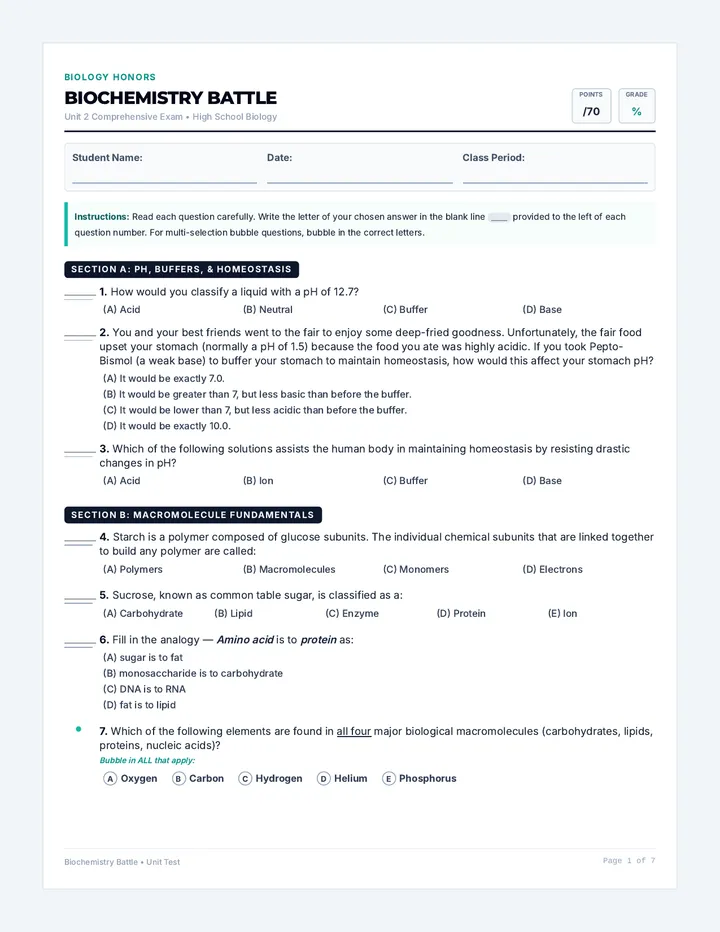
A comprehensive biology unit exam and matching teacher key assessing students' understanding of pH, buffers, macromolecule structures, lab identification, and enzyme kinetics.