A mastery-based lesson on the Thin Lens Equation and magnification formula, with a strong focus on sign conventions and algebraic problem-solving.
A comprehensive introduction to Health Information Management (HIM), focusing on essential terminology, legal standards like HIPAA, and the basics of medical coding (ICD-10-CM and CPT) for high school CTE students.
A comprehensive project guide for a deep-dive research presentation on chemical elements, including a detailed point-based rubric and a research organizer.
An introductory lesson on sizing water supply pipes using the Massachusetts 248 CMR plumbing code, focusing on Water Supply Fixture Units (WSFU) and table interpretation.
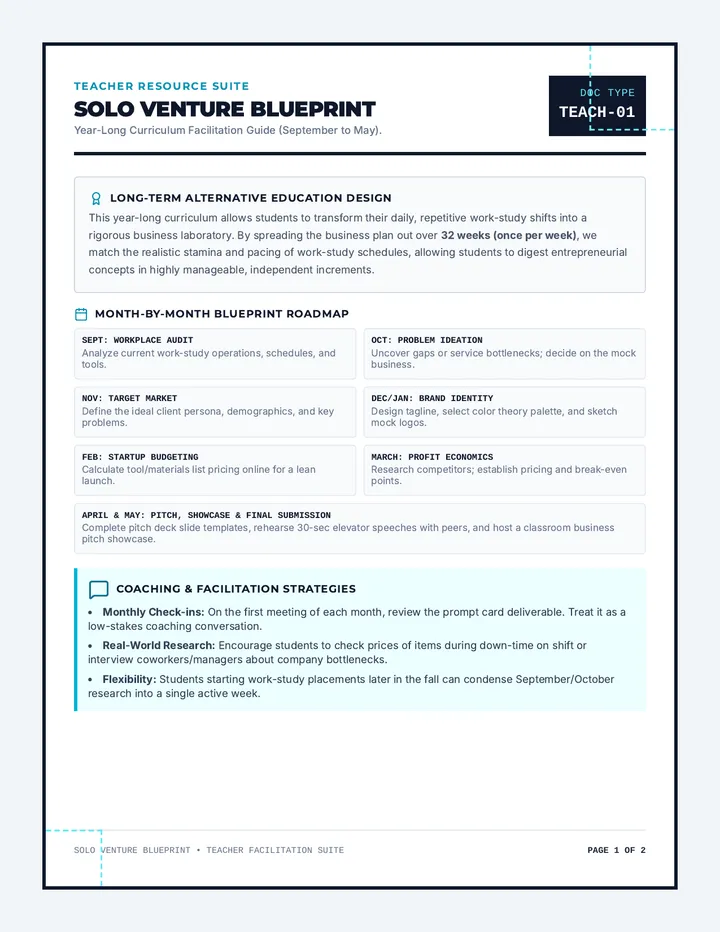
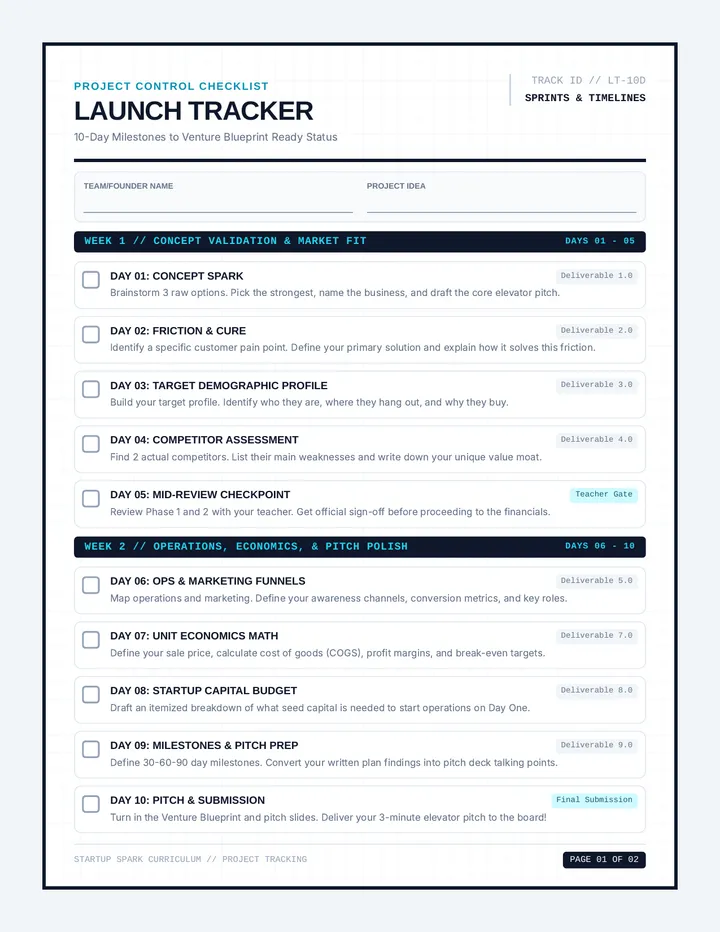
Teacher guidance and student tracking tools for the 5-week Tech Capstone project, including evaluation rubrics and progress monitoring.
Introduction au SQL dans le contexte du Big Data, de l'optimisation des requêtes et de la préparation des données pour l'IA.
Maîtriser l'art de combiner plusieurs tables avec INNER JOIN, LEFT JOIN et comprendre les relations entre les données.
Utilisation des fonctions d'agrégation (SUM, AVG, COUNT) et de la clause GROUP BY pour générer des rapports statistiques.
Apprendre à organiser les résultats de recherche avec ORDER BY, LIMIT et à éliminer les doublons avec DISTINCT.
Introduction aux concepts de base des bases de données et apprentissage des commandes SELECT, FROM et WHERE pour extraire des données spécifiques.
A comprehensive lesson on graphing and interpreting heating and cooling curves, focusing on phase changes and energy transfers.
A hands-on simulation lesson where students act as routers and servers to understand how data packets travel across the internet using IP addresses and physical infrastructure.
A discovery of the visible spectrum, rainbow colors, and a final unit quiz to celebrate learning.
Students investigate how light bounces off mirrors and how objects block light to create shadows.
An exploration of how light travels in straight lines and what happens when those beams are interrupted.
Students identify and differentiate between natural and artificial light sources using high-contrast visuals and sorting activities.
A comprehensive review of introductory chemistry lab concepts including pH calculations, organic nomenclature, functional group identification, and laboratory testing procedures.
A 90-minute investigation into how genetic mutations and chromosomal abnormalities lead to human disorders. Students act as 'genetic consultants' to analyze karyotypes, pedigrees, and mutation types.
A comprehensive 90-minute lesson on DNA, genes, chromosomes, and genetic crosses. Students explore the 'Blueprint of Life' through chunked instruction, Think-Pair-Share discussions, and hands-on modeling stations.
A 5-block (10 period) investigation into the human genome, focusing on patterns of inheritance, chromosomal disorders, and molecular biotechnology through the lens of polydactyly.
Teachers learn to break complex tasks into smaller, manageable steps using classroom routines and Iowa Core standards as examples.
A critical examination of how systemic inequities influence environmental health outcomes, focusing on Flint's water and urban air quality. Students analyze data and develop advocacy products to promote environmental justice.
A hands-on project where students explore waste management through the lens of Shoji Yamasaki's art, culminating in a creative video showcasing their own upcycling process or performance.
An extra credit project challenging students to live plastic-free for two weeks while researching the impacts of bioaccumulation and exploring sustainable alternatives. Students document their journey and findings in a formal scientific lab report.
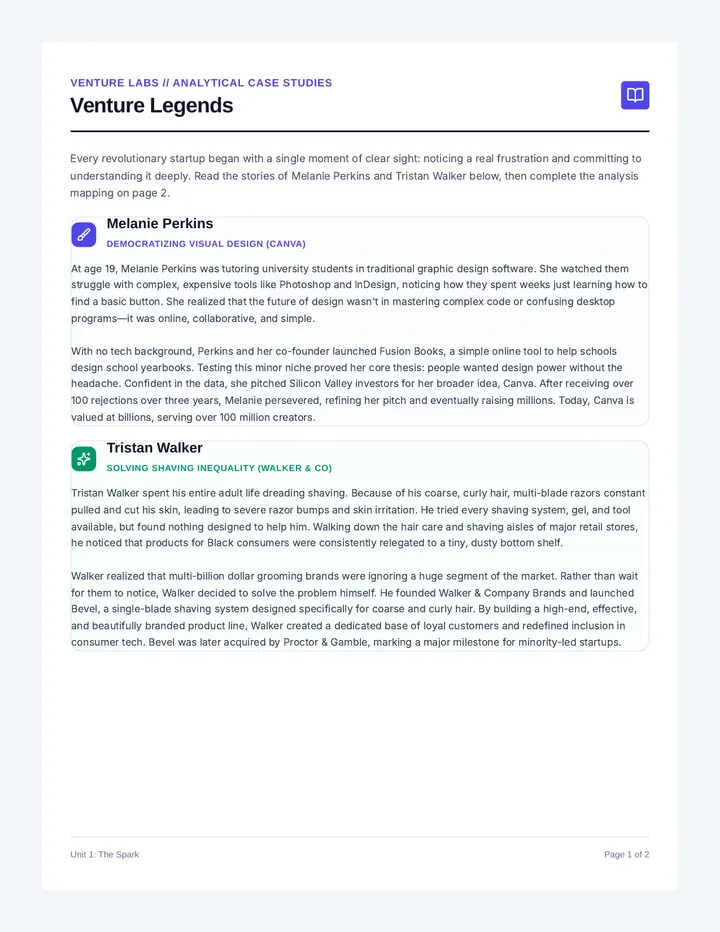
The final project compilation phase where students curate their best work from the term into a professional digital portfolio. Students learn the art of curation and how to publish a simple one-page website as a 'Digital Resume'.
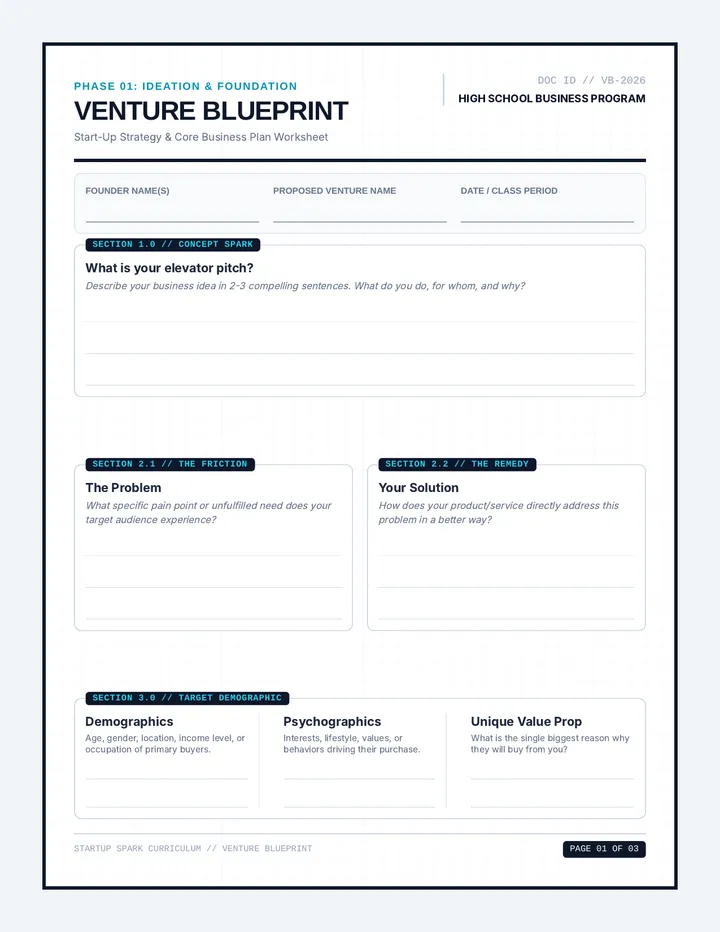
A lesson focused on post-pitch reflection and strategic iteration. Students conduct a SWOT analysis of their own performance and draft a 'Pivot' plan to refine their business concept based on audience feedback.
The unit capstone experience where students present their marketing campaigns as founders. Includes a two-day formal pitch event with peer judging, Shark Tank-style Q&A, and 'Class Cash' investment reflections.
A lesson focused on public speaking and professional presentation etiquette. Students learn non-verbal communication techniques, projection, and how to use digital slides as a backdrop rather than a teleprompter.
A lesson focused on data visualization and presentation flow. Students learn to simplify complex spreadsheets into high-impact slides, animate charts for storytelling, and finalize their full pitch deck.
A lesson focused on visual consistency and branding in pitch decks. Students learn to use master slides, image masking, and brand-aligned assets to create the first half of their digital marketing pitch.
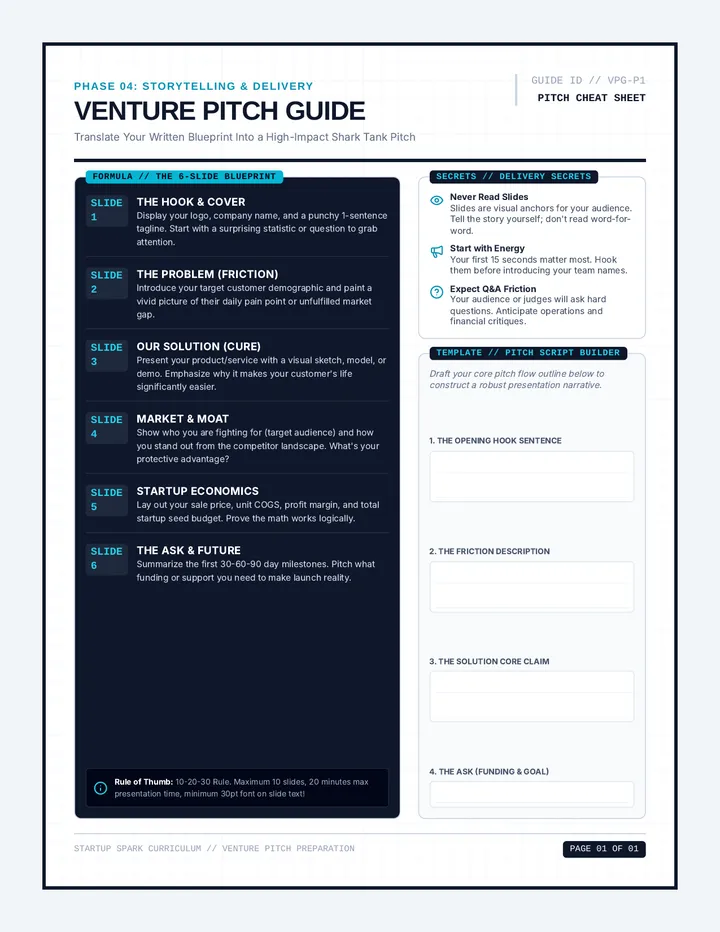
A lesson focused on business storytelling and pitch deck structure. Students learn to frame their marketing campaign as a problem-solving narrative using the 10-Slide Rule and 'invisible' design principles.
A lesson focused on designing large-format print advertisements. Students learn the differences between RGB and CMYK color modes, resolution requirements, and how to design for 'glanceability' using the Drive-By Test.
A lesson focused on creating high-impact vertical social media advertisements. Students learn the 'Thumb-Stop' rule, the 60/20/20 anatomy of mobile ads, and design safe-zone techniques in Canva.
A lesson focused on the core marketing message: the Value Proposition. Students learn the formula for persuasive messaging and how to design high-impact 'Hero Text' for digital landing pages.