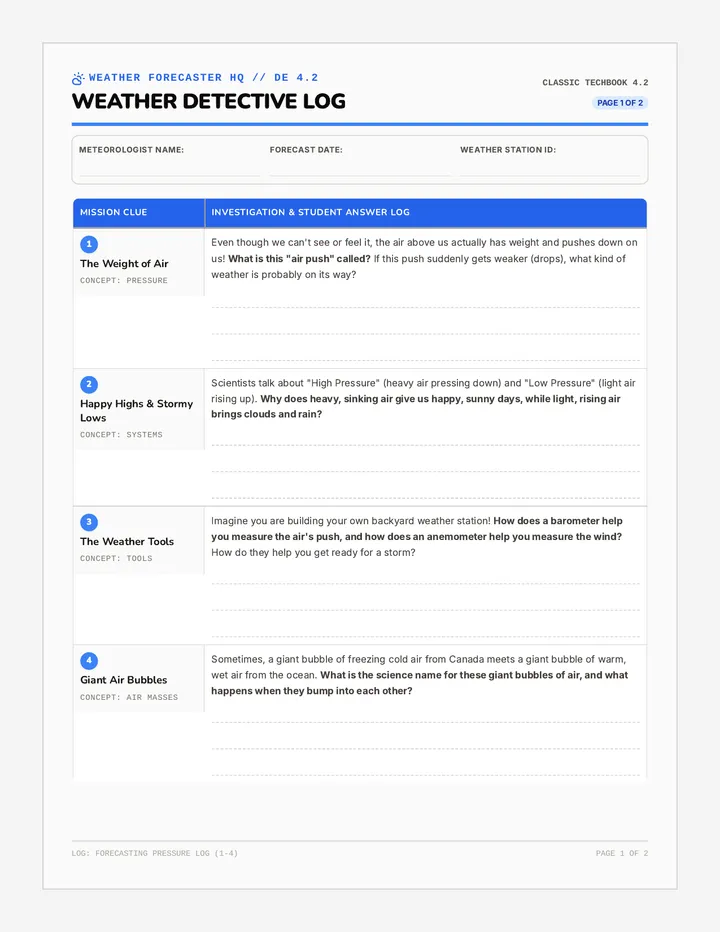
Students construct basic cup anemometers to visualize wind speed. While they may not measure exact miles per hour, they observe the difference between fast and slow spinning relative to wind strength.
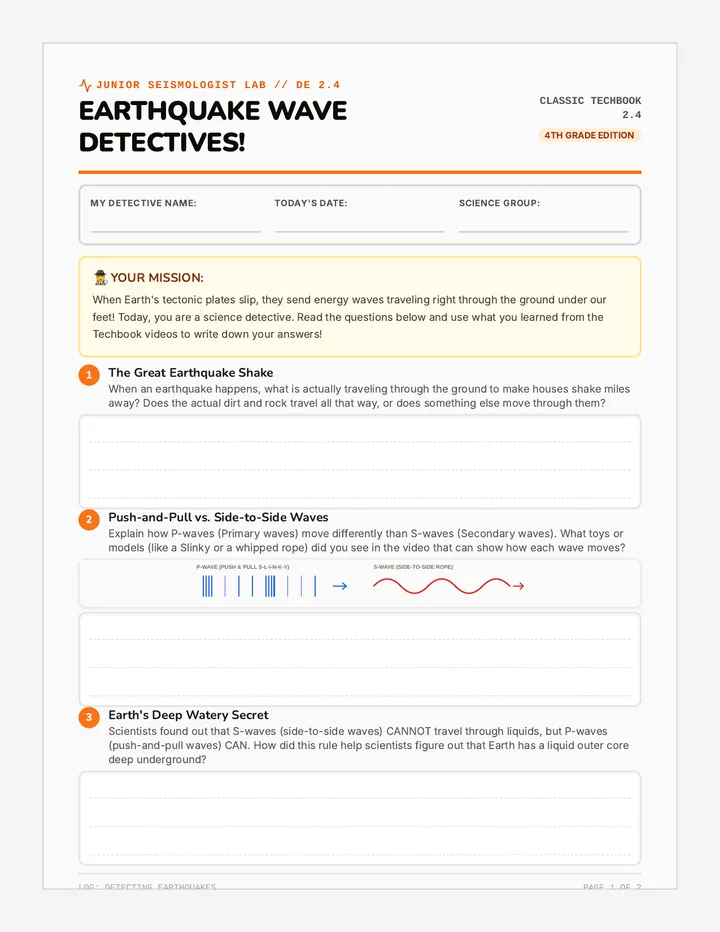
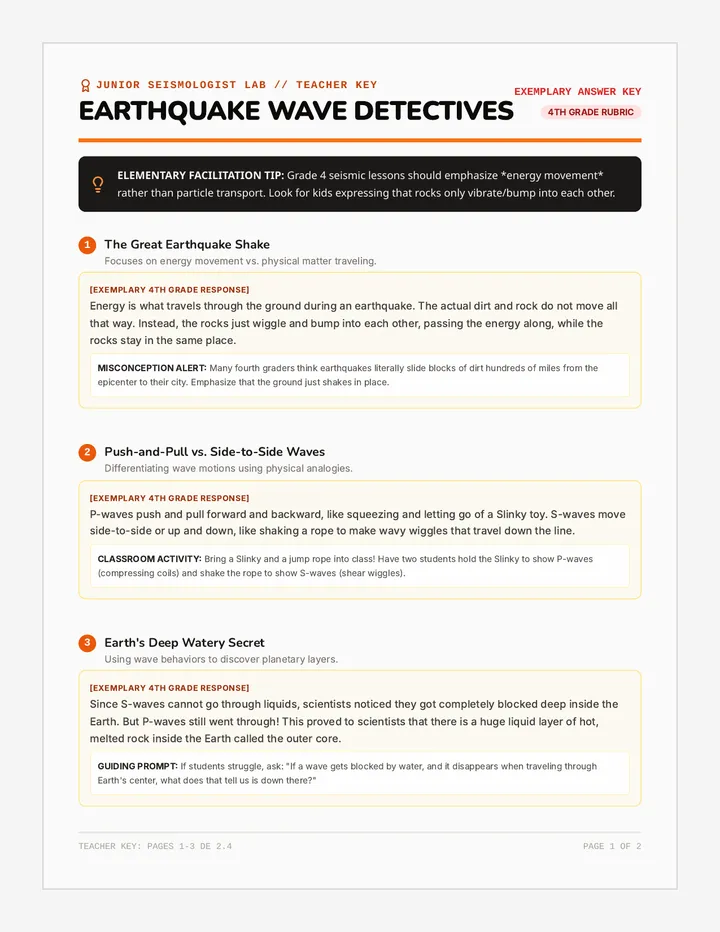
An earth and space science curriculum unit covering dynamic earth processes, earthquake wave mechanics, atmospheric pressure systems, and weather prediction techniques.
A master-level course module focusing on educational technology integration. Students design and record an online field trip showcasing five pedagogically sound websites, their integrated learning supports, and future career applications.
A stunning, highly professional 6-slide presentation guiding Master's students through the pedagogical requirements, website categories, and submission expectations for their Virtual Field Trip video project.
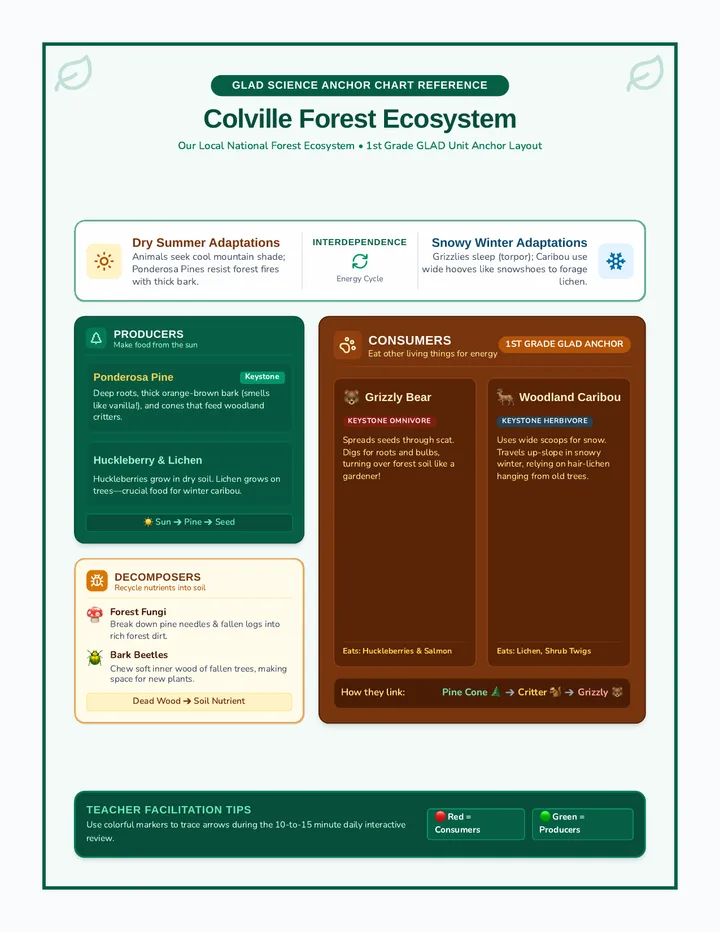
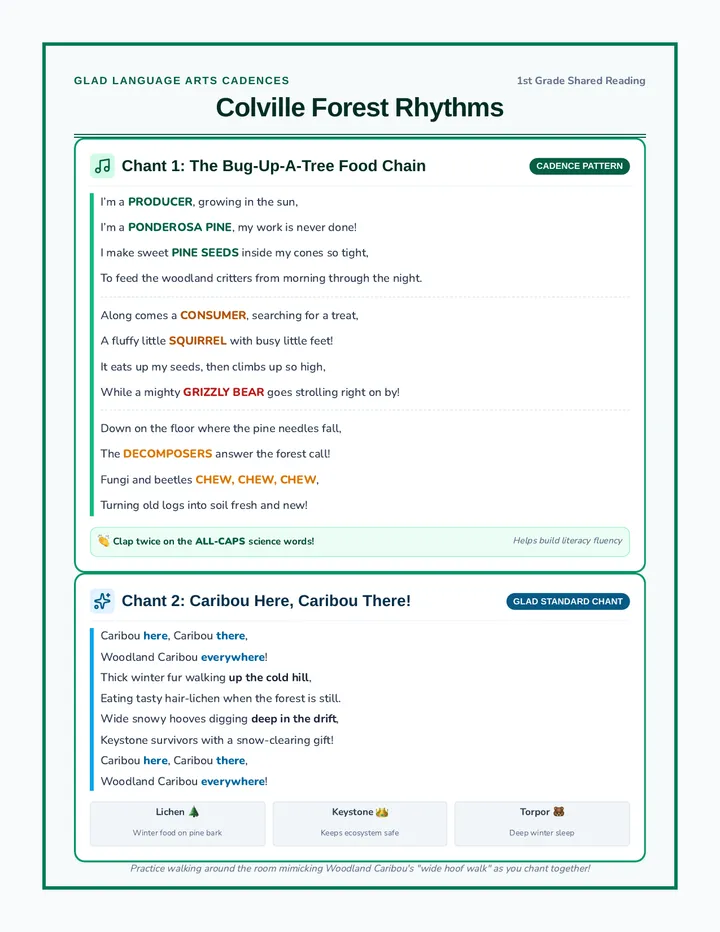
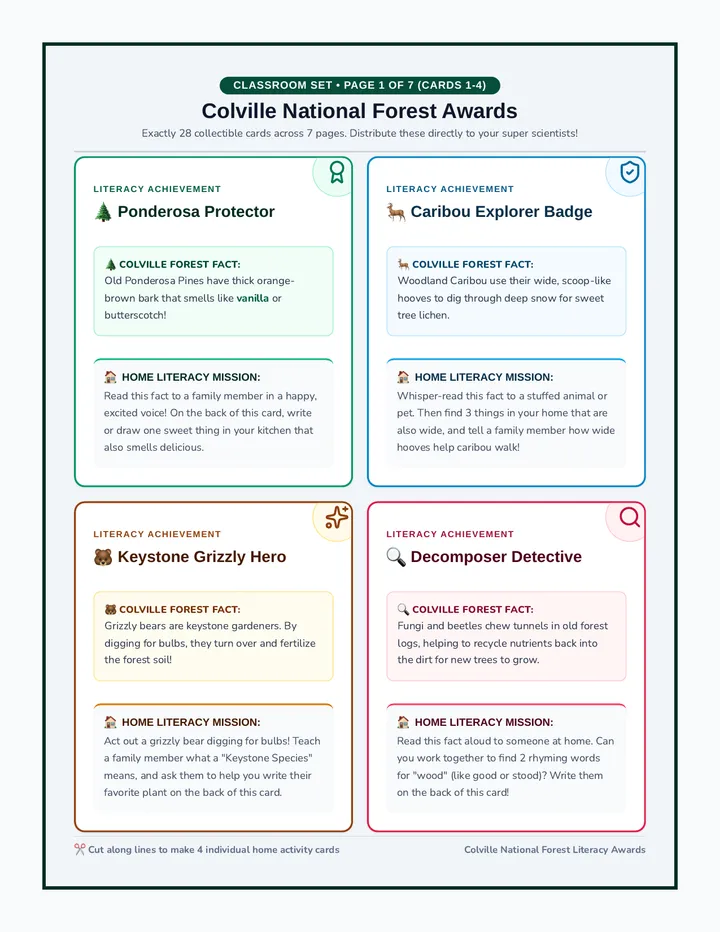
An immersive 1st-grade GLAD unit focused on the Colville National Forest ecosystem. Students explore food chains, interdependence, seasonal changes, and local keystone species through visual charts, rhythmic chants, and rewarding literacy achievements.
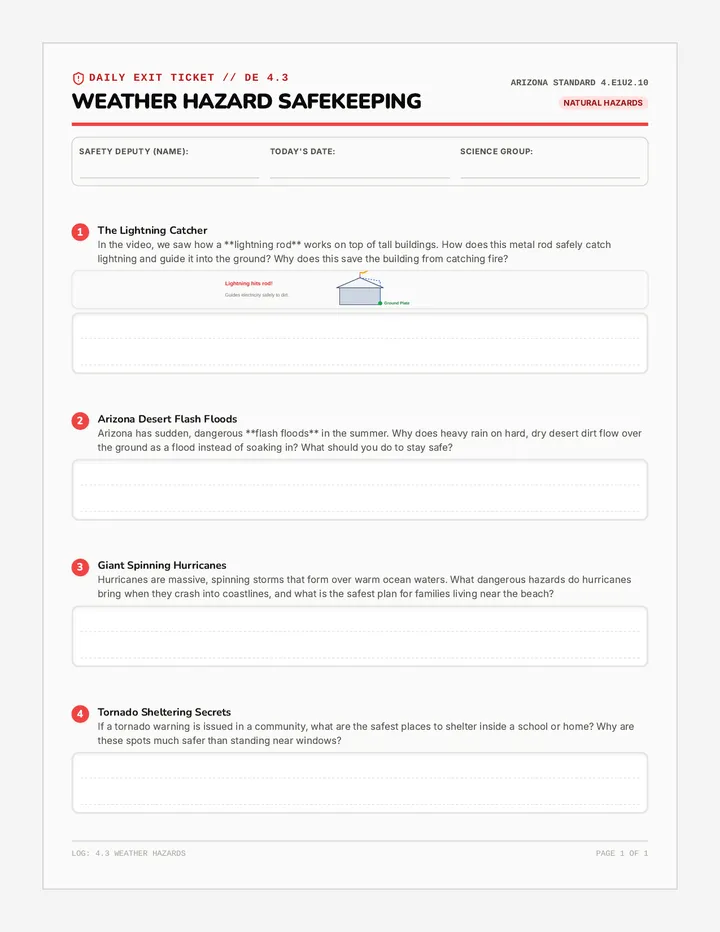
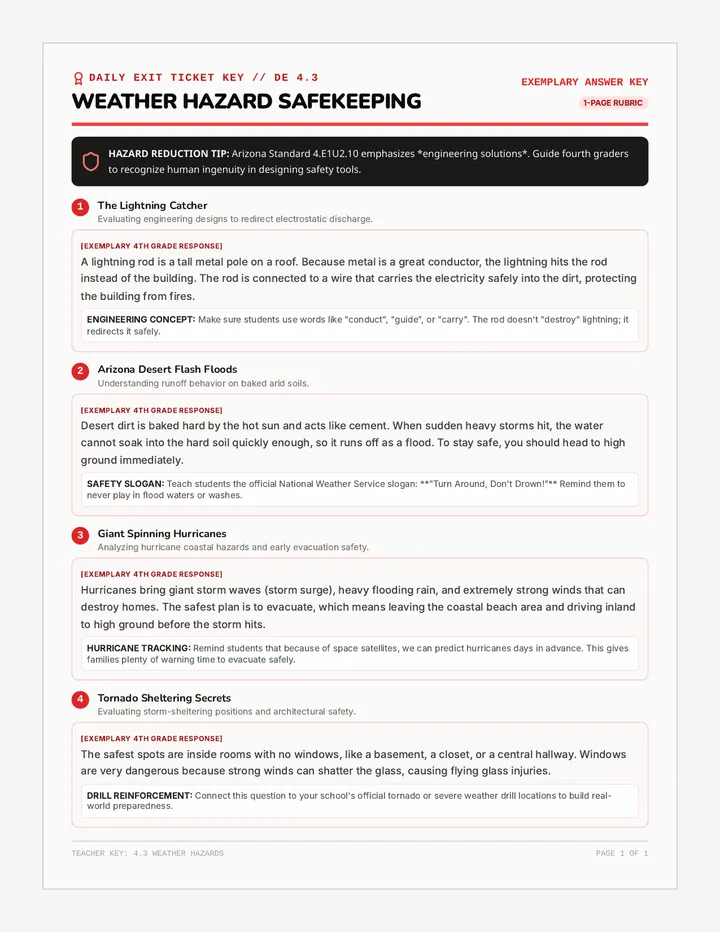
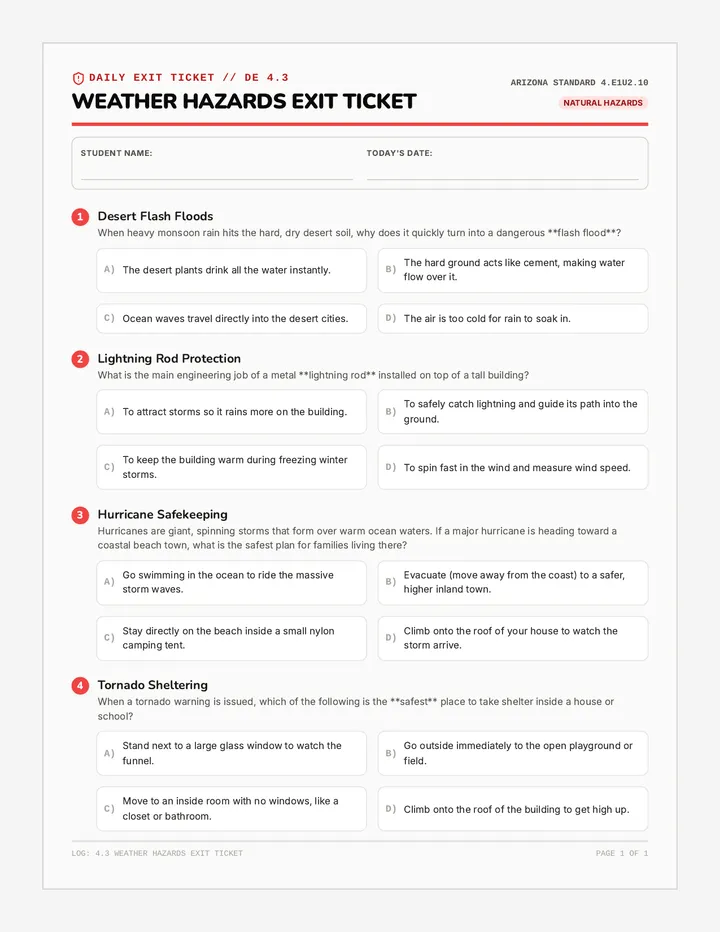
Students identify different types of severe weather hazards (like lightning, tornadoes, flash floods, and dust storms) and explore engineering solutions designed to keep communities safe.
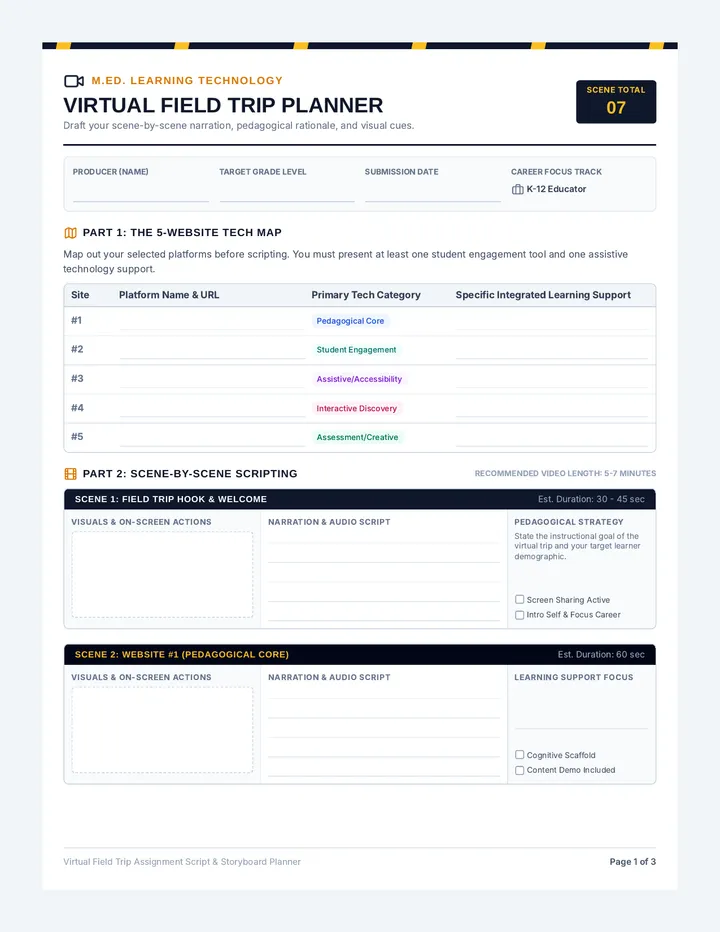
A comprehensive, high-quality 3-page storyboard and script planner designed for M.Ed. students to map out their virtual field trip video, showcasing pedagogical websites, student engagement platforms, and assistive technologies.
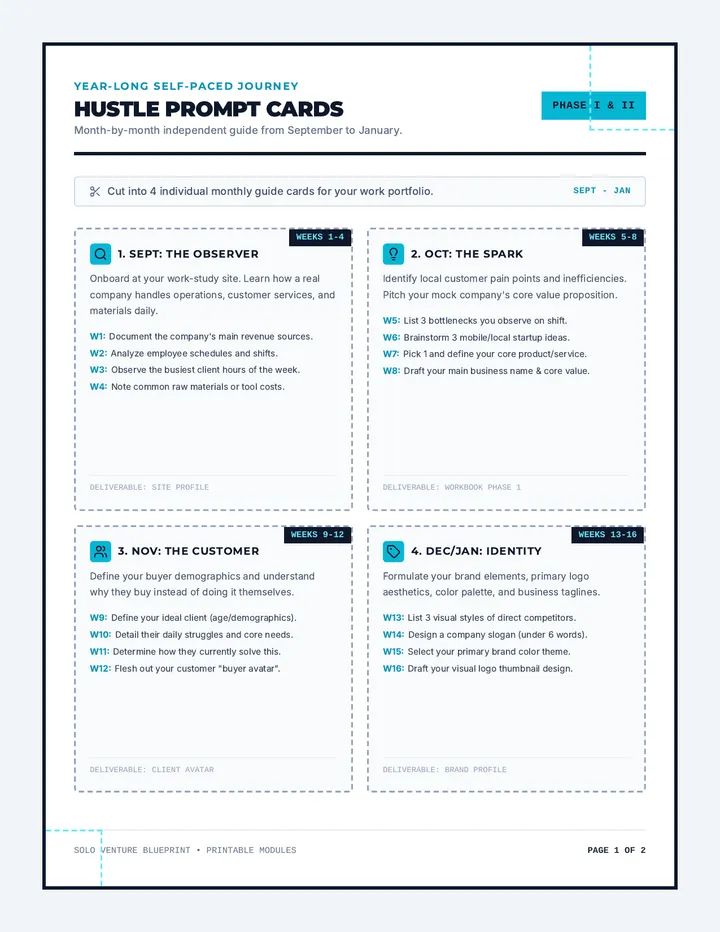
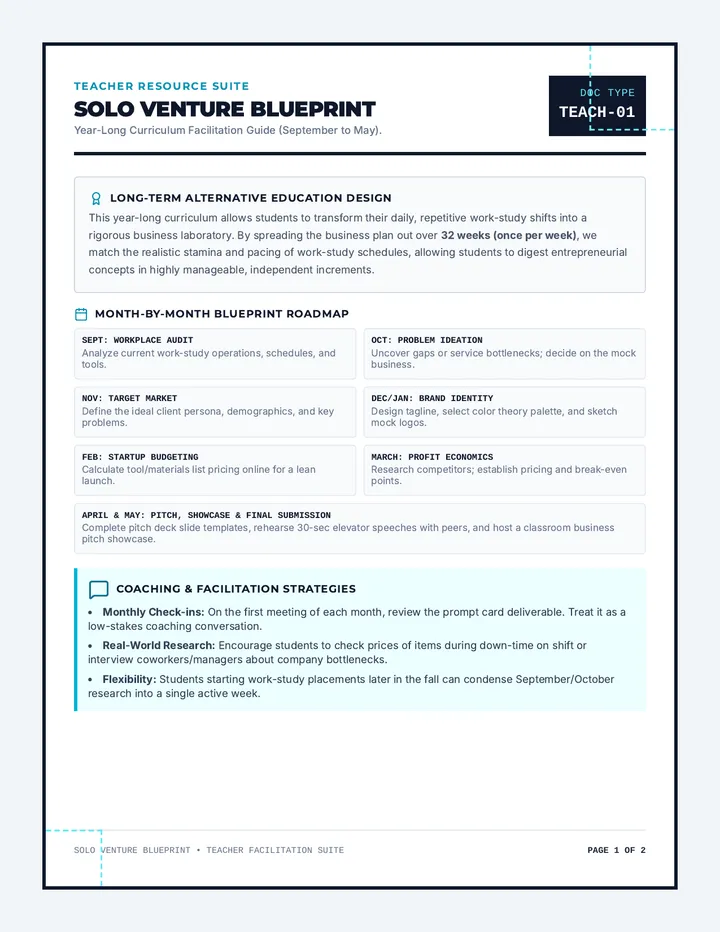
A year-long, self-paced entrepreneurship curriculum spanning September to May for alternative education students in work-study placements. Students transform real-world work experience into a modular business plan and slide presentation.
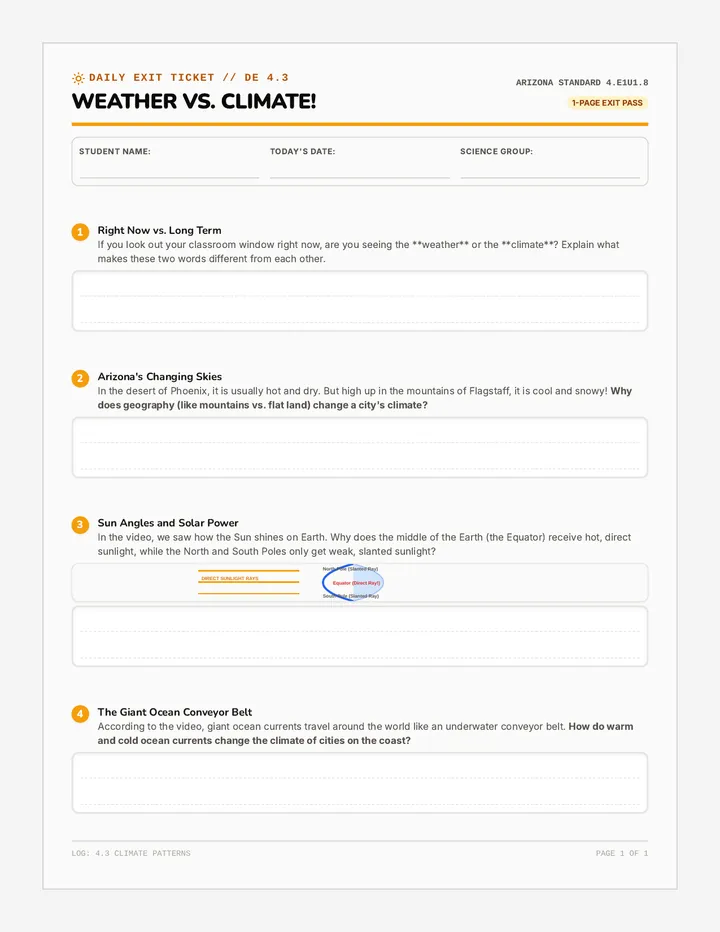
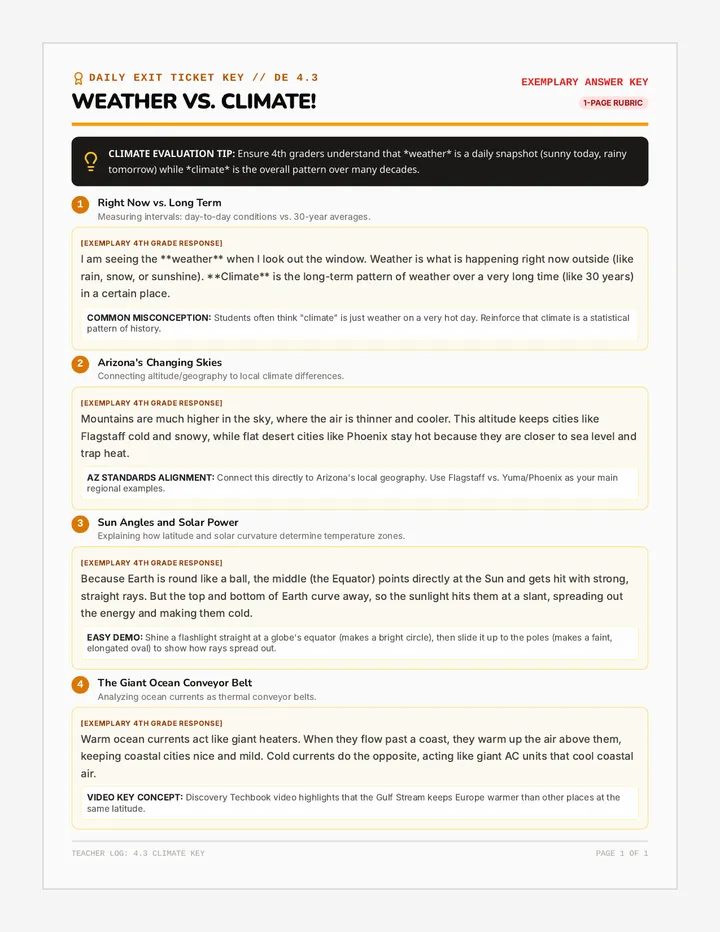
Students explore the key differences between weather and climate patterns, analyzing temperature, precipitation, and regional zones over time using global climate models.
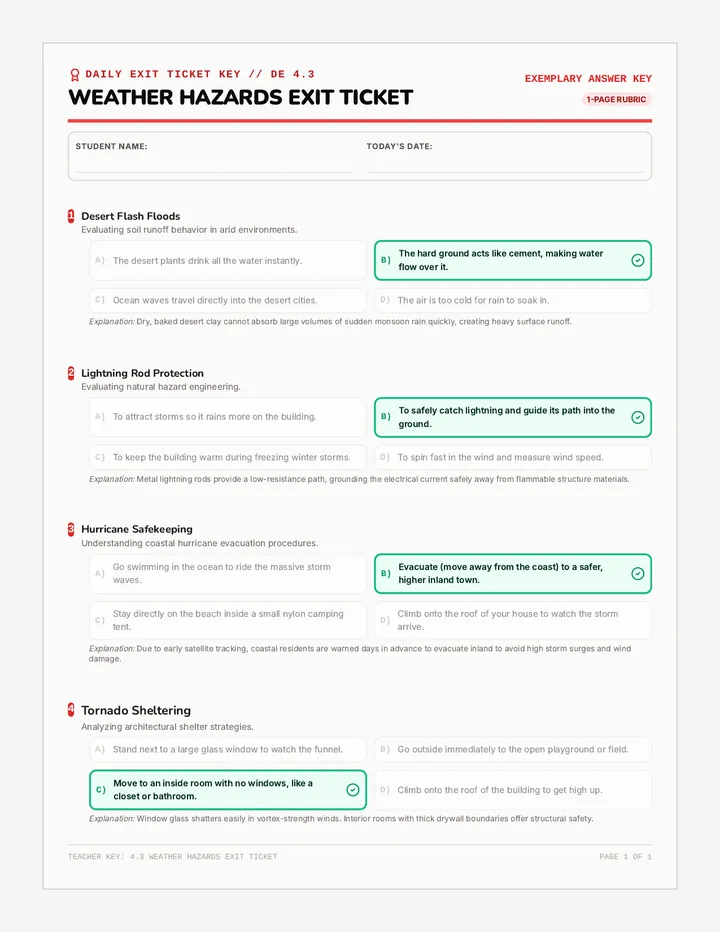
A comprehensive teacher answer key and scoring guide for the 4th-grade Weather Hazards Multiple Choice Quiz, clearly identifying correct choices and explanations.
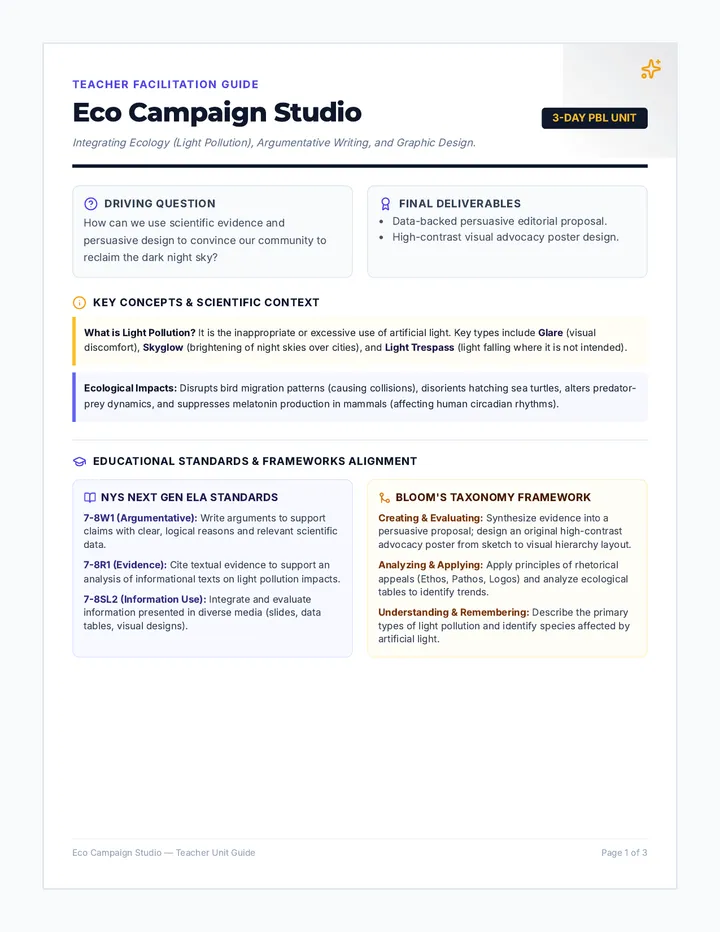
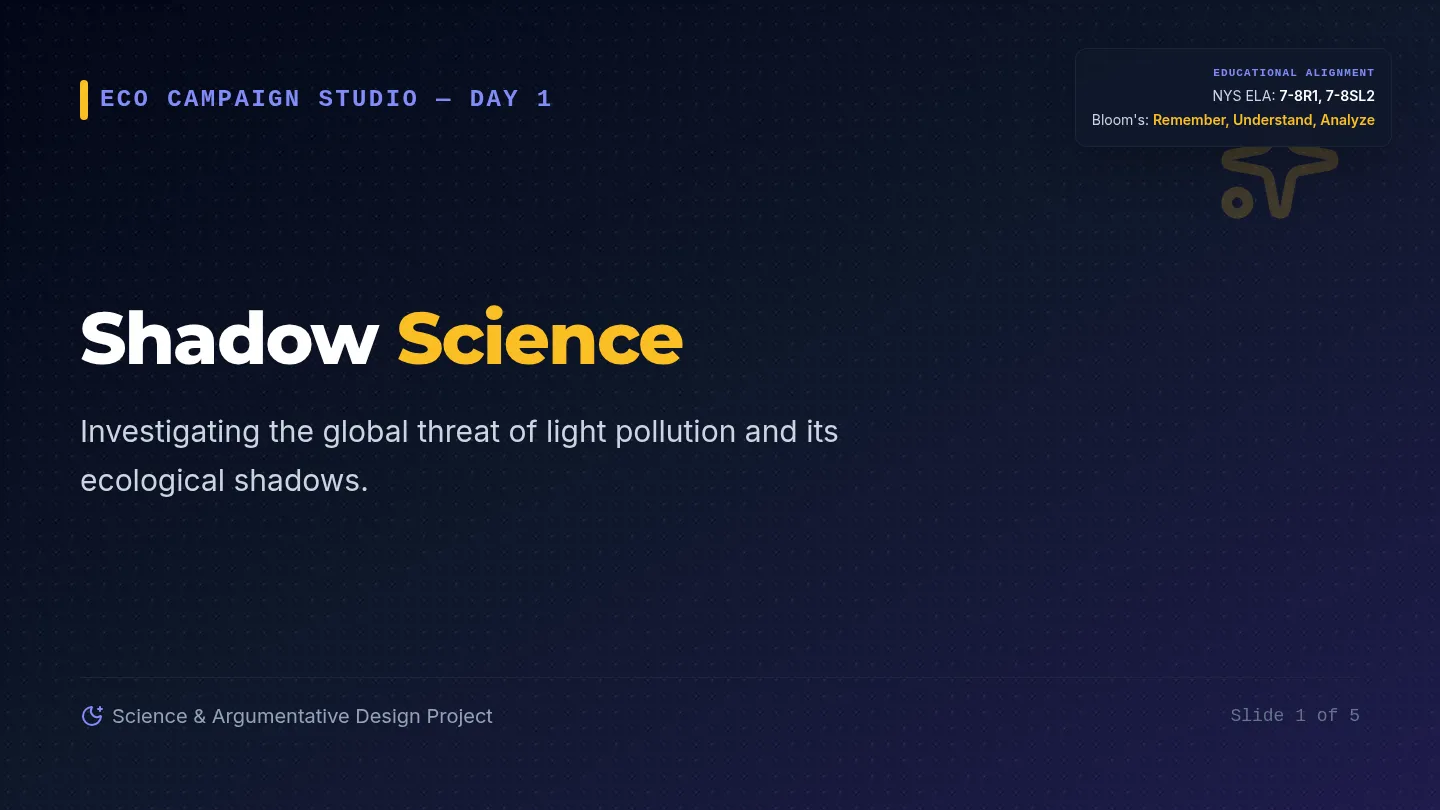
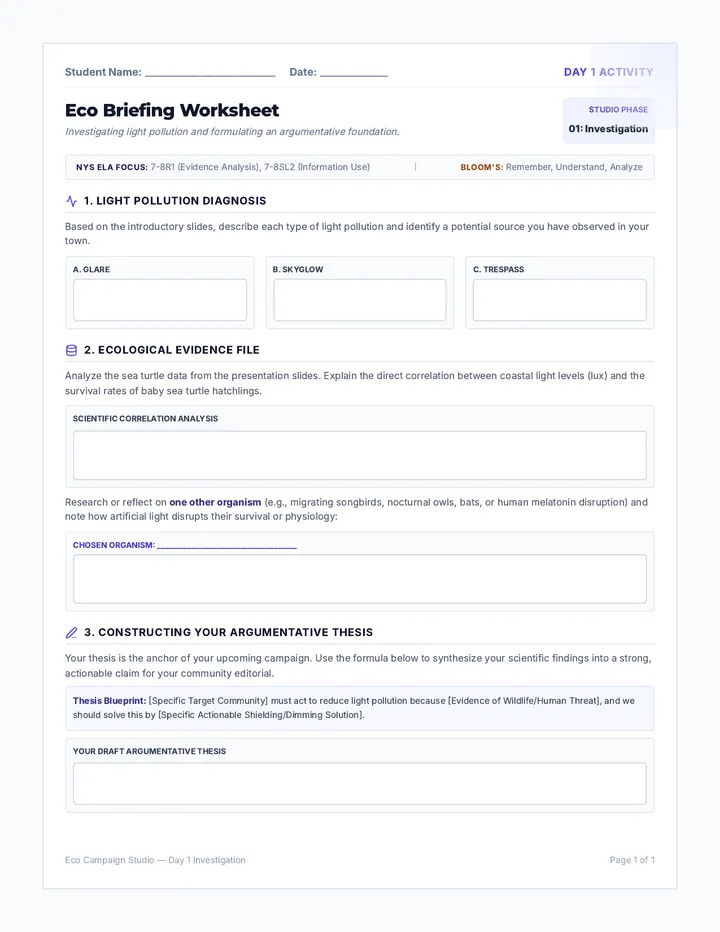
A cross-curricular, 3-day project-based unit combining science, argumentative writing, and graphic design. Students investigate the ecological impacts of light pollution, write a data-driven persuasive proposal, and design a community awareness campaign poster.
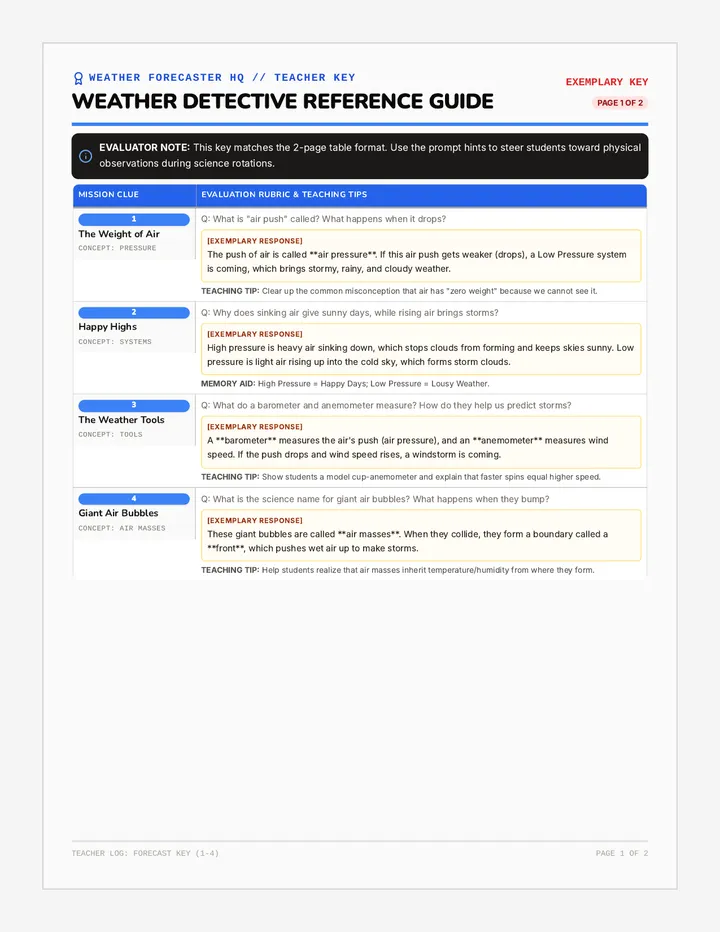
This lesson covers weather prediction techniques, atmospheric pressure systems, warm and cold fronts, and how meteorologists analyze satellite and radar data to forecast storms.
A single-page 4th-grade student multiple choice worksheet featuring 4 conceptual questions on severe storm hazards, flash floods, hurricanes, and engineering protection, styled with identical options.