Lenny.com
Explore
Create
ActivitiesNewMathEnglish Language ArtsScience & EngineeringSocial StudiesGlobal LanguagesHealth & Physical EducationSpecial EducationCounseling & Life SkillsArts & CreativityESL
Lenny.com
Lenny.com
Explore
Create
ActivitiesNewMathEnglish Language ArtsScience & EngineeringSocial StudiesGlobal LanguagesHealth & Physical EducationSpecial EducationCounseling & Life SkillsArts & CreativityESL
Lenny.com
Lenny.com

Solutions

Lenny for EducatorsLenny for SchoolsLenny for Districts

Product

ExploreSign inCreateSupportAbout

Resources

Getting startedMTSS Acceleration Program

© 2026 Lenny Learning Inc.

TermsPrivacyAccessibility
LinkedInInstagramX
Lenny

Novel Study

Deep analysis of character development, plot structure, and thematic elements through targeted literary works. Strengthens reading comprehension and critical thinking using evidence-based discussion and writing.

English Language ArtsPhonics & Reading FoundationsLetter IdentificationLearn Letters A-ZLowercase and Uppercase LettersConsonants and VowelsLetter-Sound AssociationsLetter-Sound Associations: LowercaseLetter-Sound Associations: UppercaseBeginning and Ending SoundsRhymingBlending And SegmentingShort VowelsShort Vowel SoundsConsonant BlendsConsonant DigraphsBlends, Digraphs, and TrigraphsDigraphs, Blends, and Silent LettersLong Vowel SoundsLong Vowel PatternsShort and Long VowelsShort and Long Vowel PatternsSilent EVowel SoundsVowel TeamsR-Controlled VowelsDiphthongs: Oi, Oy, Ou, OwVariant VowelsVariant, Diphthong, And R Vowel PatternsSoft G And CSight WordsIrregular WordsWord RecognitionSyllablesSyllable TypesTwo-Syllable WordsMultisyllabic WordsPhoneme ManipulationDecodable TextsVocabularyAction WordsQuestion WordsNouns and AdjectivesClassify WordsCompound WordsSynonyms and AntonymsHomophonesHomophones and HomonymsShades of MeaningContext CluesPrefixes and SuffixesGreek and Latin RootsAnalogiesIdioms and AdagesForeign Words and ExpressionsWord Choice and UsageReference SkillsReading ComprehensionRead-Along Literary TextsRead-Along Informational TextsReality vs. FictionStory ElementsCharacterSequenceMain IdeaCause And EffectCompare And ContrastReading StrategiesText StructureAuthor's PurposeAuthor's Purpose And ToneAuthor's PerspectivePoint Of ViewThemeInference And ThemeInference And AnalysisPoetry ElementsLiterary DevicesAnalyzing LiteratureAnalyzing Informational TextsComparing TextsAudience, Purpose, And ToneBusiness DocumentsNovel StudyNonfiction Book StudyGrammar & MechanicsSentencesNounsVerbsAdjectivesPronounsCapitalizationPunctuationContractionsConjunctionsPrepositionsArticlesAdjectives And AdverbsVerb TypesVerb TensePronouns And AntecedentsPronoun TypesSubject-Verb AgreementDirect And Indirect ObjectsSentences, Fragments, And Run-OnsPhrases And ClausesCommasSemicolons, Colons, And CommasDashes, Hyphens, And EllipsesSpellingAbbreviationsFormattingVerb Tense And MoodMisplaced ModifiersWritingDescriptive DetailsCreative WritingOpinion WritingTopic SentencesOrganizing WritingLinking WordsSentence VarietyIntroductions And ConclusionsPersuasive And Opinion WritingExpository WritingPersuasive StrategiesDeveloping And Supporting ArgumentsTopic Sentences And Thesis StatementsSummarizingResearch SkillsEditing And RevisingActive And Passive Voice=Writing Clearly And ConciselyDebate & Public SpeakingPublic Speaking BasicsPersuasive TechniquesClaims and EvidenceTypes of ArgumentsReasoning TypesLogical FallaciesTopic ResearchOrganizing EvidenceDebate Speech OrganizationAttacking and Defending ArgumentsClash and EngagementImpact CalculusQuestioning and Cross-ExaminationCritical ThinkingInformal LogicFormal LogicInductive Reasoning

Videos

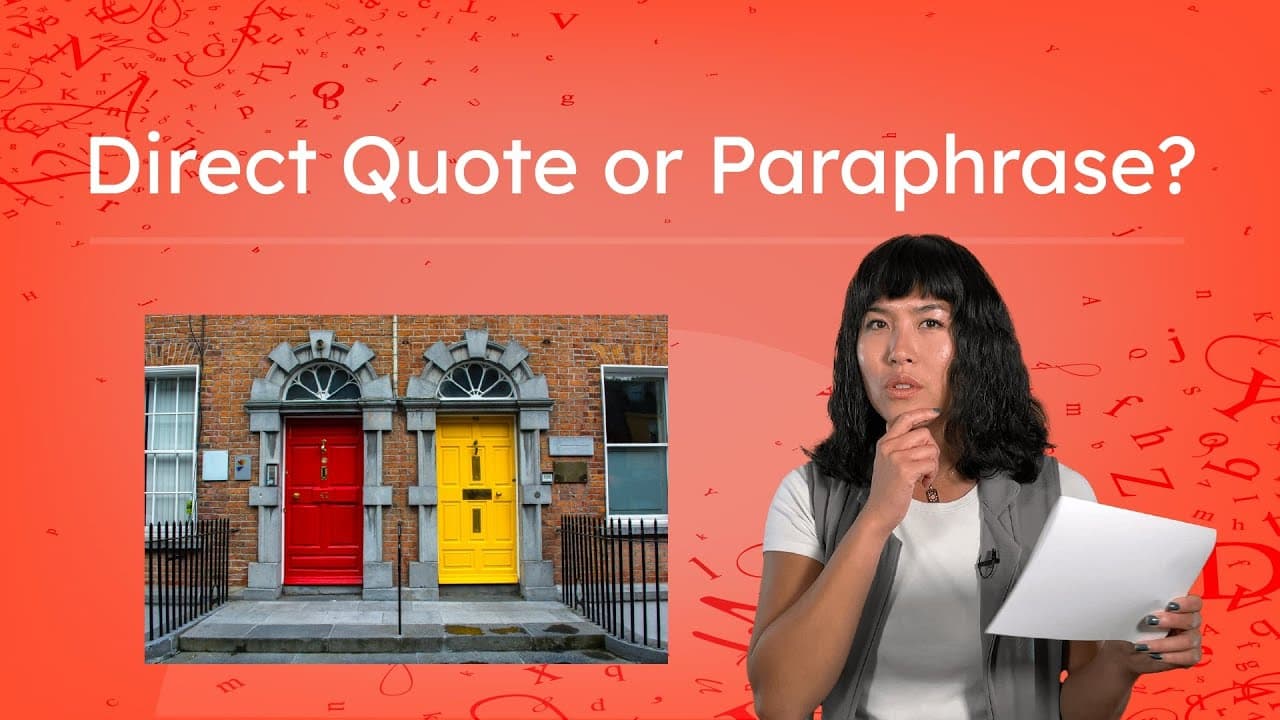
When to Quote vs. When to Paraphrase in Essays

When to Quote vs. When to Paraphrase in Essays

This instructional video guides high school students through the critical writing decision of when to use a direct quote versus a paraphrase in analytical essays. Using Toni Morrison's novel 'Beloved' as a case study, the presenter demonstrates how to integrate evidence effectively to support a thesis statement about literary motifs and character memory. The video distinguishes between analyzing specific language (which requires quotes) and summarizing events (which uses paraphrasing). The content covers key writing concepts including thesis statements, full direct quotes, partial quotes, paraphrasing, explanation sentences, and analysis sentences. It provides visual examples of how to structure a body paragraph, showing text on screen that integrates evidence with the student's own voice. The lesson emphasizes that the choice of evidence format depends entirely on the writer's purpose and what they intend to analyze. For educators, this video serves as an excellent model for teaching evidence integration and literary analysis. It moves beyond simple definitions to show the *why* and *how* of writing. Teachers can use this to help students move away from "quote bombing" (dropping quotes without context) and towards sophisticated embedding of partial quotes and meaningful analysis of diction and syntax.

Miacademy & MiaPrep Learning ChannelMiacademy & MiaPrep Learning Channel

10mins 30s

How Ancient Philosophies Shape Modern Asian Literature

How Ancient Philosophies Shape Modern Asian Literature

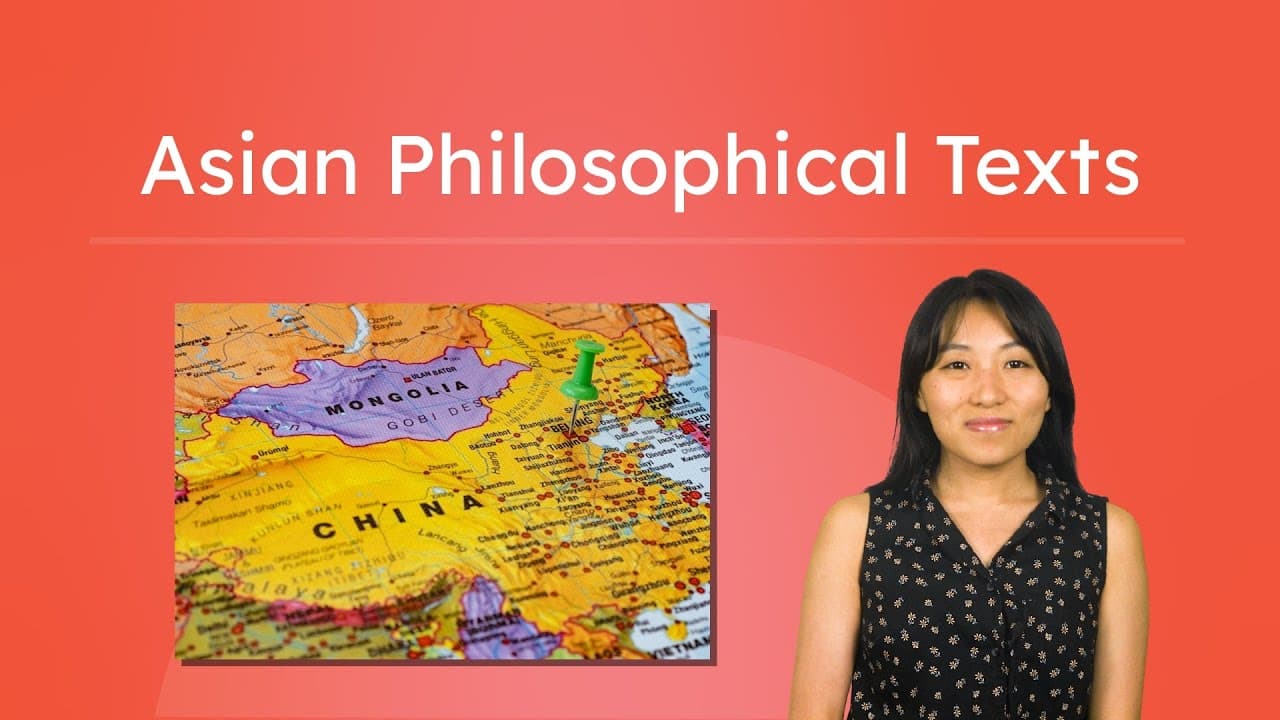
This educational video introduces students to four major Asian philosophies—Confucianism, Taoism, Buddhism, and Hinduism—and explores how these ancient belief systems influence contemporary Asian literature. Using a narrative framing device involving a writer named Liu Hao who has lost his memory, the host guides viewers through the definitions, key texts, and core tenets of each philosophy. The video emphasizes that philosophy is the study of life's important questions and encourages students to reflect on their own guiding principles. The lesson provides a structured comparison of the four philosophies, highlighting their unique focuses—from Confucianism's emphasis on social order and respect to Taoism's connection with nature. It explains the concept of "philosophical literature" and demonstrates how to identify philosophical themes in modern texts. A specific analysis of an excerpt from Cao Wenxuan's novel *Bronze and Sunflower* serves as a model for how students can spot Taoist influences like appreciating nature and "going with the flow" in character actions. Ideally suited for middle school Language Arts or World History classes, this video bridges the gap between abstract historical concepts and concrete literary analysis. It provides clear definitions, opportunities for student interaction through pause-and-think moments, and real-world examples of authors like Linda Sue Park and Grace Lin who incorporate these traditions. Teachers can use this resource to introduce a unit on world mythology, Asian literature, or to teach the skill of analyzing theme and cultural context in fiction.

Miacademy & MiaPrep Learning ChannelMiacademy & MiaPrep Learning Channel

8mins 57s

Controlling Time and Pacing in Creative Writing

Controlling Time and Pacing in Creative Writing

This engaging video lesson explores the concept of "pacing" in creative writing, teaching students how authors manipulate time to influence a reader's experience. Using a thematic hook of escaping a room with a ticking clock, the presenter draws an analogy between film direction and writing, explaining that while time in real life is constant, writers have the unique power to speed up or slow down time within a story. The video defines pacing as the speed and flow of a story's events and demonstrates how different paces create different emotional impacts—excitement and suspense versus reflection and character development. The lesson breaks down specific, actionable strategies for controlling pacing. For fast-paced scenes, students learn the "less is more" approach: using short sentences, fragments, rapid dialogue, and minimal description to create urgency. Conversely, for slow-paced scenes, the "more is more" strategy is introduced: utilizing longer sentences, extended dialogue, and rich, sensory details to encourage readers to linger. The video uses excerpts from *A Wrinkle in Time* as mentor texts to illustrate these concepts in practice. This resource is highly valuable for English Language Arts classrooms, specifically for creative writing units and literary analysis. It moves beyond abstract definitions to provide concrete tools students can use during the revision process. By understanding how sentence structure and detail affect mood, students can make intentional choices to keep their readers engaged, whether they are crafting an action-packed climax or an emotional character moment.

Miacademy & MiaPrep Learning ChannelMiacademy & MiaPrep Learning Channel

9mins

Building Your Essay Around a Strong Thesis Statement

Building Your Essay Around a Strong Thesis Statement

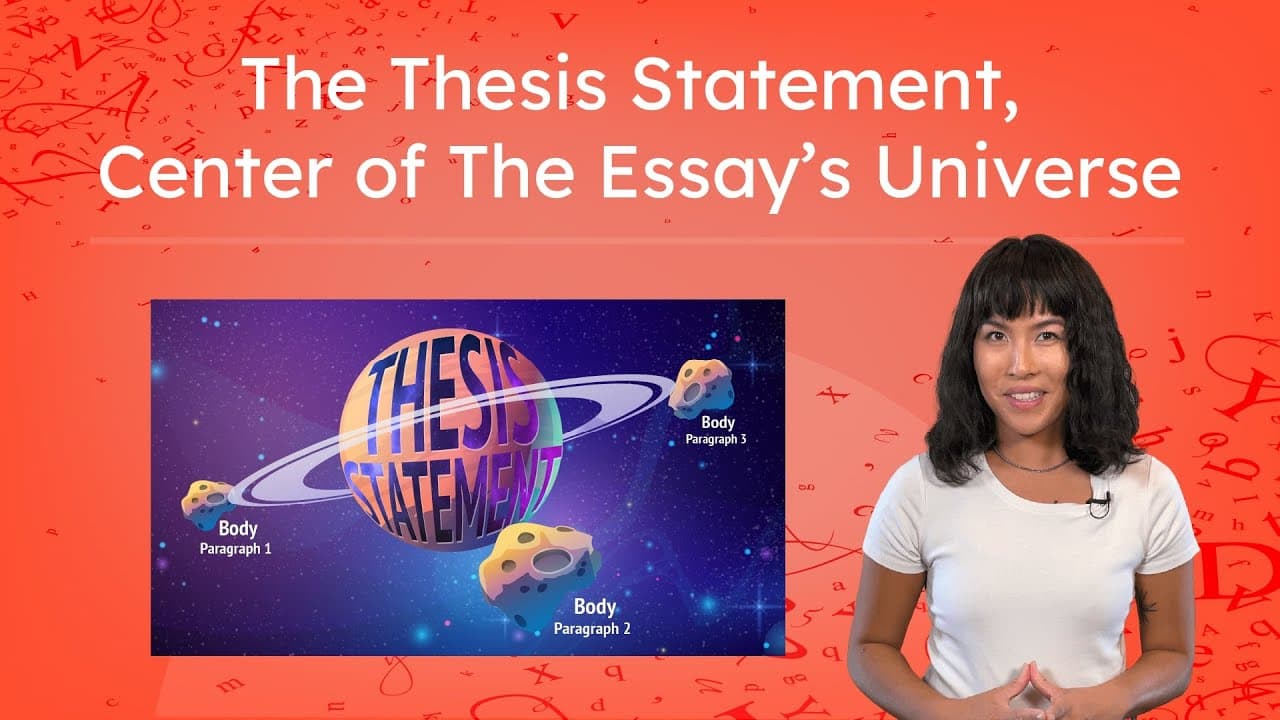
This engaging video lesson uses an extended metaphor of a solar system to explain the relationship between a thesis statement and the body paragraphs of an essay. The narrator guides students through the definition of a thesis statement, emphasizing that it must be the central argument around which the rest of the paper revolves. The video breaks down the criteria for a strong thesis—specifically that it must be arguable and specific—and demonstrates how to construct one using Sandra Cisneros's novel "The House on Mango Street" as a case study. The content dives deep into the structural mechanics of essay writing, showing how a thesis statement serves as a roadmap for the entire paper. It explicitly models how to extract key points from a thesis to create distinct topic sentences for body paragraphs. Through a step-by-step example, the host shows how specific experiences of the protagonist, Esperanza, translate into focused arguments for individual paragraphs, effectively teaching students how to outline their writing before they even begin drafting. This resource is highly valuable for high school English classrooms as it demystifies the abstract concept of "essay flow." By visualizing the thesis as a planet and body paragraphs as moons, it provides a concrete mental model for organization. The video includes built-in pause points for reflection, checks for understanding, and a "growth mindset" check-in, making it an excellent interactive tool for introducing literary analysis essays or argumentative writing units.

Miacademy & MiaPrep Learning ChannelMiacademy & MiaPrep Learning Channel

9mins 51s

Exploring the Life and Legacy of Toni Morrison

Exploring the Life and Legacy of Toni Morrison

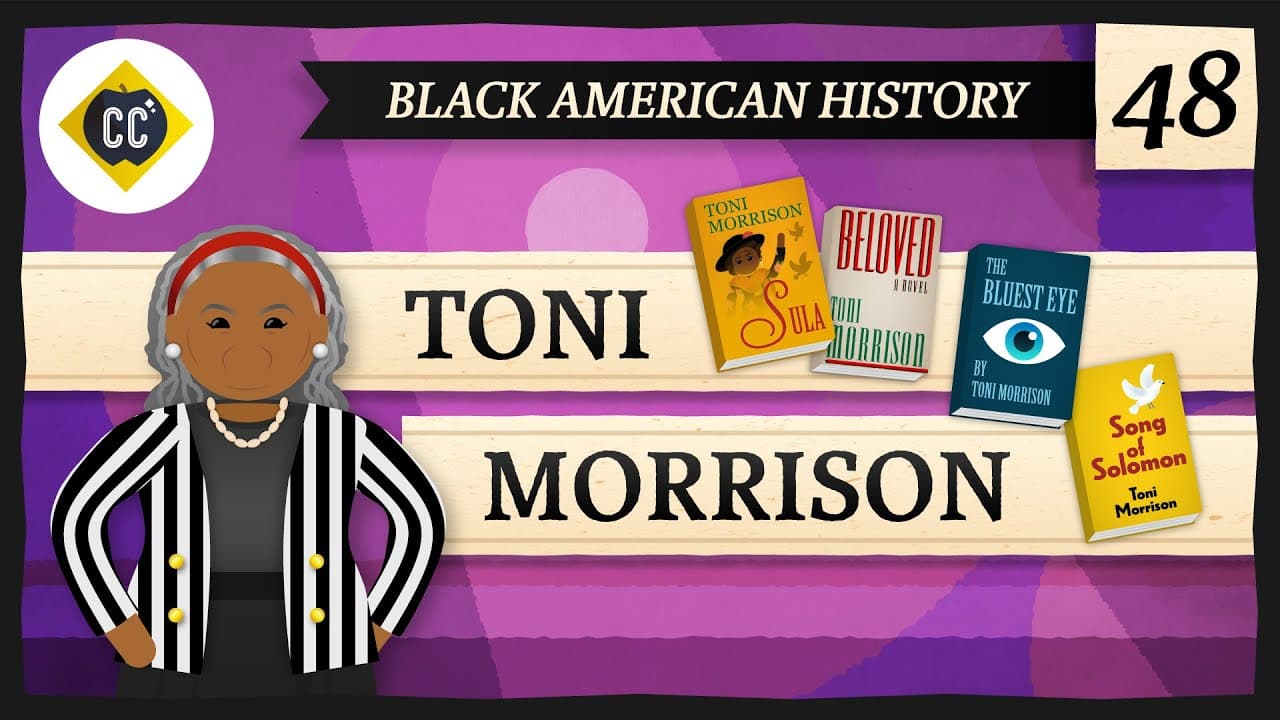
This educational video provides a comprehensive biography of Toni Morrison, one of the most celebrated authors in American literature. Hosted by Clint Smith, the video traces Morrison's journey from her childhood in Lorain, Ohio, as Chloe Wofford, to her transformation into a Nobel Prize-winning author. It covers her academic background at Howard and Cornell Universities, her pivotal role as the first Black female senior editor at Random House, and her prolific writing career that challenged the traditional literary canon. The video explores the central themes of Morrison's work, including the Black American experience, the psychological impacts of racism, and the complexities of memory and trauma. Specific attention is given to her major novels, such as 'The Bluest Eye,' 'Sula,' 'Song of Solomon,' and her masterpiece, 'Beloved.' The narrative highlights how Morrison centered Black lives and perspectives in her storytelling, refusing to let her work be defined or limited by the white gaze. For educators, this resource serves as an excellent introduction to Morrison's literary contributions and the historical context of her work. It bridges English Language Arts and Social Studies by connecting literature to real-world history, such as the story of Margaret Garner which inspired 'Beloved.' The video also discusses the importance of representation in publishing and the cultural impact of figures like Oprah Winfrey in bringing Black literature to the mainstream.
CrashCourseCrashCourse

12mins 1s

Materials

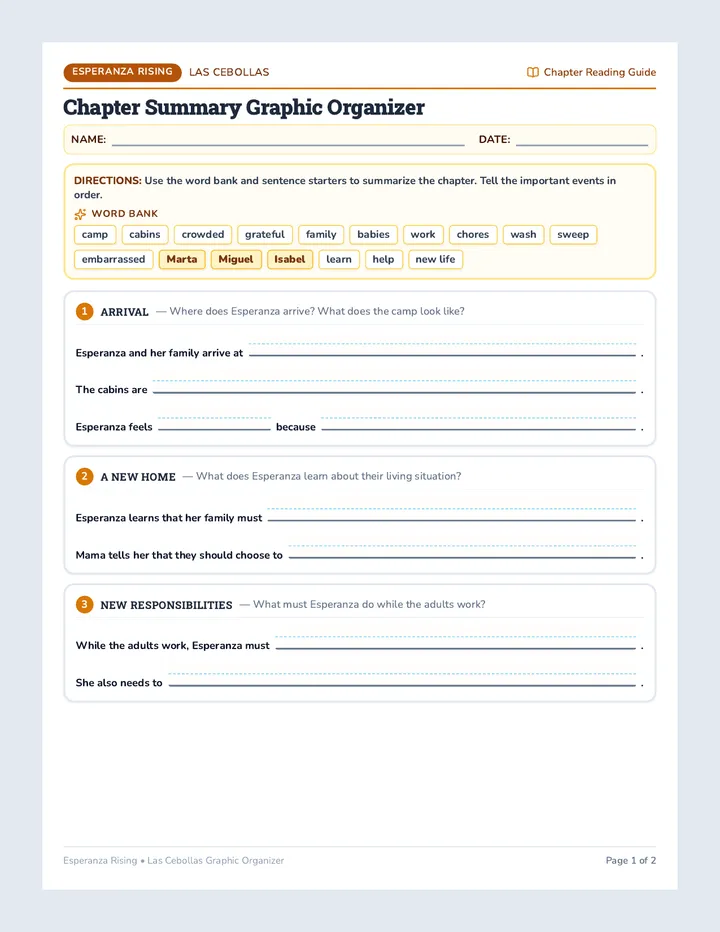
Las Cebollas Summary Organizer

Las Cebollas Summary Organizer

A 2-page print-ready scaffolded chapter summary graphic organizer for *Esperanza Rising: Las Cebollas*, featuring subtle guided handwriting midlines, word bank, Sections 1–6 sentence starters, and a 'Put It All Together' summary section, designed with dignified, grade-neutral language for upper elementary learners needing writing support.

L

lastevens

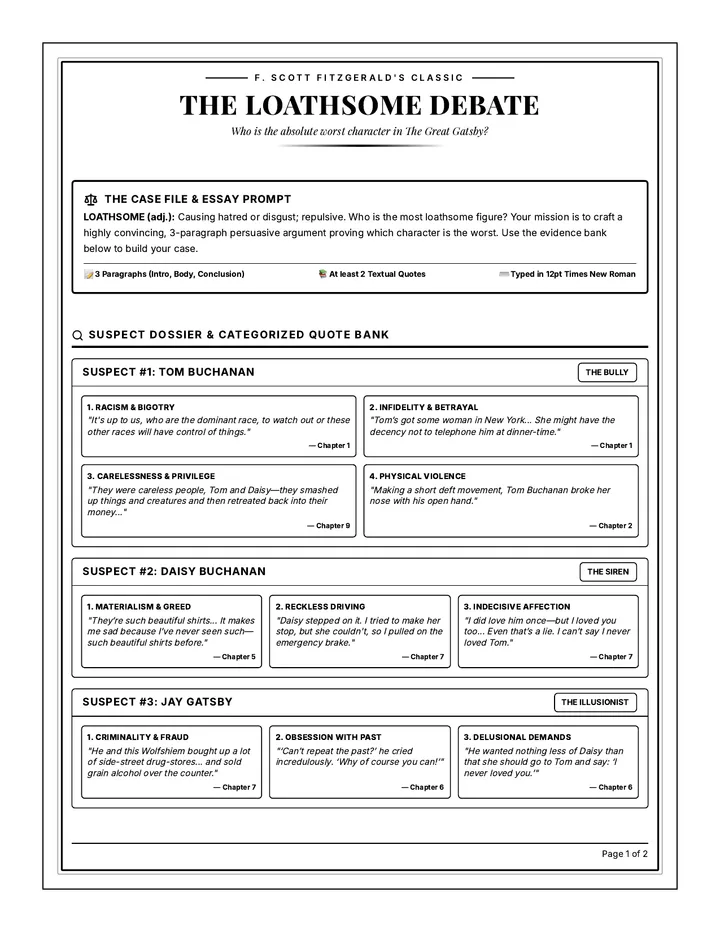
Gatsby Loathsome Character Blueprint

Gatsby Loathsome Character Blueprint

A two-page printable graphic organizer and quote bank in a high-contrast black-and-white theme with zero color or gray fills. Page 1 presents the 'Suspect Dossier' with clear borders, white backgrounds, and pure black text, while Page 2 features the highly structured essay outline and sentence starters with solid black-and-white print-friendly writing guides and page numbers.

KR

Kirstin Reed

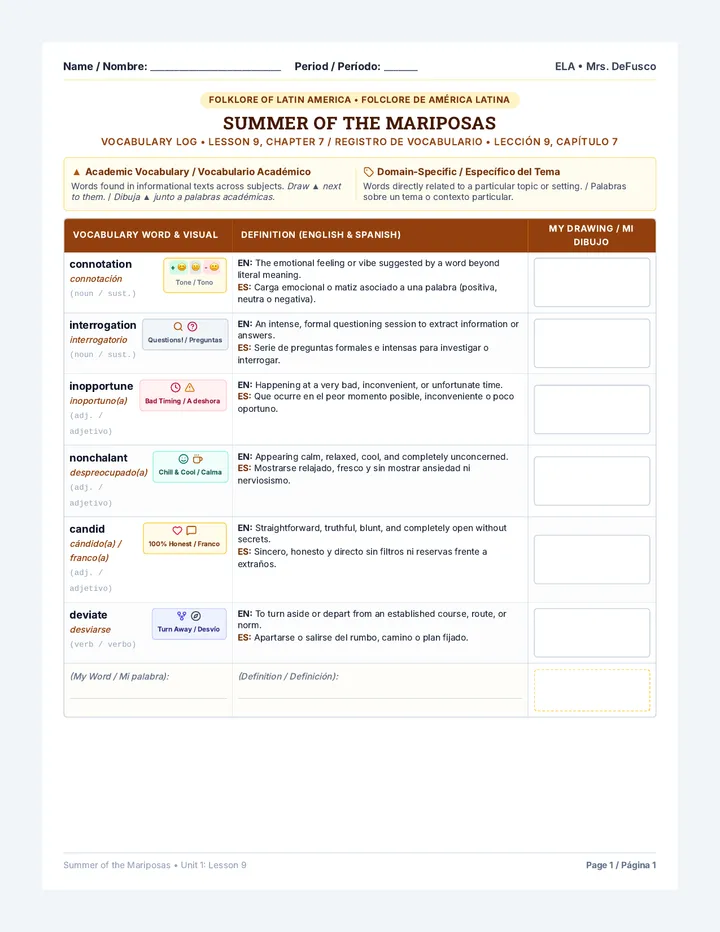
Mariposas Chapter Seven Packet

Mariposas Chapter Seven Packet

A 5-page bilingual student packet for Summer of the Mariposas (Lesson 9, Chapter 7). Page 5 now focuses exclusively on Question 1, transformed into a guided R.A.C.E. deep-dive with bilingual word banks, scaffolded fill-in-the-blank sentence stems for Restating, Answering, Citing, and Explaining, and dedicated final response writing lines.

N

nebouchard

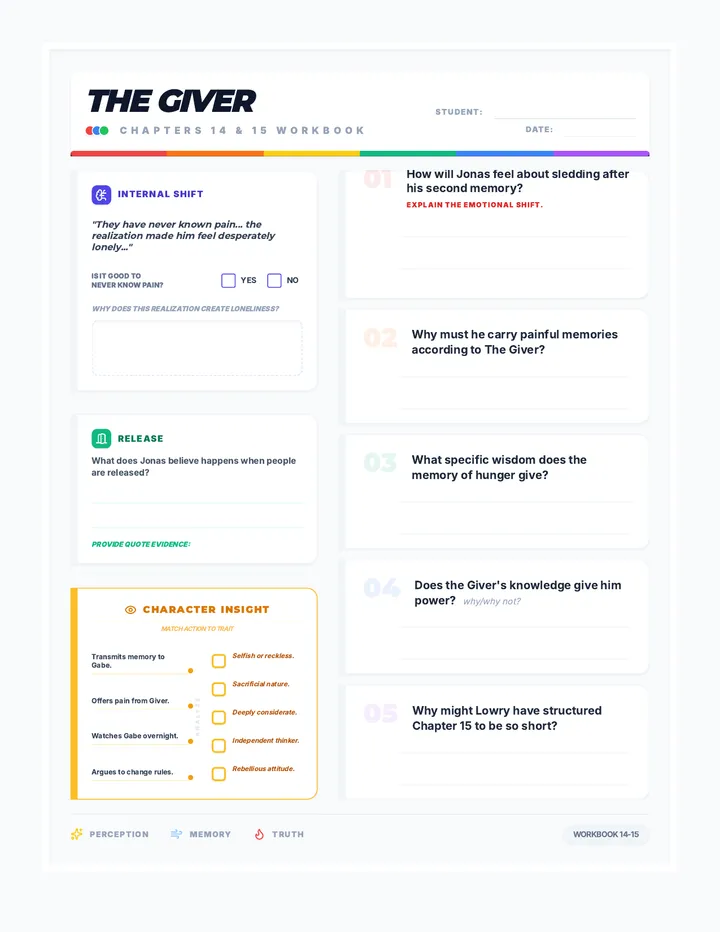
Giver Chapters 14-15 One Pager-REVISED-v2-FINAL

Giver Chapters 14-15 One Pager-REVISED-v2-FINAL

A final, refined one-page workbook for Chapters 14-15 of The Giver. This version has been strictly optimized for height by reducing margins and padding to ensure everything fits perfectly on a single page, while featuring a vibrant full-spectrum rainbow theme to represent Jonas's awakening to color and deep memory.

BC

Brenda Coombs

Las Almendras Summary Graphic Organizer

Las Almendras Summary Graphic Organizer

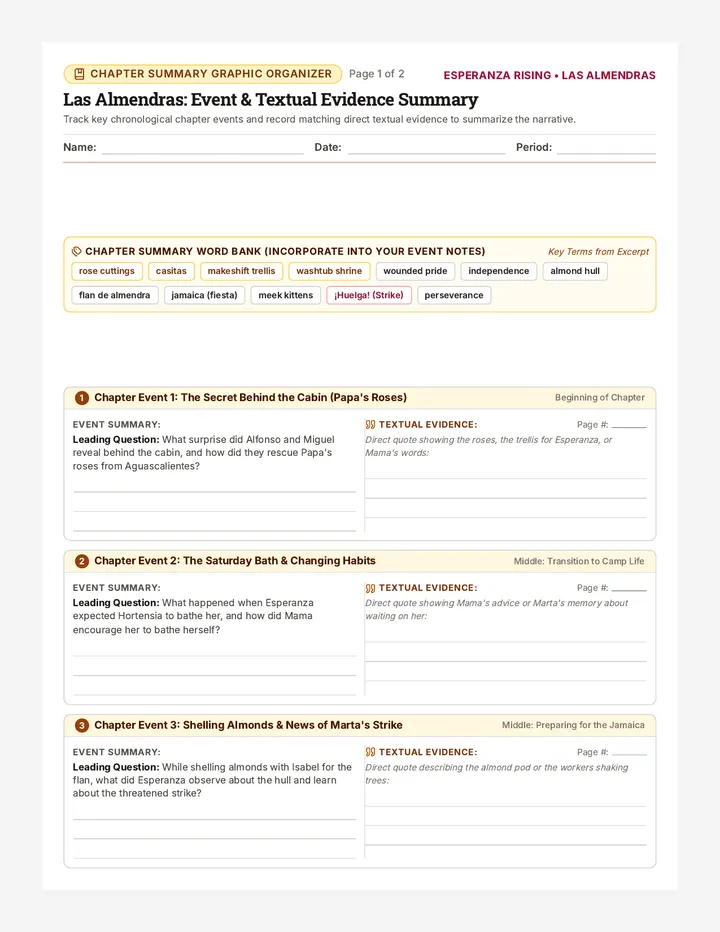
A two-page printable summary graphic organizer for Chapter 8 ('Las Almendras') of Esperanza Rising, structured with paired Event and Textual Evidence sections, leading questions, a chapter word bank, and an essay summary planner featuring the exact required sentence starter.

L

lastevens

Novel Navigator Assignment Packet

Novel Navigator Assignment Packet

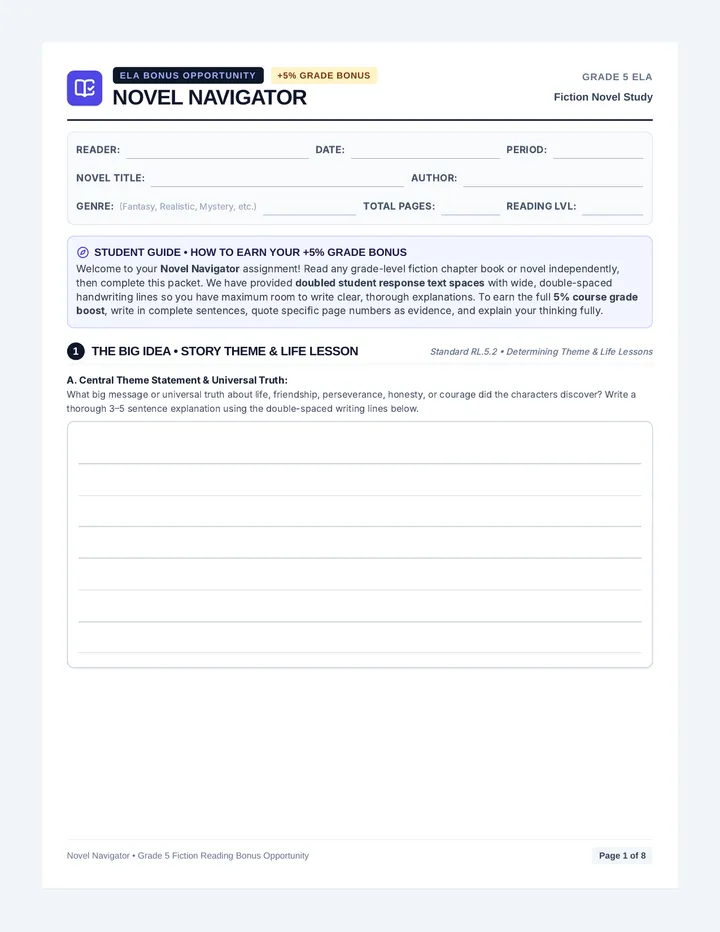
An 8-page comprehensive 5th-grade ELA fiction assignment packet for an ELA Bonus Opportunity, featuring doubled student response text spaces, generous double-spaced handwriting lines, student-friendly directions, story elements analysis, creative writing pitch, and a streamlined evaluation rubric.

TK

Tanya Kovac

Sequences

Invention Quest Slides

Frindle Frenzy Novel Study

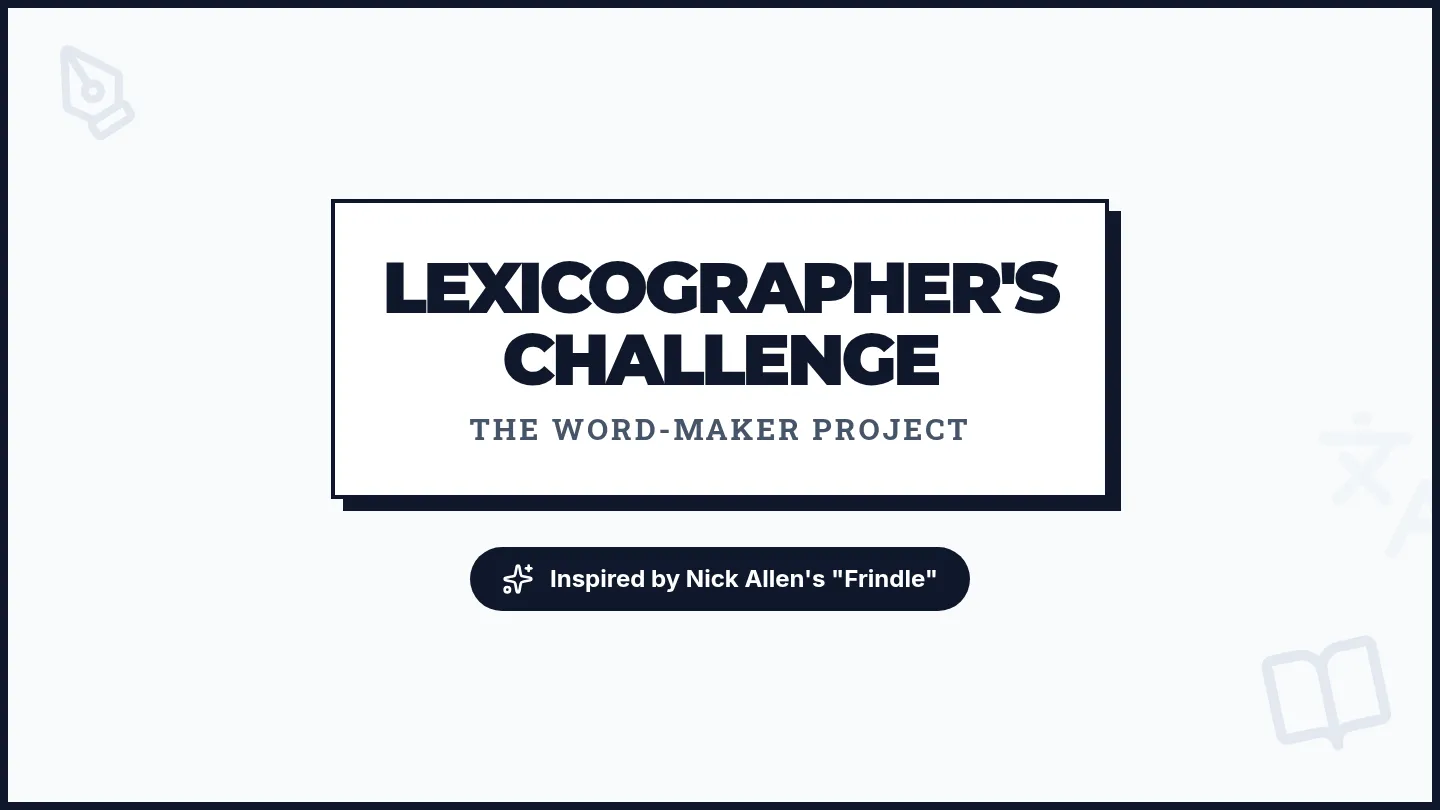
A 9-day novel study for 'Frindle' by Andrew Clements, aligned to 3rd Grade ELAR TEKS, focusing on character development, vocabulary, and plot analysis.

LH

Lucy Hellerman

56
Value Vault Teacher Guide

Metamorphosis Mastery

An 8-week deep dive into Kafka's Metamorphosis for special education students, focusing on abstract thinking, social value, and the human condition through high-engagement activities and visual organizers.

C

Ceeasia.walker

58
Prophecy and Power Slides

Shadows and Crowns

A series of lessons exploring Shakespeare's Macbeth, specifically designed for 10th-grade emergent bilingual students to master complex characterization and thematic elements.

DC

Dylan Clark

30
Copenhagen Clues Slides

Resistance Chronicles

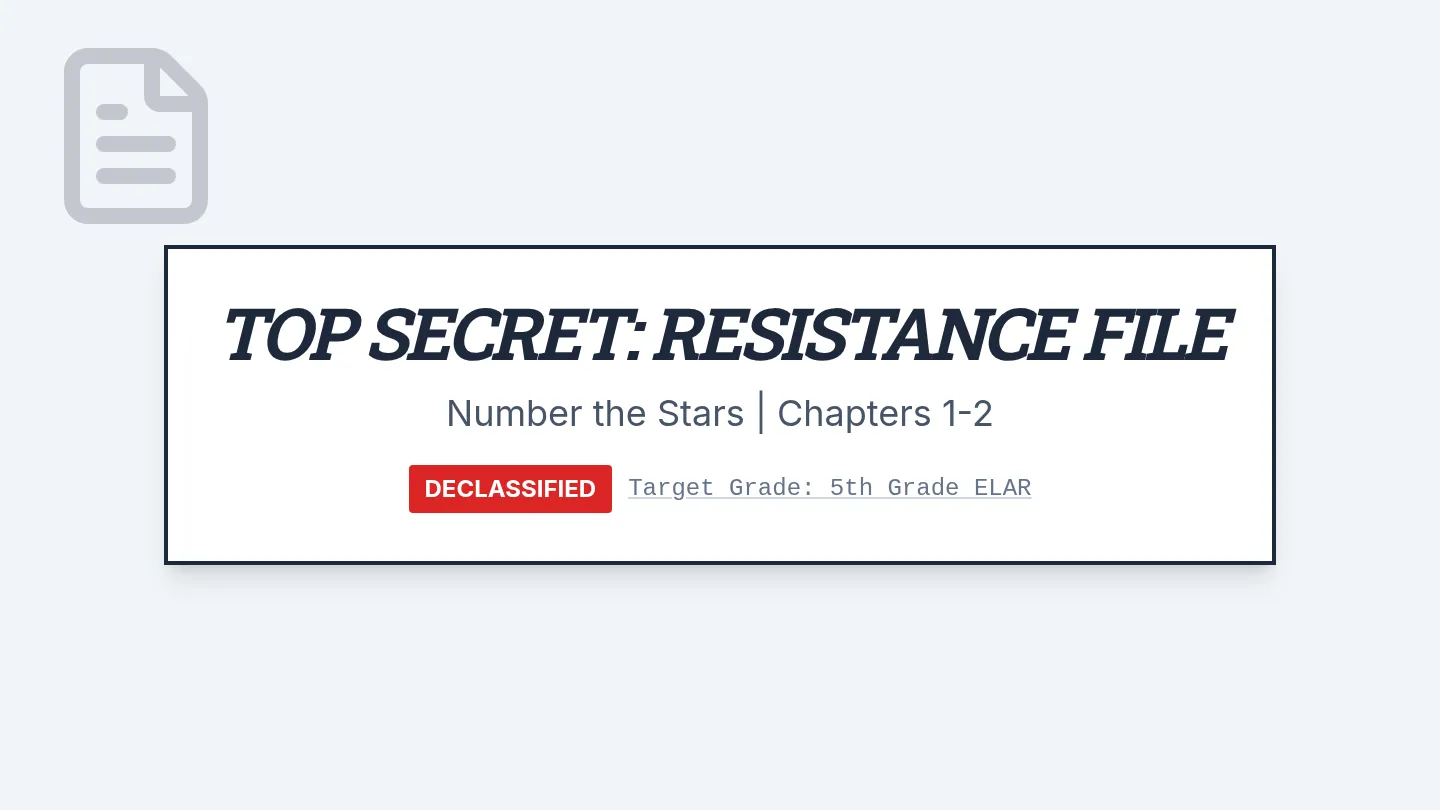
A 9-day novel study for Number the Stars centered on 5th Grade ELAR TEKS, focusing on character development, plot analysis, and historical context through the lens of a Resistance Secret File.

LH

Lucy Hellerman

79
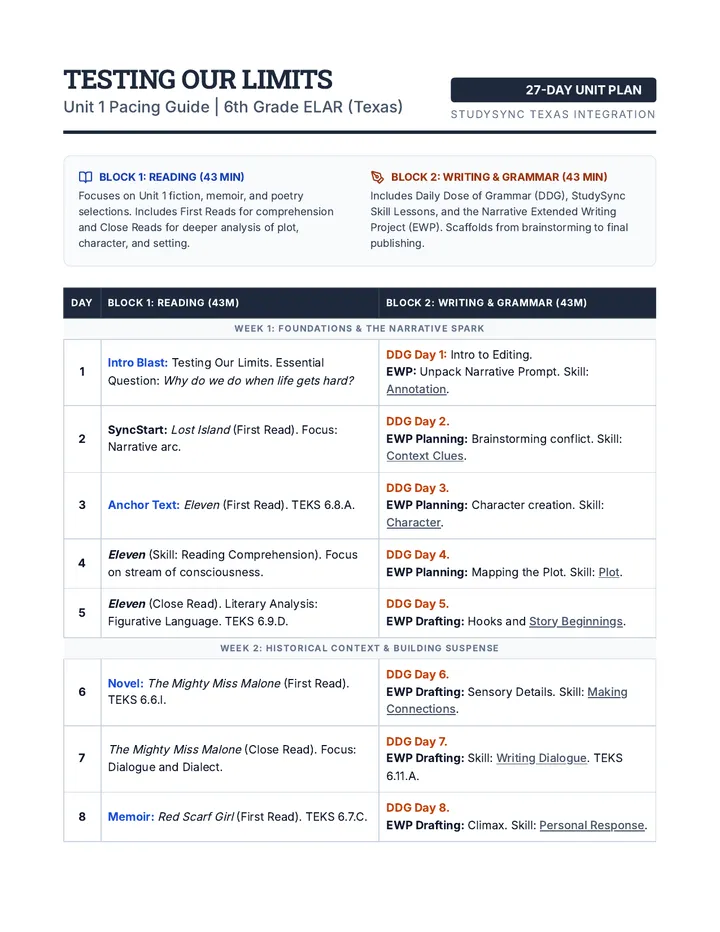
Unit 1 Pacing Guide Document

Testing Our Limits Unit Sequence

A 27-day instructional sequence for 6th Grade ELAR Unit 1: Testing Our Limits, featuring dual blocks for Reading and Writing with daily grammar and skill scaffolding.

DM

Dawn Mustian

81
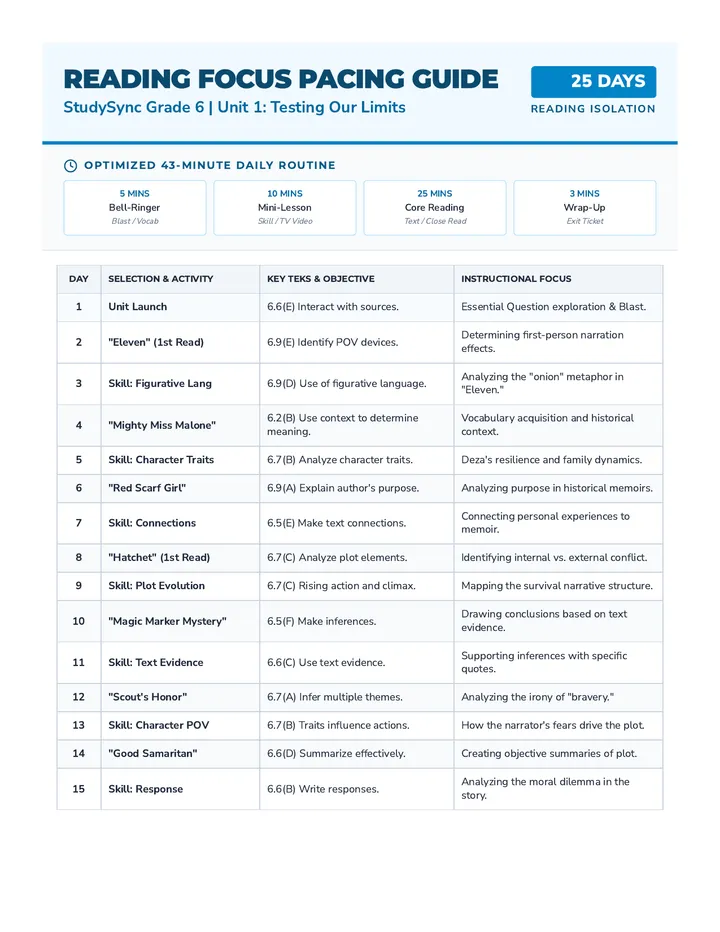
Reading Focus Pacing Guide

Testing Our Limits Unit

A 25-day comprehensive unit for StudySync Grade 6 that explores the theme of courage and resilience through isolated reading and writing tracks, aligned to ELA TEKS.

DM

Dawn Mustian

79

Lessons

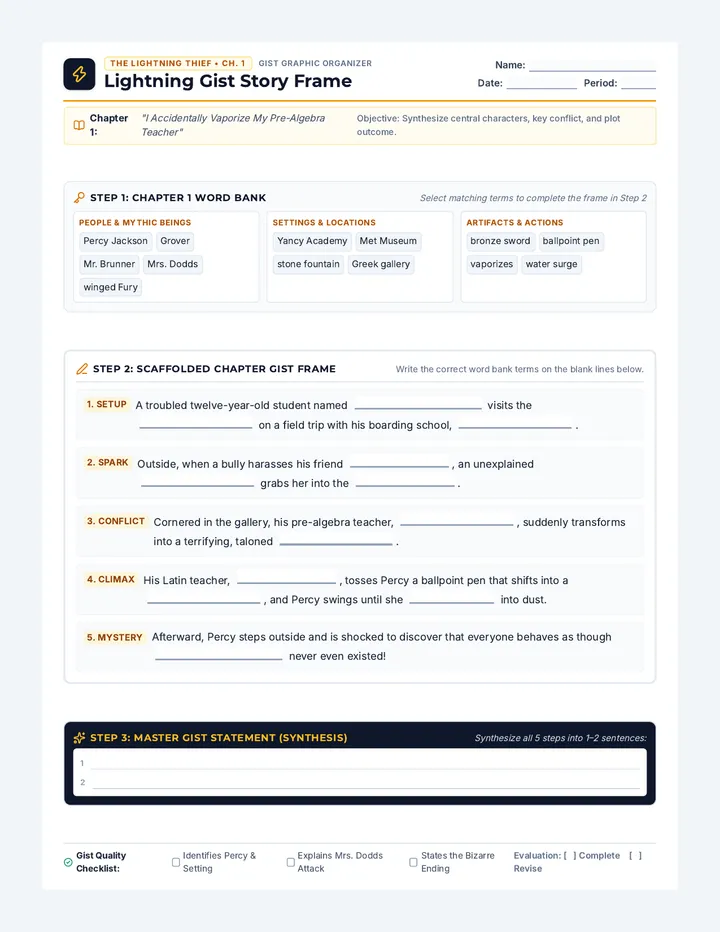
Lightning Gist Story Frame

Lightning Gist Launch

A lesson guiding students through analyzing and summarizing the central gist of Chapters 1 through 8 of The Lightning Thief using scaffolded story frames, picture supports, and targeted word banks.

C

cedaniels

11
Dahl Dreamers Choice Board

Dahl Dreamers

A collection of print-ready, high-interest ELA choice board activities and accompanying worksheets designed for 6th-grade early finishers. Rooted in Amplify 6A, students explore Roald Dahl's novels, connect them to his autobiography 'Boy', practice R.A.C.E. writing responses, engage in gobbledegook word play, and draft narrative responses.

A

Amy.Cannon

5
Awakening Words Bell Ringer

Stolen Seconds

A comprehensive lesson exploring Tanith Lee's 'Awake,' a subversion of Sleeping Beauty, focusing on structural choices and source material transformation (RL.5 and RL.9). Students will analyze character conflict and the concept of 'the gift of time.'

V

vivianbelarmino

25
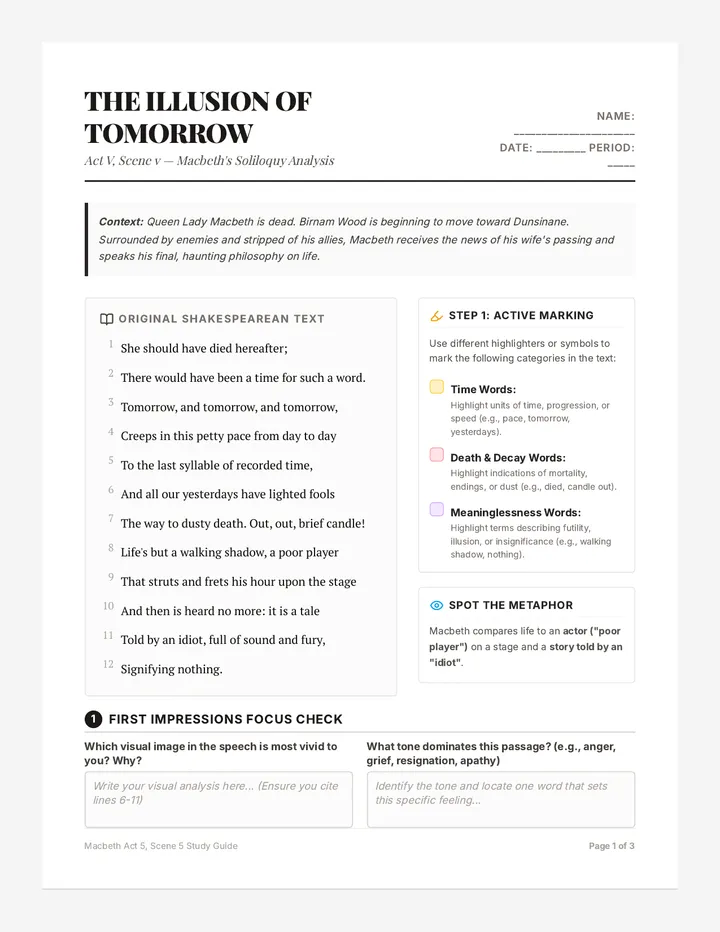
Tomorrow Speech Worksheet

The Illusion of Tomorrow

A comprehensive 10th-grade ELA lesson analyzing Macbeth's famous 'Tomorrow, and tomorrow, and tomorrow' speech from Act 5, Scene 5. Students explore Macbeth's psychological state—whether he is depressed, defeated, or finally realizing the truth of his ambitions—using textual annotation, group evidence organizers with scaffolded sentence stems, a Philosophical Four Corners debate, and a reflective exit ticket.

EC

Erin Cloutier

5
Narrative Navigator Slides

Journal Journey Cultural Bridge

An advanced 8th-grade ELA lesson exploring the intersection of Filipino and American identities through personal narrative. Students analyze the immigrant experience, master advanced vocabulary via a 'Quiz Bee,' and draft narratives that bridge their cultural heritage with their current journey.

V

vivianbelarmino

13
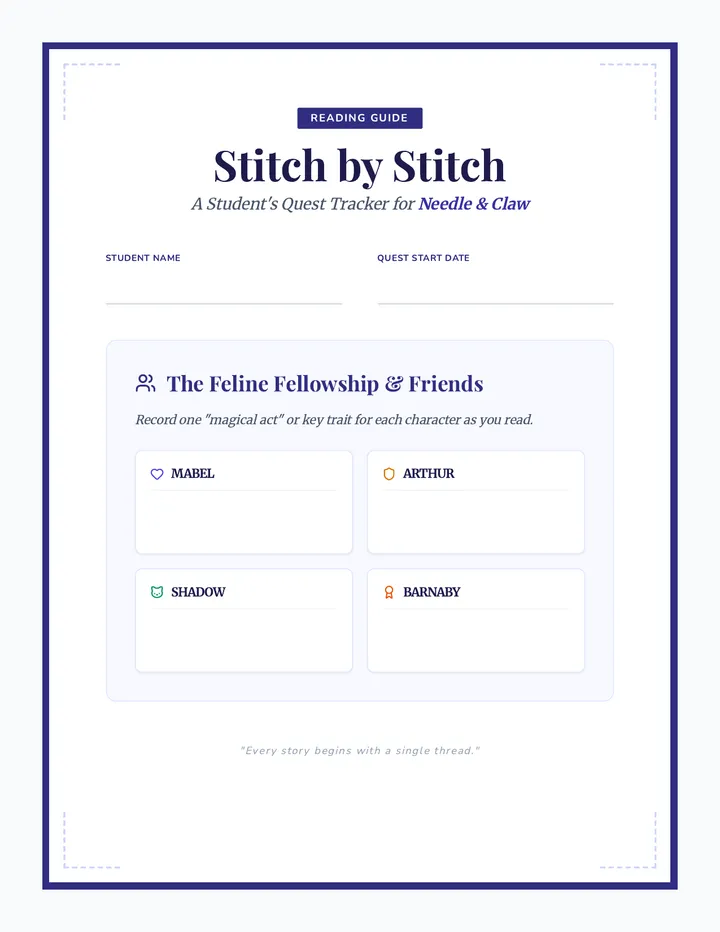
Stitch by Stitch Reading Guide

Needle and Claw

A creative story outline and character guide for a high-interest, low-readability (Hi-Lo) novel featuring an elderly protagonist in a fantasy world.

AP

Alexis Paolini

27