Lenny.com
Explore
Create
ActivitiesNewMathEnglish Language ArtsScience & EngineeringSocial StudiesGlobal LanguagesHealth & Physical EducationSpecial EducationCounseling & Life SkillsArts & CreativityESL
Lenny.com
Lenny.com
Explore
Create
ActivitiesNewMathEnglish Language ArtsScience & EngineeringSocial StudiesGlobal LanguagesHealth & Physical EducationSpecial EducationCounseling & Life SkillsArts & CreativityESL
Lenny.com
Lenny.com

Solutions

Lenny for EducatorsLenny for SchoolsLenny for Districts

Product

ExploreSign inCreateSupportAbout

Resources

Getting startedMTSS Acceleration Program

Newsletters

School Funding Newsletter

© 2026 Lenny Learning Inc.

TermsPrivacyAccessibility
LinkedInInstagramX
Lenny

Spelling

Phonetic patterns, orthographic rules, and morphological structures like roots and affixes. Develops spelling accuracy through systematic word study and recognition of high-frequency terms.

English Language ArtsPhonics & Reading FoundationsLetter IdentificationLearn Letters A-ZLowercase and Uppercase LettersConsonants and VowelsLetter-Sound AssociationsLetter-Sound Associations: LowercaseLetter-Sound Associations: UppercaseBeginning and Ending SoundsRhymingBlending And SegmentingShort VowelsShort Vowel SoundsConsonant BlendsConsonant DigraphsBlends, Digraphs, and TrigraphsDigraphs, Blends, and Silent LettersLong Vowel SoundsLong Vowel PatternsShort and Long VowelsShort and Long Vowel PatternsSilent EVowel SoundsVowel TeamsR-Controlled VowelsDiphthongs: Oi, Oy, Ou, OwVariant VowelsVariant, Diphthong, And R Vowel PatternsSoft G And CSight WordsIrregular WordsWord RecognitionSyllablesSyllable TypesTwo-Syllable WordsMultisyllabic WordsPhoneme ManipulationDecodable TextsVocabularyAction WordsQuestion WordsNouns and AdjectivesClassify WordsCompound WordsSynonyms and AntonymsHomophonesHomophones and HomonymsShades of MeaningContext CluesPrefixes and SuffixesGreek and Latin RootsAnalogiesIdioms and AdagesForeign Words and ExpressionsWord Choice and UsageReference SkillsReading ComprehensionRead-Along Literary TextsRead-Along Informational TextsReality vs. FictionStory ElementsCharacterSequenceMain IdeaCause And EffectCompare And ContrastReading StrategiesText StructureAuthor's PurposeAuthor's Purpose And ToneAuthor's PerspectivePoint Of ViewThemeInference And ThemeInference And AnalysisPoetry ElementsLiterary DevicesAnalyzing LiteratureAnalyzing Informational TextsComparing TextsAudience, Purpose, And ToneBusiness DocumentsNovel StudyNonfiction Book StudyGrammar & MechanicsSentencesNounsVerbsAdjectivesPronounsCapitalizationPunctuationContractionsConjunctionsPrepositionsArticlesAdjectives And AdverbsVerb TypesVerb TensePronouns And AntecedentsPronoun TypesSubject-Verb AgreementDirect And Indirect ObjectsSentences, Fragments, And Run-OnsPhrases And ClausesCommasSemicolons, Colons, And CommasDashes, Hyphens, And EllipsesSpellingAbbreviationsFormattingVerb Tense And MoodMisplaced ModifiersWritingDescriptive DetailsCreative WritingOpinion WritingTopic SentencesOrganizing WritingLinking WordsSentence VarietyIntroductions And ConclusionsPersuasive And Opinion WritingExpository WritingPersuasive StrategiesDeveloping And Supporting ArgumentsTopic Sentences And Thesis StatementsSummarizingResearch SkillsEditing And RevisingActive And Passive Voice=Writing Clearly And ConciselyDebate & Public SpeakingPublic Speaking BasicsPersuasive TechniquesClaims and EvidenceTypes of ArgumentsReasoning TypesLogical FallaciesTopic ResearchOrganizing EvidenceDebate Speech OrganizationAttacking and Defending ArgumentsClash and EngagementImpact CalculusQuestioning and Cross-ExaminationCritical ThinkingInformal LogicFormal LogicInductive Reasoning

Videos

Mastering the 'Qu' Sound: Why Q Loves U

Mastering the 'Qu' Sound: Why Q Loves U

This engaging animated video introduces early readers to the specific phonics rule connecting the letters 'Q' and 'U'. Hosted by a humorous cheese character, the video explains that while these letters have individual sounds, they almost always appear together in English to form the /kw/ sound. The narrative uses the metaphor of the letters 'liking' each other to help students remember this spelling convention. The video explores the sounds associated with the digraph 'qu' through clear visual examples and repetition. Key vocabulary words such as 'quack', 'queen', 'quarrel', 'quiet', and 'quit' are illustrated with amusing animations involving a duck and a queen character. A specific interactive segment invites viewers to brainstorm their own words, encouraging active participation. For educators, this resource is an excellent tool for introducing or reviewing phonics and spelling rules. It simplifies an abstract concept (digraphs) into a memorable social relationship between letters. The video effectively combines auditory learning (sound repetition) with visual cues (text on screen) and context (skits defining words like 'quarrel'), making it highly suitable for early literacy instruction in Kindergarten through 2nd grade.

Scratch GardenScratch Garden

2mins 30s

Why the Plural of Ox Is Oxen but Box Is Boxes

Why the Plural of Ox Is Oxen but Box Is Boxes

This educational video explores the fascinating history behind irregular English plurals, specifically focusing on the rare "-en" ending found in words like "children" and "oxen." The narrator, David, breaks down why English grammar often feels unpredictable by explaining its roots as a Germanic language derived from Old English. He uses humor and clear handwriting to illustrate how historical regional variations eventually distilled into the standard English rules we use today. The video delves into etymology to explain common student questions, such as why the plural of "ox" is "oxen" while the plural of "box" is "boxes." By distinguishing between native Old English words and borrowed words from Greek or Latin, the lesson demystifies these apparent inconsistencies. The content encourages students to view English not as a rigid block of rules, but as a "lashed together raft" of history and diverse influences. Included as a bonus segment is a historical anecdote about William Caxton, the first English printer, and a 15th-century confusion between the words "eggs" and "eyren." This story vividly illustrates the concept of dialects and the evolution of language, making it an excellent resource for discussing how communication technologies like the printing press helped standardize the English language.

Khan AcademyKhan Academy

7mins 23s

Spelling and Reading the Sight Word "Clean"

Spelling and Reading the Sight Word "Clean"

A high-energy, musical sight word lesson focusing on the word "clean." Through repetition, rhythmic spelling, and a catchy beat, the video helps early learners recognize, read, and spell this essential vocabulary word. The simple visual design keeps students focused on the text, minimizing distractions while maximizing phonemic awareness. The video explores the concept of "clean" through three primary modes: whole word recognition, letter-by-letter spelling (C-L-E-A-N), and contextual usage in a sentence ("Everybody clean up"). It includes an interactive bridge section that encourages movement and action, associating the word with the physical act of cleaning, washing, and brushing. This resource is highly valuable for early childhood and primary classrooms as a tool for literacy and classroom management. Teachers can use it to introduce the sight word, reinforce spelling skills, or as an energetic transition song during cleanup times. The combination of auditory, visual, and kinesthetic elements makes it effective for diverse learning styles.
Have Fun TeachingHave Fun Teaching

2mins 19s

How to Form Comparative and Superlative Adjectives

How to Form Comparative and Superlative Adjectives

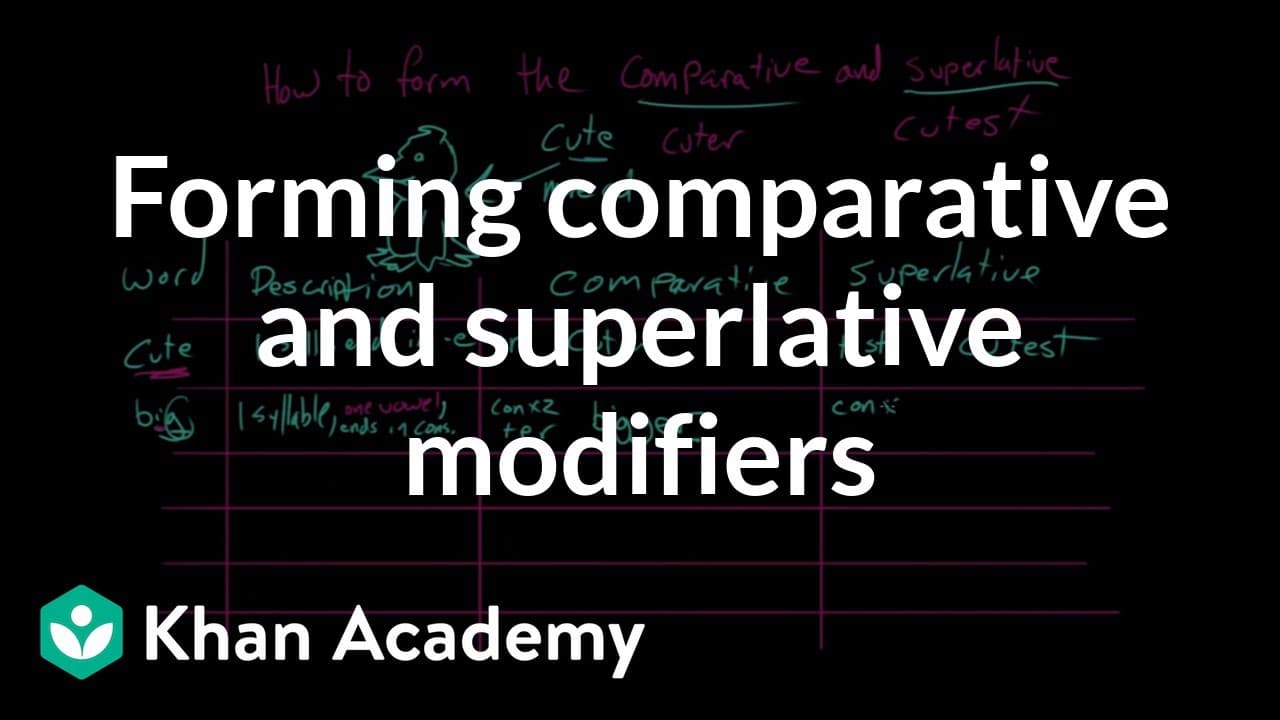
This video provides a clear, step-by-step guide on how to form comparative and superlative adjectives in English. Using a digital whiteboard, the narrator constructs a reference table that categorizes adjectives based on their spelling and syllable count—such as one-syllable words ending in 'e', words ending in 'y', and longer multi-syllable words. Specific spelling rules, like doubling consonants or changing 'y' to 'i', are explained visually and phonetically. The content covers five distinct categories of adjectives: (1) one syllable ending in 'e' (cute); (2) one syllable with one vowel and one consonant (big); (3) short words with two vowels or ending in two consonants (sweet, short); (4) two-syllable words ending in 'y' (shiny); and (5) long words (magnificent). The video concludes with a humorous application of these rules to a nonsense word, "blarfy," demonstrating how internalizing these patterns allows students to conjugate even unfamiliar vocabulary. This resource is highly valuable for English Language Arts and ESL classrooms. It breaks down complex spelling conventions into manageable rules, making it an excellent tool for introducing or reviewing adjective morphology. Teachers can use the final "blarfy" segment to test students' ability to transfer these rules to new or made-up words, fostering a deeper understanding of English structural patterns rather than just rote memorization.

Khan AcademyKhan Academy

7mins 40s

Mastering the Difference Between There, Their, and They're

Mastering the Difference Between There, Their, and They're

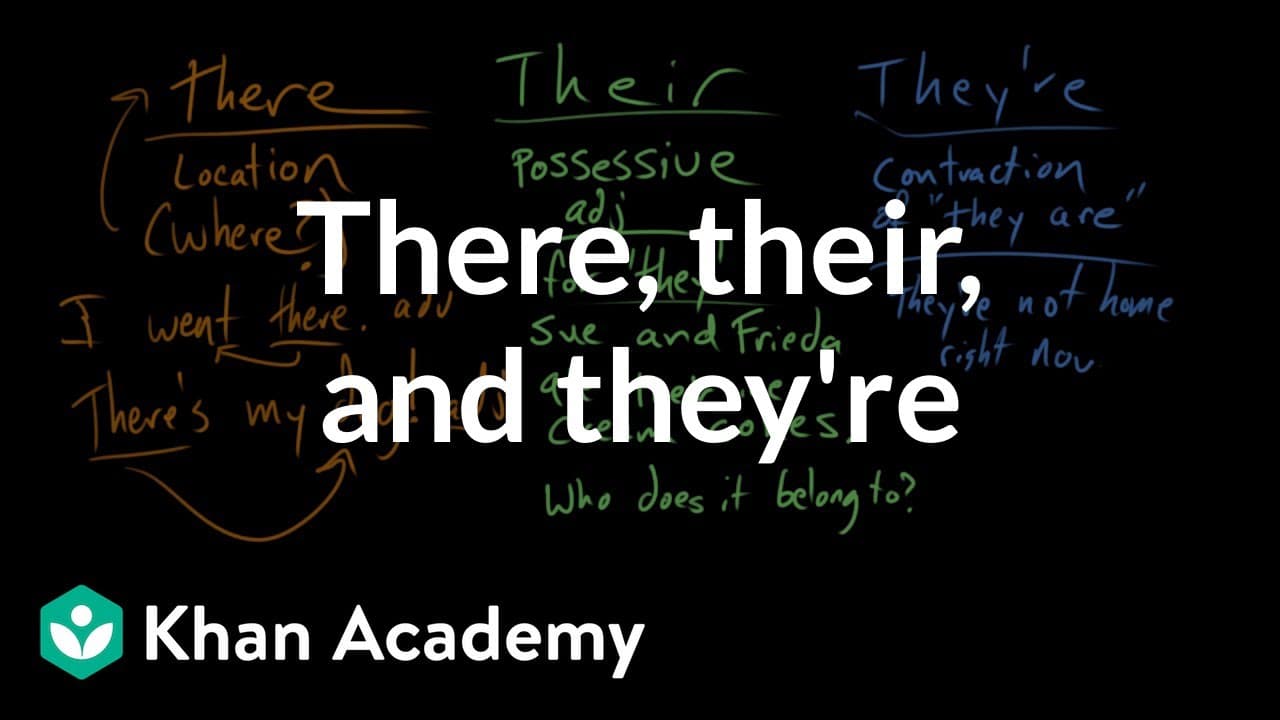
This video provides a clear and practical guide to mastering one of the most common confusion points in the English language: the difference between the homophones "there," "their," and "they're." Using a digital whiteboard format, the narrator visually breaks down each word's specific grammatical function—location, possession, and contraction—assigning a distinct color to each to aid memory retention. The lesson explores distinct strategies for identifying the correct word choice. For "there," the narrator demonstrates a "T to W" replacement trick to connect it to the question "Where?". For "their," the focus is placed on ownership and the question "Who does it belong to?". Finally, "they're" is explained through the mechanics of contractions, showing how it simply replaces "they are." Practical sentence examples are diagrammed on screen to reinforce these rules in context. This resource is highly valuable for English Language Arts classrooms ranging from upper elementary to middle school. It addresses a persistent writing error that affects students of all ages. Teachers can use this video as a hook for a grammar unit, a remediation tool for students struggling with mechanics, or a quick refresher before a writing assignment to encourage self-editing skills.

Khan AcademyKhan Academy

3mins 21s

Singing and Spelling 40 Common Sight Words

Singing and Spelling 40 Common Sight Words

This high-energy educational music video is designed to help students master reading and spelling over 40 essential sight words. Set to an upbeat electronic rhythm, the video presents each word visually while a narrator pronounces it, spells it out letter-by-letter, and repeats it, creating a multi-sensory learning experience that aids memory retention through music and repetition. The video covers a wide range of high-frequency vocabulary commonly found in second and third-grade texts, including words like "about," "myself," "together," and "laugh." It reinforces the concept that sight words are foundational building blocks for reading fluency that often cannot be sounded out phonetically and must be recognized instantly. Teachers can use this video as a lively warm-up to a literacy block, a transition activity, or a fun way to practice spelling. The rhythmic nature of the content allows for active participation, where students can chant along, clap to the beat of the letters, or use the video as a self-checking tool for spelling practice. It is particularly effective for visual and auditory learners who benefit from musical mnemonics.

Have Fun TeachingHave Fun Teaching

4mins 4s

Materials

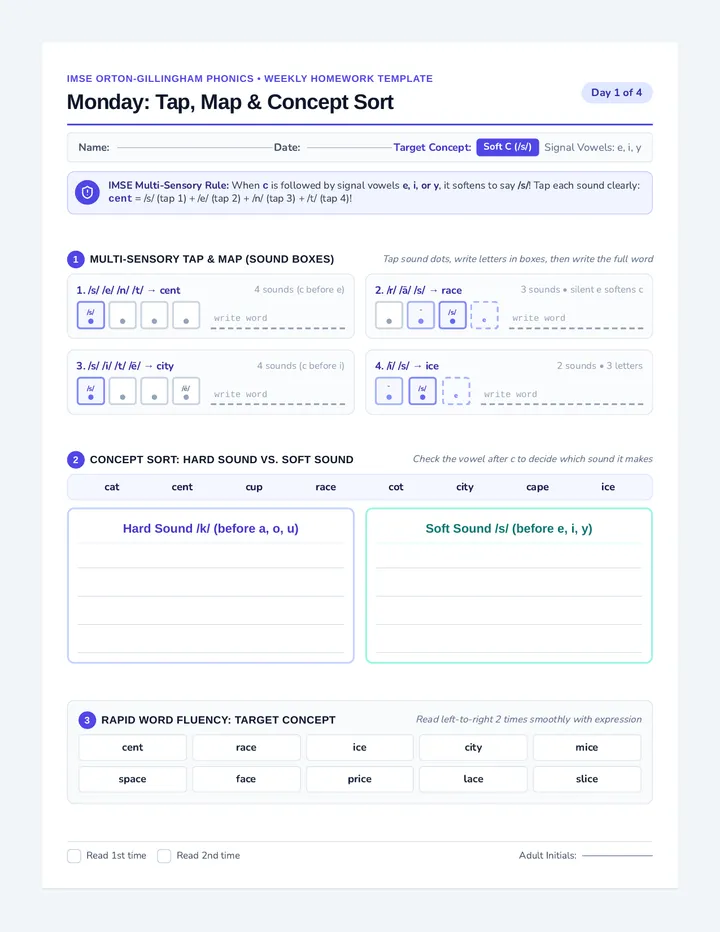
Phonics Homework Packet Template

Phonics Homework Packet Template

A standardized four-day weekly homework packet template aligned with the IMSE Orton-Gillingham scope and sequence. Features daily multi-sensory sound tapping, sound boxes, concept sorts, sound change ladders, decodable cloze sentences, fluency matrices, and home dictation with C.O.P.S. self-monitoring.

K

katie_conklin

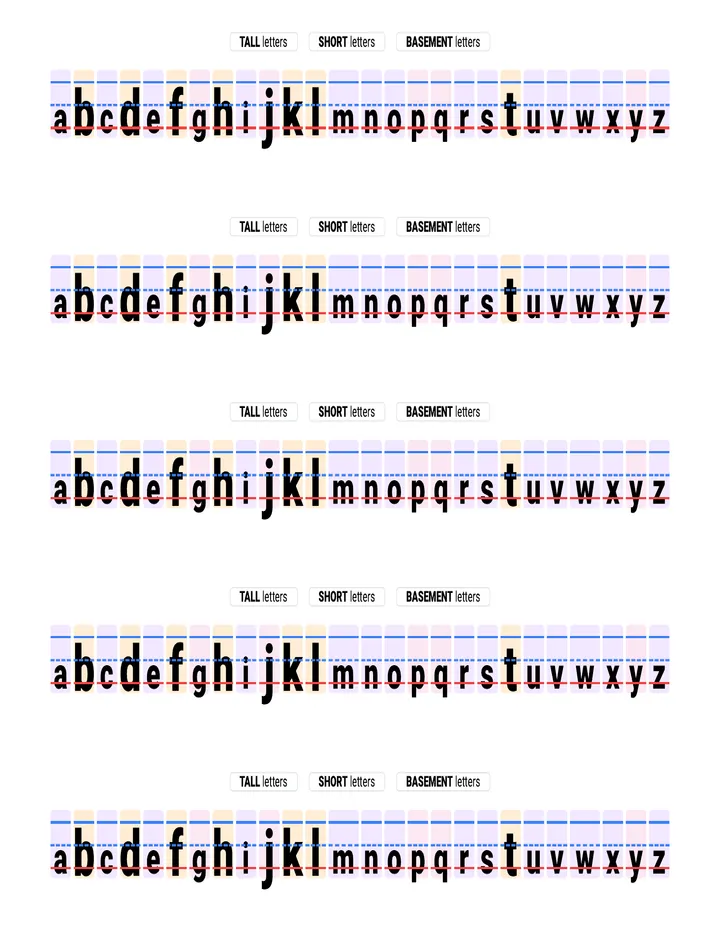
Alphabet Block Strips Final Document

Alphabet Block Strips Final Document

A collection of five alphabet practice strips in landscape layout using Roboto font. Features precisely calibrated primary handwriting line markings (solid blue topline, dashed blue midline, solid red baseline) correctly aligned to letter anatomy. Letters are black, and extra space is provided below the red line for basement letter visibility. Includes a color-coded key and 0.8 inch gaps between strips. Basement letters correctly descend below the red baseline while staying vertically aligned with other letters. High-contrast line colors ensure visibility.

R

RENEE.ALGER

Text Features Explorer Worksheet

Text Features Explorer Worksheet

A full-page 3rd-grade animal text features worksheet featuring 8 prominent visual picture clues and dedicated answer spaces, with the third column removed to maximize visual clarity and handwriting space.

BA

Becky Arkins

Spelling Mastery Test Worksheet

Spelling Mastery Test Worksheet

A print-ready multiple-choice spelling test featuring 11 target vocabulary and morphology words with plausible phonological distractors, bubble-style answer choices, and a bonus word-analysis prompt.

EO

Emily Ondreas

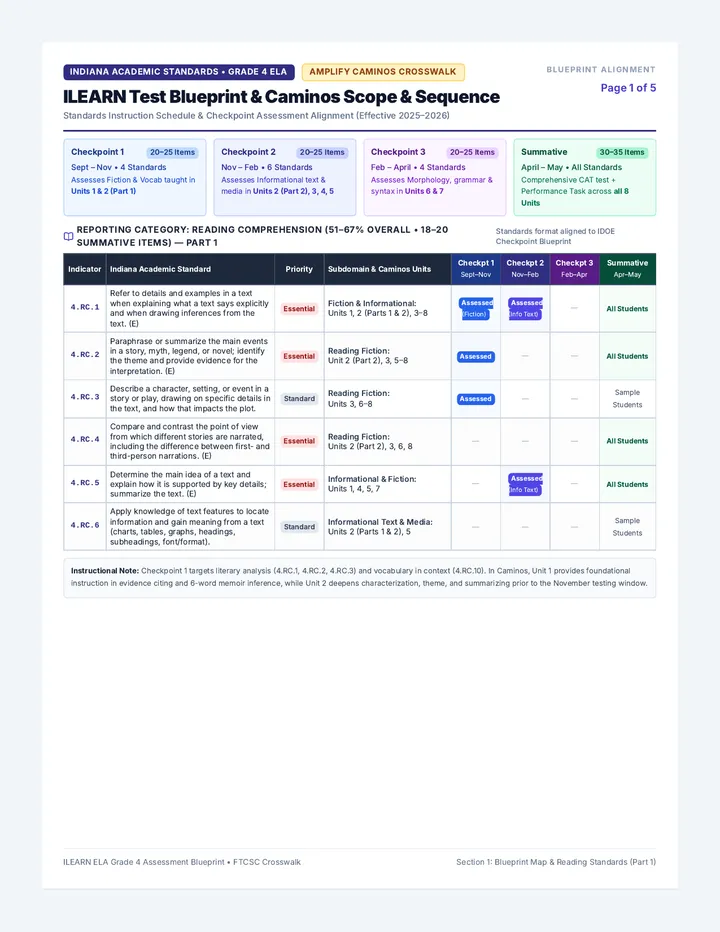
ILEARN Caminos Blueprint Guide

ILEARN Caminos Blueprint Guide

Comprehensive Grade 4 ILEARN Test Blueprint and Amplify Caminos Scope & Sequence crosswalk. Formatted to match the state ILEARN checkpoint blueprint, showing exactly when Indiana Academic Standards (Reading, Vocabulary, Writing, Grammar, and Communication) are taught across Units 1–8 and assessed in Checkpoints 1, 2, 3, and the Summative Assessment.

A

Amy.Hacker

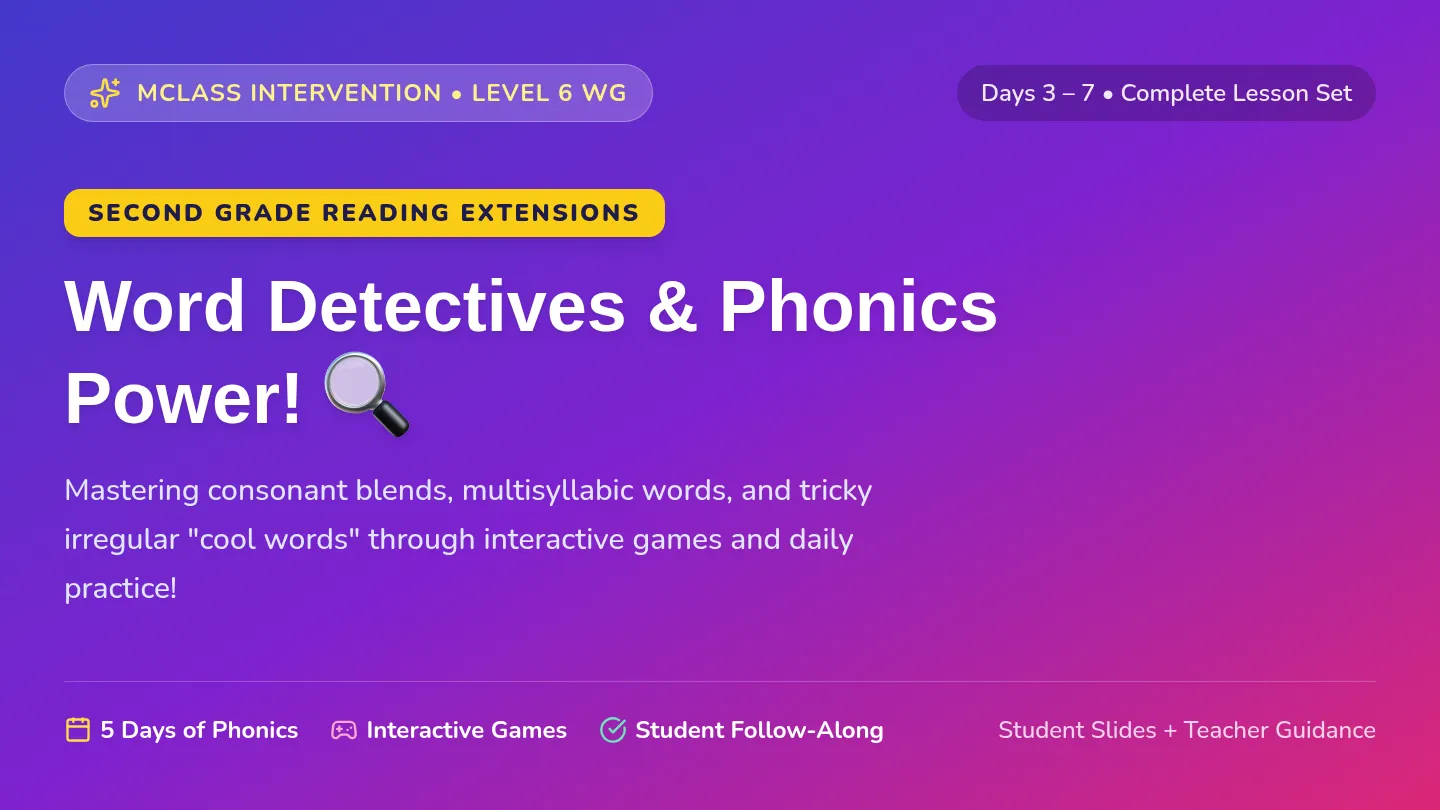
Word Power Slides

Word Power Slides

A comprehensive 36-slide instructional slide deck covering Days 3 through 7 of the Second Grade Extensions phonics curriculum. Designed for student follow-along engagement and Google Slides compatibility, it features gamified decoding activities without spoilers or on-screen answers, multisyllabic breakdowns, irregular word spotlights, and dedicated teacher facilitation guidance.

L

Lauren.Cullison

Sequences

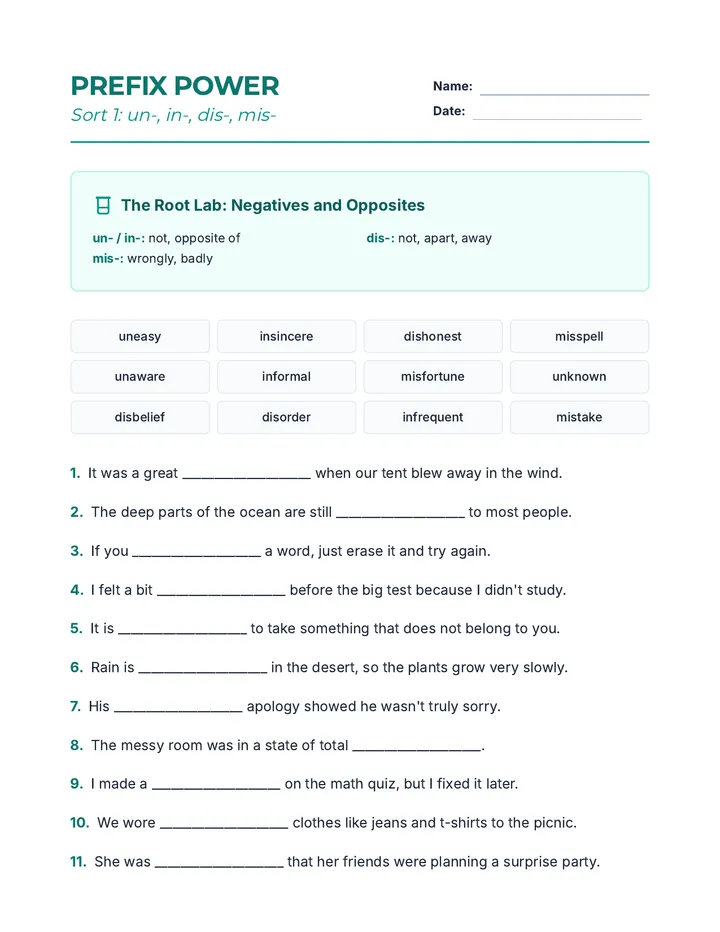
Prefix Power Sort 1 Worksheet

Word Wizard Packet

A comprehensive vocabulary and morphology curriculum covering prefixes, suffixes, Latin roots, and Greek roots through fill-in-the-blank exercises and engaging word puzzles.

N

nmack

137
Invention Quest Slides

Frindle Frenzy Novel Study

A 9-day novel study for 'Frindle' by Andrew Clements, aligned to 3rd Grade ELAR TEKS, focusing on character development, vocabulary, and plot analysis.

LH

Lucy Hellerman

56
Monday Sentences Worksheet

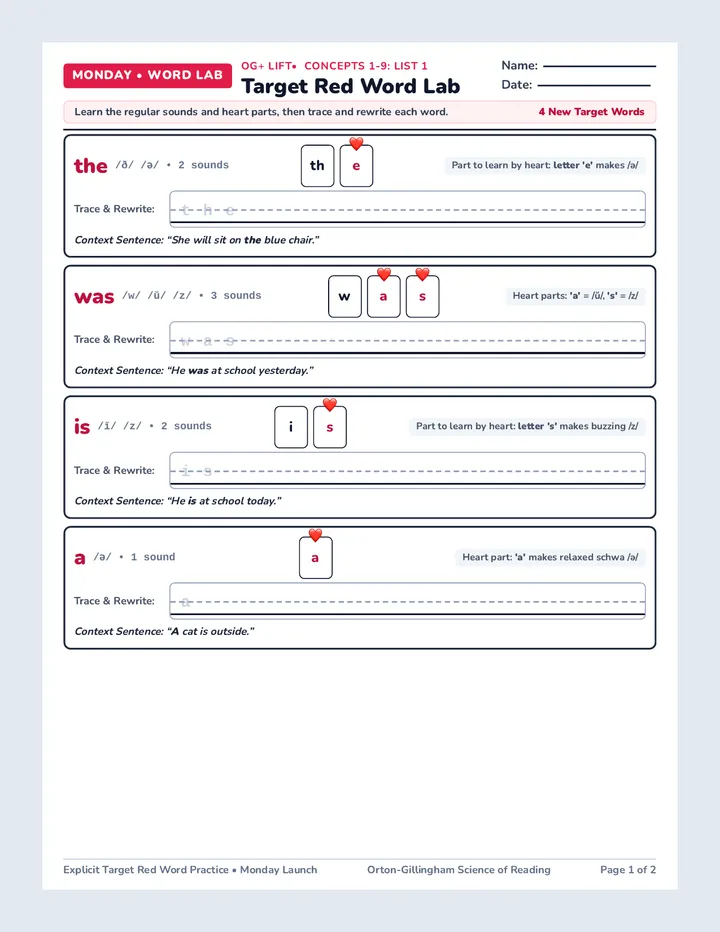
OG+ LIFT: Red word K-Concepts: Book 1

This comprehensive intervention unit features a weekly scope and sequence targeting high-frequency red words, sound-spelling correspondences, and reading comprehension, directly aligned with Orton-Gillingham Kindergarten Book 1 beginning concepts. Designed for self-contained or intervention settings, it pairs decodable readers and comprehension story mapping with explicit daily paraprofessional guides, fluency routines, scaffolded practice, and weekly assessments.

S

Sara

59
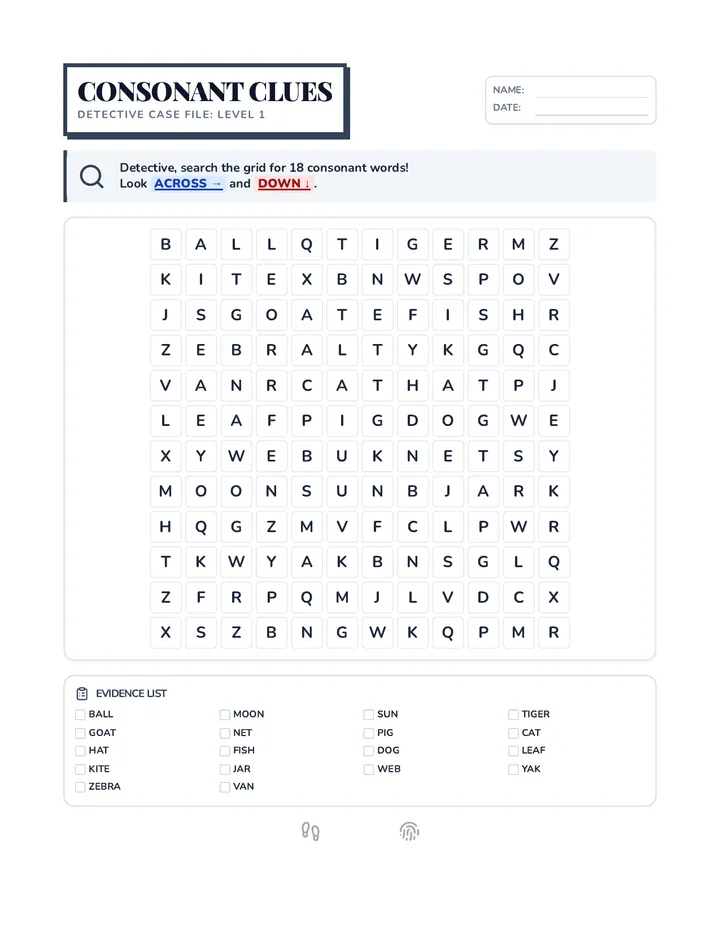
Consonant Clues Word Search

Sound Detective Workbook

A complete phonics journey covering letter-name alphabetic spelling stages, featuring randomized word sort practice through interactive sentence completion.

N

nmack

57
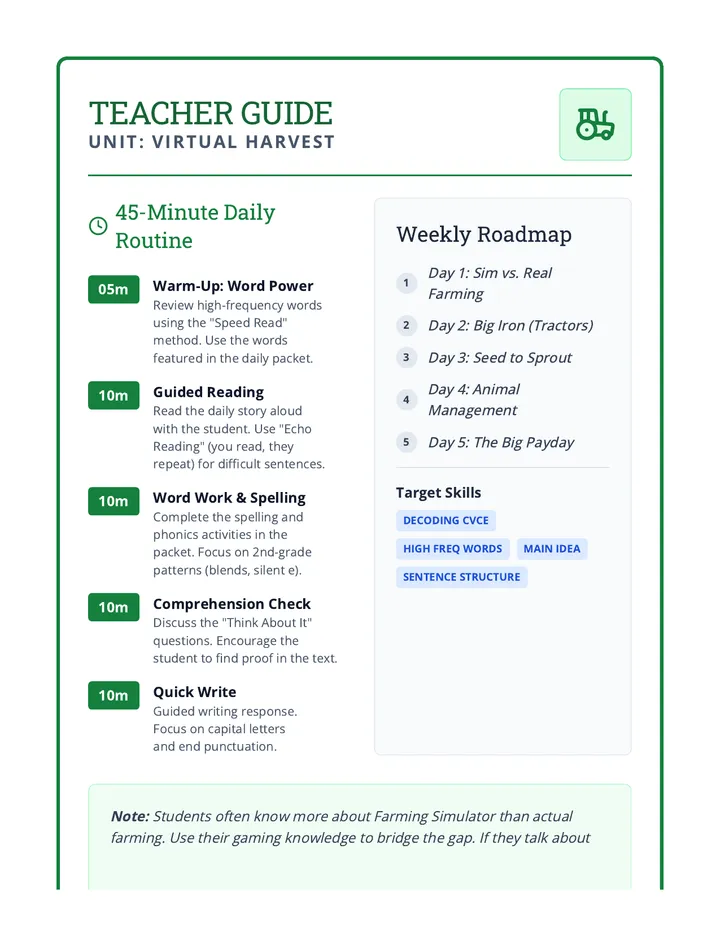
Virtual Harvest Teacher Guide

Digital Dirt

A 5-day reading comprehension and writing unit for struggling readers, blending the world of Farming Simulator with real-world agriculture. Focuses on 2nd-grade level literacy skills within a high-interest 5th-grade context.

CM

carley Martin

30
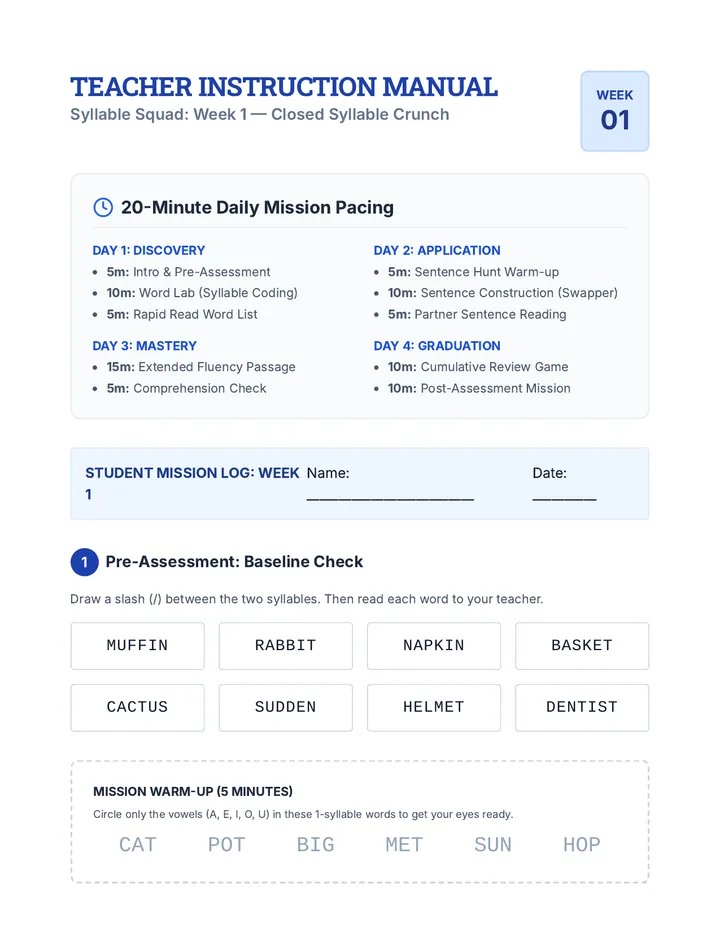
Week 1 Closed Syllable Manual

Syllable Squad Decoding Mission

A comprehensive 5-week phonics intervention focused on decoding two-syllable words across five major syllable types. Each week includes a pre-assessment, daily lessons with specific targets, student practice sheets, and a post-assessment.

KJ

Kelsey Jacobs

29

Lessons

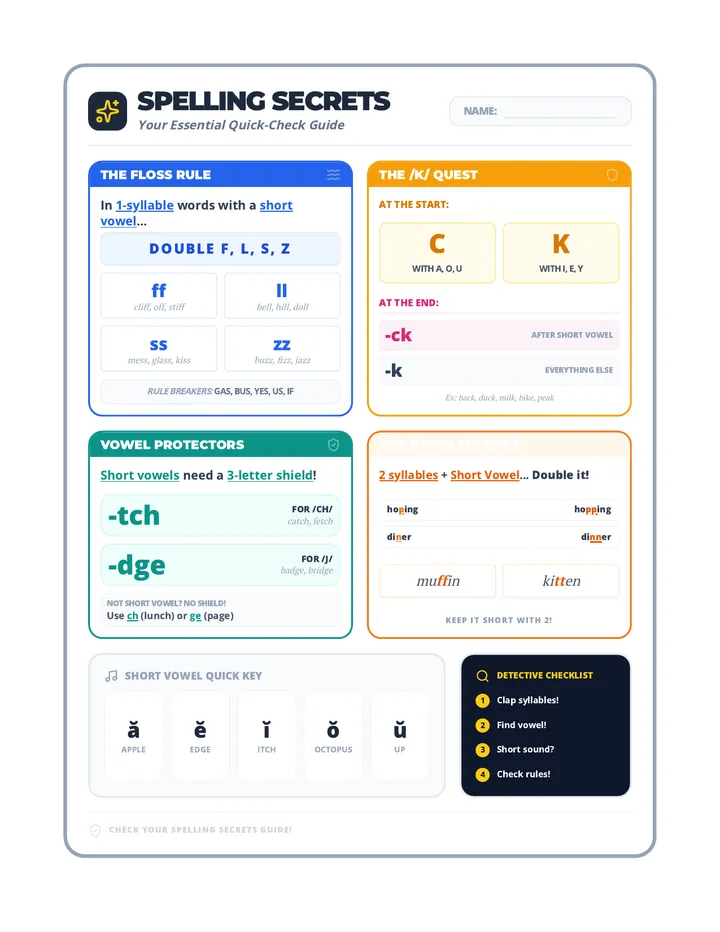
Spelling Secrets Folder Sheet

Spelling Secrets

A collection of visual anchor charts and notebook inserts to help students master common spelling rules including the FLOSS rule and the C/K/CK spelling choice.

E

ecreamer

11
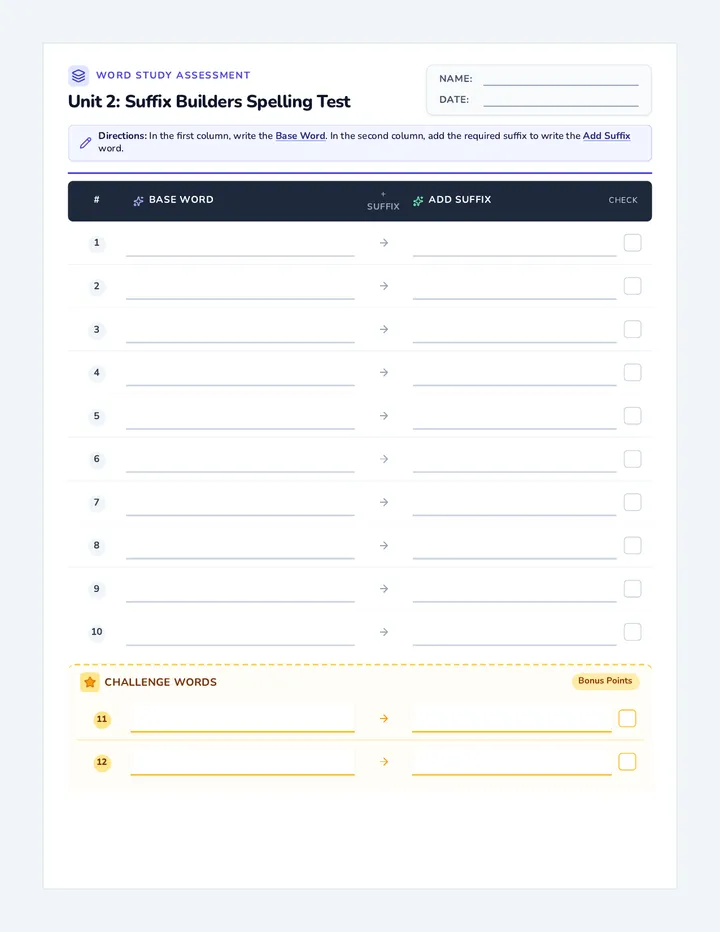
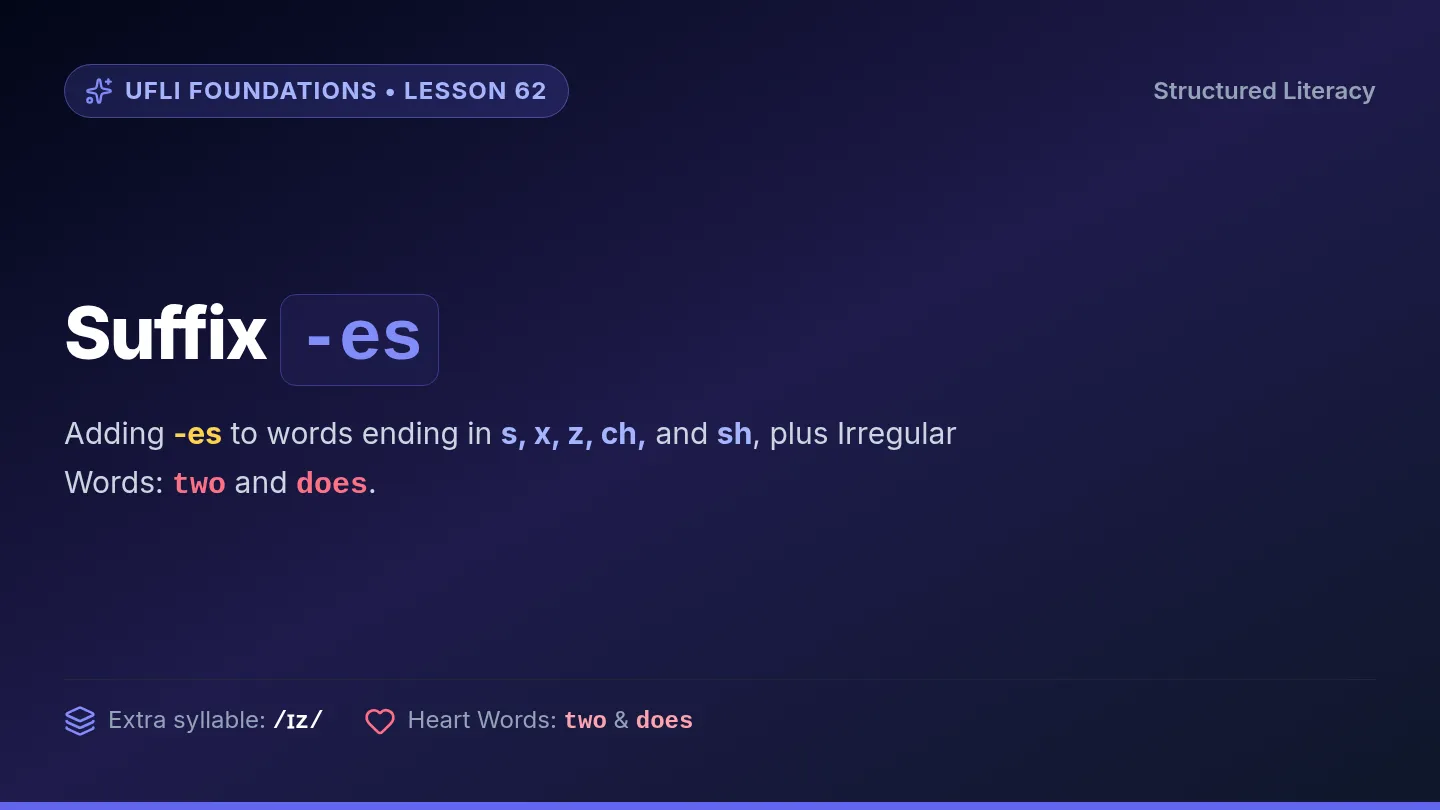
Suffix Spark Slides

Suffix Power

A comprehensive UFLI Lesson 63 unit covering suffix -es added to base words ending in s, x, z, ch, and sh. Includes explicit phonics instruction, three decodable readers, an oral check exit ticket, and a long fluency passage with comprehension questions.

ML

Marti Lushin

7
Progression Annuelle Grammaire Guide Pedagogique

Portrait de Monstre

Une leçon complète pour étudier la structure du portrait d'un personnage imaginaire (l'ogre) à travers l'analyse d'un texte littéraire et documentaire. Elle comprend des fiches de lecture, d'analyse de structure et de vocabulaire pour guider les élèves vers la rédaction autonome de leur propre créature légendaire.

LP

LAURENT PERCHE

24
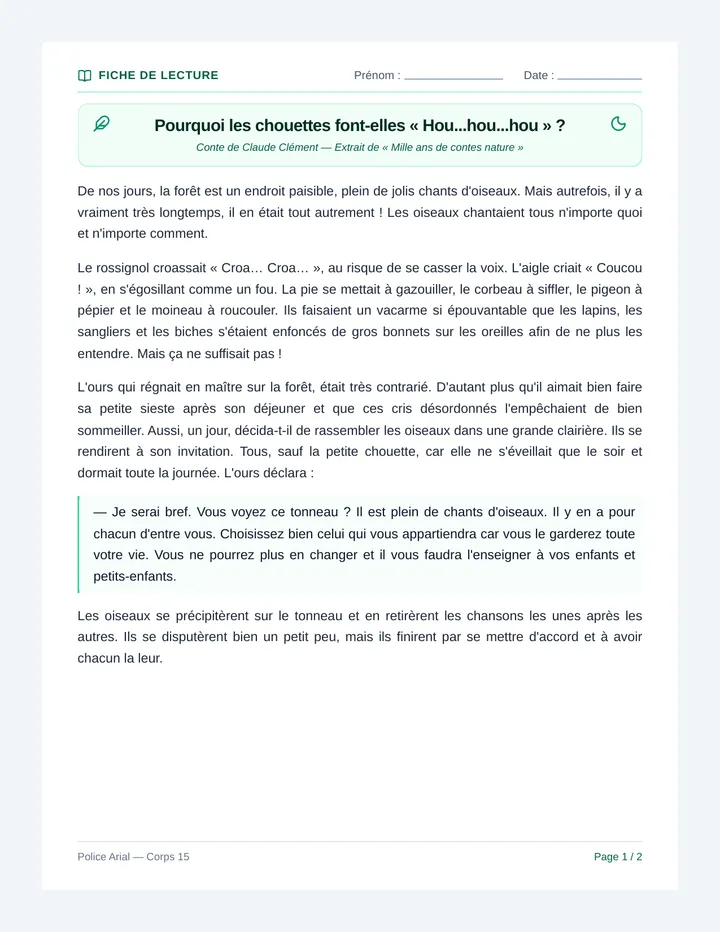
Chant Chouette Fiche Lecture

Chouette Conte et Comprehension

Séquence pédagogique complète autour du conte « Pourquoi les chouettes font-elles Hou...hou...hou ? » de Claude Clément pour CM1/CM2, comprenant les textes de lecture (standard et adapté), le dispositif de dictée en trois temps, la fiche de compréhension type conte des origines, son corrigé et la fiche de préparation enseignant.

LP

LAURENT PERCHE

22
Vowel Team Reading Student Sheet

Vowel Team Mastery

A comprehensive progress monitoring set for vowel teams ai, ay, ee, ea, and oa. Includes student-facing reading and spelling materials along with teacher-facing scoring and dictation guides.

ML

Michelle Low

4
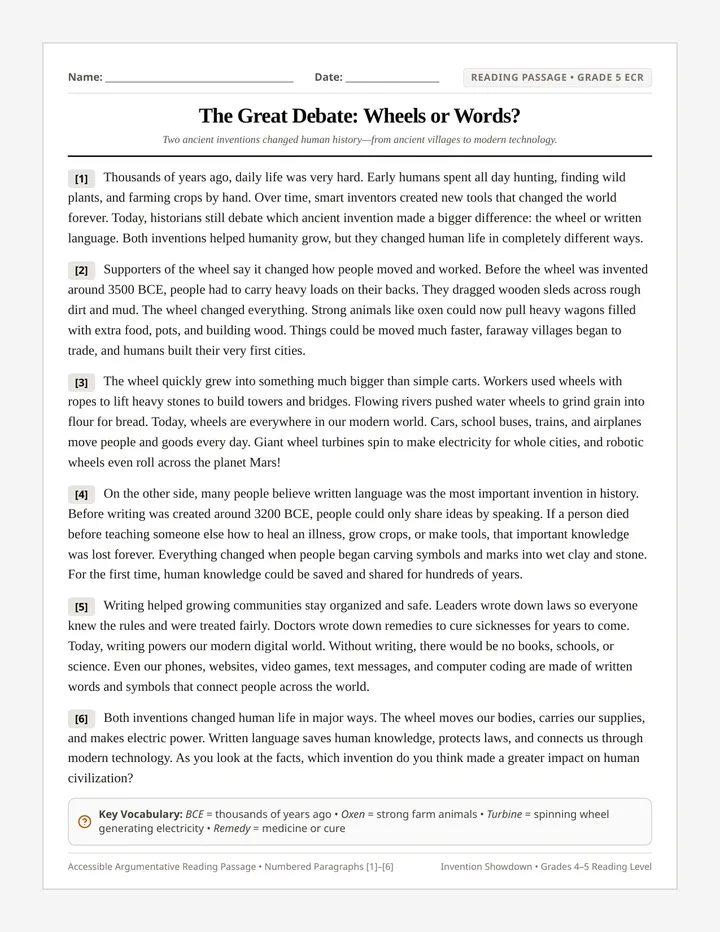
Invention Showdown Passage

Invention Showdown

An informational reading and argumentative writing study exploring whether the wheel or written language had a greater impact on human civilization. Students analyze evidence to prepare for a STAAR extended constructed response.

ED

Emily Denson

8