Lenny.com
Explore
Create
ActivitiesNewCurriculumNewMathEnglish Language ArtsScience & EngineeringSocial StudiesGlobal LanguagesHealth & Physical EducationSpecial EducationCounseling & Life SkillsArts & CreativityESL
Lenny.com
Lenny.com
Explore
Create
ActivitiesNewCurriculumNewMathEnglish Language ArtsScience & EngineeringSocial StudiesGlobal LanguagesHealth & Physical EducationSpecial EducationCounseling & Life SkillsArts & CreativityESL
Lenny.com
Lenny.com

Solutions

Lenny for EducatorsLenny for SchoolsLenny for Districts

Product

ExploreSign inCreateSupportAbout

Resources

Getting startedMTSS Acceleration Program

Newsletters

School Funding Newsletter

© 2026 Lenny Learning Inc.

TermsPrivacyAccessibility
LinkedInInstagramX
Lenny
English Language ArtsPhonics & Reading FoundationsLetter IdentificationLearn Letters A-ZLowercase and Uppercase LettersConsonants and VowelsLetter-Sound AssociationsLetter-Sound Associations: LowercaseLetter-Sound Associations: UppercaseBeginning and Ending SoundsRhymingBlending And SegmentingShort VowelsShort Vowel SoundsConsonant BlendsConsonant DigraphsBlends, Digraphs, and TrigraphsDigraphs, Blends, and Silent LettersLong Vowel SoundsLong Vowel PatternsShort and Long VowelsShort and Long Vowel PatternsSilent EVowel SoundsVowel TeamsR-Controlled VowelsDiphthongs: Oi, Oy, Ou, OwVariant VowelsVariant, Diphthong, And R Vowel PatternsSoft G And CSight WordsIrregular WordsWord RecognitionSyllablesSyllable TypesTwo-Syllable WordsMultisyllabic WordsPhoneme ManipulationDecodable TextsVocabularyAction WordsQuestion WordsNouns and AdjectivesClassify WordsCompound WordsSynonyms and AntonymsHomophonesHomophones and HomonymsShades of MeaningContext CluesPrefixes and SuffixesGreek and Latin RootsAnalogiesIdioms and AdagesForeign Words and ExpressionsWord Choice and UsageReference SkillsReading ComprehensionRead-Along Literary TextsRead-Along Informational TextsReality vs. FictionStory ElementsCharacterSequenceMain IdeaCause And EffectCompare And ContrastReading StrategiesText StructureAuthor's PurposeAuthor's Purpose And ToneAuthor's PerspectivePoint Of ViewThemeInference And ThemeInference And AnalysisPoetry ElementsLiterary DevicesAnalyzing LiteratureAnalyzing Informational TextsComparing TextsAudience, Purpose, And ToneBusiness DocumentsNovel StudyNonfiction Book StudyGrammar & MechanicsSentencesNounsVerbsAdjectivesPronounsCapitalizationPunctuationContractionsConjunctionsPrepositionsArticlesAdjectives And AdverbsVerb TypesVerb TensePronouns And AntecedentsPronoun TypesSubject-Verb AgreementDirect And Indirect ObjectsSentences, Fragments, And Run-OnsPhrases And ClausesCommasSemicolons, Colons, And CommasDashes, Hyphens, And EllipsesSpellingAbbreviationsFormattingVerb Tense And MoodMisplaced ModifiersWritingDescriptive DetailsCreative WritingOpinion WritingTopic SentencesOrganizing WritingLinking WordsSentence VarietyIntroductions And ConclusionsPersuasive And Opinion WritingExpository WritingPersuasive StrategiesDeveloping And Supporting ArgumentsTopic Sentences And Thesis StatementsSummarizingResearch SkillsEditing And RevisingActive And Passive Voice=Writing Clearly And ConciselyDebate & Public SpeakingPublic Speaking BasicsPersuasive TechniquesClaims and EvidenceTypes of ArgumentsReasoning TypesLogical FallaciesTopic ResearchOrganizing EvidenceDebate Speech OrganizationAttacking and Defending ArgumentsClash and EngagementImpact CalculusQuestioning and Cross-ExaminationCritical ThinkingInformal LogicFormal LogicInductive Reasoning

Persuasion Power Assessment

A print-ready quick assessment and self-check worksheet for elementary students to evaluate and demonstrate their understanding of persuasive text, author's purpose, identifying what the author wants them to believe, finding three supporting reasons, and spotting key details using happy, neutral, and sad face rating indicators.

EBEvelyn Bibilashvili

You might also like

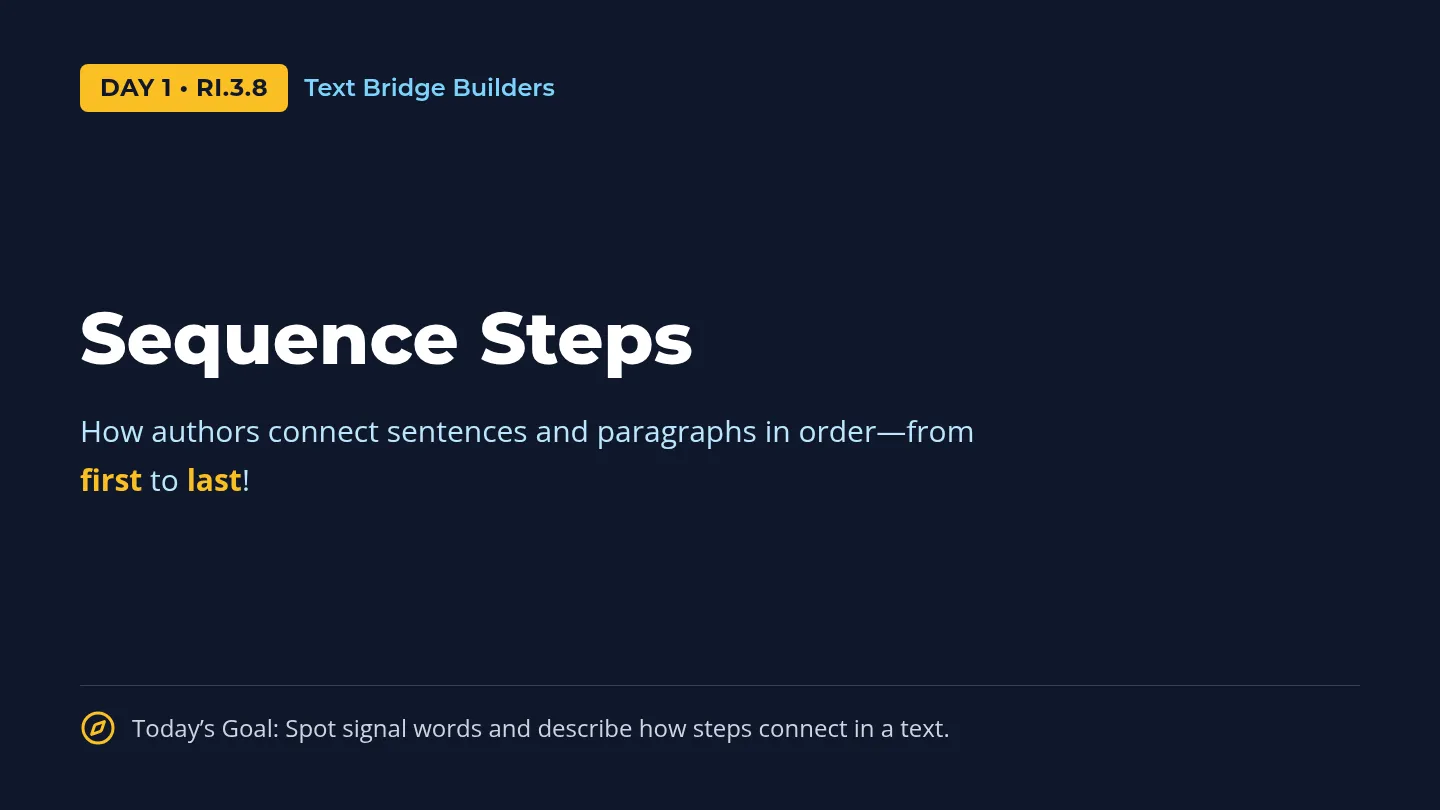
Sequence Steps Slides

Text Bridge Builders

A three-day third-grade ELA mini-lesson sequence introducing CCSS RI.3.8 (describing logical connections between sentences and paragraphs). Students act as Idea Bridge Builders to master sequence, cause and effect, and compare and contrast connections through interactive slides, guided reading, and scaffolded practice.

TB

Tabitha Brewer

12
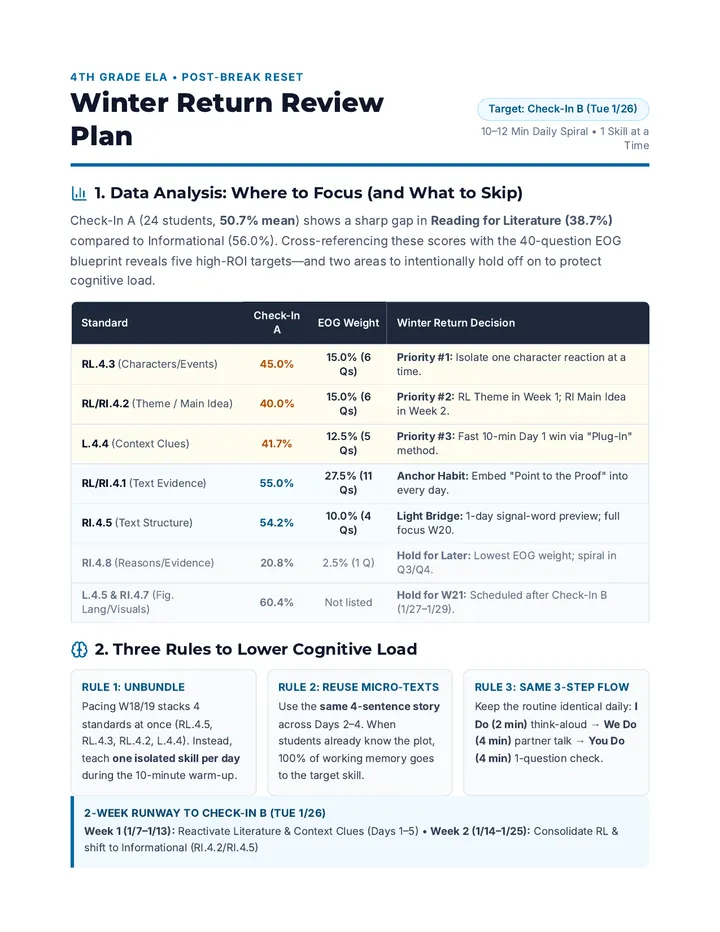
Winter Return Review Plan

Winter Return Review

A 1-week post-break 4th grade ELA review unit built from Check-In A data and EOG weights, designed to lower cognitive load ahead of Check-In B.

DC

Dustin Cooper

2
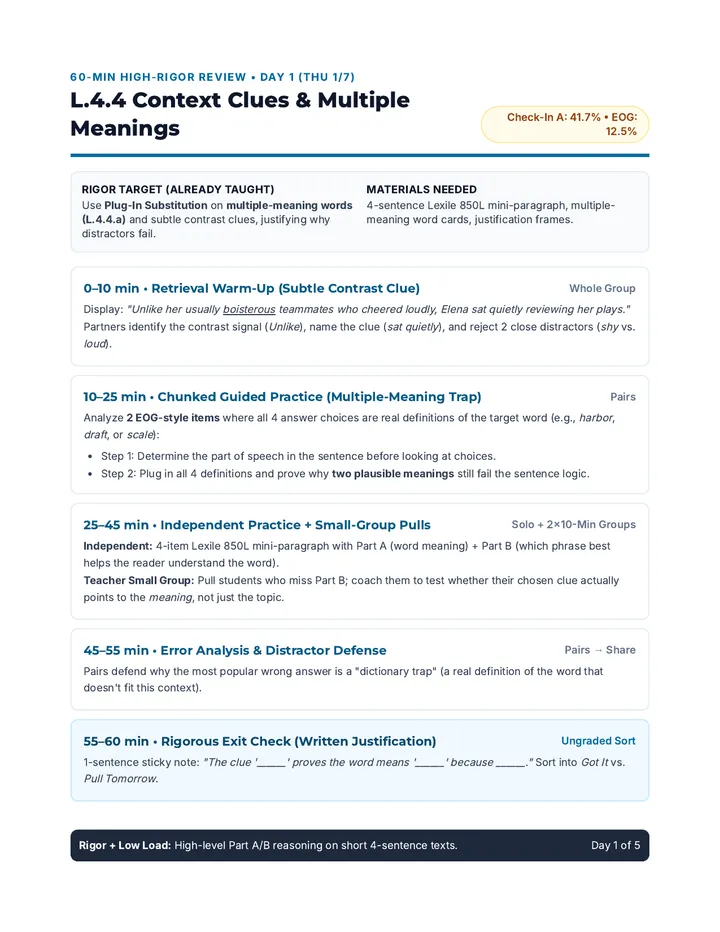
Winter Reset Lesson Plans

Winter Reset Lesson Plans

A 5-page teacher guide with expanded, high-rigor 60-minute review lesson plans for Days 1–5, featuring EOG-style multi-step reasoning, distractor analysis, and chunked practice for previously taught skills.

DC

Dustin Cooper

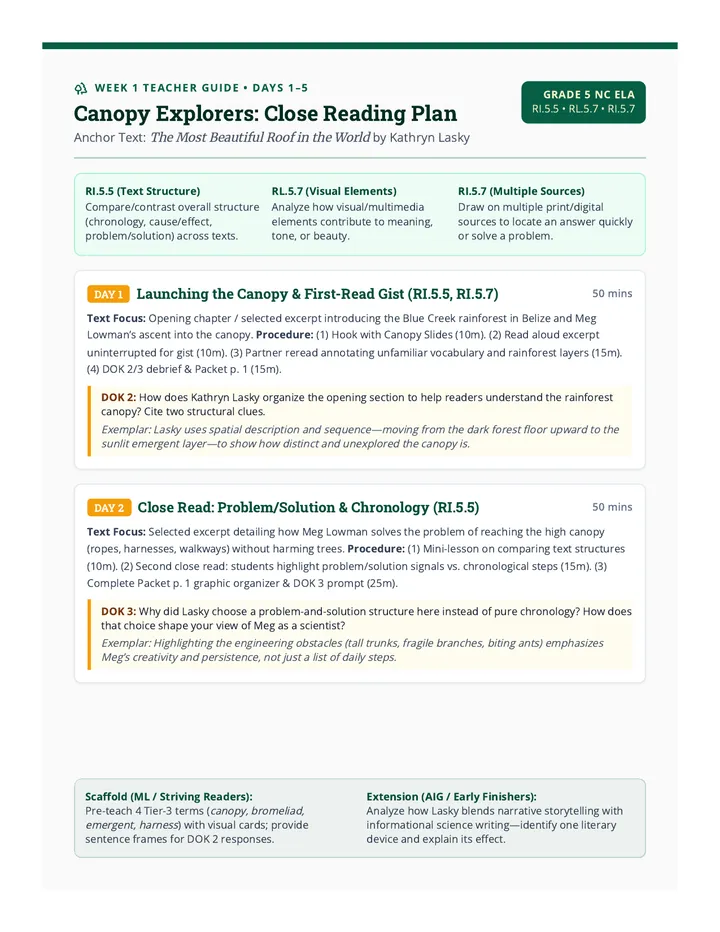
Canopy Explorers Teacher Guide

Rainforest Canopy Explorers

A 3-week (15-day) 5th grade North Carolina ELA unit centered on *The Most Beautiful Roof in the World* by Kathryn Lasky. Students master RL.5.7, RL.5.9, RI.5.5, RI.5.6, and RI.5.7 through explicit close reading, DOK 2 and DOK 3 questioning, visual analysis, and a summative assessment.

KM

Kelly Messer

11
Compare Contrast Slides

Compare and Contrast

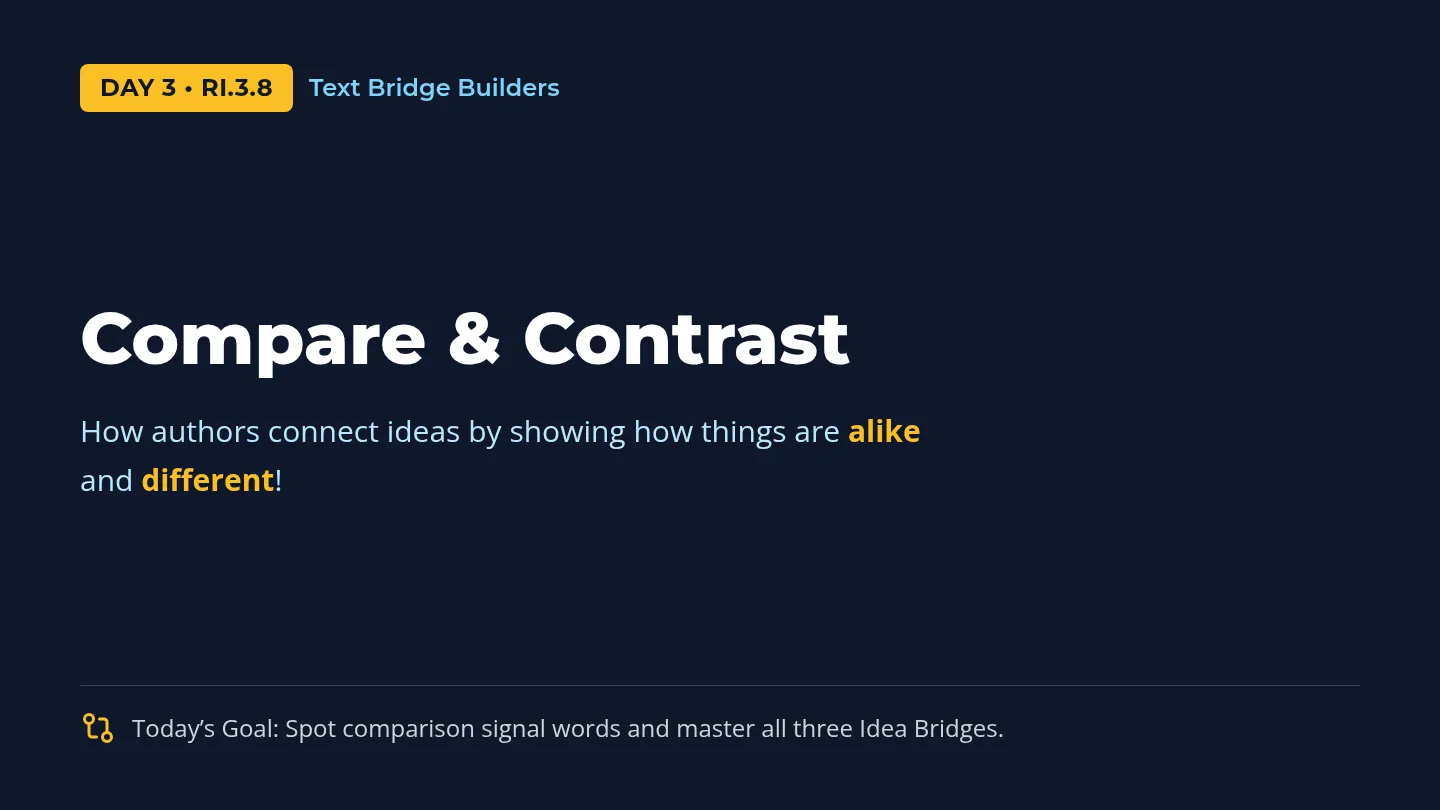
Day 3 completes the RI.3.8 introduction by teaching compare-and-contrast connections between sentences and paragraphs alongside a cumulative review of all three connection types. Includes instructional slides, a teacher lesson plan, a student worksheet, and an answer key.

TB

Tabitha Brewer

4
Winter Return Review Plan

Winter Return Review Plan

A teacher-facing 4-page review plan combining Check-In A data analysis, EOG weight alignment, and a 1-week low-cognitive-load daily spiral routine leading into Check-In B.

DC

Dustin Cooper

Week 1 Clue Hunters Worksheet

Skill Builder Weekly Pack

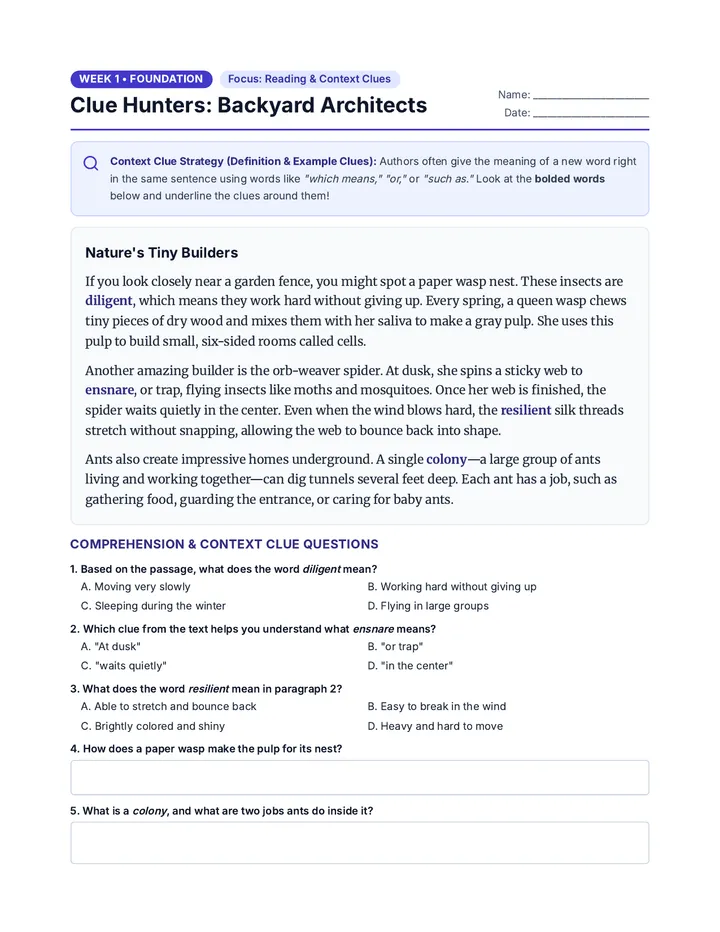
A 9-week printable practice sequence targeting 4th–6th grade reading comprehension with context clues, three-paragraph essay writing with self-editing, and identifying operations in multi-step equations. Each week rotates the primary focus skill while revisiting the other two skills, gradually increasing text complexity and reducing scaffolds across three 3-week cycles.

JF

Jessi Fazio Scott

18
Cause Effect Slides

Cause and Effect

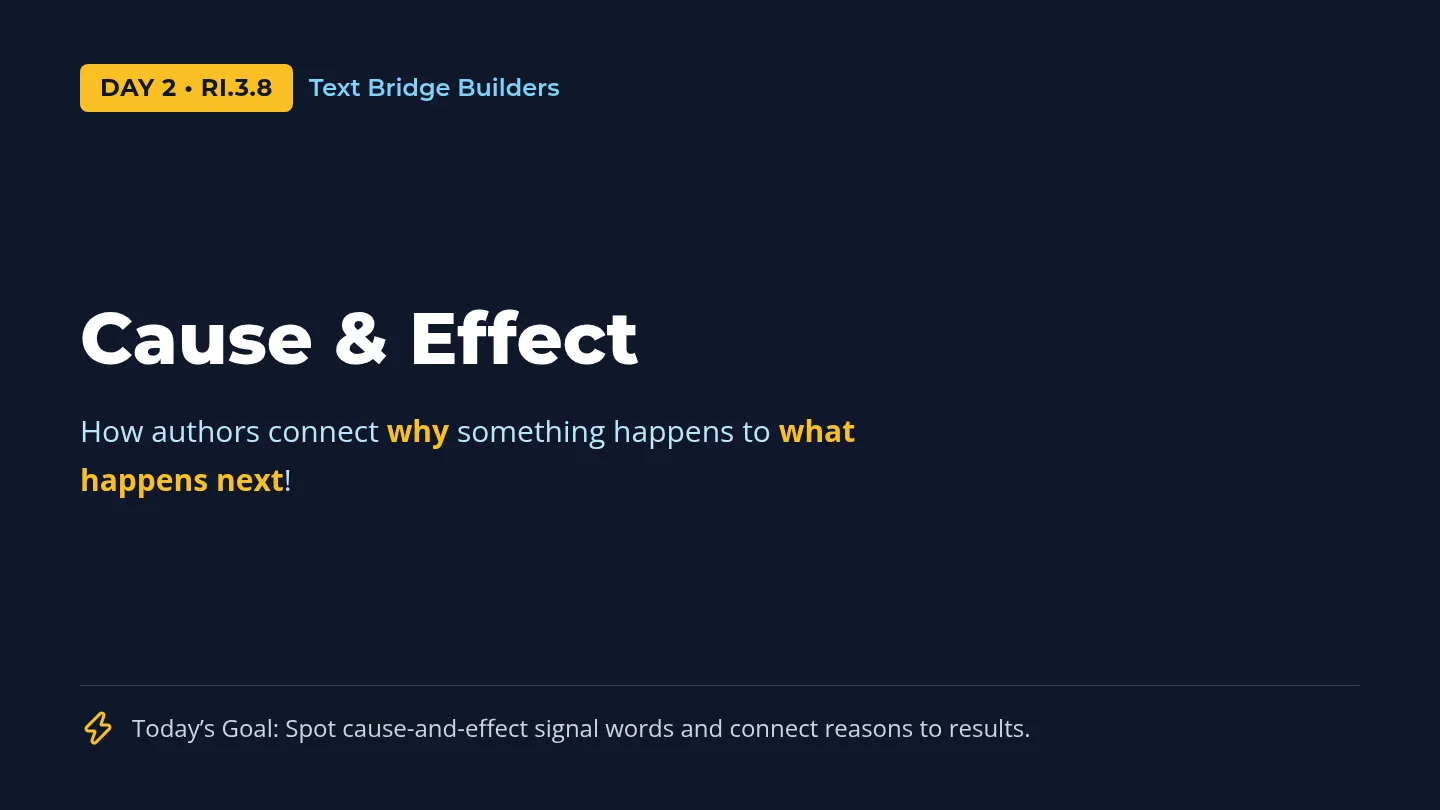
Day 2 builds on RI.3.8 by teaching students to identify cause-and-effect connections between sentences and paragraphs using signal words such as because, so, since, and as a result. Includes instructional slides, a teacher lesson plan, a student worksheet, and an answer key.

TB

Tabitha Brewer

4
Copper Compass Worksheet

Copper Compass Worksheet

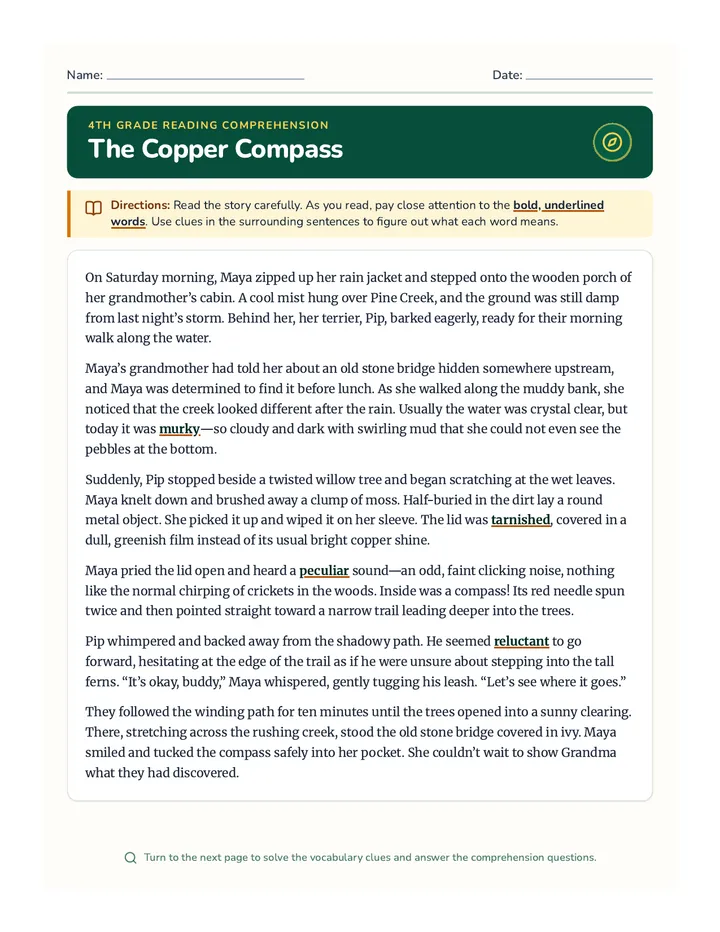
A two-page fourth-grade reading comprehension worksheet featuring an original short story, The Copper Compass, with embedded Tier 2 vocabulary words. Students use context clues to define target words and answer five WH comprehension questions with dedicated writing space.

RK

Reva Kanner

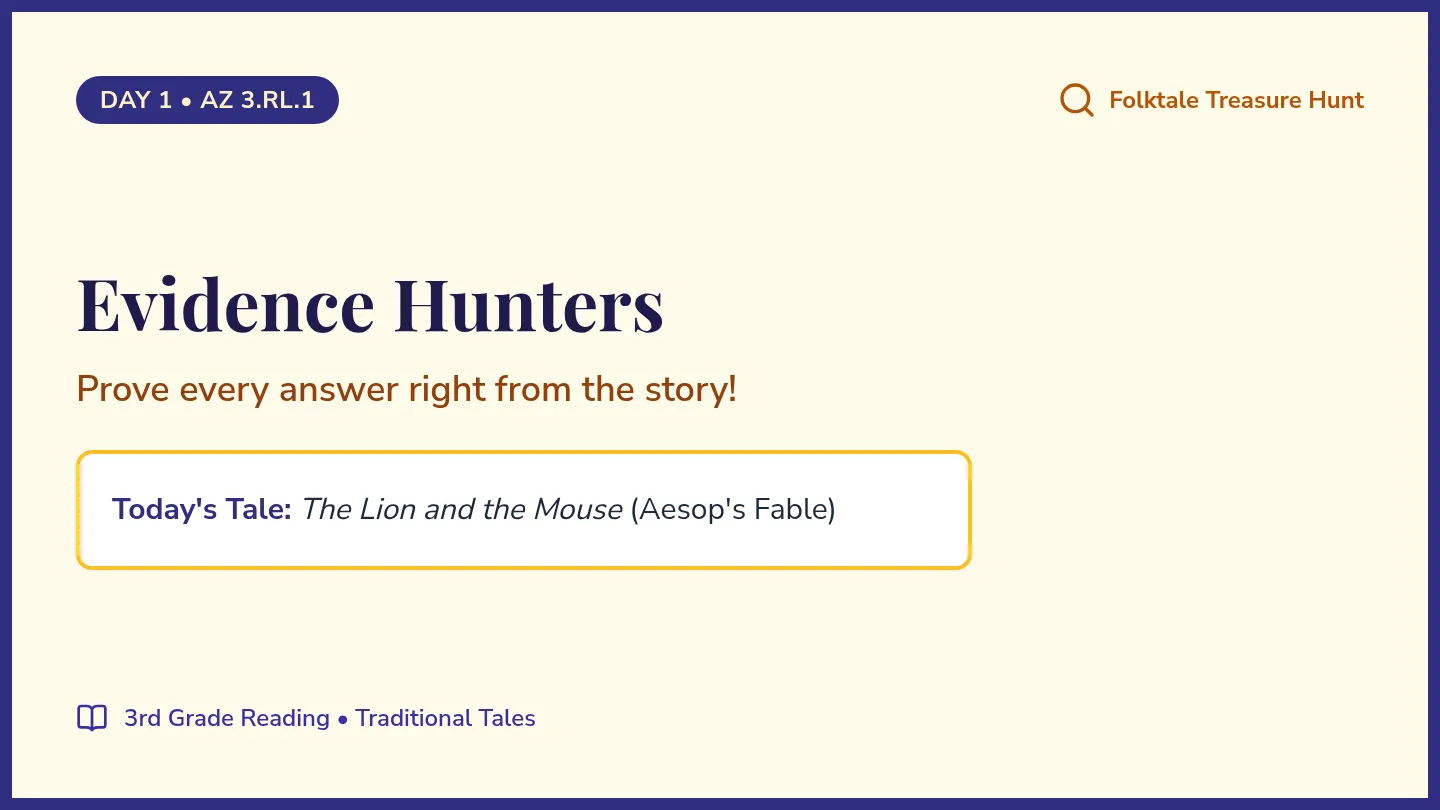
Evidence Hunters Slides

Folktale Treasure Hunt

A 5-day 3rd grade ELA sequence aligned to Arizona standards 3.RL.1, 3.RL.2, 3.RL.4, and 3.RL.5. Students explore traditional folktales and fables from diverse cultures to cite explicit text evidence, recount central messages, distinguish literal from nonliteral language, and analyze how story parts build on one another.

TD

Taylor Doucet

20
Sequence Steps Slides

Sequence Steps

Day 1 introduces RI.3.8 by teaching students how authors connect sentences and paragraphs in chronological or step-by-step sequence using signal words like first, next, then, and finally. Includes instructional slides, a teacher lesson plan, a student worksheet, and an answer key.

TB

Tabitha Brewer

4
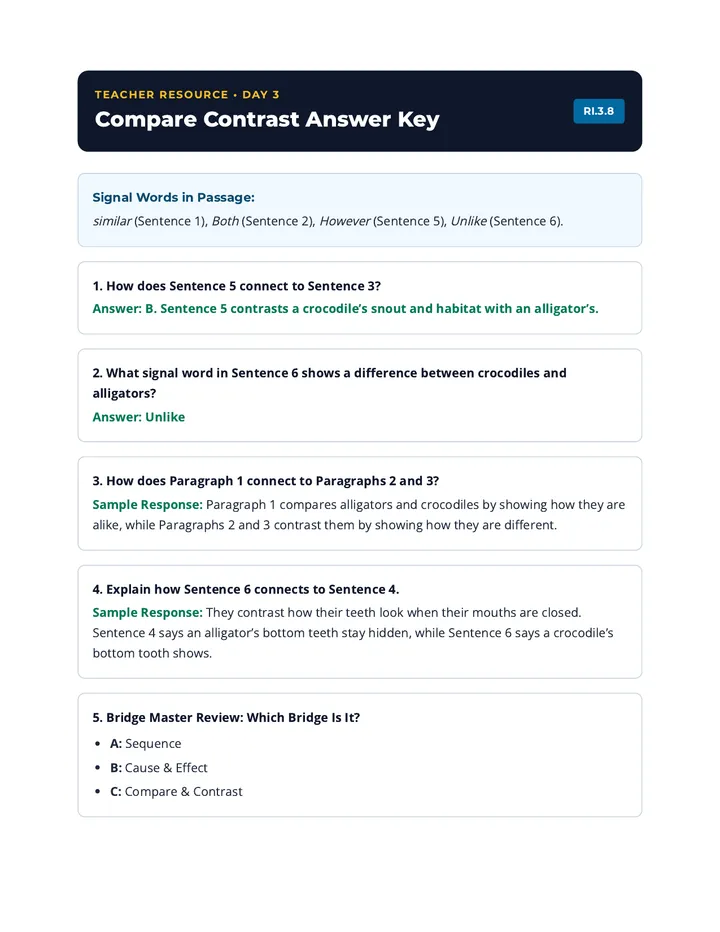
Compare Contrast Answer Key

Compare Contrast Answer Key

A 1-page answer key for the Day 3 Compare Contrast Worksheet, including correct answers for the passage questions and the cumulative 3-bridge review.

TB

Tabitha Brewer