An encoding assessment focused on welded sounds (-ng and -nk families) through pictures and context clues. Students write independently to demonstrate phonics mastery.
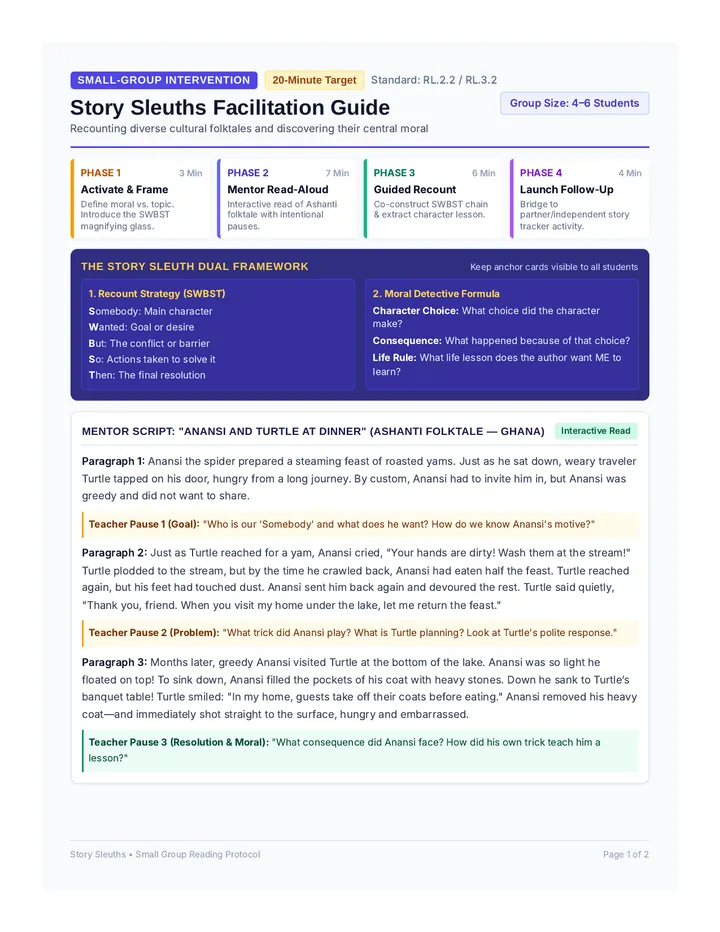
A reading comprehension lesson focused on making inferences. Students will learn to combine clues from the text with their own background knowledge to solve mini-mysteries and answer deep comprehension questions.
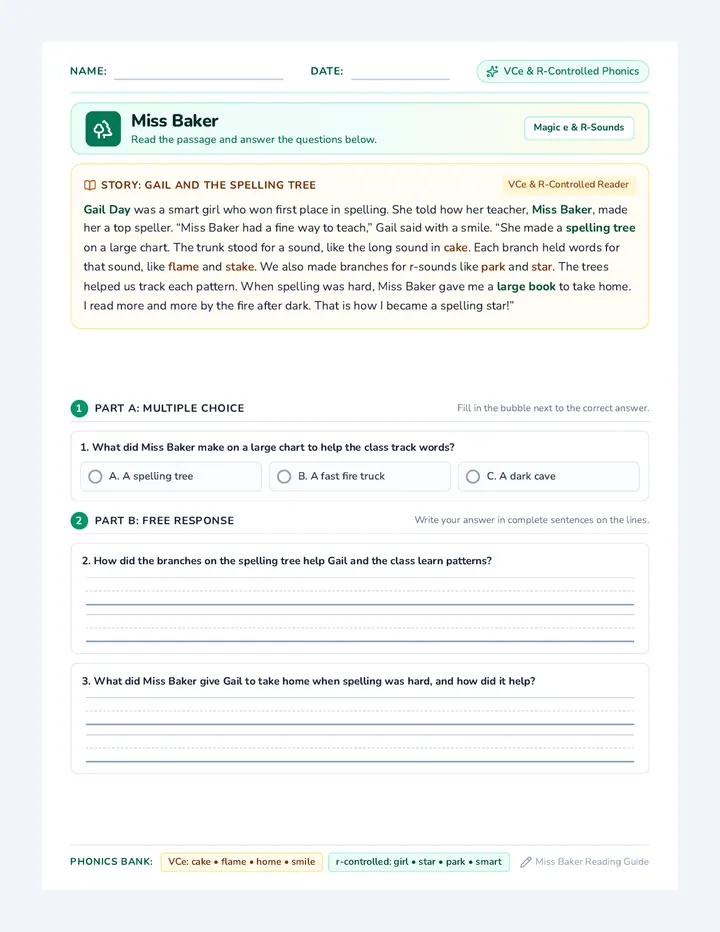
A 2nd-grade reading comprehension assessment focused on making inferences and citing text evidence. It includes a shortened detective-themed mystery passage, a concise 3-question student assessment worksheet, and a teacher grading guide and rubric.
A 2nd-grade reading comprehension lesson focused on making inferences and citing text evidence. Students read a mystery passage and use clues to solve the case while learning how to back up their answers with proof.
Form 5 of the phonics progress monitoring sequence. Tracks student decoding and encoding of an equivalent parallel set of 15 long o (oa, oe) and long i (ie) words.
Form 4 of the phonics progress monitoring sequence. Tracks student decoding and encoding of an equivalent parallel set of 15 long o (oa, oe) and long i (ie) words.
Form 3 of the phonics progress monitoring sequence. Tracks student decoding and encoding of an equivalent parallel set of 15 long o (oa, oe) and long i (ie) words.
Form 2 of the phonics progress monitoring sequence. Tracks student decoding and encoding of an equivalent parallel set of 15 long o (oa, oe) and long i (ie) words.
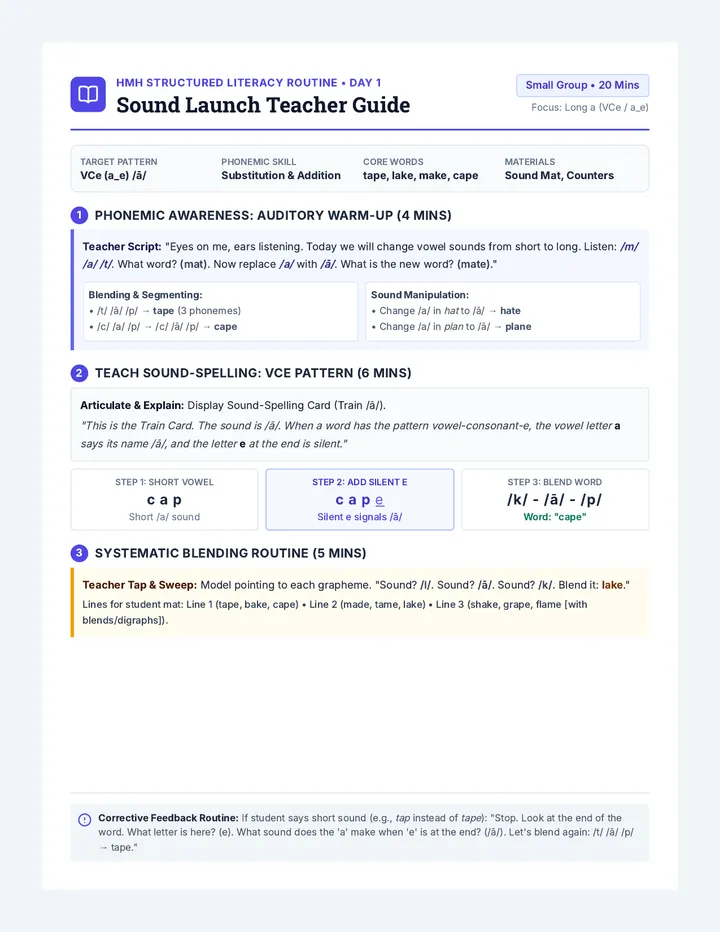
A focused phonics progress monitoring lesson for decoding and encoding long o (oa, oe) and long i (ie) vowel teams. Includes student reading sheets, teacher scoring rubrics, and student dictation worksheets.
A 5-day daily writing practice packet with visual prompts, scaffolding, and self-monitoring checklists. Students learn to write 3 complete sentences each day with a subject, predicate, capitalization, proper spacing, and correct ending punctuation.
A lesson designed for second graders to explore story sequencing, character traits, and vocabulary using hands-on storytelling props, leveled task cards, and interactive trace-and-color activities based on the story of a helpful fox and a trapped monkey.
An out-of-this-world phonics adventure focusing on initial 's' blends (st, sp, sl, sn, sm, sw, sk). Students practice identifying, writing, and reading blend words through progressive practice pages.
A comprehensive diagnostic kit for letter recognition (uppercase and lowercase) and letter sounds. Includes randomized student stimulus pages, teacher recording grids in developmental order, and individual/class progress trackers.
A comprehensive, 10-month progress-monitoring curriculum designed for rapid decoding trials. This lesson contains a student tracking binder, weekly assessment cards, and a complete curriculum booklet focusing on single-syllable phonics patterns.
A primary writing lesson themed around Matilda the Musical, teaching young students how to construct strong arguments using the Claim, Evidence, Reasoning (CER) model with friendly scaffolding.
A lesson centered around a printable phonics board game called Vowel Voyage. Students practice dividing and reading multisyllabic words with Vowel-Vowel (VV) splits (e.g., giant, poet, neon, chaos) as they navigate an explorer-themed island path.
A cooperative and competitive educational board game designed to help students master multisyllabic syllable division. Students navigate a canyon crossing path by correctly dividing words with V/V, VC/CV, and V/CV patterns, with a special focus on prefix/suffix boundaries.
A 1st-grade lesson on identifying and analyzing the character, setting, and plot elements of 'The Magician's Hat' by Malcolm Mitchell.
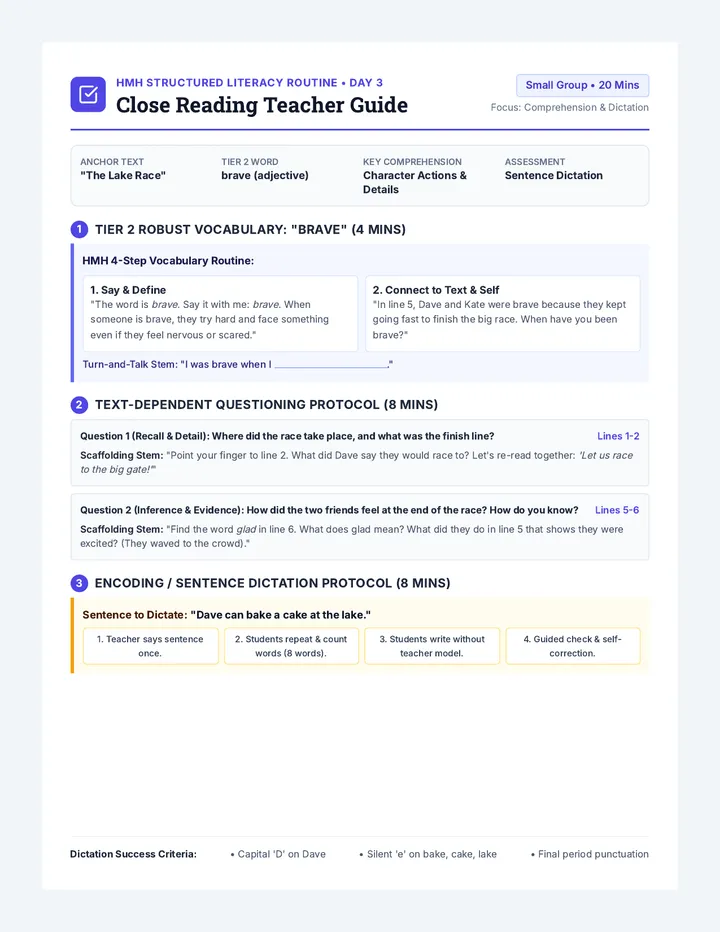
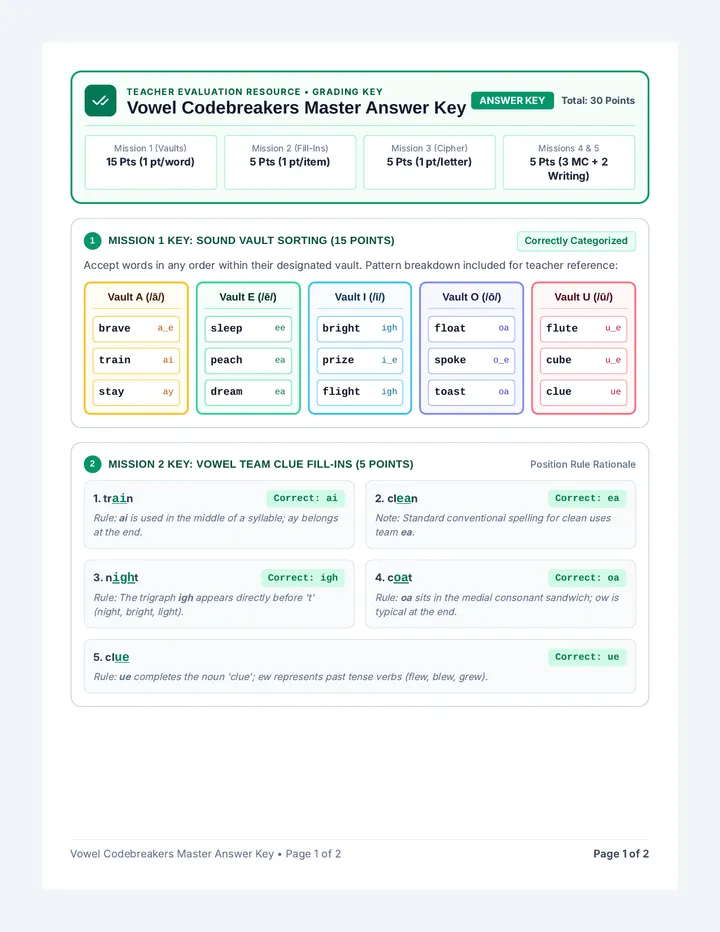
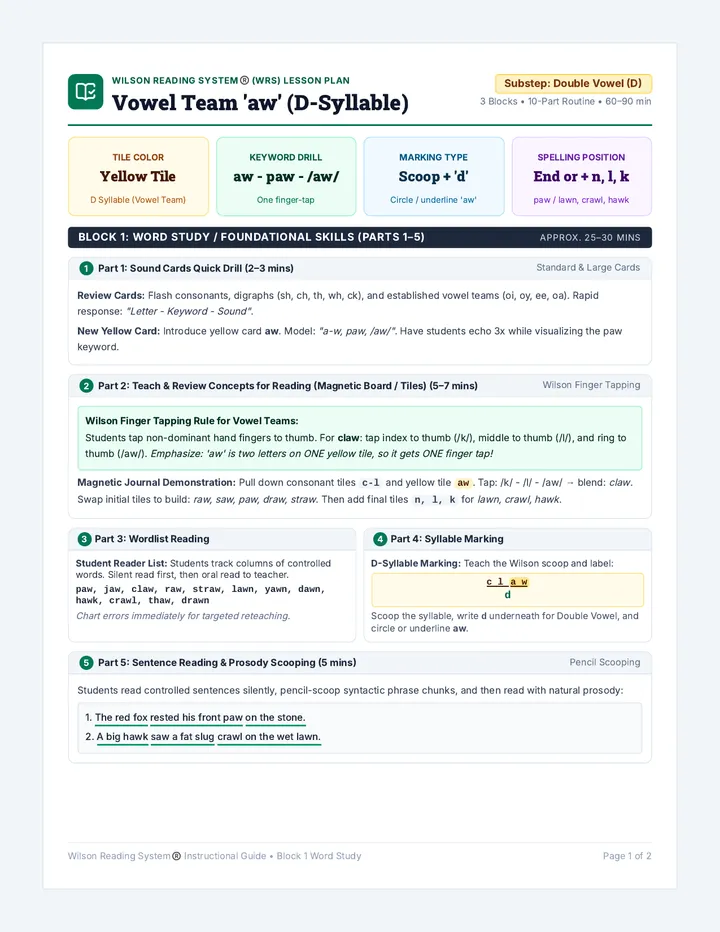
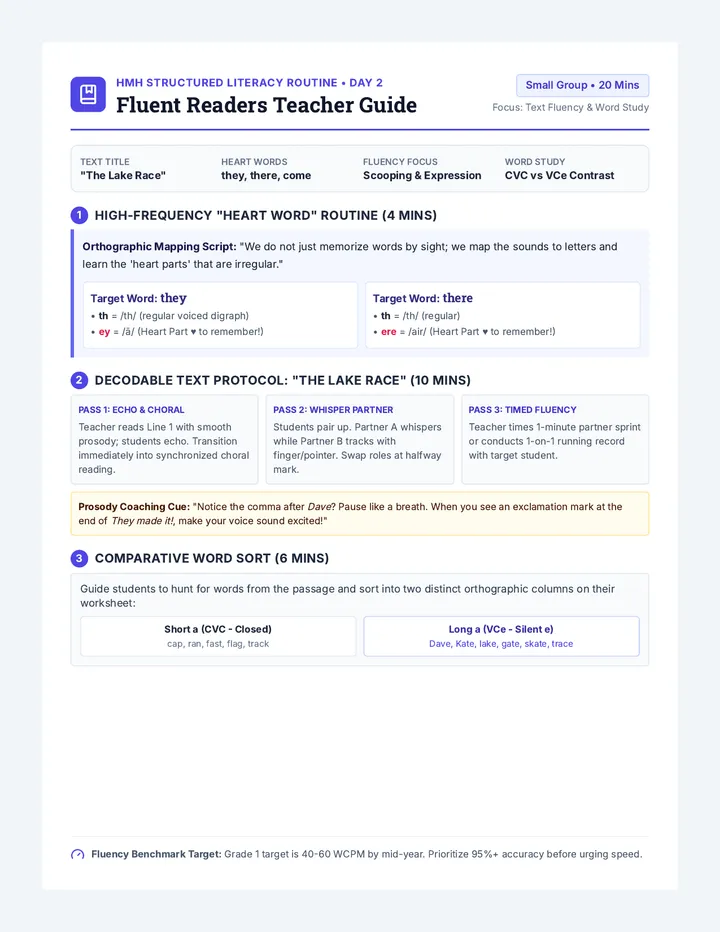
A clean, focused phonic assessment lesson designed to test CCVC, CVCC, and CVCe word pattern decoding without scaffolds.
Day 3 focuses on independent execution and performance monitoring. Students independently read, highlight, and analyze paragraph structures to demonstrate mastery, followed by a collaborative review.
Day 2 transitions to guided practice with fading scaffolds. Students collaborate to highlight and unpack paragraphs, learning to distinguish between critical supporting details and interesting but non-essential information.
Day 1 of the intervention focuses on explicit teacher modeling of the 'Roof' (Main Idea) and 'Pillars' (Supporting Details) concept. Students learn how a paragraph is built, watch a live highlighting demonstration, and participate in highly guided practice using physical highlighters.
A 1st-grade lesson on nonfiction text features using an explorer-themed slide deck, a lively Bingo game, and a three-level differentiated practice packet.
Weeks 11-20 of the Phoneme Power Protocol intervention, focusing on CCVC (consonant blends) and complex CVC words. Includes systematic small-group routines for 4-phoneme words, visual 4-box Elkonin mats, tactile onset-rime blending cards, and progress monitoring scoring sheets for Weeks 12, 16, and 20.
Weeks 1-10 of the Phoneme Power Protocol intervention, focusing on VC and CVC words. Includes systematic routines for segmenting individual sounds (PSF) and blending phonemes into nonsense and real words (NWF) using 2-box and 3-box Elkonin mats, color-coded word cards, and progress monitoring at Weeks 4 and 8.