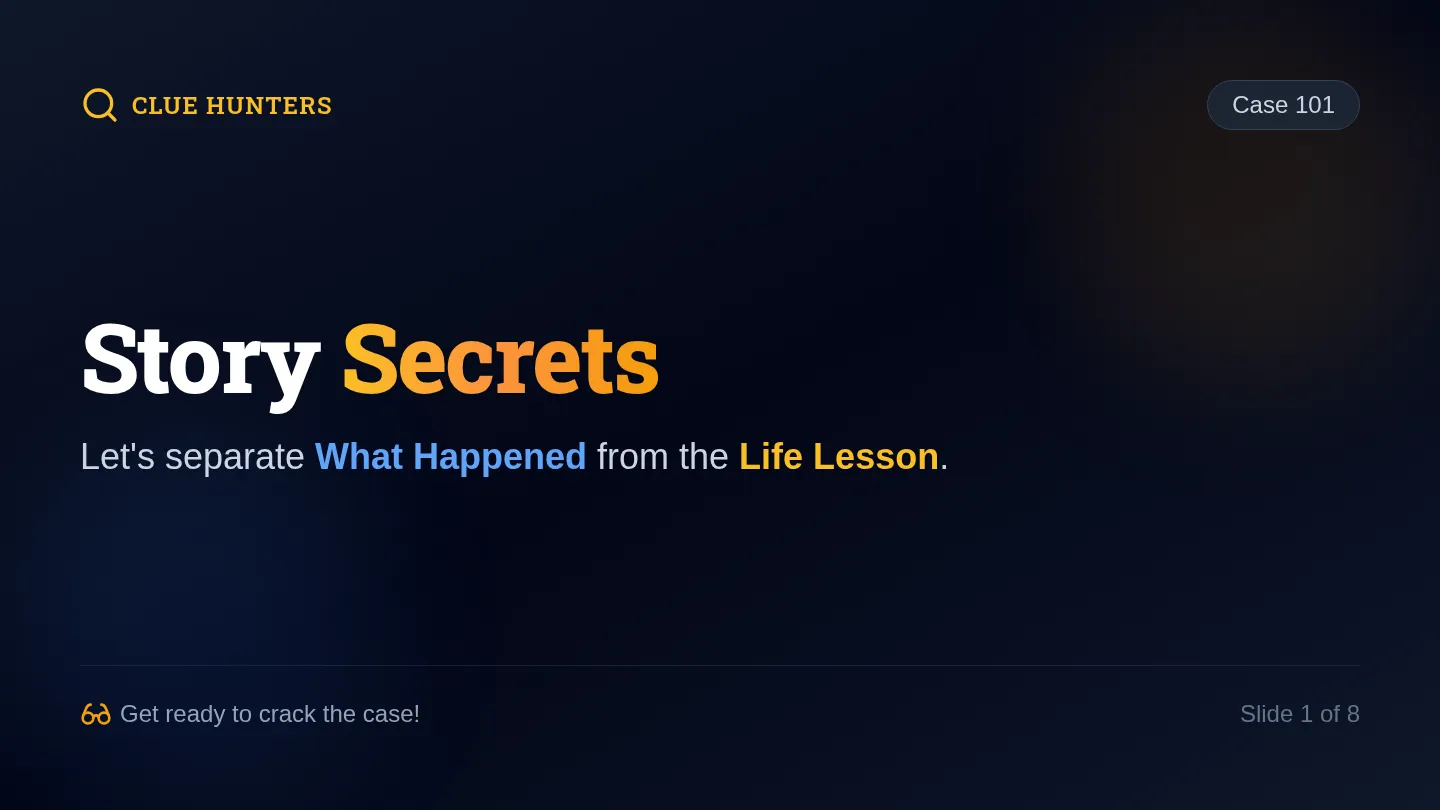
This 35-minute lesson for Advanced ELA 8 students explores the erosion and transformation of identity in Section 6 of Elie Wiesel's *Night*. Through guided reading and a 'Compass' mapping activity, students analyze Eliezer's moral and psychological shifts during the death march and at Gleiwitz.
The Kapos quickly settled us into the barrack. There was shoving and jostling as if this were the ultimate haven. People trod over numbed bodies, trampled wounded faces. My father and I were thrown to the ground by this rolling tide. From beneath me came a desperate cry: "You're crushing me... have mercy!" Knowing that I was crushing him, I wanted to get up to allow him to breathe. But I myself was crushed under the weight of other bodies. I dug my nails into unknown faces. I was biting my way through, searching for air. I prevailed.
"Never before had I heard such a beautiful sound. In such silence."
Those were my thoughts when I heard the sound of a violin. A violin in a dark barrack where the dead were piled on top of the living? It had to be Juliek. He was playing a fragment of a Beethoven concerto. Never before had I heard such a beautiful sound. In such silence. I shall never forget Juliek. How could I forget this concert given before an audience of the dead and dying? Even today, when I hear that particular piece by Beethoven, my eyes close and out of the darkness emerges the pale and melancholy face of my Polish comrade bidding farewell to an audience of dying men. When I awoke at daybreak, I saw Juliek facing me, hunched over, dead. Next to him lay his violin, trampled, an eerily poignant little corpse.
The Final Selection and Journey
On the third day, at dawn, we were driven out of the barrack. We were directed to a gate that divided the camp in two. A group of SS officers stood waiting. A word flew through our ranks: selection! My father was sent to the left. I ran after him. An SS officer shouted at my back: "Come back!" I inched my way through the crowd. Several SS men rushed to find me, creating such confusion that a number of people were able to switch over to the right—among them my father and I.
Someone had the idea of quenching his thirst by eating snow. Soon, we were all imitating him. As we were not permitted to bend down, we took out our spoons and ate the snow off our neighbors' backs. A mouthful of bread and a spoonful of snow. The SS men who were watching were greatly amused by the spectacle. The hours went by. Our eyes were tired from staring at the horizon, waiting for the liberating train to appear. It arrived only very late that evening. An infinitely long train, composed of roofless cattle cars. The SS shoved us inside, a hundred per car: we were so skinny! When everybody was on board, the convoy left.
Night • Section 6 Guided Reading • Advanced ELA 8
SLIDE 8
Share Out and Discussion
Teacher Action
Bring class together. Have groups share 1-2 key observations. Synthesis.
[Slide 8] "Alright, let's bring it back together. I'd like each group to share one significant shift you noted regarding his humanity or his filial duty. How did a specific event in Section 6 drive that change?"
"We've seen how the Holocaust pushed Eliezer to the brink of what it means to be human. His journey is a testament to the struggle for survival, both physical and spiritual. Thank you for your thoughtful participation today."
Teacher Note: This script is a guide. Adjust the phrasing to match your natural teaching voice. If discussion on Slide 3 is robust, you may need to compress the guided reading section to stay within the 35-minute timeframe.
Juliek's Music: "He was playing his life... His charred past, his extinguished future."
Analysis Summary
Eliezer describes himself as a "machine" or "automaton," suggesting a regression to basic biological function. However, his reaction to Juliek's music (beauty in horror) shows the persistence of his human spirit. His identity is a battleground between mechanical survival and human empathy.
Sample Group Conclusion
"Eliezer's identity is no longer the singular, faithful boy from Sighet. It is now a 'fractured self.' He exists in a state of dissociation from his own body, clinging to the singular duty of his father as his only link to humanity. His 'new' identity is defined by conflict: the instinct to survive at all costs versus the desperate need to remain a son and a human being."