A 45-minute 9th grade lesson where students learn to identify rhetorical strategies (ethos, pathos, logos) and deliver a concise rhetorical criticism speech. Following a gradual release model, students analyze a sample presidential excerpt and engage in peer feedback.
“My fellow citizens, today we stand at a crossroads of history. We have the chance to build a future of hope and opportunity for every child in our nation. But we cannot walk this path alone. I have seen your strength in the factories and in the classrooms. I know the pulse of this country because I am one of you.”
— Presidential Excerpt
Teacher Notes
Display and read aloud. Ask students to underline or highlight appeals they notice on their own handout. Mention the "crossroads" metaphor as a hook.
I Do: Teacher Modeling
Model Analysis
Step 1: Identify Pathos
"Future of hope and opportunity for every child."
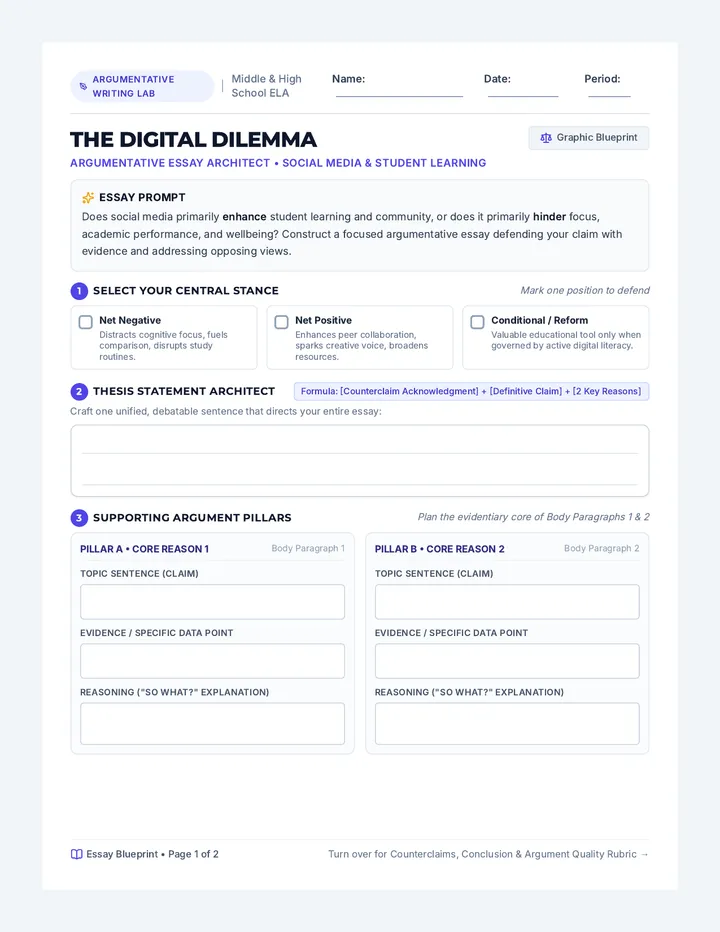
Analysis Worksheet Preview
The 1-Minute Critique
"The speaker uses pathos by referencing the 'future of every child.' This influences the audience by connecting national policy to personal values of family and protection, making the speech feel urgent and emotionally resonant."
Teacher Notes
Think aloud as you identify pathos. Show how to link evidence to evaluation on the worksheet. Then deliver a mini critique speech exactly as you expect them to.
We Do: Investigation Pairs
Guided Practice
Partner Up
Analyze the next passage in the Case File.
Find Ethos or Logos
Cite specific evidence and explain the effect.
Mission Check
Strategy Identified?
Quote Provided?
Effect Explained?
Teacher Notes
Circulate among pairs, offering prompts. Invite 2–3 pairs to share examples before moving to independent work.
You Do: Solo Report
Independent
Draft Your Critique
Choose a third passage. Use your guiding questions and the rubric to draft your 1-minute speech.
Peer Feedback
Present to your partner. Use the Peer Feedback Checklist to evaluate their evidence and clarity.
1:00
Mission Timer
Teacher Notes
Remind students to apply the rubric. Focus on "reasoning"—the "why" behind the rhetorical strategy's effectiveness.
Investigation De-Brief
Exit Ticket
On your index card, answer the following:
One STRENGTH of your critique speech.
One GROWTH area to improve for next time.
Teacher Notes
Collect cards as students leave. Summarize common themes (e.g., "many of us found logos the hardest to identify") at the start of the next lesson.