Star Power Lesson Plan
★
Grade 3 Phonics & Word Study
Star Power Lesson Plan
R-Controlled Vowels: /ar/
Estimated Duration: 45–50 Mins
Target Pattern /ɑːr/ spelled 'ar'
CCSS Standard RF.3.3 & RF.3.3.c
Grouping Whole + Small Partner
Prerequisite Short Vowels & Digraphs
Learning Objectives (SWBAT)
-
- Decode & Encode: Accurately segment, map, and read 1- and 2-syllable words containing the /ar/ pattern with 85%+ accuracy.
-
- Syllable Division: Divide and blend multi-syllable words by isolating r-controlled syllable chunks (e.g., mar-ket, har-vest).
-
- Phoneme Awareness: Articulate how "Bossy R" alters the typical short /ă/ vowel sound into the pirate/star sound /ar/.
Key Materials
• Bossy R Word Cards (1 set per pair)
• Star Power Practice Worksheet
• Dry-erase boards, markers & star counters
Essential Terms:
R-controlled syllable, Bossy R, phoneme-grapheme map, syllable split
Phase 1: Phonemic Warm-Up & Sound Hook (8 Mins) Auditory Discovery
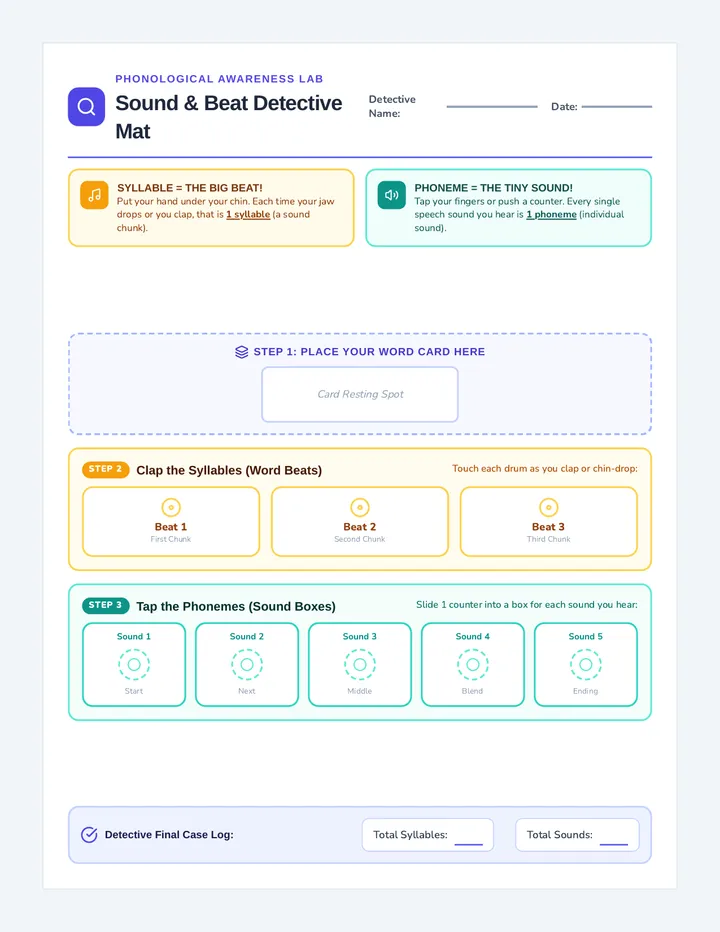
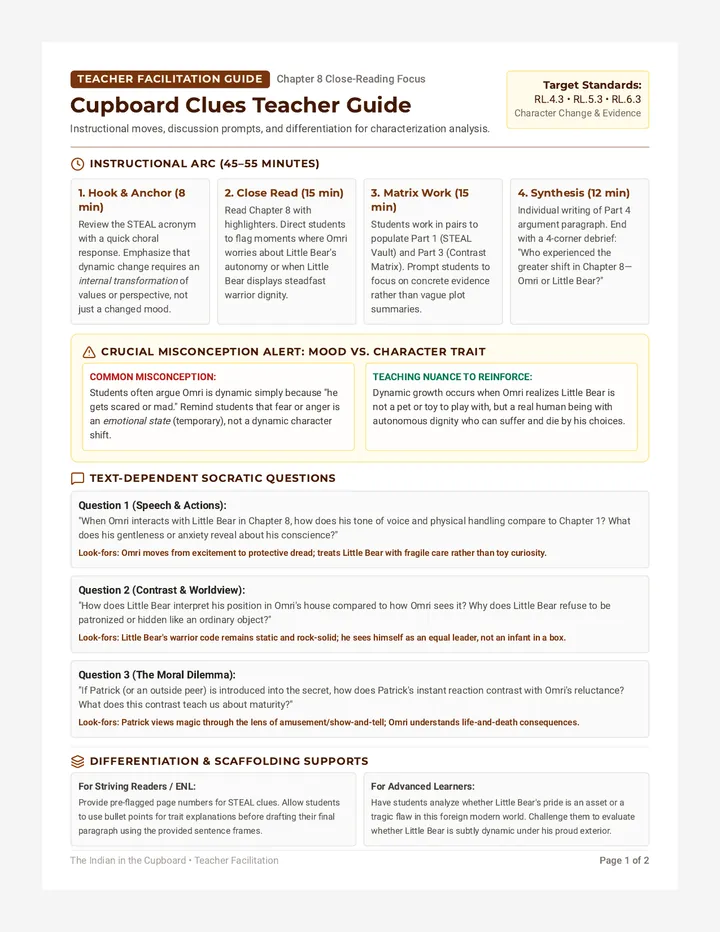
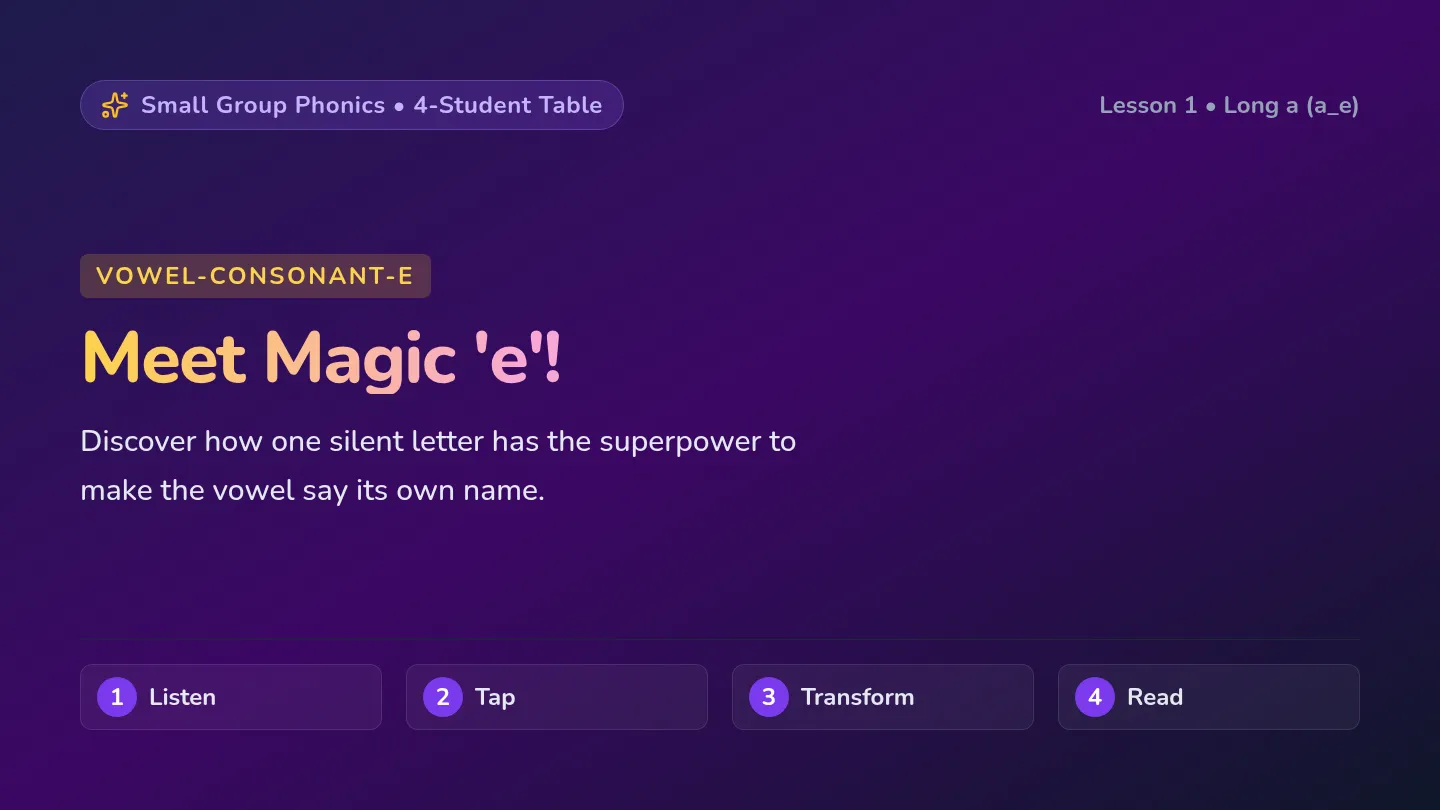
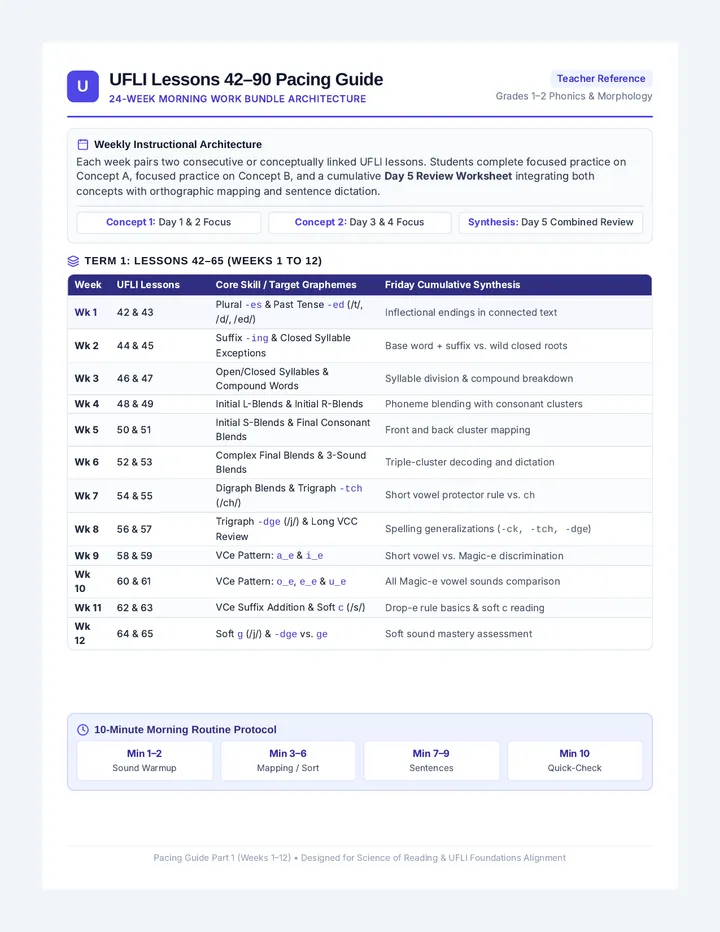
1. The Sound Detective Hook: Say aloud pairs of words: cat / cart, had / hard, pat / part. Ask: "What happens to the short vowel /ă/ when letter 'r' sneaks in behind it?" Guide students to notice that the 'r' takes charge—we don't hear /ă/ or /r/ separately; they blend into the rich vowel sound /ar/, like in STAR or a pirate saying "Arrr!"
2. Mouth Mechanics: Have students check jaw and tongue posture. Jaw drops wide open like /ă/, but the tongue tip pulls back and curls slightly upward to create the resonance of /ɑːr/.
3. Quick Oral Sound-Swapping: Teacher says a word without 'r', students insert 'r': "Say 'fist' with /ar/ instead of /i/ → first? No, let's swap 'fist' to 'fast' to 'far'!" Try: bat → bar, cab → car, bad → bard.
Phase 2: Explicit Instruction & Modeling "I Do" (12 Mins) Phoneme-Grapheme Mapping
Sound-to-Letter Elkonin Box Demonstration:
Model the word SPARK on the board:
s + p + ar + k
Rule Anchor: 5 letters, but only 4 phonemes! The ar grapheme stays together in ONE single sound box.
Two-Syllable Strategy (VCCV Split): Introduce TARGET. Model finding the vowels (a and e). Notice the two consonants in the middle (r and g). Cut between the consonants: tar / get. Blend syllable 1: /t/-/ar/ = tar. Blend syllable 2: /g/-/e/-/t/ = get. Put them together: target!
Star Power Phonics • Grade 3 Tier 1 Phonics Core Page 1 of 2 • Teacher Instructional Plan
Instructional Blueprint Continued
Guided Practice, Application & Assessment
Target Lesson Step: We Do • You Do • Review
Phase 3: Guided Practice & Syllable Scooping "We Do" (12 Mins) Partner Boards
1. Sound Box Challenge: Have students draw 4 sound boxes on their dry-erase boards. Teacher dictates the word CHART. Students tap sounds: /ch/ (box 1), /ar/ (box 2), /t/ (box 3). Discuss why 5 letters fit into 3 boxes. Repeat with SMART and HARSH.
2. Syllable Scoop Routine: Write on board: GAR-DEN, CAR-PET, HAR-VEST. Have students scoop each syllable with their fingers in the air while pronouncing each part clearly. Reinforce that the 'ar' syllable has an r-controlled vowel pattern.
3. Rapid-Fire Contrast Check: Flash words: pack vs park; mash vs marsh; chat vs chart. Have students signal "Thumbs Up" for /ar/ sound and "Thumbs Down" for short /a/.
Phase 4: Word Sort & Worksheet Routine "You Do" (12 Mins) Paired + Solo Tasks
★ Word Card Partner Sort:
In pairs, students use the Bossy R Word Cards to sort words into 3 columns:
• 1-Syllable /ar/ (barn, dart, spark)
• 2-Syllable /ar/ (market, garlic, carpet)
• Oddballs / Review (warm, ward, star)
★ Practice Worksheet:
Students complete the Star Power Practice Worksheet independently. Includes sound mapping, multisyllabic decoding scoops, context sentence fills, and proofreading error detection.
Targeted Differentiation & Scaffolding
Striving Readers (Tier 2/3)
- Highlight 'ar' in yellow before attempting to read.
- Provide tactile Elkonin tiles with physical 'ar' bonded blocks.
- Limit sort to single-syllable base words (e.g., bark, car, dart).
On-Level Readers
- Practice blending 2-syllable compound words (e.g., starfish, barnyard).
- Write complete complex sentences using 2 target 'ar' words.
- Self-check syllable breaks with partner reading.
Advanced / Enrichment
- Add affixes to /ar/ stems: darkness, harmless, restart, stardom.
- Explore the 'w-controlled' exception: why warm and warn sound like /or/.
- Compose a 4-line mini-story using 6+ /ar/ words.
Formative Exit Check (Last 5 Mins): Quick Check 3-2-1
Dictate 3 words for students to spell on the back of their worksheet: 1. shark • 2. marble • 3. harvest. Collect worksheets to check for: (a) correct placement of 'ar' in sound boxes, (b) successful syllable break between VCCV consonants, and (c) automatic recognition of the /ar/ spelling.
Star Power Phonics • Grade 3 Tier 1 Phonics Core Page 2 of 2 • Teacher Instructional Plan
Star Power Practice Worksheet
★
Star Power Practice Worksheet
R-Controlled Vowel /ar/ • Bossy R Sound Study
Grade 3 Phonics
Name:
Date:
Score: / 25
💡
Bossy R Rule: When the letter a is followed by r, they team up to make the sound /ar/ as in star, bark, and smart! The letters ar stay together in one sound box.
Part 1: Sound Box Mapping (8 Points)
One box = one speech sound (phoneme)
Say each word aloud. Count the sounds, then write one sound in each box. Remember: ar shares ONE box!
1. chart
2. spark
3. smart
4. harsh
Part 2: Sound Contrast Detective (4 Points)
Read each word pair carefully. Circle the letter of the word that has the /ar/ sound.
Question 1:
A) bat
B) bar
Question 2:
A) cart
B) cat
Question 3:
A) mash
B) marsh
Question 4:
A) part
B) pat
Part 3: Complete the Context Sentences (5 Points)
★ Word Bank ★
garden sharp alarm market barn
-
We picked fresh juicy strawberries from our backyard .
-
The loud morning rang at seven o'clock to wake us up for school.
-
The red tractor was parked safely inside the wooden .
-
Be careful using the scissors because the metal blades are very .
-
Grandma bought fresh peaches and crusty bread at the farmers .
Star Power Phonics Worksheet Page 1 of 2 • Continue to Page 2 →
Advanced Word Analysis
Syllable Division & Text Application
Target: Multisyllabic Decoding
Part 4: Two-Syllable Division & Scooping (5 Points)
Split each word between the two consonants (VC / CV). Write each syllable chunk separately on the lines.
Example: target → tar / get
R-controlled syllable + closed syllable
carpet
garlic
harvest
Bossy R Word Cards
★
Bossy R Word Cards • Set 1
Phonics Sorting, Syllable Division & Partner Speed Drill
18 Printable Cards
Cut along dashed lines ✂️
Sort Column 1
★ 1-Syllable /ar/
(e.g., star, barn, spark)
Sort Column 2
★★ 2-Syllable /ar/
(e.g., market, carpet)
Sort Column 3
⚠️ Contrasts / Tricky
(Short /a/ & /or/ in warm)
Card 01
star
Card 02
garden
gar • den
Card 03
warm
sounds like /or/
Card 04
chart
Card 05
market
mar • ket
Card 06
bat
short /a/ check
Card 07
spark
Card 08
carpet
car • pet
Card 09
cat
short /a/ check
Card 10
barn
Card 11
harvest
har • vest
Card 12
warn
sounds like /or/
Card 13
dart
Card 14
marble
mar • ble
Card 15
pat
short /a/ check
Star Power Phonics • Activity Word Cards Page 1 of 2 • Cut & Sort Routine
★★
Bossy R Word Cards • Set 2
Compound Word Matching & Morphological Extensions
Compound Match Deck
Cut along dashed lines ✂️
Base Word
star
Pairs with → [fish / light]
Base Word
barn
Pairs with → [yard]
Compound Word
starfish
star + fish
Compound Word
barnyard
double /ar/ sound!
Target 2-Syllable
target
tar • get
Target 2-Syllable
garlic
gar • lic
Suffix -ness
darkness
dark + ness
Suffix -less
harmless
harm + less
Suffix -er
farmer
farm + er
Challenge Word
Star Power Answer Key
✓
Star Power Answer Key
TEACHER REFERENCE
Grading Guide • Phoneme Mapping • Parts 1–3
Total Page 1 Points: 17 / 25
🎯
Key Scoring Criterion: In phoneme-grapheme mapping, the digraph ar represents a single r-controlled vowel phoneme (/ɑːr/). Verify that students placed both letters together in the designated shaded box.
Part 1: Sound Box Mapping Solutions (8 Pts • 2 pts each)
1 pt sound separation + 1 pt /ar/ placement
1. chart 3 sounds (/ch/ /ar/ /t/)
ch
ar
t
2. spark 4 sounds (/s/ /p/ /ar/ /k/)
s
p
ar
k
3. smart 4 sounds (/s/ /m/ /ar/ /t/)
s
m
ar
t
4. harsh 3 sounds (/h/ /ar/ /sh/)
h
ar
sh
Part 2: Sound Contrast Solutions (4 Pts • 1 pt each)
Auditory Discrimination
Item 1:
A) bat
✓ B) bar
bat has short /ă/
Item 2:
✓ A) cart
B) cat
cat has short /ă/
Item 3:
A) mash
✓ B) marsh
mash has short /ă/
Item 4:
✓ A) part
B) pat
pat has short /ă/
Part 3: Context Cloze Solutions (5 Pts • 1 pt each)
Semantic & Orthographic Match
1. We picked fresh juicy strawberries from our backyard... garden
2. The loud morning... rang at seven o'clock to wake us up. alarm
3. The red tractor was parked safely inside the wooden... barn
4. Be careful using the scissors because the metal blades are very... sharp
5. Grandma bought fresh peaches and crusty bread at the farmers... market
Star Power Phonics • Teacher Answer Key Page 1 of 2 • Continue to Page 2 →
Instructional Scoring & Analysis
Syllable Division, Detective & Sentences
Total Page 2 Points: 8 / 25
Part 4: Syllable Scooping Solutions (5 Pts • 1 pt each)
carpet
car / pet
garlic
gar / lic
harvest