Lenny.com
Explore
Create
ActivitiesNewMathEnglish Language ArtsScience & EngineeringSocial StudiesGlobal LanguagesHealth & Physical EducationSpecial EducationCounseling & Life SkillsArts & CreativityESL
Lenny.com
Lenny.com
Explore
Create
ActivitiesNewMathEnglish Language ArtsScience & EngineeringSocial StudiesGlobal LanguagesHealth & Physical EducationSpecial EducationCounseling & Life SkillsArts & CreativityESL
Lenny.com
Lenny.com

Solutions

Lenny for EducatorsLenny for SchoolsLenny for Districts

Product

ExploreSign inCreateSupportAbout

Resources

Getting startedMTSS Acceleration Program

Newsletters

School Funding Newsletter

© 2026 Lenny Learning Inc.

TermsPrivacyAccessibility
LinkedInInstagramX
Lenny
English Language ArtsPhonics & Reading FoundationsLetter IdentificationLearn Letters A-ZLowercase and Uppercase LettersConsonants and VowelsLetter-Sound AssociationsLetter-Sound Associations: LowercaseLetter-Sound Associations: UppercaseBeginning and Ending SoundsRhymingBlending And SegmentingShort VowelsShort Vowel SoundsConsonant BlendsConsonant DigraphsBlends, Digraphs, and TrigraphsDigraphs, Blends, and Silent LettersLong Vowel SoundsLong Vowel PatternsShort and Long VowelsShort and Long Vowel PatternsSilent EVowel SoundsVowel TeamsR-Controlled VowelsDiphthongs: Oi, Oy, Ou, OwVariant VowelsVariant, Diphthong, And R Vowel PatternsSoft G And CSight WordsIrregular WordsWord RecognitionSyllablesSyllable TypesTwo-Syllable WordsMultisyllabic WordsPhoneme ManipulationDecodable TextsVocabularyAction WordsQuestion WordsNouns and AdjectivesClassify WordsCompound WordsSynonyms and AntonymsHomophonesHomophones and HomonymsShades of MeaningContext CluesPrefixes and SuffixesGreek and Latin RootsAnalogiesIdioms and AdagesForeign Words and ExpressionsWord Choice and UsageReference SkillsReading ComprehensionRead-Along Literary TextsRead-Along Informational TextsReality vs. FictionStory ElementsCharacterSequenceMain IdeaCause And EffectCompare And ContrastReading StrategiesText StructureAuthor's PurposeAuthor's Purpose And ToneAuthor's PerspectivePoint Of ViewThemeInference And ThemeInference And AnalysisPoetry ElementsLiterary DevicesAnalyzing LiteratureAnalyzing Informational TextsComparing TextsAudience, Purpose, And ToneBusiness DocumentsNovel StudyNonfiction Book StudyGrammar & MechanicsSentencesNounsVerbsAdjectivesPronounsCapitalizationPunctuationContractionsConjunctionsPrepositionsArticlesAdjectives And AdverbsVerb TypesVerb TensePronouns And AntecedentsPronoun TypesSubject-Verb AgreementDirect And Indirect ObjectsSentences, Fragments, And Run-OnsPhrases And ClausesCommasSemicolons, Colons, And CommasDashes, Hyphens, And EllipsesSpellingAbbreviationsFormattingVerb Tense And MoodMisplaced ModifiersWritingDescriptive DetailsCreative WritingOpinion WritingTopic SentencesOrganizing WritingLinking WordsSentence VarietyIntroductions And ConclusionsPersuasive And Opinion WritingExpository WritingPersuasive StrategiesDeveloping And Supporting ArgumentsTopic Sentences And Thesis StatementsSummarizingResearch SkillsEditing And RevisingActive And Passive Voice=Writing Clearly And ConciselyDebate & Public SpeakingPublic Speaking BasicsPersuasive TechniquesClaims and EvidenceTypes of ArgumentsReasoning TypesLogical FallaciesTopic ResearchOrganizing EvidenceDebate Speech OrganizationAttacking and Defending ArgumentsClash and EngagementImpact CalculusQuestioning and Cross-ExaminationCritical ThinkingInformal LogicFormal LogicInductive Reasoning

Cupboard Character Study

A characterization lesson for Chapter 8 of The Indian in the Cupboard examining STEAL indirect characterization methods, character responses, and dynamic versus static character change. Students close-read key moments, track character decisions, and contrast character perspectives.

CGCody Germann

Differentiation & Scaffolding Supports

For Striving Readers / ENL:

Provide pre-flagged page numbers for STEAL clues. Allow students to use bullet points for trait explanations before drafting their final paragraph using the provided sentence frames.

For Advanced Learners:

Have students analyze whether Little Bear's pride is an asset or a tragic flaw in this foreign modern world. Challenge them to evaluate whether Little Bear is subtly dynamic under his proud exterior.

The Indian in the Cupboard • Teacher Facilitation Page 1 of 2

Exemplar Key & Assessment

Chapter 8 Exemplars & Rubric

Teacher Reference Key

Sample STEAL Evidence (Chapter 8 Focus)

Omri • Category: Thoughts & Actions Reveals: Dynamic Moral Awakening

Evidence: Omri hesitates, shields Little Bear in his pocket with extreme tenderness, and refuses to treat him as a novelty for amusement. He constantly worries about Little Bear suffocating, getting crushed, or being discovered.

Analysis: Omri is moving from an egocentric child who saw the cupboard as a fun toy machine to an empathetic guardian burdened with the ethical weight of keeping a tiny person alive.

Little Bear • Category: Speech & Looks Reveals: Static Warrior Dignity

Evidence: Little Bear stands rigid with arms folded, demands respect, issues crisp commands ("Give knife!"), and scorns any suggestion that he hide like a coward.

Analysis: Little Bear remains essentially static: his core pride, warrior courage, and expectation of deference are unwavering despite being placed in a bizarre giant world.

Model Contrast Matrix (Omri vs. Patrick / Little Bear)

Category

Omri (Protective / Dynamic)

Patrick / Little Bear (Contrasting Foil)

Outward Action

Guards the cupboard/pocket; hesitates to show or brag; sets strict rules to prevent harm.

Patrick: Demands to see and manipulate.
Little Bear: Demands weapons and autonomy.

Core Concern

Safety, conscience, and preventing disastrous death or exposure of a sentient being.

Patrick: Thrill, spectacle, and curiosity.
Little Bear: Honor, dignity, and survival.

Model Student Synthesis Paragraph (Part 4)

"In Chapter 8, Omri is best understood as a dynamic character because his understanding of Little Bear evolves from treating him like a thrilling toy to recognizing his fragile human autonomy. Through Omri's internal thoughts, the reader sees how terrified he is of dropping or suffocating Little Bear, proving he now values the miniature man's life over his own entertainment. Furthermore, through his protective actions when resisting reckless curiosity, Omri shoulders an intense ethical responsibility. Unlike in Chapter 1 where he thoughtlessly locked a living creature away, Omri now experiences agonizing moral maturity. This shift demonstrates that Omri is dynamically growing into a compassionate, responsible person."

4-Point Assessment Rubric

4 - Exemplary

Cites accurate STEAL quotes; articulates sharp distinction between emotion and internal growth; contrasts perspectives with deep nuance.

3 - Proficient

Identifies valid STEAL evidence; correctly classifies dynamic vs. static with sound reasoning; contrast matrix includes clear textual points.

2 - Developing

Confuses fleeting emotion with permanent character change; evidence is vague summary rather than specific dialogue/action clues.

1 - Novice

Missing STEAL categories; incomplete contrast matrix; claim unsupported by Chapter 8 textual details.

The Indian in the Cupboard • Teacher Facilitation Page 2 of 2

Omri's Trait: Passionate empathy; moral awakening.

ACTIONS (A)

Little Bear draws his tiny knife instantly when Patrick tries to poke him with a pencil.

Little Bear's Trait: Fierce pride; warrior self-defense.

EFFECT ON OTHERS (E)

Patrick becomes angry and coercive when Omri refuses to do what he wants with the cupboard.

Patrick's Trait: Selfish impulse; lack of foresight.

Chapter 8 Analysis 4 / 6


Big Picture • Dynamic vs. Static Character Growth Verdict

DYNAMIC: Omri

Internal Transformation

Omri begins the book viewing plastic figures as personal possessions. By Chapter 8, he has matured into a moral protector who respects another creature's humanity above his own convenience.

✓ Values shift from selfish fun to selfless stewardship

STATIC: Little Bear & Patrick

Steadfast Worldviews

Little Bear remains unwavering in his warrior honor and demands for equality. Patrick remains focused on the entertainment value of toys, providing a foil that highlights Omri's growth.

✓ Core motivations and temperament remain consistent

Discussion: Would Omri have agreed to bring the cowboy to life if Patrick had asked in Chapter 2? Why or why not?
You might also like

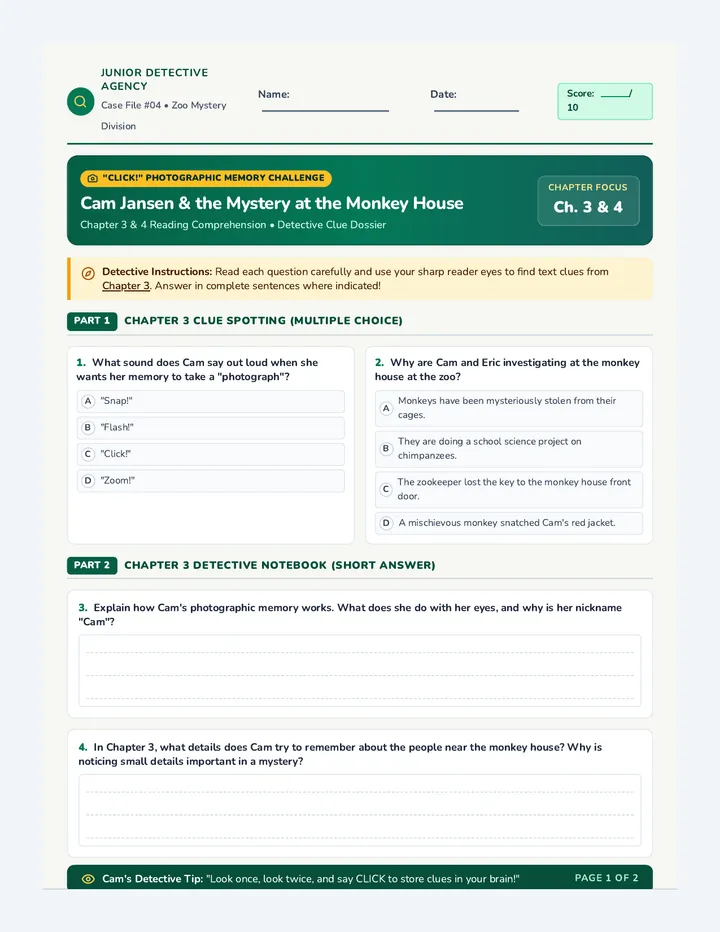
Monkey Mystery Worksheet

Monkey Mystery Casebook

A novel study sequence for David A. Adler's Cam Jansen and the Mystery at the Monkey House. Students develop detective reading comprehension, textual evidence skills, and character analysis across chapters.

AG

Angie Goodman

11
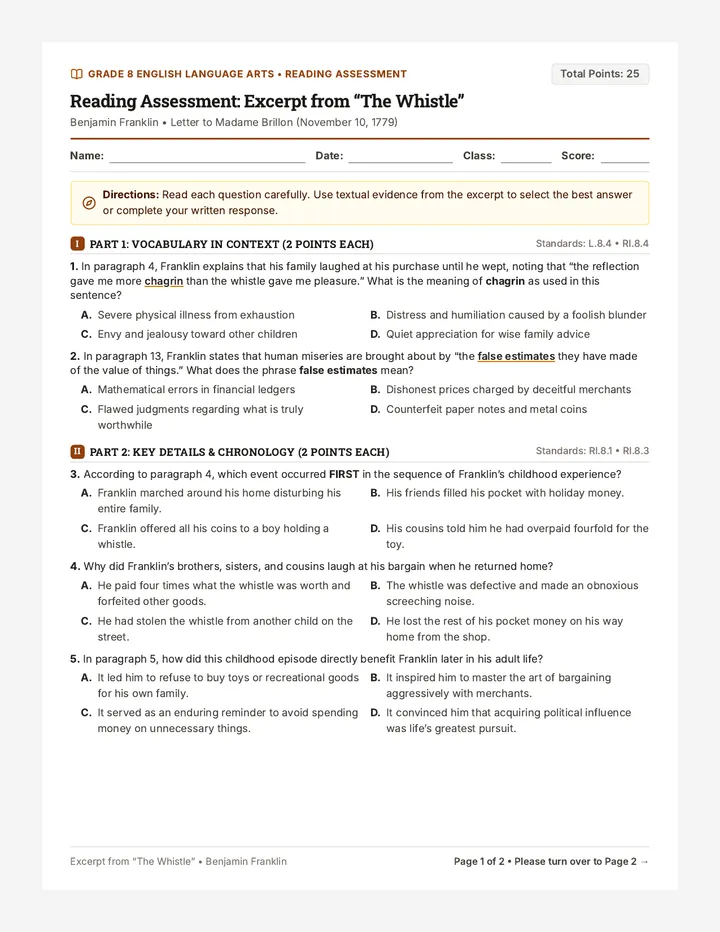
The Whistle Reading Quiz

Franklin's Whistle Assessment

An eighth-grade reading comprehension and analysis assessment based on Benjamin Franklin's 1779 letter 'The Whistle.' Students analyze vocabulary in context, text structure, central theme, and Franklin's extended metaphor on the true cost of human desires.

S

sramlall

3
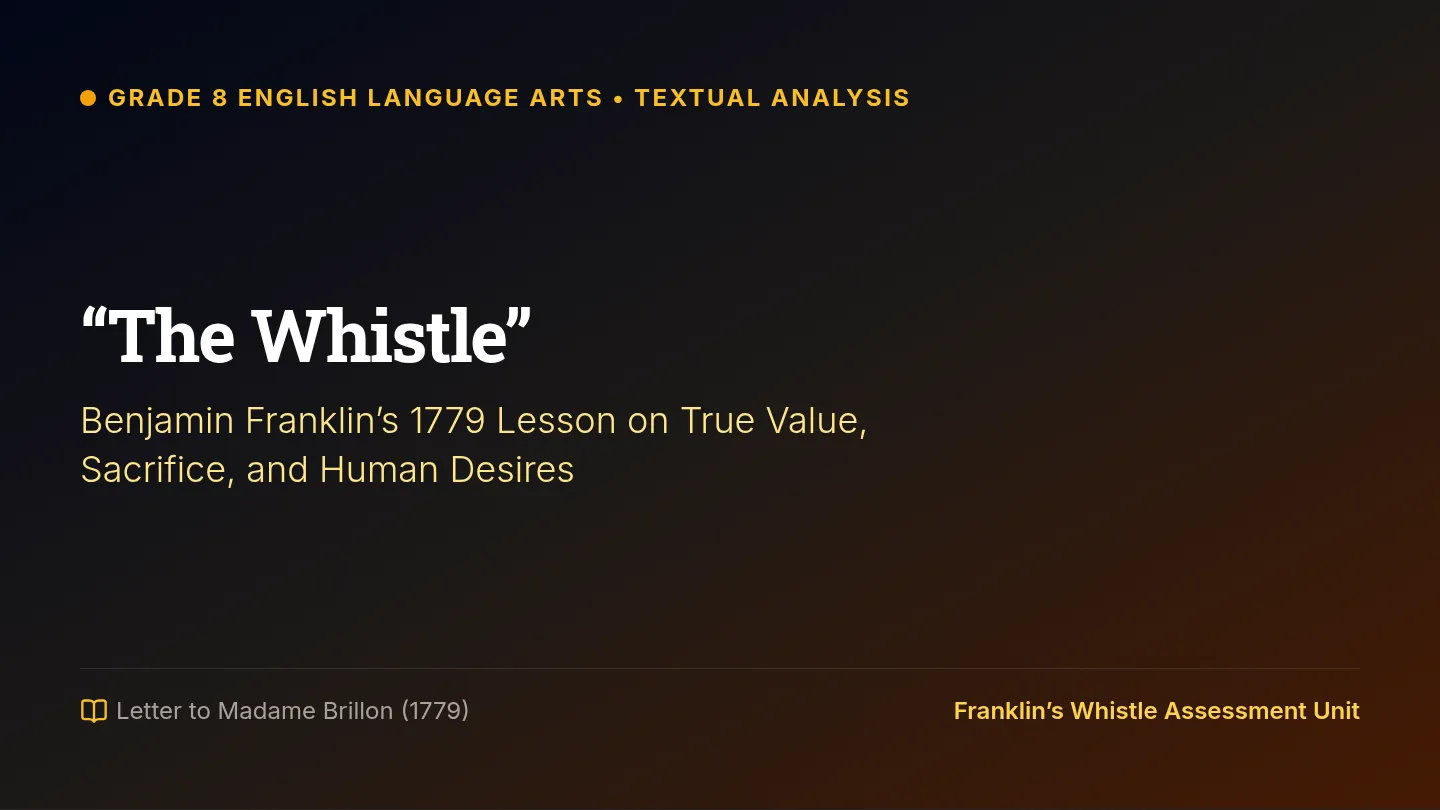
Whistle Wisdom Slides

Whistle Wisdom Slides

An engaging five-slide presentation for Benjamin Franklin's 'The Whistle.' Features explicit academic and character targets focusing on mutual peer support ('brother's keeper'), an analysis of Franklin's childhood anecdote, the adult extended metaphor breakdown, and structured collaborative partner inquiries.

S

sramlall

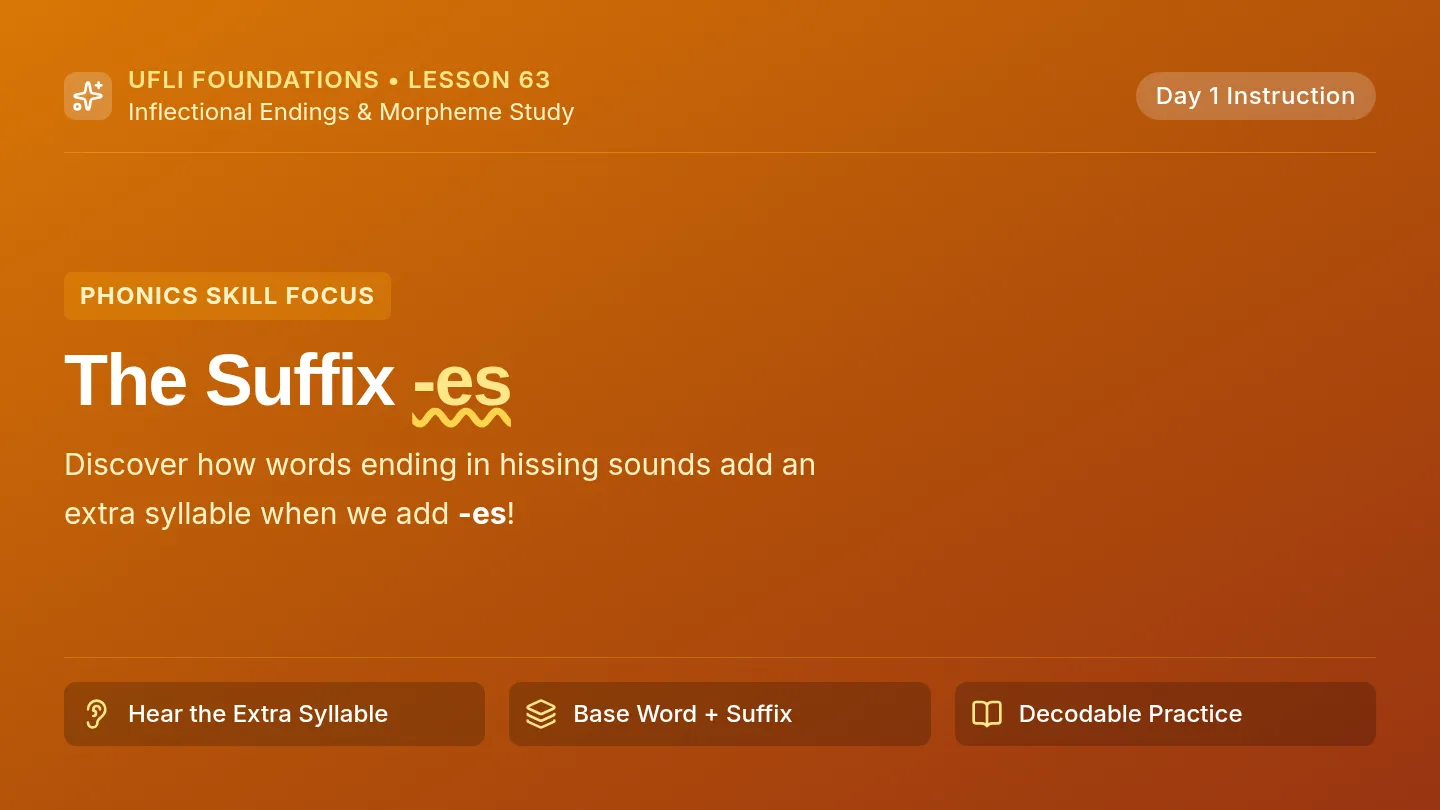
Suffix Sparks Presentation

Plural Power

A comprehensive three-day instructional sequence targeting UFLI Lesson 63 on suffix -es. Students build phonemic and morphological mastery through explicit decoding, decodable text reading, fluency routines, and encoding practice.

MT

Maryam Trout

8
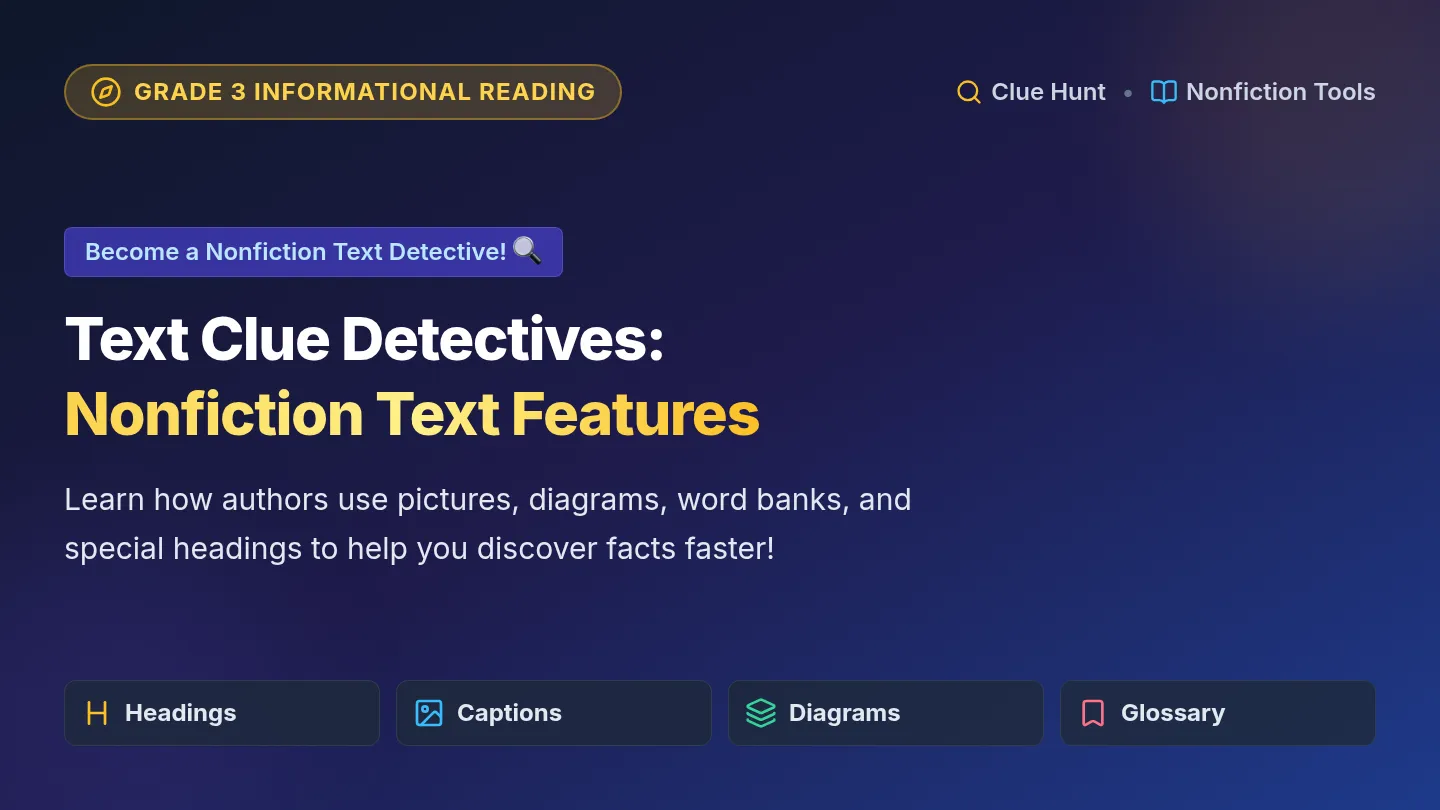
Text Clue Slides

Text Clue Detectives

A Grade 3 reading lesson that teaches nonfiction text features using illustrated mockups and structured word banks. Students explore headings, captions, diagrams, glossaries, sidebars, and bold words to boost reading comprehension.

A

asaul

3
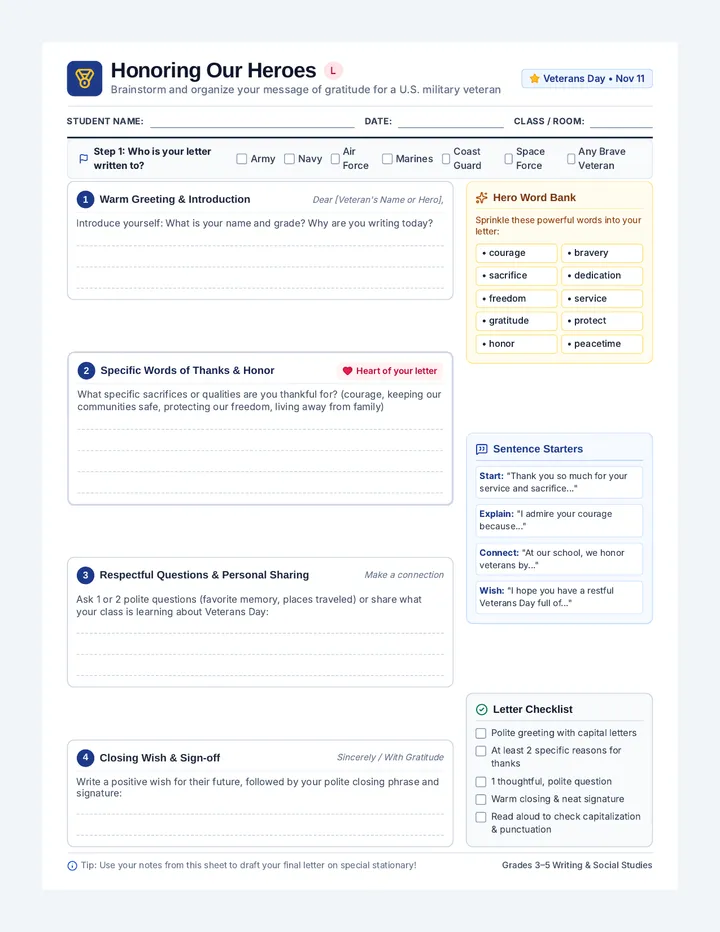
Honoring Heroes Letter Organizer

Honoring Heroes Letter Organizer

A structured, print-ready brainstorming graphic organizer designed for 3rd to 5th grade students to plan a heartfelt Veterans Day letter. Features guided planning quadrants for greeting, gratitude, questions, and closing, accompanied by a hero vocabulary bank, sentence starters, and a student self-check list.

TE

Trinnie Eng

Magic Wand Intro Slides

Magic E Mastery

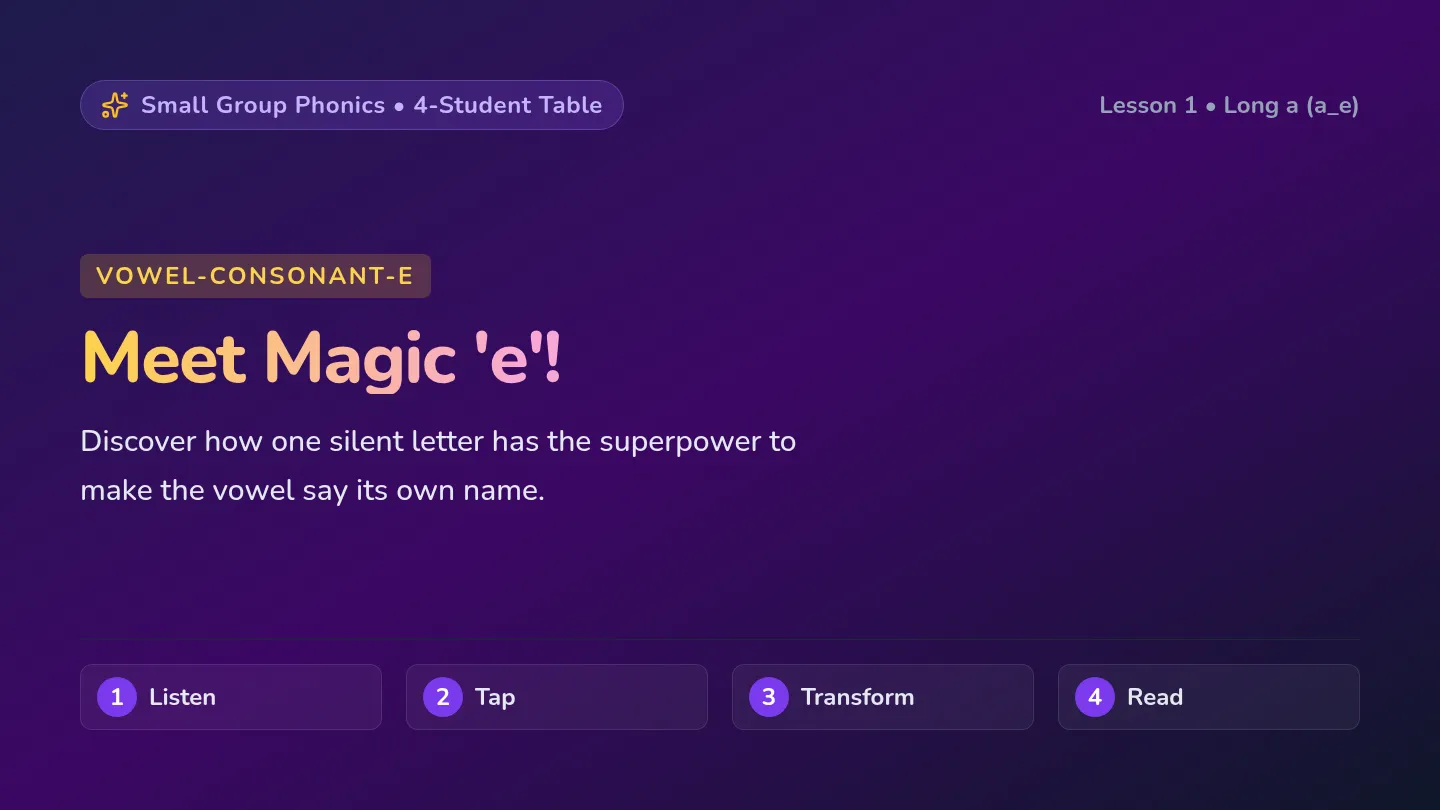
A targeted 3-lesson small group phonics sequence for 4 students mastering the vowel-consonant-e (VCe) pattern. Students transition systematically from short vowels to long vowel sounds across a_e, i_e, o_e, and u_e with multi-sensory practice, decodable reading, and games.

L

lacarpenter

7
Sound Beat Sorting Activity

Sound Beat Detectives

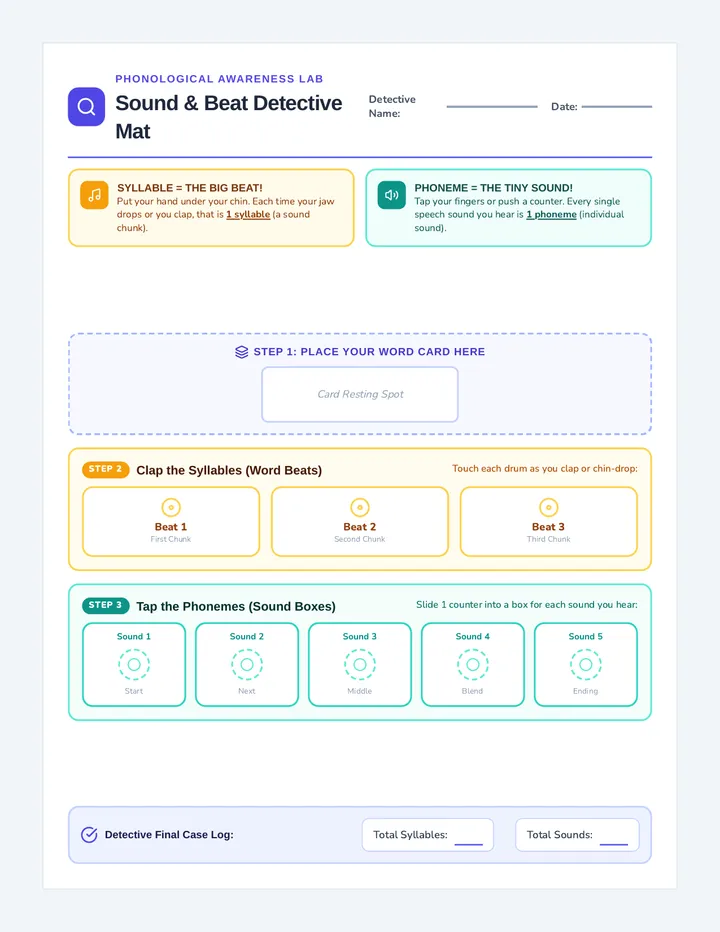
A dynamic second-grade phonological awareness lesson that helps students clearly differentiate between syllables (spoken word beats) and phonemes (individual speech sounds) using multi-sensory kinesthetic routines, sorting mats, and phonics-pattern practice.

J

jamacleod

3
Theme Plot Analysis Chart

Theme Plot Analysis Chart

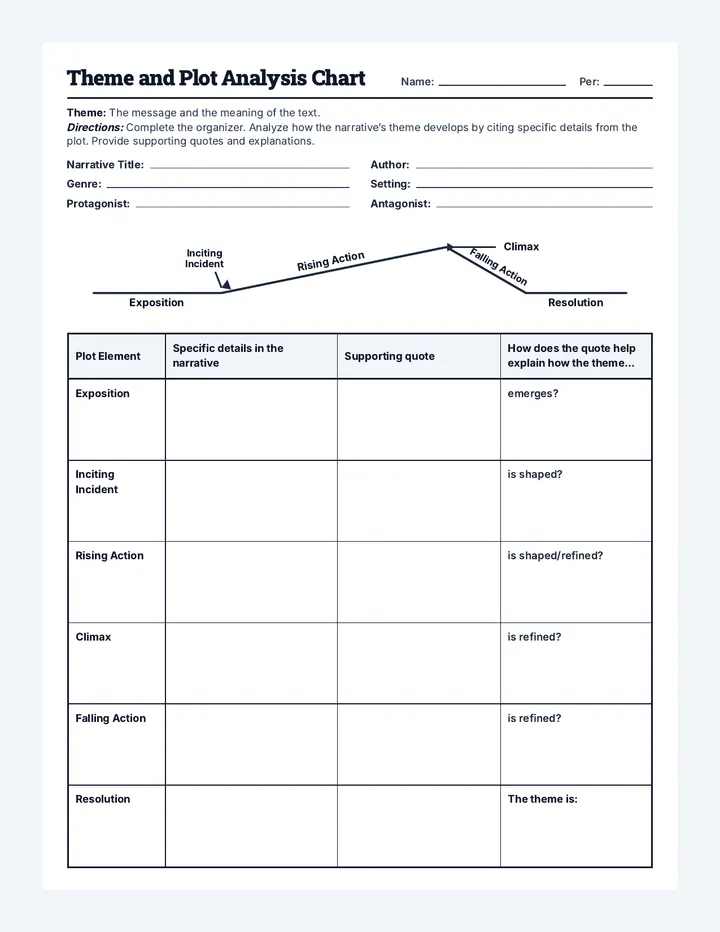
A printable graphic organizer for analyzing how literary theme develops across key plot elements using narrative details and supporting quotes.

KD

kathy dale

Character Clues Teacher Guide

Story Detectives

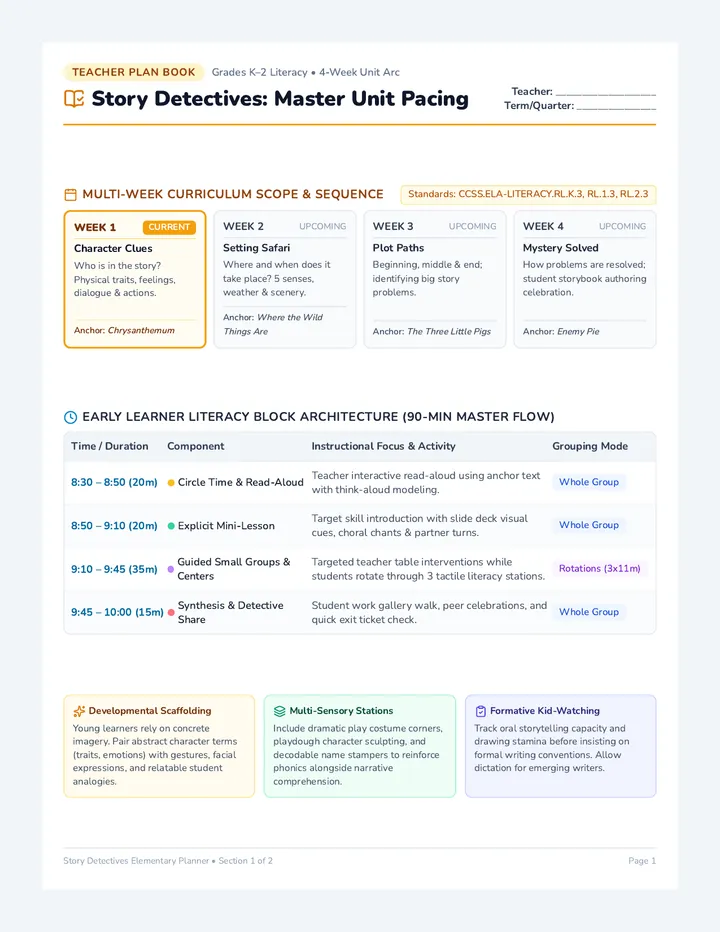
A vibrant multi-week early elementary literacy sequence designed for younger learners. Teachers receive complete weekly lesson plan spreads and center matrices, accompanied by interactive circle time slides and hands-on student activity sheets.

Lenny Avatar
Lenny
6
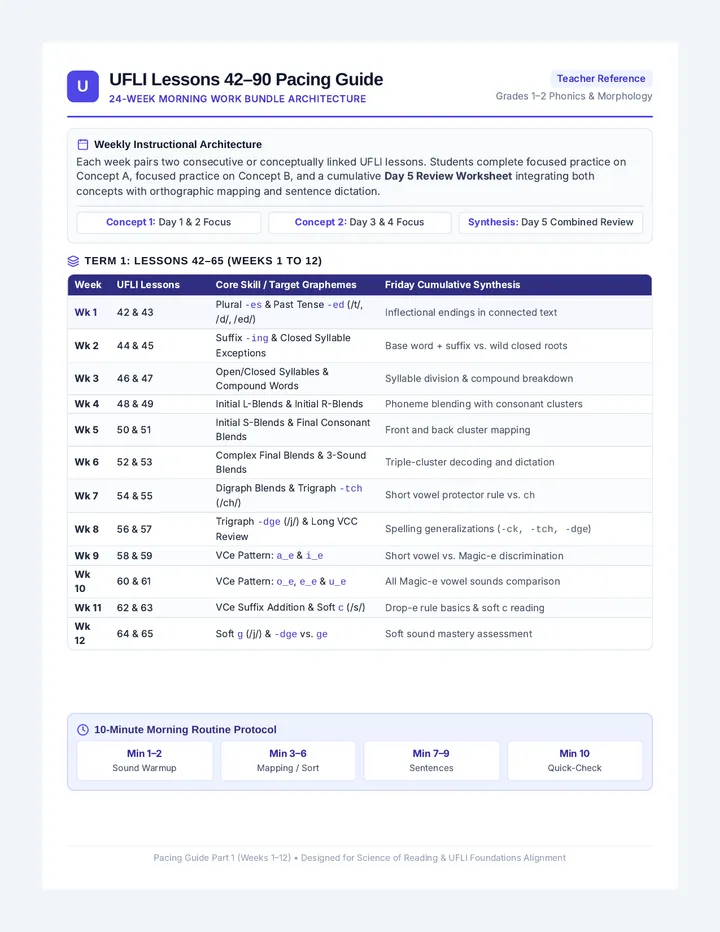
Morphology Pacing Teacher Guide

Suffix Sleuths

A foundational morning work bundle pairing UFLI Lesson 42 (-es plurals) and Lesson 43 (-ed past tense), complete with a 24-week pacing roadmap spanning Lessons 42 to 90. Students engage in orthographic mapping, morpheme sorting, and sentence-level decodable practice.

MC

Megan Costello

4
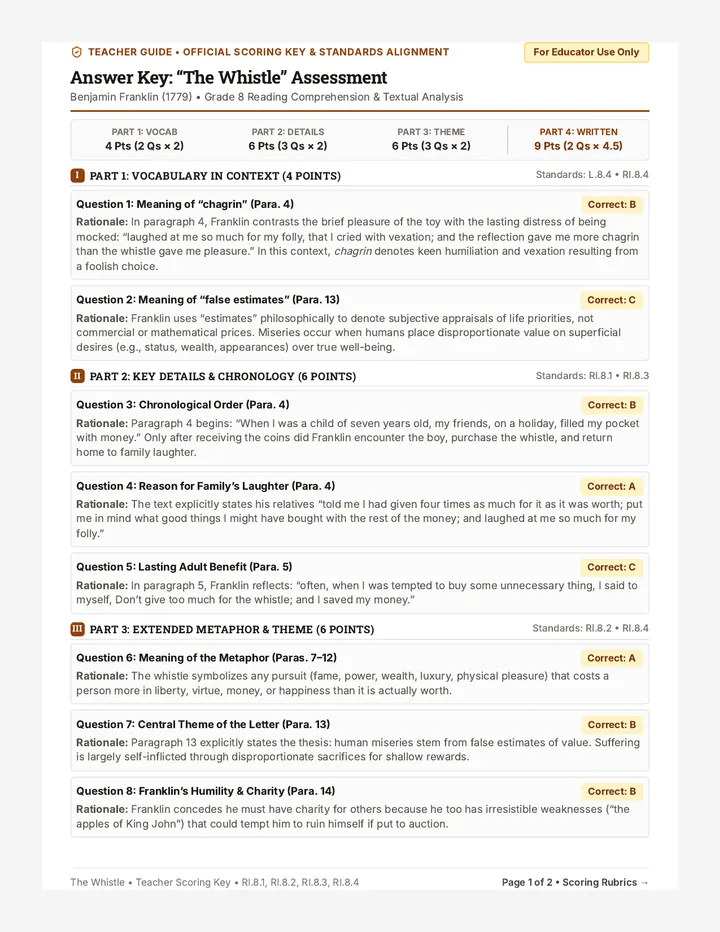
The Whistle Quiz Key

The Whistle Quiz Key

A comprehensive teacher scoring guide and answer key for 'The Whistle Reading Quiz,' formatted with 12px font size for improved legibility. Includes CCSS standards alignment, correct answers with detailed textual rationales for Questions 1-8, multi-point constructed response rubrics with student exemplars for Questions 9-10, and instructional notes on common misconceptions.

S

sramlall