Screen Time Showdown Worksheet
Grade 6-8 Reading Support
Screen Time Showdown
Investigating Point of View: Health Researcher vs. Video Game CEO
Name:
Date:
Class:
Skill Focus: Point of View (POV)
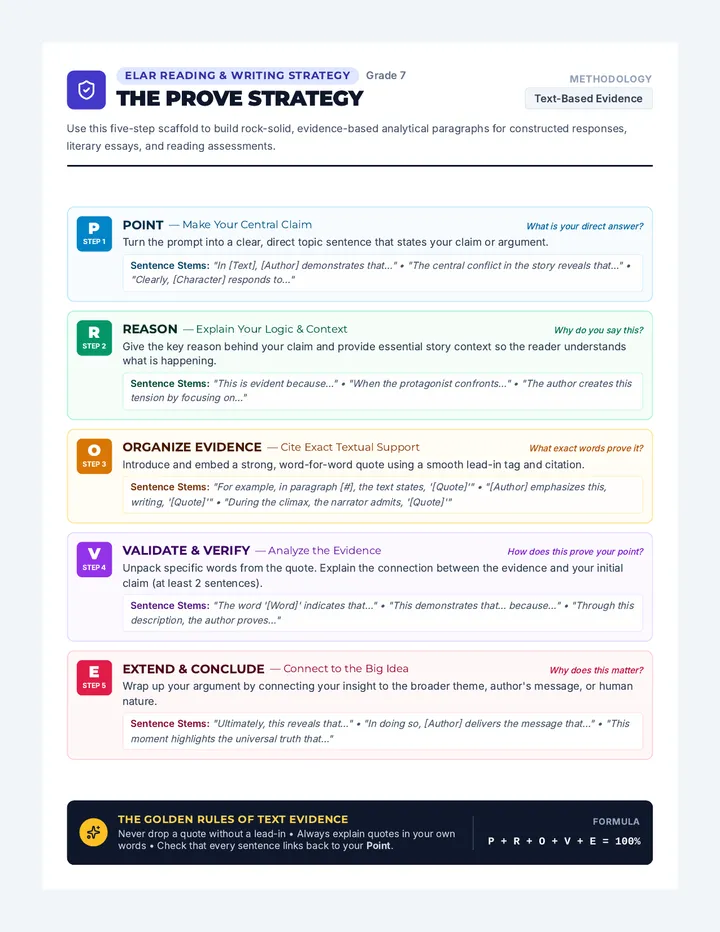
Point of view is how an author sees a topic. An author's job, goals, and feelings shape what they write! Ask yourself: Who is talking? What do they want?
Read both short texts below. Pay attention to what each person wants you to believe.
Text 1: Dr. Lee's Study
Doctor / Scientist
Paragraph 1
Many kids love to play video games after school. Game screens shine with a bright type of light called blue light. Doctors wanted to study what this bright light does to a kid's body before sleep.
Paragraph 2
The doctors studied one hundred students. They found that blue light tricks the human brain. The brain thinks it is still daytime! Students who played late took one whole extra hour to fall asleep. Their eyes felt dry and tired.
Paragraph 3
Dr. Lee says kids must protect their health. She advises turning off all game consoles two hours before bedtime. She says resting gives your brain power for school the next morning.
Dr. Lee's Goal: Protect sleep and keep kids healthy.
Text 2: Alex Nova's Game World
Company CEO
Paragraph 1
Video games are the best way for young people to have fun! In our newest games, players build teams and solve huge quests together. Every kid deserves to relax and play after a long day at school.
Paragraph 2
Our company just built a brand new game called Galaxy Quest. It has colorful worlds that keep players smiling. We want kids to hop online with their best friends every single night to unlock new badges.
Paragraph 3
Alex Nova says screen time is great for kids. He believes fast games make kids smarter and happier. He hopes every family buys Galaxy Quest so no child ever feels left out of the fun.
Alex Nova's Goal: Get kids excited and sell more games.
Reading Check: Finished reading both 3-paragraph texts? Turn to Page 2 for Questions!
Page 1 of 3
Part 1
Multiple Choice: Inference & Point of View
Page 2 of 3
Questions on Text 1 (Dr. Lee - Sleep Scientist)
1. What is Dr. Lee’s main point of view about video games before bed?
A) Playing games late hurts sleep and makes eyes tired.
B) Playing games late helps students finish homework faster.
C) Blue light makes the human brain fall asleep faster.
D) Every family should buy Galaxy Quest for their kids.
2. Based on Text 1, what happens to kids who look at screens late at night?
A) They fall asleep an hour earlier than other students.
B) Their brain thinks it is daytime and they take longer to sleep.
C) Their eyes feel rested and full of energy for morning.
D) They build teams to solve quests with online friends.
3. Why does Dr. Lee tell kids to read paper books instead of playing games before bed?
A) Paper books do not shine bright blue light into kids' eyes.
B) Paper books teach kids how to win Galaxy Quest faster.
C) Dr. Lee sells books and wants to make money from parents.
D) Paper books trick the brain into staying awake all night.
Questions on Text 2 (Alex Nova - Game Company CEO)
4. What is Alex Nova’s point of view about kids playing video games?
A) Screen time makes kids' eyes tired and ruins sleep.
B) Kids should play games every night because games are great fun.
C) Kids should turn off game consoles two hours before sleep.
D) Reading books is much more exciting than playing games.
5. Why does Alex Nova describe his game as having "colorful worlds" and "badges"?
A) He wants to warn parents about the danger of bright screens.
B) He wants kids to feel excited so families buy his game.
C) He wants to prove that blue light tricks students' brains.
D) He wants students to go to sleep earlier on school nights.
6. How does Alex Nova’s job as CEO shape what he shares in Text 2?
A) Because he is a CEO, he focuses on things that help sell games.
B) Because he is a CEO, he studies how sleep helps students learn.
C) Because he is a CEO, he wants families to stop playing games.
D) Because he is a CEO, he tells kids not to buy Galaxy Quest.
All 6 multiple choice questions answered? Turn to Page 3 for the Critical Thinking Write!
Page 2 of 3
Part 2
Critical Thinking Write: 3-Sentence Master Formula
Page 3 of 3
Final Writing Question:
Why do Dr. Lee and Alex Nova have different points of view about video games?
Step 1: Argument Restate & answer the question
Step 2: Evidence Must start: "According to the text,"
Step 3: Analysis Must start: "This shows that,"
1 Argument Statement (Restate the question and answer it) Starter: Dr. Lee and Alex Nova have different points of view because...
2 Evidence Statement (Support your argument with facts) Must start with: "According to the text,"
3 Analysis Statement (Explain WHY the evidence supports your argument) Must start with: "This shows that,"
Helpful Words:
protect health blue light sleep delay sell games different jobs
Writer's Final Checklist:
Sentence 1: Restates & answers question Sentence 2: Starts with "According to the text," Sentence 3: Starts with "This shows that,"
Screen Time Showdown Slides
Middle School Reading & Writing Point of View Investigation
Screen Time
Showdown
Investigating Author's Point of View: Health Researcher vs. Video Game CEO
Who is talking?
What is their goal?
3-Sentence Formula
Core Reading Skill
What is Point of View?
The Glasses You Wear
Point of view is how a person sees a topic. Who you are changes what you notice and what you care about.
Ask: What is their job or mission?
The Hidden Reason
Authors write for a reason! Some want to teach and protect us. Others want to sell a product or make money.
Ask: What do they want you to do?
Remember: Two people can look at the same thing and have completely different opinions!
Our Two Perspectives
Meet the Two Voices
Text 1 Author
Dr. Lee
Sleep Scientist & Doctor
- Cares about student health
- Studies blue light and tired eyes
- Goal: Warn kids to sleep well
Point of View: Be careful with screens!
Text 2 Author
Alex Nova
Video Game Company CEO
- Cares about selling Galaxy Quest
- Wants kids to play every night
- Goal: Grow the game business
Point of View: Play games as much as you can!
Notice how each person's job changes their advice!
Writing Formula
The 3-Sentence Master Plan
1
Argument Statement
Restate and answer the question
State your clear answer right away. Do not leave the reader guessing!
2
Evidence Statement
Must start: "According to the text,"
Give a specific fact from Dr. Lee or Alex Nova that supports your claim.
3
Analysis Statement
Must start: "This shows that,"
Explain why that proof explains their point of view. Connect the dots!
Follow all three steps to build a complete, powerful answer!
Teacher Model
See It in Action!
Question: Why do Dr. Lee and Alex Nova have different points of view?
Sentence 1 (Argument):
Dr. Lee and Alex Nova have different points of view because Dr. Lee cares about kid health, while Alex Nova wants to make money.
Sentence 2 (Evidence):
Screen Time Showdown Teacher Guide
15:1 Self-Contained Middle School
Screen Time Showdown: Teacher Guide
Point of View Analysis • 6 Multiple-Choice Items • Scaffolded Argument Writing (Gr. 2 Equiv.)
Pacing: 45–55 Min
Instructional Objectives
- Identify contrasting points of view of a researcher and a CEO.
- Answer 6 multiple-choice questions (3 on Text 1, 3 on Text 2) testing inference and POV.
- Draft a 3-sentence critical response containing Argument, Evidence, and Analysis statements using required sentence starters.
Standards Alignment
- CCSS.ELA-RI.6-8.6: Determine an author’s point of view or purpose and analyze how different authors emphasize facts.
- CCSS.ELA-W.6-8.1: Write arguments to support claims with clear reasons and relevant text evidence.
15:1 Classroom Strategies (Middle School Age / 2nd Grade Reading Level)
Middle School Dignity: Texts feature mature adolescent interests (video games, sleep, screen rules) while syntax stays at 4–10 words per sentence with high-frequency vocabulary.
Choral & Echo Reading: Do not assign cold call reading. Read Paragraph 1 together (choral), then have student pairs echo-read Paragraphs 2 & 3 with finger tracking.
Oral Rehearsal: Before pencil touches paper, have students say their 3 sentences aloud to a partner or paraprofessional using the formula strips.
50-Minute Lesson Delivery Sequence
10 Min
Hook & Concept Launch (Slides 1–3): Project the "Glasses You Wear" metaphor. Discuss how jobs shape goals (doctor vs. company CEO). Introduce Dr. Lee and Alex Nova.
15 Min
Guided Close Read (Worksheet Page 1): Choral read Text 1 (Dr. Lee). Highlight medical findings in blue. Echo read Text 2 (Alex Nova). Highlight promotional claims in purple.
12 Min
Multiple Choice Checks (Worksheet Page 2): Students answer 3 questions for Text 1 and 3 questions for Text 2. Have students locate and point to the evidence sentence in the text before circling.
13 Min
3-Sentence Writing Workshop (Slides 4–6 & Worksheet Page 3): Model the Argument, Evidence ("According to the text,"), and Analysis ("This shows that,") formula. Students orally rehearse, then draft in designated boxes.
Paraprofessional & Co-Teacher Prompting Script
Prompting Questions 1–3: "Look at Text 1. Put your finger on what Dr. Lee says about blue light and sleep. What is her job?"