Lenny.com
Explore
Create
ActivitiesNewMathEnglish Language ArtsScience & EngineeringSocial StudiesGlobal LanguagesHealth & Physical EducationSpecial EducationCounseling & Life SkillsArts & CreativityESL
Lenny.com
Lenny.com
Explore
Create
ActivitiesNewMathEnglish Language ArtsScience & EngineeringSocial StudiesGlobal LanguagesHealth & Physical EducationSpecial EducationCounseling & Life SkillsArts & CreativityESL
Lenny.com
Lenny.com

Solutions

Lenny for EducatorsLenny for SchoolsLenny for Districts

Product

ExploreSign inCreateSupportAbout

Resources

Getting startedMTSS Acceleration Program

Newsletters

School Funding Newsletter

© 2026 Lenny Learning Inc.

TermsPrivacyAccessibility
LinkedInInstagramX
Lenny
English Language ArtsPhonics & Reading FoundationsLetter IdentificationLearn Letters A-ZLowercase and Uppercase LettersConsonants and VowelsLetter-Sound AssociationsLetter-Sound Associations: LowercaseLetter-Sound Associations: UppercaseBeginning and Ending SoundsRhymingBlending And SegmentingShort VowelsShort Vowel SoundsConsonant BlendsConsonant DigraphsBlends, Digraphs, and TrigraphsDigraphs, Blends, and Silent LettersLong Vowel SoundsLong Vowel PatternsShort and Long VowelsShort and Long Vowel PatternsSilent EVowel SoundsVowel TeamsR-Controlled VowelsDiphthongs: Oi, Oy, Ou, OwVariant VowelsVariant, Diphthong, And R Vowel PatternsSoft G And CSight WordsIrregular WordsWord RecognitionSyllablesSyllable TypesTwo-Syllable WordsMultisyllabic WordsPhoneme ManipulationDecodable TextsVocabularyAction WordsQuestion WordsNouns and AdjectivesClassify WordsCompound WordsSynonyms and AntonymsHomophonesHomophones and HomonymsShades of MeaningContext CluesPrefixes and SuffixesGreek and Latin RootsAnalogiesIdioms and AdagesForeign Words and ExpressionsWord Choice and UsageReference SkillsReading ComprehensionRead-Along Literary TextsRead-Along Informational TextsReality vs. FictionStory ElementsCharacterSequenceMain IdeaCause And EffectCompare And ContrastReading StrategiesText StructureAuthor's PurposeAuthor's Purpose And ToneAuthor's PerspectivePoint Of ViewThemeInference And ThemeInference And AnalysisPoetry ElementsLiterary DevicesAnalyzing LiteratureAnalyzing Informational TextsComparing TextsAudience, Purpose, And ToneBusiness DocumentsNovel StudyNonfiction Book StudyGrammar & MechanicsSentencesNounsVerbsAdjectivesPronounsCapitalizationPunctuationContractionsConjunctionsPrepositionsArticlesAdjectives And AdverbsVerb TypesVerb TensePronouns And AntecedentsPronoun TypesSubject-Verb AgreementDirect And Indirect ObjectsSentences, Fragments, And Run-OnsPhrases And ClausesCommasSemicolons, Colons, And CommasDashes, Hyphens, And EllipsesSpellingAbbreviationsFormattingVerb Tense And MoodMisplaced ModifiersWritingDescriptive DetailsCreative WritingOpinion WritingTopic SentencesOrganizing WritingLinking WordsSentence VarietyIntroductions And ConclusionsPersuasive And Opinion WritingExpository WritingPersuasive StrategiesDeveloping And Supporting ArgumentsTopic Sentences And Thesis StatementsSummarizingResearch SkillsEditing And RevisingActive And Passive Voice=Writing Clearly And ConciselyDebate & Public SpeakingPublic Speaking BasicsPersuasive TechniquesClaims and EvidenceTypes of ArgumentsReasoning TypesLogical FallaciesTopic ResearchOrganizing EvidenceDebate Speech OrganizationAttacking and Defending ArgumentsClash and EngagementImpact CalculusQuestioning and Cross-ExaminationCritical ThinkingInformal LogicFormal LogicInductive Reasoning

Prove It Writing

A comprehensive 7th grade ELAR lesson equipping students to construct evidence-based analytical responses using the PROVE strategy (Point, Reason, Organize Evidence, Validate, Extend). Includes a visual anchor chart, a printable one-page graphic organizer with sentence scaffolds, and a detailed teacher facilitation guide with an annotated exemplar response.

Ccallawayj

Differentiation Note: For emerging bilinguals/IEP students, provide pre-selected quotes for step O and allow paired oral rehearsal of step V before writing.

Page 1 of 2

Teacher Exemplar • Mentor Text Grade 7 Literature Response

ANNOTATED PROVE STUDENT RESPONSE

Score 16/16 (100%)

Target Prompt: How does Margot's physical and social isolation on Venus impact her emotional state?

Mentor Text: "All Summer in a Day" by Ray Bradbury

P

Completed Point (Claim):

In Ray Bradbury's short story "All Summer in a Day," Margot's relentless isolation on rain-drenched Venus causes her to withdraw into deep sorrow and emotional numbness.

Teacher Annotation: Restates prompt clearly with title/author and specifies the exact emotional outcome ("numbness").

R

Completed Reason (Logic & Context):

Because she remembers the warmth of the sun from Earth while her peers have lived in perpetual darkness, Margot cannot connect with the other children, who resent her memories.

Teacher Annotation: Supplies critical backstory (the sun on Earth vs. Venus) that sets up the conflict without excessive plot summary.

O

Completed Organize Evidence (Quotation & Lead-in):

Bradbury emphasizes her alienation, writing, "Margot stood apart from them, from these children who could never remember a time when there wasn’t rain... She was an old photograph dusted from an album" (Bradbury 2).

Teacher Annotation: Smooth signal phrase ("Bradbury emphasizes... writing,"), accurate quote marks, and MLA in-text citation.

V

Completed Validate & Verify (Analysis & Word-Level Breakdown):

By describing Margot as an "old photograph," Bradbury uses a metaphor to show that her lack of belonging has drained the life and vibrancy right out of her. Furthermore, the phrase "stood apart" highlights how her psychological grief physically separates her from her classmates, leaving her silenced and fragile.

Teacher Annotation: Exemplary 2+ sentence validation. Focuses directly on the author's figurative language and unpacks exact words.

E

Completed Extend & Conclude (Big Picture Takeaway):

Ultimately, Margot’s tragedy reveals that when differences are met with jealousy rather than empathy, the resulting ostracism can destroy an individual's spirit.

Teacher Annotation: Universal thematic insight; doesn't just re-hash the plot, but delivers a meaningful message about human nature.

The Final Paragraph in Action (Organizer → Constructed Response):

Seamless Flow Test

"In Ray Bradbury's short story 'All Summer in a Day,' Margot's relentless isolation on rain-drenched Venus causes her to withdraw into deep sorrow and emotional numbness. Because she remembers the warmth of the sun from Earth while her peers have lived in perpetual darkness, Margot cannot connect with the other children, who deeply resent her memories. Bradbury emphasizes her alienation, writing, 'Margot stood apart from them, from these children who could never remember a time when there wasn’t rain... She was an old photograph dusted from an album' (Bradbury 2). By describing Margot as an 'old photograph,' Bradbury uses a metaphor to show that her lack of belonging has drained the vibrant life out of her. Furthermore, the phrase 'stood apart' reinforces how her psychological grief physically divides her from her peers. Ultimately, Margot’s tragedy reveals that when differences are met with jealousy rather than empathy, the resulting ostracism can destroy an individual's spirit."
You might also like

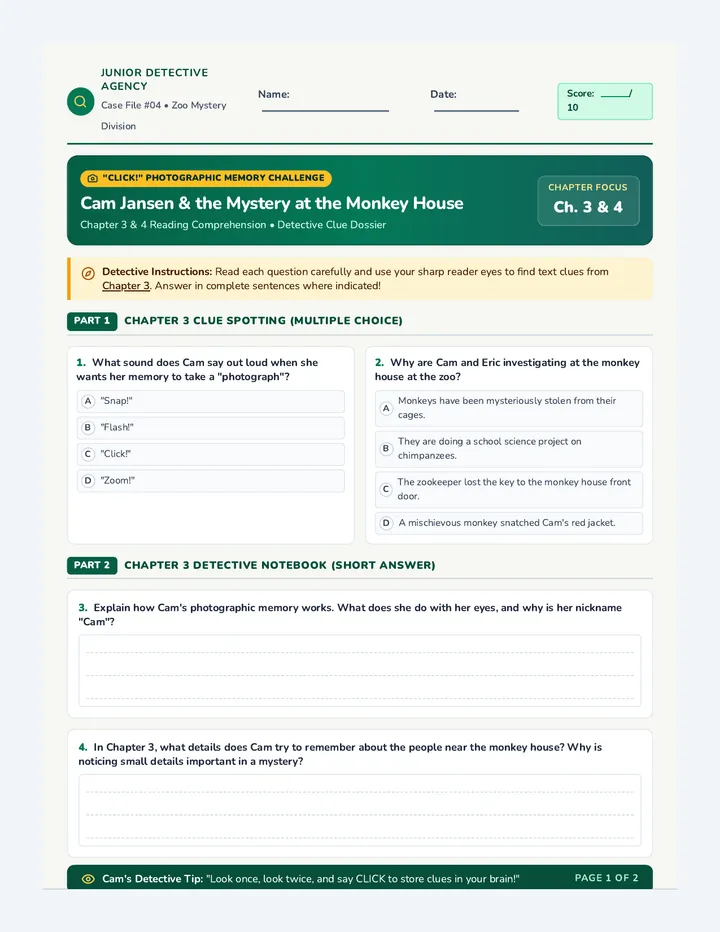
Monkey Mystery Worksheet

Monkey Mystery Casebook

A novel study sequence for David A. Adler's Cam Jansen and the Mystery at the Monkey House. Students develop detective reading comprehension, textual evidence skills, and character analysis across chapters.

AG

Angie Goodman

11
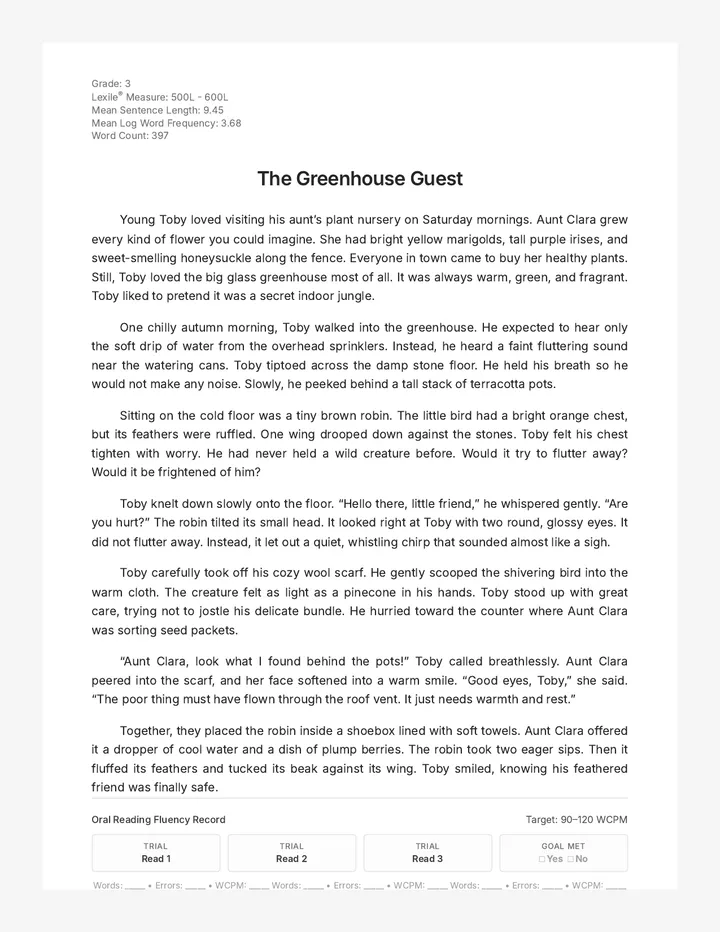
Greenhouse Guest Fluency Passage

Greenhouse Guest

A Grade 3 reading fluency and comprehension lesson centered on a 397-word narrative about a boy rescuing a bird in a greenhouse.

AM

Amanda McMahon

3
Animal Groups Lesson Plan

Animal Groups Lesson Plan

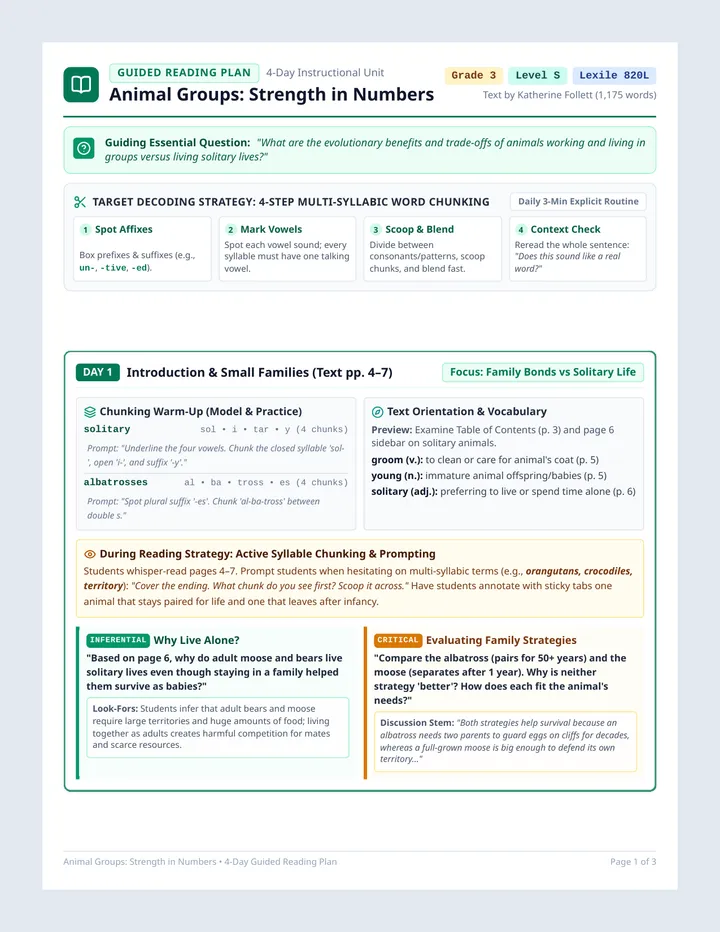
A comprehensive 4-day guided reading comprehension lesson plan for Katherine Follett's 'Animal Groups: Strength in Numbers' (Grade 3, Level S, Lexile 820L). Features an explicit multi-syllabic chunking decoding routine, text-dependent inferential questions, higher-order critical thinking prompts, a comparative synthesis matrix, and differentiated small-group assessment tools.

F

fsaccente

Suffix Sparks Presentation

Plural Power

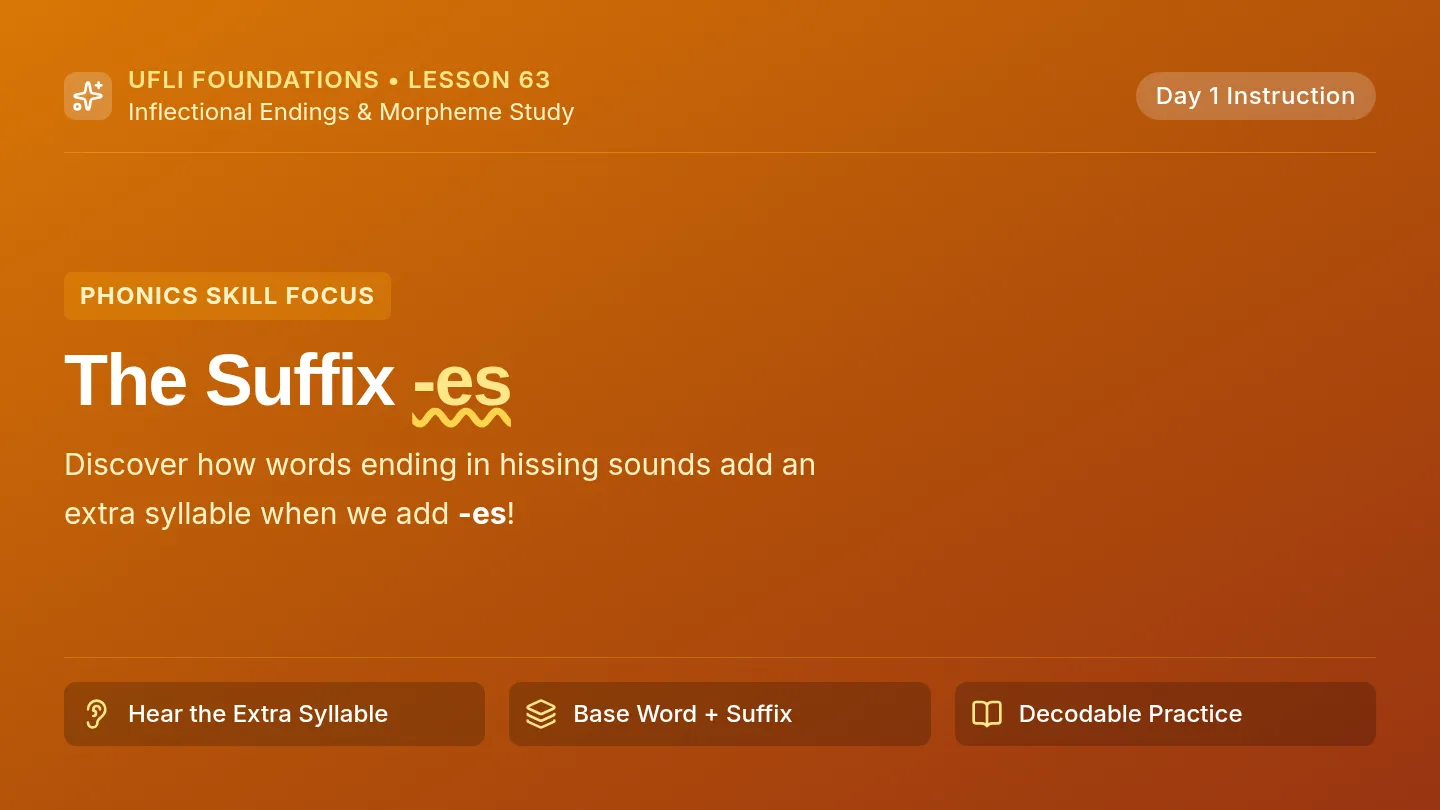
A comprehensive three-day instructional sequence targeting UFLI Lesson 63 on suffix -es. Students build phonemic and morphological mastery through explicit decoding, decodable text reading, fluency routines, and encoding practice.

MT

Maryam Trout

8
Evidence Detective Activity

Clues and Claims

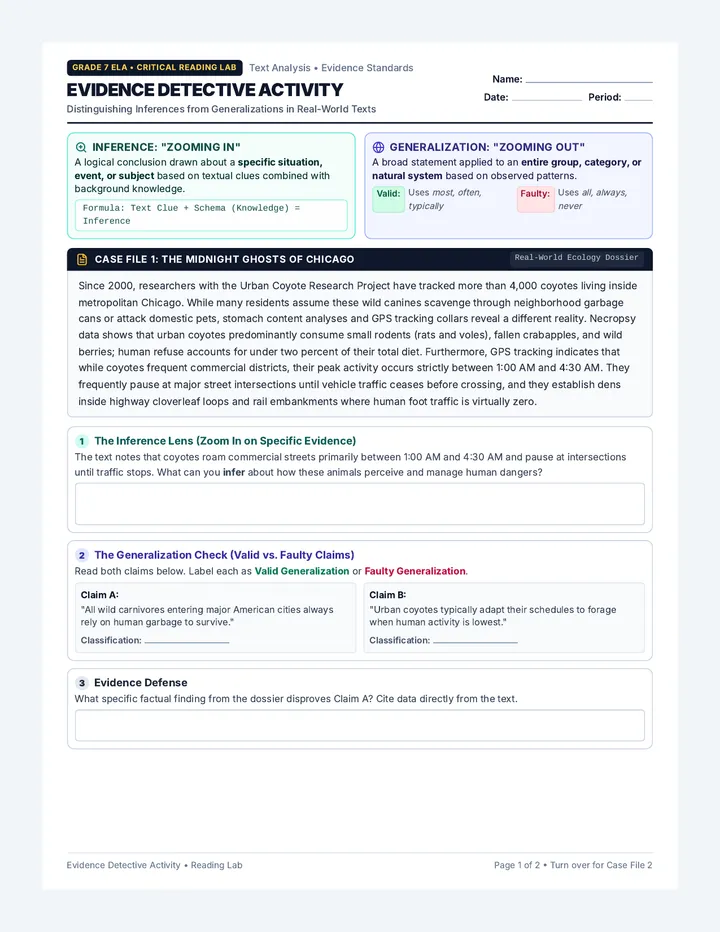
A seventh-grade critical reading lesson focused on distinguishing between evidence-based inferences and broad generalizations. Students evaluate real-world ecological and marine biology texts, dissect faulty absolute claims, and substantiate conclusions with empirical data.

PR

Paula Rein

3
Early Reading Comments Guide

Early Reading Comments Guide

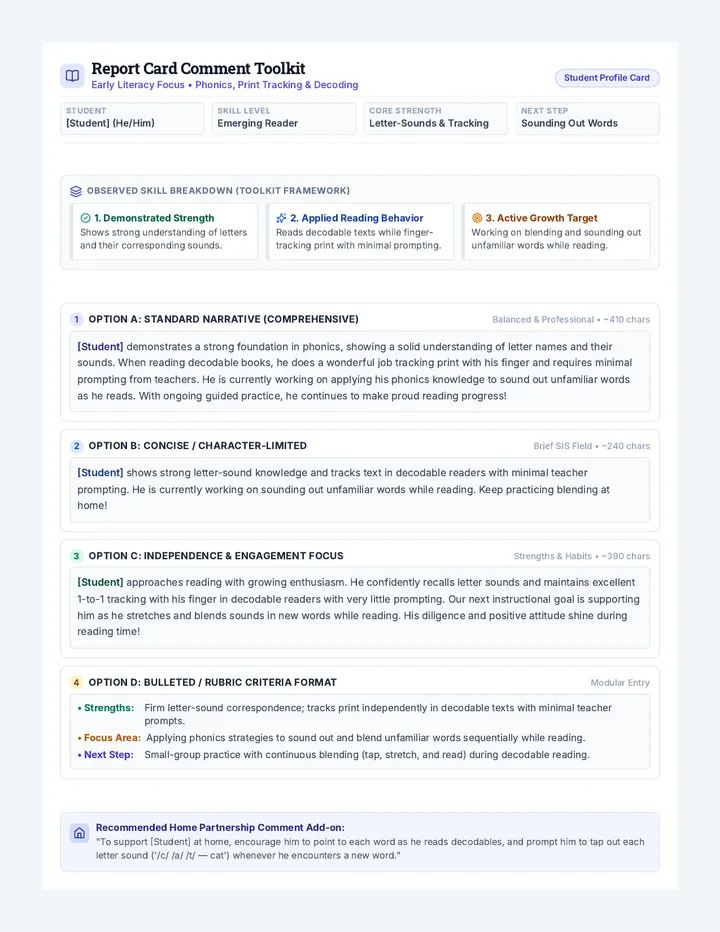
A comprehensive report card comment guide providing structured, customizable comments for an early reader based on letter-sound mastery, decodable text tracking, and emerging word-blending skills. It includes narrative, concise, bulleted, and home-connection formats ready for report card entry.

SB

Sondra Bell

Magic Wand Intro Slides

Magic E Mastery

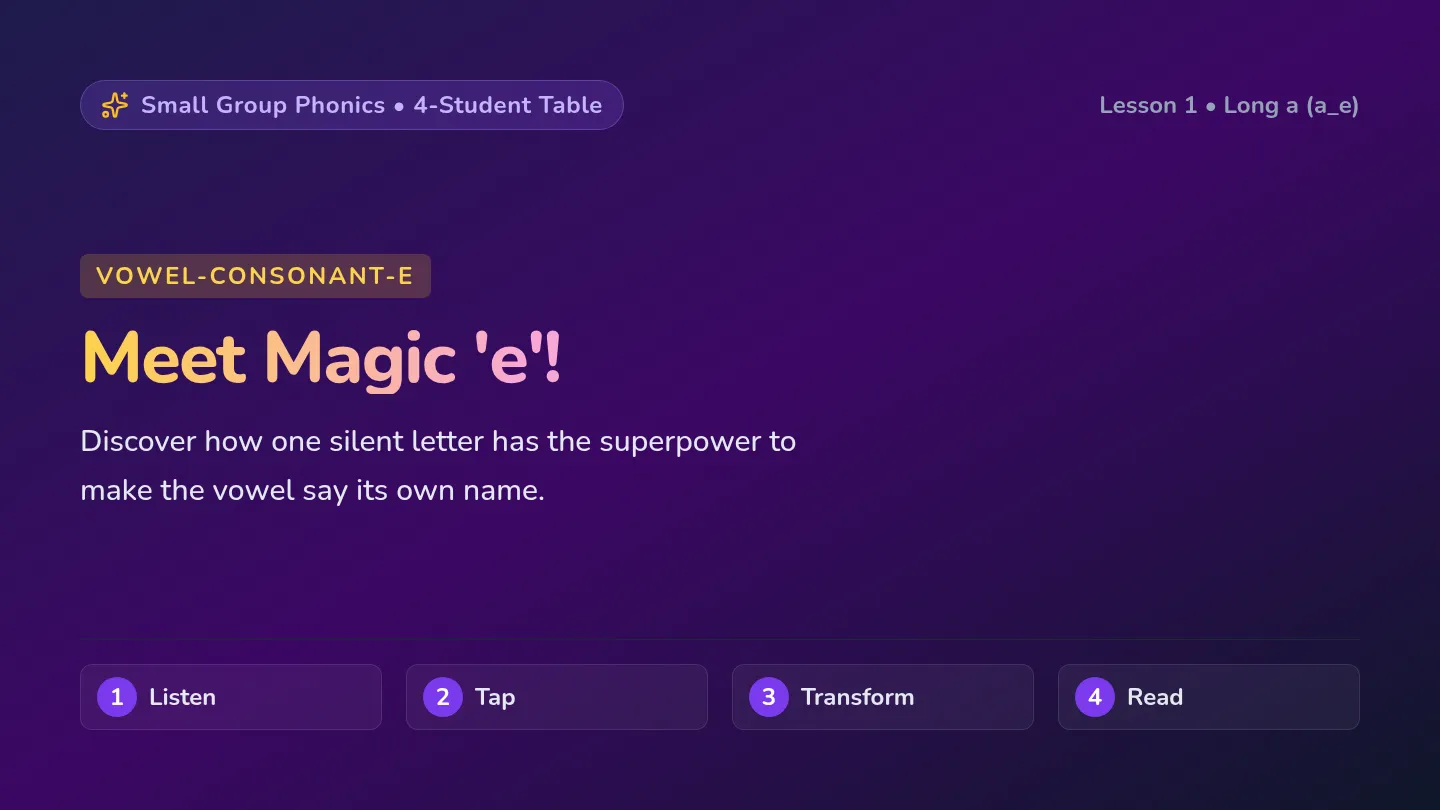
A targeted 3-lesson small group phonics sequence for 4 students mastering the vowel-consonant-e (VCe) pattern. Students transition systematically from short vowels to long vowel sounds across a_e, i_e, o_e, and u_e with multi-sensory practice, decodable reading, and games.

L

lacarpenter

7
Screen Time Showdown Worksheet

Screen Time Showdown

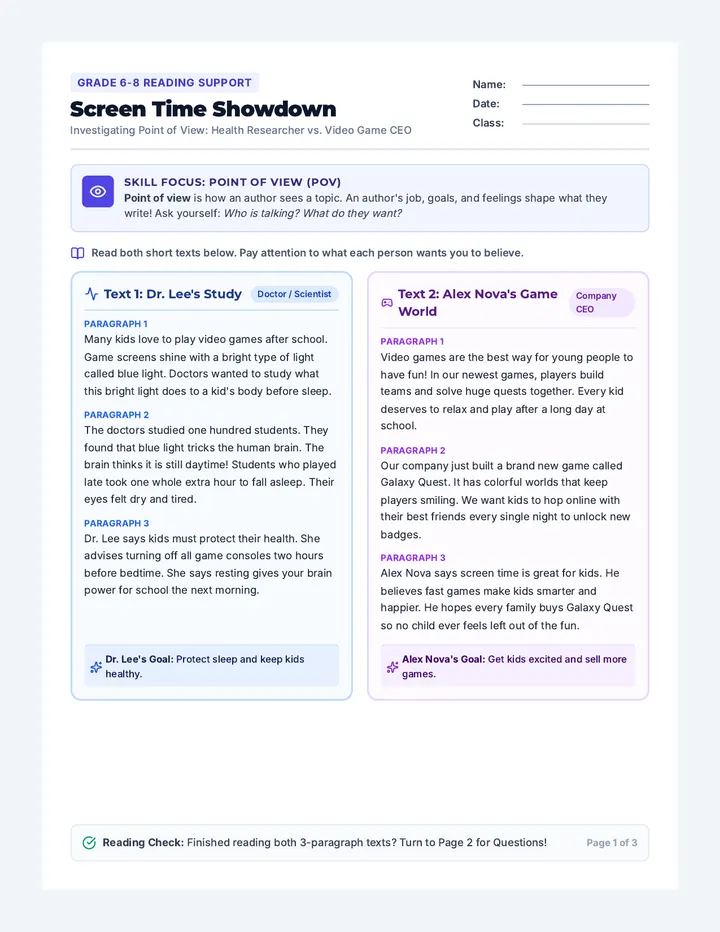
A point of view reading and writing lesson designed for middle school students in a 15:1 self-contained setting reading at a second-grade level. Students compare historical and professional viewpoints on video games between a sleep researcher and a video game CEO, answering inference questions and crafting a scaffolded three-part argument response.

CG

Connor Green

3
Contes des Origines Recueil

Contes des Origines Recueil

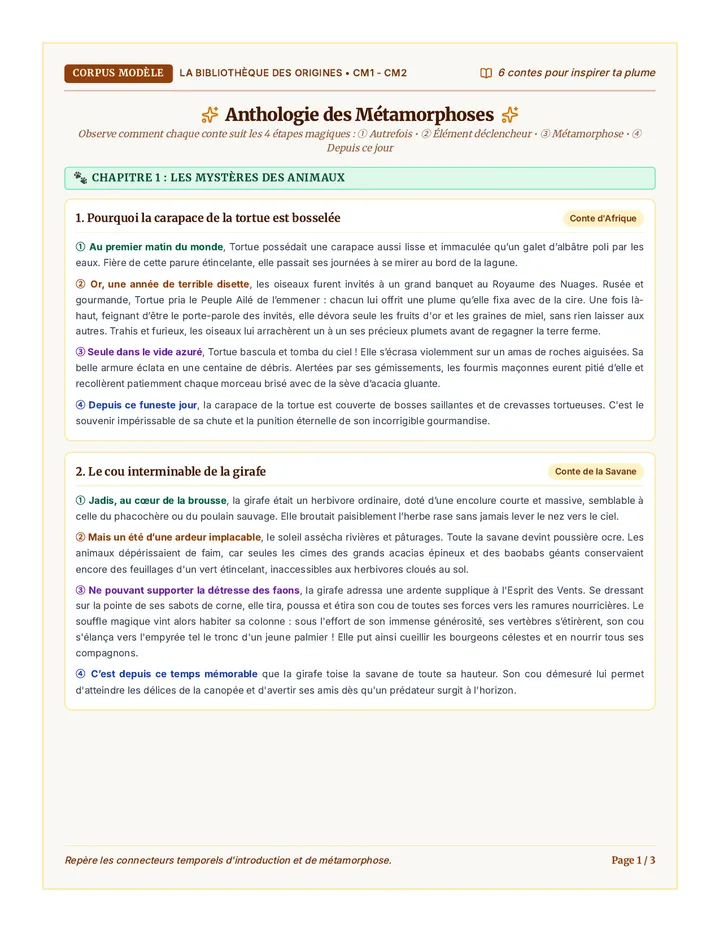
Recueil de 6 contes des origines complets pour le niveau CM1-CM2 illustrant les sujets du remue-méninges avec repérage des 4 étapes narratives.

LP

LAURENT PERCHE

Character Clues Teacher Guide

Story Detectives

A vibrant multi-week early elementary literacy sequence designed for younger learners. Teachers receive complete weekly lesson plan spreads and center matrices, accompanied by interactive circle time slides and hands-on student activity sheets.

Lenny Avatar
Lenny
6
Sound Swap Word List

Sound Sleuths

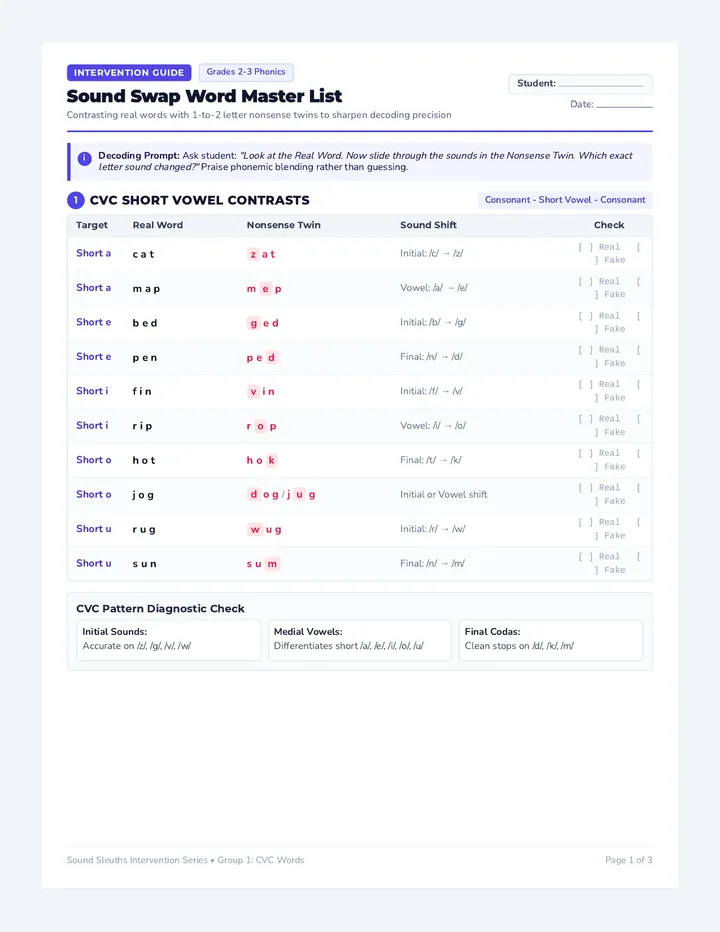
A targeted decoding and phonics intervention lesson for second and third grade readers focusing on CVC words, beginning blends, consonant digraphs, r-controlled /ar/, the schwa sound, and advanced vowel teams using real and near-match nonsense word contrasts. Students build phonemic awareness, word attack skills, and decoding accuracy through structured word lists, hands-on sorting worksheets, and partner matching cards.

D

droberts

4
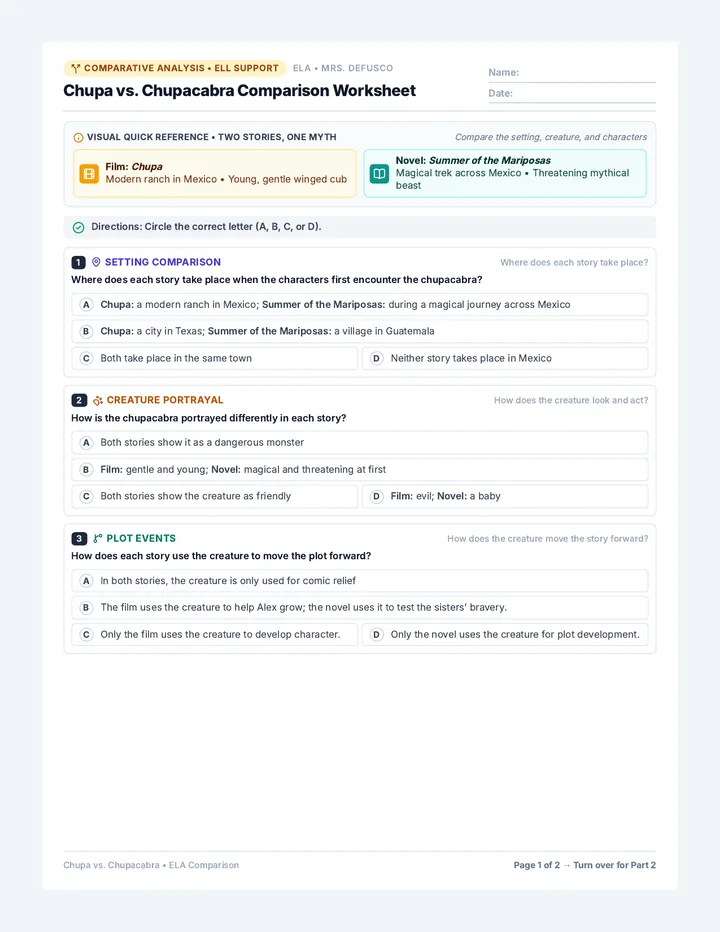
Chupa Comparison Worksheet

Chupa Comparison Worksheet

An ELL-accessible comparative worksheet analyzing the chupacabra across the film Chupa and the novel Summer of the Mariposas, featuring visual anchor charts, vocabulary supports, and structured sentence frames for written responses.

AD

Andrea DeFusco