Lenny.com
Explore
Create
ActivitiesNewMathEnglish Language ArtsScience & EngineeringSocial StudiesGlobal LanguagesHealth & Physical EducationSpecial EducationCounseling & Life SkillsArts & CreativityESL
Lenny.com
Lenny.com
Explore
Create
ActivitiesNewMathEnglish Language ArtsScience & EngineeringSocial StudiesGlobal LanguagesHealth & Physical EducationSpecial EducationCounseling & Life SkillsArts & CreativityESL
Lenny.com
Lenny.com

Solutions

Lenny for EducatorsLenny for SchoolsLenny for Districts

Product

ExploreSign inCreateSupportAbout

Resources

Getting startedMTSS Acceleration Program

© 2026 Lenny Learning Inc.

TermsPrivacyAccessibility
LinkedInInstagramX
Lenny
English Language ArtsPhonics & Reading FoundationsLetter IdentificationLearn Letters A-ZLowercase and Uppercase LettersConsonants and VowelsLetter-Sound AssociationsLetter-Sound Associations: LowercaseLetter-Sound Associations: UppercaseBeginning and Ending SoundsRhymingBlending And SegmentingShort VowelsShort Vowel SoundsConsonant BlendsConsonant DigraphsBlends, Digraphs, and TrigraphsDigraphs, Blends, and Silent LettersLong Vowel SoundsLong Vowel PatternsShort and Long VowelsShort and Long Vowel PatternsSilent EVowel SoundsVowel TeamsR-Controlled VowelsDiphthongs: Oi, Oy, Ou, OwVariant VowelsVariant, Diphthong, And R Vowel PatternsSoft G And CSight WordsIrregular WordsWord RecognitionSyllablesSyllable TypesTwo-Syllable WordsMultisyllabic WordsPhoneme ManipulationDecodable TextsVocabularyAction WordsQuestion WordsNouns and AdjectivesClassify WordsCompound WordsSynonyms and AntonymsHomophonesHomophones and HomonymsShades of MeaningContext CluesPrefixes and SuffixesGreek and Latin RootsAnalogiesIdioms and AdagesForeign Words and ExpressionsWord Choice and UsageReference SkillsReading ComprehensionRead-Along Literary TextsRead-Along Informational TextsReality vs. FictionStory ElementsCharacterSequenceMain IdeaCause And EffectCompare And ContrastReading StrategiesText StructureAuthor's PurposeAuthor's Purpose And ToneAuthor's PerspectivePoint Of ViewThemeInference And ThemeInference And AnalysisPoetry ElementsLiterary DevicesAnalyzing LiteratureAnalyzing Informational TextsComparing TextsAudience, Purpose, And ToneBusiness DocumentsNovel StudyNonfiction Book StudyGrammar & MechanicsSentencesNounsVerbsAdjectivesPronounsCapitalizationPunctuationContractionsConjunctionsPrepositionsArticlesAdjectives And AdverbsVerb TypesVerb TensePronouns And AntecedentsPronoun TypesSubject-Verb AgreementDirect And Indirect ObjectsSentences, Fragments, And Run-OnsPhrases And ClausesCommasSemicolons, Colons, And CommasDashes, Hyphens, And EllipsesSpellingAbbreviationsFormattingVerb Tense And MoodMisplaced ModifiersWritingDescriptive DetailsCreative WritingOpinion WritingTopic SentencesOrganizing WritingLinking WordsSentence VarietyIntroductions And ConclusionsPersuasive And Opinion WritingExpository WritingPersuasive StrategiesDeveloping And Supporting ArgumentsTopic Sentences And Thesis StatementsSummarizingResearch SkillsEditing And RevisingActive And Passive Voice=Writing Clearly And ConciselyDebate & Public SpeakingPublic Speaking BasicsPersuasive TechniquesClaims and EvidenceTypes of ArgumentsReasoning TypesLogical FallaciesTopic ResearchOrganizing EvidenceDebate Speech OrganizationAttacking and Defending ArgumentsClash and EngagementImpact CalculusQuestioning and Cross-ExaminationCritical ThinkingInformal LogicFormal LogicInductive Reasoning

Question Flip Mastery

A targeted intervention lesson focused on teaching struggling students how to restate inference and key idea questions using step-by-step sentence frames and visual turnarounds.

DVDalia Vargas

Question Flip Mastery

A targeted intervention lesson focused on teaching struggling students how to restate inference and key idea questions using step-by-step sentence frames and visual turnarounds.

DVDalia Vargas

Teacher Reference

Pitfall 1: "Because..."

Why: Kids want to answer fast.
Fix: Post a "NO BECAUSE AT THE START" sign. Prompt: "Because what? Give me the subject first!"

Pitfall 2: Copying "What"

Why: "What the reader can infer is..."
Fix: Physically cover the word "What" with an index card or sticky note before they begin writing.

Pitfall 3: Dropping Verb

Why: Leaving out "infer" or "support".
Fix: Remind them: "Use the magic test word in your answer so the test scorer knows you answered the exact skill."

General Student Worksheet Answer Key

Part 1: Warm-Up (Choose Best Restate)

Item 1: B (The reader can infer that Leo's decision...)

Item 2: A (The text suggests that the storm...)

Part 2: Guided Practice ("Inference" Flips)

3. Fill in blank: The reader can infer that Sophia felt [nervous / excited...].

4. Model: "The author implies that the castle's secret passage was..." (or "The text implies that...")

5. Model: "The reader can conclude that the birds flew south early because..."

Part 3: Detail & Key Idea Flips

6. Model: "The detail that best supports the idea that the desert tortoise is well-adapted is..."

7. Model: "The details in paragraph 2 show the key idea by explaining..."

Part 4: Micro-Text Application Exemplars

Passage 1 (Mateo):

Restatement & Answer: "The reader can infer that Mateo is in danger of running out of water and getting lost in the heat because his canteen only has two drops left."

Passage 2 (Honeybees):

Restatement & Answer: "The details reveal the key idea that honeybees communicate by dancing to show other bees where to find food."

Intervention Tip for Striving Writers:

Have students highlight the word "that" in yellow on their papers every time they write a restatement. It forces them to bridge the subject to the answer!

Question Flip Mastery • Teacher Instructional Resource Page 2 of 3

Argumentative Nonfiction Coaching & Answer Key

Teacher talk, think-aloud formulas, and answers for the Argument Practice Worksheet

Teacher Reference

Teacher Think-Aloud: Evaluating Details in Argument

The Problem: When asked "Which detail best supports the claim that phones hurt learning?", students instinctively write: "Because they get lower grades."

The 3-Piece Turnaround: Teach them to assemble three Lego blocks:

Block 1: The Subject
"The detail that best supports..." Block 2: The Claim
"...the claim that phones hurt learning..." Block 3: The Bridge
"...IS THAT average test scores dropped."

Argument Restate Worksheet Answer Key & Exemplars

Part 1: Restating Inference Questions

1. Completed Frame: "The reader can infer that the author's viewpoint is that smartphones distract students and should be banned/locked away during class."

2. Model Restatement: "The text suggests that silenced phones still distract students because their brains waste energy wondering if an alert or message arrived."

Parts 2, 3 & 4: Evaluating Details & Determining Key Ideas

3. Detail Evaluation (Paragraph 2):

"The detail from paragraph 2 that best supports the claim that phone bans improve student learning is that average test scores jumped by more than six percent when schools locked up phones."

4. Counterargument Evaluation (Paragraph 3):

"The details in paragraph 3 evaluate the counterargument about parent emergencies by explaining that schools have reliable front-office phone systems that deliver urgent messages instantly."

5. Big Picture Synthesis (Whole Text):

"The details in the article reveal the key idea that locking away phones helps students focus on their classes, experience less stress, and connect face-to-face with friends."

Anchor to the Author:

In argumentative texts, tell students: "Whenever you see 'infer' or 'claim', put 'the author' as the star of your sentence!"

Question Flip Mastery • Teacher Instructional Resource Page 3 of 3

Write your complete restated sentence starter and quote or summarize the detail:

Part 3

Determining Key Ideas from Details

  1. Question: How do the details in paragraph 3 evaluate the counterargument about parent emergencies?

Restate using "The details in paragraph 3 evaluate the counterargument by...":

Part 4

Big Picture Argument Synthesis

  1. Question: What key idea do the details in the entire article reveal about student well-being?

Restate and complete your response in 1-2 complete sentences:

Argument Restate Quality Check

Did I name "the author" or "the text"? Did I include the claim/detail? No sentence starts with "Because"!

Argumentative Nonfiction Restatements • Screen Bans Page 2 of 2
You might also like

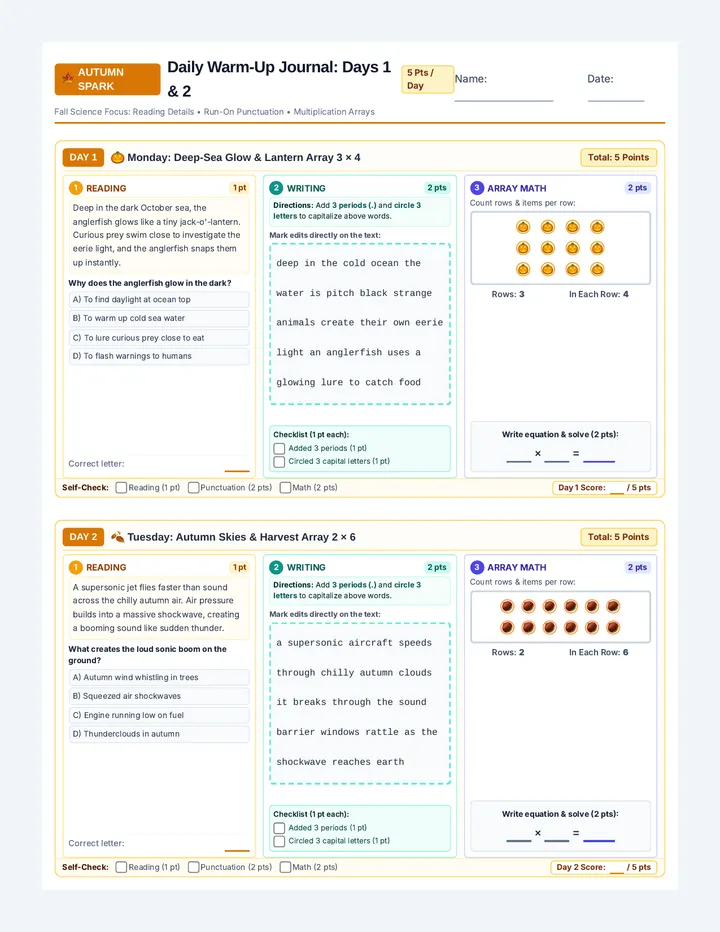
Autumn Warmup Packet

Daily Spark Warmups

A five-day daily warm-up sequence for 8th grade intervention classrooms featuring reading comprehension, sentence mechanics, and multiplication array modeling across three compact print pages.

KS

Kathleen Suther

3
Sound Code Slides

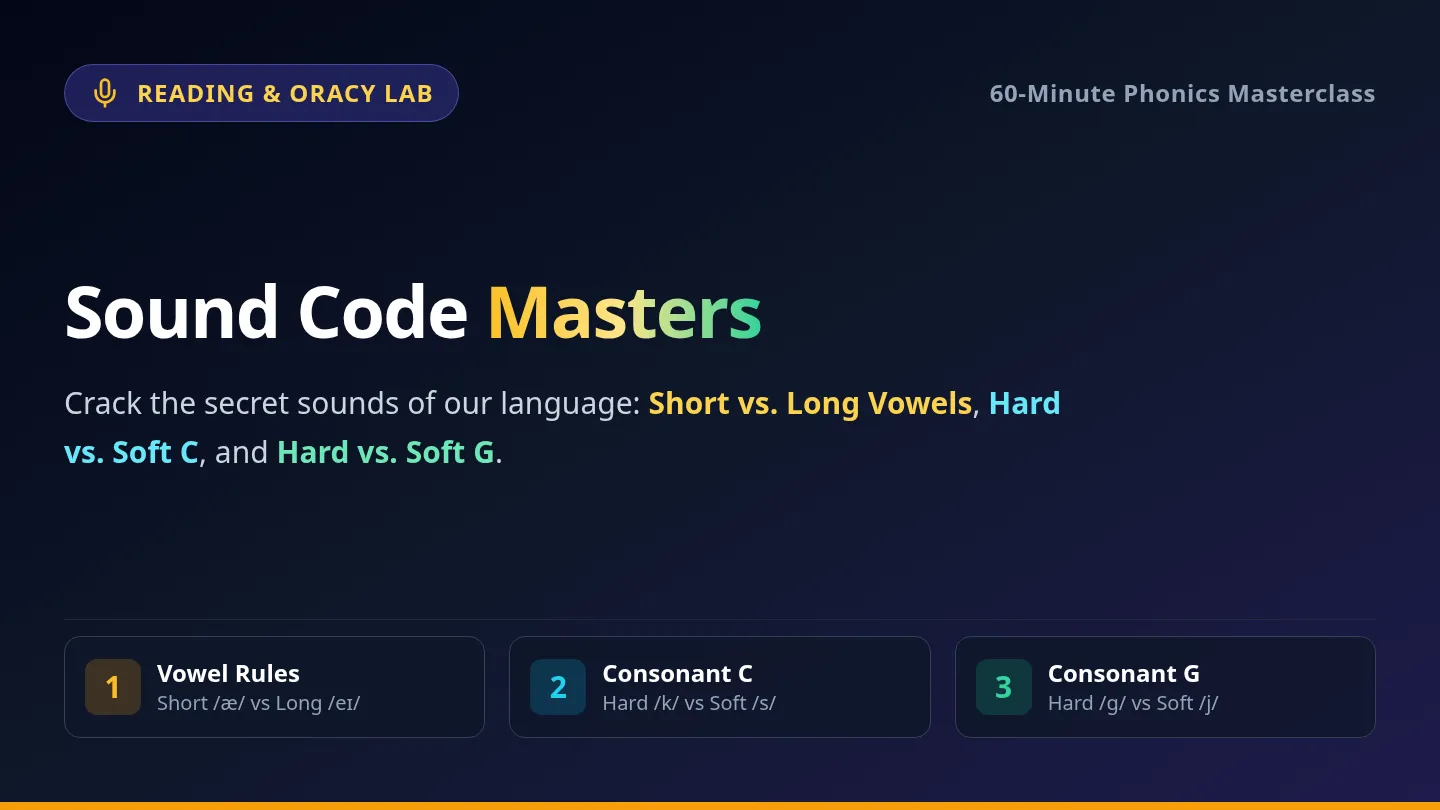
Sound Code Masters

A comprehensive 60-minute foundational reading and oracy lesson reviewing and practicing short vs. long vowels, hard vs. soft c, and hard vs. soft g. Through multisensory articulation modeling, partner whisper-and-echo drills, and oral reading challenges, students master phonics rules and spoken fluency.

LS

Laurel Sviatko

5
Lowell Loom MCAS Worksheet

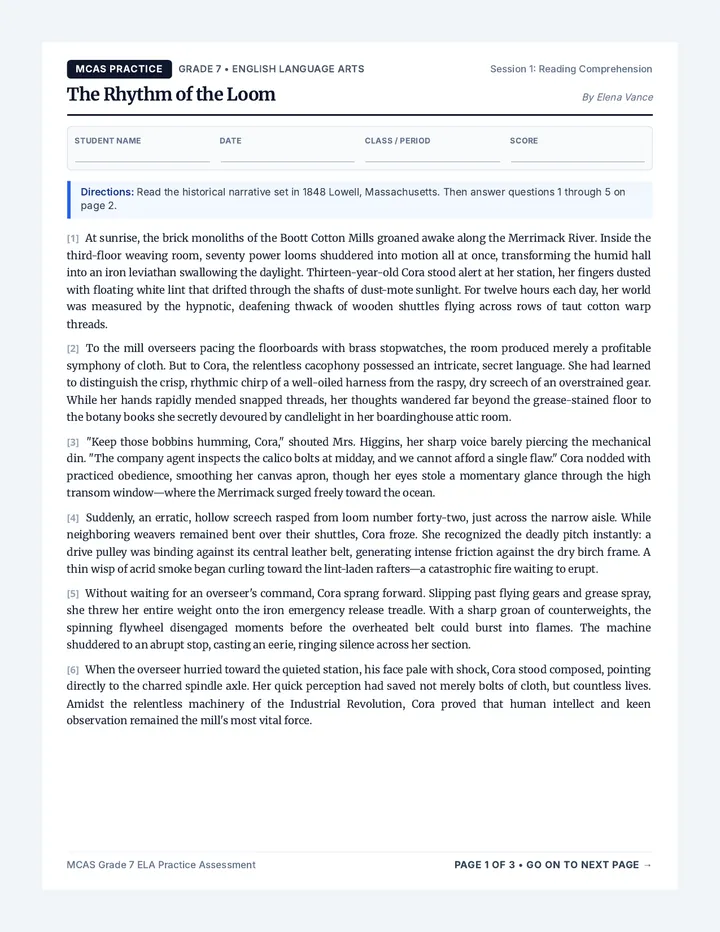
Lowell Loom MCAS Worksheet

A comprehensive 7th grade ELA MCAS-style practice worksheet featuring an original historical narrative set in Lowell, Massachusetts, paired with context vocabulary questions, evidence-based Part A/B selected-response items, and an open response essay prompt with an MCAS rubric checklist and ruled writing space.

C

caconlon

Story Sleuths Facilitation Guide

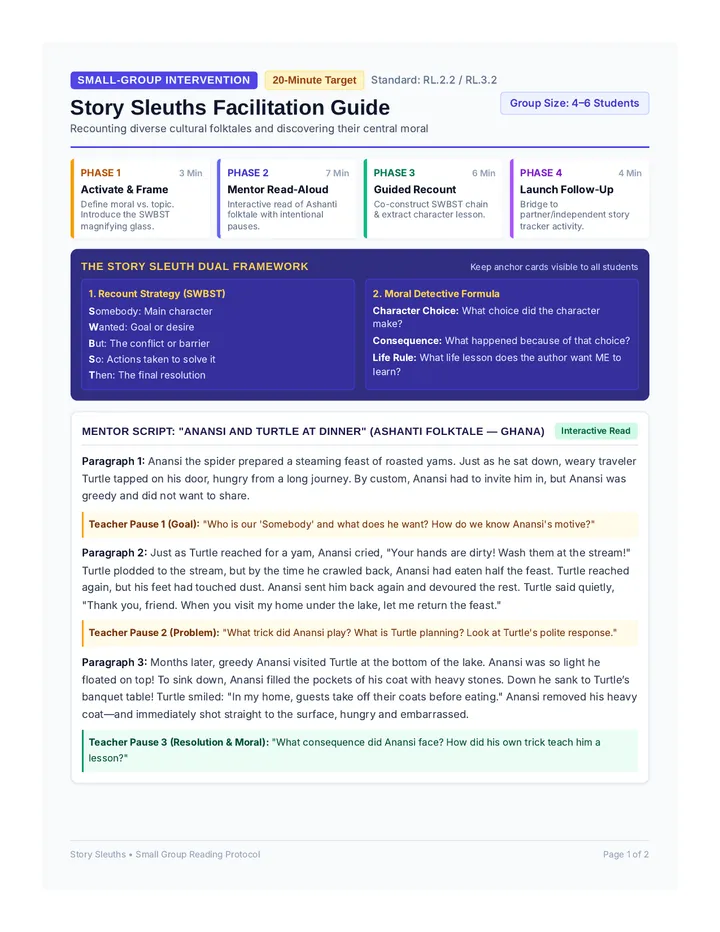
Story Explorers

An interactive, high-impact reading comprehension unit targeting core foundational literature standards. Students master recounting diverse folktales, extracting central morals, and analyzing how characters respond to major events and challenges.

S

Squiretak

8
Gist Hunters Teacher Guide

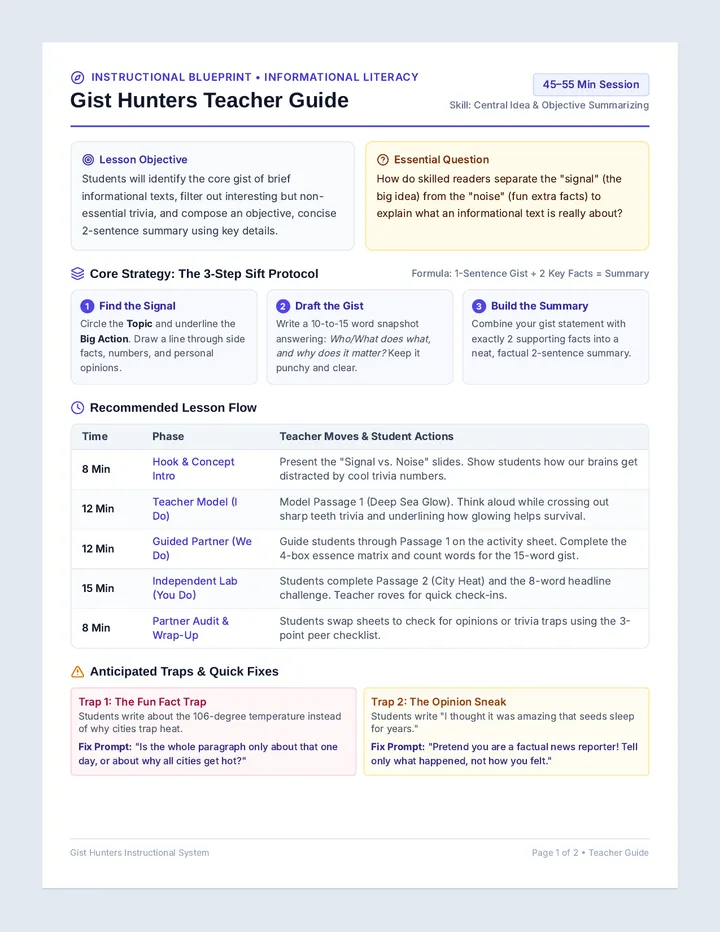
Gist Hunters

A targeted instructional unit that equips students to distinguish essential ideas from supporting trivia in brief informational texts, capture the core gist in 10-15 words, and draft punchy objective summaries.

A

arparks

4
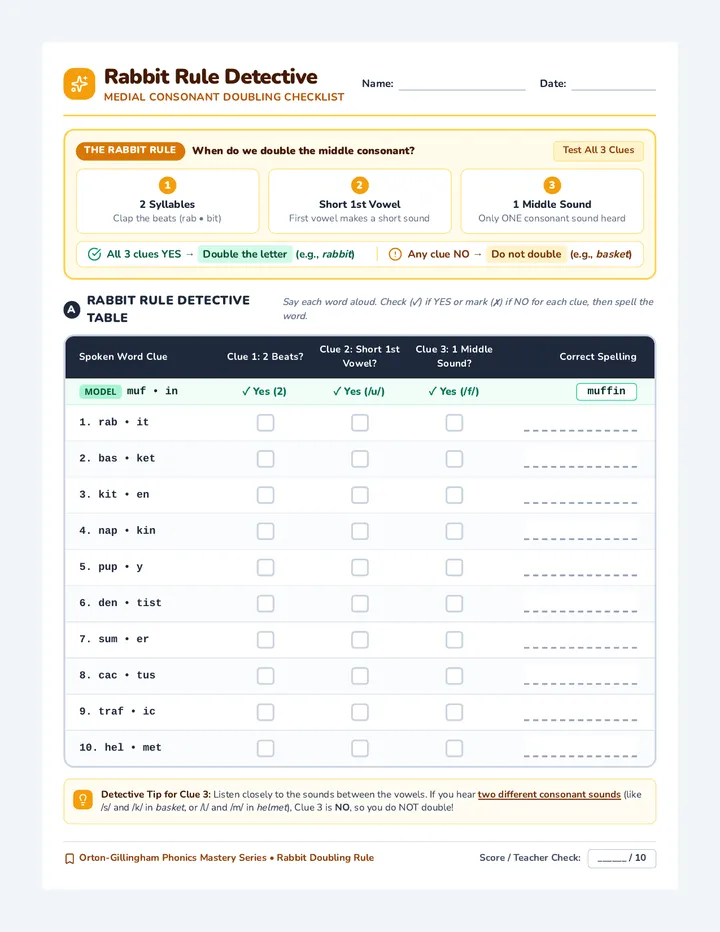
Rabbit Rule Phonics Worksheet

Rabbit Rule Phonics Worksheet

A focused one-page Orton-Gillingham aligned phonics worksheet featuring the Rabbit Rule Detective Checklist table, prompting students to independently test syllables, short vowel sound, and medial consonant sound before spelling each word.

JA

Joann Acosta

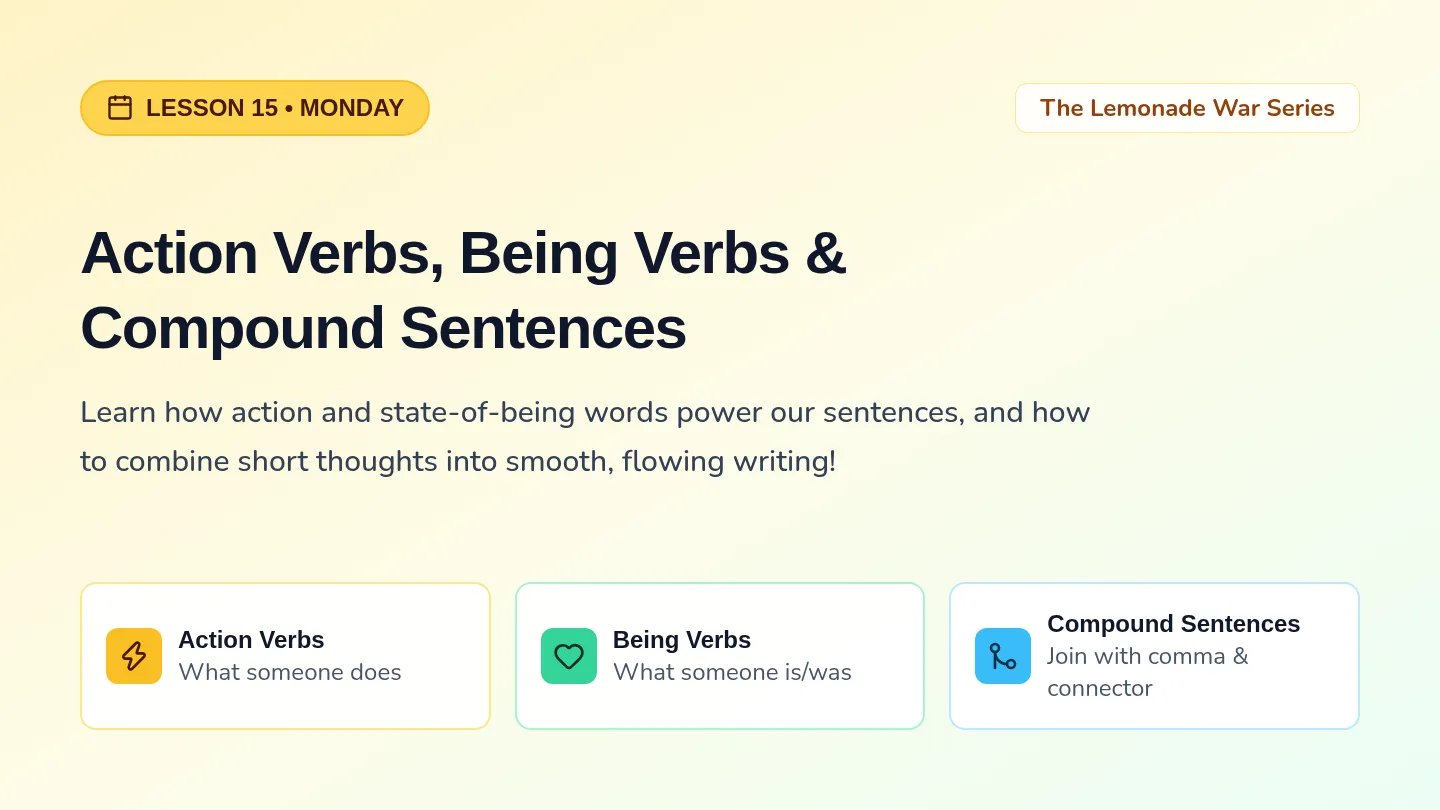
Lemonade Verbs Slides

Reading Writing Workshop

An engaging elementary English Language Arts unit connecting grammar mechanics, mentor texts, vocabulary, and sensory descriptive writing.

B

Bhoovaragavaswamym

8
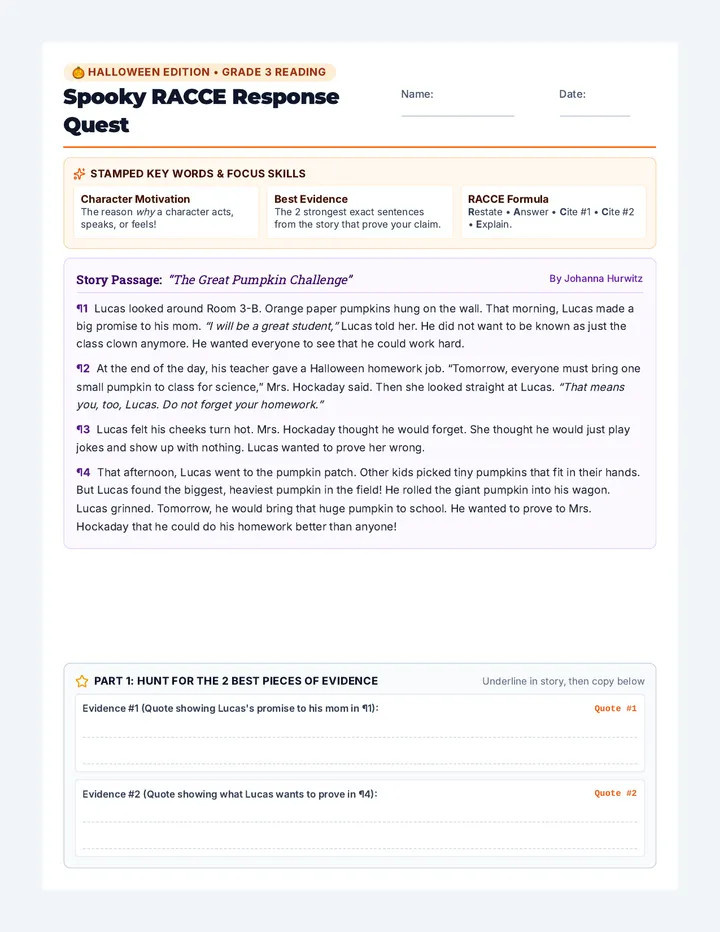
Halloween Character Motivation RACCE Worksheet

RACCE Response Champions

A 3rd-grade reading and writing lesson designed to master the RACCE framework (Restate, Answer, Cite evidence 1, Cite evidence 2, Explain). Students analyze character motivation in realistic fiction, stamp key vocabulary, find the two strongest pieces of text evidence, and craft a complete RACCE response.

KR

Kenzie Ruthven

4
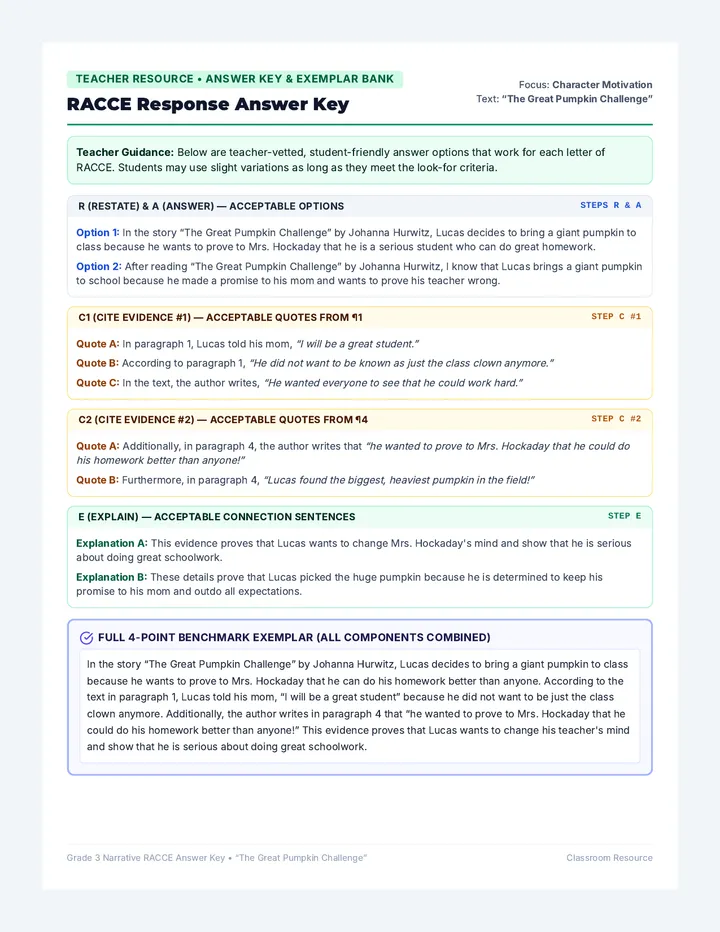
RACCE Response Answer Key

RACCE Response Answer Key

A printable one-page teacher answer key and exemplar bank for the Halloween RACCE lesson. Features multiple acceptable working answers and sentence starters for R, A, C1, C2, and E, a complete 4-point exemplar, and scoring criteria.

KR

Kenzie Ruthven

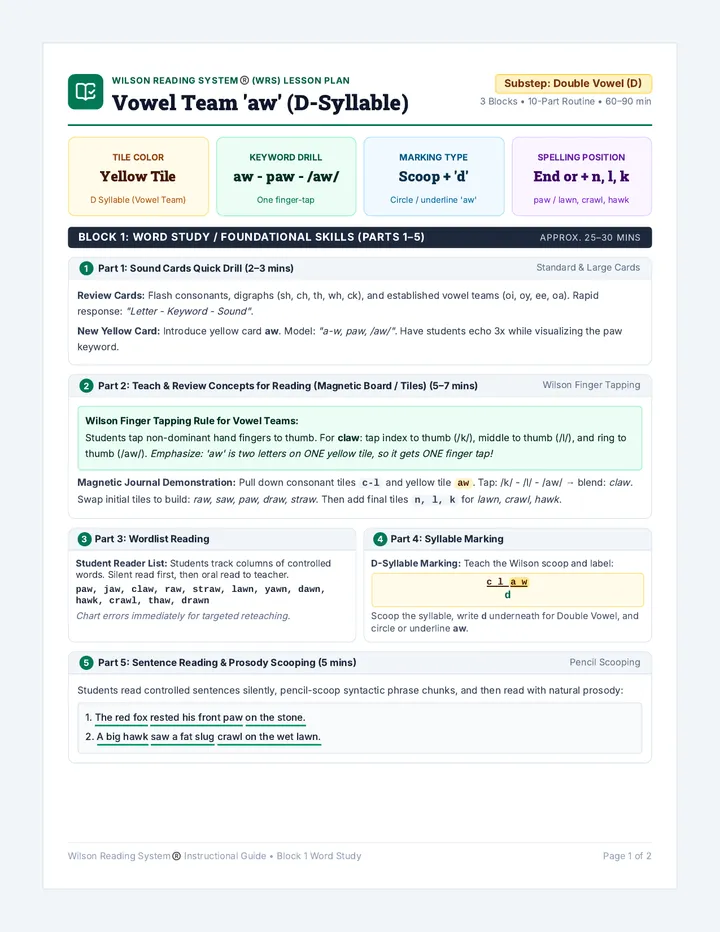
Paw Print Teacher Guide

Vowel Team Aw Pathways

A comprehensive structured literacy sequence targeting the vowel team 'aw', offering dual instructional pathways using both the Classic Orton-Gillingham 7-step routine and the 10-part Wilson Reading System (WRS) framework.

KW

Kellie Walsh

10
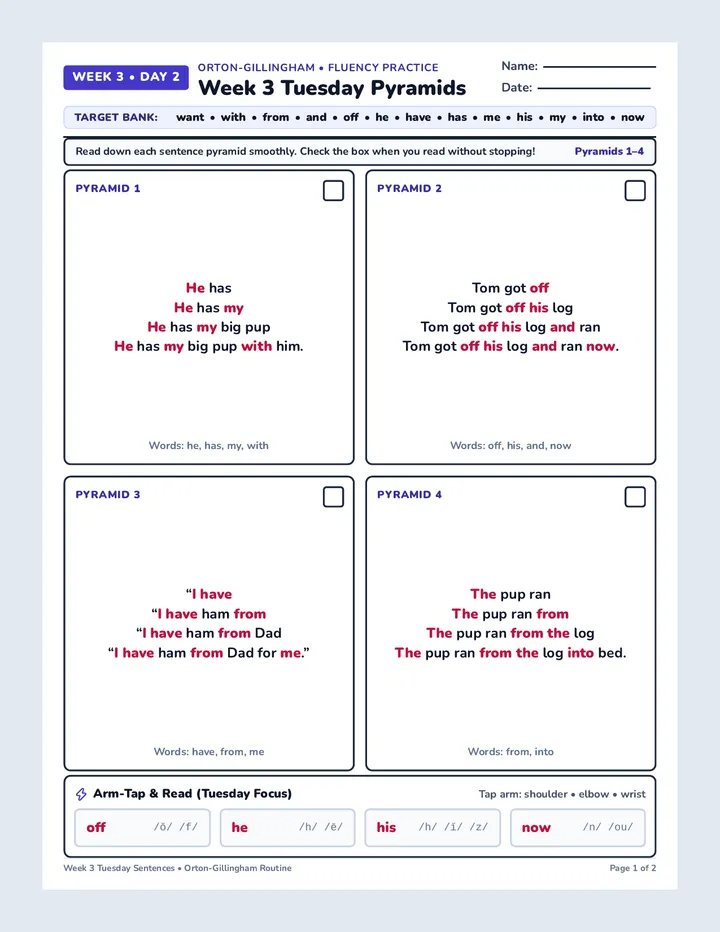
Week 3 Tuesday Sentences Worksheet

Week 3 Tuesday Fluency

Week 3 Tuesday session reinforcing the 13 target red words with decodable sentence pyramids, decodable reader 'Up to the Top!', comprehension story exit ticket, and fluency assessment.

S

Sara

4
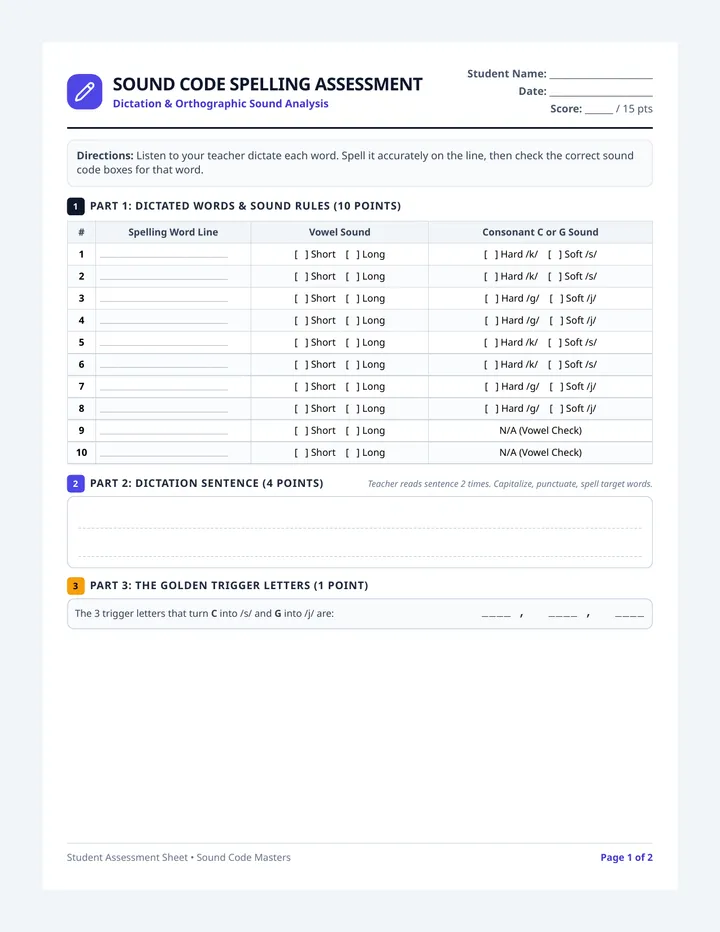
Sound Code Spelling Assessment

Sound Code Spelling Assessment

A 2-page spelling assessment containing an orthographic student dictation sheet with sound-code checkoffs and dictation sentences, followed by a complete teacher dictation script and scoring guide.

LS

Laurel Sviatko