Private Conversation Lesson Plan Uncommon Prep • High School English
Private Conversation Lesson Plan
NCO Book 2: Lesson 1
Level: Intermediate (L3-L4)
Pacing: 60 Minutes
<table class="w-full text-xs border border-gray-200"><tbody><tr class="bg-slate-100 font-bold border-b border-gray-200"><td class="p-2 border-r border-gray-200 w-1/4">SWBAT (Objective)</td><td class="p-2 border-r border-gray-200 w-1/4">Key Grammar Point</td><td class="p-2 border-r border-gray-200 w-1/4">Core Vocabulary</td><td class="p-2 w-1/4">Materials Needed</td></tr><tr><td class="p-2 border-r border-gray-200 text-gray-700 leading-relaxed">Analyze word order in narrative sentences (S + V + O + Adv) and use simple past tense to describe a breach of social etiquette.</td><td class="p-2 border-r border-gray-200 text-gray-700 leading-relaxed font-mono">S + V + O + Adverb<br>Irregular Simple Past</td><td class="p-2 border-r border-gray-200 text-gray-700 font-medium">angry, rudely, attention, bear, private, conversation</td><td class="p-2 text-gray-700">Student worksheets, Slide deck, Exit tickets, Timer</td></tr></tbody></table>
Exemplar Response & Criteria for Success
Exemplar Student Essay / Paragraph Response:
"Last week, a young man and a young woman sat behind the author in the theatre. They were talking loudly during the interesting play. The writer became extremely angry because he could not hear the actors. In the end, he turned round and told them rudely that he could not hear a word. Shockingly, the young man replied that it was none of his business because it was a private conversation."
Grammar Check: S+V+O+Adv pattern must be highlighted (e.g., "talking loudly", "replied rudely").
Text Evidence: Explicit references to character dialogue and actions must be present.
Phase 1: Do Now & Retrieval (7 mins)
00:00 - 00:07
Teacher Script (Warm-Strict):
"Pencils tracking paper in 3... 2... 1. Silence in the room. You have exactly 4 minutes to complete the Do Now on your sheets. Focus is on past simple transformations and word order. Begin."
Circulate Strategy (Aggressive Monitoring): Laptop down, tracking sheets in hand. Mark student answers with code: C (Correct) or X (Check Word Order).
No Opt Out (Cold Call): "Sarah, read question 1. Excellent. Marcus, change 'angrily' to an adjective. What is it? Yes, 'angry'."
Phase 2: Intro to New Material (15 mins)
00:07 - 00:22
Hook: Introduce the concept of "social contracts" and etiquette in public spaces (theatre, cinema). Frame the text: "Today we read about a person who broke the social contract in a hilarious yet frustrating way."
Direct Instruction Script (Grammar Focus):
"Look at the board. English has strict word order. S-V-O-Adv. Who is doing the action? Subject. What is the action? Verb. What receives it? Object. How is it done? Adverb. We say: 'He looked at the man angrily,' NOT 'He looked angrily at the man.'"
Check for Understanding (CFU):
"What is wrong with 'They talked loudly in the room'?" (Nothing, it matches!)
"Where does the adverb go if we have a direct object?" (After the object!)
Uncommon Prep Instruction Systems • English Book 2 Page 1 of 2
Uncommon Prep • High School English
Private Conversation Lesson Plan (Cont.)
NCO Book 2: Lesson 1
Level: Intermediate (L3-L4)
NCO Book 2 Lesson 1 Full Anchor Text Word Count: 104 words
"Last week I went to the theatre. I had a very good seat. The play was very interesting. I did not enjoy it. A young man and a young woman were sitting behind me. They were talking loudly. I got very angry. I could not hear the actors. I turned round. I looked at the man and the woman angrily. They did not pay any attention. In the end, I could not bear it. I turned round again. 'I can't hear a word!' I said angrily. 'It's none of your business,' the young man said rudely. 'This is a private conversation!'"
Phase 3: Guided Practice & Reading (15 mins)
00:22 - 00:37
Cold Call & Text Reading Steps:
First Pass: Teacher reads text fluently. Students track with pencils under words.Second Pass: Student Choral reading (high momentum, volume check).Structural Focus: Every time a student encounters an adverb or past simple verb, they must snap their fingers and say "Grammar Alert!" to train their attention.
Discussion Facilitation (Turn & Talk):
"Turn and Talk with your partner. Is the young man's response ('This is a private conversation!') logically sound? Why or why not? You have 60 seconds. GO."
Misconceptions & Keys:
Misconception: "Private conversation" means absolute freedom of speech.Correction: Highlight irony—public venue interferes with paid service.Syntax Fix: Enforce "He looked at them angrily" (S-V-O-Adv).
Phase 4: Independent Practice & Writing (15 mins)
00:37 - 00:52
Students work silently on the Student Worksheet . Complete silence is strictly enforced. Teacher circulates with a green marker to check the grammar grid (S+V+O+Adv).
Scaffolded Support Pathways:
Level 3 (Emerging): Provide sentence frames for the S+V+O+Adv grid. Limit verbs to regular past tense.Level 4 (Proficient): Require students to write their own alternative ending to the story using at least 3 distinct adverbs of manner.
Pacing Checkpoints:
Minute 5: All students must complete grammar rearranging exercises.
Minute 10: Students transition to the text-dependent comprehension writing.
Phase 5: Exit Ticket & Wrap-Up (8 mins)
00:52 - 01:00
Wrap-Up Routine:
"Pencils down. Pass exit tickets to the center of the aisle in 5... 4... 3... 2... 1. Clean desks. Have a respectful day."
Score Range Category Teacher Action Plan 3/4 - 4/4 Mastery met Move to continuous tense contrast. 2/4 or below Remediation Re-teach S+V+O+Adv in pull-out tutoring.
Uncommon Prep Instruction Systems • English Book 2 Page 2 of 2
Private Conversation Worksheet New Concept English • Book 2
Lesson 1: A Private Conversation
Name/Nombre: _________________
Date/Fecha: _________________
Class/Clase: _________________
1 Bilingual Passage / Lectura Bilingüe: A Private Conversation
English (Original)
[1] Last week I went to the theatre. I had a very good seat. The play was very interesting.
[2] I did not enjoy it. A young man and a young woman were sitting behind me.
[3] They were talking loudly. I got very angry. I could not hear the actors.
[4] I turned round. I looked at the man and the woman angrily.
[5] They did not pay any attention. In the end, I could not bear it.
[6] I turned round again. "I can't hear a word!" I said angrily.
[7] "It's none of your business," the young man said rudely. "This is a private conversation!"
Español (Traducción)
[1] La semana pasada fui al teatro. Tenía un asiento muy bueno. La obra era muy interesante.
[2] No la disfruté. Un hombre joven y una mujer joven estaban sentados detrás de mí.
[3] Estaban hablando en voz alta. Me enojé mucho. No podía escuchar a los actores.
[4] Me di la vuelta. Miré al hombre y a la mujer con enojo.
[5] No prestaron ninguna atención. Al final, no pude soportarlo.
[6] Me di la vuelta otra vez. "¡No puedo oír ni una palabra!", dije enojado.
[7] "No es asunto de su incumbencia", dijo el joven con rudeza. "¡Esta es una conversación privada!"
2 Do Now: Grammar Warmup / Actividad de Inicio: Calentamiento de Gramática
A. Complete the table with correct Simple Past forms / Complete la tabla con el pasado simple:
Base Verb (Present) / Presente Simple Past Form / Pasado Simple Verb Type / Tipo de Verbo 1. go (ir) went Irregular 2. get (enojarse / conseguir) ________________________ ________________________ 3. look (mirar) ________________________ ________________________
3 Vocabulary Spotlight / Glosario Clave
Connect the word to its definition / Conecte con su definición:
1. rudely (groseramente) • • To tolerate or stand / Soportar
2. attention (atención) • • Not public / No público
3. bear (tolerar) • • In an impolite way / Sin cortesía
Private Conversation Exit Ticket New Concept English • Lesson 1
Exit Ticket: Private Conversation
Name: ______________________
Date: ______________________
Class Period: _________________
Teacher Grading Matrix: Assesses both reading comprehension accuracy and syntax accuracy.
Score
___ / 4
Mastery Met
YES / NO
1 Comprehension Check (1 Point)
Which statement best summarizes the irony in the young man's response, "This is a private conversation!"?
A. He is talking quietly, and the author is invading his personal workspace on purpose. B. He is having a loud dialogue in a public space, yet claims the author has no right to hear it. C. The play is private, and the young couple is the only group of people allowed to speak. D. The couple is performing in the play themselves while sitting next to the author.
2 Word Order Mastery (1 Point)
Rearrange the following words into the correct English order (S + V + O + Adverb):
angrily / the young man / the writer / answered
3 Grammar Focus: Past Tense Conjugation (1 Point)
Change the verbs in parentheses to the Simple Past to complete the sentences correctly:
A. Yesterday, I ___________ (go) to the movies and ___________ (sit) in the front row.
B. The actors ___________ (speak) too quietly, so I ___________ (can) not hear them.
4 Narrative Writing Practice (1 Point)
Look at the scenario context: "A student talking loudly on their phone inside a quiet library."
Write exactly one past-tense narrative sentence about this scenario. You MUST use the strict S + V + O + Adverb order (e.g. including an adverb of manner like "rudely", "loudly", or "slowly").
NCO Series • New Concept English Book 2 Exit Ticket • Lesson 1
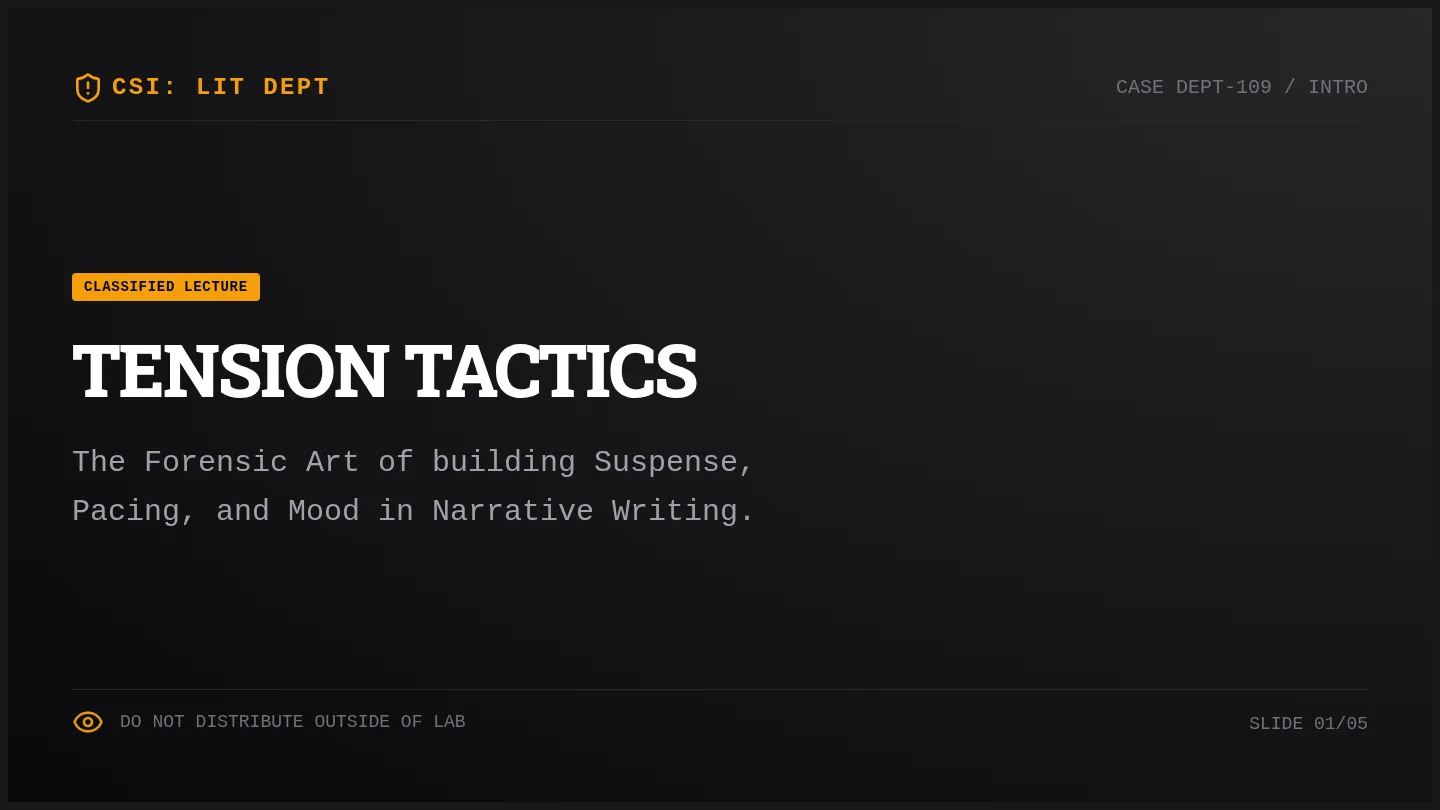
Private Conversation Slides Uncommon Prep English
NCO Book 2 • Lesson 1
A Private Conversation
Mastering narrative sentence syntax, irregular past simple verbs, and the rules of social etiquette in public spaces.
Subject-Verb-Object-Adverb Structure
Projector Mode • Press Space to Advance
Do Now Warmup
04:00 Mins
Task Checklist:
Open your student worksheet to Section 1.
Conjugate the irregular verbs in the past simple.
Decide if they are regular or irregular.
Urgency Check:
"We track with pencils from the first second. Silent, solo focus. This builds our reading stamina for the whole lesson."
Aim for 100% accuracy on irregular spelling!
Uncommon Prep • High School Academics Slide 2 of 5
The Climax
Key Passage
"I turned round again. "I can't hear a word!" I said angrily."
"It's none of your business," the young man said rudely. "This is a private conversation!"
Comprehension Drill:
Where are the characters sitting? Why are their loud words so ironic here?
Grammar Alert:
Identify the adverbs ending in -ly and explain how they alter the verb meanings.
Uncommon Prep • High School Academics Slide 3 of 5
Narrative Word Order
S + V + O + Adv
Subject (S)
The writer
Who did it?
Verb (V)
looked at
What action?
Object (O)
the couple
Who received it?
Adverb (Adv)
angrily.
How was it done?
Strict Rule: In English, adverbs of manner typically sit after the direct object. Do NOT say: "The writer angrily looked at the couple."
Uncommon Prep • High School Academics Slide 4 of 5
Turn and Talk
60 Seconds
Imagine a passenger is talking on a mobile phone on a quiet city train. Is it accurate to call this a "private conversation"? Why or why not?
A
Consider how your environment affects the social contracts we all make with strangers.
B
Formulate your answer using at least one past tense verb and one adverb of manner.
Uncommon Prep • High School Academics Slide 5 of 5