Lenny.com
Explore
Create
ActivitiesNewMathEnglish Language ArtsScience & EngineeringSocial StudiesGlobal LanguagesHealth & Physical EducationSpecial EducationCounseling & Life SkillsArts & CreativityESL
Lenny.com
Lenny.com
Explore
Create
ActivitiesNewMathEnglish Language ArtsScience & EngineeringSocial StudiesGlobal LanguagesHealth & Physical EducationSpecial EducationCounseling & Life SkillsArts & CreativityESL
Lenny.com
Lenny.com

Solutions

Lenny for EducatorsLenny for SchoolsLenny for Districts

Product

ExploreSign inCreateSupportAbout

Resources

Getting startedMTSS Acceleration Program

Newsletters

School Funding Newsletter

© 2026 Lenny Learning Inc.

TermsPrivacyAccessibility
LinkedInInstagramX
Lenny
English Language ArtsPhonics & Reading FoundationsLetter IdentificationLearn Letters A-ZLowercase and Uppercase LettersConsonants and VowelsLetter-Sound AssociationsLetter-Sound Associations: LowercaseLetter-Sound Associations: UppercaseBeginning and Ending SoundsRhymingBlending And SegmentingShort VowelsShort Vowel SoundsConsonant BlendsConsonant DigraphsBlends, Digraphs, and TrigraphsDigraphs, Blends, and Silent LettersLong Vowel SoundsLong Vowel PatternsShort and Long VowelsShort and Long Vowel PatternsSilent EVowel SoundsVowel TeamsR-Controlled VowelsDiphthongs: Oi, Oy, Ou, OwVariant VowelsVariant, Diphthong, And R Vowel PatternsSoft G And CSight WordsIrregular WordsWord RecognitionSyllablesSyllable TypesTwo-Syllable WordsMultisyllabic WordsPhoneme ManipulationDecodable TextsVocabularyAction WordsQuestion WordsNouns and AdjectivesClassify WordsCompound WordsSynonyms and AntonymsHomophonesHomophones and HomonymsShades of MeaningContext CluesPrefixes and SuffixesGreek and Latin RootsAnalogiesIdioms and AdagesForeign Words and ExpressionsWord Choice and UsageReference SkillsReading ComprehensionRead-Along Literary TextsRead-Along Informational TextsReality vs. FictionStory ElementsCharacterSequenceMain IdeaCause And EffectCompare And ContrastReading StrategiesText StructureAuthor's PurposeAuthor's Purpose And ToneAuthor's PerspectivePoint Of ViewThemeInference And ThemeInference And AnalysisPoetry ElementsLiterary DevicesAnalyzing LiteratureAnalyzing Informational TextsComparing TextsAudience, Purpose, And ToneBusiness DocumentsNovel StudyNonfiction Book StudyGrammar & MechanicsSentencesNounsVerbsAdjectivesPronounsCapitalizationPunctuationContractionsConjunctionsPrepositionsArticlesAdjectives And AdverbsVerb TypesVerb TensePronouns And AntecedentsPronoun TypesSubject-Verb AgreementDirect And Indirect ObjectsSentences, Fragments, And Run-OnsPhrases And ClausesCommasSemicolons, Colons, And CommasDashes, Hyphens, And EllipsesSpellingAbbreviationsFormattingVerb Tense And MoodMisplaced ModifiersWritingDescriptive DetailsCreative WritingOpinion WritingTopic SentencesOrganizing WritingLinking WordsSentence VarietyIntroductions And ConclusionsPersuasive And Opinion WritingExpository WritingPersuasive StrategiesDeveloping And Supporting ArgumentsTopic Sentences And Thesis StatementsSummarizingResearch SkillsEditing And RevisingActive And Passive Voice=Writing Clearly And ConciselyDebate & Public SpeakingPublic Speaking BasicsPersuasive TechniquesClaims and EvidenceTypes of ArgumentsReasoning TypesLogical FallaciesTopic ResearchOrganizing EvidenceDebate Speech OrganizationAttacking and Defending ArgumentsClash and EngagementImpact CalculusQuestioning and Cross-ExaminationCritical ThinkingInformal LogicFormal LogicInductive Reasoning

Picture Clues Do Now

A focused Do Now routine where students examine two contrasting visual scenes to identify key topics and craft universal theme statements.

Ccallawayj

Picture Clues Do Now

A focused Do Now routine where students examine two contrasting visual scenes to identify key topics and craft universal theme statements.

Ccallawayj

You might also like

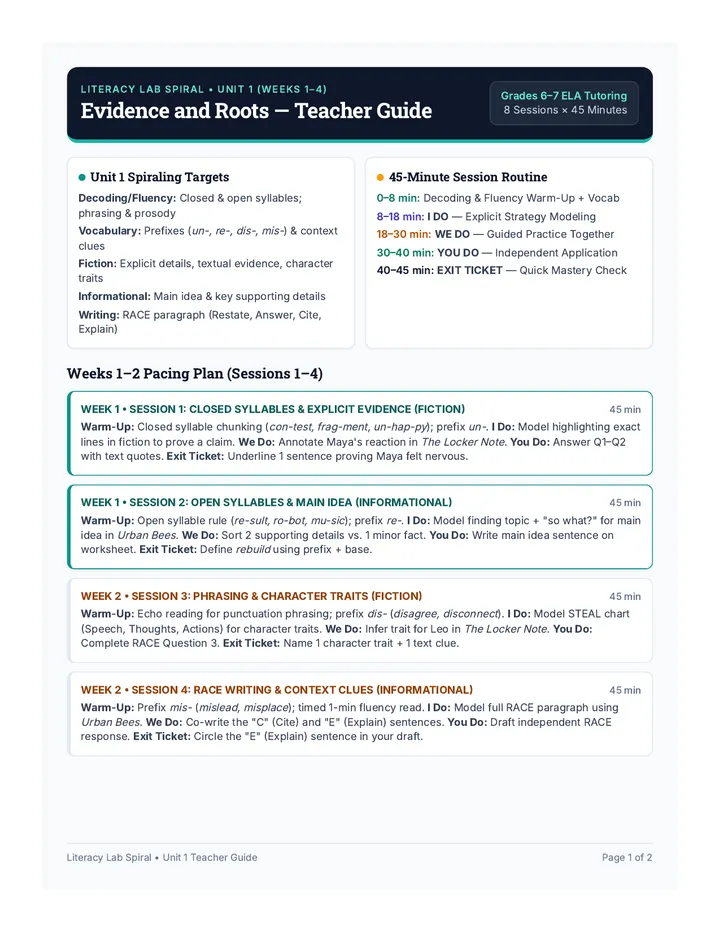
Evidence and Roots Teacher Guide

Literacy Lab Spiral

A 20-week spiraling 6th/7th grade ELA tutoring curriculum organized into five 4-week units (two 45-minute sessions per week). Each unit integrates decoding and fluency, morphology-based vocabulary, fiction and informational comprehension, and structured writing using the I Do, We Do, You Do, and Exit Ticket model, with monthly progress assessments.

S

soconnor

25
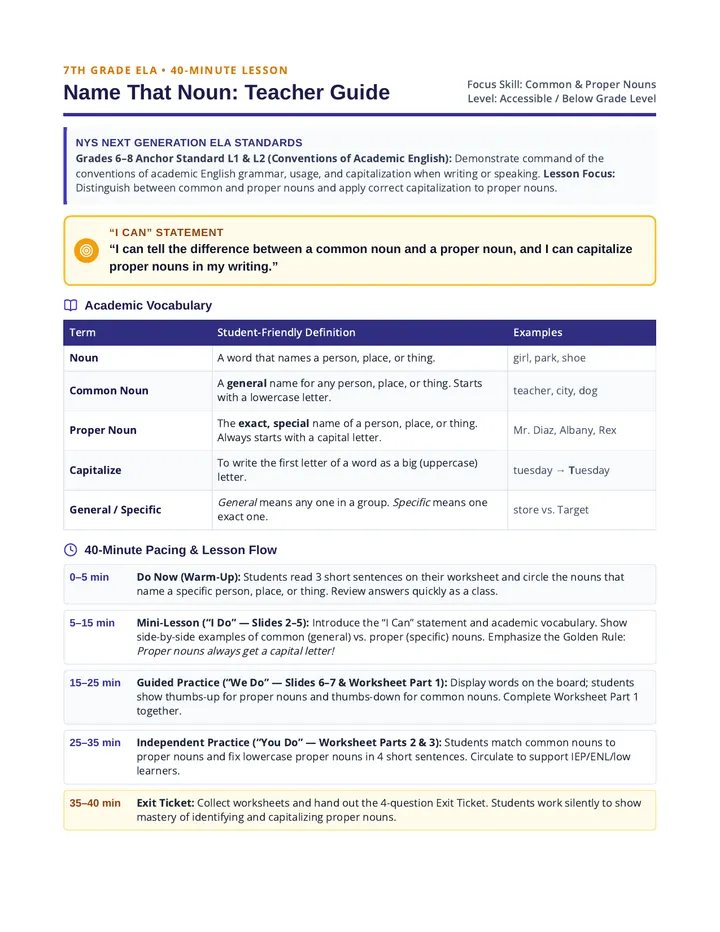
Name That Noun Teacher Guide

Name That Noun

A 40-minute 7th grade ELA lesson focused on distinguishing between common and proper nouns and correctly capitalizing proper nouns. Designed with simple, accessible wording for below-grade-level readers, aligned to New York State Next Generation ELA Standards, and complete with a Do Now, guided practice, Exit Ticket, and targeted differentiations.

GL

Grace Lisberg

4
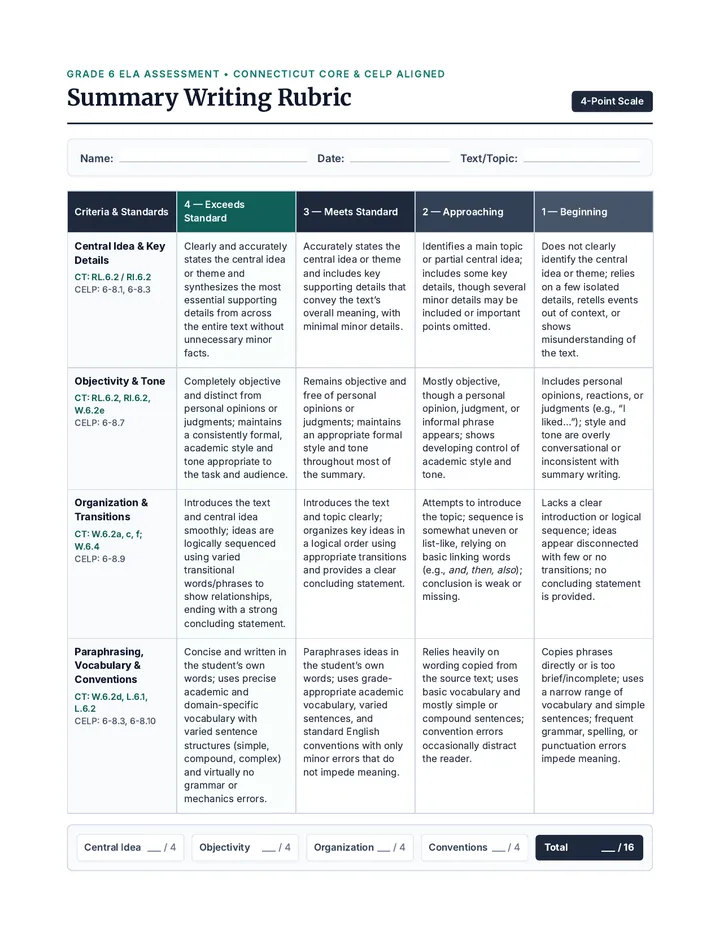
Summary Writing Rubric

Summary Writing Rubric

A 3-page, print-ready 4-point analytic rubric for 6th grade summary writing aligned to Connecticut Core Standards (RL.6.2, RI.6.2, W.6.2, W.6.4, L.6.1–L.6.2) and Grades 6–8 CELP Standards (6-8.1, 6-8.3, 6-8.7, 6-8.9, 6-8.10). Includes student scoring fields, a 4-level criteria grid, a Grades 6–8 CELP proficiency descriptor reference table, teacher feedback space, and Level 1–4 sample summaries for the Savvas mentor text "Reading Buddies."

MC

MARJORIE COLLINS

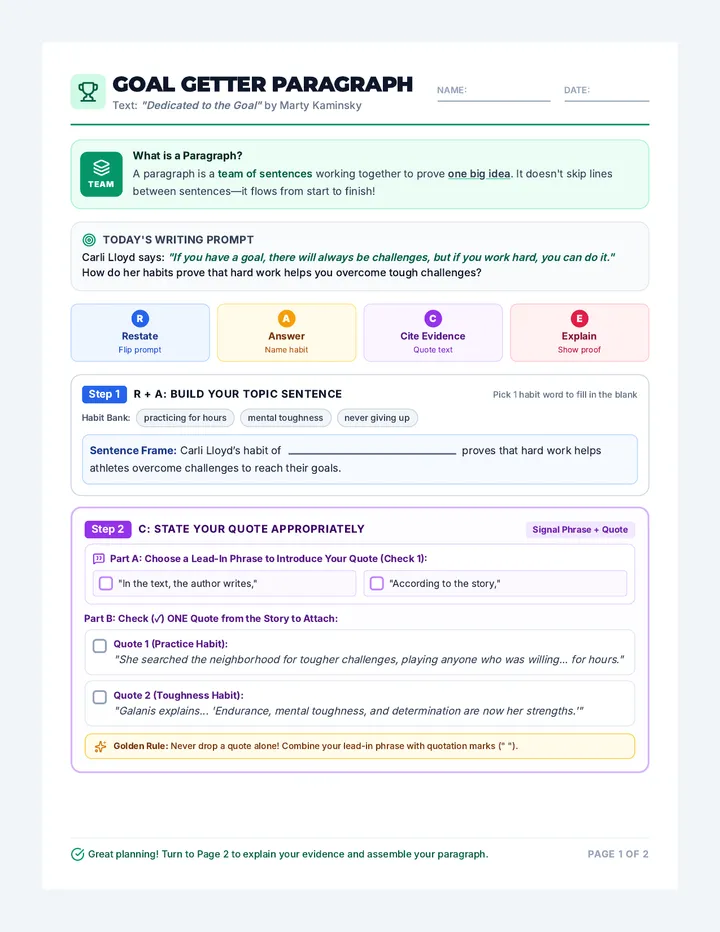
RACE Paragraph Builder Worksheet

Grit and Growth Paragraphs

A 2-lesson 6th grade ELA writing sequence designed for students reading at a 3rd grade level. Students master paragraph structure and the RACE strategy across two CommonLit texts: 'Dedicated to the Goal' and 'A Quick Note on Getting Better at Difficult Things'.

ZF

Zach Foster

5
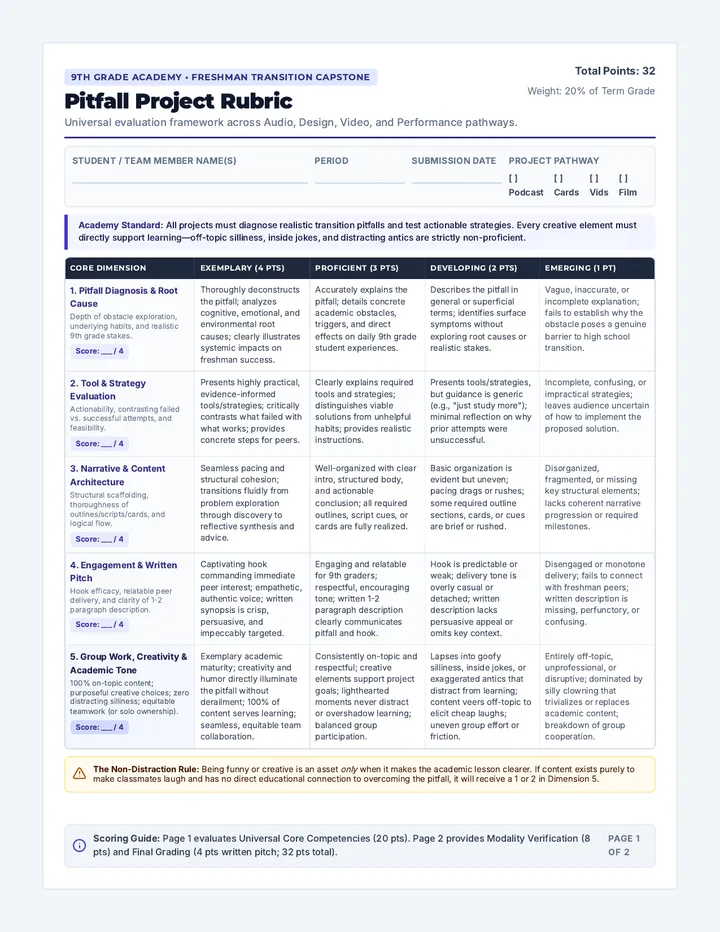
Freshman Pitfall Project Rubric

Rubric Calibration Studio

A 9th Grade Academy calibration lesson where students read, analyze, and score eight sample Pitfall Projects across all four modalities to master the universal rubric criteria before starting their own capstone.

C

ckroeker

3
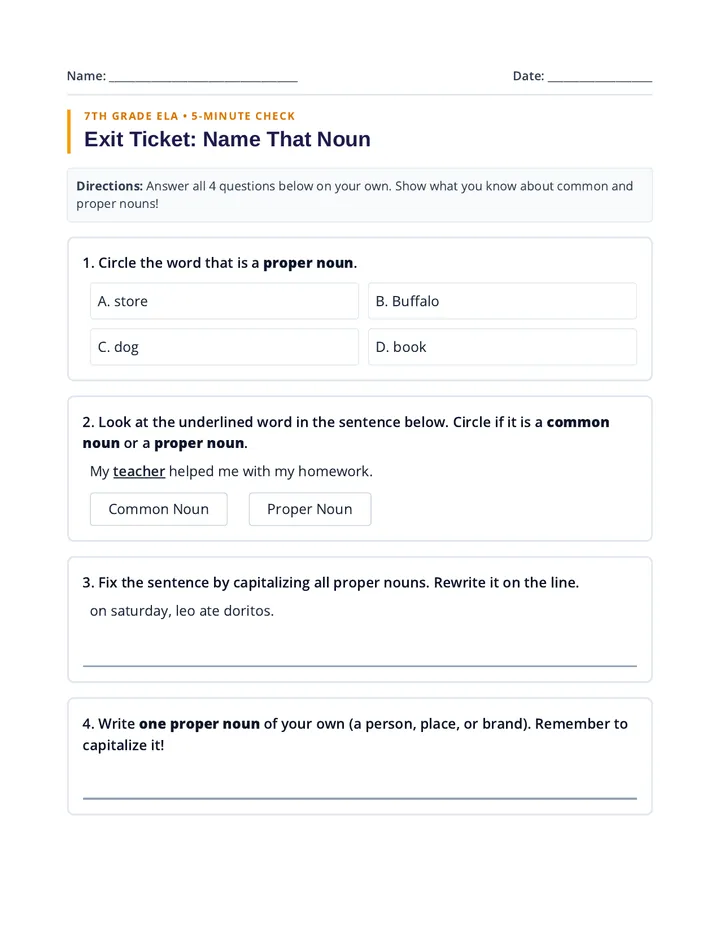
Name That Noun Exit Ticket

Name That Noun Exit Ticket

A 1-page exit ticket for 7th grade ELA to assess student mastery of identifying common and proper nouns and capitalizing proper nouns. Features simple, clear directions and clean writing spaces.

GL

Grace Lisberg

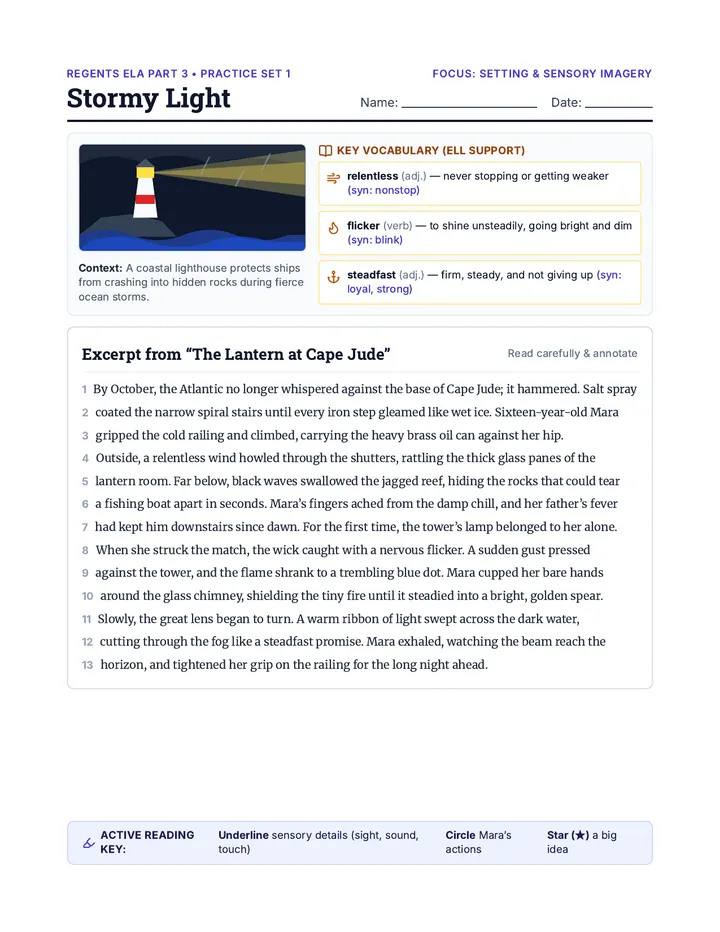
Stormy Light Worksheet

Text Analysis Studio

A three-lesson Regents ELA Part 3 practice sequence focusing on how authors use literary elements to develop central ideas across diverse texts. Includes layered ELL supports (high, moderate, and independent tiers), visual anchors, structured graphic organizers, and print-ready writing spaces.

SO

Siena Oliveri

7
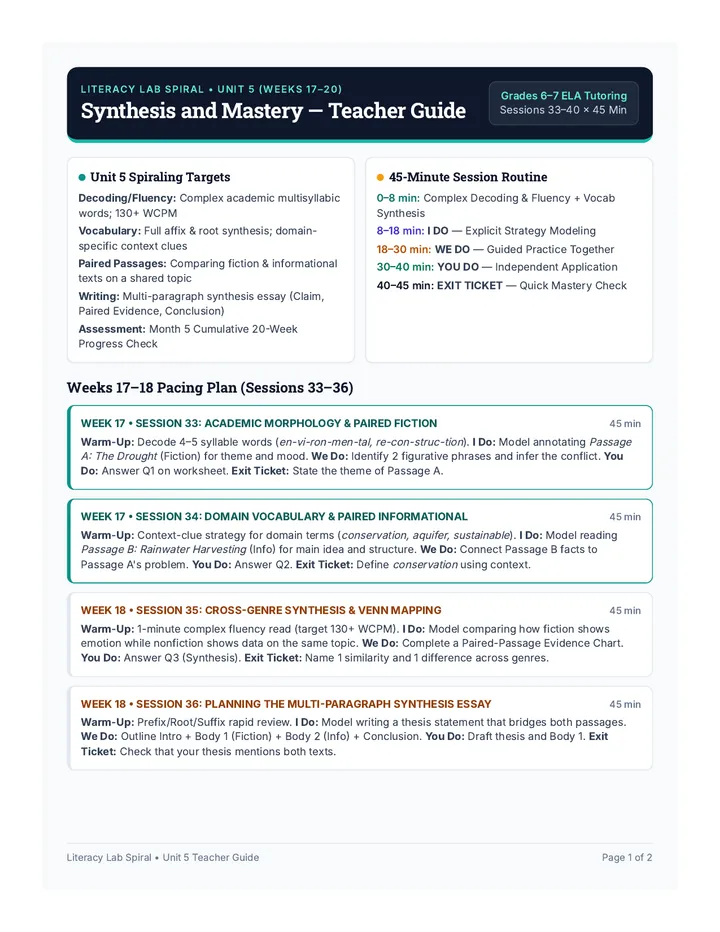
Synthesis and Mastery Teacher Guide

Synthesis and Mastery

Weeks 17–20 (Sessions 33–40) synthesize all spiraling decoding, fluency, vocabulary, paired-passage comprehension, and multi-paragraph writing skills, culminating in the Month 5 Cumulative Progress Assessment.

S

soconnor

5
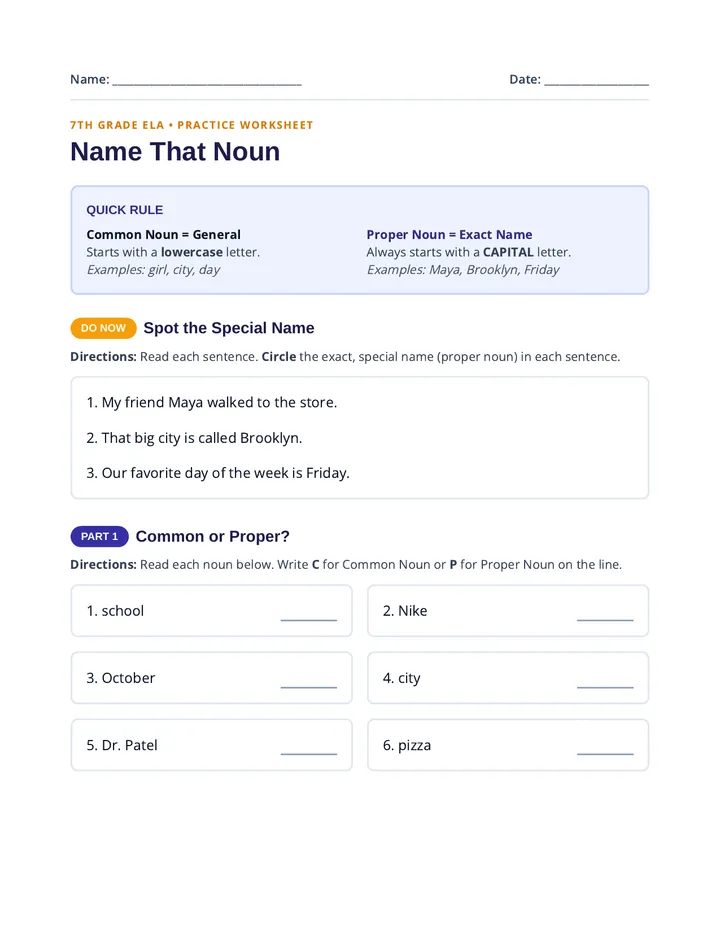
Name That Noun Worksheet

Name That Noun Worksheet

A 2-page student worksheet for 7th grade ELA on common and proper nouns. Includes a Do Now, a quick reference box, guided practice (labeling common vs. proper), matching, and sentence rewriting with simple, clear directions and generous writing space.

GL

Grace Lisberg

Pressure Pitch Slides

Broomsticks and Allegiances

A three-day high school ELA sequence analyzing character choices, hidden motives, and shifting alliances in Chapter 11 ("Quidditch") of *Harry Potter and the Sorcerer's Stone*. Students progress from tracking indirect characterization under pressure to evaluating confirmation bias and writing a formal character analysis.

ST

Skylar Tackett

11
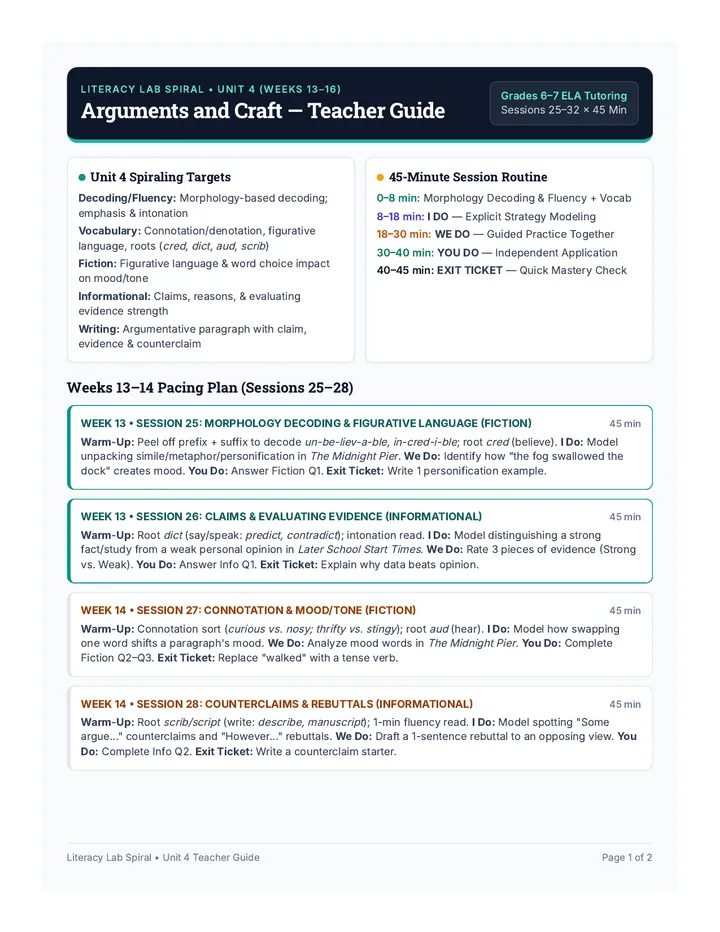
Arguments and Craft Teacher Guide

Arguments and Craft

Weeks 13–16 (Sessions 25–32) spiral prior skills into figurative language, mood/tone, evaluating arguments, morphology-based decoding, and argumentative writing with counterclaims, culminating in the Month 4 Progress Assessment.

S

soconnor

5
Name That Noun Slides

Name That Noun Slides

A 7-slide presentation for a 40-minute 7th grade ELA lesson on common and proper nouns. Includes a Do Now, "I Can" statement, simple definitions and examples, guided practice, and independent work/exit ticket directions with accessible wording.

GL

Grace Lisberg