Backward Reading Worksheet Backward Reading Challenge
Case File: Mechanical Errors #802
Name:
Date:
Mission Briefing
Your brain is too smart for its own good! When you read normally, your brain "auto-corrects" errors because it knows what you meant to say. To catch mistakes, we must trick the brain. Read the text below backward, sentence by sentence, starting from the very last sentence.
Evidence Log: Rough Draft
the expedition started early. last Tuesday morning? we packed our gear and head toward the mountain. it was going to be a long hike but we were ready. suddenly. the sky turned gray. they're was a loud crack of thunder that shook the ground! everyone started running for cover. however, I forgot my waterprof jacket. my shoes were soaking wet and heavy. After three hours we reached the cave. It was cold inside? i wish i had a warmer blanket.
Use a highlighter to mark every error you find while reading backward.
Error Log
Mistakes Found (Count):
Most Common Error Type:
Reflection: Why did reading backward help you find errors that you missed during a normal reading?
Case Study: Your Own Work
Take the last paragraph of your current writing draft. Apply the backward reading strategy. List two errors you caught that you didn't see before.
1. __________________________________________________________________________
2. __________________________________________________________________________
Error Evidence Slides Error Evidence
Mastering the Backward Reading Strategy
Today's Mission
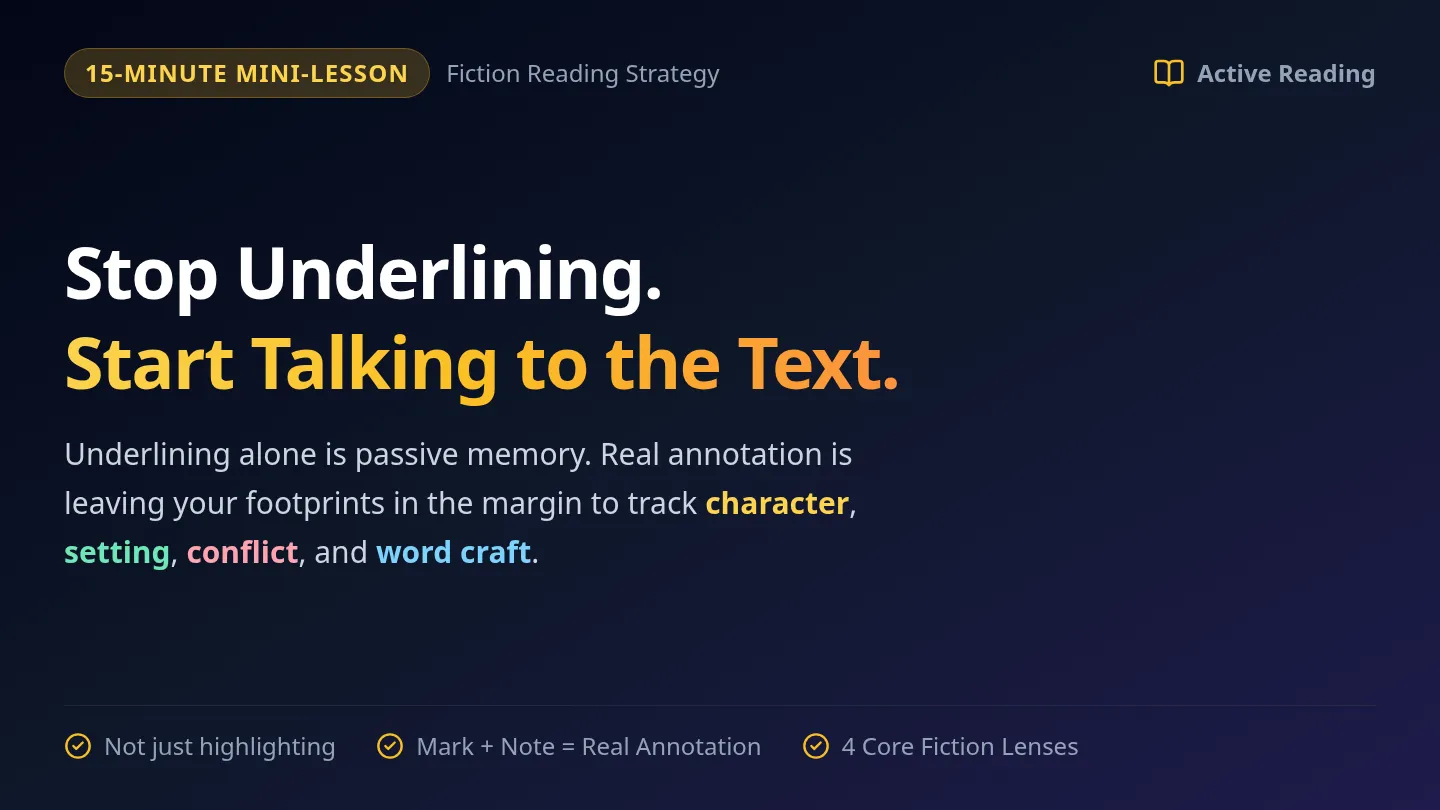
I can apply the reading backward strategy to identify and correct mechanical errors in my writing.
Warm-Up: Auto-Correct Fail
I'm having a dinner party tonight! We're having baked children.
OMG WHAT?! 😱
*CHICKEN! I meant chicken!
Why isn't technology enough to catch every mistake?
Strategy Spotlight
Embedded media
Watch for:
Objective vs. Subjective
The Backward Method
The "Why" Behind the Strategy
1 Normal Reading
Your brain focuses on meaning. It skips over small errors because it knows the context.
2 Backward Reading
Your brain focuses on mechanics. Sentences are isolated from context, forcing you to see what's actually on the page.
"How did reading backward feel different than your first read?"
Harder?
Slower?
More effective?
Final Mission
Apply the Backward Reading strategy to your own draft right now.
Pick the last paragraph of your draft.
Read it sentence-by-sentence from bottom to top.
Find at least two mechanical errors you missed.
Detective Key Answer Key Detective Dossier
Answer Key: Case File #802
Teacher Resource
Identified Errors
the expedition started early. last Tuesday morning? we packed our gear and head toward the mountain. it was going to be a long hike but we were ready. suddenly. the sky turned gray. they're was a loud crack of thunder that shook the ground! everyone started running for cover. however, I forgot my waterprof jacket. my shoes were soaking wet and heavy. After three hours we reached the cave. It was cold inside? i wish i had a warmer blanket.
the expedition started early. last Tuesday morning? we packed our gear and head toward the mountain. it was going to be a long hike but we were ready. suddenly. the sky turned gray. they're was a loud crack of thunder that shook the ground! everyone started running for cover. however, I forgot my waterprof jacket. my shoes were soaking wet and heavy. After three hours we reached the cave. It was cold inside? i wish i had a warmer blanket.
Error Found Correction Type the The Capitalization morning? morning. Punctuation head headed Verb Tense it It Capitalization suddenly. suddenly, Punctuation (Fragment) they're There Homophone waterprof waterproof Spelling inside? inside. Punctuation i I Capitalization
Discussion Guidance
Cognitive Focus: Remind students that when reading forward, the brain "predicts" the next word. Reading backward (sentence by sentence) breaks that flow, forcing the eye to actually see the symbols on the page rather than the ideas in the mind.Common Misconception: Students often try to read individual words backward. Clarify that we read the sentences backward—meaning we read the last sentence first (from its start to its end), then the second-to-last sentence, and so on. Editing Masterclass Teacher Guide Editing Masterclass
Teacher Guide | Grades 6–8
Duration
45 Min
Focus
Mechanics
Learning Objective
"Students will apply specific editing strategies—specifically reading backward —to identify and correct mechanical errors in both sample texts and their own writing."
Materials
Error Evidence Slides
Backward Reading Worksheet
Highlighters (per student)
Student Writing Drafts
Instructional Sequence
05 min
Warm-up: Auto-Correct Fails
Display Slides 3-4 . Use these humorous examples to discuss how "Spell Check" can sometimes fail because it doesn't understand context or tone. It sets the stage for why human editing is still vital.
"We rely on our phones to fix our typos, but sometimes it makes them worse. Why does our brain do the same thing when we read our own work?"
10 min
Video Analysis
Watch the Video (Slide 4) . Focus specifically on the timestamp 5:50-6:51 where the 'Read Backward' strategy is introduced.
Key Concept: Objective vs. Subjective
Remind students that Editing (Objective) is about "right and wrong" grammar, unlike Revision (Subjective) which is about style.
20 min
Backward Reading Challenge
Distribute the Backward Reading Worksheet .
Model: Take the last sentence of a text on the board and read it. Then read the second-to-last. Show how the meaning is "lost," making the grammar stand out.Independent Work: Students work through the "Evidence Log" text backward. They should highlight every error they find.Check: Review the answers as a class (see Detective Key ).
10 min
Discussion & Application
Ask: "Why did you miss some of those on a first read?" Students then apply the strategy to their own draft for the final 5 minutes.
Pro-Tip: Encourage students to use a finger or a ruler to block out other lines while reading backward to prevent their eyes from "jumping ahead" into the narrative.
Differentiation Strategies
For Support
Provide a checklist of specific errors to look for (e.g., "Find 3 capitalization errors, 2 spelling errors"). Have students work in pairs to "verify" each other's findings.