Lenny.com
Explore
Create
ActivitiesNewMathEnglish Language ArtsScience & EngineeringSocial StudiesGlobal LanguagesHealth & Physical EducationSpecial EducationCounseling & Life SkillsArts & CreativityESL
Lenny.com
Lenny.com
Explore
Create
ActivitiesNewMathEnglish Language ArtsScience & EngineeringSocial StudiesGlobal LanguagesHealth & Physical EducationSpecial EducationCounseling & Life SkillsArts & CreativityESL
Lenny.com
Lenny.com

Solutions

Lenny for EducatorsLenny for SchoolsLenny for Districts

Product

ExploreSign inCreateSupportAbout

Resources

Getting startedMTSS Acceleration Program

© 2026 Lenny Learning Inc.

TermsPrivacyAccessibility
LinkedInInstagramX
Lenny
English Language ArtsPhonics & Reading FoundationsLetter IdentificationLearn Letters A-ZLowercase and Uppercase LettersConsonants and VowelsLetter-Sound AssociationsLetter-Sound Associations: LowercaseLetter-Sound Associations: UppercaseBeginning and Ending SoundsRhymingBlending And SegmentingShort VowelsShort Vowel SoundsConsonant BlendsConsonant DigraphsBlends, Digraphs, and TrigraphsDigraphs, Blends, and Silent LettersLong Vowel SoundsLong Vowel PatternsShort and Long VowelsShort and Long Vowel PatternsSilent EVowel SoundsVowel TeamsR-Controlled VowelsDiphthongs: Oi, Oy, Ou, OwVariant VowelsVariant, Diphthong, And R Vowel PatternsSoft G And CSight WordsIrregular WordsWord RecognitionSyllablesSyllable TypesTwo-Syllable WordsMultisyllabic WordsPhoneme ManipulationDecodable TextsVocabularyAction WordsQuestion WordsNouns and AdjectivesClassify WordsCompound WordsSynonyms and AntonymsHomophonesHomophones and HomonymsShades of MeaningContext CluesPrefixes and SuffixesGreek and Latin RootsAnalogiesIdioms and AdagesForeign Words and ExpressionsWord Choice and UsageReference SkillsReading ComprehensionRead-Along Literary TextsRead-Along Informational TextsReality vs. FictionStory ElementsCharacterSequenceMain IdeaCause And EffectCompare And ContrastReading StrategiesText StructureAuthor's PurposeAuthor's Purpose And ToneAuthor's PerspectivePoint Of ViewThemeInference And ThemeInference And AnalysisPoetry ElementsLiterary DevicesAnalyzing LiteratureAnalyzing Informational TextsComparing TextsAudience, Purpose, And ToneBusiness DocumentsNovel StudyNonfiction Book StudyGrammar & MechanicsSentencesNounsVerbsAdjectivesPronounsCapitalizationPunctuationContractionsConjunctionsPrepositionsArticlesAdjectives And AdverbsVerb TypesVerb TensePronouns And AntecedentsPronoun TypesSubject-Verb AgreementDirect And Indirect ObjectsSentences, Fragments, And Run-OnsPhrases And ClausesCommasSemicolons, Colons, And CommasDashes, Hyphens, And EllipsesSpellingAbbreviationsFormattingVerb Tense And MoodMisplaced ModifiersWritingDescriptive DetailsCreative WritingOpinion WritingTopic SentencesOrganizing WritingLinking WordsSentence VarietyIntroductions And ConclusionsPersuasive And Opinion WritingExpository WritingPersuasive StrategiesDeveloping And Supporting ArgumentsTopic Sentences And Thesis StatementsSummarizingResearch SkillsEditing And RevisingActive And Passive Voice=Writing Clearly And ConciselyDebate & Public SpeakingPublic Speaking BasicsPersuasive TechniquesClaims and EvidenceTypes of ArgumentsReasoning TypesLogical FallaciesTopic ResearchOrganizing EvidenceDebate Speech OrganizationAttacking and Defending ArgumentsClash and EngagementImpact CalculusQuestioning and Cross-ExaminationCritical ThinkingInformal LogicFormal LogicInductive Reasoning

Atmosphere in Verse

A cross-curricular middle school lesson blending meteorology data analysis with creative writing, guiding students to decode barometric shifts, wind gusts, and temperature drops into vivid sensory imagery, rhythmic lineation, and structured poetry.

Atmosphere in Verse

A cross-curricular middle school lesson blending meteorology data analysis with creative writing, guiding students to decode barometric shifts, wind gusts, and temperature drops into vivid sensory imagery, rhythmic lineation, and structured poetry.

Part 2: Sensory Deconstruction Matrix

Select three specific data shifts (deltas) from your chosen station. Translate the mathematical change into bodily sensation, sound, and figurative imagery.

Data Shift / DeltaPhysical Observation (What actually happens?)Poetic Sensory Metaphor (What does it feel, sound, or taste like?)
Delta 1:
e.g., Barometer -17 mb
Delta 2:
e.g., Temp -22°F crash
Delta 3:
e.g., Gust to 76 mph

ATMOSPHERE IN VERSE • STUDENT WORKSHOP PAGE 1 OF 3 • DATA EXTRACTION

ATMOSPHERIC RESEARCH LAB • POETRY WORKSHOP

Part 3: Stanza Architecture & Rough Draft

STATION SELECTED:  

STANZA 1: LATENT STASIS

Pre-storm tension, high pressure or rising dew point, deceptive quiet. Use long, heavy lines.

STANZA 2: THE RUPTURE

The barometric crash or sudden wind shear. Use fragmented lines, sudden breaks, and harsh plosives.

STANZA 3: THE DELUGE / COLD

Thermal bottoming out, rain shaft or fog saturation. Driving cadence, sibilance, and quiet residue.

Drafting Requirements: Weave at least two numerical metrics directly into the verse (e.g., "eighty-eight degrees", "ten-fourteen millibars") as active sensory details.

12–16 LINES TOTAL

Working Title:   PENCIL DRAFT

STANZA 1 (4-5 lines): The Gathering / Latent Energy

STANZA 2 (4-5 lines): The Barometric Shift / Wind Spike

STANZA 3 (4-5 lines): The Thermal Crash / Deluge / Fog Climax

ATMOSPHERE IN VERSE • STUDENT WORKSHOP PAGE 2 OF 3 • ARCHITECTURE & ROUGH DRAFT

ATMOSPHERIC RESEARCH LAB • POETRY WORKSHOP

Part 4: Revision & Polished Verse Showcase

PEER LAB & FINAL LOG

The Meteorological Revision Scalpel (Self or Peer Audit)

1. Acoustic Sound Check

Did you use harsh consonants (k, t, p, b) for gusts/ruptures, and soft sounds (s, sh, m, l) for fog or falling rain?

[ ] Verified Soundscape

2. Line Break (Enjambment)

Do your line breaks create physical suspense? Does the line snap or plunge right when the pressure drops?

[ ] Purposeful Lineation

3. Cliché & Rhyme Purge

Eliminate forced nursery-rhymes (dark/park, rain/pain). Replace weak adjectives (very cold, super windy) with muscular verbs.

[ ] Clichés Purged

OFFICIAL POETRY TRANSCRIPTION

TITLE:  

STATION COORD:  

Metacognitive Scientific Reflection

1. Which specific data point from your station log created the greatest turning point (volta) in your poem, and why?

2. How did you alter line length or rhythm to physically mimic the wind velocity or pressure drop?

ATMOSPHERE IN VERSE • STUDENT WORKSHOP PAGE 3 OF 3 • REVISION & POLISHED SHOWCASE

"Don't worry about rhyming. Listen to the percussion of the consonants. Can you make the word 'gust' snap like a broken branch?"

When numbers feel too sterile:
"Instead of saying 'it was 59 degrees', ask: what does a 22-degree drop do to the sweat on your forearm? Turn the number into a sensory action."

ATMOSPHERE IN VERSE • TEACHER FACILITATION GUIDE PAGE 1 OF 2 • FRAMEWORK & PACING

EDUCATOR FACILITATION & PEDAGOGY GUIDE

Differentiation, Common Traps & Assessment

RUBRIC & INTERVENTIONS

Scaffolds for Striving Poets & ELL

  • • Sensory Bank: Provide pre-printed tactile word strips (shiver, metallic, suffocating, snap, hiss, vacuum).
  • • Sentence Starters: Provide structural frames: "At [time], the air was [texture]... then the glass broke to [number] millibars..."
  • • Focus on Station Beta: The fog data has fewer violent spikes, allowing for calm descriptive imagery rather than complex storm kinetics.

Extensions for Advanced Writers

  • • Form Constraint: Require an alternating syllable pattern (e.g., lines shrinking from 12 syllables down to 3 to mimic dropping barometric pressure).
  • • Dual Voice / Split Column: Write a two-column poem contrasting the automated, emotionless sensor output with the lived human panic.
  • • Metaphoric Extended Conceit: Structure the weather system as a predatory animal or industrial machinery.

Anticipated Misconceptions & In-the-Moment Fixes

Pitfall 1: The "Weather Channel Report" Trap.

Student writes: "The time was 14:00 and it was 88 degrees. The wind blew at 8 mph."

Teacher Fix: Ask: "Where does the 88 degrees live? Is it in the pavement? In the dog's panting? In the warm asphalt smell? Put the number inside an object."

Pitfall 2: Forced Rhyme Syndrome.

Student bends logic to rhyme "crash" with "trash" or "rain" with "pain".

Teacher Fix: Ban end rhymes for one draft. Enforce free verse with intentional line breaks: "Give your line a cliffhanger. Make the reader fall down the page like the barometer."

Weather Data Poetry Rubric (4-Scale)

DimensionAdvanced (4)Proficient (3)Developing (2)
Data Integration & FidelityAuthentically weaves 3+ accurate data shifts into lyrical imagery; numbers feel inevitable and evocative.Includes 2 required weather metrics accurately; clearly reflects the progression of the chosen station log.Metrics are listed mechanically or scientific facts conflict with the recorded station data.
Sensory & Figurative CraftOriginal, startling metaphors (tactile, olfactory, acoustic); completely free of clichés; highly sensory.Strong sensory descriptions of air, temperature, and wind; uses effective simile or metaphor.Relies on generic adjectives (very windy, super cold); lacks sensory depth or relies on predictable clichés.
Structural Lineation & MeterLine breaks, tempo, and caesura directly mirror physical dynamics (e.g., abrupt enjambment for gusts).Follows clear 3-stanza architecture (Stasis, Rupture, Deluge/Climax); purposeful line breaks.Stanzas lack clear progression; line breaks seem random or awkward; forced rhyming distorts flow.
Acoustic & Phonetic IntentDeliberate orchestrations of plosives, sibilance, and vowel lengths create an unmistakable soundscape.Demonstrates conscious attention to word sounds; revision checklist completed thoughtfully.Little evidence of acoustic revision; flat rhythm; sounds are accidental rather than deliberate.

ATMOSPHERE IN VERSE • TEACHER FACILITATION GUIDE PAGE 2 OF 2 • DIFFERENTIATION & ASSESSMENT

Craft Note 3: Phonetics Plosive consonants (cracks, hits, teeth, stripping, plate) match the violent mechanical violence of 76 mph gusts.

ATMOSPHERE IN VERSE • TEACHER ANALYSIS KEY PAGE 1 OF 2 • HIGH PLAINS DERECHO MODEL

TEACHER REFERENCE & MODEL EXEMPLARS

Exemplar 2: Coastal Inversion & Scoring Guide

STATION BETA MODEL & LAB NOTES

Zero Visibility at Cape Disappointment (Station Beta Model)

Dew Point Convergence (100% Saturation)

// S1: Twilight Stasis

At dawn, fifty-six degrees sleeps in the spruce needles,

the Pacific mirror smooth as oil.

Ten-twenty-two millibars holds down the harbor,

locking each gull into silent perches.

// S2: The Convergence

Then the dew point climbs to meet the chill:

forty-nine degrees touching forty-nine degrees.

One hundred percent: the air surrenders its lungs,

a wall of gray salt drowning the jetty.

// S3: Total Occlusion

By seven, the needle slips to ten-seventeen.

A northwest gale of sixteen knots wakes the fog horn,

its low bronze bellow groaning every thirty seconds

into a world wiped clean of headlands,

leaving only wet wool, cold salt, and blind water.

Acoustic Device: Heavy use of liquid consonants (l, w, r) and soft sibilance (sleeps, spruce, smooth, silent, surrenders, salt) creates a muffled, claustrophobic atmosphere.

Model Rubric Evaluation & Diagnostic Rationale

Data Fidelity: 4/4 Weaves 56°F, 1022 mb, 49°/49° saturation, 1017 mb, and 16 knots into organic lyrical narrative without feeling listed.

Sensory Craft: 4/4 Avoids cliché descriptions of fog; uses tactile metaphors ("Pacific mirror smooth as oil", "wet wool, cold salt").

Lineation: 4/4 Pacing expands and decelerates across stanzas; line lengths mirror the suffocating sprawl of the marine layer.

Acoustics: 4/4 Deliberate orchestration of sibilant and liquid phonetics produces an eerie, hushed auditory presence.

CONFERENCING CHEAT SHEET: 30-SECOND STUDENT INTERVENTIONS

If student's poem is too literal: "Read me line 3. Where is the barometer located? Don't tell me 'the pressure dropped.' Where does that drop live? Did the roof groan? Did the window rattle? Put the drop into the glass."

If student is forcing AABB rhyme: "Cross out the last word of every line. Now re-read it aloud. Hear how much more mature and serious the storm sounds when you let the lines break naturally?"

If student ignores acoustic devices: "Count your consonants in Stanza 2. If wind is 76 mph, where are your snapping sounds (K, T, P)? Replace two soft words with percussive ones."

ATMOSPHERE IN VERSE • TEACHER ANALYSIS KEY PAGE 2 OF 2 • COASTAL FOG MODEL & RUBRIC NOTES

You might also like

Big Picture Slides

Idea Detectives

A scaffolded, multi-day reading comprehension sequence aligned to Texas TEKS 4.9(D)(i) and designed for fourth-grade special education students. Across three focused lessons, students learn to recognize the characteristics of informational text by distinguishing topics from central ideas, connecting supporting details, and citing text evidence using structured visual frameworks.

G

gonzalezs

10
Structure Showdown Slides

Text Structure Showdown

A low-prep, high-energy review lesson for fifth-grade reading classes covering all six TEKS 5.9D(iii) text structures. Features bright whole-class quiz slides with unrevealed answers, a print-and-go student practice worksheet with generous bubble-in choices, and a complete teacher master key.

ED

Emily Denson

4
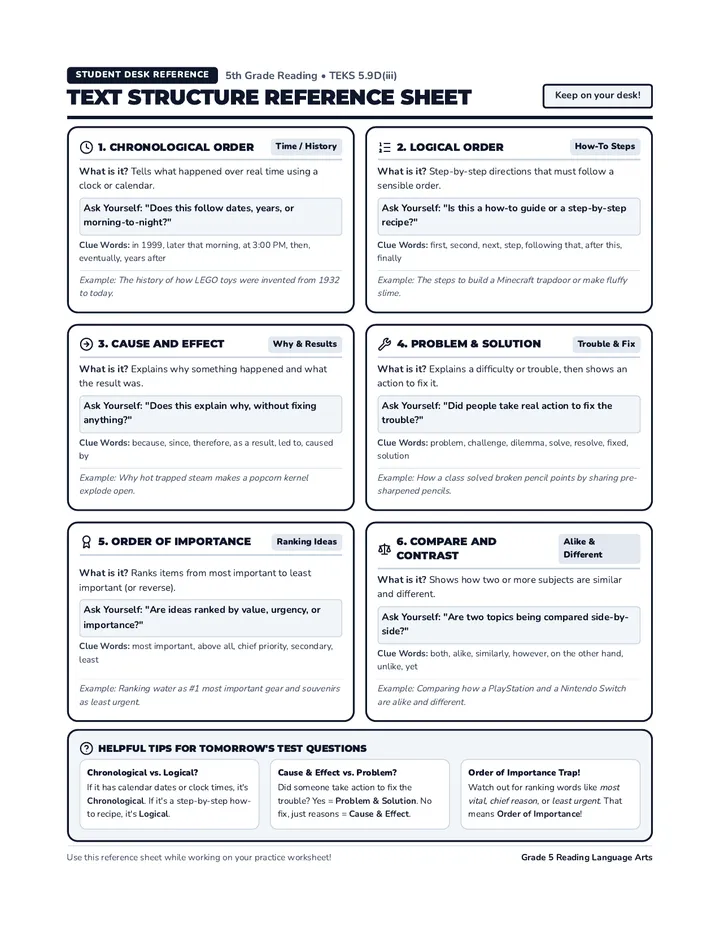
Text Structure Reference Sheet

Text Structure Reference Sheet

A high-contrast, black-and-white print-friendly student desk reference sheet featuring visual icons, simple definitions, and clue-word banks for all six TEKS 5.9D(iii) text structures.

ED

Emily Denson

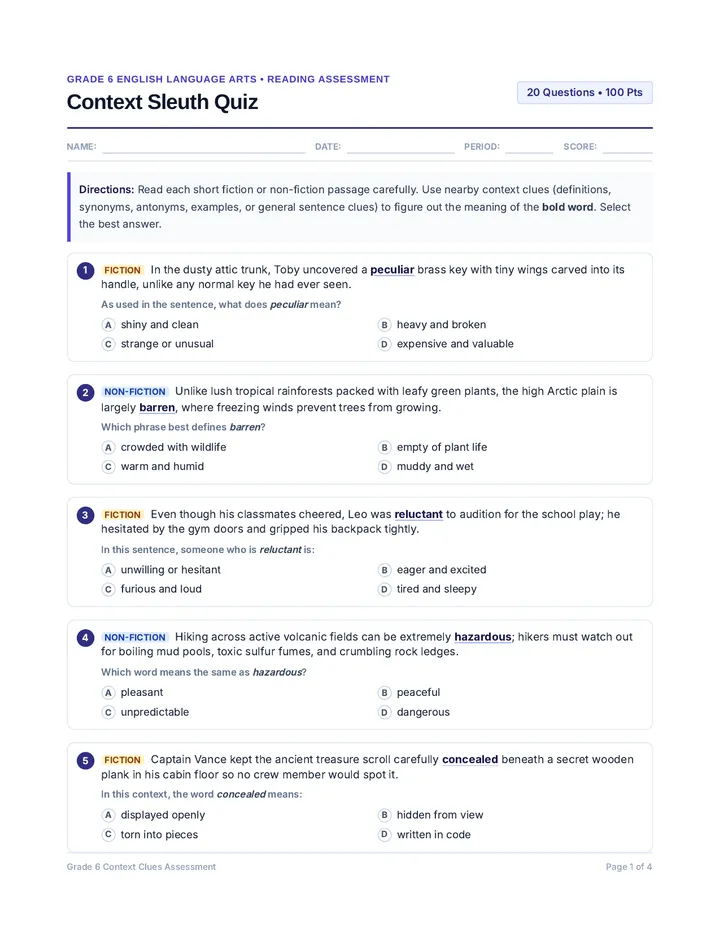
Context Sleuth Quiz

Reading Skill Arsenal

A comprehensive 6th-grade ELA assessment unit focused on foundational reading comprehension, vocabulary acquisition, and literary and informational text analysis across fiction and non-fiction.

SH

Sarah Hunter

6
Essay Architecture Slides

Essay Architecture

A comprehensive 10th-grade expository writing and analysis unit where students dissect high-caliber mentor texts, master defensible thesis construction, weave textual evidence with fidelity, and craft rigorous analytical commentary.

Lenny Avatar
Lenny
4
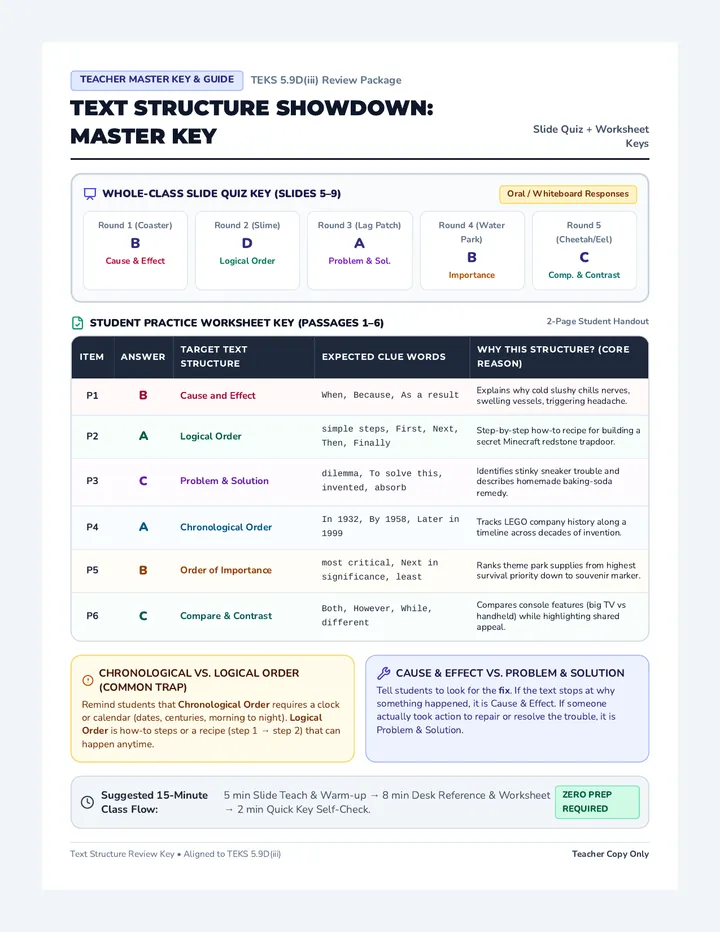
Text Structure Review Key

Text Structure Review Key

A black-and-white print-friendly teacher master key with quick answers for the slide quiz and student worksheet, highlighted clue words, and lower 5th-grade scaffolding notes.

ED

Emily Denson

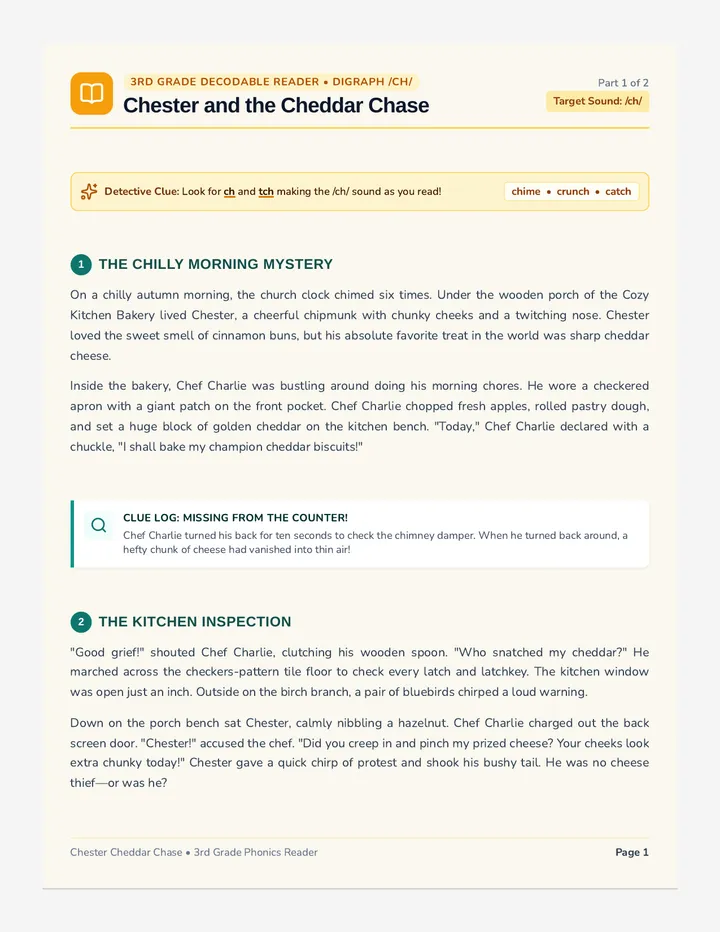
Chester Cheddar Chase Story

Chester Mystery Unit

A comprehensive multi-day third-grade reading, phonics, and writing unit focused on the digraph /ch/, narrative story progression, and mystery dialogue conventions.

V

victoria.lesniak

7
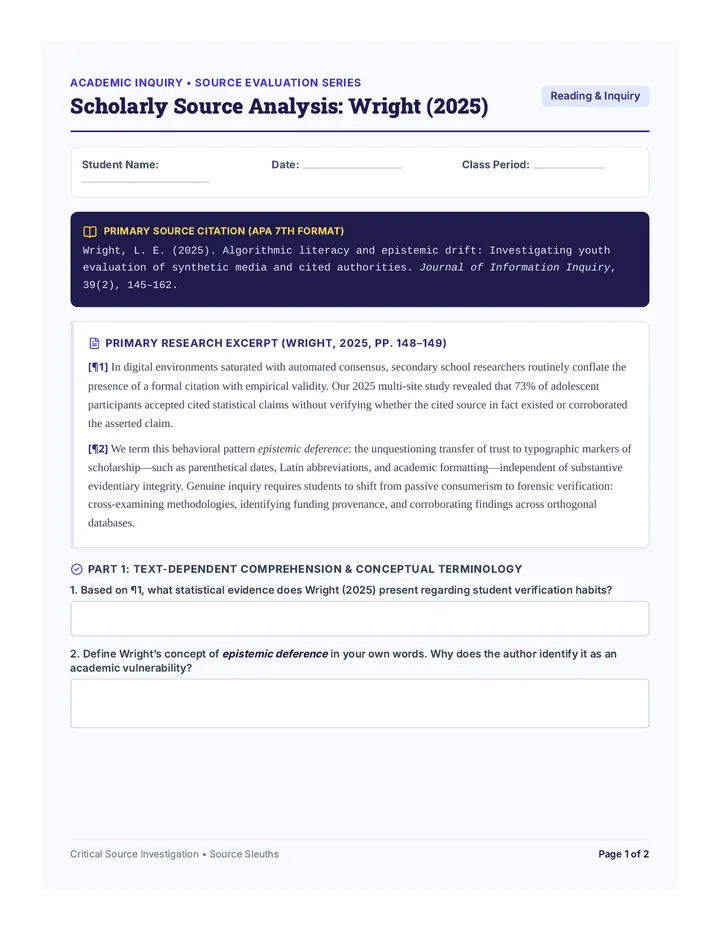
Wright Study Worksheet

Source Sleuths

A rigorous academic inquiry lesson examining Dr. Wright's 2025 research on algorithmic literacy and digital source verification. Students deconstruct scholarly claims, evaluate methodology, and practice proper academic citation.

Lenny Avatar
Lenny
3
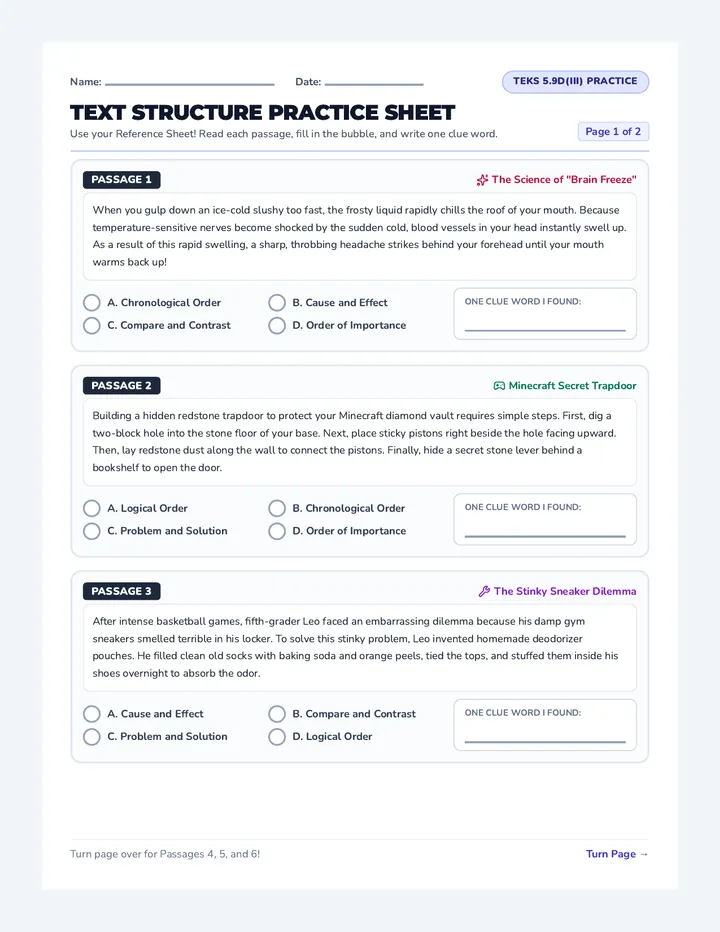
Text Structure Review Worksheet

Text Structure Review Worksheet

A black-and-white print-friendly two-page practice worksheet with lower-reading-level passages, kid-friendly topics (brain freeze, Minecraft, LEGO, pencils), large bubble choices, and wide writing lines.

ED

Emily Denson

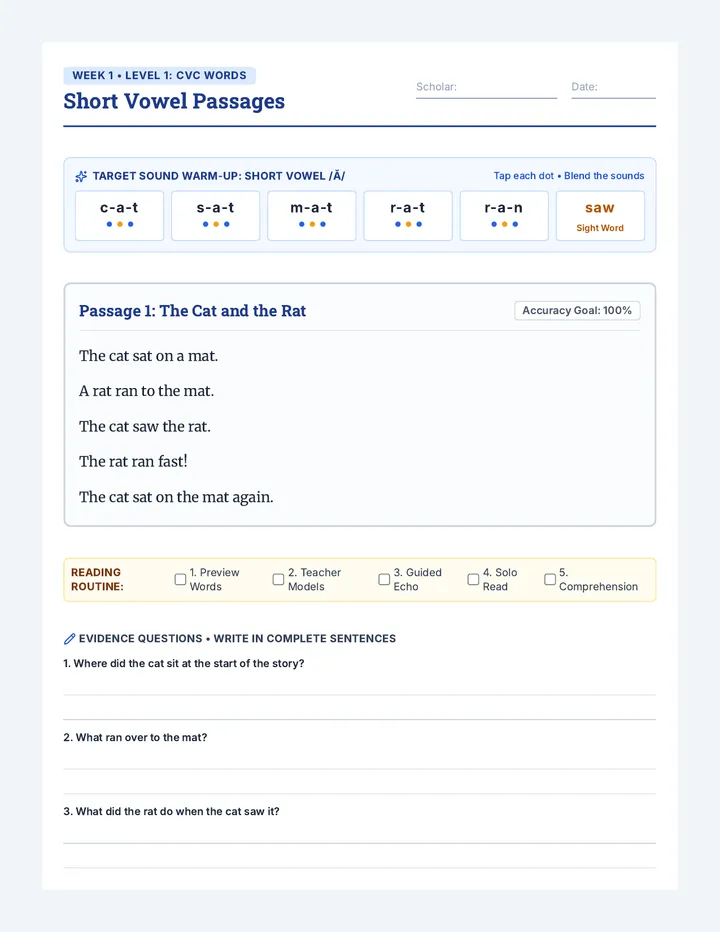
Short Vowel Passages Worksheet

Phonics Scholar Pathway

An eight-week tier-two reading intervention sequence guiding elementary scholars from decodable CVC short vowels through complex multisyllabic words and fluent comprehension. Each week provides structured decodable passages, targeted word banks, text-dependent comprehension questions, and systematic fluency tracking.

B

Bhoovaragavaswamym

8
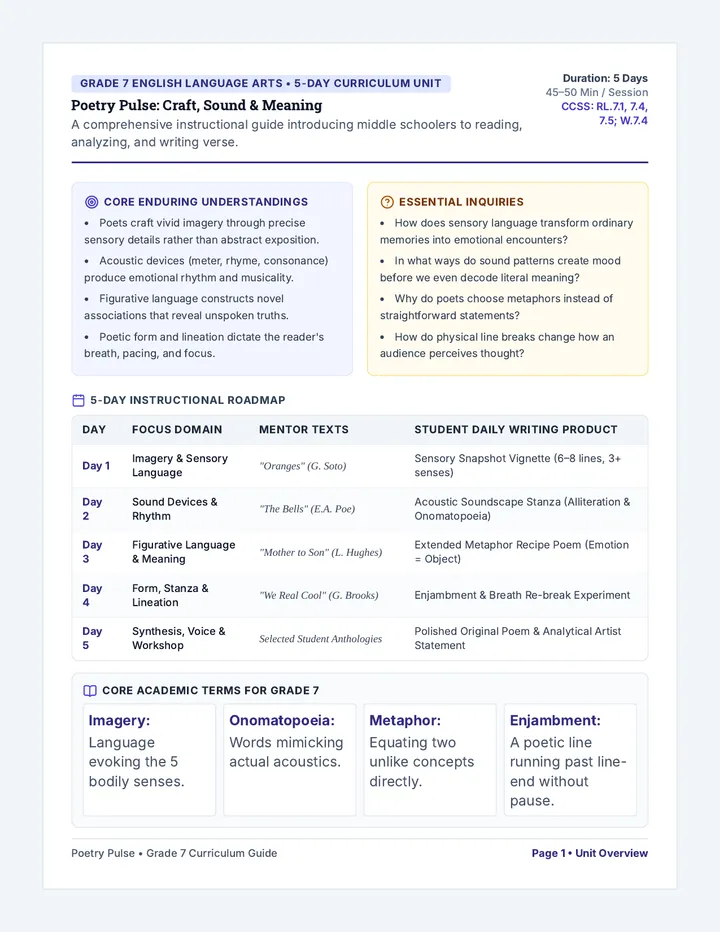
Poetry Pulse Lesson Plan

Poetry Pulse

A 5-day introductory poetry unit for 7th grade students exploring imagery, sound devices, figurative language, and poetic structure through analysis and creative writing.

AC

Anaissa Carrillo

3
Structure Showdown Slides

Structure Showdown Slides

Updated whole-class quiz slides with lower-reading-level passages, child-friendly topics like popcorn popping, and clear question-and-reveal slide pairs with highlighted clue words.

ED

Emily Denson