Lenny.com
Explore
Create
ActivitiesNewMathEnglish Language ArtsScience & EngineeringSocial StudiesGlobal LanguagesHealth & Physical EducationSpecial EducationCounseling & Life SkillsArts & CreativityESL
Lenny.com
Lenny.com
Explore
Create
ActivitiesNewMathEnglish Language ArtsScience & EngineeringSocial StudiesGlobal LanguagesHealth & Physical EducationSpecial EducationCounseling & Life SkillsArts & CreativityESL
Lenny.com
English Language ArtsPhonics & Reading FoundationsLetter IdentificationLearn Letters A-ZLowercase and Uppercase LettersConsonants and VowelsLetter-Sound AssociationsLetter-Sound Associations: LowercaseLetter-Sound Associations: UppercaseBeginning and Ending SoundsRhymingBlending And SegmentingShort VowelsShort Vowel SoundsConsonant BlendsConsonant DigraphsBlends, Digraphs, and TrigraphsDigraphs, Blends, and Silent LettersLong Vowel SoundsLong Vowel PatternsShort and Long VowelsShort and Long Vowel PatternsSilent EVowel SoundsVowel TeamsR-Controlled VowelsDiphthongs: Oi, Oy, Ou, OwVariant VowelsVariant, Diphthong, And R Vowel PatternsSoft G And CSight WordsIrregular WordsWord RecognitionSyllablesSyllable TypesTwo-Syllable WordsMultisyllabic WordsPhoneme ManipulationDecodable TextsVocabularyAction WordsQuestion WordsNouns and AdjectivesClassify WordsCompound WordsSynonyms and AntonymsHomophonesHomophones and HomonymsShades of MeaningContext CluesPrefixes and SuffixesGreek and Latin RootsAnalogiesIdioms and AdagesForeign Words and ExpressionsWord Choice and UsageReference SkillsReading ComprehensionRead-Along Literary TextsRead-Along Informational TextsReality vs. FictionStory ElementsCharacterSequenceMain IdeaCause And EffectCompare And ContrastReading StrategiesText StructureAuthor's PurposeAuthor's Purpose And ToneAuthor's PerspectivePoint Of ViewThemeInference And ThemeInference And AnalysisPoetry ElementsLiterary DevicesAnalyzing LiteratureAnalyzing Informational TextsComparing TextsAudience, Purpose, And ToneBusiness DocumentsNovel StudyNonfiction Book StudyGrammar & MechanicsSentencesNounsVerbsAdjectivesPronounsCapitalizationPunctuationContractionsConjunctionsPrepositionsArticlesAdjectives And AdverbsVerb TypesVerb TensePronouns And AntecedentsPronoun TypesSubject-Verb AgreementDirect And Indirect ObjectsSentences, Fragments, And Run-OnsPhrases And ClausesCommasSemicolons, Colons, And CommasDashes, Hyphens, And EllipsesSpellingAbbreviationsFormattingVerb Tense And MoodMisplaced ModifiersWritingDescriptive DetailsCreative WritingOpinion WritingTopic SentencesOrganizing WritingLinking WordsSentence VarietyIntroductions And ConclusionsPersuasive And Opinion WritingExpository WritingPersuasive StrategiesDeveloping And Supporting ArgumentsTopic Sentences And Thesis StatementsSummarizingResearch SkillsEditing And RevisingActive And Passive Voice=Writing Clearly And ConciselyDebate & Public SpeakingPublic Speaking BasicsPersuasive TechniquesClaims and EvidenceTypes of ArgumentsReasoning TypesLogical FallaciesTopic ResearchOrganizing EvidenceDebate Speech OrganizationAttacking and Defending ArgumentsClash and EngagementImpact CalculusQuestioning and Cross-ExaminationCritical ThinkingInformal LogicFormal LogicInductive Reasoning

Organizing Writing

Logical sequencing of ideas, paragraph construction, and the use of transition words to enhance clarity. Targets the development of strong introductions, conclusions, and cohesive narrative or argumentative structures.

Lenny.com

Solutions

Lenny for EducatorsLenny for SchoolsLenny for Districts

Product

ExploreSign inCreateSupportAbout

Resources

Getting startedMTSS Acceleration Program

© 2026 Lenny Learning Inc.

TermsPrivacyAccessibility
LinkedInInstagramX
Lenny

Videos

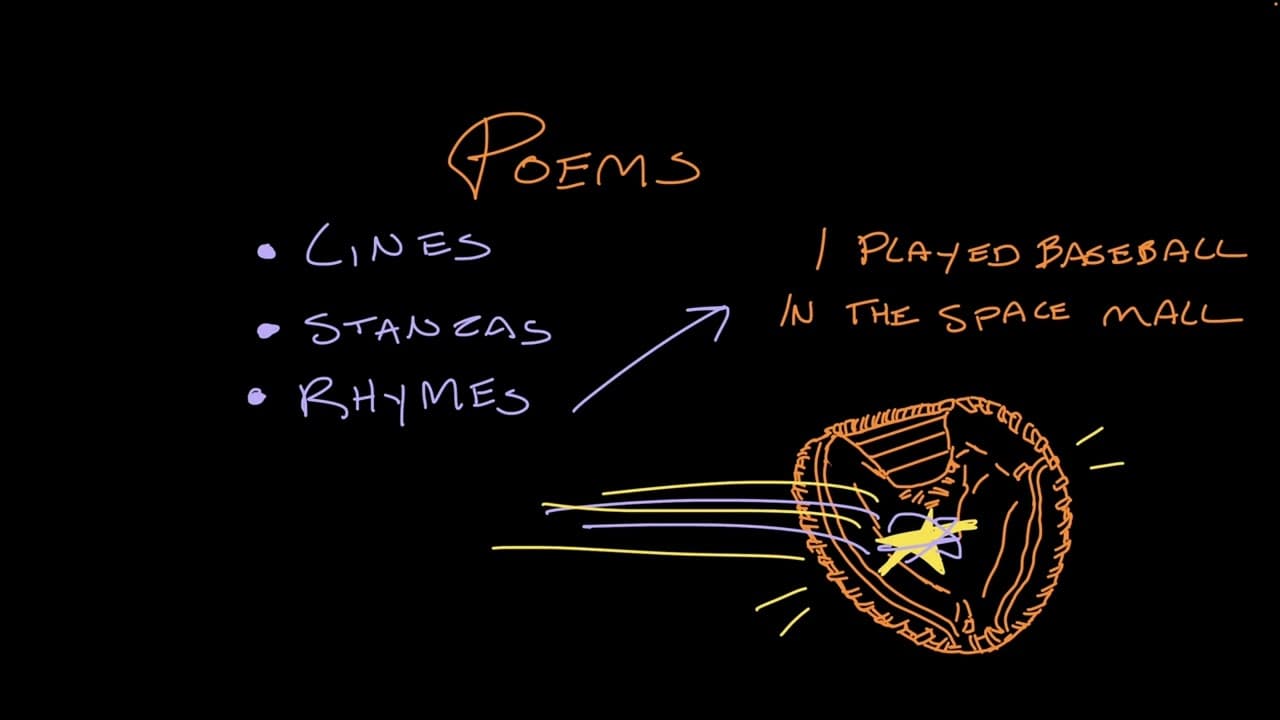
How to Read a Poem: Structure and Meaning

How to Read a Poem: Structure and Meaning

This educational video serves as an engaging introduction to poetry analysis, specifically focusing on how structure contributes to meaning. The narrator, David, welcomes viewers to "The Poem Zone" and breaks down the fundamental building blocks of poetry: lines, line breaks, stanzas, and rhyme. He defines poetry simply as "art made out of words" and explains that while poems play with sound and rhythm, they don't always have to rhyme. The visual style uses a blackboard aesthetic with handwritten text that appears in real-time to illustrate concepts. The core of the video features an original piece titled "Egg Poem," which the narrator reads and then dissects stanza by stanza. Through this close reading, the video demonstrates how a poem's structure can organize ideas and build an emotional arc. The narrator highlights how the poem uses a repeating structure ("Morning is...") to anchor each stanza while progressing from a calm morning to a chaotic one. For educators, this video is a powerful tool for bridging the gap between simply reading poetry and analyzing it. It explicitly teaches students to ask how lines and stanzas build meaning, rather than just identifying them as structural elements. The video introduces the concept of extended metaphor in a highly accessible way by connecting the cooking terms "easy," "medium," and "hard" to both the state of an egg and the speaker's emotional state, providing a clear model for students to use in their own literary analysis.

Khan AcademyKhan Academy

4mins 6s

Exploring Adventure Fiction and Pacing Techniques

Exploring Adventure Fiction and Pacing Techniques

This educational video explores the genre of adventure fiction, guiding viewers through its defining characteristics and the literary techniques used to create suspense. Set within a meta-narrative of exploring an "ancient temple of adventure fiction," the host and an animated robot character named Mia encounter tropes of the genre firsthand while teaching concepts. The video breaks down the essential elements of adventure stories, including courageous protagonists, dangerous settings, and action-packed plots, before diving deep into the specific craft of "pacing." The second half of the video provides a focused lesson on literary pacing—the speed and rhythm at which a story unfolds. Using the analogy of riding a bike, the narrator explains how authors manipulate time to build tension. Three specific techniques are analyzed in detail: structure (using short sentences and fragments), dialogue (rapid back-and-forth exchange), and information control (foreshadowing and cliffhangers). The video uses specific textual examples to demonstrate how these techniques look on the page, helping students visualize the mechanics of writing. Ideal for English Language Arts classrooms, this resource combines literary analysis with creative writing concepts. It offers clear definitions, visual examples of text annotation, and guided practice opportunities where students are asked to identify techniques in provided excerpts. Teachers can use this video to introduce genre units, teach narrative structure, or run a creative writing workshop focused on building suspense and writing action scenes.

Miacademy & MiaPrep Learning ChannelMiacademy & MiaPrep Learning Channel

11mins 55s

Exploring Storytelling Tools in Comics and Graphic Novels

Exploring Storytelling Tools in Comics and Graphic Novels

This engaging educational video introduces students to the unique storytelling language of comic books and graphic novels. Set in the fictional city of "Mangatropolis," the host, Caroline, and her robot companion, Mia, guide viewers through the fundamental elements that make comics a distinct medium. The narrative framework involves helping Mia regain her comic-making skills to restore a lost key to the city, adding a playful quest element to the lesson. The video breaks down complex concepts of visual literacy into three main categories: Iconography (how simple images represent complex ideas), Structure (the function of panels and gutters to manipulate time and pacing), and Content Tools (motion lines, sound effects/onomatopoeia, and speech bubbles). Specific examples demonstrate how altering panel width changes the perception of time and how the "gutter" requires the reader's mind to bridge gaps between static images to create motion and narrative. For educators, this resource serves as an excellent foundation for units on graphic novels, narrative writing, or visual arts. It moves beyond simple appreciation to analysis, teaching students how to critically "read" images and layout choices. The video provides clear definitions and interactive pause-points where students can practice drawing and analyzing, making it a perfect launchpad for creative projects where students write and illustrate their own comic strips.
Miacademy & MiaPrep Learning ChannelMiacademy & MiaPrep Learning Channel

10mins 59s

How to Write Powerful Starts and Satisfying Endings

How to Write Powerful Starts and Satisfying Endings

This engaging creative writing lesson guides aspiring writers through the critical process of crafting opening and closing scenes for a novel. Hosted by an energetic presenter in a library setting, the video breaks down the specific goals of these pivotal moments: grabbing the reader's investment at the start and rewarding that investment at the end. It distinguishes between the plot events themselves and the "craft" of how those events are presented to the audience. The content introduces specific literary techniques and terminology for structuring narratives. For beginnings, it covers strategies like "In Medias Res" (starting in the middle of action), setting-focused openings, and character-focused introductions. For endings, it explores the use of epilogues, ambiguous endings that leave room for interpretation, and "callbacks" that reference earlier story details. Each concept is illustrated with clear definitions and relatable examples. Ideal for middle and high school English Language Arts classrooms, this video serves as a practical workshop tool. It includes built-in pause points that prompt students to reflect on their own reading experiences and apply the concepts to their own writing projects. Teachers can use this resource to introduce narrative structure units, support NaNoWriMo projects, or help students revise their creative writing pieces for greater impact.

Miacademy & MiaPrep Learning ChannelMiacademy & MiaPrep Learning Channel

9mins 58s

How to Write an Analytical Essay: From Observation to Claim

How to Write an Analytical Essay: From Observation to Claim

This video provides a comprehensive guide to high school analytical writing, breaking down the complex cognitive process of analysis into three manageable steps: observing, reflecting, and making a claim. Through a clever opening skit featuring "Dr. Rorschach," the narrator distinguishes between simple observation (what you see) and psychological interpretation (what it means), setting the stage for how students should approach texts and images in the classroom. The content explores key themes such as the difference between summary and analysis, the importance of creating specific and arguable thesis statements, and the fallacy of trying to guess "authorial intent." It uses Vincent van Gogh's famous painting "The Starry Night" as a central case study, modeling exactly how to move from listing visual details (colors, shapes, scale) to formulating a sophisticated argument about the insignificance of humanity compared to the power of nature. For educators, this video serves as an excellent foundational lesson for any unit on essay writing, literary analysis, or document-based historical inquiry. It offers a clear, repeatable framework that helps students overcome "blank page syndrome" by giving them concrete tasks—starting with simple observation—before asking them to generate complex arguments. The video is structured to function as a standalone workshop with built-in pause points for student practice.

Miacademy & MiaPrep Learning ChannelMiacademy & MiaPrep Learning Channel

9mins 21s

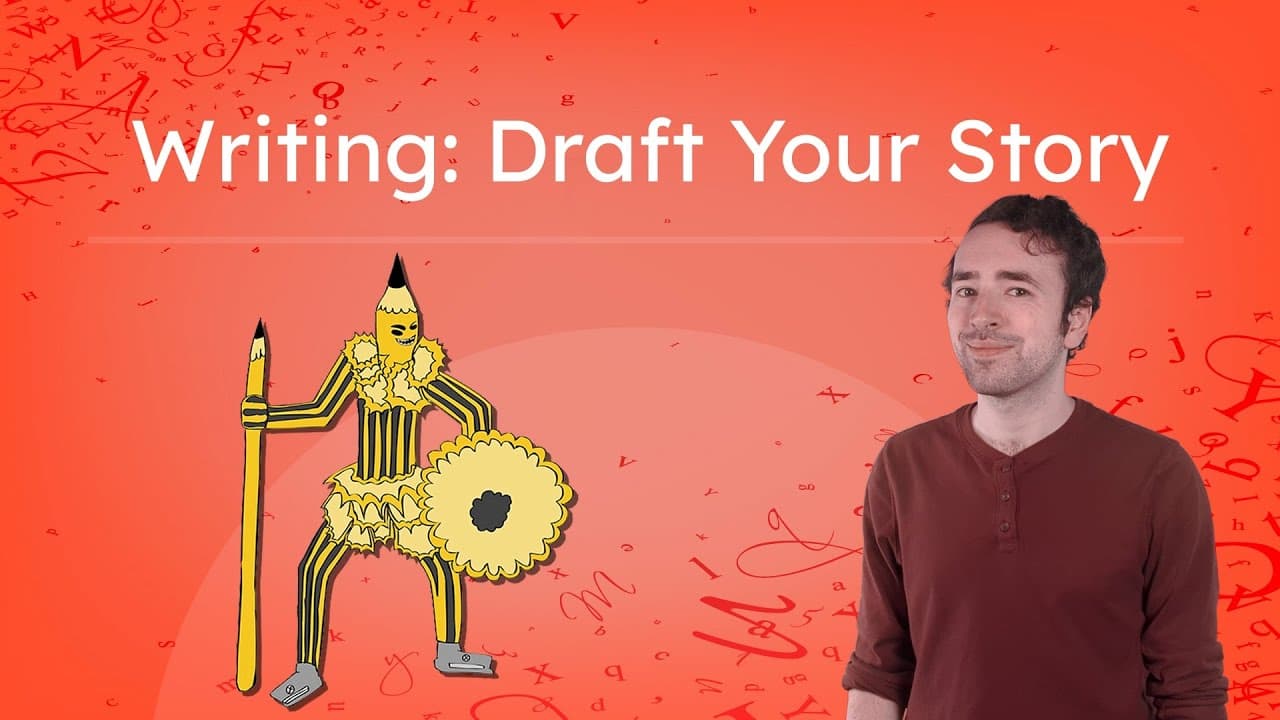
How to Plan and Draft a Creative Short Story

How to Plan and Draft a Creative Short Story

This educational video guides students through the crucial planning and drafting phase of creative writing, specifically focusing on short stories. The host, Justin, frames the lesson as a "Storysmith Trial" challenge, engaging students to apply previously learned writing techniques to a new project. The video bridges the gap between theoretical knowledge of literary devices and practical application by encouraging students to select specific techniques—such as dialogue, imagery, or characterization—to prioritize in their drafts.

Miacademy & MiaPrep Learning ChannelMiacademy & MiaPrep Learning Channel

8mins 47s

Materials

September 11 Heroes RACES Worksheet

September 11 Heroes RACES Worksheet

A middle school English Language Arts 20-minute writing assignment featuring an informational passage on September 11 first responders and everyday heroes. Includes a structured RACES graphic organizer, analytical prompt, and printable response area.

AC

Aimee Crosby

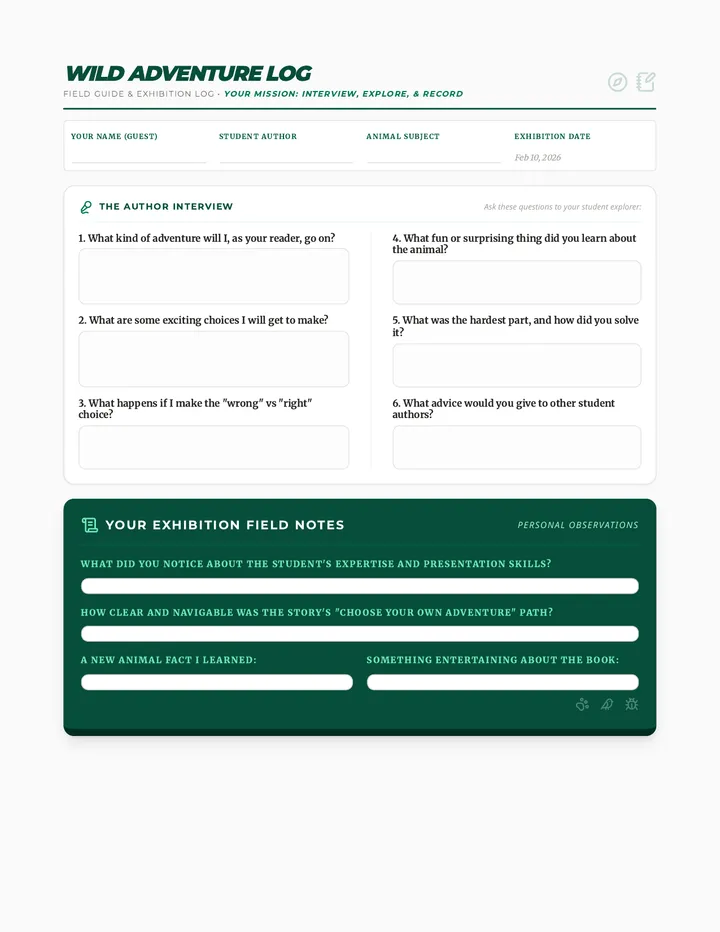
Wild Adventure Log Guest Form Plus Plus Plus Plus Plus

Wild Adventure Log Guest Form Plus Plus Plus Plus Plus

A 2nd-person 'Wild Adventure Log' guest form with maximized writing space. It features a side-by-side author interview/process section and a large Guest Observation area, all designed for comfortable handwriting on a single page.

E

epate

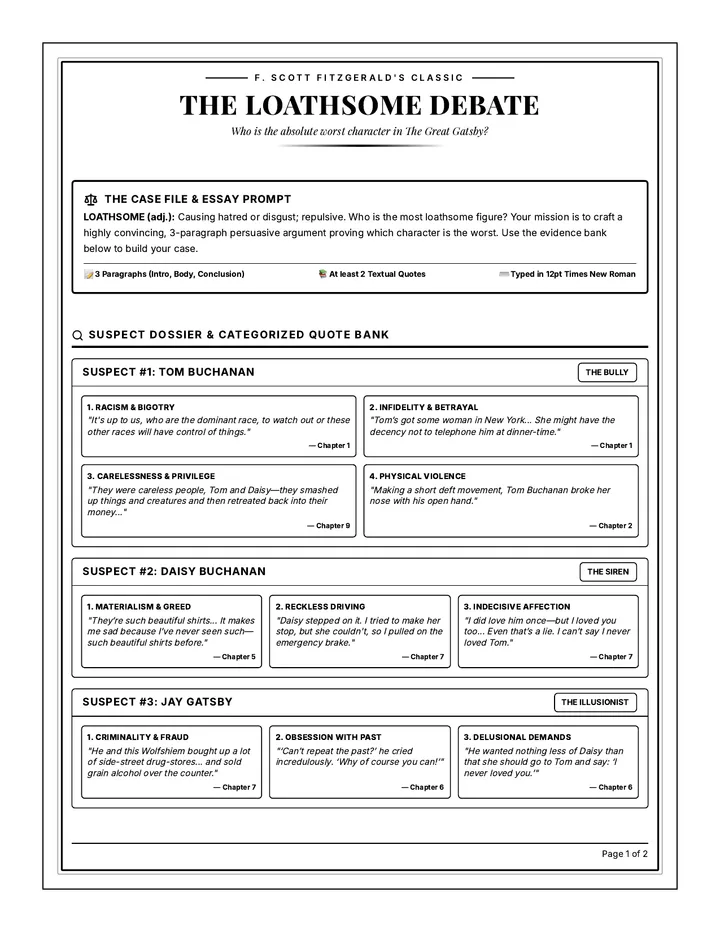
Gatsby Loathsome Character Blueprint

Gatsby Loathsome Character Blueprint

A two-page printable graphic organizer and quote bank in a high-contrast black-and-white theme with zero color or gray fills. Page 1 presents the 'Suspect Dossier' with clear borders, white backgrounds, and pure black text, while Page 2 features the highly structured essay outline and sentence starters with solid black-and-white print-friendly writing guides and page numbers.

KR

Kirstin Reed

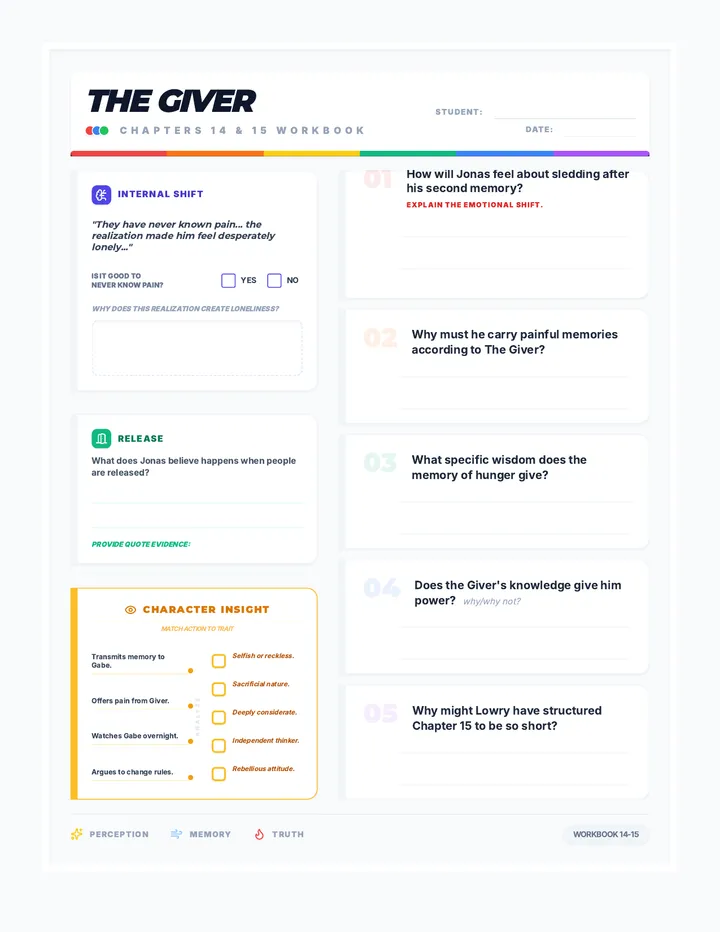
Giver Chapters 14-15 One Pager-REVISED-v2-FINAL

Giver Chapters 14-15 One Pager-REVISED-v2-FINAL

A final, refined one-page workbook for Chapters 14-15 of The Giver. This version has been strictly optimized for height by reducing margins and padding to ensure everything fits perfectly on a single page, while featuring a vibrant full-spectrum rainbow theme to represent Jonas's awakening to color and deep memory.

BC

Brenda Coombs

Story Architect Guide Worksheet

Story Architect Guide Worksheet

A refined three-page story planning guide for senior English. Features a high-contrast architectural blueprint aesthetic with improved visual hierarchy, expanded student work areas, and technical schematic sections for character psychology, plot structure, and dialogue subtext.

JT

Jason Tetlow

Argument Pro Rubric

Argument Pro Rubric

A comprehensive 100-point rubric for 10th-grade argumentative essays, featuring detailed criteria for claims, evidence, analysis, and counter-claims. Designed with a clean, professional aesthetic for easy grading and clear student feedback.

D

dmclaurin

Sequences

Invention Quest Slides

Frindle Frenzy Novel Study

A 9-day novel study for 'Frindle' by Andrew Clements, aligned to 3rd Grade ELAR TEKS, focusing on character development, vocabulary, and plot analysis.

LH

Lucy Hellerman

56
Lesson Plan 1 Introduction

Literary Device Detectives

A comprehensive multi-unit sequence for 3rd and 4th grade students covering key literary devices: Introduction to Figurative Language, Onomatopoeia, Similes, Metaphors, Personification, and Idioms. Each unit provides 5 lesson plans, interactive notebook resources, and a wide variety of activities and stories designed to improve descriptive writing and reading comprehension.

JS

Janette Sullivan

105
Value Vault Teacher Guide

Metamorphosis Mastery

An 8-week deep dive into Kafka's Metamorphosis for special education students, focusing on abstract thinking, social value, and the human condition through high-engagement activities and visual organizers.

C

Ceeasia.walker

58
Prophecy and Power Slides

Shadows and Crowns

A series of lessons exploring Shakespeare's Macbeth, specifically designed for 10th-grade emergent bilingual students to master complex characterization and thematic elements.

DC

Dylan Clark

30
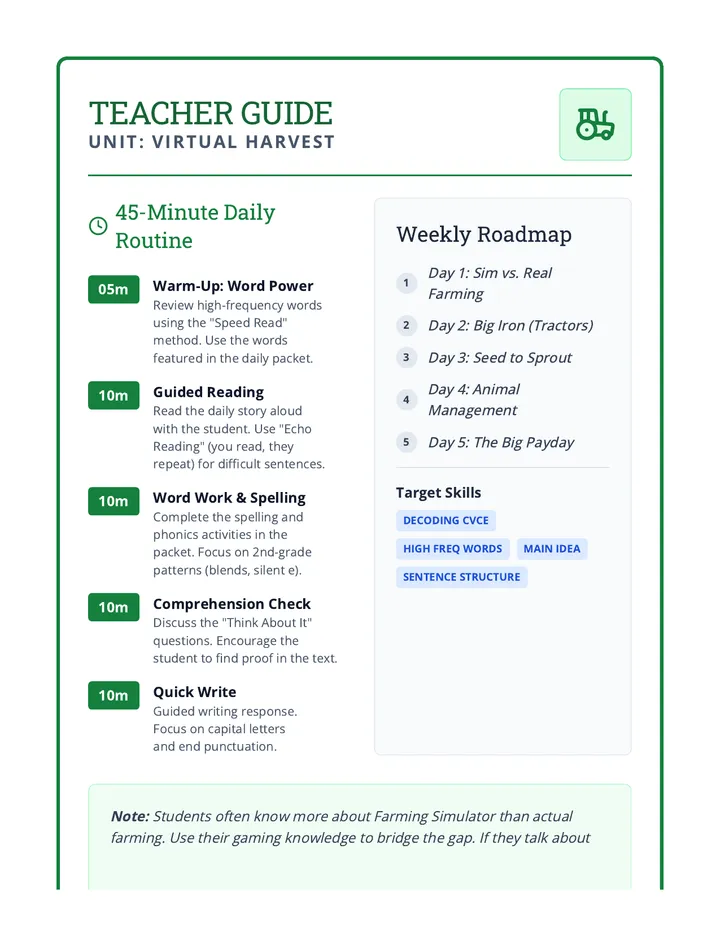
Virtual Harvest Teacher Guide

Digital Dirt

A 5-day reading comprehension and writing unit for struggling readers, blending the world of Farming Simulator with real-world agriculture. Focuses on 2nd-grade level literacy skills within a high-interest 5th-grade context.

CM

carley Martin

30
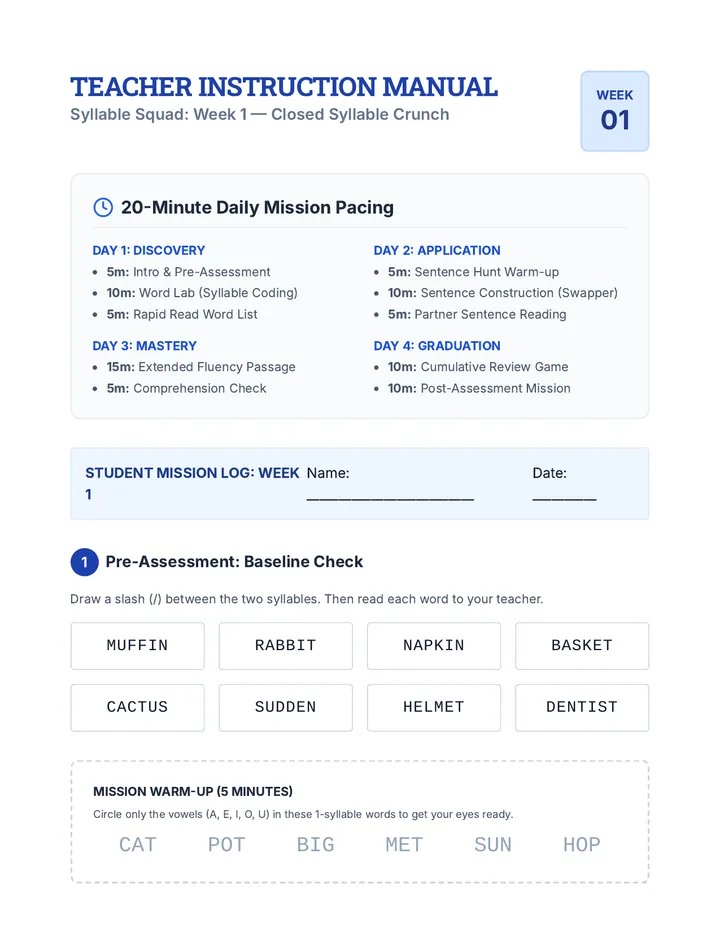
Week 1 Closed Syllable Manual

Syllable Squad Decoding Mission

A comprehensive 5-week phonics intervention focused on decoding two-syllable words across five major syllable types. Each week includes a pre-assessment, daily lessons with specific targets, student practice sheets, and a post-assessment.

KJ

Kelsey Jacobs

29