Lenny.com
Explore
Create
ActivitiesNewMathEnglish Language ArtsScience & EngineeringSocial StudiesGlobal LanguagesHealth & Physical EducationSpecial EducationCounseling & Life SkillsArts & CreativityESL
Lenny.com
Lenny.com
Explore
Create
ActivitiesNewMathEnglish Language ArtsScience & EngineeringSocial StudiesGlobal LanguagesHealth & Physical EducationSpecial EducationCounseling & Life SkillsArts & CreativityESL
Lenny.com

Expository Writing

Evidence-based essay construction, report writing, and objective explanation techniques. Develops skills in synthesizing information, logical organization, and precise vocabulary usage.

Lenny.com

Solutions

Lenny for EducatorsLenny for SchoolsLenny for Districts

Product

ExploreSign inCreateSupportAbout

Resources

Getting startedMTSS Acceleration Program

© 2026 Lenny Learning Inc.

TermsPrivacyAccessibility
LinkedInInstagramX
Lenny
English Language ArtsPhonics & Reading FoundationsLetter IdentificationLearn Letters A-ZLowercase and Uppercase LettersConsonants and VowelsLetter-Sound AssociationsLetter-Sound Associations: LowercaseLetter-Sound Associations: UppercaseBeginning and Ending SoundsRhymingBlending And SegmentingShort VowelsShort Vowel SoundsConsonant BlendsConsonant DigraphsBlends, Digraphs, and TrigraphsDigraphs, Blends, and Silent LettersLong Vowel SoundsLong Vowel PatternsShort and Long VowelsShort and Long Vowel PatternsSilent EVowel SoundsVowel TeamsR-Controlled VowelsDiphthongs: Oi, Oy, Ou, OwVariant VowelsVariant, Diphthong, And R Vowel PatternsSoft G And CSight WordsIrregular WordsWord RecognitionSyllablesSyllable TypesTwo-Syllable WordsMultisyllabic WordsPhoneme ManipulationDecodable TextsVocabularyAction WordsQuestion WordsNouns and AdjectivesClassify WordsCompound WordsSynonyms and AntonymsHomophonesHomophones and HomonymsShades of MeaningContext CluesPrefixes and SuffixesGreek and Latin RootsAnalogiesIdioms and AdagesForeign Words and ExpressionsWord Choice and UsageReference SkillsReading ComprehensionRead-Along Literary TextsRead-Along Informational TextsReality vs. FictionStory ElementsCharacterSequenceMain IdeaCause And EffectCompare And ContrastReading StrategiesText StructureAuthor's PurposeAuthor's Purpose And ToneAuthor's PerspectivePoint Of ViewThemeInference And ThemeInference And AnalysisPoetry ElementsLiterary DevicesAnalyzing LiteratureAnalyzing Informational TextsComparing TextsAudience, Purpose, And ToneBusiness DocumentsNovel StudyNonfiction Book StudyGrammar & MechanicsSentencesNounsVerbsAdjectivesPronounsCapitalizationPunctuationContractionsConjunctionsPrepositionsArticlesAdjectives And AdverbsVerb TypesVerb TensePronouns And AntecedentsPronoun TypesSubject-Verb AgreementDirect And Indirect ObjectsSentences, Fragments, And Run-OnsPhrases And ClausesCommasSemicolons, Colons, And CommasDashes, Hyphens, And EllipsesSpellingAbbreviationsFormattingVerb Tense And MoodMisplaced ModifiersWritingDescriptive DetailsCreative WritingOpinion WritingTopic SentencesOrganizing WritingLinking WordsSentence VarietyIntroductions And ConclusionsPersuasive And Opinion WritingExpository WritingPersuasive StrategiesDeveloping And Supporting ArgumentsTopic Sentences And Thesis StatementsSummarizingResearch SkillsEditing And RevisingActive And Passive Voice=Writing Clearly And ConciselyDebate & Public SpeakingPublic Speaking BasicsPersuasive TechniquesClaims and EvidenceTypes of ArgumentsReasoning TypesLogical FallaciesTopic ResearchOrganizing EvidenceDebate Speech OrganizationAttacking and Defending ArgumentsClash and EngagementImpact CalculusQuestioning and Cross-ExaminationCritical ThinkingInformal LogicFormal LogicInductive Reasoning

Videos

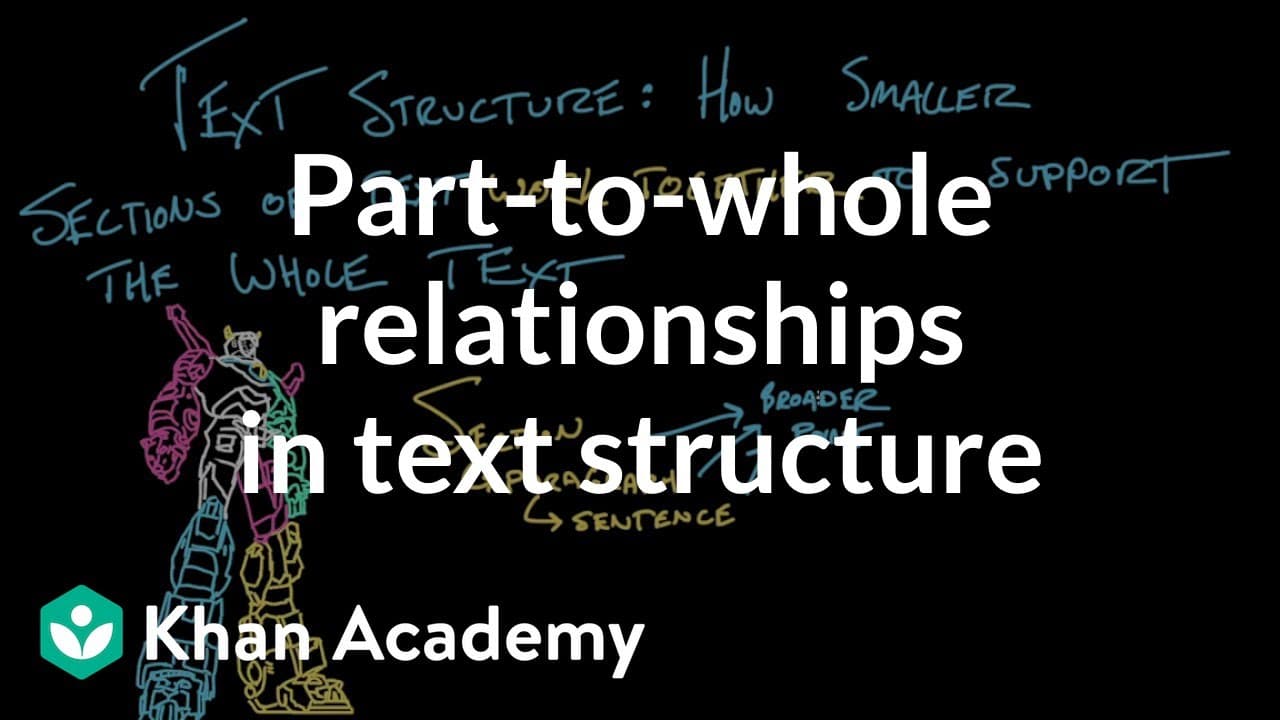
Using Giant Robots to Explain Text Structure

Using Giant Robots to Explain Text Structure

This engaging educational video uses a unique analogy—a giant battle robot named Voltron—to explain the abstract concept of text structure. The narrator demonstrates how smaller sections of a text (sentences and paragraphs) function like the individual limbs and pilots of a robot: distinct parts that must coordinate perfectly to support the text's central purpose. This metaphorical approach simplifies the complex idea of part-to-whole relationships in writing. The video transitions from the robot analogy to a concrete analysis of an informational article about 10th-century Japanese samurai armor (O-yoroi). By dissecting specific sections of the text, such as the descriptions of the cuirass (breastplate) and kusazuri (skirt), the narrator illustrates how specific details—like a gap in the armor for a bow—directly support the article's main idea that this armor was designed for mounted archers. Teachers can use this video to introduce or reinforce standards regarding informational text analysis and structure. The memorable "battle robot" comparison provides a persistent mental model for students struggling to see how individual paragraphs serve a broader argument. It effectively bridges the gap between sentence-level comprehension and holistic text analysis, making it an excellent resource for language arts instruction.

Khan AcademyKhan Academy

4mins 43s

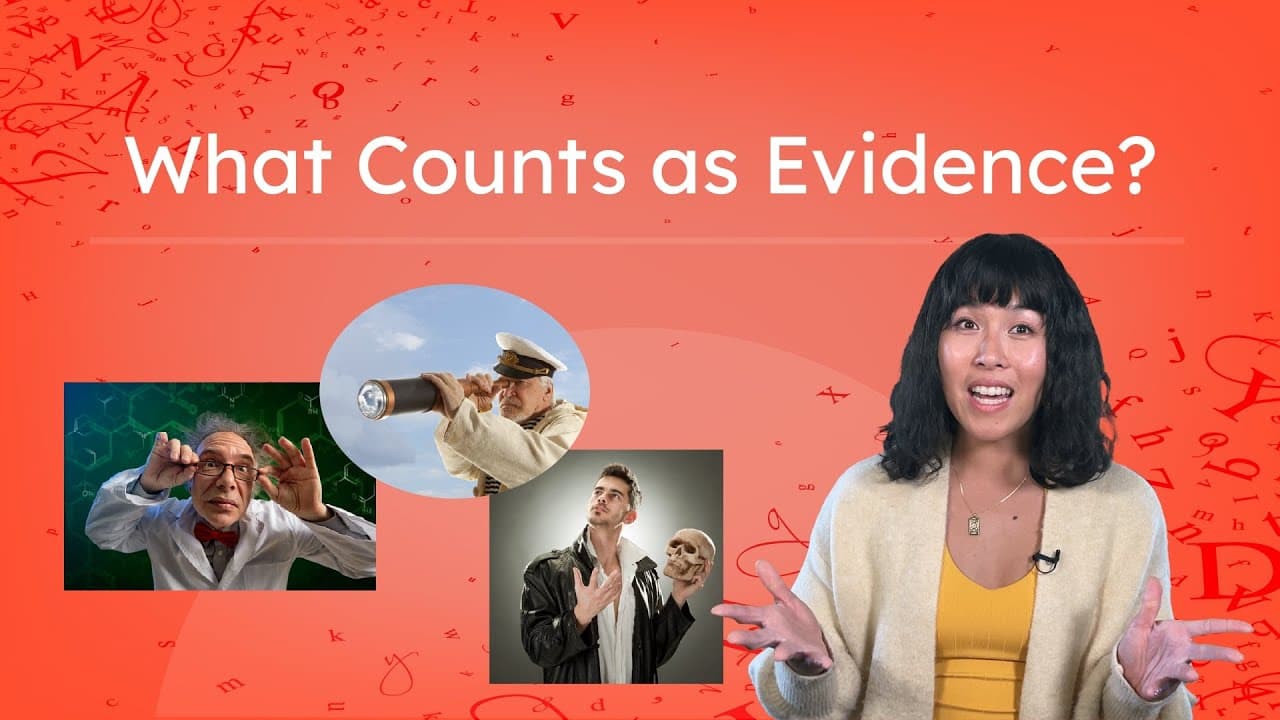
Using Evidence Effectively in High School Writing

Using Evidence Effectively in High School Writing

This educational video serves as a comprehensive guide for high school students on how to effectively incorporate evidence into their writing. It breaks down four distinct types of evidence—facts, quotes, summaries, and paraphrases—defining each clearly with relatable examples ranging from biology to classic literature like *Moby Dick*. The video uses a structured approach, starting with definitions, moving to side-by-side comparisons, and culminating in practical application exercises.

Miacademy & MiaPrep Learning ChannelMiacademy & MiaPrep Learning Channel

12mins 24s

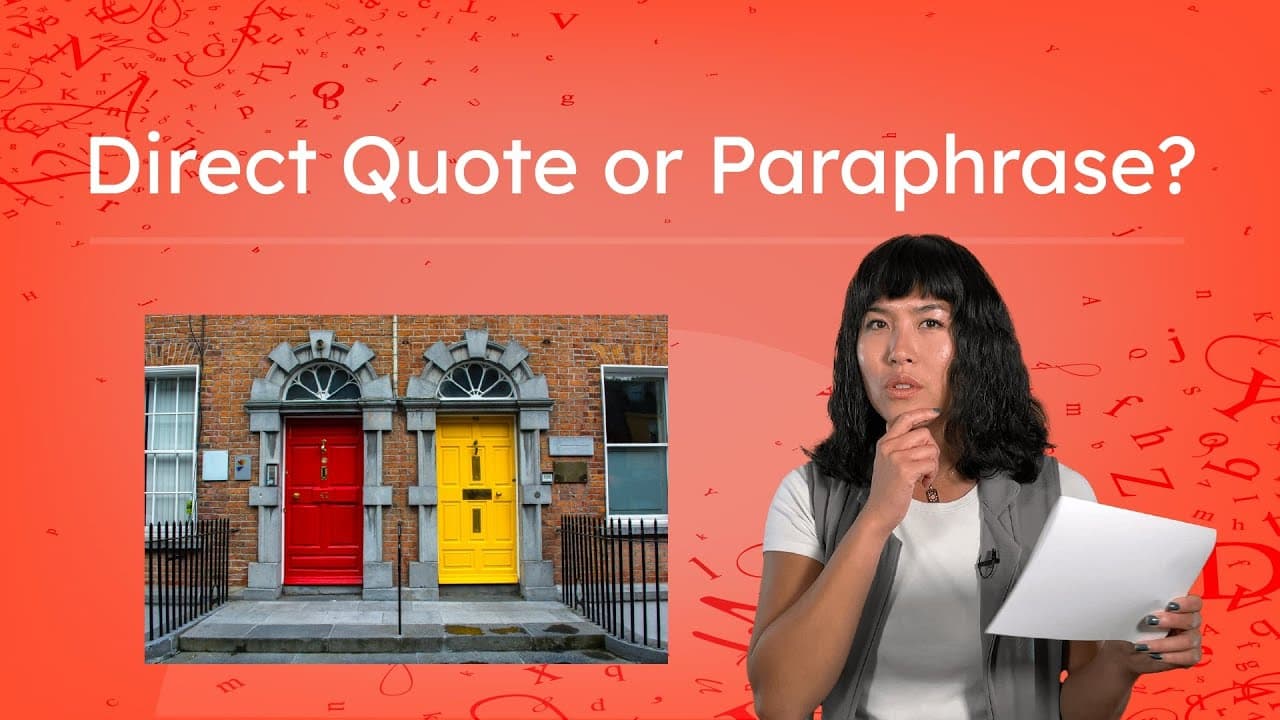
When to Quote vs. When to Paraphrase in Essays

When to Quote vs. When to Paraphrase in Essays

This instructional video guides high school students through the critical writing decision of when to use a direct quote versus a paraphrase in analytical essays. Using Toni Morrison's novel 'Beloved' as a case study, the presenter demonstrates how to integrate evidence effectively to support a thesis statement about literary motifs and character memory. The video distinguishes between analyzing specific language (which requires quotes) and summarizing events (which uses paraphrasing). The content covers key writing concepts including thesis statements, full direct quotes, partial quotes, paraphrasing, explanation sentences, and analysis sentences. It provides visual examples of how to structure a body paragraph, showing text on screen that integrates evidence with the student's own voice. The lesson emphasizes that the choice of evidence format depends entirely on the writer's purpose and what they intend to analyze. For educators, this video serves as an excellent model for teaching evidence integration and literary analysis. It moves beyond simple definitions to show the *why* and *how* of writing. Teachers can use this to help students move away from "quote bombing" (dropping quotes without context) and towards sophisticated embedding of partial quotes and meaningful analysis of diction and syntax.

Miacademy & MiaPrep Learning ChannelMiacademy & MiaPrep Learning Channel

10mins 30s

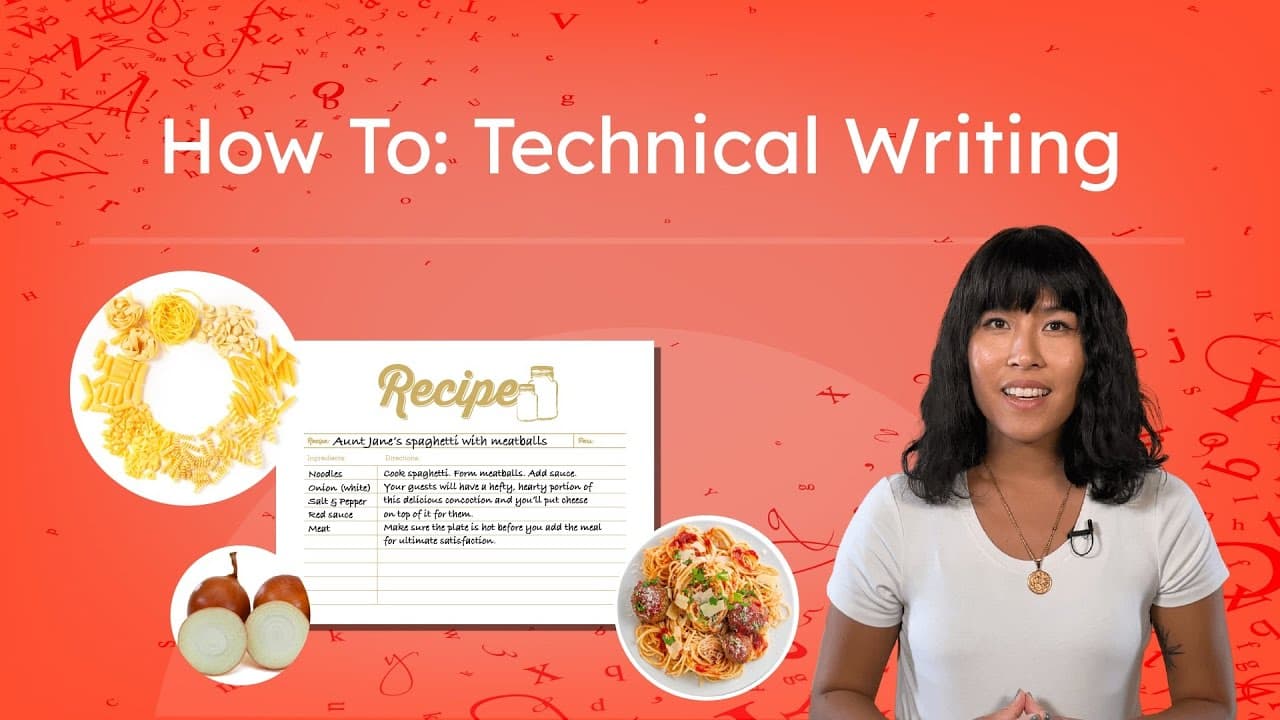
How to Write Clear Technical Instructions

How to Write Clear Technical Instructions

This engaging video introduces students to the fundamentals of technical writing through a relatable and humorous scenario: a failed attempt at making spaghetti using a poorly written recipe. The narrator uses this "kitchen disaster" to illustrate why clarity, precision, and structure are essential when giving instructions. By analyzing the flaws in "Aunt Jane's" vague recipe, the video breaks down complex writing concepts into tangible, easy-to-understand examples. The lesson explores key pillars of effective technical writing, including specificity, conciseness, chronological ordering, and being action-oriented. It introduces advanced grammatical concepts such as nominalization—the habit of turning verbs into nouns—and demonstrates how to replace weak nouns with strong, active verbs to improve readability. The video also provides practical strategies for revision, such as asking specific questions (How many? Which kind? When?) to identify gaps in information. For educators, this video serves as an excellent launchpad for units on expository or instructional writing. It moves beyond abstract grammar rules by showing real-world consequences of poor communication (like having to scrape spaghetti off a cold plate). It includes built-in pause points for student reflection and guided note-taking, making it a ready-made interactive lesson that helps students transition from creative narrative writing to the functional, objective style required in professional and academic contexts.

Miacademy & MiaPrep Learning ChannelMiacademy & MiaPrep Learning Channel

8mins 44s

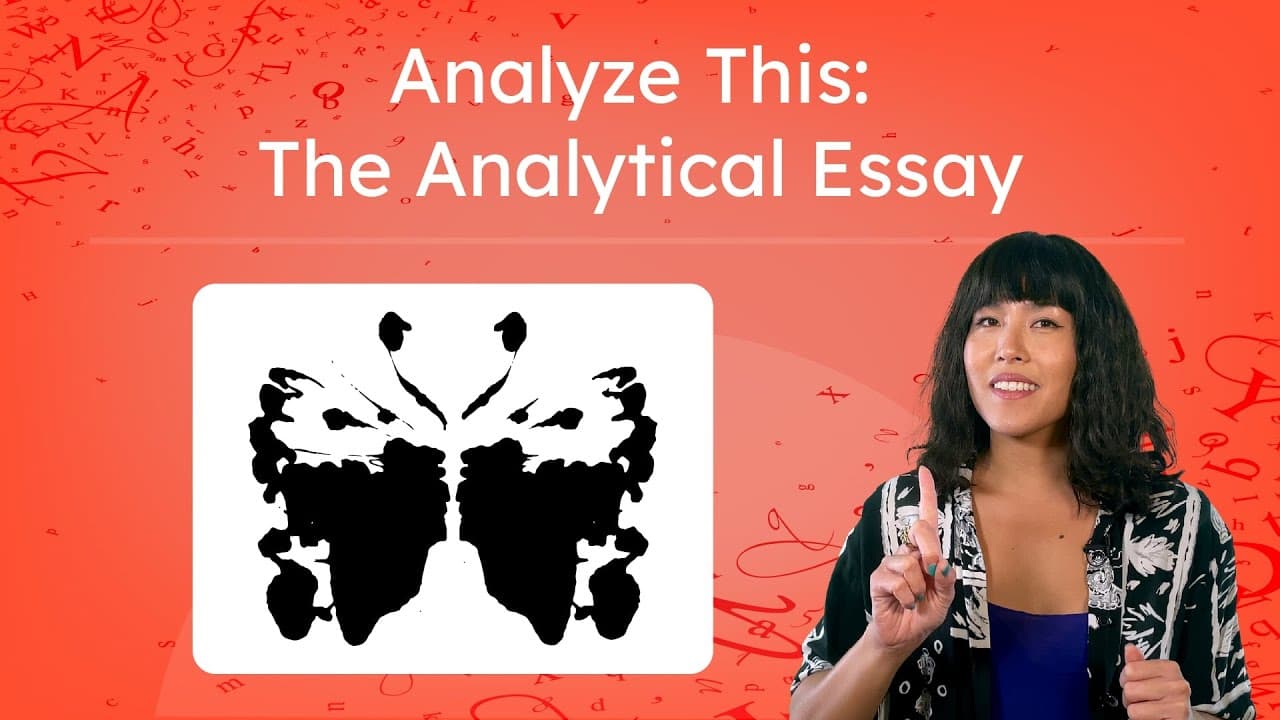
How to Write an Analytical Essay: From Observation to Claim

How to Write an Analytical Essay: From Observation to Claim

This video provides a comprehensive guide to high school analytical writing, breaking down the complex cognitive process of analysis into three manageable steps: observing, reflecting, and making a claim. Through a clever opening skit featuring "Dr. Rorschach," the narrator distinguishes between simple observation (what you see) and psychological interpretation (what it means), setting the stage for how students should approach texts and images in the classroom. The content explores key themes such as the difference between summary and analysis, the importance of creating specific and arguable thesis statements, and the fallacy of trying to guess "authorial intent." It uses Vincent van Gogh's famous painting "The Starry Night" as a central case study, modeling exactly how to move from listing visual details (colors, shapes, scale) to formulating a sophisticated argument about the insignificance of humanity compared to the power of nature. For educators, this video serves as an excellent foundational lesson for any unit on essay writing, literary analysis, or document-based historical inquiry. It offers a clear, repeatable framework that helps students overcome "blank page syndrome" by giving them concrete tasks—starting with simple observation—before asking them to generate complex arguments. The video is structured to function as a standalone workshop with built-in pause points for student practice.
Miacademy & MiaPrep Learning ChannelMiacademy & MiaPrep Learning Channel

9mins 21s

Using Graphs and Charts to Support Arguments

Using Graphs and Charts to Support Arguments

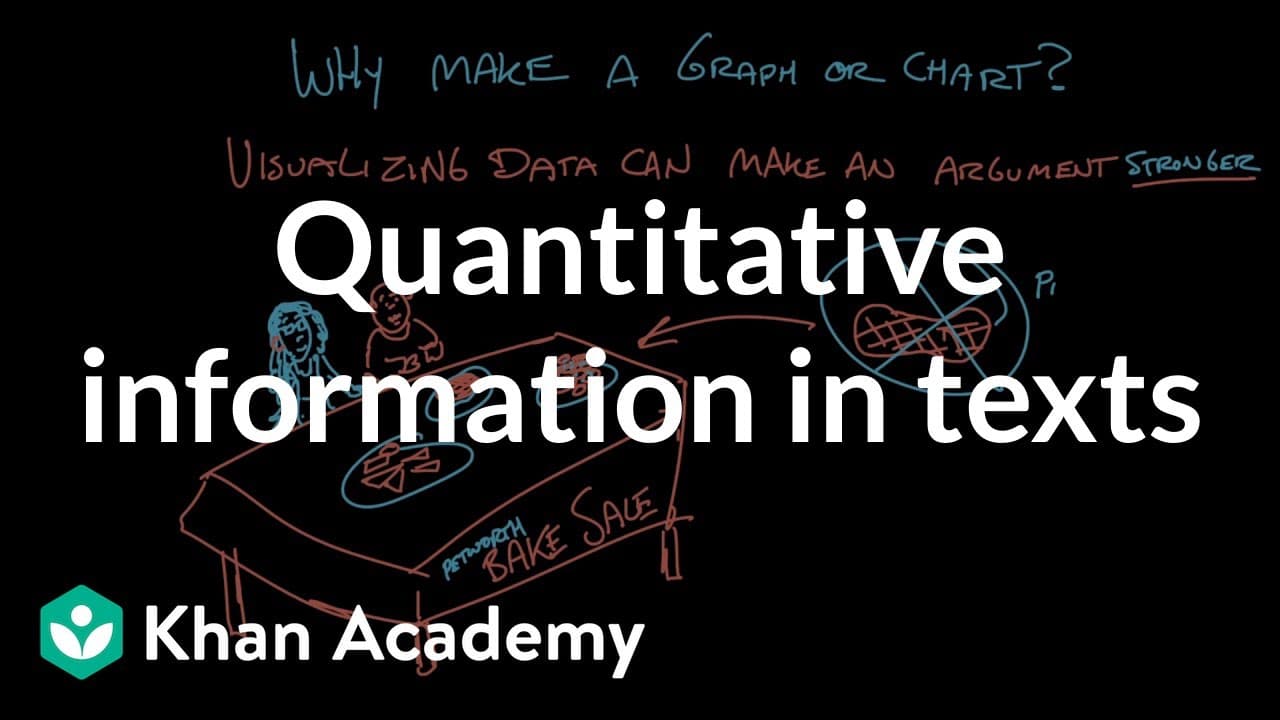
This educational video explores the relationship between written text and quantitative information, specifically demonstrating how graphs and charts can strengthen written arguments. Using a relatable analogy of describing a galloping horse followed by a practical example of a neighborhood bake sale, the narrator illustrates how visual data provides efficiency and clarity that words alone sometimes lack. The video breaks down the specific roles of text versus visuals: text provides context and severity (e.g., the danger of allergies), while graphs provide specific breakdown and prevalence (e.g., exact numbers of people allergic to specific nuts). The key themes include the efficiency of communication, the synthesis of information from multiple sources, and the function of text features in informational writing. It specifically covers how to read and interpret bar graphs and pie charts in the context of a persuasive argument, highlighting how authors use these tools to back up claims with evidence. For the classroom, this video is an excellent resource for bridging English Language Arts and Math skills (data literacy). It helps students meet standards related to integrating information from diverse formats and evaluating the advantages of using different mediums. Teachers can use this to introduce text features, support lessons on persuasive writing, or help students practice synthesizing quantitative and qualitative data to fully understand a topic.

Khan AcademyKhan Academy

4mins 51s

Materials

September 11 Heroes RACES Worksheet

September 11 Heroes RACES Worksheet

A middle school English Language Arts 20-minute writing assignment featuring an informational passage on September 11 first responders and everyday heroes. Includes a structured RACES graphic organizer, analytical prompt, and printable response area.

AC

Aimee Crosby

Wild Adventure Log Guest Form Plus Plus Plus Plus Plus

Wild Adventure Log Guest Form Plus Plus Plus Plus Plus

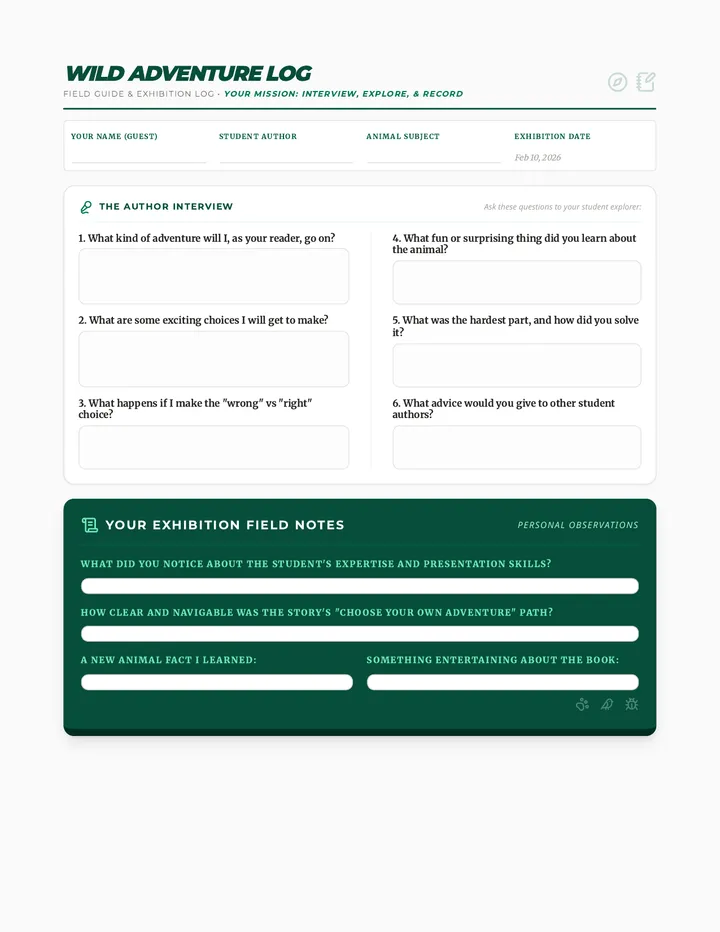
A 2nd-person 'Wild Adventure Log' guest form with maximized writing space. It features a side-by-side author interview/process section and a large Guest Observation area, all designed for comfortable handwriting on a single page.

E

epate

Mythology Masterpiece Rubric

Mythology Masterpiece Rubric

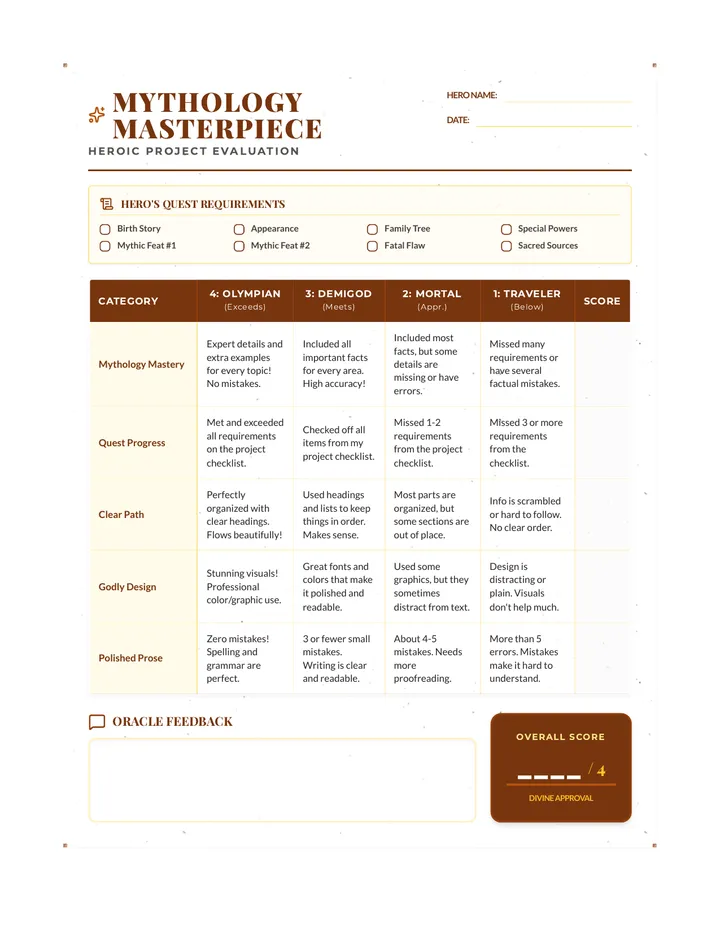
A single-page rubric for the Greek Mythology project, redesigned for space efficiency and readability. It features a horizontal checklist and consolidated footer to ensure the Oracle Feedback and Overall Score sections fit perfectly on one page without sacrificing text size. The final score is now explicitly labeled 'overall score _/4'.

SD

Stephany Durtsche

Dual Text Theme Writing Guide

Dual Text Theme Writing Guide

A student-friendly, STAAR-aligned Extended Constructed Response (ECR) guide comparing themes across 'Thank You, M'am' and 'A Police Stop Changed This Teenager's Life'. Features an accessible, clear prompt, simplified sentence starters, an annotated 5/5 exemplar essay, and a clear scoring rubric with checklist.

TJ

Tasha Jaramillo

Space Writers Feedback Form

Space Writers Feedback Form

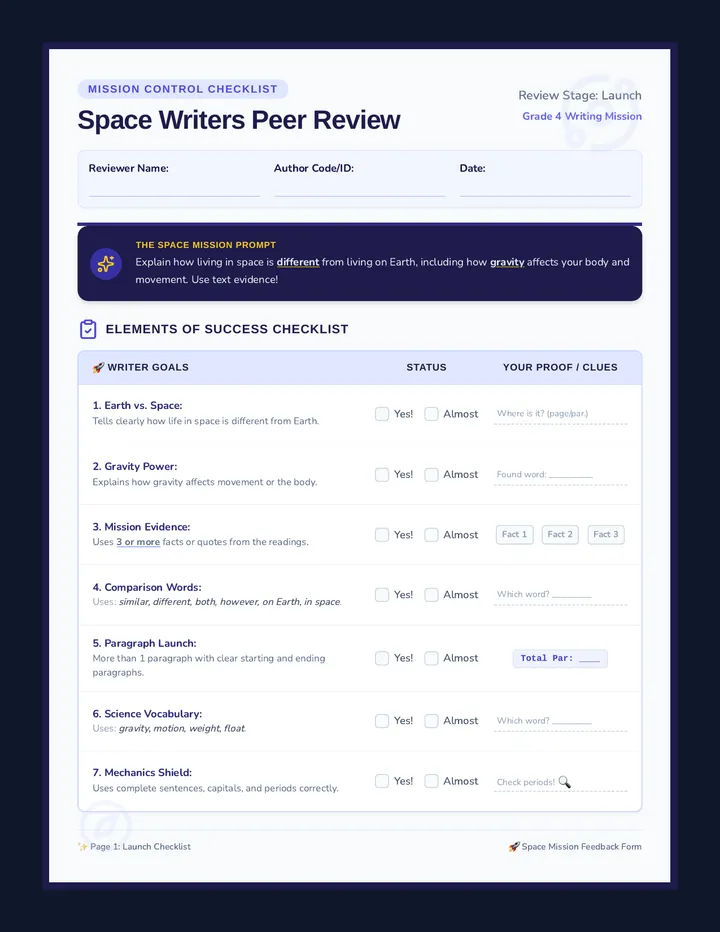
A two-page student peer feedback form styled with an astronaut/space theme. Page 1 contains a spacious visual success checklist for evaluating a writing piece. Page 2 provides expanded writing spaces with generous handwriting lines and color-coded boxes for comprehensive positive and constructive feedback ('Stellar Glows' and 'Cosmic Grows'), accompanied by sentence frames designed for Multilingual Language Learners.

J

jamacleod

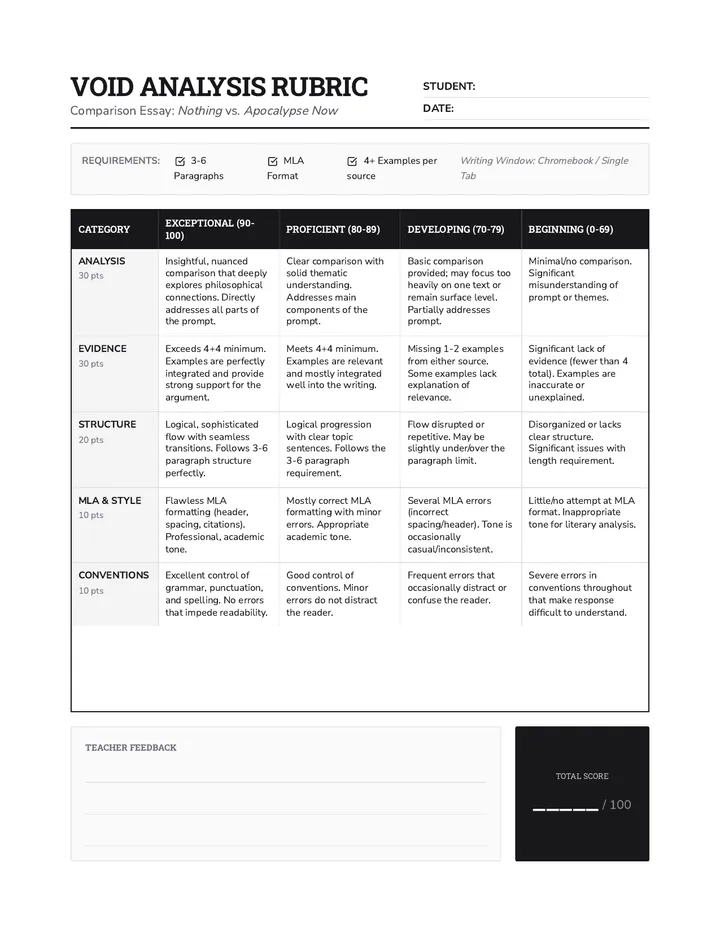
Void Analysis Rubric

Void Analysis Rubric

A revised 2-page rubric and prompt sheet for a comparative analysis of 'Nothing' and 'Apocalypse Now'. Page 1 features a detailed 100-point rubric with sections for teacher feedback and final scoring; Page 2 provides the five thematic writing prompts for student reference.

EH

Erin Hofmann

Sequences

Invention Quest Slides

Frindle Frenzy Novel Study

A 9-day novel study for 'Frindle' by Andrew Clements, aligned to 3rd Grade ELAR TEKS, focusing on character development, vocabulary, and plot analysis.

LH

Lucy Hellerman

56
Prophecy and Power Slides

Shadows and Crowns

A series of lessons exploring Shakespeare's Macbeth, specifically designed for 10th-grade emergent bilingual students to master complex characterization and thematic elements.

DC

Dylan Clark

30
Question Anatomy Slides

Insight Investigators

A 6-week reading intervention unit for 5th graders focused on making inferences, analyzing questions, and using text evidence. Themes include mysteries, sports (baseball and basketball), and dragons to engage high-interest readers.

MK

Meg Keene

48
Echo Showdown Quiz

Statement Chasers

A writing sequence focused on the 'Echo Method'—teaching students to transform writing prompts into strong topic statements by reusing prompt keywords.

KB

Krista Bodkin

18
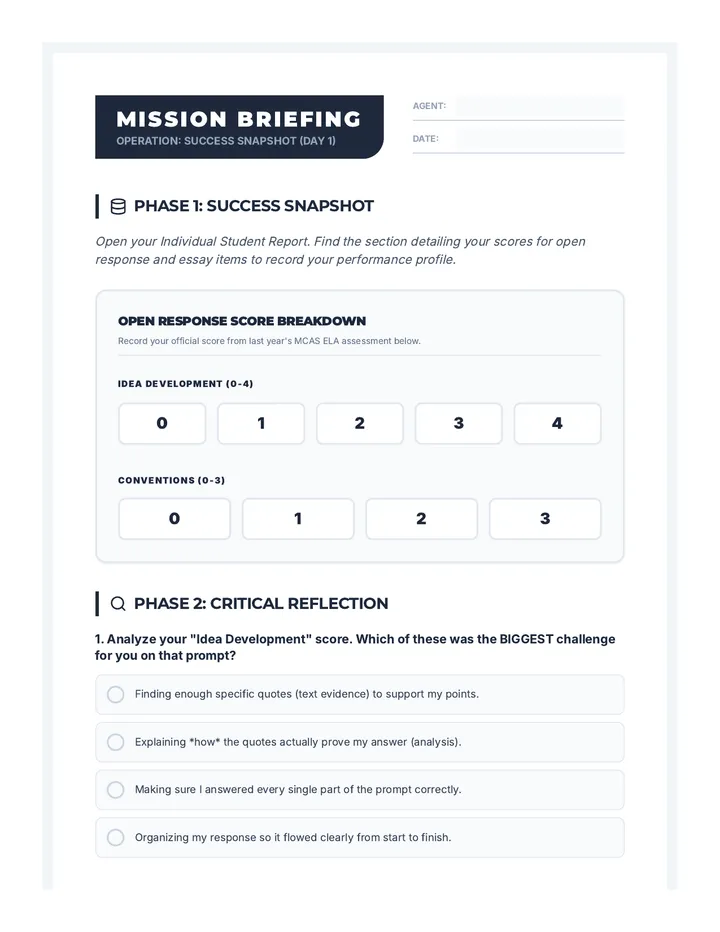
Mission Briefing Worksheet

Mastery Mission

A project-based learning unit designed to help middle school students analyze their past MCAS ELA performance, deconstruct scoring rubrics, and create a personalized strategy playbook for upcoming assessments. Students move from 'investigating' their scores to 'rebooting' their responses and 'finalizing' their test-taking toolkit.

M

mhbutterworth

18
Vowel Valley Fluency Packet Mastered

Phonics Fluency Fun

A series of phonics lessons focusing on vowel teams, digraphs, and other phonetic patterns through narrative passages and fluency drills.

N

npowers

28