Lenny.com
Explore
Create
ActivitiesNewMathEnglish Language ArtsScience & EngineeringSocial StudiesGlobal LanguagesHealth & Physical EducationSpecial EducationCounseling & Life SkillsArts & CreativityESL
Lenny.com
Lenny.com
Explore
Create
ActivitiesNewMathEnglish Language ArtsScience & EngineeringSocial StudiesGlobal LanguagesHealth & Physical EducationSpecial EducationCounseling & Life SkillsArts & CreativityESL
Lenny.com
Lenny.com

Solutions

Lenny for EducatorsLenny for SchoolsLenny for Districts

Product

ExploreSign inCreateSupportAbout

Resources

Getting startedMTSS Acceleration Program

© 2026 Lenny Learning Inc.

TermsPrivacyAccessibility
LinkedInInstagramX
Lenny

Prefixes and Suffixes

Identification of common affixes and their meanings to decode complex vocabulary. Demonstrates how adding prefixes or suffixes alters the grammatical function and definition of base words.

English Language ArtsPhonics & Reading FoundationsLetter IdentificationLearn Letters A-ZLowercase and Uppercase LettersConsonants and VowelsLetter-Sound AssociationsLetter-Sound Associations: LowercaseLetter-Sound Associations: UppercaseBeginning and Ending SoundsRhymingBlending And SegmentingShort VowelsShort Vowel SoundsConsonant BlendsConsonant DigraphsBlends, Digraphs, and TrigraphsDigraphs, Blends, and Silent LettersLong Vowel SoundsLong Vowel PatternsShort and Long VowelsShort and Long Vowel PatternsSilent EVowel SoundsVowel TeamsR-Controlled VowelsDiphthongs: Oi, Oy, Ou, OwVariant VowelsVariant, Diphthong, And R Vowel PatternsSoft G And CSight WordsIrregular WordsWord RecognitionSyllablesSyllable TypesTwo-Syllable WordsMultisyllabic WordsPhoneme ManipulationDecodable TextsVocabularyAction WordsQuestion WordsNouns and AdjectivesClassify WordsCompound WordsSynonyms and AntonymsHomophonesHomophones and HomonymsShades of MeaningContext CluesPrefixes and SuffixesGreek and Latin RootsAnalogiesIdioms and AdagesForeign Words and ExpressionsWord Choice and UsageReference SkillsReading ComprehensionRead-Along Literary TextsRead-Along Informational TextsReality vs. FictionStory ElementsCharacterSequenceMain IdeaCause And EffectCompare And ContrastReading StrategiesText StructureAuthor's PurposeAuthor's Purpose And ToneAuthor's PerspectivePoint Of ViewThemeInference And ThemeInference And AnalysisPoetry ElementsLiterary DevicesAnalyzing LiteratureAnalyzing Informational TextsComparing TextsAudience, Purpose, And ToneBusiness DocumentsNovel StudyNonfiction Book StudyGrammar & MechanicsSentencesNounsVerbsAdjectivesPronounsCapitalizationPunctuationContractionsConjunctionsPrepositionsArticlesAdjectives And AdverbsVerb TypesVerb TensePronouns And AntecedentsPronoun TypesSubject-Verb AgreementDirect And Indirect ObjectsSentences, Fragments, And Run-OnsPhrases And ClausesCommasSemicolons, Colons, And CommasDashes, Hyphens, And EllipsesSpellingAbbreviationsFormattingVerb Tense And MoodMisplaced ModifiersWritingDescriptive DetailsCreative WritingOpinion WritingTopic SentencesOrganizing WritingLinking WordsSentence VarietyIntroductions And ConclusionsPersuasive And Opinion WritingExpository WritingPersuasive StrategiesDeveloping And Supporting ArgumentsTopic Sentences And Thesis StatementsSummarizingResearch SkillsEditing And RevisingActive And Passive Voice=Writing Clearly And ConciselyDebate & Public SpeakingPublic Speaking BasicsPersuasive TechniquesClaims and EvidenceTypes of ArgumentsReasoning TypesLogical FallaciesTopic ResearchOrganizing EvidenceDebate Speech OrganizationAttacking and Defending ArgumentsClash and EngagementImpact CalculusQuestioning and Cross-ExaminationCritical ThinkingInformal LogicFormal LogicInductive Reasoning

Videos

Concrete vs. Abstract Nouns: The Difference Between Objects and Ideas

Concrete vs. Abstract Nouns: The Difference Between Objects and Ideas

This video provides a clear and engaging explanation of the difference between concrete and abstract nouns, utilizing etymology to deepen student understanding. The narrator breaks down the Latin roots of both terms—"concrete" meaning "grown together" or physical, and "abstract" meaning "drawn away" or conceptual—to help students visualize the distinction. Through a digital whiteboard demonstration, the lesson contrasts tangible objects that can be sensed with intangible ideas, emotions, and states of being. The content focuses on key grammatical concepts including the definition of nouns as not just persons, places, and things, but also *ideas*. It explores how abstract nouns like "sadness," "freedom," and "permission" function grammatically (often using suffixes like "-ness") despite lacking physical form. The video specifically addresses the nuance between an abstract concept and its physical manifestations, using the example of "freedom" versus the "ice cream" one is free to eat. For educators, this resource offers a robust foundation for grammar instruction in upper elementary and middle school. It moves beyond simple memorization by providing a logic-based framework (the "physical vs. not physical" test) that students can apply to new vocabulary. The video is particularly useful for introducing abstract nouns, a concept that often challenges students transitioning from basic concrete noun identification, and can serve as a springboard for lessons on sensory imagery and descriptive writing.

Khan AcademyKhan Academy

3mins 43s

Defining Experiment, Invention, and Discovery

Defining Experiment, Invention, and Discovery

This engaging vocabulary lesson from Khan Academy invites students into the "Vocabulab" to explore three interconnected words: experiment, invention, and discovery. Narrated with humor and energy, the video defines each term as a noun and verb, providing clear distinctions between creating something new (invention), testing an idea (experiment), and finding something that already exists (discovery). The narrator uses whimsical hand-drawn animations to illustrate these concepts, making abstract definitions concrete and memorable for young learners. The video delves deeper than simple definitions by exploring word origins, specifically the prefix "dis-." It breaks down "discovery" into "dis-" (not/opposite) and "cover," explaining that discovering is literally the act of uncovering something hidden. This etymological sidebar helps students understand how prefixes function to change the meaning of base words, reinforcing language mechanics alongside vocabulary acquisition. The narrator provides additional examples like "dislike" and "disapprove" to cement this concept. Educationally, this resource is excellent for both English Language Arts and Science curriculums. It clarifies terms often used interchangeably in scientific contexts, helping students speak more precisely about the scientific method. The inclusion of a "useless invention" (a machine that turns gold into crabs) adds a layer of fun that keeps students engaged, while the narrator's persistence with his failed experiments subtly models a growth mindset. Teachers can use this to introduce scientific units, teach prefixes, or inspire creative writing about imaginary inventions.
Khan AcademyKhan Academy

3mins 28s

Defining and Using the Words Examine, Resource, and Pollution

Defining and Using the Words Examine, Resource, and Pollution

This educational video introduces and defines three specific vocabulary words: "examine," "resource," and "pollution." Using a "blackboard" style visual approach with colorful handwritten text and simple illustrations, the narrator breaks down each word by identifying its part of speech (verb or noun), providing a clear definition, and explaining its etymology or morphological structure (such as the suffix "-tion"). The video explores the meanings in depth before showing them in context. For example, it connects "examine" to the familiar concept of taking an "exam," expands the definition of "resource" from natural materials to school libraries, and breaks down "pollution" as the act of dirtying the environment. Each segment concludes with an illustrated sentence that demonstrates the word being used correctly in a real-world scenario. Teachers can use this video as a versatile tool for both English Language Arts and Science instruction. It serves as an excellent model for how to learn new vocabulary—by defining, connecting to known words, and using in context. Additionally, the specific words chosen bridge nicely into science units regarding scientific observation (examining), natural resources, and environmental stewardship (pollution).

Khan AcademyKhan Academy

2mins 59s

Why the Plural of Ox Is Oxen but Box Is Boxes

Why the Plural of Ox Is Oxen but Box Is Boxes

This educational video explores the fascinating history behind irregular English plurals, specifically focusing on the rare "-en" ending found in words like "children" and "oxen." The narrator, David, breaks down why English grammar often feels unpredictable by explaining its roots as a Germanic language derived from Old English. He uses humor and clear handwriting to illustrate how historical regional variations eventually distilled into the standard English rules we use today. The video delves into etymology to explain common student questions, such as why the plural of "ox" is "oxen" while the plural of "box" is "boxes." By distinguishing between native Old English words and borrowed words from Greek or Latin, the lesson demystifies these apparent inconsistencies. The content encourages students to view English not as a rigid block of rules, but as a "lashed together raft" of history and diverse influences. Included as a bonus segment is a historical anecdote about William Caxton, the first English printer, and a 15th-century confusion between the words "eggs" and "eyren." This story vividly illustrates the concept of dialects and the evolution of language, making it an excellent resource for discussing how communication technologies like the printing press helped standardize the English language.

Khan AcademyKhan Academy

7mins 23s

Defining and Understanding Admire and Inspire

Defining and Understanding Admire and Inspire

This educational video provides a clear and engaging breakdown of two related vocabulary words: "admire" and "inspire." Using a digital blackboard format, the narrator defines both verbs, explores their etymological roots (including prefixes and Latin origins), and illustrates their meanings through distinct examples. The lesson moves from definitions to word analysis, explaining how "admire" relates to looking and respecting, while "inspire" relates to breathing life and motivation into someone. Key themes include vocabulary acquisition, etymology (word roots), and the concepts of respect and motivation. The video specifically highlights the Latin roots "mirar" (to look) and "spire" (breath), helping students understand how the history of a word informs its current meaning. It also touches on role models through the example of Chef Jacques Pépin and creative invention through a humorous example about Swiss cheese. For educators, this video is an excellent tool for introducing Tier 2 vocabulary and the concept of morphology (prefixes and roots). It bridges simple definitions with deeper linguistic understanding, making it suitable for word study lessons. The video supports social-emotional learning by encouraging students to identify who they admire and what inspires them, while the specific examples provide a template for students to use these words correctly in their own writing and speech.

Khan AcademyKhan Academy

2mins 35s

Learning Unfamiliar and Strategy Through Storytelling

Learning Unfamiliar and Strategy Through Storytelling

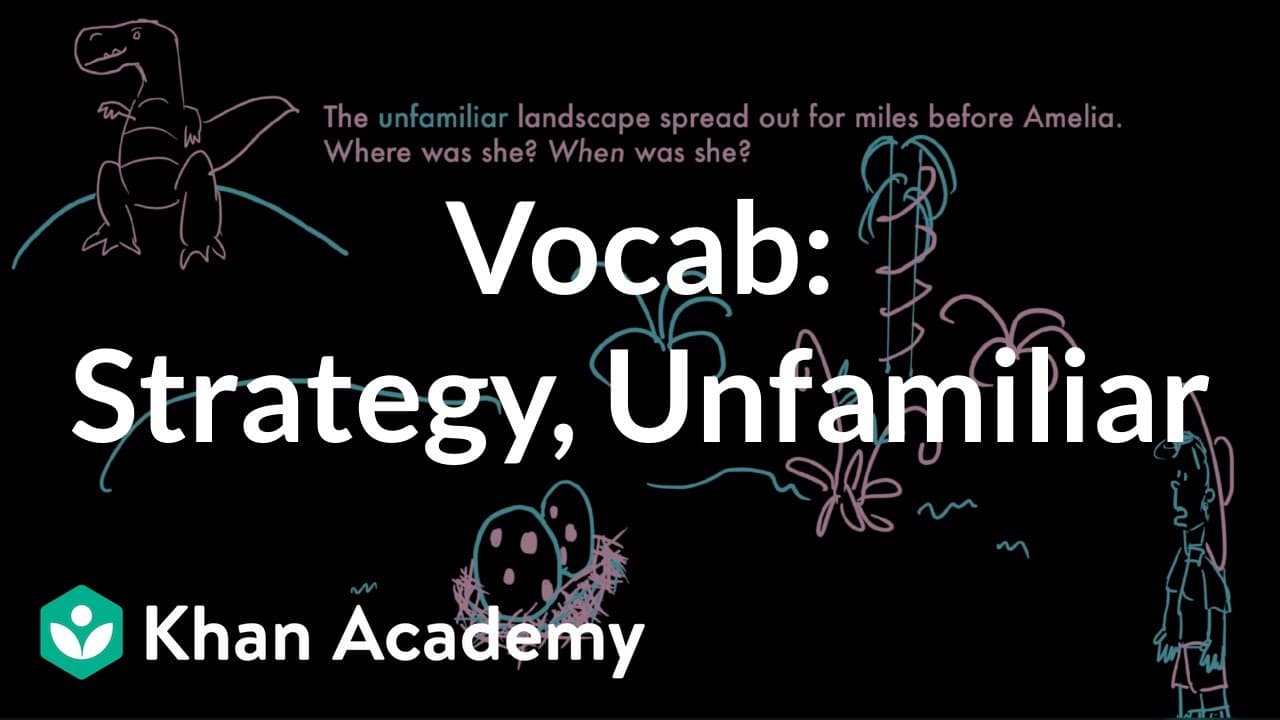
This engaging vocabulary lesson introduces two high-utility words, "unfamiliar" and "strategy," framed around a humorous personal narrative where the narrator has locked himself out of his house. Through digital whiteboard-style illustrations and text, the video breaks down the definitions, morphology, and usage of each word while weaving in a storyline about retrieving keys through a window. The narrator explains the prefix "un-" to decode meaning and distinguishes between the noun "strategy" and verb "strategize." Key themes include vocabulary acquisition, word morphology (prefixes and roots), and context clues. The video explores how breaking words into parts (like identifying "family" within "familiar") helps understanding, and it provides memorable, slightly absurd example sentences involving dinosaurs and fishing for tuna in a grocery store to reinforce the concepts in a fun way. For educators, this video serves as an excellent hook for literacy blocks focusing on Tier 2 vocabulary or morphology. It connects abstract definitions to concrete, humorous scenarios that aid retention. Teachers can use the "locked out" scenario to prompt students to brainstorm their own strategies, or use the "un-" segment to launch a lesson on how prefixes change word meanings.

Khan AcademyKhan Academy

2mins 45s

Materials

Spelling Mastery Test Worksheet

Spelling Mastery Test Worksheet

A print-ready multiple-choice spelling test featuring 11 target vocabulary and morphology words with plausible phonological distractors, bubble-style answer choices, and a bonus word-analysis prompt.

EO

Emily Ondreas

ILEARN Checkpoint Master Guide

ILEARN Checkpoint Master Guide

Comprehensive Grade 3 ELA ILEARN Checkpoint 1 Master Pacing Guide and Extended Assessment Bank aligned to Indiana Academic Standards. Features a 9-week pacing calendar, standard unwrapping matrix, and a 4-page comprehensive item bank including EBSR Part A/B stems, informational text passages, multi-select items, technology-enhanced table grids, and short constructed response rubrics.

L

LINDSEY.ELLIOTT

ELA Baseline Screener

ELA Baseline Screener

An expanded 5-page 6th-grade Resource Room diagnostic ELA screener featuring an in-depth phonics and multisyllable decoding inventory, Greek and Latin roots, academic vocabulary, context clues tasks (with affixes removed), four progressive reading passages with all grade-level markers removed for students, and sentence editing with a structured diagnostic paragraph prompt.

L

laura.clar

Word Lab Worksheet

Word Lab Worksheet

A revised two-page worksheet titled 'Word Lab' featuring 25 words with 3-4 syllables. Each word is housed in a dedicated box with an example sentence and a designated handwriting area for students to practice syllabic breakdown, addressing patterns like -tious, -cious, -cial, -tial, -al, -ci-, and -ti-. This version uses robust layout classes to prevent content from splitting across pages.

CH

Caroline Haack

Word Builder Flashcards

Word Builder Flashcards

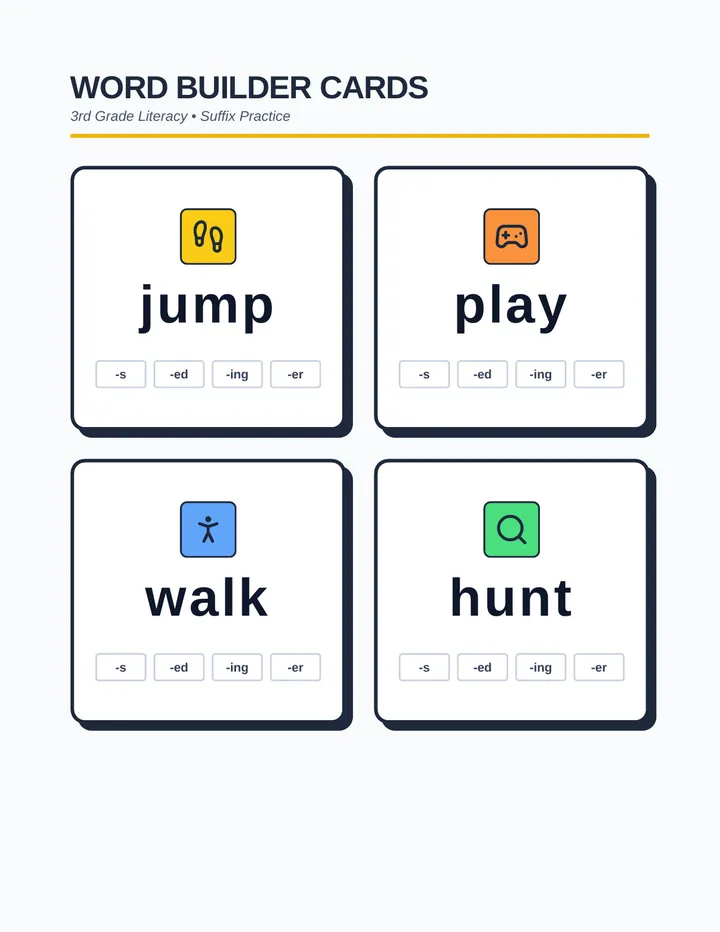
A set of 10 root word flashcards for 3rd grade, featuring words compatible with -ed, -er, -ing, and -s suffixes. Includes 8 printable suffix tiles for interactive word building and visual cues for each root word.

J

Jennifer.Thomas

Vocab Loop Cards

Vocab Loop Cards

An updated version of the 12-card vocabulary game with larger cards (2 per page) for easier cutting and better visibility. Includes the same loop terms and a teacher reference key.

MC

Makaela Carias

Sequences

Prefix Power Sort 1 Worksheet

Word Wizard Packet

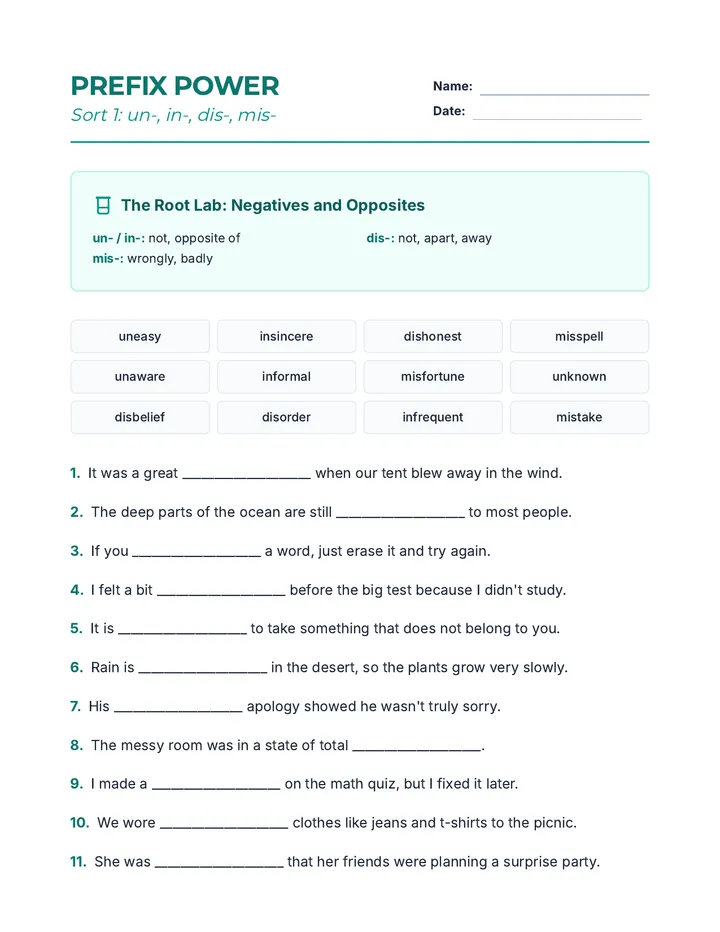
A comprehensive vocabulary and morphology curriculum covering prefixes, suffixes, Latin roots, and Greek roots through fill-in-the-blank exercises and engaging word puzzles.

N

nmack

137
Invention Quest Slides

Frindle Frenzy Novel Study

A 9-day novel study for 'Frindle' by Andrew Clements, aligned to 3rd Grade ELAR TEKS, focusing on character development, vocabulary, and plot analysis.

LH

Lucy Hellerman

56
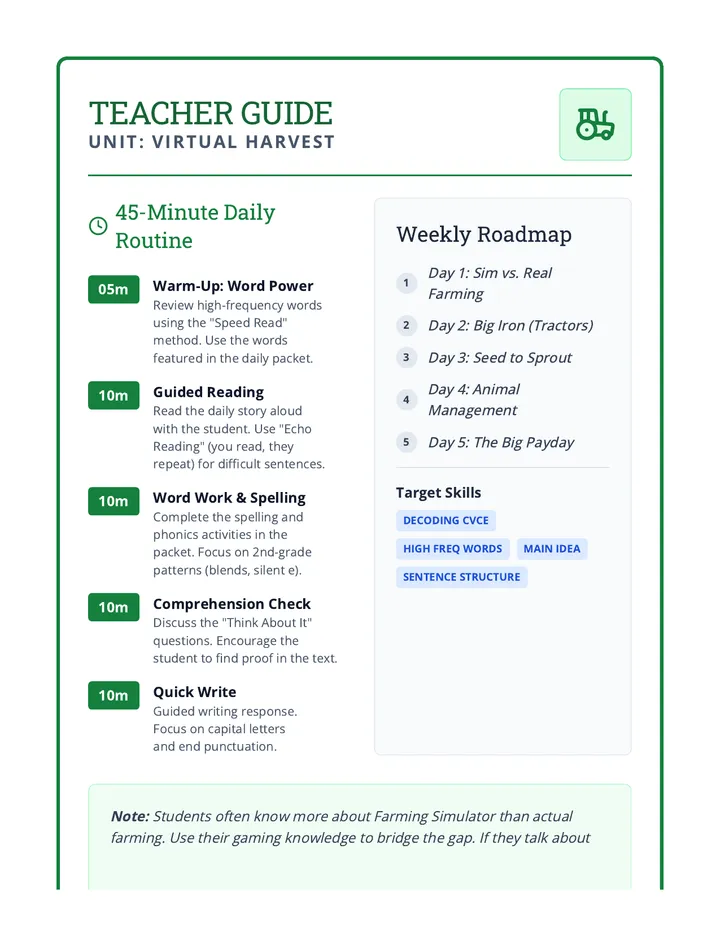
Virtual Harvest Teacher Guide

Digital Dirt

A 5-day reading comprehension and writing unit for struggling readers, blending the world of Farming Simulator with real-world agriculture. Focuses on 2nd-grade level literacy skills within a high-interest 5th-grade context.

CM

carley Martin

30
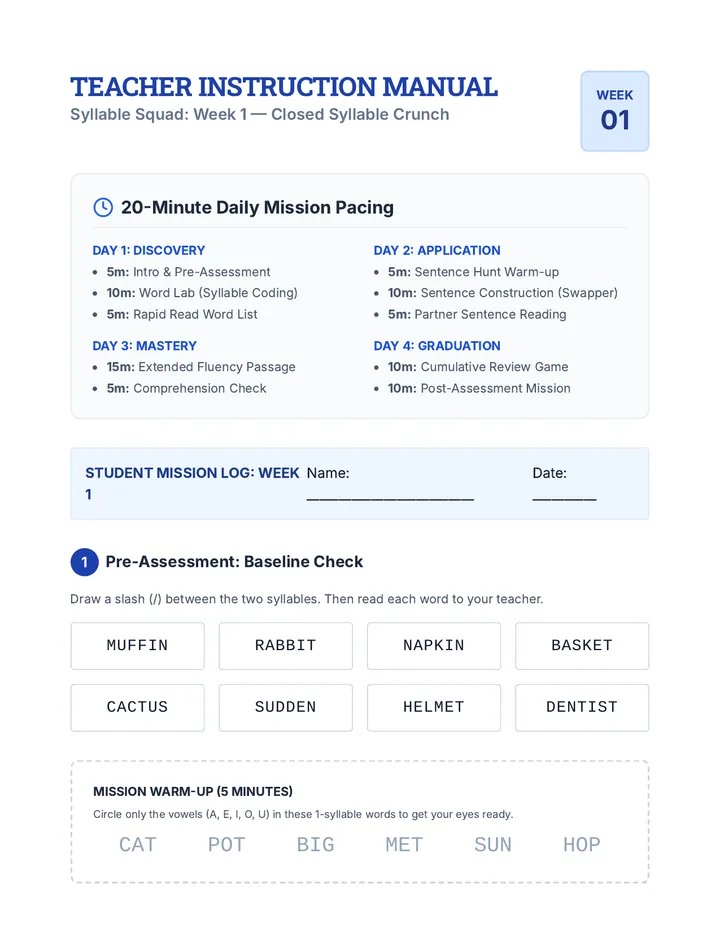
Week 1 Closed Syllable Manual

Syllable Squad Decoding Mission

A comprehensive 5-week phonics intervention focused on decoding two-syllable words across five major syllable types. Each week includes a pre-assessment, daily lessons with specific targets, student practice sheets, and a post-assessment.

KJ

Kelsey Jacobs

29
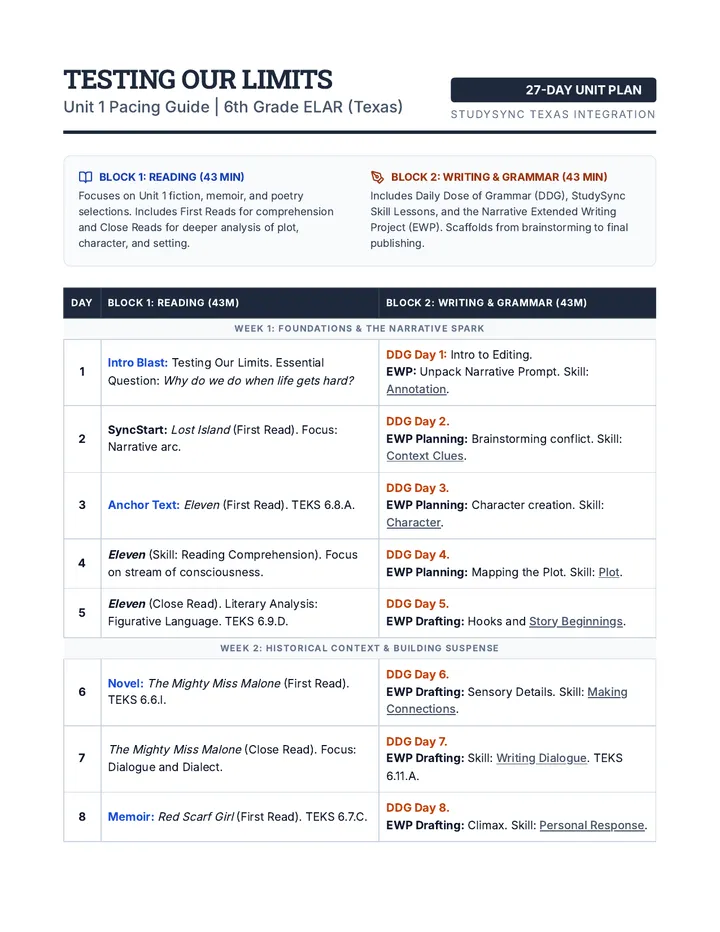
Unit 1 Pacing Guide Document

Testing Our Limits Unit Sequence

A 27-day instructional sequence for 6th Grade ELAR Unit 1: Testing Our Limits, featuring dual blocks for Reading and Writing with daily grammar and skill scaffolding.

DM

Dawn Mustian

81
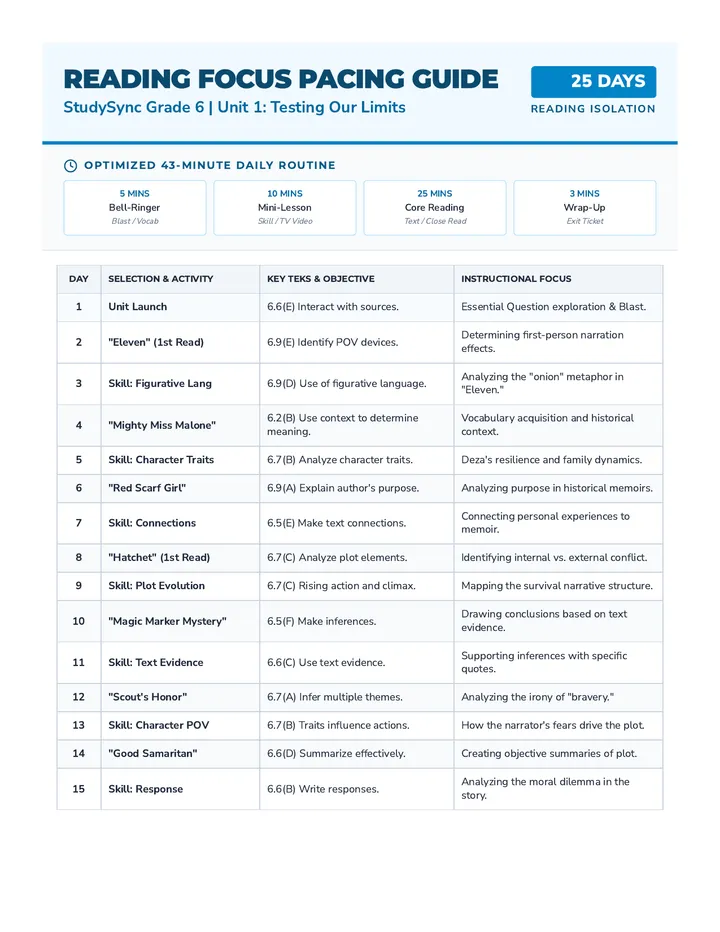
Reading Focus Pacing Guide

Testing Our Limits Unit

A 25-day comprehensive unit for StudySync Grade 6 that explores the theme of courage and resilience through isolated reading and writing tracks, aligned to ELA TEKS.

DM

Dawn Mustian

79